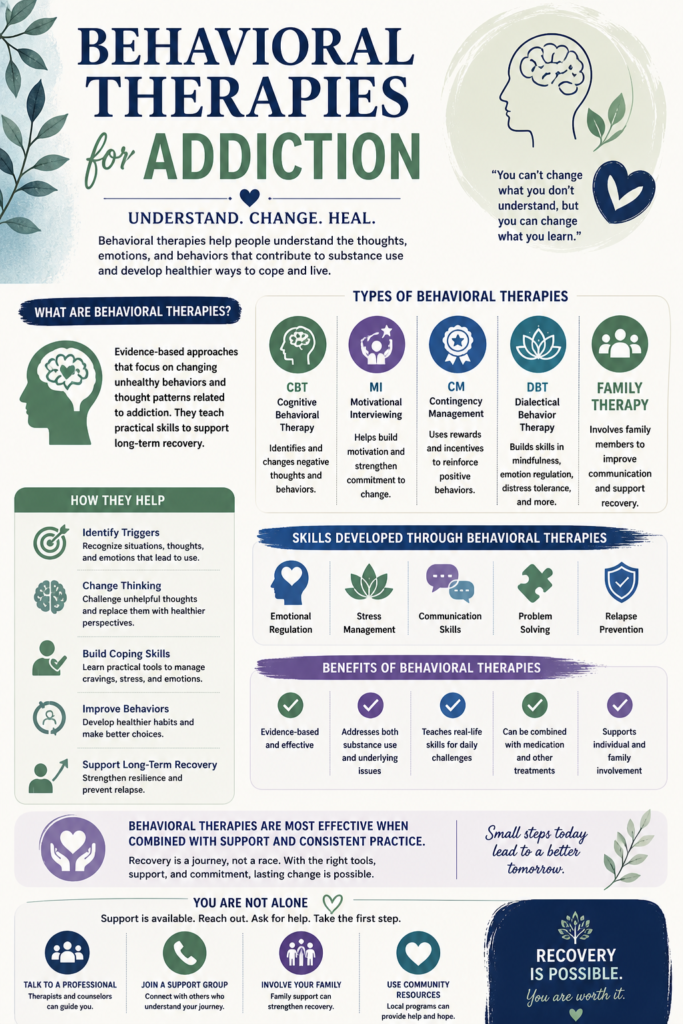
Behavioral therapies are a fundamental component of addiction treatment, focusing on the connection between thoughts, emotions, and actions that contribute to substance use. Unlike approaches that rely solely on medication, behavioral therapies aim to help individuals recognize harmful patterns, develop healthier coping mechanisms, and build the skills needed for long-term recovery. Addiction is not only a physical condition but also a learned behavior influenced by environmental and psychological factors. By addressing these underlying influences, behavioral therapies provide individuals with practical tools to better understand their behaviors and make meaningful, lasting changes.
Changing Patterns, Changing Lives: Behavioral Therapies for Addiction
Addiction is a complex condition that affects both the brain and behavior, making it difficult for individuals to stop using substances despite harmful consequences. While medications can play a role in treatment, behavioral therapies are a cornerstone of addiction recovery. These therapies focus on understanding the thoughts, emotions, and habits that drive substance use, helping individuals develop healthier coping strategies and long-term behavioral change.
Behavioral therapies are grounded in the idea that addiction is a learned behavior that can be unlearned or modified. By addressing triggers, reinforcing positive behaviors, and building practical life skills, these approaches empower individuals to regain control over their actions. They are widely used in both outpatient and inpatient settings and can be tailored to meet individual needs.
What Are Behavioral Therapies?
Behavioral therapies are structured approaches that help individuals:
- Identify patterns of substance use
- Understand triggers and high-risk situations
- Change negative thought patterns
- Develop healthier coping mechanisms
- Build skills to maintain long-term recovery
Common Types of Behavioral Therapies
Several evidence-based therapies are commonly used in addiction treatment:
- Cognitive Behavioral Therapy (CBT):
Focuses on identifying and changing harmful thoughts and behaviors related to substance use - Contingency Management:
Uses rewards or incentives to reinforce positive behaviors such as abstinence - Motivational Interviewing (MI):
Helps individuals strengthen their motivation and commitment to change - Dialectical Behavior Therapy (DBT):
Teaches emotional regulation, distress tolerance, and interpersonal skills - Family Therapy:
Involves family members to improve communication and support recovery
How Behavioral Therapies Support Recovery
These approaches address multiple aspects of addiction:
- Breaking the Cycle of Use:
Helps individuals recognize and interrupt automatic patterns - Managing Cravings:
Provides tools to cope with urges without acting on them - Improving Decision-Making:
Encourages thoughtful, goal-oriented choices - Building Emotional Resilience:
Strengthens the ability to handle stress and setbacks
Benefits of Behavioral Therapies
Behavioral therapies offer several key advantages:
- Can be tailored to individual needs and circumstances
- Address both substance use and underlying mental health issues
- Provide practical, real-life coping skills
- Support long-term behavior change and relapse prevention
- Can be combined with medication for comprehensive care
Challenges and Considerations
While effective, behavioral therapies may also present challenges:
- Require consistent participation and effort
- Progress may take time and vary between individuals
- Access to trained professionals may be limited in some areas
- Relapse can still occur and should be addressed as part of the recovery process
The Role of Support Systems
Behavioral therapies are most effective when combined with support:
- Peer support groups and recovery communities
- Family involvement and encouragement
- Structured treatment programs
- Ongoing counseling and follow-up care
Moving Toward Lasting Change
Behavioral therapies play a vital role in helping individuals understand and overcome addiction. By focusing on thought patterns, behaviors, and coping strategies, these approaches provide the tools needed for sustainable recovery. While the journey can be challenging, behavioral therapies offer a path toward lasting change, improved well-being, and a healthier, more stable future.
Taking Charge of Change: Self-Management Strategies for Understanding Behavioral Therapies for Addiction
Behavioral therapies are a core component of addiction treatment, helping individuals understand and change the patterns that drive substance use. However, therapy is most effective when individuals actively engage in their own growth outside of sessions. Self-management strategies empower individuals to apply what they learn in therapy to real-life situations, strengthening their ability to maintain progress and prevent relapse.
Understanding behavioral therapies—such as Cognitive Behavioral Therapy (CBT), Motivational Interviewing, and Contingency Management—requires more than passive participation. It involves recognizing personal triggers, practicing new skills, and consistently reflecting on thoughts and behaviors. Self-management bridges the gap between structured treatment and everyday life, making recovery more sustainable.
Building Awareness of Thought and Behavior Patterns
Self-awareness is the foundation of behavioral change:
- Identify triggers that lead to substance use (stress, environment, emotions)
- Recognize negative thought patterns that justify or reinforce use
- Reflect on past behaviors and their consequences
- Track patterns through journaling or self-monitoring tools
Applying Therapy Techniques in Daily Life
Using learned strategies outside of therapy strengthens progress:
- Practice cognitive restructuring (challenging negative thoughts)
- Use coping skills taught in therapy during high-risk situations
- Rehearse problem-solving techniques for real-life challenges
- Apply mindfulness or grounding exercises to manage cravings
Developing Healthy Coping Mechanisms
Replacing substance use with healthier alternatives is essential:
- Engage in physical activity to reduce stress and improve mood
- Use relaxation techniques such as deep breathing or meditation
- Participate in hobbies or creative outlets
- Build routines that support stability and structure
Setting Goals and Tracking Progress
Clear goals help maintain focus and motivation:
- Set realistic, short-term and long-term recovery goals
- Break larger goals into manageable steps
- Monitor progress regularly and adjust strategies as needed
- Celebrate small achievements to reinforce positive change
Strengthening Self-Regulation and Discipline
Consistency is key in maintaining behavioral change:
- Practice delaying impulses and urges
- Establish daily routines that reduce unpredictability
- Use reminders or tools to stay accountable
- Reinforce boundaries around substance use
Utilizing Support Systems
Self-management works best when combined with support:
- Stay connected with therapists or counselors
- Participate in peer support groups or recovery communities
- Share goals and progress with trusted individuals
- Seek guidance when facing challenges or setbacks
Monitoring Warning Signs of Relapse
Early recognition can prevent setbacks:
- Increased cravings or thoughts about substance use
- Returning to high-risk environments or behaviors
- Emotional distress or loss of motivation
- Gradual relaxation of personal boundaries
Maintaining Long-Term Growth
Recovery is an ongoing process that requires continuous effort:
- Regularly reflect on progress and challenges
- Stay open to learning new coping strategies
- Adjust approaches based on changing needs
- Focus on overall well-being, not just avoiding substance use
Moving Toward Lasting Change
Self-management transforms behavioral therapy from a structured intervention into a lifelong skill set. By actively applying therapeutic techniques, building awareness, and maintaining accountability, individuals can strengthen their recovery journey. Understanding behavioral therapies is not just about learning concepts—it’s about consistently practicing them to create meaningful, lasting change.
Healing Together: Family Support Strategies for Understanding Behavioral Therapies for Addiction
Behavioral therapies are a central part of addiction treatment, focusing on changing thought patterns, behaviors, and emotional responses linked to substance use. While these therapies are highly effective, their success is often strengthened by the involvement of supportive family members. Families who understand how behavioral therapies work are better equipped to reinforce positive changes, encourage consistency, and create a home environment that supports recovery.
Addiction affects not only the individual but also the entire family system. When families actively engage in the recovery process, they can help bridge the gap between therapy sessions and everyday life. By learning key concepts and strategies, families can become valuable partners in supporting long-term behavioral change.
Understanding Behavioral Therapies as a Family
Education is the first step in providing effective support:
- Learn the basics of therapies like Cognitive Behavioral Therapy (CBT), Motivational Interviewing, and Contingency Management
- Understand that addiction involves learned behaviors that can be changed over time
- Recognize the role of triggers, cravings, and coping strategies
- Accept that progress may be gradual and include setbacks
Reinforcing Positive Behavioral Changes
Families can help strengthen what is learned in therapy:
- Encourage healthy habits and routines introduced in treatment
- Acknowledge and celebrate progress, even small improvements
- Support the use of coping strategies during stressful situations
- Avoid focusing only on mistakes or setbacks
Improving Communication and Support
Healthy communication builds trust and reduces conflict:
- Use nonjudgmental and supportive language
- Practice active listening without interrupting or criticizing
- Express concerns using “I” statements rather than blame
- Encourage open discussions about challenges and progress
Creating a Structured and Supportive Environment
Consistency at home helps reinforce therapy goals:
- Establish daily routines that promote stability
- Reduce exposure to triggers or high-risk situations
- Encourage participation in therapy and recovery activities
- Promote healthy lifestyle habits (sleep, nutrition, exercise)
Encouraging Accountability Without Control
Balance is key in supporting independence and responsibility:
- Support goal-setting and personal responsibility
- Avoid enabling behaviors (e.g., covering up consequences)
- Allow natural consequences while offering emotional support
- Encourage self-reflection rather than imposing control
Participating in Family Involvement Opportunities
Many behavioral therapies include family components:
- Attend family therapy sessions when available
- Learn communication and conflict-resolution skills together
- Gain insight into how family dynamics influence behavior
- Work collaboratively to support recovery goals
Recognizing Warning Signs of Relapse
Families can help identify early concerns:
- Changes in mood, behavior, or motivation
- Increased withdrawal or secrecy
- Returning to old environments or habits
- Reduced engagement in therapy or support systems
Caring for Family Well-Being
Supporting someone in recovery can be challenging:
- Seek support through counseling or family support groups
- Acknowledge feelings of stress, frustration, or uncertainty
- Maintain personal boundaries and self-care routines
- Avoid taking sole responsibility for the individual’s recovery
Moving Forward as a Support System
Behavioral therapies provide the tools for change, but family support helps sustain that change over time. By understanding therapeutic approaches, reinforcing positive behaviors, and maintaining a supportive environment, families can play a vital role in recovery. Working together, families and individuals can build healthier patterns, stronger relationships, and a more stable future.
Community in Action: Resource Strategies for Understanding Behavioral Therapies for Addiction
Behavioral therapies are among the most effective tools for treating addiction, focusing on changing harmful patterns of thinking and behavior. While these therapies are often delivered in clinical settings, their success depends heavily on the availability of community resources that support learning, access, and long-term application. Communities play a critical role in helping individuals and families understand these therapies and integrate them into everyday life.
By providing education, accessible services, and supportive environments, community resources help bridge the gap between formal treatment and real-world recovery. Understanding how these resources function can empower individuals to fully engage in behavioral therapies and sustain progress over time.
Expanding Access to Behavioral Therapy Services
Communities help ensure that individuals can receive appropriate care:
- Local clinics offering outpatient behavioral therapy programs
- Community mental health centers providing affordable or low-cost services
- Telehealth options increasing accessibility for remote or underserved areas
- Integrated programs addressing both addiction and mental health
Providing Education and Awareness
Community education helps individuals understand how behavioral therapies work:
- Workshops explaining approaches like Cognitive Behavioral Therapy (CBT) and Motivational Interviewing
- Public health campaigns about addiction as a behavioral and medical condition
- Educational materials distributed through schools, workplaces, and community centers
- Training sessions for families and caregivers
Strengthening Peer and Recovery Support Networks
Social support enhances the effectiveness of behavioral therapies:
- Peer-led support groups reinforcing therapy concepts
- Community recovery centers offering structured programs and safe spaces
- Mentorship opportunities with individuals in long-term recovery
- Group therapy sessions that build shared understanding and accountability
Promoting Skill-Building Opportunities
Behavioral therapies focus on practical life skills that communities can reinforce:
- Programs teaching stress management and emotional regulation
- Workshops on communication and problem-solving skills
- Job readiness and life skills training to support stability
- Activities that encourage healthy routines and structure
Improving Coordination of Care
Collaboration across systems strengthens outcomes:
- Partnerships between healthcare providers, schools, and social services
- Referral systems connecting individuals to appropriate therapy programs
- Case management services to guide individuals through treatment options
- Ongoing follow-up care to support long-term recovery
Reducing Barriers to Treatment
Communities can address obstacles that limit access:
- Transportation services to attend therapy sessions
- Financial assistance or sliding-scale payment options
- Childcare support for individuals in treatment
- Flexible scheduling to accommodate work or school commitments
Reducing Stigma and Encouraging Participation
Community attitudes influence engagement in therapy:
- Campaigns promoting addiction treatment as a path to recovery
- Safe, inclusive environments where individuals feel comfortable seeking help
- Open discussions that normalize therapy and mental health support
- Encouragement from community leaders and organizations
Supporting Long-Term Recovery
Behavioral therapies are most effective when reinforced over time:
- Continued access to counseling and support groups
- Community programs that encourage healthy lifestyles
- Opportunities for volunteering and community involvement
- Ongoing education about relapse prevention and coping strategies
Moving Forward as a Community
Community resource strategies play a vital role in helping individuals understand and benefit from behavioral therapies for addiction. By increasing access, providing education, and fostering supportive environments, communities transform therapy from a clinical service into a sustainable, real-world practice. Through collaboration and continued investment, communities can strengthen recovery efforts and promote lasting behavioral change for individuals affected by addiction.
Frequently Asked Questions
Here are some common questions:
1. What are behavioral therapies for addiction?
Behavioral therapies are treatment approaches that help individuals change unhealthy patterns of thinking and behavior related to substance use. They focus on developing coping skills, managing triggers, and promoting long-term recovery.
2. How do behavioral therapies work?
They work by helping individuals:
- Identify triggers and high-risk situations
- Change negative thought patterns
- Develop healthier behaviors and coping strategies
- Build skills to prevent relapse
3. Are behavioral therapies effective?
Yes. Behavioral therapies are evidence-based and widely used in addiction treatment. They are especially effective when combined with other supports such as medication and peer support.
4. What are the most common types of behavioral therapies?
- Cognitive Behavioral Therapy (CBT)
- Motivational Interviewing (MI)
- Contingency Management (CM)
- Dialectical Behavior Therapy (DBT)
- Family Therapy
5. What is Cognitive Behavioral Therapy (CBT)?
CBT helps individuals recognize and change negative thoughts and behaviors that contribute to substance use. It focuses on practical strategies for managing cravings and triggers.
6. What is Motivational Interviewing (MI)?
Motivational Interviewing helps individuals explore their reasons for change and strengthens their motivation to stop or reduce substance use.
7. What is Contingency Management?
This approach uses rewards or incentives to encourage positive behaviors, such as staying substance-free or attending treatment sessions.
8. How long do behavioral therapies take?
The length varies depending on the individual and treatment plan. Some programs last a few weeks, while others continue for months or longer as part of ongoing recovery.
9. Can behavioral therapies be used alone?
Yes, but they are often most effective when combined with other treatments, such as medication-assisted treatment (MAT) and support groups.
10. Do behavioral therapies address mental health issues?
Yes. Many behavioral therapies also help treat co-occurring mental health conditions like anxiety, depression, and trauma.
11. What skills do people learn in these therapies?
- Stress management
- Emotional regulation
- Communication skills
- Problem-solving
- Relapse prevention strategies
12. Can families be involved in behavioral therapy?
Yes. Family therapy is often included to improve communication, strengthen relationships, and support recovery.
13. What are the benefits of behavioral therapies?
- Help change harmful behaviors
- Provide practical coping skills
- Support long-term recovery
- Improve overall mental and emotional well-being
14. What challenges might people face?
- Requires time and commitment
- Progress may be gradual
- Access to services may be limited in some areas
- Relapse can still occur and should be addressed as part of recovery
15. How can someone get started with behavioral therapy?
- Talk to a healthcare provider or counselor
- Contact local treatment centers or mental health clinics
- Explore telehealth therapy options
- Join support groups for guidance and referrals
Conclusion
Behavioral therapies play a critical role in supporting recovery from addiction by empowering individuals to change the patterns that sustain substance use. Through consistent practice, self-awareness, and skill development, these therapies help individuals manage triggers, reduce cravings, and improve decision-making. While recovery is often a gradual process that may include setbacks, behavioral therapies offer a structured and evidence-based path toward lasting change. When combined with support systems and, when appropriate, medical treatment, they provide a strong foundation for improved well-being, stability, and long-term success in recovery.
Video: This is Why Most Addiction Treatment Fails (and How to Fix It) #addiction #recovery #mentalhealth