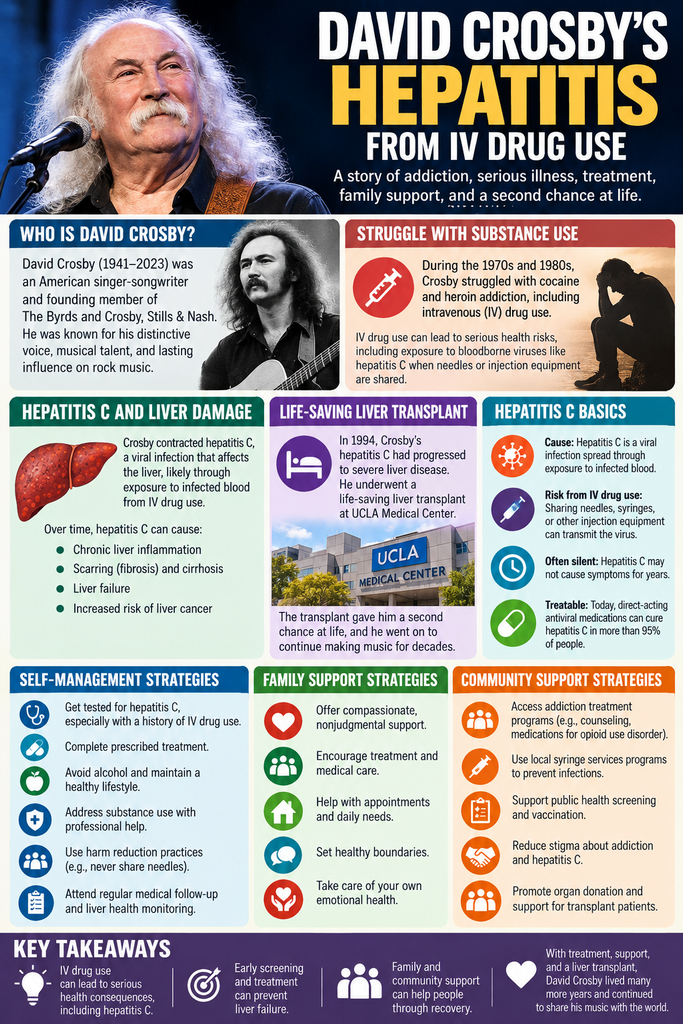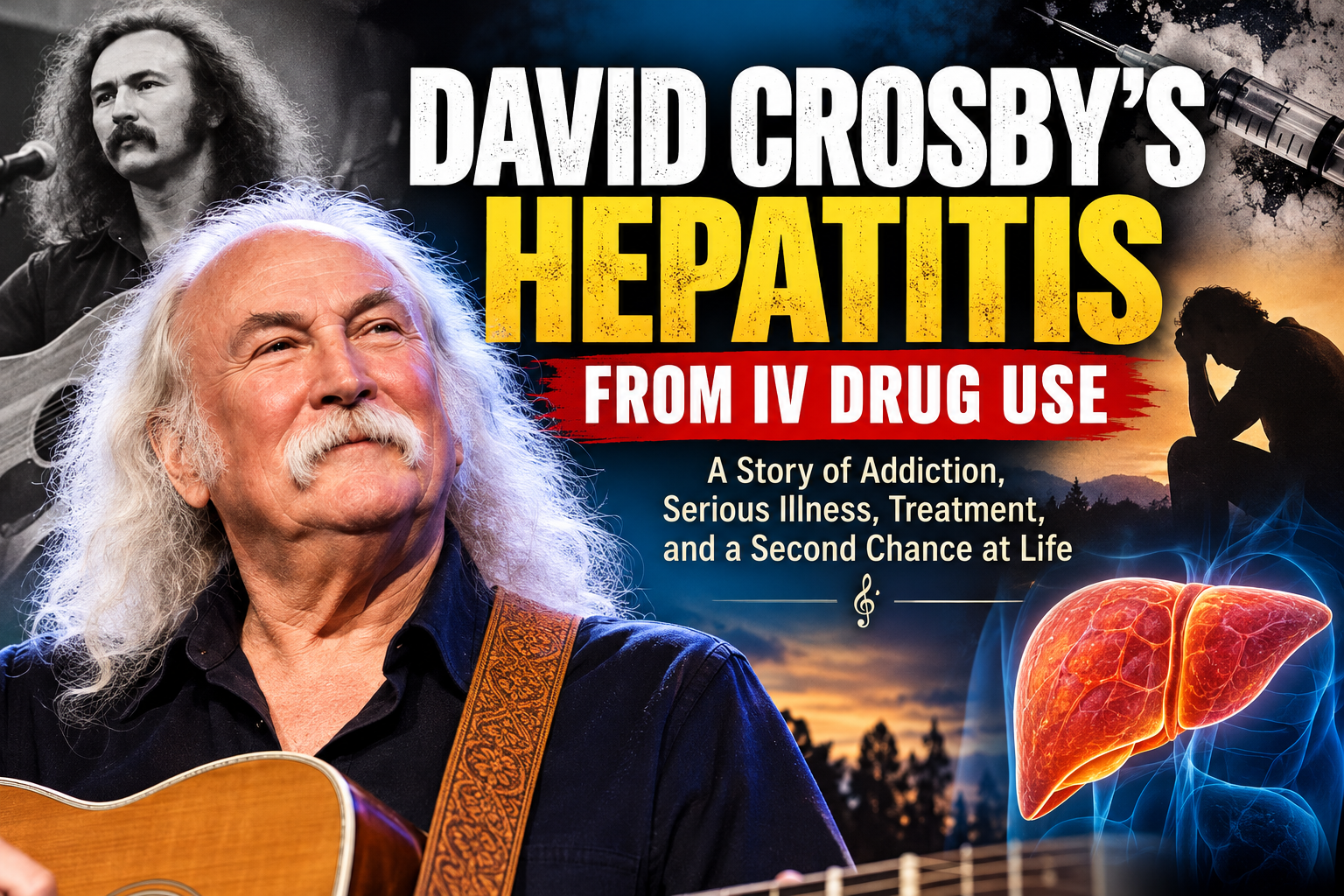
David Crosby, the legendary American singer-songwriter and founding member of The Byrds and Crosby, Stills & Nash, was celebrated for his distinctive voice, musical creativity, and contributions to rock music. Behind his extraordinary career, however, Crosby experienced decades of substance use, serious health complications, and personal struggles that threatened his life.
One of his most significant medical challenges was hepatitis C, a viral infection associated with exposure to infected blood, including through shared injection drug equipment. Crosby’s history of intravenous drug use placed him at risk for bloodborne infections, and his hepatitis C ultimately contributed to severe liver disease. In 1994, he underwent a life-saving liver transplant.
His story illustrates the relationship between substance use disorders, infectious diseases, and long-term health consequences. It also highlights the importance of addiction treatment, early medical intervention, family support, and access to community resources.
Understanding David Crosby’s journey can help individuals and families recognize the dangers of injection drug use while promoting compassion, recovery, and preventive healthcare.
David Crosby’s Struggle With Addiction and Hepatitis C
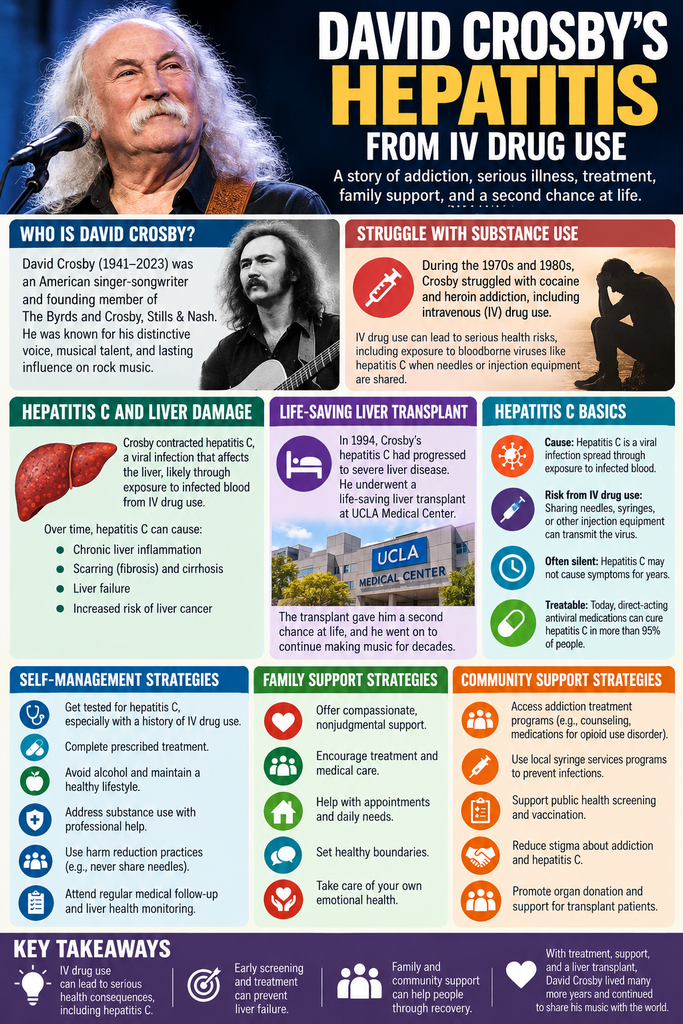
During the 1970s and 1980s, Crosby struggled with cocaine and heroin addiction. His substance use contributed to legal problems, damaged relationships, and declining health. He eventually entered recovery, describing a major turning point during his incarceration in the mid-1980s.
In 1994, Crosby learned that he had advanced liver disease caused by hepatitis C. The diagnosis was particularly devastating because the infection can remain silent for decades before causing significant liver damage.
Crosby publicly discussed his hepatitis C diagnosis and the consequences of his previous drug use. Although injection drug use is a well-established route of hepatitis C transmission, the precise circumstances under which Crosby contracted the virus have not been conclusively documented.
His condition became life-threatening, requiring a liver transplant at UCLA Medical Center in November 1994. He survived the procedure and continued making music for decades afterward.
Understanding the Connection Between IV Drug Use and Hepatitis C
Hepatitis C is a bloodborne viral infection that primarily affects the liver. The virus spreads when infected blood enters another person’s bloodstream.
Injection drug use increases the risk of hepatitis C transmission when needles, syringes, or other injection equipment are shared.
Common risk factors include:
- Sharing needles or syringes contaminated with infected blood.
- Sharing cookers, cotton filters, or rinse water used to prepare drugs.
- Repeated exposure to blood through unsafe injection practices.
- Limited access to sterile injection supplies and preventive healthcare.
- Delayed screening because hepatitis C often produces no early symptoms.
Chronic hepatitis C can cause progressive liver inflammation, fibrosis, cirrhosis, liver failure, and hepatocellular carcinoma.
According to the CDC, modern direct-acting antiviral medications cure more than 95% of hepatitis C infections, usually within 8–12 weeks. These treatments were not available when Crosby developed liver failure.
Self-Management Strategies: Protecting Health and Supporting Recovery
David Crosby’s experience demonstrates why addiction recovery must address both substance use and the physical complications associated with it.
For individuals living with hepatitis C or recovering from injection drug use, self-management involves medical treatment, behavioral changes, and long-term emotional support.
1. Seek early screening and medical treatment
Hepatitis C may progress without noticeable symptoms. Early diagnosis allows treatment before irreversible liver damage develops.
- Request hepatitis C screening, especially with any history of injection drug use.
- Obtain confirmatory HCV RNA testing after a positive antibody test.
- Complete prescribed antiviral treatment.
- Attend liver function evaluations and specialist appointments.
- Discuss hepatitis A and B vaccination with a healthcare professional.
- Continue liver cancer surveillance when indicated for cirrhosis, even after hepatitis C is cured.
2. Address substance use disorders
Treating addiction reduces the risk of reinfection, overdose, and additional health complications.
- Seek evaluation by an addiction medicine professional.
- Consider medications for opioid use disorder, including buprenorphine or methadone, when appropriate.
- Participate in cognitive behavioral therapy or motivational interviewing.
- Identify emotional, environmental, and social triggers.
- Develop an individualized relapse prevention plan.
- Keep naloxone available when opioid exposure is possible.
Importantly, active substance use should not prevent someone from receiving hepatitis C treatment.
3. Practice harm reduction
Harm reduction helps prevent infectious diseases and overdose while individuals work toward their personal treatment goals.
- Never share needles, syringes, or injection preparation equipment.
- Access sterile supplies through local syringe services programs where available.
- Obtain regular testing for hepatitis C, hepatitis B, and HIV.
- Use overdose prevention resources and naloxone.
- Seek professional support without waiting until complete abstinence is achieved.
4. Maintain liver health
Healthy lifestyle choices support overall recovery and may help prevent further liver damage.
- Avoid alcohol, particularly when living with liver disease.
- Maintain balanced nutrition and appropriate physical activity.
- Review medications and supplements with a healthcare professional.
- Manage associated conditions such as diabetes.
- Follow transplant medication and monitoring requirements when applicable.
These strategies complement medical treatment but cannot replace antiviral therapy.
Family Support Strategies: Helping Loved Ones Through Addiction and Liver Disease
Family relationships can become strained when someone experiences prolonged substance use, legal problems, or serious illness.
Crosby’s wife, Jan Dance, remained an important figure in his life. In interviews, Crosby described the emotional significance of his marriage and family during his medical crisis.
His experience illustrates how family relationships can provide meaning and motivation during recovery, although family support alone cannot cure addiction.
Families can offer meaningful assistance through several approaches.
Encourage compassionate communication
- Discuss substance use and medical concerns without blame or humiliation.
- Listen to the person’s fears about hepatitis C and long-term health.
- Avoid labeling someone solely by their addiction history.
- Encourage honest discussions about treatment and recovery goals.
Participate in treatment and recovery planning
- Offer transportation to medical appointments.
- Help organize medications and follow-up schedules when requested.
- Learn about hepatitis C transmission and treatment.
- Encourage engagement with addiction treatment services.
- Respect the individual’s autonomy and confidentiality.
Establish healthy boundaries
Supporting someone with addiction does not mean accepting harmful behaviors.
Families should establish reasonable expectations around finances, substance use in the home, and personal safety.
Family counseling can improve communication and help loved ones distinguish between supportive behavior and actions that unintentionally maintain unhealthy patterns.
Protect family emotional health
Addiction and chronic illness affect entire households. Caregivers may experience anxiety, frustration, exhaustion, and uncertainty.
Families should consider counseling, peer support, respite care, and their own emotional needs.
Community Support Strategies: Building a Stronger Recovery Network
David Crosby’s survival also highlights the importance of medical resources, access to specialized care, and organ donation.
After receiving his liver transplant, Crosby publicly encouraged organ donation and participated in efforts to help other musicians facing similar medical challenges.
Communities can help prevent hepatitis C complications by making treatment and recovery services accessible.
Addiction treatment and peer recovery programs
Community-based programs can offer:
- Outpatient and residential substance use treatment.
- Medications for opioid use disorder.
- Individual and group counseling.
- Peer recovery coaching.
- Relapse prevention education.
- Support for housing, employment, and transportation.
Public health and hepatitis C prevention
Public health agencies can reduce hepatitis C transmission through accessible screening, sterile injection supplies, vaccination services, and linkage to antiviral treatment.
The CDC reports that comprehensive syringe services programs are associated with substantial reductions in HIV and hepatitis C transmission.
Community education and stigma reduction
Public education should emphasize that addiction is a treatable medical condition and hepatitis C is a curable infection.
Communities can improve outcomes by challenging stigma, supporting confidential testing, and encouraging people to seek medical assistance before serious complications develop.
Lessons From David Crosby’s Journey
Crosby’s life provides several important lessons about addiction, chronic illness, and second chances.
Addiction can have delayed medical consequences. Even after substance use stops, previously acquired infections may progress silently for years.
Early screening saves lives. Hepatitis C can now be diagnosed and treated before it causes severe liver damage.
Recovery requires more than abstinence. Physical health, emotional well-being, supportive relationships, and ongoing medical care are essential components of long-term recovery.
Family and community support matter. Compassion, access to treatment, and practical assistance can help individuals navigate difficult medical and personal challenges.
Organ donation offers another chance at life. Crosby’s liver transplant allowed him to continue his music career and spend additional decades with his family.
Conclusion: David Crosby’s Legacy of Recovery and Survival
David Crosby’s journey demonstrates how substance use disorders can lead to serious and sometimes life-threatening medical complications. His battle with hepatitis C and subsequent liver transplant revealed the lasting consequences of bloodborne infections and the importance of timely medical intervention.
Although Crosby experienced significant personal and medical challenges, he continued creating music and sharing his experiences. He died in January 2023 at age 81, nearly three decades after receiving his liver transplant.
His story offers a powerful public health message: a history of addiction should never prevent someone from receiving compassionate, evidence-based healthcare.
Today, hepatitis C is highly treatable, addiction recovery services are more widely available, and harm reduction programs can help prevent new infections.
Through self-management, family encouragement, and community support, individuals affected by substance use disorders and hepatitis C can improve their health, rebuild relationships, and pursue meaningful recovery.
David Crosby’s life reminds us that serious illness does not erase a person’s accomplishments or their capacity for change. Recovery, medical treatment, and human connection can create opportunities for a healthier future.
Resources for Hepatitis C and Addiction Recovery
- CDC — Hepatitis C Information: Screening, prevention, treatment, and liver health.
- FindTreatment.gov: Locate substance use and mental health treatment services.
- SAMHSA National Helpline: Confidential treatment referral and information.
- OrganDonor.gov: Learn about organ donation and transplantation.
Frequently Asked Questions and Answers
David Crosby’s Hepatitis C and Medical History
1. What type of hepatitis did David Crosby have?
David Crosby had hepatitis C, a viral infection that primarily affects the liver. Chronic hepatitis C can cause inflammation, progressive liver scarring, cirrhosis, and eventually liver failure. Crosby developed advanced liver disease and required a liver transplant in 1994.
2. Did David Crosby contract hepatitis C from intravenous drug use?
Crosby had a history of intravenous drug use, which is a major risk factor for hepatitis C. The virus spreads through contact with infected blood, particularly when injection equipment is shared.
Although his history of drug use was associated with his hepatitis C risk, the exact circumstances of his infection have not been conclusively established publicly.
3. What drugs did David Crosby struggle with?
Crosby publicly discussed his struggles with cocaine and heroin addiction, particularly during the 1970s and 1980s. His substance use contributed to legal difficulties, damaged relationships, and serious health concerns.
He eventually entered recovery and continued discussing his experiences with addiction throughout his life.
4. When was David Crosby diagnosed with hepatitis C?
Crosby’s hepatitis C became a major medical concern in the early 1990s. By 1994, he had developed advanced liver disease requiring transplantation.
Hepatitis C can remain undetected for decades because many people experience few or no symptoms until significant liver damage occurs.
5. Did David Crosby receive a liver transplant?
Yes. Crosby underwent a liver transplant in November 1994 at UCLA Medical Center in California.
The procedure saved his life and allowed him to continue recording music, performing, and spending time with his family for nearly three additional decades.
6. Did David Crosby recover completely from hepatitis C?
Crosby survived his liver transplant and experienced a substantial extension of his life. However, a liver transplant does not automatically cure hepatitis C.
Before effective antiviral medications became available, hepatitis C could infect a transplanted liver if the virus remained in the bloodstream.
His long-term medical management involved complex health considerations. The precise details of his hepatitis C treatment and virologic cure status are not fully established in the public record.
7. Did hepatitis C cause David Crosby’s death?
David Crosby died on January 18, 2023, at age 81. Although he had a history of serious liver disease and other medical conditions, there is insufficient verified information to conclude that hepatitis C directly caused his death.
His previous liver transplant should not be confused with a confirmed cause of death.
Understanding Hepatitis C and IV Drug Use
8. How does intravenous drug use increase the risk of hepatitis C?
Hepatitis C spreads primarily through exposure to infected blood. Sharing needles, syringes, cookers, cotton filters, or other injection equipment can transfer the virus between individuals.
Even microscopic amounts of contaminated blood may transmit hepatitis C.
9. What are the early symptoms of hepatitis C?
Many individuals have no noticeable symptoms for years. When symptoms occur, they may include:
- Persistent fatigue and weakness.
- Nausea and reduced appetite.
- Abdominal discomfort.
- Dark urine or pale stools.
- Joint pain.
- Yellowing of the skin or eyes (jaundice).
Because symptoms are unreliable indicators, blood testing is essential.
10. Can hepatitis C cause permanent liver damage?
Yes. Untreated chronic hepatitis C can cause progressive fibrosis, cirrhosis, liver failure, and liver cancer.
Early antiviral treatment can prevent many complications. However, individuals with established cirrhosis may require continued monitoring even after the infection is cured.
11. Is hepatitis C curable today?
Yes. Modern direct-acting antiviral medications cure more than 95% of hepatitis C infections, generally with 8–12 weeks of oral treatment.
These highly effective medications were unavailable when Crosby developed liver failure in 1994.
12. Can someone get hepatitis C again after being cured?
Yes. Successful treatment does not provide immunity against future hepatitis C infections.
People who continue to have potential blood exposures should receive appropriate repeat testing and access to harm reduction services.
13. Can hepatitis C spread through hugging, kissing, or sharing meals?
Hepatitis C does not spread through ordinary casual contact, including hugging, holding hands, sharing food, or eating together.
The primary concern is exposure to infected blood. Families can safely provide emotional and practical support without avoiding normal social contact.
Addiction Recovery and Self-Management
14. How did David Crosby overcome his drug addiction?
Crosby described his incarceration in the mid-1980s as a turning point in his recovery. He later credited changes in his life and relationships with helping him move away from destructive substance use.
His experiences illustrate that recovery can involve difficult transitions, personal accountability, and long-term support.
15. What self-management strategies help someone recovering from IV drug use?
Recovery strategies may include:
- Participating in addiction counseling or structured treatment.
- Using evidence-based medications for opioid use disorder when indicated.
- Identifying cravings, triggers, and high-risk situations.
- Creating an individualized relapse prevention plan.
- Maintaining regular medical appointments.
- Seeking hepatitis C and HIV screening.
- Practicing harm reduction to prevent reinfection and overdose.
16. Should someone stop using drugs before receiving hepatitis C treatment?
No. Current or recent substance use is not, by itself, a reason to withhold hepatitis C treatment.
Providing antiviral therapy alongside addiction services can improve individual health and reduce community transmission.
17. How can someone protect their liver after a hepatitis C diagnosis?
Important strategies include avoiding alcohol, completing antiviral therapy, maintaining a balanced diet, exercising appropriately, and discussing medications or supplements with a healthcare professional.
People with advanced liver disease should receive specialized care and monitoring.
Family and Community Support
18. How did David Crosby’s family influence his recovery?
Crosby frequently discussed the importance of his wife, Jan Dance, and their family. His medical crisis occurred during a period when he was also preparing for the birth of their son.
He described his liver transplant and the opportunity to experience fatherhood as deeply meaningful events in his life.
19. How can families support someone with hepatitis C and addiction?
Families can help by communicating compassionately, encouraging medical treatment, helping with appointments, and supporting healthy daily routines.
They should also maintain reasonable boundaries and seek counseling or peer support when needed.
20. What should families avoid when supporting someone with addiction?
Families should avoid shame, threats, blaming language, and unrealistic expectations of immediate recovery.
Instead, they can encourage professional treatment while maintaining boundaries that protect everyone’s safety and emotional health.
21. What community resources help people recovering from IV drug use?
Helpful resources include:
- Addiction treatment clinics and medications for opioid use disorder.
- Hepatitis C screening and treatment programs.
- Syringe services and harm reduction programs.
- Peer recovery groups and recovery coaches.
- Mental health counseling.
- Housing, employment, and transportation assistance.
22. Why is organ donation important in David Crosby’s story?
Crosby’s 1994 liver transplant gave him nearly three additional decades of life.
He later advocated for organ donation and helped raise awareness about transplantation. His experience shows how donated organs can give people with life-threatening diseases another chance to live.
Prevention, Education, and Lasting Lessons
23. Can hepatitis C be prevented among people who inject drugs?
Yes. Prevention strategies include using sterile injection equipment, never sharing preparation supplies, participating in syringe services programs, and receiving routine screening.
Access to addiction treatment and community-based healthcare also reduces risks.
24. Is there a vaccine for hepatitis C?
No. There is currently no approved vaccine against hepatitis C.
However, vaccines are available for hepatitis A and hepatitis B. These vaccinations are especially important for people with chronic liver disease when they are not already immune.
25. What is the most important lesson from David Crosby’s hepatitis C journey?
David Crosby’s story demonstrates that the consequences of substance use can continue long after someone enters recovery.
His experience emphasizes the importance of early screening, evidence-based addiction treatment, liver disease management, and compassionate support.
It also shows how medical intervention and organ donation can provide life-changing opportunities.
Video: David Crosby Didn’t Know He Had Hep C for Years #shorts #hepatitisAwareness