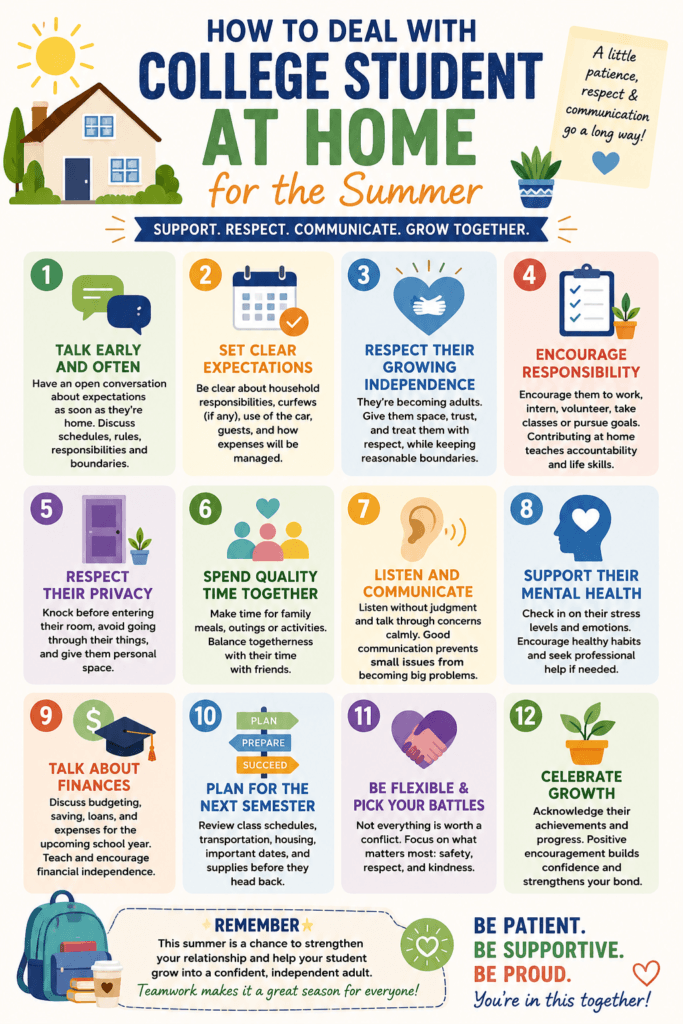
Having a college student return home for the summer is an exciting opportunity for families to reconnect, but it also brings a period of adjustment. During the school year, students often develop greater independence, establish their own routines, and learn to make decisions on their own. At the same time, parents become accustomed to a different household dynamic. When everyone is together again, differences in expectations about responsibilities, privacy, communication, and household rules can sometimes lead to misunderstandings. By approaching this transition with open communication, mutual respect, flexibility, and realistic expectations, families can strengthen their relationships while supporting the student’s continued growth into adulthood.
Parents’ Guide: College Student Home for Summer
When college students return home for the summer, families often experience an adjustment period. During the school year, students typically become more independent, making their own schedules and decisions. Returning home can create tension if parents continue to treat them like younger teenagers while students expect the freedom they had in college. Successfully navigating the summer requires communication, flexibility, and mutual respect from both parents and students.
Recognize That Your Student Has Changed
College provides opportunities for personal growth, problem-solving, and increased responsibility. Parents should recognize that their student may have developed new routines, opinions, and goals. Showing respect for this growth helps strengthen the parent-child relationship.
Set Clear Expectations Early
Before or shortly after the student returns home, discuss household expectations. Topics might include:
- Household chores
- Curfews or communication about late nights
- Use of the family vehicle
- Employment or summer classes
- Financial responsibilities
- Guests and overnight visitors
Clear expectations reduce misunderstandings and conflicts.
Treat Them Like a Young Adult
Parents can provide guidance without micromanaging. Instead of giving orders, involve your college student in family decisions and discussions. Ask for their opinions and encourage them to take responsibility for managing their own time and commitments.
Respect Their Independence
Many college students are accustomed to making their own schedules. While maintaining reasonable household rules, parents can allow flexibility in sleeping, social activities, and studying. Independence builds confidence and prepares students for adulthood.
Encourage Responsibility
Summer is an excellent opportunity for students to:
- Work a part-time or full-time job
- Complete internships
- Volunteer
- Take summer classes
- Save money for the upcoming school year
- Develop life skills such as budgeting and meal preparation
Supporting these activities promotes maturity and future success.
Communicate Openly
Regular conversations help prevent small frustrations from becoming major disagreements. Practice active listening by allowing your student to express concerns without immediately offering criticism or solutions. Likewise, parents should communicate their expectations and concerns honestly.
Respect Privacy
College students value privacy after living away from home. Knock before entering their room, avoid going through personal belongings, and recognize that maintaining some independence is a healthy part of development.
Balance Family Time and Social Life
Students often want to reconnect with hometown friends while also spending time with family. Encourage a healthy balance without making them feel guilty for having an active social life.
Support Mental Health
The transition home may be stressful. Some students struggle with academic pressure, uncertainty about their future, or returning to family dynamics that have changed. Parents can:
- Ask how they’re coping emotionally.
- Encourage healthy sleep, nutrition, and exercise.
- Support counseling if needed.
- Watch for signs of depression, anxiety, or substance misuse.
Prepare for the Next Transition
Toward the end of summer, discuss plans for returning to school. Review finances, transportation, housing, academic goals, and any concerns about the upcoming semester. Planning ahead reduces stress for everyone.
Common Challenges
Parents may notice:
- Different sleep schedules
- Increased independence
- More time spent with friends
- Changes in political or personal beliefs
- Conflicts over chores
- Different expectations regarding household rules
These challenges are common and often reflect normal development rather than disrespect.
Tips for Parents
- Avoid power struggles over minor issues.
- Focus on safety rather than control.
- Praise responsible behavior.
- Be willing to compromise.
- Keep communication respectful.
- Remember that your goal is preparing your child for independent adulthood.
Conclusion
Having a college student home for the summer is a temporary transition that can strengthen family relationships when handled thoughtfully. Parents who communicate clearly, respect their students’ growing independence, and provide support rather than control create an environment where young adults can continue to develop confidence and responsibility. With patience, flexibility, and mutual respect, the summer can become an opportunity for both parents and students to build a healthier, more mature relationship before the next academic year begins.
Self-Management Strategies for Parents: Dealing with a College Student at Home for the Summer
Having a college student return home for the summer can be both rewarding and challenging. During the school year, students often become more independent and establish their own routines. Parents also adapt to life without them at home. When everyone is living together again, adjusting expectations can help reduce stress and strengthen family relationships. These self-management strategies can help parents navigate the transition successfully.
Practice Flexible Thinking
Accept that your college student has grown and changed. They may have developed new habits, opinions, and ways of managing their life. Rather than expecting things to be exactly as they were before college, approach the summer with curiosity and openness. Flexibility allows both parents and students to adjust more easily.
Communicate Expectations Early
Have an honest conversation about household expectations within the first few days of returning home. Discuss chores, work schedules, transportation, finances, visitors, quiet hours, and communication if plans change. Clear expectations help prevent misunderstandings and reduce unnecessary conflict.
Respect Their Growing Independence
Recognize that your student is becoming an adult. Allow them to make appropriate decisions while maintaining reasonable household boundaries. Offering guidance instead of constant supervision encourages responsibility and mutual respect.
Manage Your Own Emotions
Parents may feel frustrated when routines change or worried about their child’s future. Before reacting, pause and consider whether the issue is truly important or simply reflects a different lifestyle. Responding calmly rather than emotionally helps keep conversations productive.
Set Healthy Boundaries
Boundaries benefit everyone in the household. Decide which rules are essential for safety and respect, while allowing flexibility in less important areas. Consistent, reasonable boundaries create a predictable home environment.
Encourage Responsibility
Support your student’s independence by encouraging them to contribute to household responsibilities, maintain employment or internships if possible, manage their finances, and prepare for the upcoming semester. These experiences reinforce important life skills.
Practice Active Listening
When disagreements arise, focus on understanding before responding. Listen without interrupting, ask questions, and acknowledge your student’s perspective. Feeling heard often reduces defensiveness and makes problem-solving easier.
Respect Privacy
College students are accustomed to having greater independence. Knock before entering their room, avoid searching through personal belongings, and recognize their need for personal space. Respecting privacy builds trust.
Focus on Positive Interactions
Notice and acknowledge responsible behavior, accomplishments, and contributions around the home. Expressing appreciation strengthens relationships and encourages continued maturity.
Maintain Your Own Routine
Continue participating in your own hobbies, exercise, friendships, and self-care activities. Maintaining personal well-being helps parents avoid becoming overly focused on their student’s daily activities and promotes emotional balance.
Choose Your Battles
Not every disagreement requires correction. Ask yourself whether the issue involves safety, respect, or values—or whether it’s simply a difference in personal preference. Letting go of minor issues can reduce stress for everyone.
Plan for the Transition Back to School
As summer ends, help your student prepare for returning to college by discussing finances, transportation, housing, academic goals, and health needs. Planning together reduces anxiety and promotes independence.
Seek Support When Needed
If ongoing conflict, anxiety, depression, or substance use becomes a concern, don’t hesitate to seek support from a family counselor, mental health professional, or college counseling services. Early intervention can improve communication and strengthen family relationships.
Conclusion
Successfully managing a college student at home for the summer requires patience, flexibility, and realistic expectations. By practicing open communication, respecting growing independence, setting healthy boundaries, and managing their own emotions, parents can create a supportive environment that encourages continued growth. The summer offers an opportunity to transition from a parent-child relationship toward a respectful adult-to-adult relationship that benefits the entire family.
Family Support Strategies to Deal with a College Student at Home for the Summer
The return of a college student for the summer is an opportunity for families to reconnect, but it can also require adjustment. During the school year, students often gain independence while parents establish new routines at home. Successfully navigating the summer depends on teamwork, communication, flexibility, and mutual respect. Family support strategies can help create a positive home environment while preparing the student for continued success.
Welcome the Transition
Recognize that everyone has changed during the school year. Instead of expecting life to return to the way it was before college, view the summer as a new stage in your family relationship. A welcoming and accepting attitude helps everyone adjust more comfortably.
Hold a Family Meeting
Soon after your student returns home, gather the family to discuss expectations. Topics may include household responsibilities, work schedules, use of shared spaces, transportation, finances, visitors, quiet hours, and communication about plans. When everyone participates in setting expectations, they are more likely to respect them.
Encourage Open Communication
Create an environment where every family member feels comfortable expressing thoughts and concerns without fear of criticism. Regular conversations help identify problems early and prevent misunderstandings from becoming larger conflicts.
Respect Growing Independence
Family members should acknowledge that the college student is becoming a young adult. Offer advice when requested, encourage responsible decision-making, and avoid excessive monitoring. Trust promotes confidence while maintaining healthy family relationships.
Share Household Responsibilities
Encourage the college student to contribute to household chores, meal preparation, grocery shopping, pet care, or yard work. Sharing responsibilities demonstrates respect for the household and prepares students for independent living.
Spend Quality Time Together
Balance your student’s desire to spend time with friends by planning family activities such as dinners, movie nights, hiking, game nights, or weekend outings. Shared experiences strengthen family bonds without placing unnecessary pressure on the student.
Respect Personal Space
Everyone benefits from having privacy. Knock before entering bedrooms, respect personal belongings, and allow each family member time alone when needed. Healthy boundaries reduce tension and build trust.
Support Healthy Habits
Families can encourage healthy routines by preparing nutritious meals, promoting regular physical activity, maintaining consistent sleep habits, and supporting stress-management techniques. Healthy lifestyles improve both physical and emotional well-being.
Encourage Future Planning
Discuss academic goals, internships, employment opportunities, budgeting, housing, and career interests throughout the summer. Offering guidance while allowing the student to make decisions encourages independence and confidence.
Resolve Conflict Respectfully
Disagreements are normal during periods of adjustment. Focus on solving problems rather than assigning blame. Listen carefully, remain calm, compromise when appropriate, and work together to find solutions that respect everyone’s needs.
Support Emotional Well-Being
College students may experience stress related to academics, relationships, finances, or future career plans. Family members can provide emotional support by listening without judgment, encouraging healthy coping skills, and recognizing signs that professional counseling may be beneficial.
Celebrate Growth and Achievements
Take time to acknowledge your student’s accomplishments, whether they involve academic success, employment, personal growth, or increased responsibility. Positive encouragement strengthens self-confidence and reinforces healthy behaviors.
Know When to Seek Additional Support
If conflicts become frequent or concerns arise about depression, anxiety, substance use, or other mental health challenges, families should consider seeking assistance from a family therapist, healthcare provider, or college counseling center. Early support can improve communication and strengthen relationships.
Conclusion
Supporting a college student at home for the summer is about finding a healthy balance between independence and family connection. Through open communication, shared responsibilities, mutual respect, healthy boundaries, and emotional support, families can create a positive environment where everyone continues to grow. Rather than viewing the summer as a return to old routines, families can embrace it as an opportunity to build stronger adult relationships that will continue long after the student returns to college.
Community Resource Strategies to Deal with a College Student at Home for the Summer
The transition home from college for the summer can be exciting, but it may also bring challenges as students and families adjust to new routines and expectations. Community resources can provide valuable support for academic success, career development, mental health, and healthy family relationships. Taking advantage of these resources helps students continue growing while easing the transition back home.
Utilize College Student Support Services
Many colleges and universities continue offering resources during the summer, including academic advising, career counseling, tutoring, disability services, and mental health counseling. Students can often access these services virtually, helping them stay connected and prepare for the upcoming semester.
Encourage Career Development Programs
Local workforce centers, career fairs, internships, volunteer opportunities, and summer employment programs help students gain valuable experience, develop professional skills, and build resumes. These experiences increase confidence while preparing students for future careers.
Access Mental Health Resources
Returning home can sometimes increase stress, anxiety, or feelings of uncertainty. Community mental health centers, private counselors, college counseling services, and crisis resources can provide support when needed. Early access to mental health care promotes emotional well-being and healthy coping skills.
Participate in Community Activities
Community recreation centers, libraries, fitness facilities, parks, volunteer organizations, and hobby groups provide opportunities for students to stay active, meet new people, and maintain a healthy balance between family life and personal independence.
Explore Financial Education Programs
Many banks, community colleges, nonprofit organizations, and extension programs offer free workshops on budgeting, saving, investing, managing student loans, and building credit. These resources help students develop financial independence before returning to school.
Promote Healthy Lifestyle Programs
Local gyms, walking clubs, sports leagues, nutrition classes, and wellness programs encourage regular physical activity and healthy habits. Exercise and social engagement can improve mood, reduce stress, and support overall health.
Utilize Family Counseling Services
If family communication becomes difficult during the summer, licensed family therapists or counseling centers can help improve communication, strengthen relationships, and develop healthy conflict-resolution skills. Seeking support early can prevent small disagreements from becoming larger problems.
Encourage Volunteer Opportunities
Volunteering at food banks, animal shelters, hospitals, community gardens, youth programs, or nonprofit organizations allows students to develop leadership skills, strengthen resumes, and build meaningful community connections while giving back.
Connect with Faith-Based and Community Organizations
Many churches, synagogues, mosques, and community organizations offer mentoring programs, young adult groups, service projects, and social activities. These programs can provide encouragement, positive relationships, and opportunities for personal growth.
Use Health Care Resources
Encourage students to schedule annual physical exams, dental cleanings, vision appointments, vaccinations, and preventive health screenings during the summer. Staying current with healthcare needs helps prepare them for the next academic year.
Develop Emergency Support Plans
Families should know how to access emergency services, urgent care centers, campus safety resources, crisis hotlines, and local healthcare providers. Having a plan in place increases confidence and preparedness should unexpected situations arise.
Build a Strong Community Network
Parents and students benefit from maintaining supportive relationships with relatives, neighbors, mentors, professors, coaches, employers, and trusted friends. A strong network provides guidance, encouragement, and practical assistance during times of transition.
Conclusion
Community resources play an important role in helping families and college students successfully navigate the summer months. By using educational, career, healthcare, financial, recreational, and mental health resources, families can support their student’s continued growth while promoting independence and resilience. A strong partnership between the family, college, healthcare professionals, and the community creates a supportive environment that prepares students for a successful return to campus and a confident transition into adulthood.
Frequently Asked Questions
Here are some common questions:
1. Why is it sometimes difficult when a college student comes home for the summer?
Both parents and students have adapted to different routines during the school year. College students often become more independent, while parents establish new household patterns. Adjusting to living together again takes time, patience, and open communication.
2. Should parents treat their college student like an adult?
Yes. While parents can still provide guidance and support, recognizing the student’s growing independence encourages responsibility, confidence, and mutual respect. Expectations should reflect their stage of development as a young adult.
3. Is it okay to have household rules?
Absolutely. Every household benefits from clear expectations regarding chores, guests, transportation, finances, quiet hours, and communication. Discussing these rules together before problems arise helps prevent misunderstandings.
4. Should my college student have a summer job?
Whenever possible, a summer job, internship, volunteer position, or summer classes can help students develop responsibility, gain experience, build their résumé, and save money for school expenses. The specific choice depends on the student’s goals and circumstances.
5. How much privacy should parents give their college student?
College students generally need more privacy than younger teenagers. Parents should respect personal space by knocking before entering bedrooms, avoiding unnecessary monitoring, and recognizing that privacy supports healthy independence while maintaining family trust.
6. What if my student stays up late and sleeps during the day?
Many college students develop different schedules while away at school. Unless it interferes with work, family responsibilities, or household functioning, occasional schedule differences may simply reflect temporary summer habits. Discuss expectations respectfully if the schedule becomes disruptive.
7. How can parents avoid unnecessary arguments?
Focus on respectful communication rather than control. Listen actively, stay calm, avoid criticizing small issues, and choose battles wisely. Address important concerns such as safety, respect, and responsibility while allowing flexibility in less significant matters.
8. How can families spend quality time together?
Plan activities everyone enjoys, such as family dinners, movie nights, outdoor recreation, game nights, cooking meals together, or weekend trips. Balancing family time with the student’s social life helps maintain healthy relationships.
9. What if my college student wants more freedom than I’m comfortable with?
Have an honest discussion about expectations, responsibilities, and safety. Instead of imposing rules without explanation, work together to establish reasonable boundaries that respect both the student’s independence and the family’s values.
10. How can parents support their student’s mental health?
Check in regularly about stress, academics, relationships, and future plans. Encourage healthy sleep, exercise, balanced nutrition, stress management, and seeking professional counseling if needed. A supportive, nonjudgmental home environment promotes emotional well-being.
11. Should parents continue helping financially?
Financial support varies by family. Summer is a good time to discuss budgeting, employment, saving, and shared financial responsibilities. Clear communication helps students gradually develop financial independence while understanding family expectations.
12. What if my college student seems different after returning home?
College often changes students by exposing them to new ideas, experiences, friendships, and responsibilities. Personality changes are often a normal part of development. Stay curious, ask respectful questions, and allow room for healthy personal growth.
13. How can parents prepare for the student returning to college?
Review important dates, housing arrangements, transportation, financial needs, academic goals, medical appointments, and school supplies before the semester begins. Planning ahead reduces stress and supports a smoother transition back to campus.
14. What should families do if conflict becomes constant?
If disagreements become frequent, intense, or interfere with family functioning, consider seeking support from a family therapist, counselor, or trusted healthcare professional. Early intervention can improve communication and strengthen family relationships.
15. What is the most important strategy for a successful summer together?
The key is balancing independence with connection. Parents who communicate openly, establish reasonable expectations, respect their student’s growing maturity, and provide encouragement rather than control help create a positive home environment. When both parents and students approach the summer with flexibility, patience, and mutual respect, the experience can strengthen family relationships and prepare the student for continued success in college and beyond.
Conclusion
The summer months offer more than just a break from college—they provide an opportunity for families to build stronger, healthier relationships. Parents who recognize their student’s growing independence while maintaining reasonable boundaries can create a supportive home environment that encourages responsibility, confidence, and open communication. Likewise, college students who contribute to the household and respect family expectations help foster trust and cooperation. With patience, understanding, and a willingness to adapt, families can transform the summer transition into a positive experience that prepares everyone for the student’s successful return to college and for the student’s continued journey toward independent adulthood.
Video: Don’t Let Summer Ruin Your Future #addictionawareness #collegestudent #summerbreak