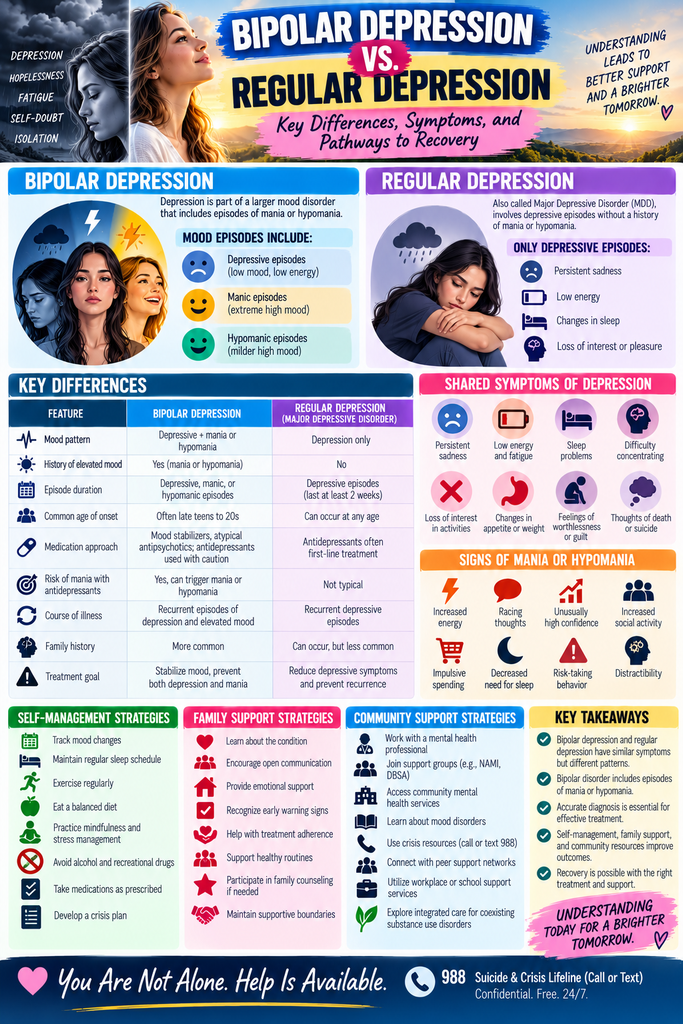
Depression is more than occasional sadness or emotional exhaustion. It is a mental health condition that can significantly affect mood, energy, concentration, relationships, and daily functioning. However, not all depressive episodes occur within the same psychiatric disorder. Two conditions that are frequently confused are bipolar depression and major depressive disorder (MDD), commonly called unipolar or regular depression.
Although both conditions can produce similar depressive symptoms, they differ in their overall mood patterns, diagnostic criteria, and treatment approaches. Bipolar depression occurs in individuals with bipolar disorder, a condition characterized by episodes of depression and a history of mania or hypomania. Major depressive disorder involves depressive episodes without a history of mania or hypomania.
Recognizing these differences is essential because an incorrect diagnosis may lead to ineffective treatment, delayed recovery, or inappropriate medication choices.
Through self-management strategies, family encouragement, professional treatment, and community resources, individuals living with either condition can improve emotional stability, reduce symptoms, and build healthier, more fulfilling lives.
What Is Bipolar Depression?
Bipolar depression refers to a depressive episode occurring in someone with bipolar disorder.
Bipolar disorder is a mood disorder characterized by changes in mood, energy, activity, and functioning that extend beyond ordinary emotional fluctuations.
Individuals may experience depressive episodes, manic episodes, hypomanic episodes, or combinations of mood symptoms.
Types of Bipolar Disorder
- Bipolar I disorder: Defined by at least one manic episode lasting at least seven days, or any duration if hospitalization is necessary. Depressive episodes are common but are not required for diagnosis.
- Bipolar II disorder: Characterized by at least one hypomanic episode and at least one major depressive episode, without a history of full mania.
- Cyclothymic disorder: Involves chronic fluctuations between depressive and hypomanic symptoms that do not meet the full criteria for major mood episodes.
- Other specified bipolar and related disorders: Include clinically significant bipolar symptoms that do not meet the complete criteria for the conditions above.
A person with bipolar disorder may spend substantially more time experiencing depressive symptoms than elevated mood, making diagnosis particularly challenging.
What Is Regular or Unipolar Depression?
Major depressive disorder is characterized by one or more episodes of persistent depressive symptoms that interfere with everyday functioning.
Unlike bipolar disorder, individuals with major depressive disorder have no history of manic or hypomanic episodes.
A major depressive episode typically lasts at least two weeks and includes depressed mood or loss of interest or pleasure, along with other symptoms.
Common Symptoms of Major Depression
- Persistent sadness, emptiness, or hopelessness.
- Loss of interest in previously enjoyable activities.
- Changes in appetite or weight.
- Insomnia or excessive sleeping.
- Fatigue or decreased energy.
- Difficulty concentrating or making decisions.
- Feelings of worthlessness or excessive guilt.
- Observable slowing or agitation.
- Recurrent thoughts of death or suicide.
Symptoms must cause clinically significant distress or impairment and should not be better explained by substances, medical conditions, or another psychiatric disorder.
Bipolar Depression vs. Regular Depression: Key Differences
The most important distinction between these conditions is the presence or absence of a history of mania or hypomania.
Depressive symptoms alone often cannot reliably distinguish bipolar depression from major depressive disorder.
| Feature | Bipolar depression | Major depressive disorder |
|---|---|---|
| Depressive episodes | Common | Defining feature |
| History of mania | Present in bipolar I | Absent |
| History of hypomania | May occur; required in bipolar II | Absent |
| Mood elevation | Episodic mania or hypomania | Not characteristic |
| Sleep changes | Insomnia or hypersomnia; reduced need for sleep during elevated episodes | Insomnia or hypersomnia |
| Antidepressant treatment | Requires caution and disorder-specific planning | Often a first-line medication option |
| Mood stabilizing treatment | Often central to management | Not routinely required |
| Long-term monitoring | Depression, mania, hypomania, and recurrence | Depression and recurrence |
Important: Bipolar depression is not simply a more severe form of regular depression. The two conditions differ primarily in their longitudinal mood patterns, not necessarily in the intensity of depressive symptoms.
Recognizing Mania and Hypomania
Mania and hypomania are essential features in distinguishing bipolar disorder from major depressive disorder.
These episodes involve noticeable changes from a person’s usual mood, energy, and activity levels.
Symptoms of Mania or Hypomania
- Unusually elevated, expansive, or irritable mood.
- Increased energy or goal-directed activity.
- Decreased need for sleep without feeling tired.
- Racing thoughts or rapid speech.
- Inflated self-confidence or grandiosity.
- Increased distractibility.
- Impulsive spending or risky decision-making.
- Increased sexual or social activity.
- Uncharacteristic risk-taking behavior.
Mania is more severe and may cause substantial functional impairment, hospitalization, or psychotic symptoms.
Hypomania is less severe, lasts at least four consecutive days, and does not cause marked functional impairment or require hospitalization.
A person experiencing hypomania may perceive the episode as increased productivity or improved confidence rather than a mental health concern.
This is one reason bipolar II disorder can be mistaken for major depressive disorder.
Why Bipolar Depression Is Sometimes Misdiagnosed
Many individuals with bipolar disorder initially seek treatment during depressive episodes rather than periods of elevated mood.
They may describe sadness, low energy, insomnia, hopelessness, or difficulty functioning without recognizing earlier hypomanic symptoms as clinically significant.
Factors That Can Contribute to Misdiagnosis
- Depressive episodes are more noticeable than hypomanic episodes.
- Individuals may not recognize elevated mood as abnormal.
- Hypomania may be mistaken for productivity or enthusiasm.
- Family history of bipolar disorder may not be explored.
- Symptoms may overlap with anxiety disorders, ADHD, or substance use disorders.
- Incomplete psychiatric histories may overlook past mood episodes.
- Antidepressant-associated mood elevation may require further diagnostic assessment.
Clinicians may use screening instruments such as the Mood Disorder Questionnaire, but screening results alone cannot establish a diagnosis.
A comprehensive psychiatric evaluation should assess mood episode duration, functional changes, family history, substance use, medication exposure, and prior treatment responses.
The Connection Between Bipolar Depression, Regular Depression, and Addiction
Both bipolar disorder and major depressive disorder can coexist with substance use disorders.
Some individuals use alcohol, cannabis, sedatives, stimulants, or other substances in an attempt to manage sadness, anxiety, insomnia, or emotional discomfort.
Although substances may provide temporary relief, they can worsen psychiatric symptoms and interfere with treatment.
Alcohol, for example, may worsen depressive symptoms and sleep disturbances. Stimulants may produce mood changes that complicate the evaluation of mania or hypomania.
Warning Signs of Coexisting Substance Misuse
- Using alcohol or drugs to manage depressive symptoms.
- Increasing substance consumption during mood episodes.
- Using sedatives without medical supervision to manage sleep.
- Continuing substance use despite worsening mental health.
- Missing psychiatric appointments because of substance use.
- Stopping prescribed medications in favor of alcohol or drugs.
- Experiencing mood instability associated with intoxication or withdrawal.
Integrated treatment addressing both mental health and substance use disorders can improve continuity of care and recovery outcomes.
Self-Management Strategies for Bipolar Depression and Major Depression
Self-management plays an important role in improving mental health and supporting professional treatment.
However, lifestyle changes should complement rather than replace evidence-based psychiatric care, particularly for individuals experiencing severe depression or bipolar mood episodes.
Practical Self-Management Strategies
- Track mood changes: Record depressive symptoms, elevated mood, energy levels, sleep patterns, and significant behavioral changes.
- Maintain consistent sleep schedules: Regular sleep and wake times are particularly important in bipolar disorder because sleep disruption can contribute to mood episodes.
- Take medications as prescribed: Avoid abruptly stopping psychiatric medications without consulting the prescribing clinician.
- Practice stress-management techniques: Use mindfulness, relaxation exercises, journaling, or other healthy coping methods.
- Engage in physical activity: Choose regular, manageable exercise appropriate for energy levels and overall health.
- Maintain balanced nutrition: Consistent meals and adequate hydration support general well-being.
- Avoid alcohol and recreational drugs: Substance use may worsen depression, destabilize mood, or interfere with treatment.
- Identify early warning signs: Recognize changes in sleep, mood, impulsivity, energy, or social behavior.
- Develop a crisis plan: Identify trusted contacts, healthcare professionals, and emergency resources before symptoms become severe.
- Attend regular follow-up appointments: Ongoing monitoring helps assess treatment effectiveness and detect emerging mood episodes.
For bipolar disorder, maintaining a consistent daily routine can be especially valuable because disruptions in sleep and circadian rhythms may increase vulnerability to recurrence.
Treatment Differences: Why Accurate Diagnosis Matters
Although both conditions may involve similar depressive symptoms, their pharmacological treatment approaches differ.
Treatment for Major Depressive Disorder
Common evidence-based treatments include:
- Cognitive behavioral therapy (CBT).
- Interpersonal psychotherapy.
- Antidepressants such as SSRIs or SNRIs.
- Behavioral activation.
- Repetitive transcranial magnetic stimulation (rTMS) for selected patients.
- Electroconvulsive therapy (ECT) for severe or treatment-resistant depression.
- Other specialized treatments, including esketamine for eligible patients.
Treatment selection depends on symptom severity, medical history, patient preferences, and prior response.
Treatment for Bipolar Depression
Treatment may include:
- Quetiapine.
- Lurasidone, often in combination with lithium or valproate depending on the indication.
- Lamotrigine for appropriate maintenance and depressive-phase management.
- Lithium.
- Cariprazine.
- Lumateperone.
- Selected evidence-based psychotherapies.
- Electroconvulsive therapy for severe or urgent presentations.
Specific medication choices depend on whether the patient has bipolar I or bipolar II disorder, the current episode, previous treatment response, comorbidities, and medication risks.
Antidepressant monotherapy is generally avoided in bipolar I depression because of concerns about treatment-emergent mania, hypomania, mixed symptoms, or mood destabilization.
Antidepressants may be considered in selected bipolar patients under appropriate clinical supervision, but they are not interchangeable with standard treatment for unipolar depression.
Family Support Strategies: Helping Loved Ones Through Mood Disorders
Families can play an important role in recognizing mood changes, encouraging treatment adherence, and providing emotional reassurance.
However, supporting someone with depression or bipolar disorder requires understanding that psychiatric symptoms are not simply matters of attitude, motivation, or personal choice.
How Families Can Help
- Learn about the diagnosis: Understand the differences between depressive episodes, mania, and hypomania.
- Encourage open communication: Discuss emotional concerns without judgment or criticism.
- Recognize early warning signs: Notice changes in sleep, energy, spending, impulsivity, withdrawal, or hopelessness.
- Support treatment adherence: Encourage appointments and medication management without becoming controlling.
- Promote healthy routines: Support regular sleep, balanced meals, and manageable activities.
- Avoid minimizing symptoms: Recognize that severe depression can interfere with basic daily functioning.
- Develop a family crisis plan: Identify steps to take if suicidal thoughts, psychosis, or severe mania occur.
- Maintain healthy boundaries: Balance support with respect for personal autonomy.
- Encourage family therapy: Structured family-focused interventions may improve communication and relapse prevention.
For individuals with bipolar disorder, family members may notice emerging hypomanic or manic symptoms before the individual recognizes them.
Collaborative planning during periods of stability can make early intervention easier.
Community Support Strategies: Building a Strong Mental Health Network
Community resources can provide education, peer support, professional treatment, and crisis intervention for individuals living with bipolar disorder or major depression.
Access to consistent care is particularly important because both conditions may involve recurrent episodes.
Helpful Community Resources
- Psychiatrists and psychiatric mental health professionals: Provide diagnostic assessment, medication management, and monitoring.
- Primary care providers: Screen for depressive symptoms, evaluate medical contributors, and coordinate referrals.
- Licensed therapists: Offer CBT, interpersonal therapy, and other evidence-based psychological treatments.
- Depression and Bipolar Support Alliance (DBSA): Provides peer support and educational resources for people living with mood disorders.
- National Alliance on Mental Illness (NAMI): Offers mental health education, advocacy, and family support programs.
- Community mental health centers: Provide outpatient treatment and case management services.
- Integrated addiction treatment programs: Address coexisting mood disorders and substance use disorders.
- Workplace and school support services: May provide accommodations, counseling, and assistance with maintaining daily functioning.
In the United States, individuals experiencing suicidal thoughts or an emotional crisis can call or text 988 to reach the Suicide & Crisis Lifeline.
Immediate danger, severe agitation, or inability to maintain safety requires emergency medical attention.
When Depression Becomes a Mental Health Emergency
Both bipolar depression and major depressive disorder can involve suicidal thoughts, hopelessness, and severe functional impairment.
Warning signs requiring urgent evaluation include:
- Thoughts of suicide or self-harm.
- Expressing a desire to die.
- Developing a suicide plan or preparing for an attempt.
- Severe inability to eat, drink, or care for basic needs.
- Hallucinations or delusions.
- Severe agitation or rapidly worsening behavior.
- Manic symptoms involving dangerous impulsivity or loss of judgment.
Individuals experiencing these symptoms should receive immediate professional assessment.
Family members should take statements about suicide seriously and help the individual access emergency or crisis services.
Lessons From Understanding Bipolar Depression and Regular Depression
Recognizing the differences between bipolar depression and major depressive disorder can help prevent diagnostic errors and improve treatment outcomes.
First, depressive symptoms alone may not reveal the underlying diagnosis. A careful history of mania and hypomania is essential.
Second, treatment must be individualized. Medications commonly prescribed for major depression may not be appropriate as standalone treatment for bipolar depression.
Third, self-management is most effective when combined with professional care. Sleep consistency, stress management, medication adherence, and mood monitoring can support recovery.
Fourth, family involvement can help identify early changes and encourage timely intervention.
Finally, community support can reduce isolation, strengthen coping skills, and improve access to treatment.
Conclusion: Understanding the Diagnosis Is the First Step Toward Recovery
Bipolar depression and major depressive disorder share many symptoms, but they represent different psychiatric conditions requiring careful assessment and individualized treatment.
Bipolar depression occurs within a disorder involving mania or hypomania, while major depressive disorder involves depressive episodes without a history of these elevated mood states.
Accurate diagnosis is essential because treatment approaches differ, particularly regarding antidepressant use and mood-stabilizing medications.
Through evidence-based treatment, self-management strategies, family encouragement, and community resources, individuals living with either condition can work toward improved emotional stability and quality of life.
Depression does not define a person’s identity, potential, or future. Understanding the condition, seeking appropriate treatment, and building a supportive recovery network can create meaningful opportunities for healing and long-term wellness.
Frequently Asked Questions and Answers
Understanding Bipolar Depression and Regular Depression
1. What is the difference between bipolar depression and regular depression?
The primary difference is that bipolar depression occurs in individuals with bipolar disorder, which involves a history of manic or hypomanic episodes.
Major depressive disorder, sometimes called unipolar depression, involves depressive episodes without a history of mania or hypomania.
Both conditions can cause significant emotional distress and interfere with daily functioning.
2. Is bipolar depression more severe than regular depression?
Not necessarily. Both conditions can range from mild to severe and may involve significant impairment or suicidal thoughts.
Bipolar depression is not automatically more severe than major depressive disorder. The key distinction is the history of elevated mood episodes rather than the intensity of depressive symptoms.
3. What are the symptoms of bipolar depression?
Common symptoms include:
- Persistent sadness or hopelessness.
- Loss of interest in enjoyable activities.
- Fatigue and decreased energy.
- Difficulty concentrating.
- Changes in appetite or weight.
- Insomnia or excessive sleeping.
- Feelings of worthlessness or guilt.
- Thoughts of death or suicide.
These symptoms are similar to those experienced during major depressive episodes in unipolar depression.
4. What are the symptoms of major depressive disorder?
Major depressive disorder typically involves at least two weeks of depressive symptoms, including depressed mood or loss of interest or pleasure.
Additional symptoms may include fatigue, sleep disturbances, appetite changes, impaired concentration, feelings of guilt, and suicidal thoughts.
Symptoms must cause clinically significant distress or impairment.
5. Can someone have bipolar disorder without experiencing depression?
Yes. Bipolar I disorder can be diagnosed after a manic episode even if the individual has never experienced a major depressive episode.
However, depressive episodes are common among individuals with bipolar I disorder.
Bipolar II disorder requires a history of both hypomania and major depression.
6. What is the difference between bipolar I and bipolar II disorder?
Bipolar I disorder requires at least one manic episode, which may cause severe functional impairment, hospitalization, or psychotic symptoms.
Bipolar II disorder involves at least one hypomanic episode and one major depressive episode, without a history of full mania.
Bipolar II disorder is not simply a milder version of bipolar I, because depressive episodes can be severe and disabling.
Recognizing Mania and Hypomania
7. What is mania?
Mania is a period of abnormally elevated, expansive, or irritable mood accompanied by increased energy or activity.
Symptoms may include:
- Decreased need for sleep.
- Racing thoughts.
- Rapid speech.
- Inflated self-confidence.
- Impulsive spending.
- Increased risk-taking.
- Distractibility.
- Increased goal-directed activity.
A manic episode typically lasts at least seven days or any duration if hospitalization is required.
8. What is hypomania?
Hypomania involves symptoms similar to mania but is less severe.
A hypomanic episode lasts at least four consecutive days and represents a noticeable change from the person’s usual functioning.
Unlike mania, hypomania does not cause marked functional impairment, require hospitalization, or involve psychosis.
9. Can someone mistake hypomania for happiness or productivity?
Yes. Individuals experiencing hypomania may feel unusually energetic, confident, creative, or productive.
Because these changes can initially appear positive, individuals may not recognize them as symptoms of bipolar disorder.
Family members or coworkers may notice unusual behavior before the individual becomes concerned.
10. Can bipolar depression occur without noticeable mood swings?
Yes. Some individuals experience long depressive episodes with relatively infrequent manic or hypomanic episodes.
Others may have subtle hypomanic symptoms that are difficult to recognize.
A detailed psychiatric history is important because depressive symptoms alone may not reveal bipolar disorder.
Diagnosis and Misdiagnosis
11. Why is bipolar depression sometimes misdiagnosed as regular depression?
Bipolar disorder is frequently first evaluated during a depressive episode.
Individuals may seek treatment for sadness, fatigue, insomnia, or hopelessness without reporting previous periods of elevated mood.
Hypomanic episodes may also be mistaken for normal productivity or improved mood.
This can lead to an initial diagnosis of major depressive disorder.
12. How do healthcare professionals distinguish bipolar depression from major depression?
Clinicians evaluate:
- Current depressive symptoms.
- Previous manic or hypomanic episodes.
- Family history of bipolar disorder.
- Age of onset and recurrence patterns.
- Sleep and energy changes.
- Substance use and medication history.
- Previous psychiatric treatment responses.
- Functional changes during mood episodes.
Screening questionnaires may support assessment, but they do not replace a comprehensive clinical evaluation.
13. Can blood tests diagnose bipolar depression or major depression?
No. There is currently no blood test that independently confirms either diagnosis.
Laboratory testing may help identify medical conditions that mimic or contribute to depressive symptoms, such as thyroid disorders, anemia, or certain metabolic abnormalities.
Diagnosis is primarily based on clinical assessment and psychiatric history.
14. Is bipolar disorder hereditary?
Genetics contribute significantly to bipolar disorder risk.
Having a close biological relative with bipolar disorder increases the likelihood of developing the condition, but it does not guarantee that someone will experience it.
Major depressive disorder also has genetic influences, although environmental and psychological factors contribute to both conditions.
15. Can bipolar disorder develop later in life?
Yes. Although bipolar disorder commonly begins during adolescence or early adulthood, symptoms may emerge or be recognized later.
New-onset manic symptoms in older adults require careful evaluation for medical conditions, neurological disorders, medications, and substance-related causes.
Treatment Differences
16. Are bipolar depression and regular depression treated with the same medications?
Not always.
Major depressive disorder is commonly treated with antidepressants, psychotherapy, or a combination of both.
Bipolar depression often requires medications with mood-stabilizing properties or certain atypical antipsychotics.
Antidepressant use in bipolar disorder requires additional caution because of the possibility of mood switching or destabilization.
17. Why can antidepressants be risky for people with bipolar disorder?
In some individuals with bipolar disorder, antidepressants may contribute to mania, hypomania, mixed symptoms, or mood destabilization.
For this reason, antidepressant monotherapy is generally avoided in bipolar I depression.
Treatment decisions should be individualized and monitored by a qualified clinician.
18. What medications are commonly used to treat bipolar depression?
Depending on the type of bipolar disorder and individual clinical circumstances, medications may include:
- Quetiapine.
- Lurasidone.
- Cariprazine.
- Lumateperone.
- Lithium.
- Lamotrigine.
- Selected combination therapies.
Not every medication is appropriate for every patient, and indications vary by diagnosis and treatment phase.
19. What treatments are commonly used for major depressive disorder?
Evidence-based treatments include:
- Cognitive behavioral therapy.
- Interpersonal psychotherapy.
- Selective serotonin reuptake inhibitors (SSRIs).
- Serotonin-norepinephrine reuptake inhibitors (SNRIs).
- Behavioral activation.
- Repetitive transcranial magnetic stimulation for selected patients.
- Electroconvulsive therapy for severe or treatment-resistant depression.
- Other specialized treatments when clinically indicated.
Treatment selection depends on symptom severity, previous treatment response, medical history, and patient preferences.
20. Can psychotherapy help both bipolar depression and major depression?
Yes. Psychotherapy can improve coping skills, emotional regulation, treatment adherence, and daily functioning.
Cognitive behavioral therapy and interpersonal approaches may benefit individuals with either condition.
For bipolar disorder, interpersonal and social rhythm therapy and family-focused therapy may also help stabilize routines and reduce recurrence.
Psychotherapy is often combined with medication when clinically appropriate.
Self-Management and Daily Living
21. What self-management strategies can help someone with bipolar depression?
Helpful strategies include:
- Maintaining consistent sleep and wake times.
- Tracking mood, energy, and behavioral changes.
- Taking prescribed medications consistently.
- Identifying early warning signs of mania or depression.
- Avoiding alcohol and recreational drugs.
- Managing stress through healthy coping techniques.
- Maintaining regular psychiatric follow-up.
- Developing a relapse prevention and crisis plan.
Sleep consistency is particularly important because sleep disruption can contribute to mood instability.
22. What self-management strategies can help someone with major depression?
Individuals with major depression may benefit from regular physical activity, behavioral activation, consistent routines, supportive relationships, and psychotherapy.
Small, achievable daily goals can help reduce avoidance and improve functioning.
Medication adherence and regular follow-up are important when pharmacological treatment is prescribed.
23. Can exercise and nutrition improve symptoms of depression?
Regular physical activity may improve mood, sleep quality, and overall health.
Balanced nutrition and consistent eating patterns can support physical well-being and energy levels.
However, exercise and dietary changes should complement rather than replace evidence-based treatment for clinically significant depression.
24. Can alcohol or drug use worsen bipolar depression and regular depression?
Yes. Alcohol and recreational substances can worsen mood symptoms, disrupt sleep, interfere with medications, and complicate psychiatric treatment.
Substance use may also produce symptoms resembling mania or depression, making accurate diagnosis more challenging.
Integrated treatment is recommended when mood disorders and substance use disorders occur together.
Family and Community Support
25. How can families support someone with bipolar depression?
Families can provide support by:
- Learning about bipolar disorder.
- Recognizing changes in sleep, energy, and mood.
- Encouraging treatment adherence.
- Supporting consistent daily routines.
- Communicating without judgment.
- Participating in family therapy when appropriate.
- Helping develop a crisis plan.
- Maintaining healthy boundaries.
Family members should avoid interpreting psychiatric symptoms as deliberate misconduct or a lack of motivation.
26. How can families help someone experiencing major depression?
Families can offer emotional support, encourage professional treatment, and assist with daily responsibilities when symptoms become overwhelming.
Listening without judgment and avoiding statements that minimize depression can strengthen trust.
Family members should also recognize warning signs of suicidal thinking and seek immediate assistance when safety concerns arise.
27. What community resources are available for people with bipolar disorder or major depression?
Helpful resources include:
- Depression and Bipolar Support Alliance (DBSA): Peer support and education.
- National Alliance on Mental Illness (NAMI): Mental health education, advocacy, and family support.
- Community mental health centers: Psychiatric assessment, counseling, and case management.
- Primary care and psychiatric clinics: Diagnosis, medication management, and ongoing monitoring.
- Integrated addiction treatment programs: Support for coexisting substance use disorders.
- Employee Assistance Programs: Counseling referrals and workplace mental health resources.
28. When should someone seek emergency help for depression?
Immediate assistance is necessary when someone experiences:
- Suicidal thoughts with intent or a plan.
- A suicide attempt or imminent self-harm risk.
- Severe mania with dangerous behavior.
- Hallucinations or delusions affecting safety.
- Inability to care for basic needs.
- Severe agitation or rapidly worsening psychiatric symptoms.
In the United States, call or text 988 for the Suicide & Crisis Lifeline. Call 911 or seek emergency care when there is immediate danger.
Long-Term Recovery and Outlook
29. Can people with bipolar depression or major depression live fulfilling lives?
Yes. Many individuals with either condition maintain meaningful relationships, successful careers, and fulfilling personal lives.
Effective treatment, consistent follow-up, healthy routines, and supportive relationships can improve functioning and reduce recurrence.
Some individuals require long-term treatment, particularly those with bipolar disorder or recurrent major depression.
30. What is the most important difference to remember between bipolar depression and regular depression?
The key distinction is a history of mania or hypomania.
Bipolar depression occurs as part of bipolar disorder, while major depressive disorder involves depression without a history of manic or hypomanic episodes.
Because treatment approaches differ, accurate diagnosis is essential for medication safety, symptom management, and long-term recovery.
Video: