Chrissy Teigen is widely recognized for her modeling career, television appearances, cookbooks, and outspoken personality. Beyond her public success, Teigen has shared personal experiences involving problematic alcohol use, emotional struggles, and her decision to pursue sobriety. Her openness has helped bring attention to the challenges of alcohol dependence, the influence of social drinking, and the importance of making healthier lifestyle choices.
Chrissy Teigen’s journey demonstrates that alcohol-related problems can affect anyone, regardless of fame, financial stability, or professional accomplishments. Her experiences also highlight how self-awareness, family encouragement, and supportive communities can help individuals reevaluate their relationship with alcohol and pursue lasting recovery.
By examining her publicly shared experiences alongside evidence-based addiction treatment strategies, we can better understand the psychological, emotional, and social factors involved in alcohol recovery.
Understanding Chrissy Teigen’s Relationship With Alcohol
Chrissy Teigen has spoken publicly about her drinking habits and how alcohol became part of her social and professional life.
As a public figure frequently attending celebrity gatherings, parties, and entertainment events, Teigen was exposed to environments where alcohol consumption was common.
She has acknowledged that drinking sometimes affected her behavior and emotional well-being, prompting her to reconsider the role alcohol played in her life.
Her experience illustrates how problematic drinking can develop gradually, particularly when alcohol becomes associated with relaxation, social interaction, or coping with emotional discomfort.
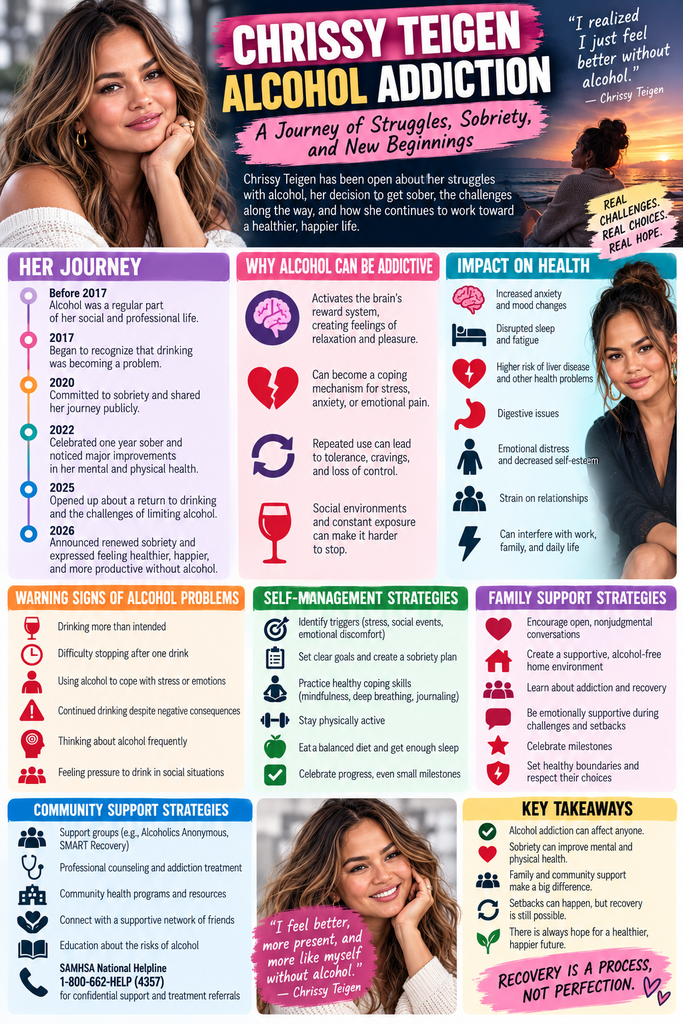
Common Warning Signs of Problematic Alcohol Use
- Drinking more alcohol than originally intended.
- Feeling unable to control the amount consumed.
- Experiencing regret or embarrassment after drinking.
- Using alcohol to cope with stress or emotional discomfort.
- Continuing to drink despite negative consequences.
- Having difficulty participating in social activities without alcohol.
- Repeatedly attempting to reduce alcohol consumption without lasting success.
Although Teigen has publicly discussed problematic drinking and sobriety, her statements should not automatically be interpreted as confirmation of a specific clinical diagnosis of alcohol use disorder.
Why Alcohol Can Become a Coping Mechanism
Alcohol affects neurotransmitter systems involved in reward, relaxation, judgment, and emotional regulation.
Some individuals initially experience temporary relaxation or reduced social anxiety after drinking. However, repeated alcohol consumption can reinforce unhealthy coping patterns.
Over time, drinking may become associated with relief from stress, sadness, loneliness, or emotional exhaustion.
For individuals experiencing significant life pressures, alcohol may appear to provide temporary comfort while ultimately contributing to additional emotional and physical difficulties.
Understanding these patterns is important because sustainable recovery often requires developing healthier ways to manage uncomfortable emotions rather than relying on alcohol.
Chrissy Teigen’s Sobriety Journey: Important Turning Points
Teigen’s relationship with alcohol has involved several periods of reflection, abstinence, and renewed efforts to stop drinking.
2017 — Recognizing a Problem
Teigen publicly acknowledged that she had been drinking excessively and found it difficult to stop after one drink. During a wellness retreat in Bali, she experienced the benefits of abstaining from alcohol.
2020–2022 — Committing to Sobriety
Inspired partly by Holly Whitaker’s book Quit Like a Woman, Teigen pursued sobriety, experienced some setbacks, and celebrated one year without alcohol in July 2022. She reported improvements in anxiety, energy, and emotional well-being.
May 2025 — Publicly Discussing a Return to Drinking
Teigen acknowledged that she had resumed drinking and struggled with limiting her consumption. She described recognizing that she felt healthier and more productive without alcohol.
January–February 2026 — Renewed Sobriety
In January, Teigen announced that she was 52 days sober after being inspired by a conversation with television personality Carl Radke. In February, she described how supportive colleagues helped her enjoy working without alcohol.
Her experiences demonstrate that recovery does not always follow a straight path. Setbacks can occur, but they do not eliminate the possibility of renewed progress.
The Connection Between Alcohol, Anxiety, and Emotional Health
One particularly important aspect of Teigen’s public statements is her recognition that alcohol did not necessarily provide the emotional relief she had expected.
She has described experiencing less anxiety and greater emotional clarity during periods of sobriety.
This reflects a common challenge among individuals who use alcohol to manage stress.
Alcohol initially enhances inhibitory neurotransmission and may temporarily reduce anxiety. However, repeated exposure can disrupt sleep, increase physiological stress responses, and worsen anxiety during withdrawal.
Healthier Ways to Manage Emotional Stress
- Practice mindfulness, meditation, or controlled breathing.
- Identify situations that increase anxiety or drinking urges.
- Participate in regular physical activity.
- Maintain consistent sleep and meal schedules.
- Seek professional counseling when anxiety becomes persistent.
- Develop alcohol-free ways to celebrate accomplishments.
- Strengthen relationships with supportive friends and family.
For individuals with coexisting anxiety disorders and problematic alcohol use, treating both conditions is often essential for sustained recovery.
Self-Management Strategies: Building a Sustainable Alcohol-Free Lifestyle
Teigen’s experience illustrates the importance of understanding personal drinking patterns and recognizing when moderation may not be an effective strategy.
In January 2026, she explained that attempts to drink only occasionally had gradually returned to frequent alcohol consumption. Recognizing this pattern helped motivate her renewed commitment to sobriety.
Practical Self-Management Strategies
- Recognize personal triggers: Identify social events, emotional stressors, or situations associated with alcohol consumption.
- Create a sobriety plan: Establish clear goals and develop strategies for managing drinking urges.
- Practice craving management: Use relaxation techniques, distraction, physical activity, and supportive conversations.
- Avoid high-risk situations: Reduce exposure to environments where drinking feels difficult to resist.
- Develop alcohol-free routines: Replace drinking rituals with hobbies, exercise, creative activities, or meaningful social experiences.
- Monitor emotional health: Track anxiety, sleep quality, mood, and stress levels.
- Seek evidence-based treatment: Consider counseling and medications for alcohol use disorder when clinically appropriate.
- Recognize progress: Celebrate meaningful milestones without placing excessive pressure on achieving perfection.
For people with alcohol use disorder, medications such as naltrexone and acamprosate can reduce the risk of returning to heavy drinking or help maintain abstinence.
Individuals who drink heavily and regularly should seek medical advice before stopping abruptly because alcohol withdrawal can be life-threatening.
Family Support Strategies: The Importance of Understanding and Encouragement
Family relationships can significantly influence recovery.
Teigen’s husband, musician John Legend, has publicly expressed support for her sobriety journey. His encouragement demonstrates how loved ones can offer reassurance while respecting an individual’s personal boundaries
Family support is particularly important when alcohol use has affected communication, trust, or daily responsibilities.
How Families Can Help
- Encourage honest conversations: Discuss alcohol-related concerns without judgment or blame.
- Understand alcohol dependence: Learn how alcohol affects brain function, emotional regulation, and behavior.
- Provide emotional reassurance: Recognize that recovery can involve uncertainty, frustration, and setbacks.
- Support alcohol-free activities: Plan celebrations, vacations, and family gatherings that do not revolve around drinking.
- Encourage professional care: Help loved ones access counseling, medical treatment, and recovery programs.
- Establish healthy boundaries: Communicate expectations while respecting personal autonomy.
- Celebrate recovery milestones: Recognize positive changes in health, relationships, and daily functioning.
- Protect family well-being: Encourage family counseling when alcohol-related problems have affected household relationships.
Family involvement should focus on collaboration rather than surveillance or punishment.
Community Support Strategies: Finding Strength Through Connection
Community support can help individuals maintain sobriety by providing encouragement, accountability, and opportunities to connect with others who understand addiction recovery.
Teigen has described finding inspiration through conversations with other individuals who have experienced alcohol-related challenges.
Her interaction with Carl Radke demonstrates how hearing another person’s recovery story can encourage self-reflection and renewed motivation.
Helpful Community Resources
- Alcoholics Anonymous: Peer-led meetings that support alcohol abstinence and long-term recovery.
- SMART Recovery: Mutual-support programs emphasizing behavioral strategies, motivation, and coping skills.
- Addiction medicine professionals: Physicians, physician assistants, and addiction specialists can provide assessment and treatment.
- Mental health counseling: Therapy can address anxiety, depression, trauma, and other concerns associated with alcohol use.
- Women-focused recovery programs: Gender-responsive services can address unique social, psychological, and healthcare needs.
- Community wellness programs: Exercise, mindfulness, and recreational activities can provide healthy social connections.
- Family support groups: Al-Anon and similar organizations provide education and support for loved ones affected by problematic drinking.
In the United States, the SAMHSA National Helpline at 1-800-662-HELP (4357) provides confidential information and treatment referrals.
Why Relapse Does Not Mean Recovery Has Failed
One of the most valuable lessons from Teigen’s experience is that returning to alcohol after a period of abstinence does not mean someone is incapable of recovery.
Alcohol use disorder is often a chronic, relapsing condition influenced by biological vulnerability, environmental triggers, emotional stress, and learned behaviors.
A return to drinking may indicate that an individual’s recovery plan needs additional support or modification.
Strategies for Responding to a Return to Drinking
- Identify the circumstances that contributed to drinking.
- Avoid shame and excessive self-criticism.
- Reconnect with trusted support systems.
- Review coping strategies and treatment goals.
- Consider more intensive counseling or medication when appropriate.
- Develop a plan for managing future high-risk situations.
- Seek medical assessment when withdrawal or other complications are possible.
Importantly, the goal is not simply to resume counting sober days. Recovery also involves strengthening emotional resilience, improving daily functioning, and developing a healthier relationship with oneself.
Lessons From Chrissy Teigen’s Journey
Teigen’s experiences offer several meaningful lessons for individuals and families affected by problematic alcohol use.
First, recognizing that alcohol has become harmful is an important step toward change. A person does not need to experience severe public consequences before seeking help.
Second, moderation is not effective for everyone. Individuals who repeatedly lose control over alcohol consumption may benefit from an abstinence-based recovery plan.
Third, emotional health matters. Addressing anxiety, stress, and other psychological concerns can improve recovery outcomes.
Fourth, supportive relationships can strengthen motivation. Family members, friends, peers, and healthcare professionals can help individuals navigate difficult periods.
Finally, recovery can involve repeated efforts. Returning to treatment or recommitting to sobriety demonstrates a willingness to continue making healthier decisions.
Conclusion: Chrissy Teigen’s Journey Toward Sobriety and Personal Growth
Chrissy Teigen’s public discussions about alcohol use and sobriety highlight the challenges of changing long-established habits, particularly when drinking has become connected to social activities, emotional coping, and personal routines.
Her experiences demonstrate that recovery requires self-awareness, realistic expectations, and a willingness to seek support.
Through self-management strategies, family encouragement, professional treatment, and community resources, individuals facing similar struggles can develop healthier coping mechanisms and work toward sustainable sobriety.
The most important lesson from Chrissy Teigen’s journey is that recovery is not defined by never experiencing setbacks. It is defined by continuing to recognize harmful patterns, seek support, and make meaningful changes that improve health and quality of life.
Her willingness to discuss the challenges of sobriety can encourage others to examine their own relationship with alcohol and recognize that positive change remains possible.
Frequently Asked Questions and Answers
Understanding Chrissy Teigen’s Alcohol Struggles
1. Did Chrissy Teigen struggle with alcohol addiction?
Chrissy Teigen has publicly acknowledged problematic drinking, difficulty controlling her alcohol consumption, and periods of sobriety. Although her experiences share characteristics associated with alcohol use disorder, her public statements do not establish a confirmed clinical diagnosis.
2. When did Chrissy Teigen first acknowledge her drinking problem?
In 2017, Teigen publicly discussed concerns about her alcohol consumption. She described drinking excessively at social events and recognizing that alcohol sometimes negatively affected her behavior and emotional well-being.
3. Why did Chrissy Teigen decide to stop drinking?
Teigen has explained that alcohol was no longer contributing positively to her life. She recognized that drinking could increase anxiety, affect her emotional health, and interfere with her desire to feel healthier and more present.
4. Did Chrissy Teigen experience alcohol relapse?
Yes. Teigen has publicly discussed returning to drinking after periods of sobriety. Her experiences demonstrate that changing alcohol-related behaviors can involve setbacks and renewed commitments to abstinence.
A return to drinking does not necessarily mean recovery has failed. It may indicate a need to reassess triggers, coping strategies, and treatment support.
5. How did alcohol affect Chrissy Teigen’s mental health?
Teigen has described experiencing improvements in anxiety and emotional well-being during periods without alcohol.
Alcohol can temporarily reduce feelings of tension, but repeated consumption may worsen anxiety, interfere with sleep, and contribute to emotional instability.
6. Did Chrissy Teigen use alcohol to cope with stress?
Teigen has discussed alcohol use in social situations and the challenges of managing her drinking. Although stress can contribute to problematic alcohol use, it is important not to assume that every instance of her drinking was motivated by emotional distress.
7. What inspired Chrissy Teigen to pursue sobriety?
Teigen has identified several influences, including reading Holly Whitaker’s book Quit Like a Woman and hearing other people’s experiences with sobriety.
These experiences encouraged her to reconsider her drinking habits and the benefits of an alcohol-free lifestyle.
Alcohol Addiction and Its Health Effects
8. What is alcohol use disorder?
Alcohol use disorder (AUD) is a medical condition characterized by impaired control over alcohol consumption, continued drinking despite harmful consequences, and other behavioral or physiological symptoms.
AUD can range from mild to severe and is diagnosed using established clinical criteria.
9. What are the warning signs of alcohol dependence?
Common warning signs include:
- Drinking more than intended.
- Difficulty stopping after one or two drinks.
- Strong cravings for alcohol.
- Continuing to drink despite negative consequences.
- Using alcohol to cope with emotional discomfort.
- Neglecting responsibilities because of drinking.
- Experiencing withdrawal symptoms when alcohol use stops.
Not everyone with problematic drinking experiences physical dependence.
10. Can alcohol increase anxiety and depression?
Yes. Alcohol affects neurotransmitter systems involved in mood regulation, stress responses, and sleep.
Although drinking may temporarily reduce anxiety, repeated use can contribute to worsening anxiety, depressive symptoms, and emotional instability.
11. How does alcohol affect physical health?
Excessive alcohol consumption increases the risk of several health problems, including:
- Liver disease.
- High blood pressure.
- Cardiomyopathy and certain heart rhythm disorders.
- Pancreatitis.
- Gastrointestinal complications.
- Sleep disturbances.
- Several types of cancer.
- Cognitive impairment.
The risks generally increase with greater alcohol exposure, although some risks occur even at relatively low consumption levels.
12. Is alcohol addiction more common among celebrities?
Alcohol use disorder can affect people in any profession. Celebrity environments may involve frequent social events, public scrutiny, and easy access to alcohol, but these circumstances do not mean celebrities necessarily have higher rates of addiction.
The underlying risk factors include genetics, psychological health, drinking patterns, environmental influences, and social circumstances.
Chrissy Teigen’s Sobriety and Recovery Journey
13. When did Chrissy Teigen celebrate one year of sobriety?
In July 2022, Teigen celebrated one year without alcohol. She reflected on improvements in her anxiety, physical well-being, and ability to remain present during important life experiences.
14. Did Chrissy Teigen return to drinking in 2025?
Yes. In May 2025, Teigen publicly acknowledged that she had resumed drinking after a period of sobriety. She explained that attempts to drink moderately sometimes led to consuming more alcohol than intended.
15. What is the latest publicly reported update about Chrissy Teigen’s sobriety?
On January 27, 2026, Teigen announced that she was 52 days sober after deciding to stop drinking again. She credited a conversation with television personality Carl Radke as an important source of motivation. This was a milestone reported at that time, not confirmation of her current sobriety status.
16. Why did Chrissy Teigen find moderate drinking difficult?
Teigen described trying to reserve alcohol for special occasions before noticing that drinking gradually became more frequent. Her experience illustrates why moderation may be difficult for some individuals with problematic drinking patterns.
For people who repeatedly experience loss of control, abstinence may be a more effective recovery goal than attempting occasional drinking.
Self-Management Strategies for Alcohol Recovery
17. What self-management strategies can help someone stop drinking?
Helpful strategies include:
- Identifying emotional and environmental drinking triggers.
- Establishing realistic sobriety goals.
- Developing an alcohol-free daily routine.
- Practicing mindfulness and relaxation techniques.
- Maintaining regular physical activity.
- Improving sleep and nutrition.
- Seeking professional counseling.
- Developing a relapse prevention plan.
- Celebrating meaningful recovery milestones.
Individuals with physical alcohol dependence should seek medical guidance before abruptly stopping drinking because withdrawal can be dangerous.
18. How can someone manage alcohol cravings?
Cravings can be managed by recognizing triggers, delaying the urge to drink, changing environments, and using healthy distractions.
Behavioral counseling and medications such as naltrexone or acamprosate may also help when clinically appropriate.
19. Can someone enjoy social events without drinking alcohol?
Yes. Alcohol-free social activities can provide enjoyment, relaxation, and meaningful connections.
Strategies include choosing nonalcoholic beverages, attending events with supportive friends, planning transportation, and preparing responses when offered alcohol.
Teigen has described discovering that she could enjoy concerts and family celebrations without drinking.
20. Why is mindfulness helpful during alcohol recovery?
Mindfulness helps individuals recognize thoughts, emotions, and cravings without automatically acting on them.
Techniques such as controlled breathing, meditation, and present-moment awareness may reduce stress and support healthier decision-making.
Mindfulness is best viewed as a complementary strategy rather than a replacement for evidence-based addiction treatment.
Family Support Strategies
21. How has John Legend supported Chrissy Teigen’s sobriety?
John Legend has publicly expressed support for Teigen during her efforts to address problematic drinking. Following her May 2025 disclosure, he offered encouragement through social media.
His response illustrates how reassurance and understanding can help someone feel supported during recovery.
22. How can families help someone struggling with alcohol addiction?
Families can provide meaningful support by:
- Encouraging honest, nonjudgmental communication.
- Learning about alcohol use disorder.
- Supporting medical appointments and counseling.
- Creating alcohol-free family activities.
- Avoiding blame or criticism.
- Recognizing recovery progress.
- Maintaining healthy boundaries.
- Encouraging treatment after setbacks.
Family support should empower the individual rather than attempt to control their recovery.
23. Should family members confront someone about their drinking?
Family members should express concerns calmly and respectfully, focusing on observable behaviors and health consequences.
Conversations are generally more productive when the individual is sober, and everyone can communicate safely.
24. Can family counseling improve recovery outcomes?
Yes. Family counseling can improve communication, address relationship difficulties, and help loved ones understand the effects of alcohol misuse.
It can also help families establish realistic expectations and supportive boundaries.
Community Support and Relapse Prevention
25. What community resources are available for alcohol recovery?
Helpful resources include:
- Alcoholics Anonymous (AA).
- SMART Recovery.
- Outpatient addiction treatment programs.
- Mental health counseling.
- Addiction medicine specialists.
- Women-focused recovery programs.
- Family support groups such as Al-Anon.
- Community wellness and alcohol-free social programs.
In the United States, individuals can contact the SAMHSA National Helpline at 1-800-662-HELP (4357) for confidential treatment referrals.
26. How can peer support help someone maintain sobriety?
Peer support provides opportunities to connect with others who understand the challenges of alcohol recovery.
Sharing experiences can reduce isolation, strengthen motivation, and provide practical strategies for managing cravings and high-risk situations.
Teigen’s renewed motivation after speaking with Carl Radke illustrates how another person’s recovery experience can encourage positive change.
27. Does returning to drinking mean recovery has failed?
No. A return to alcohol use does not erase previous progress.
However, it is important to recognize the risks associated with resumed drinking and seek additional support when necessary.
Reevaluating triggers, treatment approaches, and recovery goals can help individuals return to healthier patterns.
28. What are the most effective ways to prevent alcohol relapse?
Effective relapse prevention strategies include:
- Recognizing early warning signs.
- Avoiding or preparing for high-risk situations.
- Maintaining supportive relationships.
- Attending counseling or recovery meetings.
- Managing stress and coexisting mental health conditions.
- Considering appropriate medication treatment.
- Creating an emergency plan for strong cravings.
- Seeking professional assistance promptly after returning to drinking.
Relapse prevention is most effective when tailored to the individual’s circumstances.
Recovery and Personal Growth
29. What can women learn from Chrissy Teigen’s alcohol recovery journey?
Teigen’s experiences highlight the importance of recognizing when drinking is negatively affecting emotional and physical health.
Her openness also demonstrates that women can face unique pressures involving caregiving responsibilities, social expectations, professional demands, and stigma surrounding addiction.
Women experiencing problematic drinking should have access to individualized, compassionate treatment without shame or judgment.
30. What is the most important lesson from Chrissy Teigen’s sobriety journey?
One of the most important lessons is that recovery requires continued self-awareness, support, and a willingness to make healthier decisions.
Teigen’s experiences demonstrate that recognizing problematic drinking and recommitting to sobriety can be meaningful steps toward improved well-being.
Recovery is not defined by perfection. It is defined by the ongoing effort to develop healthier coping strategies, strengthen relationships, and create a fulfilling life without harmful alcohol use.
Video: