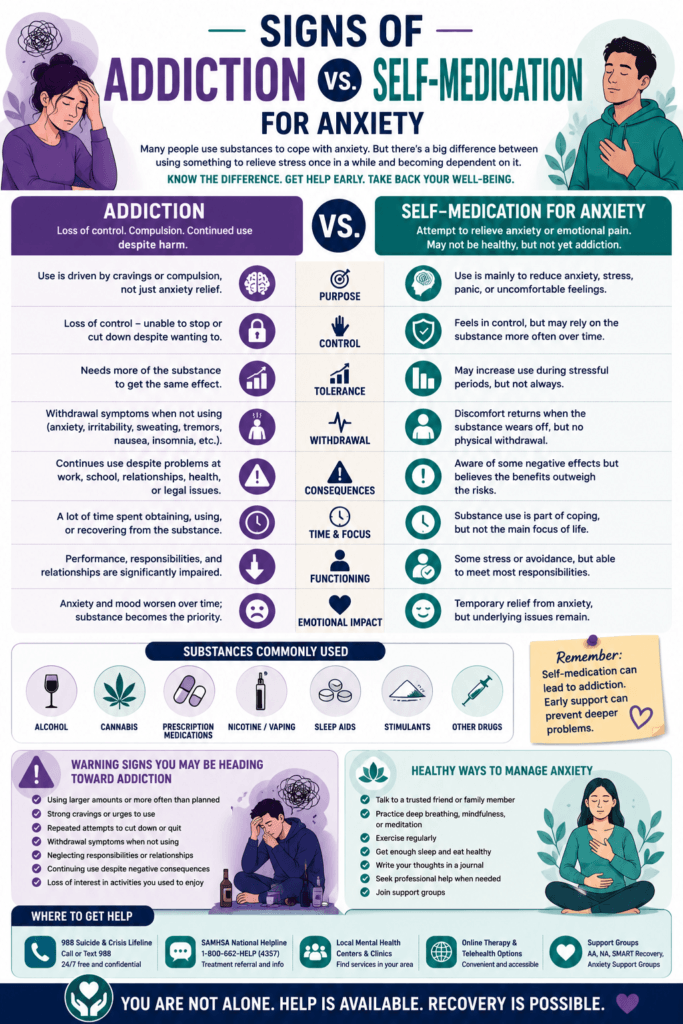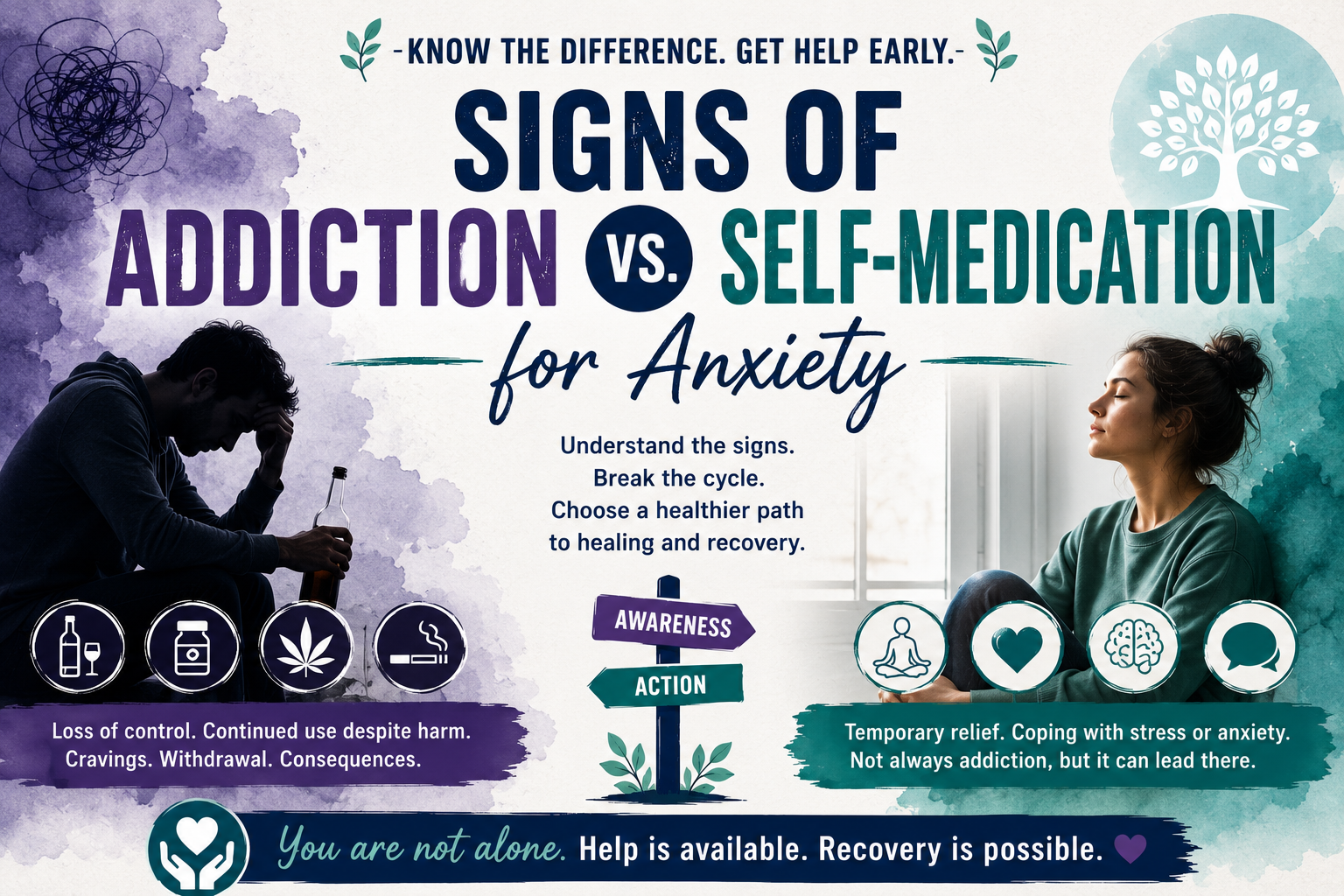
Many individuals living with anxiety attempt to manage their symptoms by using alcohol, cannabis, nicotine, prescription medications, or other substances without medical guidance. This behavior, known as self-medication, may provide temporary relief from feelings of worry, fear, or emotional distress, but it does not address the underlying cause of anxiety and can increase the risk of developing a substance use disorder. Although self-medication and addiction may appear similar, they are distinct conditions with important differences. Self-medication is often an attempt to cope with uncomfortable emotions, while addiction is characterized by loss of control over substance use, cravings, tolerance, withdrawal symptoms, and continued use despite harmful consequences. Understanding the signs of each condition is essential for early recognition, timely intervention, and access to effective treatment. Identifying unhealthy patterns before they progress can improve both mental health and long-term recovery outcomes.
Signs of Addiction vs. Self-Medication for Anxiety
Many people struggling with anxiety may use alcohol, prescription medications, cannabis, nicotine, or other substances to temporarily reduce feelings of fear, worry, panic, or emotional distress. This behavior is known as self-medication. While self-medication may provide short-term relief, repeated use can increase tolerance, worsen anxiety over time, and lead to substance use disorder (addiction). Understanding the differences between self-medication and addiction can help individuals recognize when occasional coping has progressed into a more serious health concern requiring professional treatment.
What Is Self-Medication for Anxiety?
Self-medication occurs when an individual uses substances without appropriate medical guidance to manage symptoms of anxiety or emotional distress. The goal is typically to reduce uncomfortable feelings rather than to experience intoxication.
Common substances used for self-medication include:
- Alcohol
- Cannabis
- Nicotine
- Prescription sedatives or benzodiazepines obtained without proper supervision
- Prescription opioids
- Stimulants
- Over-the-counter sleep medications
Initially, these substances may seem helpful because they temporarily reduce anxiety, improve sleep, or induce relaxation. However, the relief is usually short-lived, and symptoms often return stronger as the substance wears off.
Common Signs of Self-Medication
Individuals who are self-medicating may:
- Use substances only during stressful situations.
- Drink alcohol to relax after work every day.
- Use cannabis to decrease anxiety or improve sleep.
- Take extra prescription medication without consulting a healthcare provider.
- Depend on nicotine during stressful situations.
- Feel temporary relief, but continue experiencing anxiety afterward.
- Believe they cannot manage stress without a substance.
- Avoid learning healthier coping skills.
Although concerning, these behaviors do not necessarily indicate addiction. However, they increase the risk of developing one.
What Is Addiction?
Addiction, also known as substance use disorder, is a chronic medical condition characterized by compulsive substance use despite harmful physical, emotional, social, occupational, or legal consequences. Over time, repeated substance use changes brain circuits involved in reward, motivation, memory, and self-control, making it increasingly difficult to stop using even when the person wants to quit.
Common Signs of Addiction
Signs that substance use may have progressed beyond self-medication include:
Loss of Control
- Using larger amounts than intended.
- Difficulty cutting down or stopping.
- Repeated unsuccessful attempts to quit.
Cravings
- Strong urges or cravings to use the substance.
- Constant thoughts about obtaining or using it.
Tolerance
- Needing larger amounts to achieve the same effect.
- Reduced effectiveness of previous doses.
Withdrawal Symptoms
When the substance is reduced or stopped, individuals may experience:
- Anxiety
- Irritability
- Sweating
- Tremors
- Insomnia
- Nausea
- Muscle aches
- Increased heart rate
The presence and severity of withdrawal symptoms vary depending on the substance.
Continued Use Despite Harm
The person continues using even though it causes:
- Relationship problems
- Financial difficulties
- Poor work or school performance
- Health complications
- Legal issues
Neglecting Responsibilities
Substance use begins to interfere with:
- Employment
- School
- Parenting
- Household responsibilities
- Personal hygiene
Spending Significant Time Using
Large amounts of time are devoted to:
- Obtaining substances
- Using them
- Recovering from their effects
Loss of Interest
Individuals may lose interest in hobbies, friendships, sports, or activities they previously enjoyed.
Comparing Self-Medication and Addiction
| Self-Medication for Anxiety | Addiction |
|---|---|
| Uses substances primarily to reduce anxiety | Uses substances compulsively despite harm |
| May maintain some control over use initially | Loss of control over substance use |
| Temporary emotional relief | Substance becomes central to daily life |
| Usually linked to stressful situations | Use occurs regardless of emotional state |
| A few immediate life disruptions | Significant impairment in work, school, relationships, or health |
| Risk factor for addiction | Diagnosable medical condition requiring treatment |
Why Self-Medication Can Worsen Anxiety
Although substances may temporarily reduce anxiety, repeated use often creates a cycle:
- Anxiety develops.
- Substance is used for relief.
- Temporary improvement occurs.
- Substance wears off.
- Anxiety returns or worsens.
- More substance is used.
Over time, this cycle increases tolerance, dependence, and the risk of addiction while making anxiety more difficult to manage.
Healthy Alternatives to Self-Medication
Evidence-based alternatives include:
- Cognitive Behavioral Therapy (CBT)
- Mindfulness meditation
- Deep breathing exercises
- Regular physical activity
- Healthy sleep habits
- Journaling
- Support groups
- Stress-management techniques
- Relaxation exercises
- Prescribed medications taken under medical supervision when appropriate
When to Seek Professional Help
Professional evaluation is recommended if:
- Anxiety interferes with daily functioning.
- Substance use becomes more frequent.
- Larger amounts are needed for relief.
- Withdrawal symptoms occur.
- Relationships or work are affected.
- The individual cannot stop using despite wanting to quit.
- Thoughts of self-harm or suicide occur.
Treatment may include counseling, medications for anxiety, treatment for substance use disorder, or integrated care for both conditions.
Conclusion
Self-medication for anxiety and addiction can appear similar, but they differ in important ways. Self-medication often begins as an attempt to relieve emotional distress, while addiction develops when repeated substance use leads to loss of control, cravings, tolerance, withdrawal, and continued use despite harmful consequences. Because anxiety and substance use disorders frequently occur together, early recognition of warning signs is essential. Seeking professional help, learning healthy coping strategies, and addressing both anxiety and substance use simultaneously can improve recovery, reduce relapse risk, and promote long-term mental and physical well-being.
Self-Management Strategies to Understand Signs of Addiction vs. Self-Medication for Anxiety
Many people with anxiety use alcohol, cannabis, nicotine, prescription medications, or other substances to temporarily relieve stress, nervousness, or emotional discomfort. This behavior, known as self-medication, may seem helpful in the short term but can increase the risk of developing a substance use disorder (addiction). Understanding the differences between self-medication and addiction allows individuals to recognize unhealthy patterns early and seek appropriate support. The following self-management strategies can help individuals better understand their behaviors and develop healthier ways to manage anxiety.
1. Learn the Difference Between Self-Medication and Addiction
Educate yourself about how anxiety and substance use interact. Self-medication usually begins as an attempt to relieve anxiety, while addiction involves loss of control, cravings, tolerance, withdrawal symptoms, and continued substance use despite harmful consequences. Understanding these differences can help you recognize when professional help may be needed.
2. Identify Your Anxiety Triggers
Pay attention to situations, thoughts, or emotions that increase your anxiety. Common triggers may include work stress, relationship conflicts, financial concerns, social situations, health problems, or lack of sleep. Knowing your triggers allows you to prepare healthier coping strategies before anxiety becomes overwhelming.
3. Monitor Your Substance Use
Keep a journal or use a tracking app to record:
- What substance did you use
- How much did you use
- When you use it
- Why did you use it
- How you felt before and after
Tracking patterns can help determine whether you are occasionally self-medicating or developing behaviors that may indicate addiction.
4. Practice Healthy Coping Skills
Replace substance use with evidence-based methods for managing anxiety, such as:
- Deep breathing exercises
- Mindfulness meditation
- Progressive muscle relaxation
- Yoga or stretching
- Journaling
- Listening to calming music
- Spending time outdoors
- Engaging in hobbies or creative activities
Healthy coping strategies reduce anxiety without the risks associated with substance use.
5. Build a Consistent Daily Routine
Maintaining regular sleep, healthy meals, physical activity, work or school responsibilities, and leisure activities creates structure and helps reduce anxiety. Predictable routines also decrease the likelihood of turning to substances during stressful moments.
6. Prioritize Physical Health
Exercise regularly, eat a balanced diet, stay hydrated, and get 7–9 hours of sleep each night. Good physical health supports emotional well-being and improves the body’s ability to cope with stress naturally.
7. Develop Emotional Awareness
Learn to recognize and name your emotions instead of automatically trying to numb them. Ask yourself:
- What am I feeling?
- What triggered this emotion?
- Is there another way to respond?
Developing emotional awareness strengthens resilience and encourages healthier decision-making.
8. Build a Strong Support Network
Talk openly with trusted family members, friends, mentors, or support groups about your anxiety and coping challenges. Supportive relationships provide encouragement, accountability, and perspective during difficult times.
9. Avoid High-Risk Situations
If you know certain environments, social events, or relationships increase your likelihood of using substances to cope with anxiety, develop a plan to avoid or safely manage these situations. Preparing in advance reduces impulsive decisions.
10. Learn Healthy Stress Management
Practice regular stress reduction through:
- Time management
- Setting realistic goals
- Taking regular breaks
- Spending time with supportive people
- Participating in recreational activities
- Maintaining work-life balance
Managing stress consistently helps prevent anxiety from becoming overwhelming.
11. Seek Professional Treatment Early
If anxiety becomes persistent or substance use increases, consult a healthcare provider or mental health professional. Treatments such as Cognitive Behavioral Therapy (CBT), counseling, and prescribed medications can effectively manage anxiety while reducing the need to self-medicate.
12. Recognize When Self-Medication Is Becoming Addiction
Watch for warning signs such as:
- Needing larger amounts of a substance for the same effect
- Cravings or urges to use
- Difficulty cutting back
- Withdrawal symptoms when not using
- Continued use despite problems at work, school, or home
- Neglecting responsibilities because of substance use
Recognizing these signs early allows for timely intervention and treatment.
Conclusion
Understanding the difference between self-medication for anxiety and addiction is an important step toward protecting both mental and physical health. By identifying anxiety triggers, monitoring substance use, practicing healthy coping skills, maintaining supportive relationships, and seeking professional help when needed, individuals can reduce their reliance on substances and develop healthier ways to manage stress and anxiety. Early recognition and proactive self-management not only lower the risk of addiction but also support long-term emotional resilience, improved well-being, and a healthier, more balanced life.
Family Support Strategies to Understand Signs of Addiction vs. Self-Medication for Anxiety
Family members often play a critical role in recognizing the early signs of self-medication and addiction. Many individuals begin using alcohol, cannabis, nicotine, prescription medications, or other substances to cope with anxiety, stress, or emotional distress. While self-medication may initially seem like a way to manage difficult emotions, repeated use can increase the risk of developing a substance use disorder. Families who understand the differences between self-medication and addiction are better equipped to provide compassionate support, encourage healthy coping strategies, and help loved ones access appropriate treatment before substance use becomes more severe.
1. Learn the Difference Between Self-Medication and Addiction
Educate yourself about anxiety disorders and substance use disorders. Self-medication usually involves using a substance to temporarily relieve anxiety, while addiction is characterized by cravings, loss of control, tolerance, withdrawal symptoms, and continued use despite harmful consequences. Understanding these differences helps families respond with knowledge rather than assumptions.
2. Recognize Early Warning Signs
Pay attention to behavioral changes that may suggest your loved one is using substances to cope with anxiety, including:
- Drinking or using drugs primarily during stressful situations
- Increased reliance on alcohol or medications to relax or sleep
- Mood swings or irritability
- Social withdrawal
- Declining work or school performance
- Changes in sleep or appetite
- Increased secrecy about substance use
Early recognition allows families to seek help before addiction develops.
3. Encourage Open and Honest Communication
Create a safe, nonjudgmental environment where your loved one feels comfortable talking about anxiety, stress, and substance use. Listen with empathy and avoid criticism or blame. Open communication encourages honesty and makes it easier to discuss treatment options.
4. Avoid Stigmatizing Language
Avoid labeling your loved one as “weak,” “lazy,” or “an addict.” Instead, recognize that anxiety disorders and substance use disorders are medical conditions that deserve compassion and evidence-based care. Supportive language reduces shame and encourages treatment engagement.
5. Encourage Healthy Coping Strategies
Help your loved one develop healthier ways to manage anxiety by encouraging activities such as:
- Regular exercise
- Deep breathing or mindfulness exercises
- Journaling
- Spending time outdoors
- Creative hobbies
- Maintaining healthy sleep habits
- Participating in enjoyable family activities
Healthy alternatives can gradually replace reliance on substances.
6. Support Professional Evaluation
If anxiety or substance use begins affecting daily life, encourage your loved one to seek help from a healthcare provider or mental health professional. Offer to help schedule appointments, provide transportation, or accompany them if they feel comfortable. Early intervention can prevent self-medication from progressing to addiction.
7. Learn the Warning Signs of Addiction
Be aware of signs that substance use may have become a substance use disorder, including:
- Needing larger amounts of a substance
- Strong cravings
- Unsuccessful attempts to quit
- Withdrawal symptoms
- Neglecting responsibilities
- Continuing substance use despite problems at work, school, or home
- Relationship conflicts related to substance use
Recognizing these signs early can help families encourage timely treatment.
8. Support Medication Safety
If your loved one has been prescribed medication for anxiety, encourage them to take it exactly as directed by their healthcare provider. Discourage sharing medications, increasing doses without medical advice, or combining medications with alcohol or other substances.
9. Encourage Participation in Counseling and Support Groups
Support involvement in evidence-based treatments such as Cognitive Behavioral Therapy (CBT), counseling, peer support groups, or family therapy. Treating both anxiety and substance use together often leads to better long-term outcomes.
10. Practice Patience During Recovery
Recovery from anxiety and substance use disorders is often gradual and may include setbacks. Offer consistent encouragement, celebrate progress, and understand that lasting change takes time. Patience and compassion strengthen trust and support long-term recovery.
11. Establish Healthy Boundaries
Supporting a loved one does not mean enabling harmful behaviors. Set clear, respectful boundaries regarding substance use while continuing to express care and concern. Healthy boundaries protect both the individual and the family while encouraging accountability.
12. Take Care of Your Own Well-Being
Supporting someone with anxiety or addiction can be emotionally demanding. Family members should also prioritize their own mental and physical health by seeking counseling if needed, joining family support groups, practicing stress management, and maintaining healthy routines. Caring for yourself improves your ability to provide effective long-term support.
Conclusion
Families are an essential source of support for individuals who may be self-medicating anxiety or developing a substance use disorder. By learning the differences between self-medication and addiction, recognizing early warning signs, encouraging open communication, promoting healthy coping strategies, supporting professional treatment, and maintaining healthy boundaries, families can help loved ones receive timely care and reduce the risk of addiction. With education, compassion, and ongoing support, families can foster resilience, strengthen recovery, and help create a healthier path toward long-term emotional and physical well-being.
Community Resource Strategies to Understand Signs of Addiction vs. Self-Medication for Anxiety
Anxiety disorders and substance use disorders frequently occur together, making it difficult to distinguish between self-medication and addiction. Many individuals initially use alcohol, cannabis, nicotine, prescription medications, or other substances to temporarily relieve anxiety, stress, or emotional distress. Over time, repeated use can lead to tolerance, physical dependence, and addiction. Community resources play an important role in educating the public, increasing access to evidence-based treatment, reducing stigma, and helping individuals receive early intervention before substance use becomes more severe. The following community resource strategies can improve understanding and support healthier outcomes.
1. Utilize Community Mental Health Centers
Community mental health clinics provide evaluations, counseling, medication management, and education for individuals experiencing anxiety, depression, or other mental health conditions. Early treatment of anxiety can reduce the likelihood of self-medicating with alcohol or drugs.
2. Access Substance Use Treatment Programs
Community addiction treatment programs offer comprehensive assessments, individual counseling, group therapy, relapse prevention planning, and medication-assisted treatment when appropriate. Many programs specialize in treating both anxiety disorders and substance use disorders at the same time.
3. Participate in Peer Support Groups
Peer-led recovery groups offer education, encouragement, and shared experiences from individuals who have successfully managed both anxiety and substance use. Examples include:
- Alcoholics Anonymous (AA)
- Narcotics Anonymous (NA)
- SMART Recovery
- Recovery Dharma
- Dual Recovery Anonymous (DRA)
- Local peer recovery organizations
These groups provide accountability, coping strategies, and a sense of community.
4. Attend Community Education Programs
Hospitals, health departments, nonprofit organizations, colleges, and community centers often provide educational workshops on anxiety, addiction, stress management, healthy coping skills, and relapse prevention. These programs help individuals recognize early warning signs and understand when professional treatment may be needed.
5. Utilize Integrated Behavioral Health Services
Many primary care clinics and community health centers now integrate mental health and addiction services. This collaborative approach allows healthcare providers to screen for anxiety and substance use simultaneously, improving early diagnosis and coordinated treatment.
6. Access Telehealth Services
Telehealth counseling and psychiatric services improve access to care, particularly for individuals living in rural or underserved communities. Virtual appointments make it easier to receive therapy, medication management, and follow-up care without significant travel or scheduling barriers.
7. Encourage Family Education Programs
Community organizations often provide family education classes, workshops, and support groups that teach loved ones how to recognize the differences between self-medication and addiction, improve communication, establish healthy boundaries, and support recovery.
8. Promote Healthy Community Wellness Programs
Community recreation centers, parks, fitness facilities, and wellness organizations offer activities such as exercise classes, yoga, mindfulness training, meditation, and stress-management workshops. These programs provide healthy alternatives for managing anxiety without relying on substances.
9. Utilize Crisis Services
Individuals experiencing severe anxiety, panic attacks, suicidal thoughts, or substance-related crises should access emergency behavioral health services, mobile crisis teams, crisis stabilization units, or crisis hotlines. Prompt intervention can prevent serious medical or psychiatric emergencies.
10. Reduce Stigma Through Public Awareness
Community awareness campaigns can educate the public that anxiety disorders and substance use disorders are treatable medical conditions—not personal failures. Reducing stigma encourages individuals to seek help earlier and supports recovery-focused communities.
11. Support School and Workplace Mental Health Programs
Schools, colleges, universities, and employers can provide mental health education, employee assistance programs (EAPs), counseling services, and stress-management resources. Early screening and education help identify anxiety before individuals begin self-medicating.
12. Build Recovery-Friendly Communities
Recovery-friendly workplaces, faith communities, nonprofit organizations, volunteer groups, and neighborhood organizations create supportive environments where individuals feel accepted and encouraged to pursue treatment. Positive social connections reduce isolation, improve resilience, and strengthen long-term recovery.
Conclusion
Community resources are essential for helping individuals understand the differences between self-medication for anxiety and addiction while promoting early intervention and recovery. Access to mental health care, addiction treatment, peer support groups, integrated healthcare services, telehealth, educational programs, wellness initiatives, and family support creates a strong network of care that addresses both anxiety and substance use disorders. By working together to reduce stigma, expand access to evidence-based services, and encourage healthy coping strategies, communities can help individuals receive timely treatment, prevent addiction, and achieve lasting emotional and physical well-being.
Frequently Asked Questions
Here are some common questions:
1. What is self-medication for anxiety?
Answer:
Self-medication is the use of alcohol, cannabis, nicotine, prescription medications, or other substances without appropriate medical guidance to temporarily relieve symptoms of anxiety, stress, panic, or emotional distress. While it may provide short-term relief, it does not treat the underlying anxiety disorder and may increase the risk of addiction.
2. What is addiction?
Answer:
Addiction, also called a substance use disorder, is a chronic medical condition characterized by compulsive substance use despite harmful consequences. It often involves cravings, loss of control, tolerance, withdrawal symptoms, and continued use even when it causes problems at work, school, home, or in relationships.
3. How is self-medication different from addiction?
Answer:
Self-medication is usually an attempt to manage emotional discomfort or anxiety, whereas addiction involves changes in the brain that lead to compulsive substance use and loss of control. Although they are different, repeated self-medication can increase the risk of developing addiction over time.
4. What substances are commonly used for self-medication?
Answer:
Common substances include:
- Alcohol
- Cannabis (marijuana)
- Nicotine and vaping products
- Prescription sedatives or anti-anxiety medications are used without medical supervision
- Prescription opioids
- Stimulants
- Over-the-counter sleep medications
5. Why do people self-medicate anxiety?
Answer:
People often self-medicate because they are seeking quick relief from symptoms such as excessive worry, panic, nervousness, insomnia, or emotional distress. Unfortunately, the relief is temporary, and anxiety often returns or worsens as the effects wear off.
6. What are the warning signs of self-medication?
Answer:
Common warning signs include:
- Using alcohol or drugs to relax or cope with stress
- Taking medication differently than prescribed
- Using substances before social situations or stressful events
- Relying on substances to sleep
- Feeling unable to manage anxiety without a substance
7. What are the warning signs of addiction?
Answer:
Signs of addiction include:
- Strong cravings
- Loss of control over substance use
- Needing larger amounts to achieve the same effect (tolerance)
- Withdrawal symptoms when not using
- Neglecting responsibilities
- Continuing to use despite health, work, or relationship problems
- Spending significant time obtaining, using, or recovering from the substance
8. Can self-medication eventually become addiction?
Answer:
Yes. Repeated use of substances to manage anxiety can lead to increased tolerance, physical dependence, and addiction. Early recognition and treatment can reduce this risk.
9. Why does self-medication often make anxiety worse?
Answer:
Many substances temporarily reduce anxiety but can cause rebound anxiety as their effects wear off. This may lead to increased substance use in an attempt to relieve worsening symptoms, creating a cycle that can contribute to addiction.
10. Can someone have both an anxiety disorder and addiction?
Answer:
Yes. Anxiety disorders and substance use disorders frequently occur together. This is known as a co-occurring disorder or dual diagnosis. Treating both conditions at the same time generally leads to better long-term outcomes.
11. How is anxiety treated without self-medicating?
Answer:
Evidence-based treatments include:
- Cognitive Behavioral Therapy (CBT)
- Acceptance and Commitment Therapy (ACT)
- Mindfulness-based therapies
- Stress management techniques
- Regular exercise
- Healthy sleep habits
- Prescribed medications when appropriate and supervised by a healthcare provider
- Support groups and counseling
12. How can families help?
Answer:
Families can:
- Learn about anxiety and addiction
- Recognize early warning signs
- Encourage open communication
- Avoid judgment or blame
- Support healthy coping strategies
- Encourage professional evaluation and treatment
- Participate in family therapy or educational programs when appropriate
13. When should someone seek professional help?
Answer:
Professional evaluation is recommended if:
- Anxiety interferes with daily life
- Substance use becomes more frequent
- Larger amounts of a substance are needed
- Withdrawal symptoms occur
- Relationships or work are affected
- The person cannot stop using despite wanting to quit
- Thoughts of self-harm or suicide develop
14. What community resources are available?
Answer:
Helpful resources include:
- Mental health counselors and therapists
- Primary care providers
- Addiction treatment programs
- Peer support groups
- Telehealth counseling services
- Community mental health centers
- Employee Assistance Programs (EAPs)
- Crisis services and hotlines
- Family support groups
15. Can recovery occur if someone has both anxiety and addiction?
Answer:
Yes. Many individuals successfully recover when both conditions are treated together. Integrated treatment that combines counseling, behavioral therapies, medication when appropriate, peer support, and healthy lifestyle changes offers the best chance for long-term recovery.
16. What healthy coping skills can replace self-medication?
Answer:
Healthy alternatives include:
- Deep breathing exercises
- Mindfulness meditation
- Physical activity
- Journaling
- Yoga
- Spending time in nature
- Talking with trusted family members or friends
- Practicing relaxation techniques
- Developing hobbies and creative interests
17. Is asking for help a sign of weakness?
Answer:
No. Seeking help is a sign of strength and self-awareness. Anxiety disorders and substance use disorders are treatable medical conditions, and early intervention often leads to better health, improved relationships, and a higher quality of life.
18. What is the most important message about self-medication and addiction?
Answer:
Using substances to cope with anxiety may provide temporary relief, but it does not address the underlying cause of anxiety and can increase the risk of addiction. Recognizing the difference between self-medication and addiction, seeking professional help early, and developing healthy coping skills can prevent serious complications and support lasting recovery. With appropriate treatment and support, individuals can successfully manage anxiety, overcome substance use disorders, and build healthier, more fulfilling lives.
Conclusion
Recognizing the difference between self-medication for anxiety and addiction is an important step toward protecting both mental and physical health. While self-medication may begin as an effort to relieve anxiety, repeated substance use can gradually lead to dependence and addiction if healthier coping strategies are not developed. Early recognition of warning signs, combined with evidence-based treatment for anxiety and substance use disorders, can prevent serious health, relationship, and occupational consequences. Recovery is most successful when individuals receive comprehensive care that may include counseling, appropriate medications, behavioral therapies, family support, peer support, and community resources. By increasing awareness, reducing stigma, and encouraging individuals to seek help early, families, healthcare professionals, and communities can support healthier coping skills, reduce the risk of addiction, and promote lasting emotional well-being and recovery.
Video: How Self-Medication Becomes Addiction #psychology #awareness