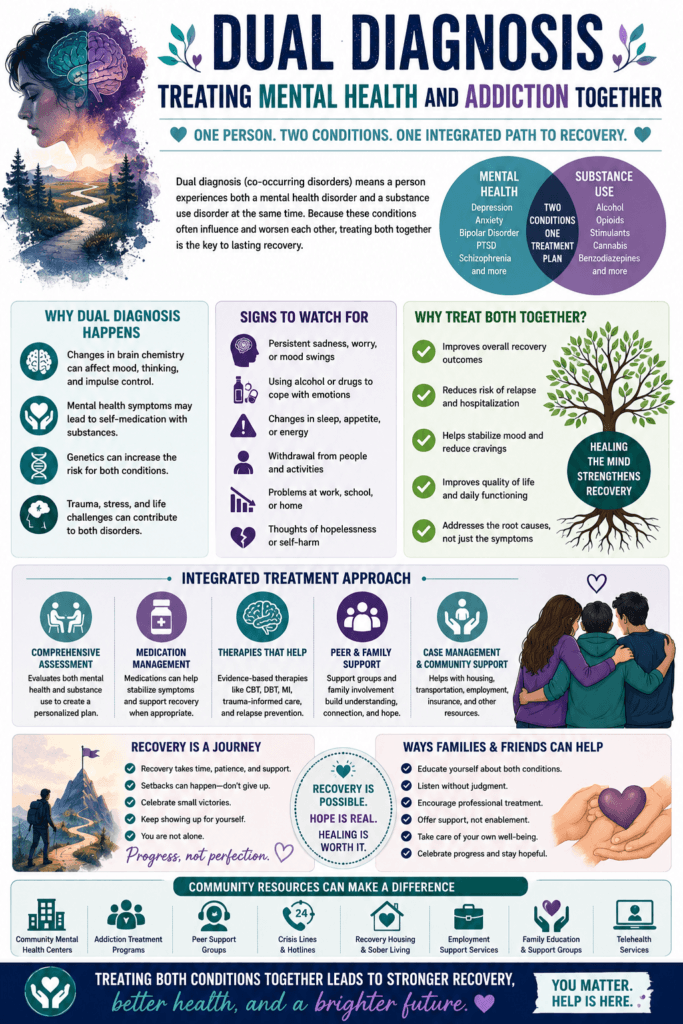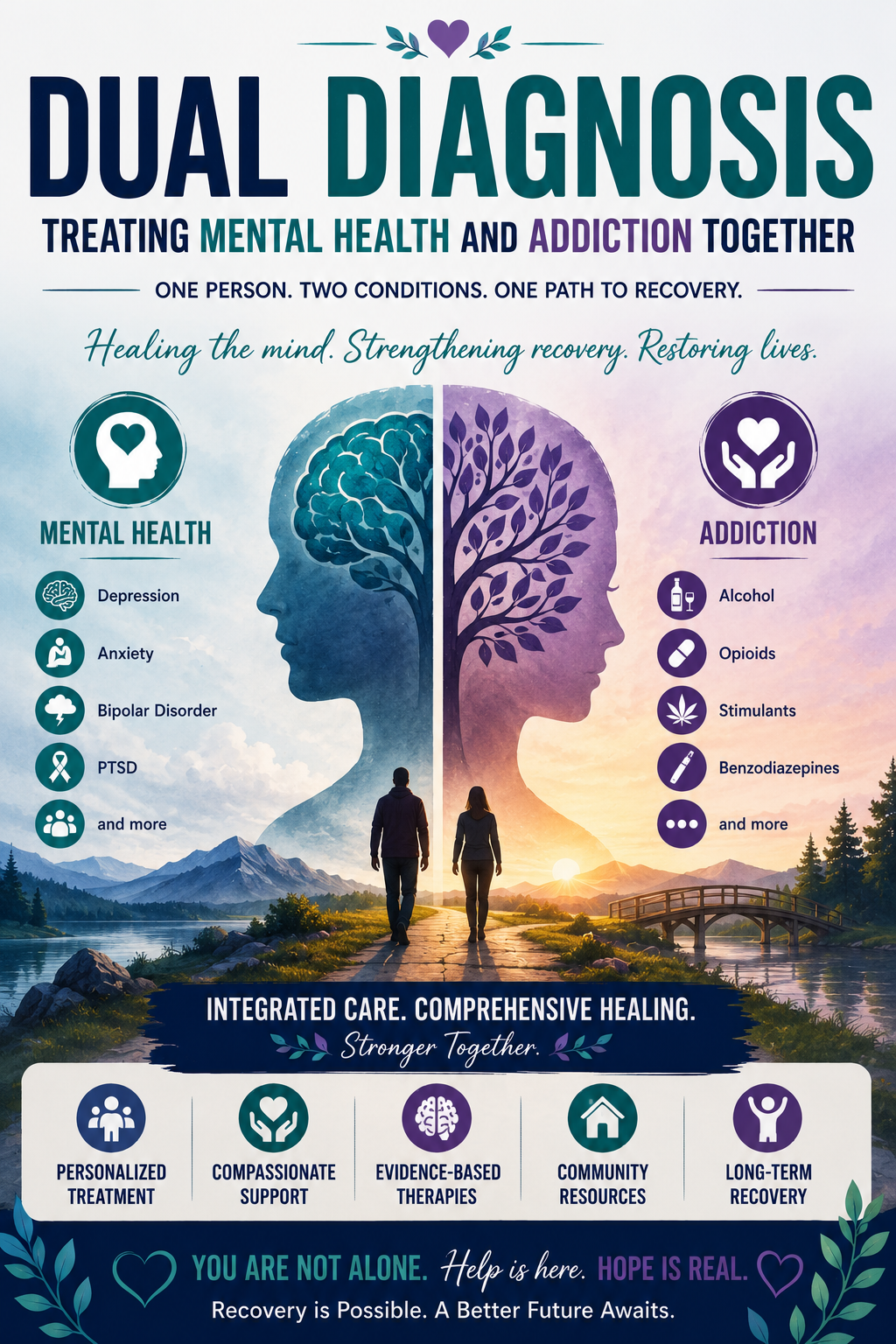
Dual diagnosis, also known as co-occurring disorders, refers to the presence of both a mental health disorder and a substance use disorder in the same individual. Common combinations include depression and alcohol use disorder, anxiety and prescription medication misuse, post-traumatic stress disorder (PTSD) and opioid use disorder, bipolar disorder and stimulant use disorder, or schizophrenia and cannabis use disorder. Because these conditions often influence and worsen one another, treating only one disorder while ignoring the other can increase the risk of relapse, hospitalization, and poor long-term outcomes. Research has shown that integrated treatment—addressing mental health and addiction at the same time through counseling, medication management when appropriate, behavioral therapies, peer support, and recovery services—provides the greatest opportunity for lasting recovery. Understanding dual diagnosis helps reduce stigma, promotes early intervention, and encourages individuals to seek comprehensive, evidence-based care that addresses the whole person rather than a single condition.
Dual Diagnosis: Treating Mental Health and Addiction Together
Dual diagnosis, also known as co-occurring disorders, occurs when a person has both a mental health disorder and a substance use disorder at the same time. Common mental health conditions associated with dual diagnosis include anxiety disorders, depression, bipolar disorder, post-traumatic stress disorder (PTSD), schizophrenia, obsessive-compulsive disorder (OCD), and attention-deficit/hyperactivity disorder (ADHD). Because these conditions often influence one another, treating only one disorder while ignoring the other frequently leads to poorer outcomes. An integrated treatment approach that addresses both conditions simultaneously offers the best opportunity for long-term recovery.
What Is Dual Diagnosis?
Dual diagnosis refers to the coexistence of at least one mental health disorder and one substance use disorder. The relationship between these conditions is complex. Some individuals develop mental health symptoms before substance use begins and may use alcohol or drugs to self-medicate emotional distress. Others develop psychiatric symptoms after prolonged substance use due to changes in brain chemistry, withdrawal effects, or the social consequences of addiction.
Examples include:
- Depression and alcohol use disorder
- Anxiety disorder and benzodiazepine misuse
- PTSD and opioid use disorder
- Bipolar disorder and stimulant use disorder
- Schizophrenia and cannabis use disorder
Each condition can worsen the other, creating a cycle that becomes increasingly difficult to break without comprehensive treatment.
Why Do Mental Health and Addiction Often Occur Together?
Several factors contribute to the high rate of co-occurring disorders:
Shared Brain Pathways
Mental health disorders and addiction both involve brain regions responsible for reward, motivation, stress response, impulse control, memory, and emotional regulation. Changes in these brain circuits can increase vulnerability to both conditions.
Genetics
Family history plays an important role. Individuals with close relatives who have mental illness, substance use disorders, or both may have a higher genetic risk of developing co-occurring disorders.
Trauma and Adverse Childhood Experiences
Childhood abuse, neglect, violence, loss of a loved one, or other traumatic experiences increase the risk of developing both mental health disorders and substance use disorders later in life.
Chronic Stress
Ongoing stress from financial difficulties, relationship problems, chronic illness, or workplace demands can contribute to anxiety, depression, and unhealthy substance use.
Self-Medication
Some individuals initially use alcohol or drugs to relieve symptoms such as anxiety, depression, insomnia, or emotional pain. While substances may provide temporary relief, they often worsen mental health symptoms over time and increase the risk of addiction.
Common Signs of Dual Diagnosis
Individuals with co-occurring disorders may experience:
- Persistent anxiety or depression
- Mood swings
- Difficulty concentrating
- Changes in sleep or appetite
- Social withdrawal
- Increased substance use to cope with emotions
- Loss of interest in previously enjoyed activities
- Problems at work, school, or home
- Relationship conflicts
- Repeated relapse despite treatment
- Thoughts of hopelessness or suicide
Because symptoms overlap, a comprehensive evaluation is important to identify all contributing conditions.
Why Integrated Treatment Matters
Treating only the addiction while ignoring mental health symptoms—or treating only the mental illness while ignoring substance use—often leads to incomplete recovery. For example:
- Untreated anxiety may increase the risk of relapse.
- Ongoing alcohol or drug use can reduce the effectiveness of psychiatric medications.
- Depression may decrease motivation to participate in addiction treatment.
- Continued substance use may worsen psychosis, bipolar symptoms, or PTSD.
Integrated care addresses both disorders simultaneously, improving overall treatment outcomes.
Components of Integrated Treatment
Effective dual diagnosis treatment often includes several evidence-based approaches:
Comprehensive Assessment
Healthcare professionals evaluate substance use, mental health symptoms, medical history, trauma history, family history, medications, and social needs to develop an individualized treatment plan.
Medication Management
When appropriate, medications may be used to treat both conditions. Examples include:
- Medications for opioid or alcohol use disorders.
- Antidepressants for depression and anxiety.
- Mood stabilizers for bipolar disorder.
- Antipsychotic medications for schizophrenia and other psychotic disorders.
Medication decisions should always be individualized and monitored by qualified healthcare professionals.
Behavioral Therapies
Evidence-based therapies include:
- Cognitive Behavioral Therapy (CBT)
- Dialectical Behavior Therapy (DBT)
- Motivational Interviewing (MI)
- Trauma-informed therapy
- Contingency Management
- Family therapy
These therapies help individuals develop healthier coping skills, improve emotional regulation, and reduce the risk of relapse.
Peer Recovery Support
Peer recovery specialists and support groups provide encouragement, accountability, education, and hope through shared lived experience.
Case Management
Case managers help coordinate healthcare, housing, employment, transportation, insurance, and community resources that support recovery.
Challenges in Treating Dual Diagnosis
Treatment can be more complex because individuals may experience:
- More severe symptoms
- Higher relapse risk
- Medication adherence challenges
- Housing instability
- Financial stress
- Social isolation
- Increased medical complications
- Greater risk of hospitalization
These challenges highlight the importance of coordinated, multidisciplinary care.
Supporting Long-Term Recovery
Recovery from dual diagnosis often requires ongoing attention to both mental health and substance use. Important recovery strategies include:
- Continuing prescribed medications as directed
- Attending counseling and follow-up appointments
- Participating in recovery support groups
- Developing healthy coping skills
- Exercising regularly
- Maintaining healthy sleep habits
- Managing stress effectively
- Building supportive relationships
- Avoiding high-risk situations
- Seeking help early if symptoms return
Recovery is typically a long-term process rather than a single event.
Reducing Stigma
Many individuals with dual diagnosis delay seeking treatment because of the stigma surrounding both mental illness and addiction. Recognizing that these are treatable medical conditions—not personal failures—can encourage earlier intervention, improve treatment engagement, and promote recovery.
Healthcare providers, families, employers, schools, and communities all play important roles in creating supportive, recovery-oriented environments.
Conclusion
Dual diagnosis is common and requires an integrated approach that treats both mental health disorders and substance use disorders simultaneously. Because these conditions often interact and reinforce one another, addressing only one problem frequently leads to poorer outcomes and increased relapse risk. Comprehensive treatment—including behavioral therapies, medication management when appropriate, peer support, family involvement, and community resources—provides the strongest foundation for lasting recovery. With early recognition, individualized care, and ongoing support, individuals living with dual diagnosis can successfully manage both conditions, improve their quality of life, and achieve meaningful, long-term recovery.
Self-Management Strategies to Understand Dual Diagnosis: Treating Mental Health and Addiction Together
Dual diagnosis, also known as co-occurring disorders, occurs when a person experiences both a mental health disorder and a substance use disorder at the same time. Conditions such as depression, anxiety, bipolar disorder, post-traumatic stress disorder (PTSD), schizophrenia, or attention-deficit/hyperactivity disorder (ADHD) often occur alongside addiction. Because these conditions influence one another, successful recovery requires treating both simultaneously. Self-management strategies can help individuals better understand their conditions, actively participate in treatment, reduce the risk of relapse, and improve their overall quality of life.
1. Learn About Both Conditions
Educate yourself about your mental health diagnosis and substance use disorder. Understanding how each condition affects the brain, emotions, behavior, and recovery can help you recognize symptoms early and make informed decisions about treatment. Knowledge reduces fear, stigma, and misunderstandings.
2. Follow Your Treatment Plan
Take medications exactly as prescribed and attend all counseling, therapy, and medical appointments. Consistent participation in treatment helps stabilize mental health symptoms while supporting long-term recovery from addiction. Never stop prescribed medications without consulting your healthcare provider.
3. Monitor Your Symptoms Daily
Keep a journal or use a mental health tracking app to record:
- Mood changes
- Anxiety levels
- Cravings
- Sleep quality
- Stress levels
- Medication adherence
- Substance use triggers
Tracking these patterns can help you recognize early warning signs of relapse or worsening mental health and discuss them with your treatment team.
4. Identify Personal Triggers
Learn to recognize situations, emotions, people, or environments that increase anxiety, depression, cravings, or thoughts of using substances. Common triggers include conflict, financial stress, loneliness, trauma reminders, poor sleep, or work-related stress. Developing a plan to manage triggers can reduce the risk of relapse.
5. Practice Healthy Coping Skills
Replace unhealthy coping behaviors with evidence-based stress management techniques such as:
- Deep breathing exercises
- Mindfulness meditation
- Progressive muscle relaxation
- Yoga
- Journaling
- Listening to music
- Creative hobbies
- Spending time outdoors
Healthy coping strategies reduce emotional distress without relying on alcohol or drugs.
6. Build a Structured Daily Routine
A consistent schedule promotes stability and reduces stress. Include:
- Regular sleep and wake times
- Healthy meals
- Physical activity
- Work, school, or volunteer activities
- Medication reminders
- Relaxation time
- Recovery meetings or therapy sessions
Structure helps reduce impulsive behaviors and supports emotional well-being.
7. Prioritize Physical Health
Exercise regularly, eat nutritious meals, stay hydrated, and aim for 7–9 hours of sleep each night. Good physical health supports brain function, improves mood, reduces anxiety, and strengthens recovery.
8. Build a Strong Support Network
Stay connected with trusted family members, friends, peer recovery specialists, sponsors, therapists, or support groups. Positive relationships provide encouragement, accountability, and assistance during challenging times.
9. Participate in Recovery and Mental Health Support Groups
Attend peer support groups that address both mental health and addiction. Sharing experiences with others facing similar challenges can reduce isolation, provide practical coping strategies, and strengthen motivation for recovery.
10. Avoid Alcohol and Non-Prescribed Drugs
Even occasional substance use can worsen mental health symptoms, interfere with medications, and increase the risk of relapse. If you have concerns about prescribed medications or side effects, discuss them with your healthcare provider rather than stopping them on your own.
11. Develop a Relapse Prevention Plan
Work with your treatment team to create a written plan that identifies:
- Early warning signs of relapse
- Personal triggers
- Healthy coping strategies
- Emergency contacts
- Crisis resources
- Steps to take if symptoms worsen
Review and update the plan regularly.
12. Seek Help Early When Symptoms Return
If you notice increased anxiety, depression, mood swings, cravings, hallucinations, panic attacks, or thoughts of self-harm, contact your healthcare provider promptly. Early intervention can prevent a temporary setback from becoming a major crisis.
Conclusion
Managing dual diagnosis requires ongoing attention to both mental health and substance use recovery. By learning about your conditions, following your treatment plan, monitoring symptoms, identifying triggers, practicing healthy coping skills, maintaining a structured routine, and building a strong support system, you can play an active role in your recovery. Self-management does not replace professional treatment but strengthens it by helping you recognize challenges early and respond effectively. With comprehensive care, consistent self-management, and continued support, individuals with dual diagnosis can achieve lasting recovery, improved mental health, and a healthier, more fulfilling life.
Family Support Strategies to Understand Dual Diagnosis: Treating Mental Health and Addiction Together
Dual diagnosis, also known as co-occurring disorders, occurs when an individual has both a mental health disorder and a substance use disorder at the same time. Conditions such as depression, anxiety, bipolar disorder, post-traumatic stress disorder (PTSD), schizophrenia, or attention-deficit/hyperactivity disorder (ADHD) frequently occur alongside addiction. Because these conditions affect one another, successful recovery depends on treating both simultaneously. Family members play a vital role in supporting treatment, encouraging recovery, reducing stigma, and creating a stable environment that promotes healing.
1. Learn About Both Conditions
Take time to understand your loved one’s mental health diagnosis and substance use disorder. Learn how each condition affects thoughts, emotions, behavior, and recovery. Recognizing that both are legitimate medical conditions—not personal failures—helps families respond with empathy and informed support.
2. Understand That Both Conditions Need Treatment
Recognize that treating only addiction or only the mental health disorder is often not enough. Encourage your loved one to participate in an integrated treatment plan that addresses both conditions through counseling, medication management when appropriate, behavioral therapies, and recovery support.
3. Encourage Open and Respectful Communication
Create a safe, nonjudgmental environment where your loved one feels comfortable discussing symptoms, stress, cravings, medication concerns, or treatment challenges. Listen with empathy and avoid criticism, blame, or minimizing their experiences.
4. Learn to Recognize Early Warning Signs
Become familiar with signs that mental health symptoms or substance use may be worsening, such as:
- Increased anxiety or depression
- Mood swings
- Social withdrawal
- Changes in sleep or appetite
- Missing treatment appointments
- Increased cravings
- Returning to old substance-using environments
- Neglecting responsibilities
- Talking about hopelessness or feeling overwhelmed
Recognizing these signs early allows families to encourage timely professional support.
5. Support Medication Adherence
If your loved one has been prescribed medications for a mental health condition or substance use disorder, encourage them to take medications exactly as prescribed. Do not encourage stopping medication without consulting a healthcare provider, as abrupt changes may worsen symptoms or increase relapse risk.
6. Encourage Healthy Daily Routines
Support routines that promote stability, including:
- Regular sleep schedules
- Nutritious meals
- Physical activity
- Relaxation techniques
- Attendance at therapy or recovery meetings
- Time for enjoyable hobbies and family activities
Consistency can improve emotional regulation and reduce stress.
7. Participate in Family Therapy or Education
Family counseling and educational programs help improve communication, rebuild trust, teach healthy boundaries, and provide practical strategies for supporting recovery. Learning together strengthens the family’s ability to respond effectively to challenges.
8. Avoid Enabling Behaviors
Support recovery without unintentionally enabling substance use. Avoid making excuses for harmful behaviors, providing money that may be used for substances, or shielding your loved one from the natural consequences of their actions. Healthy accountability supports long-term recovery.
9. Encourage Participation in Recovery Support Groups
Support your loved one’s involvement in peer support groups that address addiction, mental health, or both. Recovery communities can provide encouragement, reduce isolation, and reinforce healthy coping skills.
10. Prepare for Setbacks Without Losing Hope
Recovery from dual diagnosis is often a gradual process, and setbacks may occur. If relapse or worsening mental health symptoms happen, encourage your loved one to reconnect with their treatment team rather than viewing the setback as a failure. Recovery is strengthened by learning from challenges and continuing treatment.
11. Maintain Healthy Boundaries
Establish clear, respectful boundaries that protect both your loved one and your family. Healthy boundaries encourage responsibility while allowing family members to provide support without sacrificing their own well-being.
12. Take Care of Your Own Well-Being
Supporting someone with a dual diagnosis can be emotionally demanding. Family members should also prioritize their own physical and mental health by seeking counseling if needed, joining family support groups, practicing stress management, maintaining healthy relationships, and making time for personal interests. Caring for yourself helps you remain a consistent and effective source of support.
Conclusion
Families are an essential part of successful recovery for individuals living with dual diagnosis. By learning about both mental health disorders and addiction, encouraging integrated treatment, recognizing early warning signs, promoting healthy routines, supporting medication adherence, maintaining healthy boundaries, and participating in family education, loved ones can make a meaningful difference in the recovery process. Compassion, patience, and ongoing support help create a stable environment where individuals can address both conditions together, strengthen resilience, reduce the risk of relapse, and build healthier, more fulfilling lives.
Community Resource Strategies to Understand Dual Diagnosis: Treating Mental Health and Addiction Together
Dual diagnosis, also known as co-occurring disorders, occurs when an individual experiences both a mental health disorder and a substance use disorder at the same time. Because these conditions often interact and worsen one another, successful treatment requires an integrated approach that addresses both simultaneously. Community resources are essential in helping individuals and families access comprehensive care, reduce stigma, build recovery support networks, and improve long-term outcomes. By utilizing available community services, individuals with dual diagnosis can receive coordinated treatment that promotes lasting recovery and improved quality of life.
1. Utilize Integrated Behavioral Health Programs
Seek treatment programs that provide integrated care for both mental health and substance use disorders. These programs often include psychiatric evaluation, addiction treatment, medication management, counseling, case management, and recovery planning under one coordinated treatment team.
2. Access Community Mental Health Centers
Community mental health centers offer psychiatric evaluations, counseling, medication management, crisis intervention, and ongoing mental health support. Many centers also collaborate with addiction treatment providers to ensure comprehensive care for individuals with co-occurring disorders.
3. Participate in Substance Use Treatment Programs
Outpatient programs, intensive outpatient programs (IOPs), partial hospitalization programs (PHPs), residential treatment centers, and medication-assisted treatment (MAT) clinics provide evidence-based care that can be coordinated with mental health treatment to address both conditions effectively.
4. Join Peer Support Groups
Peer-led support groups provide encouragement, accountability, and shared experiences from others living with similar challenges. Individuals may benefit from programs such as:
- Dual Recovery Anonymous (DRA)
- Alcoholics Anonymous (AA)
- Narcotics Anonymous (NA)
- SMART Recovery
- Recovery Dharma
- Local peer recovery organizations
Peer support helps reduce isolation while reinforcing healthy coping skills.
5. Utilize Case Management Services
Case managers help coordinate healthcare appointments, medications, housing, employment services, transportation, insurance benefits, financial assistance, and community resources. Coordinated care reduces barriers to treatment and improves long-term recovery.
6. Access Telehealth Services
Telehealth expands access to psychiatrists, therapists, addiction counselors, and recovery coaches, especially for individuals living in rural or underserved communities. Virtual appointments improve treatment continuity and make it easier to attend regular follow-up visits.
7. Participate in Family Education Programs
Many hospitals, behavioral health centers, and nonprofit organizations offer educational workshops and family support programs that teach loved ones about dual diagnosis, communication skills, relapse prevention, healthy boundaries, and recovery support strategies.
8. Utilize Crisis Intervention Services
Individuals experiencing severe psychiatric symptoms, suicidal thoughts, or substance-related emergencies should access community crisis resources such as mobile crisis teams, behavioral health urgent care centers, crisis stabilization units, emergency departments, or crisis hotlines. Prompt intervention can prevent medical or psychiatric emergencies.
9. Engage in Community Wellness Programs
Community recreation centers, parks, fitness facilities, and wellness organizations provide activities such as exercise classes, yoga, mindfulness training, stress-management workshops, and nutrition education. These programs promote emotional well-being and support recovery by encouraging healthy lifestyle habits.
10. Access Recovery-Friendly Housing and Employment Services
Recovery residences, supportive housing programs, vocational rehabilitation agencies, and employment assistance services help individuals establish stability while receiving treatment. Safe housing and meaningful employment contribute significantly to long-term recovery success.
11. Promote Public Education and Stigma Reduction
Community organizations, healthcare systems, schools, and advocacy groups can increase awareness that dual diagnosis is a treatable medical condition. Public education campaigns reduce stigma, encourage early treatment, and improve understanding of integrated care.
12. Build Recovery-Oriented Community Connections
Faith communities, volunteer organizations, civic groups, recreational clubs, and neighborhood programs provide opportunities to build supportive relationships, reduce social isolation, and develop a sense of purpose outside of treatment. Positive community involvement strengthens resilience and supports long-term recovery.
Conclusion
Community resources play a vital role in helping individuals with dual diagnosis receive comprehensive, coordinated care for both mental health disorders and substance use disorders. Integrated treatment programs, mental health services, addiction treatment, peer support groups, case management, telehealth, family education, recovery housing, wellness programs, and crisis services all contribute to successful recovery. By working together to reduce stigma, improve access to evidence-based care, and strengthen community support systems, healthcare providers, families, policymakers, and community organizations can help individuals with dual diagnosis achieve lasting recovery, improved mental health, and a healthier, more fulfilling future.
Frequently Asked Questions
Here are some common questions:
1. What is dual diagnosis?
Answer:
Dual diagnosis, also called co-occurring disorders, occurs when a person has both a mental health disorder and a substance use disorder at the same time. Both conditions influence one another and should be treated together for the best chance of long-term recovery.
2. What mental health conditions commonly occur with addiction?
Answer:
Common co-occurring mental health conditions include:
- Depression
- Anxiety disorders
- Bipolar disorder
- Post-traumatic stress disorder (PTSD)
- Schizophrenia
- Obsessive-compulsive disorder (OCD)
- Attention-deficit/hyperactivity disorder (ADHD)
- Personality disorders
3. Why do mental health disorders and addiction often occur together?
Answer:
Several factors contribute to dual diagnosis, including:
- Shared brain chemistry and reward pathways
- Genetic predisposition
- Trauma or adverse childhood experiences
- Chronic stress
- Self-medication of emotional symptoms
- Environmental and social influences
These factors can increase the risk of developing both conditions.
4. What is self-medication?
Answer:
Self-medication occurs when someone uses alcohol, drugs, or other substances to reduce symptoms such as anxiety, depression, insomnia, or emotional distress without proper medical supervision. Although substances may provide temporary relief, they often worsen mental health symptoms and increase the risk of addiction.
5. What are common signs of dual diagnosis?
Answer:
Common signs include:
- Persistent anxiety or depression
- Mood swings
- Increased substance use
- Difficulty concentrating
- Changes in sleep or appetite
- Social withdrawal
- Problems at work or school
- Relationship conflicts
- Loss of interest in enjoyable activities
- Repeated relapse despite treatment
6. Why is it important to treat both conditions together?
Answer:
Treating only addiction or only the mental health disorder often results in poorer outcomes. Untreated mental health symptoms can increase the risk of relapse, while ongoing substance use can interfere with mental health treatment. Integrated treatment addresses both conditions simultaneously and improves long-term recovery.
7. What does integrated treatment involve?
Answer:
Integrated treatment may include:
- Comprehensive psychiatric and addiction assessment
- Individual counseling
- Group therapy
- Medication management
- Cognitive Behavioral Therapy (CBT)
- Dialectical Behavior Therapy (DBT)
- Trauma-informed therapy
- Peer recovery support
- Family counseling
- Case management
8. Can medications help treat dual diagnosis?
Answer:
Yes. Medications may be prescribed to manage mental health conditions and, when appropriate, treat substance use disorders. Medication decisions should always be individualized and supervised by qualified healthcare professionals.
9. Can someone fully recover from dual diagnosis?
Answer:
Yes. Many individuals achieve long-term recovery with integrated treatment, ongoing support, healthy lifestyle changes, and continued participation in recovery programs. Recovery is often a lifelong process, but improvement is possible.
10. What role does therapy play?
Answer:
Therapy helps individuals:
- Understand the connection between mental health and substance use
- Develop healthy coping skills
- Process trauma
- Improve emotional regulation
- Reduce relapse risk
- Strengthen relationships and problem-solving abilities
11. How can families support someone with a dual diagnosis?
Answer:
Families can:
- Learn about both conditions
- Encourage treatment participation
- Support medication adherence
- Communicate openly and respectfully
- Attend family therapy
- Recognize relapse warning signs
- Avoid enabling behaviors
- Maintain healthy boundaries
- Practice patience throughout recovery
12. What community resources are available?
Answer:
Helpful community resources include:
- Community mental health centers
- Addiction treatment programs
- Peer recovery specialists
- Recovery support groups
- Telehealth counseling
- Crisis intervention services
- Case management
- Recovery housing
- Employment assistance programs
- Family education and support groups
13. Does relapse mean treatment has failed?
Answer:
No. Relapse can occur because both addiction and many mental health disorders are chronic conditions. A relapse signals that the treatment plan may need adjustment, not that recovery is impossible. Early intervention and continued engagement in treatment can help individuals regain stability.
14. Can untreated mental illness increase the risk of addiction?
Answer:
Yes. Individuals with untreated anxiety, depression, PTSD, bipolar disorder, or other mental health conditions may attempt to self-medicate with alcohol or drugs. Without appropriate treatment, this pattern can increase the risk of developing a substance use disorder.
15. What healthy habits support recovery from dual diagnosis?
Answer:
Healthy recovery habits include:
- Taking medications as prescribed
- Attending therapy regularly
- Exercising consistently
- Eating a balanced diet
- Getting adequate sleep
- Practicing mindfulness and stress management
- Building supportive relationships
- Avoiding alcohol and non-prescribed drugs
- Following a structured daily routine
16. When should someone seek immediate professional help?
Answer:
Immediate evaluation is needed if someone experiences:
- Thoughts of suicide or self-harm
- Hallucinations or severe confusion
- Drug or alcohol overdose
- Severe withdrawal symptoms
- Inability to care for themselves
- Extreme mood changes that place themselves or others at risk
Emergency services or crisis intervention should be contacted immediately in these situations.
17. Why is reducing stigma important?
Answer:
Stigma can prevent individuals from seeking treatment due to fear of judgment or discrimination. Recognizing that both mental health disorders and addiction are treatable medical conditions encourages earlier intervention, greater treatment engagement, and improved recovery outcomes.
18. What is the most important message about dual diagnosis?
Answer:
Mental health disorders and substance use disorders are closely connected and should be treated together—not separately. Integrated, evidence-based care that combines mental health treatment, addiction treatment, medication management when appropriate, counseling, family involvement, peer support, and community resources provides the strongest foundation for lasting recovery. With early intervention, compassionate care, and ongoing support, individuals with dual diagnosis can successfully manage both conditions, improve their quality of life, and achieve meaningful, long-term recovery.
Conclusion
Successfully treating dual diagnosis requires recognizing that mental health disorders and substance use disorders are interconnected medical conditions that often need to be managed together. Recovery is most effective when treatment addresses both conditions simultaneously through individualized care, evidence-based therapies, medication management when appropriate, family involvement, peer support, and ongoing community resources. Long-term recovery is strengthened by healthy coping skills, consistent follow-up care, strong social support, and early recognition of changes in mental health or substance use. By increasing awareness, reducing stigma, and expanding access to integrated behavioral healthcare, families, healthcare professionals, employers, and communities can help individuals with dual diagnosis receive the comprehensive support they need to improve their mental health, maintain recovery, and build healthier, more meaningful lives.
Video: They Never Told Me They Were Connected #dualdiagnosis #mentalhealth #recovery