Recovery burnout is one of those things that sneaks up on you, especially if you’ve been stuck in a cycle of chasing endless self-improvement hacks, always looking for the next secret to feeling better. Whether you’re bouncing back from physical exhaustion, mental overload, or emotional stress, the pressure to “recover right” can turn self-care into another draining chore. In this article, I’m breaking down how recovery burnout plays out, why it’s so common, and what actually helps you rest and recharge without falling into yet another burnout trap.
Understanding Recovery Burnout
Trying to “optimize” rest sounds like a good plan, but when every waking hour revolves around perfecting your downtime, it can get stressful. I’ve noticed that following all the advice, like cold plunges, yoga, meditation apps, or special supplements, starts to feel like a job by itself. The constant focus on hacking recovery usually leads to more anxiety, not less. You might even feel guilty for not doing enough, which really defeats the whole point of recovery.
Recovery burnout isn’t always easy to spot. You might be extra tired even after you’ve had time off work, or maybe you’re restless and impatient during activities that are supposed to help you relax. Sometimes, the feeling shows up as irritability or a weird sense that you’re just “off.” Research, like this study on athlete recovery, shows that too much focus on structured recovery rituals can make stress worse instead of better.
The trend of seeking out new ways to “recover better” can create a mental trap. As you attempt to apply every suggestion you read or watch, relaxation ends up feeling forced. This pressure undercuts the benefits of downtime. It’s all too common to set the bar so high that rest becomes one more obligation, not an actual source of relief.
Why Recovery Can Turn into Burnout
There’s a big difference between real rest and just ticking off more tasks on a wellness to-do list. Social media and wellness trends make it look like we should have a 10-step protocol for everything, from sleep to stretching to meal planning. It’s easy to fall into the trap of treating recovery like a performance rather than a way to give your body and mind a break.
Pressure from all sides, including friends, health influencers, and your own inner critic, makes it harder to take things easy. When you keep piling on new routines or obsessing about whether you’re doing enough “self-care,” your brain stays in go-mode. That can keep your stress hormones high and make you feel even more run-down. Keeping up with this non-stop pace leads to a kind of burnout that feels different from work exhaustion but is just as real.
Burnout Symptoms You Should Watch Out For
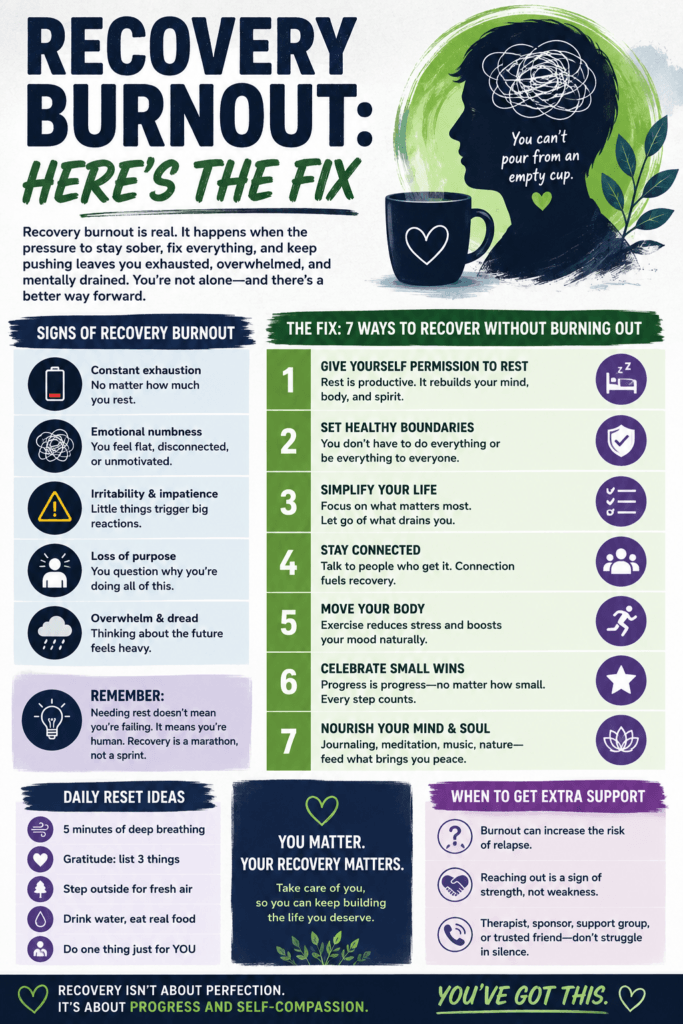
Burnout isn’t just feeling wiped after a bad day; it’s a sense of depletion that sticks around, even if you slow down. This is what I commonly notice when recovery burnout kicks in:
- Constant Fatigue: No matter how much you nap or relax, you’re still tired.
- Resentment or Boredom: Activities that once recharged you now feel pointless or annoying.
- Anxiety About Self-Care: Worrying that you’re recovering “wrong” or not doing enough.
- Restlessness: Even when you set aside time to rest, you can’t actually unwind.
- Mental Fuzziness: Trouble focusing or making decisions, even about small stuff.
It’s also common for people to start doubting whether self-care is working for them, questioning their routines, or even skipping rest altogether because it feels more like a burden than a boost.
Simple Ways to Fix Recovery Burnout
If recovery is draining you, there are a few practical things you can do that actually make a difference. These aren’t big, fancy methods; just tweaks that help reset your “off” switch so you can really rest.
- Drop the “All-or-Nothing” Thinking: You don’t need to do everything perfectly. Pick the strategies that feel good, and skip the ones that don’t. Good recovery is flexible, not rigid.
- Go Low-Tech and Unstructured: Ditch the tracking apps, timers, and checklists now. Playing music, daydreaming, or taking a slow walk, without turning it into a productivity challenge, helps way more than you might think.
- Listen to Your Signals: Your body already sends cues when it’s had enough, like tight shoulders, heavy eyelids, or a mental crash. Trust those first signs and don’t push through them in the name of being “consistent.”
- Simplify Your Rest: Instead of stacking endless wind-down routines, try doing less. Sitting quietly, doodling, or staring out the window can be surprisingly recharging.
- Connect With Others: Sometimes, what’s missing isn’t more solo recovery hacks, but a chat with someone who gets you. Social connection resets your mood and energy on a different level than alone-time ever could.
Reflecting on what energizes you versus what drains you is important. Journaling your rest experiences for a week may help you spot which routines truly help and which just add to your mental to-do list. Remember, the goal is to feel refreshed, not more boxed in.
What Recovery Should Actually Feel Like
Real recovery is about helping your mind and body recharge in a way that feels natural. When you’re on the right track, you’ll feel a little lighter, less tense, and actually look forward to moments of downtime. It isn’t about numbing out or disappearing into a pile of supplements. Here’s what balanced recovery looks like in practice:
- Rest feels satisfying, not stressful. You walk away from downtime feeling a bit fresher, even if everything isn’t perfect.
- You stop obsessing about self-improvement. The urge to “measure” your recovery fades, and you can focus on being present.
- You notice little shifts in mood. You’re less irritable, and things don’t get under your skin so easily.
Balanced recovery may also mean letting yourself feel bored or quiet without needing to fill the space. Over time, you can spot a gentle shift in your own mood and energy when rest serves its real purpose.
Challenges That Get In the Way of Real Recovery
Even with the best strategies, a few things can make true recovery trickier. Here are some popular roadblocks I’ve seen, plus how to deal with them:
- Perfectionism: Expecting your downtime to be totally peaceful or to break out magically just piles on more frustration. Imperfect rest is still valuable.
- Information Overload: Trying every trending self-care tip just clutters your schedule. Stick to basics, like good sleep, movement, and connection.
- Social Comparison: Seeing wellness influencers living their best chilled-out lives online? Their reality is probably not as curated as it looks. Unfollow, mute, or take a digital detox to help keep things real.
- Chronic Stress: When your stress load is high, deep recovery can take longer. That’s normal, and pushing for faster results doesn’t help. Instead, focus on small wins over time.
Perfectionism
Letting go of the idea that every recovery session needs to be deep and transformative is really important. Sometimes, a five-minute break is as good as it gets, and that’s okay. Starting small is more effective than pushing for an all-or-nothing approach.
Overthinking Every Step
Constantly analyzing whether you’re “doing recovery right” is exhausting. I’ve found it helps to pick one or two favorite rest activities and let the rest go, at least for a week or two. Simpler routines are easier to stick with and usually work better in the long run.
External Pressures
Family expectations or work deadlines sometimes get in the way of proper downtime. Setting small boundaries, even if it’s just a quick “no” to an extra commitment, frees up more space for rest. You don’t need hours; a few moments of real pause can make a difference.
Tips That Make Rest Really Work
After years of trial and error, these are the tips I keep coming back to when I’m feeling maxed out:
Switch Up Your Environment: Even changing rooms or getting outside for a bit can help your brain reset.
Move Your Body, Gently: Stress-relieving exercises.
Give Up on Multitasking: Trying to rest while scrolling or checking email doesn’t actually help you relax. Single-task your downtime to get better results.
These tricks make a bigger difference than following a strict protocol, and they’re easy to maintain over the long term. You’ll be surprised how effective simple, consistent actions are compared to complicated systems.
Common Questions About Recovery Burnout
You’re definitely not alone if you’re confused about recovery burnout. Here are a few common questions I hear, with the answers that help the most:
How do I know if I’m burnt out from recovery?
Answer: If you’re tired all the time, feel annoyed by your own self-care routines, or get anxious about “doing enough” to recover, you’re probably hitting recovery burnout.
Do I need to quit all routines to get actual rest?
Answer: Not at all. Just drop the routines that feel like chores for a while and focus on what feels enjoyable and refreshing instead.
Can real rest happen if I’m still stressed?
Answer: Yes, it just takes a little longer. Consistent, gentle rest (rather than high-pressure recovery) helps unwind stress over time.
Finding Balance and Moving Forward
The fix for recovery burnout is less about adding new routines and more about stripping recovery back to basics. You don’t need to earn your rest or tick off another item on your list to deserve to feel okay. Lofty self-care goals are tempting, but tuning into what really recharges you (even if it’s boring) is the real game changer. Keep things flexible and leave room for whatever fills your cup; rest can be as simple or as creative as you need it to be.
If you notice you’re falling back into old habits of over-scheduling recovery, pause and check in with yourself. Trust that small changes add up, and rest doesn’t need to be another hustle. Let go of “perfect” routines, and let your real needs guide you. Rest is not a luxury—it’s a vital piece of feeling your best in the long run.
Video: Why You’re Burned Out in Recovery (And How to Fix It)