If you’ve ever found yourself wondering why some people can take or leave certain habits while others get completely swept up, you’re not alone. Addiction isn’t just a fixed label or a black-and-white situation. It’s more like a spectrum, with lots of shades in between. Getting real about how addiction shows up in daily life can help us be more supportive, less judgmental, and a lot more helpful to ourselves and others struggling with tough habits or substances.
How Addiction Is More Than a Buzzword
“Addiction” gets tossed around a lot. Sometimes people use it casually, as in, “I’m addicted to coffee!” But the real deal goes much deeper. At its core, addiction involves repeatedly engaging in a behavior or using a substance, even when it’s clearly causing pain or trouble. This might look like compulsive gaming, drinking every night, or barely being able to function without checking your phone.
Decades of research show that addiction isn’t about willpower or bad choices. Brain changes, especially in the reward and motivation circuits, can make quitting feel nearly impossible. This is why someone might genuinely want to stop, but still end up relapsing. It’s a lot more complex than many headlines make it out to be.
I used to think addiction was only about drugs. But seeing friends struggle with everything from nicotine to social media made it clear that it shows up in all parts of life. Recognizing the wide reach of addiction can help us understand that it’s not something “other people” deal with. It’s something that can affect anyone.
Understanding the Spectrum of Addiction
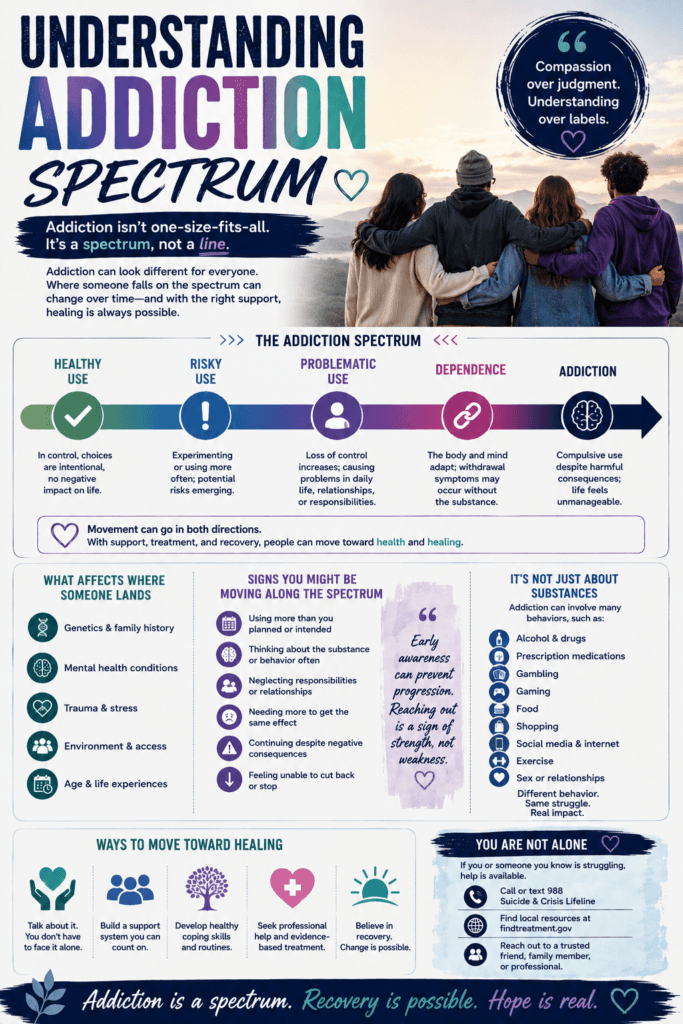
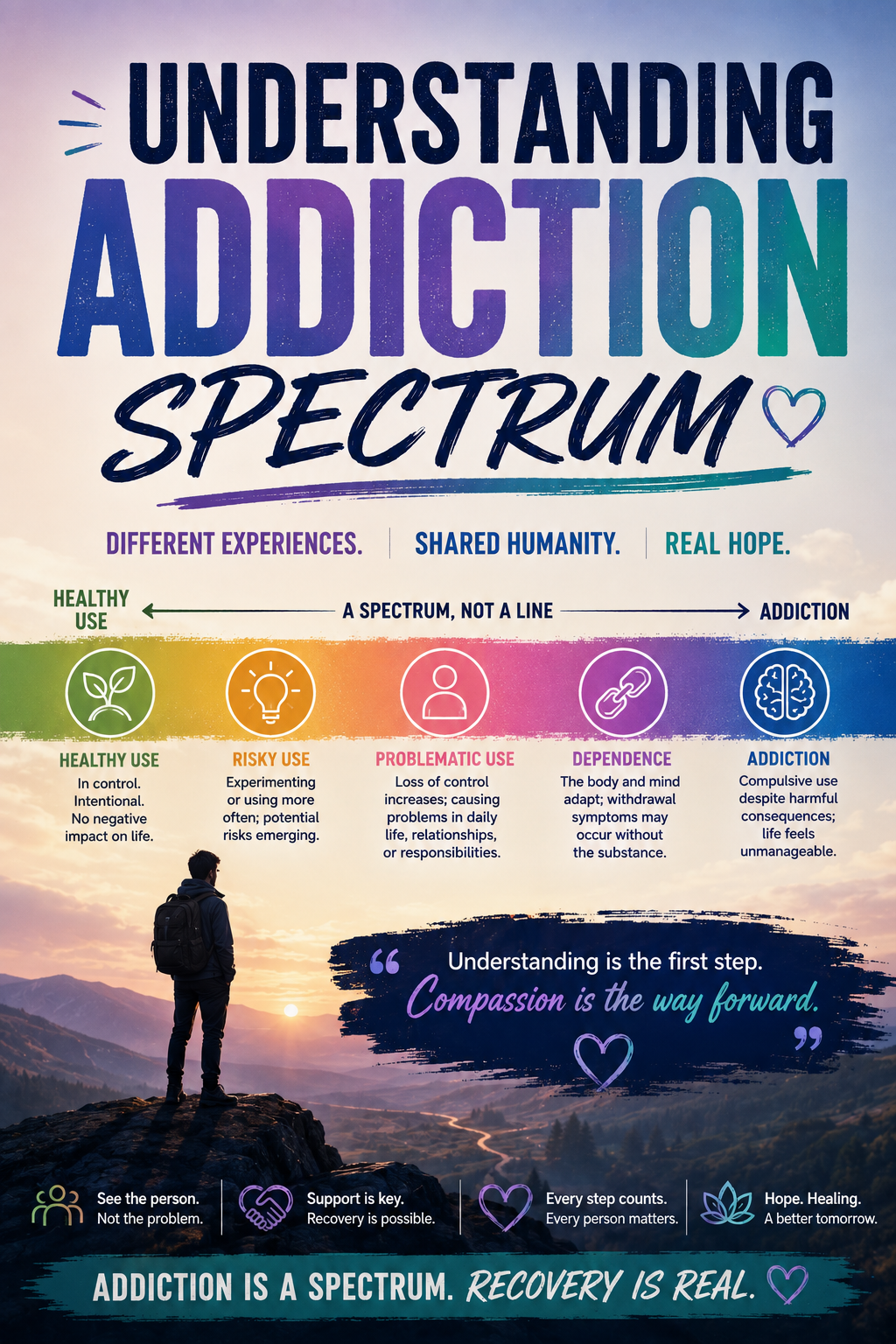
Addiction isn’t one-size-fits-all. Some people can have a glass of wine with dinner and move on, while others find themselves planning their day around the next drink. The spectrum idea means that behaviors and usage patterns can be mild, moderate, or severe.
On the “mild” end, maybe someone finds it hard to skip their nightly Netflix binge. In the middle, you might see someone who’s starting to miss work because they’re drinking more. The “severe” end includes daily drug use, major health issues, and life-changing consequences. Anywhere on this range, someone might need support or want to make changes.
- Substance Use: Things like alcohol, nicotine, cannabis, prescription meds, or illicit drugs. These are the classic examples most people think about when they hear “addiction.”
- Behavioral Addictions: Stuff that doesn’t involve a chemical, like gambling, internet use, shopping, or gaming. These can be just as tough to manage and are even recognized in big diagnostic manuals now.
It’s important to remember the spectrum isn’t a scale of “who has it worse.” It simply helps show how support, treatment, and even self-awareness might look different depending on where someone is at.
Getting Real About Risk Factors
Not everyone has the same risk of developing an addiction. Some people are more vulnerable based on a mix of genetics, environment, and life experiences.
- Genetics: Family history can actually make someone more likely to develop addictive patterns. It’s not a guarantee, but it changes the odds.
- Mental Health: People living with anxiety, depression, ADHD, or trauma are often more at risk because substances or habits might feel like a quick way to get relief, even if that relief doesn’t last.
- Social Environment: If someone grows up around a lot of drinking or drug use, it might feel “normal” to them. Peer pressure, isolation, stress, and even advertising can play a role.
I’ve known people who seemed to have every advantage in life but still ended up struggling. Others who’d been through far rougher times built tools for coping before things ever got out of hand. There’s no simple formula, but keeping these risk factors in mind opens the door to more compassion and earlier options for help.
Early Signs and How to Spot Them
You don’t have to hit rock bottom to have a problem. Here are some early signs that might mean someone is heading from habit into harmful territory:
- Spending way more time thinking about or engaging in a behavior than you want to
- Needing more to get the same effect (tolerance)
- Trying to cut down but not being able to
- Letting important things in life slide, like work or relationships
- Feeling anxious or irritable when you can’t do the behavior or use the substance
If you spot these signs in yourself or someone close to you, it’s actually a lot more common than you’d think. Reaching out or talking to a health professional can lead to options that don’t feel drastic but can really change the course early on.
Top Tips for Managing Addictive Behaviors
I’ve learned through both personal experience and research that there are a ton of strategies worth trying if you’re worried about addiction, either for yourself or someone else.
- Self-Awareness: Tracking habits, without judgment, can help you notice patterns. There are some pretty handy apps out there, but even writing it down in a notebook can make a difference.
- Set Limits: Making small, achievable changes (like cutting back on a couple of drinks a week) is often more effective than going “cold turkey” for many people.
- Stay Connected: Spending time with supportive friends or family, joining a hobby club, or even connecting online can keep loneliness, a big trigger, from taking center stage.
- Professional Help: If it feels like things are getting tough to manage, getting guidance from a counselor or addiction specialist doesn’t cross anyone off any list. It’s a smart, brave move.
- Practice SelfCompassion: Slipups happen. Being kind to yourself and trying again is really important for making long-term progress.
Common Types of Addiction and Everyday Examples
Addiction can show up in some surprising ways. Here are a few types and how they might look:
- Alcohol Addiction: Maybe it started as a drink to unwind, but now it’s tough to go a day without. “Functioning” with a hangover becomes routine, and missing events because of drinking is more common.
- Nicotine Dependence: Lighting up on break, after meals, or to manage stress is the everyday norm even if someone wishes they could quit for good.
- Internet and Gaming: Feeling uneasy or irritable when not connected, and spending longer and longer online or playing games to chase the original excitement.
- Prescription Medication Misuse: Someone might start taking more than prescribed or using medications to zone out, even if they were meant for temporary pain.
- Gambling Addiction: Increasing bets, chasing losses, lying to cover up, or stealing money to keep playing are all warning signs.
Seeing these in everyday life, not just in movies or dramatic stories, shows how much the spectrum model helps. It’s about recognizing the gray areas instead of waiting for things to fall apart.
Frequently Asked Questions
There are a ton of questions people have about addiction. Here are a few common ones I’ve heard:
Question: Can someone “grow out” of an addiction?
Answer: While some habits might fade over time, addiction rarely fixes itself on its own, especially if it’s on the more severe end. Support, treatment, and community often play a big part in lasting changes.
Question: Is it possible to have an addiction to something harmless, like shopping or exercise?
Answer: Absolutely. Even habits that sound “healthy” can get out of hand if they start taking over your life or causing you stress, debt, or conflict.
Question: What’s the difference between a habit and an addiction?
Answer: Habits are usually things you do automatically and can change if you want to. Addiction involves craving, loss of control, and continuing to do something despite negative effects.
Question: Are some people just more likely to get addicted?
Answer: Yes, due to genetics, mental health history, environment, and life stressors. But that doesn’t mean things can’t get better; there’s always room for change and support.
Bringing It All Together: Seeing Addiction as a Spectrum
Understanding addiction as a spectrum opens up more ways to support yourself and the people around you. It keeps the conversation open, helps reduce shame, and makes healthy changes feel possible at any stage. Even people who never develop a severe addiction can relate to the pull of certain habits and the effort it takes to mix things up.
If you or someone in your life is struggling, know that support is real and out there. Starting small, checking in with yourself, or reaching out to professionals and friends are all solid moves. That spectrum means nobody’s stuck at one point forever. Things can and often do get better with patience, support, and a touch of selfcompassion along the way.
Video: Addiction: It’s Not A Binary Condition