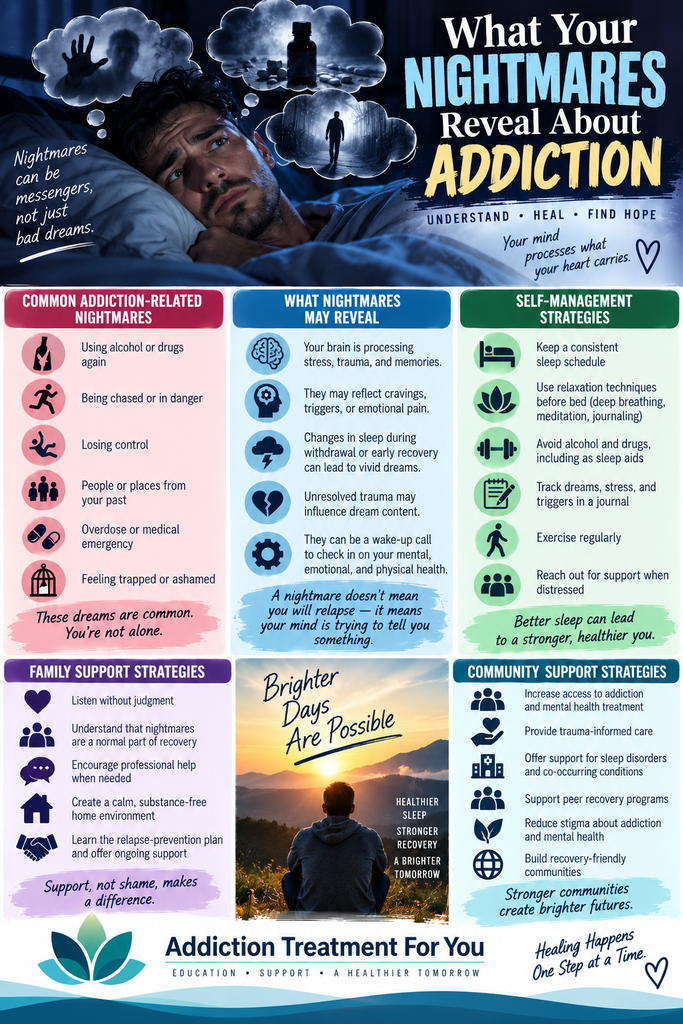
Nightmares can feel unusually vivid during active addiction and recovery. A person may dream about drinking or using drugs, being unable to find a substance, returning to an old environment, overdosing, being chased, losing control, or relapsing after months or years of recovery. These dreams can be frightening, but they do not automatically reveal a hidden desire to use substances or predict a relapse.
Instead, nightmares and substance-related dreams may reflect changes in sleep, stress, trauma, memories, cravings, withdrawal, medications, and the brain’s adjustment to life without a substance. Paying attention to recurring dreams can sometimes provide useful clues about emotional stress and recovery needs without treating dreams as a diagnosis.
Why Addiction Can Affect Dreams
Alcohol and many drugs alter normal sleep architecture. Alcohol, for example, may initially make someone sleepy while disrupting restorative sleep later in the night. Other substances can affect rapid eye movement (REM) sleep—the stage strongly associated with vivid dreaming.
When substance use decreases or stops, sleep patterns may change again. Some people experience unusually intense dreams during early recovery. REM rebound, withdrawal, anxiety, disrupted sleep schedules, and emotional adjustment may all contribute.
Common experiences can include:
- Vivid dreams involving alcohol or drugs
- Dreams about relapse
- Nightmares involving danger or loss of control
- Waking with anxiety, sweating, or a racing heart
- Difficulty returning to sleep
- Dreams involving people or places associated with previous substance use
- Feeling guilty after dreaming about using despite remaining abstinent
The important distinction is that dreaming about relapse is not the same as actually relapsing.
What Do Drug or Alcohol Dreams Mean?
There is no universal dictionary that can accurately translate a particular nightmare into a specific psychological meaning. Dreams are influenced by memory, emotions, recent experiences, sleep physiology, and individual circumstances.
For someone in recovery, a dream about using might simply reflect how important addiction and recovery have been in that person’s life. The brain may be processing memories associated with substances while adapting to new routines.
However, repeated substance-related nightmares can provide an opportunity to ask practical questions: Has stress increased? Are cravings becoming stronger? Has sleep deteriorated? Has the person recently encountered an old trigger? Are they becoming isolated from their recovery supports?
The dream itself may not be the warning sign. What is happening while the person is awake deserves more attention.
Nightmares, Trauma, and Addiction
Trauma and substance use disorders can sometimes occur together. People who have experienced traumatic events may have nightmares related to those experiences, and some may use alcohol or drugs in an attempt to suppress painful emotions or sleep disturbances.
This can create a difficult cycle:
Nightmares → poor sleep → emotional distress → substance cravings → substance use → disrupted sleep → more distress.
Using alcohol or drugs to control nightmares can eventually worsen sleep quality and create additional health problems. Persistent trauma-related nightmares deserve professional evaluation rather than self-treatment with substances.
Relapse Dreams Can Feel Surprisingly Real
One particularly distressing experience in recovery is waking from a dream believing that sobriety has been lost.
A person may briefly experience shame, fear, disappointment, or panic before realizing that the relapse happened only in the dream. Rather than viewing this as failure, the experience can become an opportunity to strengthen the recovery plan.
Ask: What do I need today to protect my recovery?
Self-Management Strategies
Nightmares should be considered alongside waking behaviors rather than interpreted in isolation. Practical strategies can help protect both sleep and recovery.
- Keep a sleep-and-dream journal. Record nightmares along with stress, cravings, sleep duration, medications, and major events. Patterns may become easier to recognize.
- Identify daytime triggers. Conflict, loneliness, grief, work stress, anniversaries, old friends, or exposure to substances may influence both cravings and dreams.
- Maintain a consistent sleep schedule. Regular sleeping and waking times can help stabilize sleep.
- Create a calming bedtime routine. Reading, relaxation exercises, quiet music, or mindfulness can help reduce nighttime arousal.
- Avoid using substances as sleep aids. Alcohol and non-prescribed drugs may temporarily cause drowsiness while ultimately disrupting sleep and increasing addiction risks.
- Use coping skills after a nightmare. Slow breathing, grounding exercises, drinking water, journaling, or briefly leaving the bed can help reduce anxiety.
- Contact recovery support when needed. If a nightmare triggers strong cravings, contacting a counselor, sponsor, peer, or trusted person can interrupt the escalation.
- Review the relapse-prevention plan. Increased nightmares combined with cravings, isolation, or thoughts of using may justify increasing support.
Family Support Strategies
Family members may not understand why someone in recovery becomes distressed after a substance-related dream. Statements such as “It was only a dream” can unintentionally minimize an experience that felt extremely real.
Families can help by:
- Listening without judging or overinterpreting the nightmare.
- Asking how the person feels rather than telling them what the dream means.
- Supporting healthy sleep routines.
- Recognizing changes in mood, cravings, isolation, or recovery participation.
- Encouraging counseling when nightmares become frequent or disruptive.
- Avoiding accusations that dreaming about drugs means the person secretly wants to relapse.
- Helping maintain a calm, substance-free home environment.
- Learning the individual’s relapse-prevention plan and knowing whom to contact during a crisis.
Support should focus on the person’s current needs rather than trying to decode every detail of a dream.
Community Support Strategies
Sleep problems can sometimes be overlooked in addiction treatment even though sleep and emotional regulation are closely connected. Recovery programs can benefit from asking patients about sleep quality, nightmares, trauma symptoms, and nighttime cravings.
Communities can support recovery by:
- Providing affordable addiction and mental-health treatment.
- Screening for sleep disorders and co-occurring psychiatric conditions.
- Offering trauma-informed behavioral healthcare.
- Providing evidence-based treatment for PTSD when appropriate.
- Supporting peer-recovery programs and mutual-help groups.
- Educating patients about sleep during withdrawal and early recovery.
- Providing crisis services for people experiencing severe psychological distress.
- Training healthcare professionals to discuss sleep as part of comprehensive addiction care.
Addressing sleep should be part of treating the whole person rather than viewed as an unrelated problem.
When Nightmares May Need Professional Attention
Occasional nightmares are common. Professional evaluation becomes more important when nightmares occur frequently, cause significant sleep deprivation, trigger intense cravings, contribute to substance use, or accompany severe anxiety, depression, trauma symptoms, or major changes in behavior.
Sudden sleep disturbances can also have medical causes or be associated with medications, withdrawal, or other sleep disorders. People withdrawing from alcohol or sedative drugs such as benzodiazepines should receive medical guidance because withdrawal can sometimes become dangerous or life-threatening.
What Your Nightmares Can—and Cannot—Tell You
A nightmare cannot reliably tell you that you are going to relapse. It cannot diagnose addiction, reveal a secret personality trait, or prove that recovery is failing.
What it can do is encourage reflection.
If nightmares repeatedly appear during periods of stress, cravings, loneliness, or poor sleep, those patterns may identify areas where additional support would be useful. Instead of asking, “What does this dream predict?” a more productive question may be, “What is happening in my life right now, and what support would help me?”
Conclusion
Nightmares during addiction recovery can be unsettling, especially when they involve drinking, drugs, overdose, or relapse. Yet a frightening dream does not erase recovery progress and should not automatically be interpreted as a prediction of future substance use.
The greatest value may come from using nightmares as prompts for awareness rather than prophecy. Improving sleep, identifying waking triggers, managing stress, addressing trauma, strengthening family communication, and reconnecting with treatment or recovery supports can turn a disturbing night into an opportunity to protect recovery.
Your dreams may reflect what your brain is processing, but your waking choices, treatment, relationships, and support system help determine what happens next.
Frequently Asked Questions
Here are some common questions:
1. Can addiction cause nightmares?
Yes. Alcohol and other drugs can alter normal sleep patterns, including REM sleep, which is strongly associated with vivid dreaming. Withdrawal, early recovery, stress, medications, and disrupted sleep can also contribute to nightmares.
2. Why do people in recovery dream about using drugs or alcohol?
Substance-related dreams are relatively common during recovery. The brain may be processing memories, emotions, habits, and experiences associated with previous substance use. A dream about using does not mean the person actually wants to relapse.
3. Does dreaming about relapse mean I am going to relapse?
No. A relapse dream does not predict future substance use. However, if the dream occurs alongside increased cravings, stress, isolation, or thoughts about using while awake, it may be useful to strengthen your recovery supports.
4. Why can addiction dreams feel so real?
Dreams can produce strong emotional and physical reactions. Someone may wake feeling guilty, frightened, sweaty, or confused and need a few moments to realize that the substance use occurred only in a dream.
5. Can withdrawal cause vivid dreams?
Yes. Withdrawal from certain substances can significantly change sleep. Some people experience vivid dreams or nightmares as their sleep cycle adjusts. Alcohol and sedative withdrawal can also be medically dangerous, so people with significant dependence should seek professional guidance rather than abruptly stopping on their own.
6. What is REM rebound?
REM rebound refers to an increase in REM sleep after it has previously been suppressed or disrupted. Because REM sleep is associated with vivid dreaming, changes in REM during withdrawal or recovery may contribute to unusually intense dreams.
7. Can nightmares reveal hidden addiction triggers?
Not reliably. There is no scientifically established dream dictionary that can tell someone exactly what a particular nightmare means. However, recurring dreams may encourage someone to examine waking-life factors such as stress, cravings, relationships, memories, or exposure to old environments.
8. Can trauma contribute to both nightmares and addiction?
Yes. Trauma-related symptoms can include recurring nightmares, sleep disturbances, anxiety, and intrusive memories. Some people use alcohol or drugs in an attempt to cope with these symptoms, potentially creating a cycle between poor sleep, emotional distress, and substance use.
9. Can alcohol help stop nightmares or improve sleep?
Alcohol may initially make someone feel sleepy, but it can disrupt sleep quality later in the night. Using alcohol as a sleep aid can also reinforce problematic drinking and is not an appropriate long-term treatment for nightmares.
10. What should I do after having a relapse dream?
Remind yourself that a dream is not a relapse. Ground yourself, slow your breathing, write down what you remember if helpful, and consider whether anything has recently changed in your stress level, cravings, sleep, or recovery routine.
11. Should I tell my counselor about substance-related nightmares?
It can be helpful, particularly if the dreams are frequent, distressing, interfering with sleep, or triggering cravings. A clinician can evaluate possible contributors such as trauma, medications, withdrawal, anxiety, or another sleep disorder.
12. How can I reduce nightmares during addiction recovery?
Helpful strategies can include:
- Maintaining consistent sleeping and waking times.
- Creating a relaxing bedtime routine.
- Tracking sleep, nightmares, stress, and cravings.
- Using grounding, mindfulness, or relaxation techniques.
- Avoiding alcohol or non-prescribed drugs as sleep aids.
- Exercising regularly when medically appropriate.
- Addressing trauma and mental-health symptoms professionally.
- Staying connected with treatment and recovery supports.
13. How can families respond when someone has addiction-related nightmares?
Listen without judgment and avoid telling the person that the dream proves they secretly want to use. Ask how they are feeling, encourage healthy sleep habits, and help them reconnect with professional or recovery support if the nightmare produces significant distress or cravings.
14. What role can communities play in addressing sleep problems during recovery?
Addiction programs can incorporate sleep assessments, mental-health screening, trauma-informed care, peer recovery support, and education about sleep changes during recovery. Sleep health can be an important part of comprehensive addiction treatment.
15. When should nightmares become a medical concern?
Professional evaluation is appropriate when nightmares are frequent, cause substantial sleep loss, interfere with daily functioning, trigger substance use or intense cravings, or occur alongside significant anxiety, depression, trauma symptoms, or other concerning behavioral changes.
16. Can medications contribute to unusual dreams?
Yes. Some medications can affect sleep and dreaming. Do not stop a prescribed medication because of nightmares without discussing the symptoms with the prescribing healthcare professional.
17. Does having nightmares mean recovery is failing?
No. Nightmares do not erase recovery progress. Sleep disturbances can occur during recovery for many reasons, and recognizing them provides an opportunity to address stress, sleep quality, trauma, or other treatment needs.
18. What is the most important lesson about nightmares and addiction?
Treat nightmares as possible prompts for reflection, not predictions. Instead of asking, “Does this dream mean I will relapse?” consider asking, “How am I doing while awake?” Changes in cravings, stress, sleep, relationships, and participation in recovery provide much more useful information about current recovery needs.
Video: Why you dream about using when you’re clean #addiction #recovery