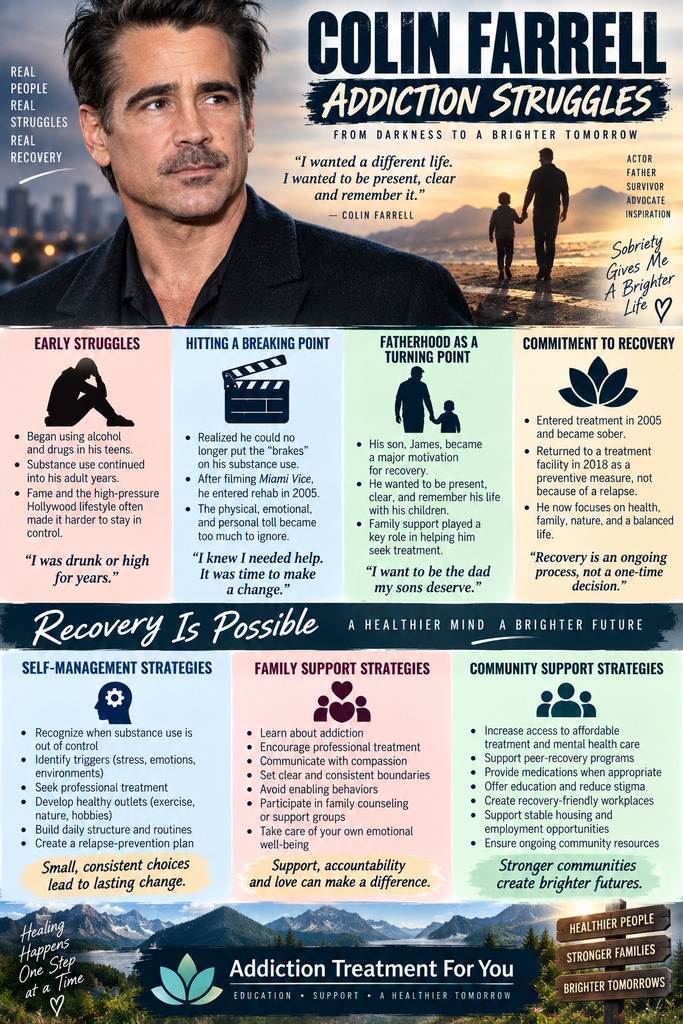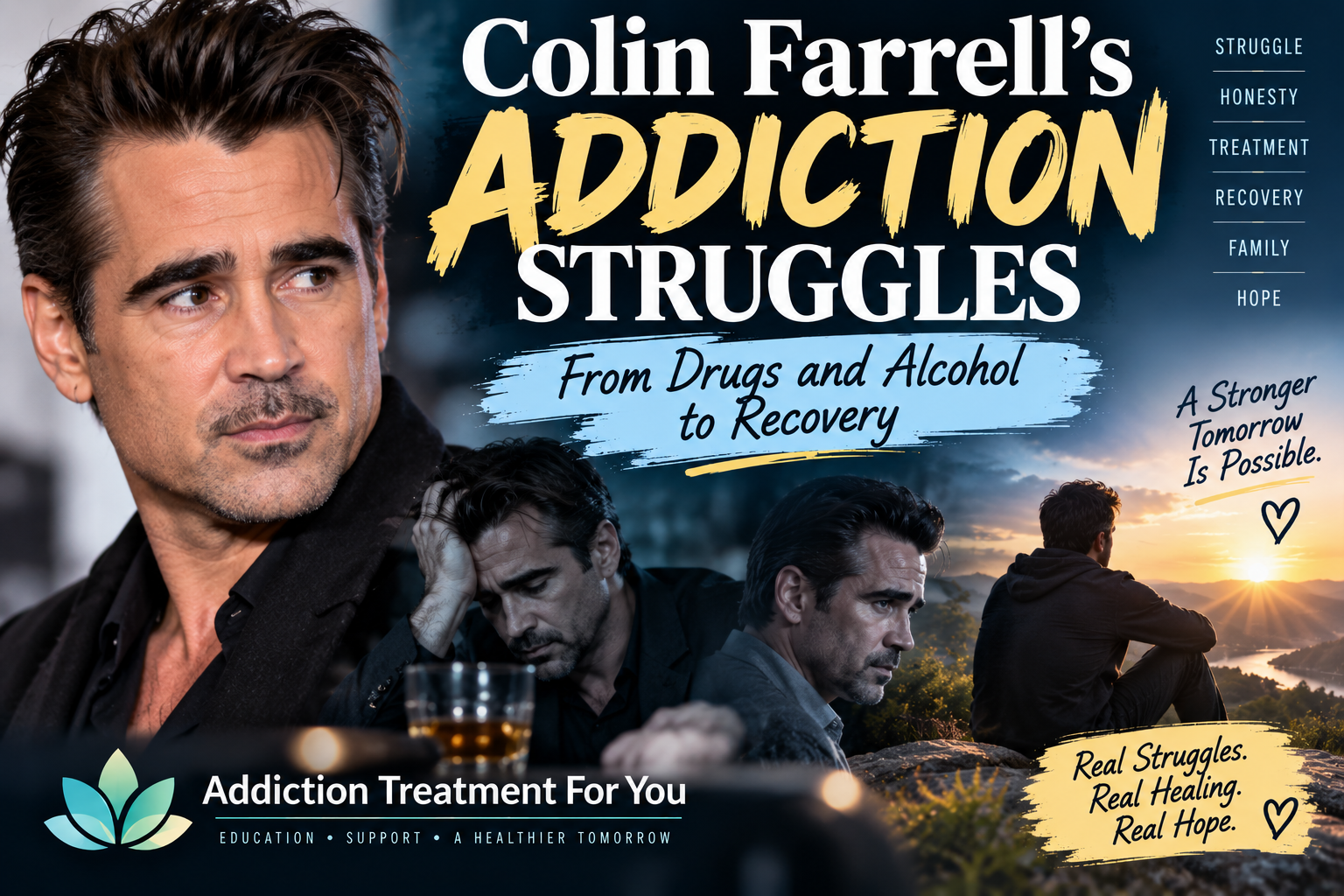
Colin Farrell is known around the world for his acting career, but behind his early Hollywood success was a serious struggle with alcohol and drugs. Farrell has spoken openly about substance use beginning during adolescence and escalating as he became famous. He eventually reached a point where, as he described it, he could no longer put the “brakes” on his behavior. After filming Miami Vice, he entered treatment in late 2005.
Farrell’s journey demonstrates that addiction can affect people regardless of talent, career success, or financial resources. It also highlights several important elements of recovery: recognizing when substance use has become uncontrollable, accepting help, finding healthier ways to manage emotions and stress, maintaining supportive relationships, and taking action when relapse feels possible.
How Colin Farrell’s Addiction Developed
Farrell has described being drunk or high regularly from his teenage years into adulthood. In later interviews, he recalled using alcohol and various drugs and eventually realizing how much substance use had consumed his life. During treatment, reviewing the amount of alcohol and drugs he had used over the years became an emotional confrontation with the seriousness of his problem.
Fame did not create all of Farrell’s difficulties. He has indicated that problematic substance use existed before his Hollywood career. However, success brought a demanding lifestyle in which alcohol, drugs, travel, long working hours, and constant stimulation could reinforce destructive patterns.
When Addiction Became Unmanageable
For years, Farrell believed he could periodically slow down after periods of heavy substance use. Eventually, he described reaching a stage where he could no longer find the “handbrake.” Following Miami Vice, his family helped persuade him to enter rehabilitation.
His experience illustrates an important feature of addiction: a person may recognize harmful consequences yet still struggle to control substance use. This is one reason telling someone to simply “use willpower” or “stop drinking” can be inadequate.
Fatherhood Became an Important Motivation
Farrell has repeatedly identified fatherhood as a powerful motivation for changing his life. In 2006, he explained that he wanted to be present, clear, and able to remember his experiences with his son James. More recently, he has again described his children—particularly his responsibilities toward James—as a major source of motivation for leaving alcohol and drugs behind.
Recovery ultimately has to involve the individual, but meaningful relationships can provide powerful reasons to pursue change.
Self-Management Strategies
Farrell’s recovery story provides useful opportunities to discuss strategies that can support people experiencing substance use problems. These should complement professional care rather than replace it.
- Recognize loss of control. Repeatedly using more than intended, or being unable to stop despite the consequences, can indicate that a professional assessment is needed.
- Identify personal triggers. Stress, loneliness, emotional pain, social environments, fame, work pressure, and easy access to substances can contribute to continued use.
- Seek professional treatment. Medical evaluation, behavioral therapies, medications when appropriate, and structured addiction programs can help.
- Develop healthy outlets. Farrell has discussed running, hiking, spending time in nature, taking road trips, watching movies, and spending time with his children as parts of his sober life.
- Build structure into everyday life. Regular sleep, exercise, meals, responsibilities, and meaningful activities can reduce unstructured periods associated with substance use.
- Create a relapse-prevention plan. Recognizing warning signs early allows someone to seek additional support before substance use resumes.
Taking Relapse Prevention Seriously
One particularly valuable part of Farrell’s story occurred years after his initial treatment. In 2018, reports said he voluntarily returned to a treatment facility because he was concerned about maintaining his sobriety amid increasing stress. Reports at the time indicated that he had not returned to using substances but sought additional support as a preventive measure.
This provides an important lesson: seeking additional treatment does not necessarily mean someone has failed or relapsed. Recognizing vulnerability and increasing support before substance use occurs can be an effective recovery strategy.
Family Support Strategies
Farrell has credited family with helping him enter treatment, and he has described the relief his recovery brought his mother. Addiction can create years of fear and uncertainty for relatives as they watch someone they love engage in dangerous behavior.
Families supporting someone with addiction can:
- Learn about substance use disorder and evidence-based treatment.
- Express concern without humiliation or name-calling.
- Encourage professional treatment rather than relying solely on promises to change.
- Establish clear and consistent boundaries.
- Avoid providing money or assistance that directly supports substance use.
- Recognize warning signs of relapse without attempting to control every decision.
- Participate in family counseling or support groups.
- Seek help for their own stress, anxiety, grief, or exhaustion.
Supporting recovery does not mean accepting harmful behavior. Compassion and accountability can exist together.
Community Support Strategies
Farrell has acknowledged that he had significant resources available when he entered recovery. He has specifically noted that being a famous actor did not make his struggle inherently harder than the experiences of people without his financial advantages.
That distinction matters because many people face barriers to treatment that celebrities may not experience. Communities can improve recovery opportunities by:
- Expanding affordable addiction and mental-health treatment.
- Providing evidence-based outpatient and residential programs.
- Increasing access to medications for substance use disorders when appropriate.
- Supporting peer-recovery programs and mutual-help groups.
- Providing overdose education and naloxone.
- Offering treatment for co-occurring mental-health conditions.
- Creating recovery-supportive workplaces.
- Providing stable housing and employment assistance.
- Reducing stigma toward people seeking addiction treatment.
What Colin Farrell’s Journey Can Teach Us
One of the strongest lessons from Farrell’s experience is that recovery is not simply a single decision made on a particular day. Long-term recovery often requires continued awareness of vulnerabilities and a willingness to seek additional support when necessary.
His experience also illustrates how priorities can change. Farrell has described how fatherhood, work, nature, exercise, and everyday experiences have felt different after becoming sober.
Recovery does not erase someone’s past. Instead, it can create an opportunity to build a life in which alcohol or drugs no longer determine daily decisions.
Conclusion
Colin Farrell’s journey from years of heavy alcohol and drug use to long-term recovery demonstrates how addiction can develop gradually until a person feels unable to regain control alone. Treatment, family involvement, fatherhood, healthier activities, and continued attention to relapse prevention have all appeared in his public accounts of recovery.
His experience should not be treated as a universal recovery formula. Every person’s circumstances are different, and treatment should be individualized. The broader message is that asking for help is not limited to the first days of recovery. People can seek additional support months or years later when stress, cravings, or old patterns begin threatening the progress they have made. Recovery can be an ongoing process of protecting health, strengthening relationships, and building a life worth maintaining.
Frequently Asked Questions
Here are some common questions:
1. Did Colin Farrell struggle with addiction?
Yes. Colin Farrell has spoken publicly about years of problematic alcohol and drug use. He has described substance use beginning when he was young and continuing as his acting career and fame grew.
2. What substances did Colin Farrell use?
Farrell has discussed using alcohol and various drugs during his years of substance use. When discussing celebrity addiction, it is important to rely on substances the individual has publicly acknowledged rather than speculate about undocumented drug use.
3. Did Colin Farrell’s addiction begin after he became famous?
No. Farrell has said his problems with alcohol and drugs began before he became a Hollywood star. Fame and the pressures surrounding his career became part of the environment in which those existing behaviors continued.
4. When did Colin Farrell realize he needed help?
Farrell has described eventually reaching a point where he could no longer put the “brakes” on his substance use. Following the filming of Miami Vice, he entered addiction treatment in 2005.
5. Did Colin Farrell’s family encourage him to enter treatment?
Yes. Farrell has discussed how people close to him helped him recognize the seriousness of his situation and encouraged him to seek treatment. Family involvement can sometimes help someone recognize problems that have become difficult to see on their own.
6. Did fatherhood influence Colin Farrell’s recovery?
Yes. Farrell has repeatedly discussed fatherhood as an important motivation for changing his life. He wanted to be emotionally present and able to remember his experiences with his children rather than living through the effects of alcohol and drugs.
7. Did Colin Farrell become sober after rehabilitation?
Farrell has publicly discussed living without alcohol and drugs following treatment and has spoken extensively about the changes sobriety brought to his life.
8. Did Colin Farrell return to treatment in 2018 because he relapsed?
Reports at the time indicated that Farrell voluntarily returned to a treatment facility as a preventive measure because he was concerned about maintaining his sobriety during a stressful period. It was reported as an effort to protect his recovery rather than treatment following a confirmed relapse.
9. What does his decision to seek additional help teach us about relapse prevention?
It demonstrates that people do not have to wait until they return to substance use before asking for help. Recognizing increasing stress, cravings, isolation, or other warning signs and increasing support early can be an important part of long-term recovery.
10. What self-management strategies can support addiction recovery?
Helpful approaches include:
- Identifying emotional and environmental triggers.
- Maintaining healthy daily routines.
- Seeking professional addiction treatment.
- Exercising and participating in meaningful activities.
- Developing healthier ways of managing stress.
- Maintaining supportive relationships.
- Creating a written relapse-prevention plan.
- Asking for additional help when warning signs appear.
11. How can family members support someone struggling with addiction?
Families can encourage treatment without humiliation, learn about substance use disorders, establish healthy boundaries, avoid enabling substance use, participate in family counseling when appropriate, and recognize that they also need emotional support.
12. Is family support enough to overcome addiction?
Not necessarily. Family relationships can provide motivation and support, but addiction may require professional treatment. Depending on the substance and individual, care can include medical management, behavioral therapy, medications, residential or outpatient treatment, and peer-recovery support.
13. What role can communities play in addiction recovery?
Communities can improve access to affordable treatment, mental-health services, peer recovery programs, medications for substance use disorders when appropriate, naloxone, stable housing, employment opportunities, and recovery-supportive environments.
14. Does seeking treatment again mean recovery has failed?
No. Returning to counseling, treatment, meetings, or another level of care can be a proactive response to warning signs. Long-term recovery often requires adjusting support as circumstances and stress levels change.
15. How did Colin Farrell replace his former lifestyle?
Farrell has spoken about enjoying activities such as exercise, hiking, spending time in nature, traveling, working, and spending time with his children. Developing rewarding activities without alcohol or drugs can help build a sustainable recovery lifestyle.
16. What is the biggest lesson from Colin Farrell’s addiction journey?
His experience illustrates that recovery is better understood as an ongoing process than a single decision. Recognizing vulnerability, accepting help, building healthier routines, maintaining supportive relationships, and seeking additional treatment when necessary can all contribute to protecting long-term recovery.
17. Can someone recover after years of alcohol and drug use?
Yes. Substance use disorders are treatable, and people can achieve meaningful long-term recovery even after years of problematic use. Outcomes vary, and individualized evidence-based treatment and continued support can improve the chances of sustained recovery.
18. What can families take away from Colin Farrell’s story?
Families do not have to wait until circumstances become catastrophic before encouraging help. Early intervention, compassionate communication, appropriate boundaries, professional treatment, and continued support can give someone more opportunities to change while also protecting the family’s well-being.
Video: