Vaping is frequently marketed as a less harmful alternative to traditional cigarettes, leading many people to underestimate its potential health consequences. However, the experience of Fraser Olender demonstrates that vaping can be associated with serious, potentially life-threatening complications. The Below Deck reality television personality experienced a frightening medical emergency in November 2025, later revealing that he had suffered vaping-associated lung injury and a heart attack at just 33 years old.
His experience highlights the importance of recognizing vaping-related health risks, seeking immediate medical attention for warning symptoms, and developing healthier coping strategies. It also demonstrates how family encouragement, professional healthcare, and community education can help individuals overcome nicotine dependence and make lasting lifestyle changes.
Fraser Olender’s Unexpected Health Crisis
Fraser Olender became widely recognized through Bravo’s Below Deck, where his demanding career required physical endurance, emotional resilience, and strong interpersonal skills. Behind his television personality, however, he faced an unexpected medical crisis that changed his perspective on vaping.
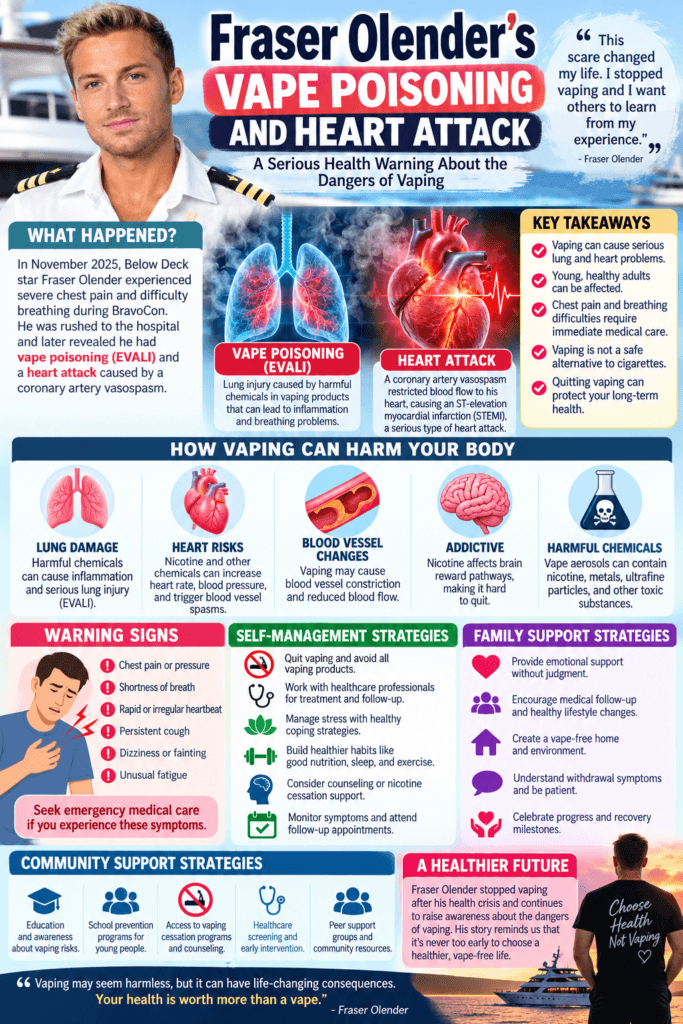
During BravoCon in November 2025, Olender experienced severe chest pain and difficulty breathing. He was rushed to the hospital and subsequently underwent additional examinations with medical specialists in London.
On December 5, 2025, he publicly revealed that he had experienced what he called vape poisoning, medically identified as e-cigarette or vaping-associated lung injury (EVALI). He also reported that a coronary artery vasospasm had restricted blood flow to his heart, resulting in an ST-elevation myocardial infarction (STEMI), a serious type of heart attack.
His experience illustrates several important concerns:
- Vaping-related complications can occur in younger adults.
- Severe chest pain and breathing difficulties require immediate medical evaluation.
- Coronary artery spasms can cause heart attacks even without a traditional cholesterol-related arterial blockage.
- Vaping-related lung injury may require hospitalization and specialized treatment.
- Recognizing warning symptoms early can help prevent life-threatening complications.
Olender publicly described the experience as extraordinarily painful and frightening. Following his hospitalization, he announced that he had stopped vaping and encouraged others to reconsider their use of electronic cigarettes.
Understanding Vape Poisoning and Its Effects on the Heart
The phrase vape poisoning is not a precise medical diagnosis. In Olender’s case, he used it to describe EVALI, a serious condition involving lung injury associated with vaping products.
EVALI can develop when inhaled substances trigger inflammation and damage within the lungs. Some vaping aerosols also contain nicotine, ultrafine particles, metals, and other chemicals that may negatively affect cardiovascular and respiratory health.
Although vitamin E acetate has been strongly associated with the 2019 EVALI outbreak, particularly involving THC-containing products, the specific substance responsible for Olender’s reported injury has not been publicly established.
How vaping may affect the cardiovascular system
- Blood vessel constriction: Nicotine and other exposures may contribute to vascular dysfunction and narrowing of blood vessels.
- Increased heart rate: Nicotine stimulates the sympathetic nervous system, potentially increasing cardiac workload.
- Elevated blood pressure: Nicotine exposure can temporarily increase blood pressure.
- Inflammatory responses: Certain vaping aerosols can contribute to oxidative stress and inflammation.
- Reduced oxygen delivery: Severe lung injury can impair oxygen exchange, while coronary artery spasms can reduce blood supply to heart muscle.
In Olender’s reported case, a coronary artery vasospasm was identified as the mechanism behind his heart attack. However, this does not mean every vaping-related heart attack occurs through the same mechanism.
Self-Management Strategies: Taking Control of Health and Recovery
Olender’s decision to stop vaping represents an important step toward protecting his cardiovascular and respiratory health.
In March 2026, he publicly reported that he remained vape-free. He acknowledged that quitting had been challenging but described feeling mentally clearer and less controlled by vaping.
For individuals experiencing nicotine dependence or recovering from vaping-related complications, self-management involves recognizing triggers, changing habits, and following appropriate medical recommendations.
Effective self-management strategies
- Develop a vaping cessation plan: Establish a quit date and identify situations that trigger cravings.
- Seek professional medical guidance: Discuss nicotine dependence and evidence-based cessation treatments with a healthcare professional.
- Monitor physical symptoms: Report persistent cough, shortness of breath, chest discomfort, or unusual fatigue.
- Attend follow-up appointments: Follow recommendations from cardiologists, pulmonologists, or primary care providers.
- Manage stress: Practice relaxation techniques, mindfulness, breathing exercises, and other healthy coping methods.
- Improve daily habits: Prioritize adequate sleep, balanced nutrition, and physical activity appropriate for medical clearance.
- Avoid vaping products: Following EVALI or a vaping-associated cardiac event, avoiding further exposure is particularly important.
- Build relapse-prevention skills: Identify high-risk situations and prepare alternative responses to nicotine cravings.
For individuals recovering from a heart attack, exercise intensity, medications, and return-to-work activities should be individualized by their medical team. Cardiac rehabilitation may also be recommended.
Important: Sudden chest pain, severe shortness of breath, fainting, or symptoms suggestive of a heart attack require emergency evaluation. Call 911 rather than attempting to manage these symptoms at home.
Family Support Strategies: Encouraging Recovery Without Judgment
Family members, partners, and close friends can play a meaningful role in helping someone recover from a serious vaping-related illness.
Olender’s boyfriend, Matt Rogers, was present during his hospitalization and publicly expressed concern about his health. In December 2025, Rogers shared that Olender was improving and encouraged viewers to stop vaping.
This illustrates how emotional reassurance and practical assistance can help someone navigate a frightening medical experience.
Ways families can provide support
- Offer emotional reassurance: Listen to concerns about health, recovery, and nicotine withdrawal without criticism.
- Encourage medical follow-up: Help organize appointments, transportation, and prescribed treatment routines when needed.
- Create a vape-free environment: Reduce exposure to vaping products and situations that encourage nicotine use.
- Recognize withdrawal symptoms: Understand that irritability, restlessness, difficulty concentrating, and cravings may occur during nicotine cessation.
- Promote healthy activities: Encourage shared meals, relaxing activities, and medically appropriate exercise.
- Celebrate recovery milestones: Recognize progress without creating pressure or unrealistic expectations.
- Learn emergency warning signs: Understand when chest pain or breathing difficulties require immediate medical assistance.
- Respect independence: Support the person’s decisions while avoiding excessive monitoring or blame.
Family support should emphasize compassion rather than shame. Nicotine dependence involves neurobiological, behavioral, and environmental factors, making cessation more complicated than simply deciding to stop.
Community Support Strategies: Raising Awareness and Preventing Vaping-Related Harm
Olender’s decision to share his experience publicly created an opportunity to educate others about the potential dangers of vaping.
Community organizations, healthcare professionals, schools, and public health agencies can use such experiences to promote evidence-based prevention and cessation programs.
Community strategies for vaping prevention and recovery
- Public health education: Explain the cardiovascular and respiratory risks associated with vaping.
- School prevention programs: Educate adolescents and young adults about nicotine dependence and vaping-related health complications.
- Smoking and vaping cessation services: Provide access to counseling, behavioral interventions, and appropriate medications.
- Healthcare screening: Encourage clinicians to ask about vaping during routine medical visits.
- Peer support programs: Connect individuals trying to quit with others who have similar experiences.
- Accessible treatment: Reduce financial, geographic, and social barriers to nicotine cessation services.
- Media awareness campaigns: Share medically accurate information that challenges misconceptions about vaping safety.
- Mental health resources: Address anxiety, stress, and other factors that may contribute to nicotine use.
Helpful community resources
The following resources can support people who want to stop vaping:
- Smokefree.gov — Free cessation information, tools, and personalized quit support.
- Smokefree Teen — Resources designed for adolescents and young adults.
- 1-800-QUIT-NOW — Connects callers with state tobacco cessation programs.
- CDC Tobacco Prevention and Control — Educational information about nicotine, tobacco, and vaping risks.
- American Lung Association — Lung health education and smoking cessation support.
The Psychological Challenges of Quitting Vaping
Nicotine dependence is not simply a physical habit. It can involve powerful behavioral associations, emotional responses, and changes in brain reward pathways.
Nicotine stimulates nicotinic acetylcholine receptors, influencing dopamine release in reward-related neural circuits. Repeated exposure can reinforce use and contribute to dependence.
When individuals stop vaping, withdrawal symptoms can create discomfort and increase the likelihood of returning to nicotine.
Common challenges include:
- Strong cravings for nicotine.
- Irritability, anxiety, or restlessness.
- Difficulty concentrating.
- Changes in appetite and sleep patterns.
- Emotional triggers associated with stress.
- Social environments where vaping is common.
Evidence-based behavioral counseling can help individuals recognize these patterns and develop alternative coping strategies.
For adults with nicotine dependence, clinicians may consider nicotine replacement therapy, varenicline, or bupropion when appropriate. These treatments have established roles in smoking cessation, although their use specifically for vaping cessation requires individualized clinical judgment. People recovering from a recent heart attack should discuss medication options with their treating clinician.
Olender’s experience demonstrates that even a frightening health event does not automatically eliminate the psychological challenges associated with nicotine dependence.
Lessons From Fraser Olender’s Experience
Olender’s health crisis provides several broader lessons about vaping, cardiovascular health, and the importance of supportive recovery environments.
First, vaping should not be considered harmless simply because it does not involve burning traditional cigarettes. Although exposure risks differ between cigarettes and electronic nicotine delivery systems, vaping can still introduce harmful substances into the respiratory and cardiovascular systems.
Second, serious cardiovascular events are not limited to older adults. Young adults can experience coronary artery spasms, arrhythmias, and other cardiac complications.
Third, medical emergencies can become powerful motivations for behavior change. However, sustainable recovery often requires continued education, medical guidance, and behavioral support.
Finally, sharing personal health experiences can encourage others to recognize warning signs and seek help. Public awareness is most effective when personal stories are paired with accurate medical information rather than fear or stigma.
Conclusion: Turning a Health Crisis Into Awareness and Prevention
Fraser Olender’s reported vaping-associated lung injury and heart attack illustrate how a seemingly routine habit can be connected to serious medical consequences. His hospitalization, decision to stop vaping, and willingness to discuss his experience publicly offer important lessons about prevention, early intervention, and long-term health.
Self-management strategies help individuals recognize nicotine dependence, develop healthier coping behaviors, and follow medical recommendations. Family support provides encouragement, emotional reassurance, and practical assistance during recovery. Community programs expand access to education, cessation resources, and evidence-based healthcare.
The central message of Olender’s experience is that protecting health requires awareness, informed decisions, and meaningful support. Quitting vaping can be challenging, but professional care, supportive relationships, and accessible community resources can help individuals build healthier, nicotine-free lives.
Frequently Asked Questions and Answers
1. What happened to Fraser Olender after vaping?
Fraser Olender reported experiencing a serious medical emergency in November 2025 involving vaping-associated lung injury, commonly called EVALI, and a heart attack. He described severe chest pain and breathing difficulties that required emergency medical attention. His experience highlights the importance of recognizing potentially life-threatening complications associated with vaping.
2. What is vape poisoning?
Vape poisoning is an informal term that may refer to several different conditions, including nicotine toxicity or lung injury associated with vaping. In Olender’s case, he used the term to describe e-cigarette or vaping-associated lung injury (EVALI).
EVALI involves inflammation and damage to lung tissue associated with exposure to substances inhaled through vaping products. Severe cases may cause respiratory failure and require hospitalization.
3. Did Fraser Olender suffer a heart attack?
Yes. Olender publicly reported experiencing an ST-elevation myocardial infarction (STEMI), a serious type of heart attack. He attributed the event to a coronary artery vasospasm, which occurs when a coronary artery suddenly constricts, reducing blood flow to the heart muscle.
His medical details come from public reporting and his own statements, not independently reviewed medical records.
4. How old was Fraser Olender when he experienced his heart attack?
Olender was reportedly 33 years old when he experienced his medical emergency in November 2025. His experience emphasizes that serious cardiovascular complications can occur in younger adults, even when they do not have the typical risk factors associated with coronary artery disease.
5. What symptoms did Fraser Olender experience?
Olender described severe chest pain and difficulty breathing. These symptoms can occur with heart attacks, coronary artery spasms, and serious respiratory conditions.
Other warning signs that require medical attention include:
- Chest pressure or tightness.
- Sudden shortness of breath.
- Dizziness or fainting.
- Rapid or irregular heartbeat.
- Pain spreading to the arm, jaw, back, or shoulder.
- Severe weakness or cold sweating.
Anyone experiencing symptoms suggestive of a heart attack should call 911 immediately.
6. Can vaping really cause a heart attack?
Vaping may contribute to cardiovascular problems through nicotine exposure, inflammation, oxidative stress, and blood vessel dysfunction. Nicotine can increase heart rate and blood pressure, while other chemicals in vaping aerosols may damage blood vessels.
The American Heart Association has highlighted growing evidence linking vaping exposures to cardiovascular harm. However, the precise risk of heart attacks from different vaping products remains under investigation.
7. What is a coronary artery vasospasm?
A coronary artery vasospasm occurs when the muscular wall of a coronary artery suddenly contracts, temporarily narrowing the artery and restricting blood flow to the heart.
If the spasm is severe or prolonged, it can cause myocardial ischemia or a heart attack, even without a cholesterol-related arterial blockage.
8. Has Fraser Olender stopped vaping?
Yes. Olender announced in December 2025 that he had stopped vaping following his hospitalization. In a March 9, 2026 update, he reported that he remained vape-free and described feeling mentally clearer and less controlled by nicotine dependence.
9. Is Fraser Olender recovering from his heart attack?
According to his public updates, Olender has been recovering and has reported improved well-being. His boyfriend, Matt Rogers, also publicly stated in December 2025 that Olender was doing much better.
His complete cardiac recovery, long-term prognosis, and current medical treatment have not been publicly established.
Vaping Risks and Long-Term Health
10. Is vaping safer than smoking traditional cigarettes?
Electronic cigarettes generally expose users to fewer combustion-related toxicants than traditional cigarettes, but they are not harmless. Vaping aerosols can contain nicotine, heavy metals, ultrafine particles, and other potentially harmful substances.
For adults who smoke cigarettes, completely switching to regulated nicotine vaping products may reduce exposure to some toxicants. However, individuals who do not smoke should not begin vaping, and avoiding both products is preferable for long-term health.
11. Can vaping cause permanent lung damage?
Yes, severe vaping-associated lung injury can potentially cause lasting respiratory complications. Some individuals recover substantially with treatment, while others may experience persistent breathing difficulties or reduced lung function.
The outcome depends on the severity of injury, underlying health conditions, and the effectiveness of treatment.
12. Can young, healthy adults develop vaping-related complications?
Yes. Younger adults can experience nicotine dependence, lung injury, and cardiovascular complications. Being physically active or having no known heart disease does not eliminate these risks.
Olender’s experience demonstrates why concerning symptoms should never be dismissed solely because someone is young.
13. What chemicals in vaping products may be harmful?
Potentially harmful substances include nicotine, formaldehyde, acrolein, certain metals, and other compounds produced during aerosol formation.
Vitamin E acetate was strongly linked to the 2019 EVALI outbreak, particularly involving THC-containing vaping products. However, it has not been established as the cause of every EVALI case, and the specific substance involved in Olender’s reported illness remains unclear.
14. Can vaping-related heart problems improve after quitting?
Some cardiovascular effects associated with nicotine exposure, such as temporary increases in heart rate and blood pressure, may improve after nicotine cessation.
However, recovery from a heart attack or coronary artery vasospasm depends on the extent of injury and any underlying cardiovascular conditions. Continued medical monitoring may be necessary.
Self-Management and Recovery Strategies
15. What is the best way to quit vaping?
An effective cessation plan combines behavioral strategies, professional guidance, and ongoing support.
Helpful steps include:
- Establishing a quit date.
- Identifying nicotine cravings and emotional triggers.
- Removing vaping products from the home.
- Developing alternative stress-management techniques.
- Seeking behavioral counseling.
- Discussing appropriate cessation medications with a healthcare professional.
- Creating a plan to manage cravings and prevent relapse.
Individuals recovering from a heart attack should discuss nicotine cessation medications with their treating clinician.
16. What are common nicotine withdrawal symptoms?
Nicotine withdrawal can produce irritability, anxiety, difficulty concentrating, restlessness, increased appetite, sleep disturbances, and strong cravings.
Symptoms often begin within hours of stopping nicotine and are frequently most intense during the first several days. They generally decrease over subsequent weeks, although cravings may persist longer.
17. How can someone manage stress without vaping?
Healthy stress-management strategies include mindfulness, meditation, counseling, journaling, supportive conversations, and enjoyable hobbies.
Regular physical activity can also improve stress regulation, but individuals recovering from cardiac complications should follow medical recommendations regarding exercise.
18. What medical follow-up may be needed after vaping-related lung injury and a heart attack?
Depending on the clinical findings, follow-up may involve a cardiologist, pulmonologist, and primary care provider.
Medical evaluation may include electrocardiograms, echocardiography, pulmonary function testing, oxygen monitoring, or additional imaging when indicated.
Treatment plans should be individualized according to the person’s symptoms and recovery.
Family and Community Support
19. How can families help someone recover from vaping-related complications?
Families can provide emotional reassurance, encourage medical follow-up, and help create a supportive, vape-free environment.
They can also learn about nicotine withdrawal, encourage healthy coping behaviors, and recognize recovery milestones without judgment or criticism.
20. What should family members avoid when supporting someone who is quitting vaping?
Family members should avoid shaming, threatening, blaming, or repeatedly criticizing someone experiencing nicotine dependence.
These responses can increase emotional distress and discourage open communication. Compassionate encouragement, practical assistance, and healthy boundaries are generally more constructive.
21. How can communities help prevent vaping-related illnesses?
Communities can support prevention through public education, school-based programs, healthcare screening, and accessible cessation services.
Community organizations can also provide peer support, counseling referrals, and educational campaigns that explain the risks of nicotine dependence and vaping-related health complications.
22. Where can someone find help to stop vaping?
Several free resources are available:
- Smokefree.gov — Personalized quitting tools and educational resources.
- Smokefree Teen — Support designed for adolescents and young adults.
- 1-800-QUIT-NOW — Free access to state tobacco cessation programs.
- American Lung Association — Respiratory health education and cessation resources.
- CDC Tobacco Prevention and Control — Information about nicotine dependence and tobacco-related health risks.
Lessons From Fraser Olender’s Experience
23. Why did Fraser Olender share his medical experience publicly?
Olender explained that he wanted others to understand the potential dangers of vaping and reconsider their own nicotine use.
His public statements emphasized the seriousness of his medical emergency and his gratitude for surviving the experience.
24. What can people learn from Fraser Olender’s experience?
His experience provides several important lessons:
- Vaping is not risk-free.
- Serious medical complications can affect younger adults.
- Chest pain and breathing difficulties should never be ignored.
- Nicotine dependence can make quitting challenging.
- Medical treatment and supportive relationships are important during recovery.
- Public education can help individuals make informed health decisions.
25. What is the most important message from Fraser Olender’s vaping-related health crisis?
The most important message is that vaping can expose individuals to serious health risks, and early recognition of symptoms can be lifesaving.
Olender’s decision to stop vaping and share his experience demonstrates how a medical crisis can motivate healthier behavior and encourage public awareness.