Recovery from addiction is a complex adventure full of ups and downs. Factors outside someone’s control, such as family support, peer pressure, social environments, and cultural norms, often play a significant role in shaping the process’s success. Figuring out how external influences affect addiction recovery really helps in creating strategies for lasting change. I’m sharing some key points and guidance drawn from my experience working with recovery communities, academic studies, and personal observations.
How Family Involvement Shapes Recovery
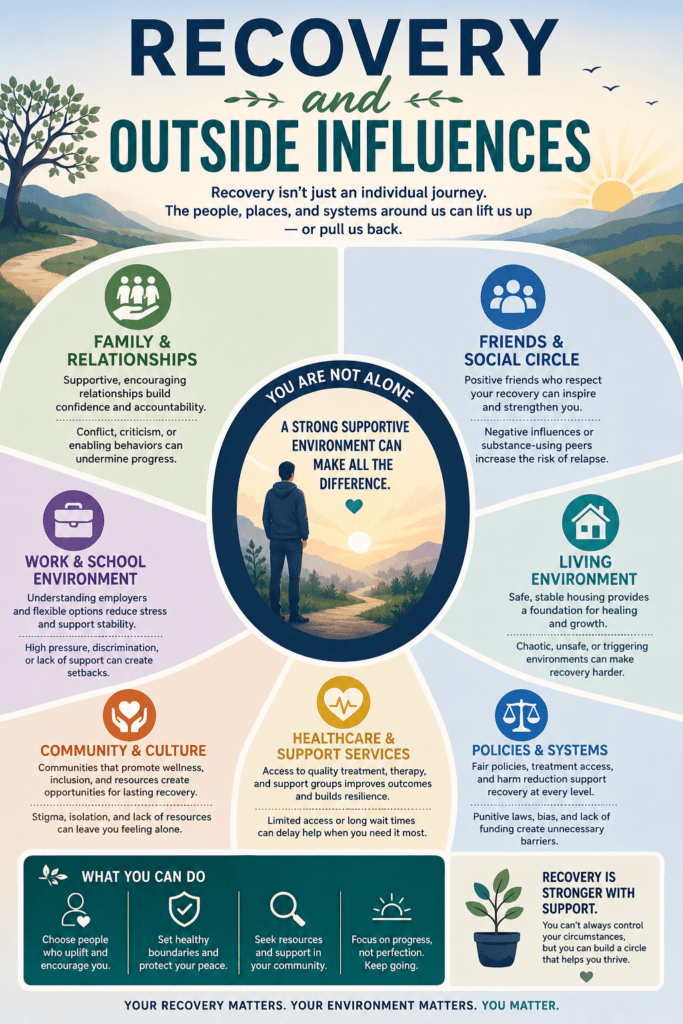
Family members are often the first line of support, but the nature of their involvement matters a lot. Supportive family relationships prove pretty helpful when someone is trying to break free from addiction. Encouragement, positive communication, and healthy boundaries help people feel safer and more motivated. I’ve seen people who know their family has their back make it through setbacks with a lot more resilience.
On the flip side, families with unresolved conflicts, enabling behaviors, or even distrust can make recovery harder. If a loved one gives in to requests for money that fuel substance use or regularly covers for the person’s addictive behavior, progress is often stalled. Recognizing the difference between support and enabling is really important here. Group therapy sessions, family counseling, and open discussions at home are super useful tools for keeping everyone on the right track.
Peer Influence: Friends and Social Circles
Friends have a huge pull, sometimes more than family. Hanging out with people who continue using alcohol or drugs can trigger cravings or lead to relapse, even for those committed to recovery. This social environment can feel hard to escape, especially when friendships go back years. But connecting with peers who support sober living can make a real difference. Many people find sober support groups, 12-step meetings, or recovery communities helpful for building new, positive relationships.
Realizing it’s okay to set limits or even let go of harmful relationships is a powerful part of recovery. Choosing activities where substance use isn’t the centerpiece and seeking out friends who share similar recovery goals builds a support network that keeps motivation high, especially during tough times.
The Role of Culture and Society
Culture and society influence recovery in more subtle but still impactful ways. In some places, drinking or recreational drug use is widely accepted and even seen as a rite of passage. There might be stigma attached to admitting an addiction, making it tougher to open up or ask for help. I’ve noticed that cultures with open conversations around mental health and addiction tend to provide safer spaces for individuals to come forward and seek treatment.
Society’s attitudes about addiction as a moral failing versus a health condition also matter. Medical perspectives on addiction remove some of the shame and encourage people to see recovery as a process, not a final destination. Governments and advocacy groups are working to reduce stigma, but it still lingers, so finding supportive communities (either in person or online) can be a relief.
Environmental Triggers and Daily Life
Environments shape habits, and daily routines can either support recovery or challenge it. Coming home to a place full of triggers, like substances tucked away or high-stress situations, tends to make recovery much harder. Simple steps like keeping living areas substance-free, creating new routines, and finding peaceful or inspiring spaces help reinforce positive choices.
Workplace environments matter too. If colleagues hold regular happy hours or there’s a lot of stress with little support, the risk of relapse may be higher. Having a plan for tricky situations like social gatherings, travel, or holidays helps people manage cravings and stay on track. Personally, I’ve seen how even small changes, like switching up a daily route to avoid old hangouts, can reduce temptation and offer new freedom.
Access to Resources and Community Support
Access to resources such as healthcare, therapy, or mutual support meetings is often overlooked. Rural areas or places with limited treatment centers can leave people feeling isolated or unsupported. On the other hand, areas with active community resource centers, counselors, and easily accessible help lines make asking for help and staying involved in recovery much less challenging.
Community efforts, such as local support groups, sober events, and volunteering, help people feel connected and valued. Some people thrive in environments that offer meaningful roles or responsibilities, providing a sense of purpose during recovery. Volunteering, joining a faith community, or participating in group hobbies creates positive feedback loops that reinforce healthy behaviors. In addition, the presence of role models or “sponsors” can give a boost to those just starting out, making the recovery path feel more accessible and less lonely. With more resources and encouragement, individuals are more likely to stay motivated and reach out when tough situations arise.
Barriers and Obstacles Along the Way
Even with support, there are a bunch of common obstacles. These can include:
- Lack of Understanding: Loved ones or employers may not “get” addiction, leading to judgment or unrealistic expectations.
- Transportation Issues: Limited or no access to a car or public transit makes it tough to attend appointments or meetings.
- Financial Stress: The cost of treatment, therapy, or time off work can add extra challenges.
- Mental Health Stigma: Fear of appearing “weak” or of feeling ashamed can keep people from opening up about setbacks.
I always encourage people to reach out for help early; there’s almost always a creative way to get around these barriers, even if it takes a few tries. Telehealth, virtual support groups, sliding fee scales, and nonprofit aid organizations are all worth checking out if local options seem limited.
Managing Triggers From Social and Physical Environments
Learning to manage triggers is part of the recovery toolkit. This can mean changing social habits, such as declining party invitations or choosing restaurants without bars. Setting up home with visual reminders of why recovery matters, such as photos, notes, or positive quotes, can give a boost when things get tough. I’ve found apps that track moods and daily progress to be pretty handy as well. Choosing new hobbies or outdoor activities can also make it easier to fill time and energy with positive experiences. For example, taking up gardening, joining an art class, or even just regular walks in nature can help redirect attention and make recovery goals more sustainable. These little shifts in environment and habit gradually tip the balance toward healthier routines.
Handling Letdowns and Setbacks
Nobody’s recovery runs perfectly smoothly. Relapses or struggles along the journey are more common than many realize. Getting back on track, talking it through with a trusted support person, and reviewing what led up to the setback build resilience for the next challenge. Keeping a “setback plan” written down can prevent panic when things don’t go as planned. Knowing that setbacks are a normal part of change, not a sign of failure, helps reduce shame and encourages progress even after a slip.
Practical Tips for Creating a Supportive Environment
- Set Clear Boundaries: Talk openly with friends and family about your recovery needs and limits.
- Stay Connected: Make it a habit to check in regularly with support groups, mentors, or counselors.
- Change Up Daily Patterns: Even small tweaks, like a new exercise routine or hobby, help break old associations.
- Prepare for High-Risk Situations: Have a script or an excuse for refusing substances, and a plan to exit awkward situations quickly.
- Celebrate Small Wins: Progress in recovery isn’t always dramatic, so take time to notice and reward small steps forward.
Pairing these practical strategies with ongoing support builds confidence and sustains motivation. Sometimes, reaching out to someone who has been through recovery can provide much-needed perspective and encouragement. Regularly checking in with recovery contacts or sponsors makes it easier to address issues before they become overwhelming.
Frequently Asked Questions
Question: Why do outside influences matter so much in recovery?
Answer: Recovery doesn’t happen in a bubble. People are shaped by their surroundings and relationships, so positive external influences provide practical help while negative ones can slow down or derail progress.
Question: How can I deal with friends who don’t support my recovery?
Answer: Set boundaries, explore new social circles, and focus on activities that don’t revolve around substance use. It takes practice, but growing a support network is possible even if it starts small.
Question: What steps can families take to be helpful instead of enabling?
Answer: Family members can get involved in their own education, participate in counseling, and support loved ones’ goals without helping maintain unhealthy habits.
Bringing It All Together
Recovery unfolds in all kinds of environments, and outside influences can shape progress for better or worse. Building awareness, support, and healthy routines makes sticking with recovery way more doable. Approaching each influence—family, friends, society, and daily life—with practical strategies helps individuals regain momentum, even when challenges arise. Everyone’s adventure is unique, but understanding how the world around us shapes recovery opens new ways to thrive. Staying flexible and seeking support makes the path forward feel possible, no matter what hurdles appear along the way.
Video: Addiction Recovery: Why Your Environment Matters More Than Willpower