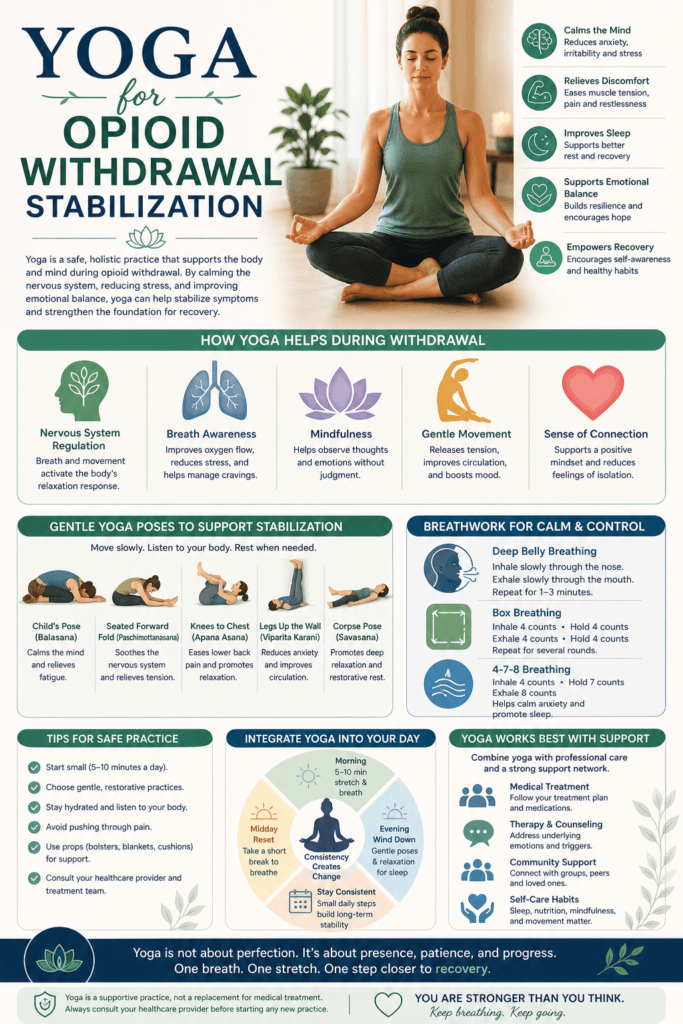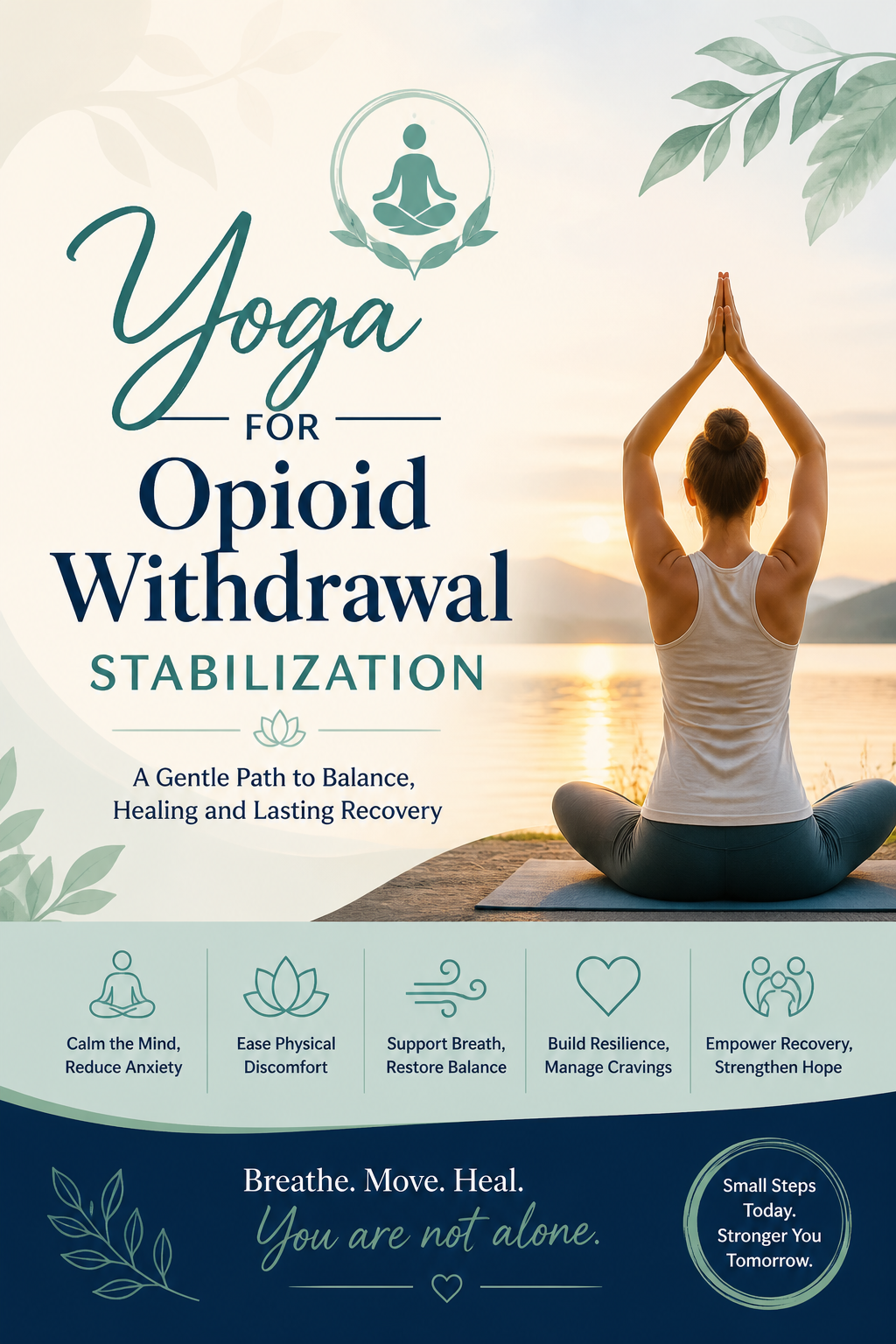
Opioid withdrawal is a physically and emotionally demanding stage of recovery that often requires a combination of medical care and supportive strategies. In recent years, yoga has gained recognition as a valuable complementary approach for stabilizing individuals during this process. By combining gentle movement, controlled breathing, and mindfulness, yoga helps regulate the nervous system, reduce stress, and ease common withdrawal symptoms such as anxiety, restlessness, and sleep disruption. When thoughtfully integrated into a broader treatment plan, yoga can provide individuals with a practical, empowering tool to support early recovery and promote a greater sense of balance.
Yoga for Opioid Withdrawal Stabilization: A Holistic Path to Recovery
Opioid withdrawal is one of the most challenging phases in the recovery journey, often marked by physical discomfort, emotional distress, and intense cravings. While medical interventions remain essential, complementary approaches are gaining attention for their ability to support stabilization. One such approach is yoga—a mind-body practice that integrates movement, breathwork, and mindfulness to promote balance and healing.
Understanding Opioid Withdrawal
Withdrawal from opioids can produce a wide range of symptoms, including anxiety, insomnia, muscle pain, nausea, and restlessness. These symptoms can make early recovery especially difficult and increase the risk of relapse. Stabilization during this phase is critical, as it sets the foundation for long-term treatment success.
How Yoga Supports Withdrawal Stabilization
Yoga is more than physical exercise—it directly influences the nervous system. Through controlled breathing and intentional movement, yoga helps shift the body from a stress-dominated state to a more relaxed and regulated one.
Key benefits include:
- Reduced Anxiety and Stress: Breathing techniques and mindfulness practices calm the nervous system and decrease emotional distress.
- Improved Sleep Quality: Gentle yoga can help regulate sleep cycles disrupted during withdrawal.
- Pain and Tension Relief: Stretching and movement ease muscle aches and physical discomfort.
- Enhanced Emotional Regulation: Mindfulness practices help individuals observe cravings without reacting impulsively.
The Science Behind Yoga in Recovery
Yoga has been shown to influence neurotransmitters and hormones associated with stress and well-being. It can increase levels of gamma-aminobutyric acid (GABA), a neurotransmitter linked to reduced anxiety, while lowering cortisol, the body’s primary stress hormone.
These physiological changes support stabilization by:
- Reducing withdrawal severity
- Improving mood and resilience
- Enhancing the body’s natural ability to regulate itself
Practical Yoga Strategies During Withdrawal
Not all yoga practices are suitable during early withdrawal. The focus should be on gentle, accessible techniques:
- Restorative Yoga: Uses supported poses to encourage deep relaxation
- Breathwork (Pranayama): Simple breathing exercises to reduce anxiety and cravings
- Short, Consistent Sessions: Even 10–15 minutes daily can provide benefits
- Guided Practice: Structured sessions led by trained instructors, especially in clinical settings
Consistency is more important than intensity, particularly during early recovery.
Integrating Yoga into Addiction Treatment
Many treatment centers are now incorporating yoga into comprehensive care plans alongside counseling, medication-assisted treatment (MAT), and behavioral therapies. This integrative approach recognizes that recovery involves both physical and psychological healing.
Yoga can:
- Complement traditional therapies
- Improve patient engagement
- Provide a healthy coping mechanism for stress and cravings
Limitations and Considerations
While yoga is beneficial, it is not a replacement for medical care. Opioid withdrawal can involve serious complications, and professional supervision is essential. Yoga should be used as a supportive tool within a broader treatment plan.
Conclusion
Yoga offers a powerful, holistic approach to supporting opioid withdrawal stabilization. By calming the nervous system, reducing discomfort, and enhancing emotional resilience, it helps individuals navigate one of the most difficult stages of recovery. When combined with medical and psychological care, yoga can play a meaningful role in building a stable foundation for long-term healing and sustained recovery.
Empowering Recovery: Self-Management Strategies for Using Yoga in Opioid Withdrawal Stabilization
Opioid withdrawal can be physically and emotionally overwhelming, making early recovery one of the most vulnerable stages of the healing process. While clinical care is essential, individuals can also play an active role in their own stabilization. Yoga offers a practical, accessible way to support this process—especially when paired with intentional self-management strategies that promote consistency, awareness, and control.
Why Self-Management Matters in Withdrawal
Self-management is the ability to actively participate in your own recovery by building habits, recognizing triggers, and using tools to regulate your body and mind. During opioid withdrawal, this can help:
- Reduce feelings of helplessness
- Improve emotional stability
- Strengthen resilience against cravings
- Support long-term recovery habits
Yoga becomes most effective when it’s not just practiced occasionally, but integrated into a structured, self-directed routine.
1. Start Small and Stay Consistent
One of the biggest mistakes people make is trying to do too much too quickly. During withdrawal, the body is already under stress.
Effective strategy:
- Begin with 5–10 minutes of gentle yoga daily
- Focus on simple poses like child’s pose, seated stretches, or lying relaxation
- Gradually increase duration as your body stabilizes
Consistency—not intensity—is what helps regulate the nervous system over time.
2. Use Breathwork to Manage Cravings and Anxiety
Cravings and anxiety often peak suddenly during withdrawal. Breathwork (pranayama) is one of the fastest ways to regain control.
Try:
- Deep diaphragmatic breathing (slow inhale through the nose, long exhale)
- Box breathing (inhale-hold-exhale-hold in equal counts)
These techniques help calm the stress response and create a pause between feeling a craving and acting on it.
3. Build a Structured Routine
Withdrawal can disrupt normal daily rhythms, especially sleep and energy levels. A simple routine anchored by yoga can create stability.
Example structure:
- Morning: light stretching + breathing
- Midday: short grounding session
- Evening: restorative yoga to promote sleep
Having predictable touchpoints throughout the day reduces chaos and supports emotional balance.
4. Practice Mindful Awareness
Yoga encourages you to observe sensations without judgment—an essential skill during withdrawal.
Self-management focus:
- Notice physical discomfort without immediately reacting
- Observe cravings as temporary experiences
- Use mindfulness to reduce impulsive responses
This builds psychological distance from symptoms, making them more manageable.
5. Adapt to Your Body’s Needs
Withdrawal symptoms can vary day to day. Self-management means adjusting your approach rather than forcing a rigid routine.
On difficult days:
- Focus only on breathing exercises
- Use restorative poses instead of active movement
- Shorten sessions without skipping them entirely
Listening to your body helps prevent burnout and supports long-term adherence.
6. Combine Yoga with Other Supports
Yoga works best as part of a comprehensive approach.
Pair it with:
- Medical supervision or medication-assisted treatment (MAT)
- Counseling or behavioral therapy
- Peer or group support
Self-management doesn’t mean doing it alone—it means actively engaging with all available tools.
7. Track Progress and Reflect
Keeping track of your experience can reinforce motivation and highlight improvements.
Consider:
- Journaling after each session
- Noting changes in mood, sleep, or cravings
- Setting small, achievable goals
Over time, these reflections can show progress that may not feel obvious day-to-day.
Conclusion
Using yoga for opioid withdrawal stabilization is not just about movement—it’s about building a sustainable, self-directed approach to recovery. Through consistent practice, mindful awareness, and adaptive routines, individuals can take an active role in calming their bodies and strengthening their resilience.
Self-management transforms yoga from a simple activity into a powerful recovery tool—one that supports short-term stability and lays the groundwork for lasting healing.
Stronger Together: Family Support Strategies for Using Yoga in Opioid Withdrawal Stabilization
Opioid withdrawal can be one of the most physically and emotionally intense stages of recovery. While medical care and professional support are essential, family involvement can significantly influence how individuals navigate this period. When combined with holistic practices like yoga, family support becomes even more impactful—helping create a calm, structured, and encouraging environment for stabilization.
This blog explores how families can actively support loved ones using yoga as a complementary tool during opioid withdrawal.
Why Family Support Matters During Withdrawal
Withdrawal often brings anxiety, irritability, fatigue, and discomfort, which can feel overwhelming for both the individual and their loved ones. Family support helps:
- Reduce feelings of isolation
- Encourage consistency in recovery practices
- Provide emotional reassurance during difficult moments
- Reinforce healthy coping strategies
When families understand and participate in supportive practices like yoga, they become active partners in recovery rather than passive observers.
1. Create a Calm and Supportive Environment
Yoga relies on a sense of safety and relaxation. Families can help by:
- Designating a quiet, clutter-free space for practice
- Minimizing noise and distractions during sessions
- Encouraging a peaceful atmosphere with soft lighting or calming music
A stable environment makes it easier for the individual to engage in yoga consistently.
2. Encourage Gentle, Consistent Practice
During withdrawal, energy levels can fluctuate. Families should focus on encouragement—not pressure.
Support strategies:
- Suggest short sessions (5–15 minutes) rather than long routines
- Celebrate small efforts and consistency
- Avoid pushing physical limits or setting unrealistic expectations
The goal is to build a sustainable habit, not perfection.
3. Participate When Appropriate
Practicing yoga together can strengthen connection and reduce feelings of isolation.
Families can:
- Join in simple stretching or breathing exercises
- Follow guided yoga videos together
- Use the time as a shared moment of calm and support
This shared experience can also help family members better understand what their loved one is going through.
4. Reinforce Breathwork During Stressful Moments
Breathing techniques are one of the most effective tools for managing cravings and anxiety.
Families can:
- Gently remind their loved one to use breathing exercises during distress
- Practice techniques like slow, deep breathing together
- Model calm behavior to help regulate emotional responses
This immediate support can help de-escalate difficult moments.
5. Learn About Withdrawal and Yoga’s Role
Education is key to effective support. Families who understand both opioid withdrawal and the benefits of yoga are better equipped to help.
Focus on:
- Common withdrawal symptoms and their progression
- How yoga supports relaxation and nervous system regulation
- The importance of combining yoga with medical care
This knowledge prevents misunderstandings and unrealistic expectations.
6. Respect Boundaries and Individual Needs
Recovery is deeply personal. While support is important, so is respecting autonomy.
Families should:
- Avoid being overly controlling or intrusive
- Allow the individual to choose when and how to practice
- Recognize that some days will be harder than others
Balanced support fosters trust and independence.
7. Support a Broader Recovery Plan
Yoga is most effective when integrated into a comprehensive treatment approach.
Families can help by:
- Encouraging attendance at medical appointments or therapy
- Supporting healthy routines like sleep and nutrition
- Staying engaged in family therapy or support groups
This holistic approach strengthens overall stabilization and long-term recovery.
Conclusion
Using yoga for opioid withdrawal stabilization becomes far more powerful when supported by a caring and informed family. Through encouragement, participation, and understanding, families can help create an environment where healing is not only possible but sustainable.
Recovery is rarely a solitary process. When families actively support healthy practices like yoga, they help transform withdrawal from a period of crisis into an opportunity for connection, resilience, and lasting change.
Community Matters: Resource Strategies for Using Yoga in Opioid Withdrawal Stabilization
Opioid withdrawal is a complex and often overwhelming experience that requires more than individual effort or clinical care alone. Recovery is strongest when supported by a network of community resources that reinforce healthy coping strategies. Among these, yoga has emerged as a valuable complementary practice for stabilizing both the body and mind during withdrawal. When communities actively support and integrate yoga into recovery efforts, they create a more accessible, sustainable path toward healing.
Why Community Support Is Essential
Withdrawal can isolate individuals, making it harder to stay engaged in recovery. Community resources help bridge this gap by:
- Providing structure and accountability
- Offering safe, supportive environments
- Reducing stigma סביב addiction and recovery
- Expanding access to non-clinical coping tools like yoga
When yoga is embedded within community support systems, it becomes more than a personal practice—it becomes a shared recovery resource.
1. Expand Access to Community-Based Yoga Programs
One of the most effective strategies is increasing access to yoga in community settings.
Examples include:
- Offering free or low-cost classes at community centers
- Partnering with recovery programs or sober living homes
- Hosting outdoor or donation-based yoga sessions
Accessible programs remove financial and logistical barriers, making it easier for individuals in withdrawal to participate.
2. Partner with Addiction Treatment Providers
Collaboration between yoga instructors and treatment professionals ensures that practices are safe and appropriate.
Community strategies:
- Coordinate with clinics to align yoga sessions with treatment plans
- Invite certified instructors trained in trauma-informed care
- Integrate yoga into outpatient or aftercare programs
This connection ensures yoga complements—not replaces—medical treatment.
3. Train Instructors in Trauma-Informed and Recovery-Focused Yoga
Not all yoga is suitable for individuals in withdrawal. Community programs should prioritize specialized training.
Key elements include:
- Understanding withdrawal symptoms and limitations
- Using gentle, restorative approaches
- Creating a non-judgmental, inclusive environment
Trauma-informed instruction helps participants feel safe and supported, which is critical during early recovery.
4. Build Peer Support Around Yoga Practices
Community is not just about services—it’s about connection.
Strategies:
- Organize group yoga sessions specifically for people in recovery
- Encourage peer-led practices or accountability groups
- Combine yoga with support meetings or discussion circles
These connections reduce isolation and help individuals stay engaged in recovery routines.
5. Promote Awareness and Education
Many people are unaware of how yoga can support withdrawal stabilization.
Communities can:
- Host workshops or informational sessions
- Share resources through local health organizations
- Highlight success stories and testimonials
Education helps normalize yoga as a legitimate and effective recovery tool.
6. Integrate Yoga into Broader Recovery Services
Yoga works best when it’s part of a larger ecosystem of care.
Community integration may include:
- Pairing yoga with counseling or peer support services
- Including yoga in wellness programs at recovery centers
- Offering combined services like mindfulness, nutrition, and stress management
This holistic approach addresses both the physical and psychological aspects of withdrawal.
7. Ensure Sustainability and Consistency
For yoga to be effective, it must be consistently available.
Communities should focus on:
- Securing funding or sponsorships for ongoing programs
- Building partnerships with nonprofits and health organizations
- Maintaining regular class schedules
Consistency helps individuals build routines, which are essential for stabilization.
Conclusion
Using yoga for opioid withdrawal stabilization becomes far more impactful when supported by strong community resources. By expanding access, fostering collaboration, and creating supportive environments, communities can help individuals move through withdrawal with greater stability and resilience.
Recovery does not happen in isolation. When communities invest in accessible, holistic practices like yoga, they create pathways to healing that are not only effective but also sustainable, inclusive, and deeply human.
Frequently Asked Questions
Here are some common questions:
1. What is yoga’s role in opioid withdrawal stabilization?
Yoga serves as a complementary practice that supports the body and mind during withdrawal. It helps regulate the nervous system, reduce stress, and ease symptoms like anxiety, restlessness, and muscle tension.
2. Can yoga replace medical treatment for opioid withdrawal?
No. Yoga should not replace medical care. Opioid withdrawal can involve serious symptoms that require professional supervision. Yoga is most effective when used alongside medical treatment and counseling.
3. How does yoga help reduce withdrawal symptoms?
Yoga helps by:
- Calming the nervous system
- Reducing stress hormones like cortisol
- Improving breathing and oxygen flow
- Promoting relaxation and emotional balance
These effects can make withdrawal symptoms more manageable.
4. Is yoga safe during opioid withdrawal?
Yes, when practiced gently and appropriately. It’s important to:
- Choose low-intensity or restorative yoga
- Avoid overexertion
- Listen to your body
- Consult a healthcare provider before starting
5. What types of yoga are best during withdrawal?
Gentle and restorative styles are recommended, such as:
- Restorative yoga
- Yin yoga
- Light stretching and mindfulness-based practices
These approaches focus on relaxation rather than physical intensity.
6. How often should someone practice yoga during withdrawal?
Short, consistent sessions are most effective:
- Start with 5–15 minutes daily
- Gradually increase duration as tolerated
- Focus on consistency rather than intensity
7. Can yoga help with cravings?
Yes, especially through breathwork and mindfulness. These techniques help individuals pause, observe cravings, and respond more calmly rather than reacting impulsively.
8. Does yoga improve sleep during withdrawal?
Yoga can support better sleep by calming the mind and body. Evening practices, especially restorative poses and breathing exercises, can help reduce insomnia and improve rest.
9. What are some simple yoga techniques for beginners?
Beginner-friendly options include:
- Deep breathing exercises
- Child’s Pose (gentle resting pose)
- Seated forward bends
- Body scan meditation
These are accessible even for those with low energy.
10. Can yoga help with emotional symptoms like anxiety or depression?
Yes. Yoga promotes mindfulness and emotional regulation, which can reduce anxiety and improve mood during withdrawal.
11. Is it better to practice alone or in a group?
Both can be beneficial:
- Alone: Offers privacy and flexibility
- Group: Provides support, accountability, and connection
The best choice depends on personal comfort and access.
12. How long does it take to see benefits from yoga?
Some benefits, like reduced stress, can be felt immediately after a session. Others, such as improved sleep and emotional balance, may develop over days or weeks of consistent practice.
13. Can family members support yoga practice during withdrawal?
Yes. Family can:
- Encourage consistency
- Create a calm space
- Participate in simple sessions
- Reinforce breathing techniques during stressful moments
14. Are there risks to practicing yoga during withdrawal?
Risks are minimal when practiced gently, but overexertion or ignoring physical limits can increase discomfort. Always prioritize safety and moderation.
15. How does yoga fit into long-term recovery?
Yoga can become a long-term coping strategy by:
- Reducing stress and relapse triggers
- Supporting emotional resilience
- Encouraging healthy routines
Conclusion
Using yoga for opioid withdrawal stabilization highlights the importance of a holistic approach to recovery—one that addresses both the body and the mind. While it is not a replacement for medical treatment, yoga can enhance stabilization by improving emotional regulation, reducing discomfort, and encouraging consistent self-care practices. As individuals navigate the challenges of withdrawal, incorporating yoga into their routine can foster resilience and create a foundation for long-term healing. When combined with clinical support and a strong recovery network, yoga becomes a meaningful part of a comprehensive and sustainable path forward.
Video: I didn’t think yoga could help my recovery until… #SoberLife #AddictionTreatment #Healing