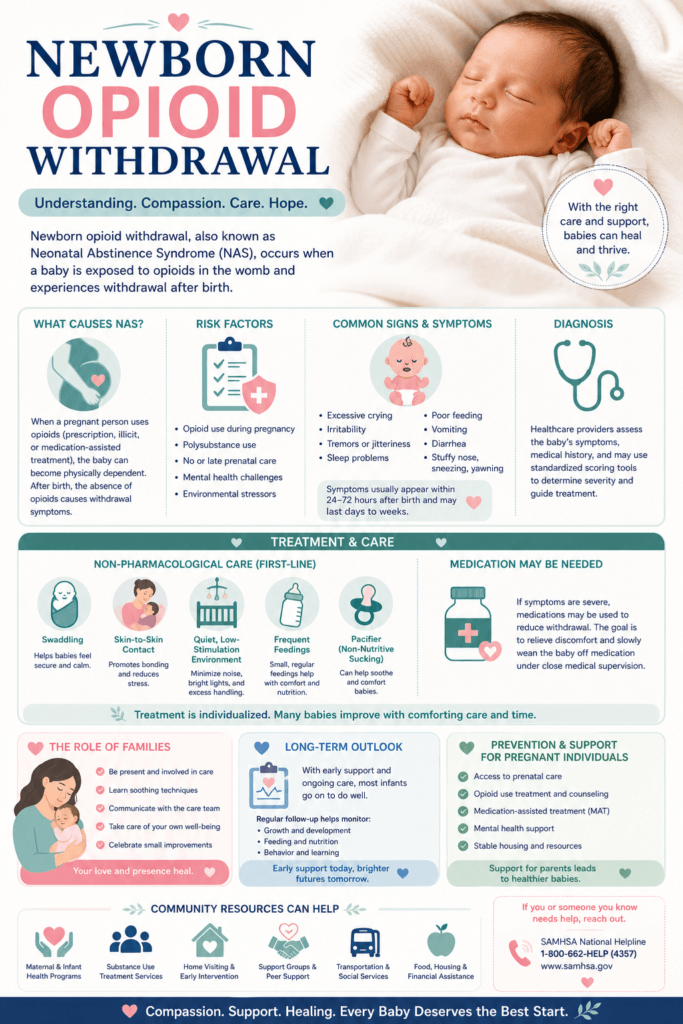
Newborn opioid withdrawal, medically known as Neonatal Abstinence Syndrome, is a condition that affects infants exposed to opioids before birth. As these substances pass through the placenta, the developing baby can become physically dependent, leading to withdrawal symptoms after delivery when exposure suddenly stops. This condition has become an increasing concern alongside rising rates of opioid use, highlighting the need for awareness, early intervention, and compassionate care. Understanding how withdrawal presents and how it is managed is essential for supporting both infants and their families during this critical stage.
Newborn Opioid Withdrawal: Understanding, Care, and Hope for Recovery
Newborn opioid withdrawal—clinically known as Neonatal Abstinence Syndrome—is a serious and growing public health concern. It occurs when infants are exposed to opioids in the womb and then experience withdrawal symptoms after birth. As opioid use has increased in many communities, so too has the number of affected newborns, making awareness and effective care more important than ever.
What Is Newborn Opioid Withdrawal?
When a pregnant individual uses opioids—whether prescribed medications or illicit substances—those substances pass through the placenta to the developing baby. Over time, the fetus can become physically dependent. After birth, when the opioid supply suddenly stops, the newborn’s body must adjust, leading to withdrawal symptoms.
This condition is not a result of something the newborn has done—it is a physiological response to exposure before birth.
Common Signs and Symptoms
Symptoms of neonatal withdrawal can vary in severity and may appear within the first few days of life. Common signs include:
- Excessive crying or high-pitched crying
- Tremors or shaking
- Difficulty feeding
- Sleep disturbances
- Irritability or fussiness
- Vomiting or diarrhea
These symptoms can be distressing, but with proper care, they can be managed effectively.
How Is It Treated?
Treatment for Neonatal Abstinence Syndrome focuses on stabilizing the infant and reducing discomfort.
Non-pharmacological care is often the first step:
- Swaddling and gentle rocking
- Skin-to-skin contact
- Quiet, low-stimulation environments
- Frequent, small feedings
In more severe cases, medications may be used to gradually wean the infant off opioids in a controlled and safe way.
The Role of Family and Caregivers
Family involvement plays a critical role in recovery. Caregivers who are informed and supported can:
- Provide consistent comfort and bonding
- Help reduce environmental stressors
- Participate in care plans alongside medical teams
Programs that encourage rooming-in (keeping the baby with the parent) have been shown to improve outcomes and shorten hospital stays.
Long-Term Outlook
With proper treatment and a supportive environment, many infants recover well from withdrawal. However, ongoing monitoring is important, as some children may face developmental or behavioral challenges later in life.
Early intervention services, pediatric follow-ups, and supportive home environments can significantly improve long-term outcomes.
Reducing Stigma and Supporting Prevention
It’s important to approach this issue with compassion rather than judgment. Pregnant individuals with opioid use disorder benefit from access to treatment, including medication-assisted therapy and prenatal care.
Reducing stigma encourages more people to seek help early, which ultimately leads to better outcomes for both parent and child.
Conclusion
Newborn opioid withdrawal is a complex but treatable condition that requires coordinated medical care, family involvement, and community support. By understanding Neonatal Abstinence Syndrome and responding with compassion and evidence-based care, we can improve outcomes and give affected infants a healthier start in life.
Caring with Confidence: Self-Management Strategies for Newborn Opioid Withdrawal
Caring for a newborn experiencing opioid withdrawal—medically known as Neonatal Abstinence Syndrome—can feel overwhelming for caregivers. These infants require specialized attention, patience, and consistency as their bodies adjust after birth. While medical teams provide essential treatment, caregivers play a critical role in day-to-day stabilization. With the right self-management strategies, families can confidently support their newborn’s comfort, healing, and development.
Understanding the Caregiver’s Role
Self-management in this context refers to how caregivers organize, adapt, and respond to their infant’s needs. Because symptoms can fluctuate, having structured, informed strategies helps:
- Reduce stress for both caregiver and baby
- Improve the infant’s ability to self-soothe
- Support consistent, nurturing care
- Strengthen caregiver confidence and resilience
1. Create a Low-Stimulation Environment
Newborns with withdrawal are often highly sensitive to light, sound, and touch.
Care strategies:
- Keep lighting soft and the room quiet
- Limit visitors and sudden noise
- Use gentle, slow movements when handling the baby
A calm environment helps reduce irritability and supports stabilization.
2. Master Soothing Techniques
Consistent soothing is one of the most effective ways to manage symptoms.
Helpful methods include:
- Swaddling to provide a sense of security
- Gentle rocking or rhythmic motion
- Skin-to-skin contact (when appropriate)
- Using a pacifier for non-nutritive sucking
Learning what works best for your baby—and using it consistently—is key.
3. Develop a Flexible Feeding Routine
Feeding can be challenging due to irritability or digestive symptoms.
Self-management tips:
- Offer smaller, more frequent feedings
- Watch for hunger cues rather than strict schedules
- Burp the baby often to reduce discomfort
Flexibility helps ensure proper nutrition while minimizing stress.
4. Monitor Symptoms and Patterns
Tracking your baby’s behavior can provide valuable insights.
Consider noting:
- Sleep patterns
- Feeding amounts and timing
- Episodes of fussiness or discomfort
This information helps caregivers and healthcare providers adjust care plans effectively.
5. Prioritize Consistency and Routine
Although flexibility is important, a general routine can help regulate the baby’s system.
Focus on:
- Predictable sleep and feeding cycles
- Consistent soothing responses
- Repeating calming activities
Routine builds a sense of safety and stability for the newborn.
6. Practice Caregiver Self-Care
Caring for a newborn with withdrawal can be physically and emotionally demanding.
Caregivers should:
- Take breaks when possible
- Ask for help from family or support networks
- Get adequate rest and nutrition
A well-supported caregiver is better able to provide calm, attentive care.
7. Stay Connected with Healthcare Providers
Self-management does not mean managing alone. Regular communication with healthcare professionals is essential.
Be proactive about:
- Attending follow-up appointments
- Asking questions about symptoms or care techniques
- Reporting any changes in the baby’s condition
This partnership ensures the baby receives comprehensive, coordinated care.
8. Build Confidence Through Education
Understanding Neonatal Abstinence Syndrome helps reduce fear and uncertainty.
Caregivers can:
- Learn about typical withdrawal symptoms and timelines
- Understand what is normal versus concerning
- Access educational resources and support groups
Knowledge empowers caregivers to respond effectively and calmly.
Conclusion
Self-management strategies are essential in caring for newborns experiencing opioid withdrawal. Through consistency, observation, and compassionate care, caregivers can significantly improve their baby’s comfort and recovery experience. While the journey may be challenging, it is also one of resilience and connection.
With the right tools, support, and understanding, families can help their newborns move through withdrawal toward a healthier, more stable start in life.
Stronger Together: Family Support Strategies for Newborn Opioid Withdrawal
Caring for a newborn experiencing opioid withdrawal—clinically known as Neonatal Abstinence Syndrome—can be emotionally challenging for families. These infants often require extra comfort, patience, and consistency as they adjust after birth. While medical care is essential, family support plays a powerful role in helping newborns stabilize, bond, and begin a स्वस्थ development journey.
This blog explores practical, family-centered strategies to make a meaningful difference in supporting infants through withdrawal.
Why Family Support Is Critical
Newborns with withdrawal symptoms are often more sensitive, irritable, and difficult to soothe. Family involvement helps:
- Promote bonding and attachment
- Reduce the infant’s stress levels
- Improve feeding and sleep patterns
- Support faster stabilization and recovery
When families are informed and engaged, they become an essential part of the healing process.
1. Create a Calm and Nurturing Environment
Infants experiencing withdrawal are highly sensitive to stimulation.
Families can help by:
- Keeping the room quiet and softly lit
- Reducing loud noises and sudden movements
- Limiting the number of visitors
A peaceful environment helps minimize overstimulation and supports the baby’s ability to settle.
2. Use Consistent Soothing Techniques
Consistency is key when comforting a newborn with withdrawal.
Effective strategies include:
- Swaddling to provide a sense of security
- Gentle rocking or slow, rhythmic movement
- Skin-to-skin contact to promote bonding and calmness
- Offering a pacifier for additional soothing
Over time, these techniques help the baby feel safe and regulated.
3. Support Feeding with Patience and Flexibility
Feeding challenges are common due to irritability and digestive discomfort.
Family strategies:
- Offer smaller, more frequent feedings
- Watch for hunger cues rather than strict schedules
- Allow extra time for feeding sessions
Patience during feeding helps ensure proper nutrition and reduces frustration for both baby and caregiver.
4. Encourage Rooming-In and Bonding
When possible, keeping the baby close to the parent or caregiver (rooming-in) has been shown to improve outcomes.
Benefits include:
- Stronger emotional connection
- Better recognition of the baby’s needs
- Reduced severity of withdrawal symptoms
Physical closeness provides comfort and reassurance to the newborn.
5. Learn to Recognize and Respond to Cues
Each baby expresses discomfort differently. Families should learn to identify signs such as:
- Increased crying or fussiness
- Changes in sleep patterns
- Feeding difficulties
Responding quickly and calmly helps prevent escalation and builds trust.
6. Share Responsibilities and Seek Support
Caring for a newborn with withdrawal can be exhausting.
Families should:
- Rotate caregiving responsibilities when possible
- Ask for help from trusted relatives or support networks
- Utilize community or hospital-based resources
Shared support helps prevent burnout and ensures consistent care.
7. Stay Connected with Healthcare Providers
Family involvement works best when aligned with professional guidance.
Important steps:
- Attend follow-up appointments
- Ask questions about care techniques and symptoms
- Follow treatment plans closely
This collaboration ensures the baby receives comprehensive and safe care.
8. Practice Compassion and Reduce Stigma
Families may experience feelings of guilt, fear, or judgment. It’s important to approach the situation with compassion.
Focus on:
- Supporting both the infant and parent
- Avoiding blame and judgment
- Encouraging open communication and emotional support
A compassionate environment benefits everyone involved in the recovery process.
Conclusion
Family support is a cornerstone in helping newborns navigate opioid withdrawal. Through calm environments, consistent care, and compassionate involvement, families can significantly improve their baby’s comfort and recovery experience.
While Neonatal Abstinence Syndrome presents challenges, it also offers an opportunity for connection, resilience, and healing. With the right strategies and support, families can help their newborns move toward a healthier, more stable start.
Building a Supportive Network: Community Resource Strategies for Newborn Opioid Withdrawal
Newborn opioid withdrawal—medically referred to as Neonatal Abstinence Syndrome—is a complex condition that requires more than hospital-based care alone. While medical teams play a critical role in stabilization, long-term outcomes are greatly influenced by the strength of community support systems. From healthcare services to social programs, community resources help families navigate challenges, maintain stability, and support healthy infant development.
This blog explores key strategies communities can use to better support infants and families affected by newborn opioid withdrawal.
Why Community Resources Matter
Families caring for infants with withdrawal often face multiple challenges, including healthcare access, financial stress, and emotional strain. Community resources help:
- Extend care beyond the hospital
- Provide ongoing education and support
- Reduce the risk of relapse and instability in the home
- Promote healthy development for the infant
A coordinated community approach ensures that no family has to manage this experience alone.
1. Strengthen Access to Healthcare Services
Continuity of care is essential after hospital discharge.
Community strategies include:
- Ensuring access to pediatric follow-up care
- Connecting families with maternal health and addiction treatment services
- Supporting medication-assisted treatment (MAT) programs for parents
Accessible healthcare helps monitor the infant’s progress and supports the caregiver’s recovery.
2. Expand Home Visiting and Early Intervention Programs
Home-based services provide direct, personalized support in a familiar environment.
These programs can:
- Teach caregivers soothing and feeding techniques
- Monitor infant development
- Identify early signs of developmental delays
- Provide emotional support to families
Early intervention improves both short-term stabilization and long-term outcomes.
3. Provide Parenting Education and Support Groups
Knowledge and connection are powerful tools for families.
Communities can offer:
- Parenting classes tailored to infants with withdrawal
- Peer support groups for shared experiences
- Workshops on infant care, bonding, and stress management
These resources build confidence and reduce isolation.
4. Address Social Determinants of Health
Stability in areas like housing, nutrition, and employment directly impacts recovery and infant well-being.
Community efforts should focus on:
- Access to safe and stable housing
- Food assistance programs
- Transportation services for medical appointments
Meeting basic needs creates a foundation for healthy caregiving.
5. Promote Cross-Sector Collaboration
Effective support requires coordination among multiple systems.
Key partnerships include:
- Hospitals and pediatric providers
- Substance use treatment programs
- Child welfare and social services
- Nonprofit and community organizations
Collaboration ensures families receive comprehensive, consistent support.
6. Reduce Stigma Through Community Education
Stigma can prevent families from seeking help.
Communities can:
- Promote awareness about Neonatal Abstinence Syndrome
- Encourage compassionate, nonjudgmental attitudes
- Highlight recovery success stories
Reducing stigma fosters trust and increases engagement with support services.
7. Support Long-Term Development and Monitoring
Recovery does not end after withdrawal symptoms subside.
Community resources should include:
- Developmental screenings and early childhood programs
- Ongoing pediatric and behavioral health support
- Educational resources for caregivers as the child grows
Long-term monitoring helps ensure children reach their full potential.
Conclusion
Addressing newborn opioid withdrawal requires a community-wide commitment to care, compassion, and coordination. By strengthening healthcare access, expanding supportive services, and reducing stigma, communities can create a safety net that supports both infants and their families.
When community resources are aligned and accessible, families affected by Neonatal Abstinence Syndrome are better equipped to navigate challenges and build a stable, healthy future for their children.
Frequently Asked Questions
Here are some common questions:
1. What is newborn opioid withdrawal?
Newborn opioid withdrawal, medically known as Neonatal Abstinence Syndrome, occurs when a baby is exposed to opioids in the womb and then experiences withdrawal symptoms after birth.
2. What causes this condition?
It happens when opioids—such as prescription pain medications, illicit drugs, or medications used in treatment—pass from the pregnant individual to the baby through the placenta. After birth, the sudden absence of these substances leads to withdrawal.
3. When do symptoms appear in newborns?
Symptoms typically appear within 24 to 72 hours after birth, but in some cases, they may take up to a week or longer depending on the type of opioid involved.
4. What are the common symptoms?
Common signs include:
- Excessive or high-pitched crying
- Tremors or shaking
- Irritability
- Feeding difficulties
- Sleep problems
- Vomiting or diarrhea
5. Is newborn opioid withdrawal treatable?
Yes. With proper care, most infants recover well. Treatment focuses on reducing symptoms and supporting the baby’s comfort and development.
6. What types of treatment are used?
Treatment may include:
- Non-medical care: swaddling, skin-to-skin contact, quiet environments, and frequent feeding
- Medication (if needed): to gradually reduce withdrawal symptoms under medical supervision
7. How long does withdrawal last in newborns?
The duration varies. Some babies recover within a few days, while others may need weeks of monitoring and care, especially if symptoms are more severe.
8. Can parents stay with their baby during treatment?
Yes, and it is often encouraged. Practices like rooming-in (keeping the baby with the parent) can improve bonding and may reduce symptom severity.
9. Are there long-term effects?
Many infants do well with proper care. However, some may need ongoing monitoring for developmental or behavioral concerns. Early intervention can greatly improve outcomes.
10. How can families help support recovery?
Families can:
- Provide a calm, low-stimulation environment
- Use consistent soothing techniques
- Attend all follow-up appointments
- Stay engaged with healthcare providers
11. Can this condition be prevented?
Prevention focuses on early prenatal care and treatment for opioid use. Medication-assisted treatment (MAT) and medical supervision during pregnancy can reduce risks.
12. Is it safe for a parent in treatment to care for their baby?
Yes. With proper medical care and support, parents receiving treatment can safely care for their newborn and play a vital role in recovery.
13. Does breastfeeding help?
In many cases, breastfeeding is encouraged if it is medically appropriate, as it can help soothe the baby and support bonding. This should always be discussed with a healthcare provider.
14. Why is reducing stigma important?
Stigma can prevent individuals from seeking care during pregnancy. Compassionate, nonjudgmental support leads to better outcomes for both parent and baby.
15. Where can families find help?
Support is available through:
- Pediatric healthcare providers
- Maternal health programs
- Substance use treatment services
- Community and peer support groups
Conclusion
Addressing Neonatal Abstinence Syndrome requires a coordinated approach that combines medical treatment, family involvement, and community support. While the symptoms can be challenging, many infants recover successfully with proper care and monitoring. By promoting education, reducing stigma, and ensuring access to supportive resources, healthcare providers and communities can improve outcomes and help give affected newborns a healthier start in life.
Video: This Happens to Babies Exposed to Opioids in the Womb #newborn #addiction #pregnancy