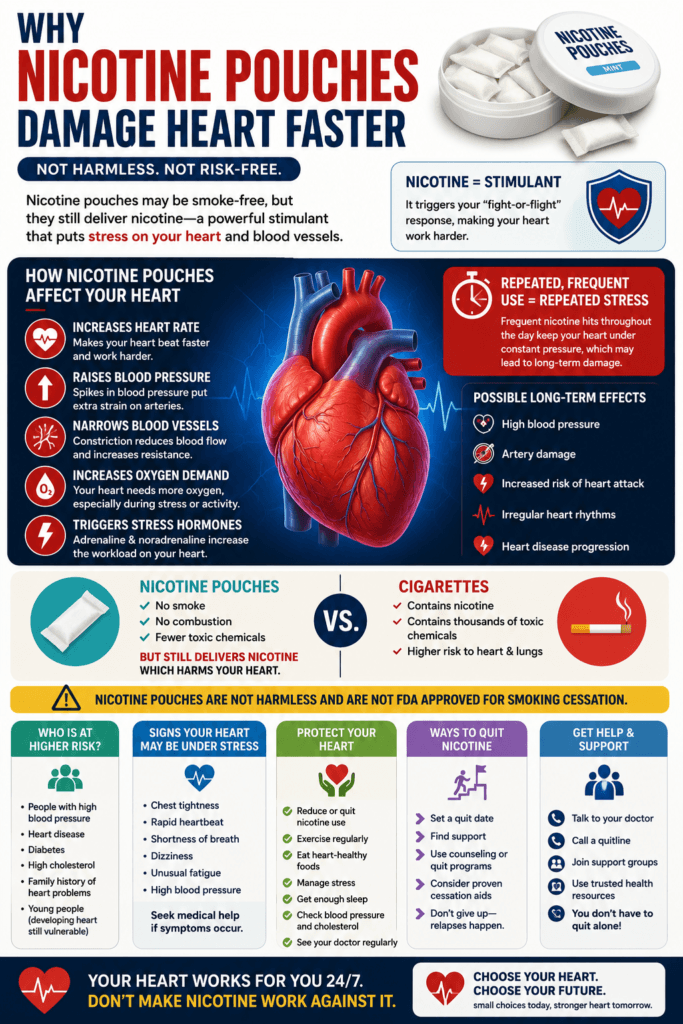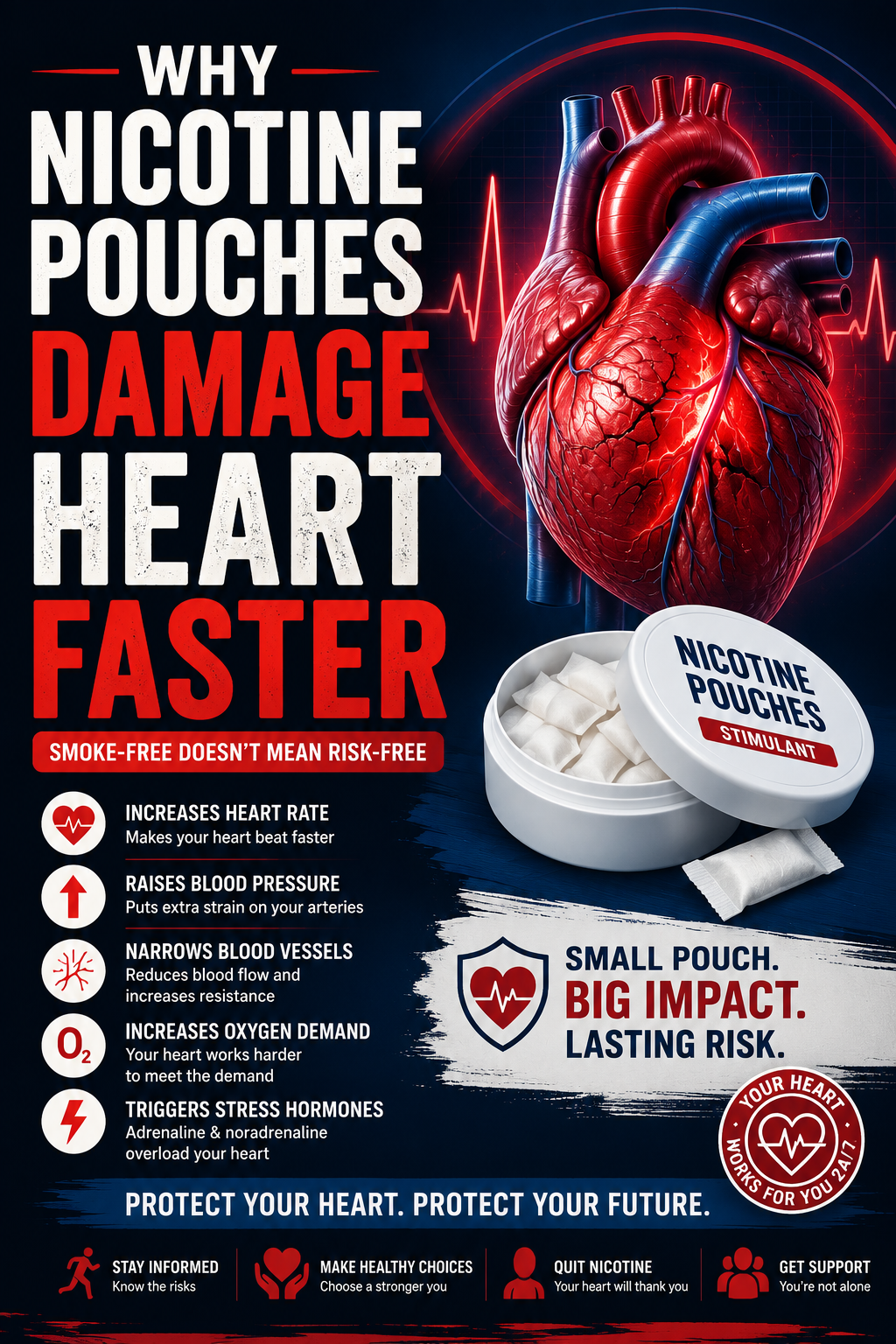
Nicotine pouches have gained popularity as a smoke-free alternative to traditional cigarettes, leading many people to believe they are a safer choice for overall health. While these products eliminate exposure to many of the harmful chemicals produced by burning tobacco, they still deliver nicotine, a highly addictive stimulant that affects the cardiovascular system. Nicotine can increase heart rate, raise blood pressure, constrict blood vessels, and place additional stress on the heart. Although current scientific evidence does not show that nicotine pouches damage the heart faster than cigarettes, frequent or high-dose nicotine exposure may contribute to cardiovascular strain, particularly in individuals with existing heart disease or other risk factors. Understanding how nicotine affects the heart empowers individuals to make informed decisions and take steps to protect their long-term cardiovascular health.
Why Nicotine Pouches May Damage the Heart Faster
Nicotine pouches are smokeless products that deliver nicotine through the lining of the mouth without tobacco leaf or combustion. Because they do not produce smoke, many people assume they are harmless. While nicotine pouches generally expose users to fewer toxic chemicals than cigarettes, they are not risk-free, particularly for the cardiovascular system. The nicotine they contain can have immediate effects on the heart and blood vessels, and frequent use may contribute to cardiovascular strain.
How Nicotine Affects the Heart
Nicotine is a powerful stimulant that activates the sympathetic nervous system, often called the body’s “fight-or-flight” response. Shortly after nicotine enters the bloodstream, it triggers the release of stress hormones such as adrenaline and noradrenaline. These hormones can:
- Increase heart rate.
- Raise blood pressure.
- Narrow blood vessels (vasoconstriction).
- Increase the heart’s oxygen demand.
- Make the heart work harder.
These effects can occur within minutes of nicotine exposure, regardless of whether the nicotine comes from cigarettes, vaping products, nicotine pouches, or nicotine replacement products.
Why Nicotine Pouches May Place Stress on the Heart
Many nicotine pouches contain relatively high amounts of nicotine, and some products deliver nicotine efficiently through the oral mucosa. Frequent use throughout the day can lead to repeated spikes in heart rate and blood pressure, resulting in prolonged cardiovascular stimulation. For people with high blood pressure, coronary artery disease, irregular heart rhythms, or heart failure, this added stress may worsen existing conditions.
However, current research has not established that nicotine pouches damage the heart more quickly than cigarettes. Cigarette smoking exposes users to thousands of additional toxic chemicals—including carbon monoxide and oxidizing compounds—that substantially increase cardiovascular risk beyond nicotine alone. While nicotine pouches eliminate many of those combustion-related toxins, the nicotine itself can still contribute to cardiovascular strain, especially with high-dose or frequent use.
Effects on Blood Vessels
Nicotine can reduce the ability of blood vessels to relax normally by impairing endothelial function. Healthy endothelium helps regulate blood flow and maintain normal circulation. Repeated nicotine exposure may contribute to:
- Reduced blood vessel flexibility.
- Elevated blood pressure.
- Increased workload on the heart.
- Progression of cardiovascular disease in susceptible individuals.
Increased Risk for Certain Individuals
People may face greater cardiovascular risks from nicotine if they have:
- High blood pressure.
- Coronary artery disease.
- A history of heart attack or stroke.
- Diabetes.
- High cholesterol.
- Chronic kidney disease.
- Certain abnormal heart rhythms.
- Multiple cardiovascular risk factors.
These individuals should discuss nicotine use with a healthcare professional.
Can Nicotine Increase the Risk of Heart Rhythm Problems?
Nicotine stimulates the release of stress hormones that may contribute to palpitations and can increase susceptibility to certain arrhythmias in some people. Those with preexisting rhythm disorders should use caution and seek medical guidance regarding nicotine products.
Young Adults and Nicotine Pouches
Nicotine can affect the developing brain, which continues to mature into the mid-20s. Young people who use nicotine pouches may become nicotine-dependent and may also experience increases in heart rate and blood pressure during use.
Are Nicotine Pouches Safer Than Smoking?
For adults who completely switch from cigarettes to nicotine pouches, exposure to many harmful combustion-related chemicals is likely reduced. However, this does not mean nicotine pouches are safe. The ideal goal for cardiovascular health is to eliminate nicotine dependence whenever possible.
Reducing Cardiovascular Risk
People who use nicotine pouches can lower their heart health risks by:
- Working toward reducing and eventually stopping nicotine use.
- Monitoring blood pressure regularly.
- Exercising routinely, if medically appropriate.
- Eating a heart-healthy diet.
- Managing diabetes, cholesterol, and hypertension.
- Getting adequate sleep.
- Avoiding smoking or dual use with cigarettes.
- Speaking with a healthcare professional about evidence-based smoking and nicotine cessation strategies.
Conclusion
Nicotine pouches may seem like a safer alternative because they do not involve smoke or tobacco combustion, but they still deliver nicotine, a stimulant that can increase heart rate, raise blood pressure, constrict blood vessels, and place additional stress on the cardiovascular system. Current evidence supports that nicotine can contribute to cardiovascular strain, particularly in people with underlying heart disease or multiple cardiovascular risk factors. At the same time, available research does not show that nicotine pouches damage the heart faster than cigarettes; in fact, cigarettes generally pose greater cardiovascular risk because they expose users to many additional toxic chemicals. While nicotine pouches may reduce some harms for adults who completely replace cigarette smoking, they are not harmless, and avoiding or stopping nicotine use remains the healthiest choice for long-term heart health.
Self-Management Strategies to Understand Why Nicotine Pouches Can Harm Heart Health
Nicotine pouches are often marketed as a smoke-free alternative to cigarettes, leading many people to believe they are harmless. Although they do not produce smoke or expose users to many of the toxic chemicals found in cigarettes, they still deliver nicotine—a powerful stimulant that affects the cardiovascular system. Nicotine can increase heart rate, raise blood pressure, constrict blood vessels, and make the heart work harder. While current evidence does not show that nicotine pouches damage the heart faster than cigarettes, frequent or high-dose nicotine use may place significant strain on the heart, particularly in people with existing cardiovascular disease. The following self-management strategies can help individuals protect their heart health and reduce nicotine-related risks.
1. Learn How Nicotine Affects Your Heart
Understanding nicotine’s effects helps you make informed decisions about your health.
Learn that nicotine can:
- Increase heart rate.
- Raise blood pressure.
- Narrow blood vessels.
- Increase the heart’s oxygen demand.
- Stimulate the release of stress hormones.
Knowing these effects can strengthen motivation to reduce or quit nicotine use.
2. Monitor Your Blood Pressure Regularly
Nicotine can temporarily increase blood pressure after each use.
Self-management tips:
- Check your blood pressure regularly, especially if you use nicotine daily.
- Record your readings in a journal or digital app.
- Share abnormal readings with your healthcare provider.
- Follow your treatment plan if you have hypertension.
Early detection can help prevent long-term cardiovascular complications.
3. Pay Attention to Heart-Related Symptoms
Recognizing warning signs allows for prompt medical evaluation.
Seek medical attention if you experience:
- Chest pain or pressure.
- Shortness of breath.
- Rapid or irregular heartbeat.
- Dizziness or fainting.
- Severe or persistent palpitations.
Do not ignore symptoms that may indicate a heart problem.
4. Reduce Your Nicotine Intake Gradually
If quitting immediately feels difficult, reducing nicotine exposure can be a meaningful first step.
Helpful approaches include:
- Extending the time between pouch use.
- Choosing lower-strength nicotine pouches, if appropriate.
- Avoiding habitual use during every daily routine.
- Setting gradual reduction goals.
A structured plan may make quitting more achievable.
5. Work Toward Becoming Nicotine-Free
The greatest cardiovascular benefit comes from eliminating nicotine use whenever possible.
Consider:
- Setting a quit date.
- Identifying your reasons for quitting.
- Removing nicotine products from your environment.
- Seeking evidence-based cessation support.
- Celebrating milestones throughout recovery.
Every nicotine-free day benefits your heart and overall health.
6. Manage Stress Without Nicotine
Many people use nicotine to cope with stress, but healthier alternatives provide lasting benefits.
Try:
- Deep breathing exercises.
- Meditation or mindfulness.
- Yoga or stretching.
- Listening to music.
- Journaling.
- Spending time outdoors.
- Talking with supportive friends or family.
Healthy stress management reduces the urge to rely on nicotine.
7. Stay Physically Active
Regular exercise supports both heart health and nicotine recovery.
Aim to:
- Walk most days of the week.
- Strength train regularly if medically appropriate.
- Stretch daily.
- Gradually increase activity as your fitness improves.
Exercise can improve circulation, reduce stress, and decrease nicotine cravings.
8. Eat a Heart-Healthy Diet
Nutrition plays a major role in cardiovascular health.
Focus on:
- Fruits and vegetables.
- Whole grains.
- Lean proteins.
- Healthy fats such as nuts, seeds, and olive oil.
- Limiting highly processed foods, excess sodium, and sugary beverages.
Healthy eating helps control blood pressure, cholesterol, and body weight.
9. Get Adequate Sleep
Poor sleep can increase stress, cravings, and cardiovascular risk.
Aim for:
- 7–9 hours of sleep each night.
- A consistent bedtime routine.
- Limiting caffeine and nicotine close to bedtime.
- Creating a quiet, comfortable sleep environment.
Quality sleep supports both heart health and successful nicotine reduction.
10. Schedule Regular Healthcare Visits
Routine medical care can identify cardiovascular problems early.
Discuss with your healthcare provider:
- Blood pressure.
- Cholesterol levels.
- Blood sugar.
- Heart disease risk factors.
- Nicotine use.
- Safe nicotine cessation options.
Preventive care helps reduce long-term complications.
11. Build a Strong Support System
Quitting nicotine is often easier with encouragement from others.
Seek support from:
- Family members.
- Friends.
- Healthcare professionals.
- Tobacco or nicotine cessation counselors.
- Support groups.
- Telephone quitlines or digital cessation programs.
Support improves motivation and long-term success.
12. Celebrate Progress and Stay Motivated
Recovery from nicotine dependence is a process, and every step forward matters.
Keep yourself motivated by:
- Tracking nicotine-free days.
- Rewarding yourself for meeting goals.
- Remembering improvements in breathing, circulation, and overall health.
- Viewing setbacks as opportunities to learn rather than failures.
Small, consistent changes can lead to lasting improvements in heart health.
Key Takeaway
Nicotine pouches may reduce exposure to many harmful chemicals found in cigarette smoke, but they still deliver nicotine, which can increase heart rate, raise blood pressure, constrict blood vessels, and place additional stress on the cardiovascular system. Although current evidence does not show that nicotine pouches damage the heart faster than cigarettes, frequent nicotine exposure can still contribute to cardiovascular strain, particularly in individuals with existing heart disease or other risk factors. By learning about nicotine’s effects, monitoring cardiovascular health, managing stress without nicotine, adopting heart-healthy lifestyle habits, working toward nicotine cessation, and seeking professional support, individuals can reduce their risk of heart disease and improve their long-term health.
Family Support Strategies to Understand Why Nicotine Pouches Can Harm Heart Health
Nicotine pouches are often promoted as a smoke-free alternative to cigarettes, causing many people to believe they are harmless. Although they do not expose users to the harmful chemicals produced by burning tobacco, they still deliver nicotine—a highly addictive stimulant that can increase heart rate, raise blood pressure, constrict blood vessels, and place stress on the cardiovascular system. Current evidence does not show that nicotine pouches damage the heart faster than cigarettes, but frequent nicotine exposure may still contribute to cardiovascular problems, especially in individuals with underlying heart disease or other risk factors. Families can play a powerful role in helping loved ones understand these risks and support healthier choices.
1. Learn About Nicotine Together
Education helps families make informed decisions and reduces misinformation about nicotine products.
Families should learn:
- How nicotine affects the heart and blood vessels.
- The difference between nicotine pouches, cigarettes, vaping products, and nicotine replacement therapies.
- That “smoke-free” does not mean “risk-free.”
- The signs of nicotine dependence and withdrawal.
Shared knowledge encourages productive conversations and healthier decision-making.
2. Encourage Open and Respectful Conversations
Many people use nicotine because of stress, curiosity, or social influences.
Family members should:
- Ask questions without judgment.
- Listen to concerns and experiences.
- Avoid criticism or shaming.
- Focus on health rather than blame.
- Encourage honest discussions about nicotine use.
Supportive communication increases the likelihood of positive behavior change.
3. Recognize the Signs of Nicotine Dependence
Families who recognize early warning signs can encourage help before dependence becomes more severe.
Watch for:
- Frequent use of nicotine pouches throughout the day.
- Strong cravings between uses.
- Irritability or anxiety when nicotine is unavailable.
- Difficulty stopping despite wanting to quit.
- Using nicotine to cope with stress or emotions.
Early recognition allows for earlier intervention.
4. Support Heart-Healthy Habits
Healthy daily routines can help reduce cardiovascular risk while supporting nicotine cessation.
Encourage loved ones to:
- Exercise regularly.
- Eat nutritious meals.
- Drink plenty of water.
- Get adequate sleep.
- Manage stress in healthy ways.
- Attend regular medical checkups.
Healthy habits benefit both heart health and recovery from nicotine dependence.
5. Encourage Medical Evaluation When Needed
Individuals who use nicotine regularly—especially those with cardiovascular risk factors—should receive routine medical care.
Encourage healthcare visits to:
- Monitor blood pressure.
- Check cholesterol and blood sugar levels.
- Assess heart disease risk.
- Discuss nicotine use openly.
- Develop a personalized plan to reduce or quit nicotine.
Early medical intervention can help prevent future complications.
6. Help Identify Healthy Alternatives to Nicotine
Many people use nicotine during stressful situations or daily routines.
Families can help by encouraging:
- Walking together.
- Deep breathing exercises.
- Meditation or mindfulness.
- Hobbies and creative activities.
- Family outings.
- Exercise programs.
- Relaxation techniques.
Replacing nicotine with healthier coping strategies promotes lasting change.
7. Support a Nicotine-Free Home Environment
A supportive home can reduce triggers that contribute to ongoing nicotine use.
Families may:
- Avoid using nicotine products around one another.
- Remove nicotine products from shared spaces.
- Encourage tobacco- and nicotine-free household rules.
- Celebrate milestones in quitting or reducing nicotine use.
A positive environment reinforces healthy choices.
8. Understand Withdrawal Symptoms
Nicotine withdrawal can be uncomfortable but is usually temporary.
Common symptoms include:
- Irritability.
- Anxiety.
- Difficulty concentrating.
- Restlessness.
- Increased appetite.
- Mood changes.
- Cravings.
Families can offer patience, reassurance, and encouragement during this period.
9. Encourage Professional Support
Many people benefit from structured nicotine cessation programs.
Helpful resources include:
- Primary care providers.
- Tobacco and nicotine treatment specialists.
- Behavioral counseling.
- Quitlines.
- Digital cessation programs.
- Support groups.
Professional guidance improves the likelihood of long-term success.
10. Celebrate Progress Instead of Perfection
Quitting nicotine is often a gradual process.
Families should:
- Praise small achievements.
- Encourage persistence after setbacks.
- Avoid focusing only on mistakes.
- Recognize improvements in health and well-being.
- Reinforce positive lifestyle changes.
Positive reinforcement builds confidence and motivation.
11. Be a Positive Role Model
Children, adolescents, and young adults often learn health behaviors from those around them.
Family members can:
- Avoid nicotine use whenever possible.
- Demonstrate healthy stress management.
- Prioritize regular exercise.
- Practice balanced nutrition.
- Show that asking for help is a sign of strength.
Healthy role models influence future generations.
12. Take Care of Yourself While Supporting Others
Supporting someone through nicotine cessation can be challenging.
Family caregivers should:
- Maintain their own physical and emotional health.
- Set healthy boundaries.
- Seek support when needed.
- Practice stress-management techniques.
- Celebrate their own efforts as caregivers.
Healthy families provide stronger and more consistent support.
Key Takeaway
Nicotine pouches may reduce exposure to the harmful chemicals found in cigarette smoke, but they still expose users to nicotine, which can increase heart rate, elevate blood pressure, and place stress on the cardiovascular system. While current evidence does not show that nicotine pouches damage the heart faster than cigarettes, they are not harmless and can contribute to cardiovascular strain, especially with frequent use or in individuals with existing heart disease. Families can make a meaningful difference by learning about nicotine’s health effects, encouraging open communication, promoting heart-healthy lifestyles, supporting nicotine cessation, recognizing signs of dependence, and connecting loved ones with professional care. Through education, patience, and encouragement, families can help reduce nicotine-related risks and promote lifelong cardiovascular health.
Community Resource Strategies to Understand Why Nicotine Pouches Can Harm Heart Health
Nicotine pouches have become increasingly popular as a smoke-free alternative to cigarettes, particularly among adolescents and young adults. Although they eliminate exposure to many harmful chemicals produced by burning tobacco, they still deliver nicotine, a highly addictive stimulant that can increase heart rate, raise blood pressure, constrict blood vessels, and place stress on the cardiovascular system. Current scientific evidence does not show that nicotine pouches damage the heart faster than cigarettes, but frequent nicotine exposure may still contribute to cardiovascular strain and nicotine dependence. Communities can play a critical role in educating the public, promoting prevention, supporting nicotine cessation, and encouraging heart-healthy lifestyles.
1. Expand Public Education About Nicotine Products
Many people mistakenly believe that “smoke-free” means “risk-free.”
Community education programs should explain:
- How nicotine affects the heart and blood vessels.
- The addictive nature of nicotine.
- The differences between cigarettes, vaping devices, nicotine pouches, and FDA-approved nicotine replacement therapies.
- The importance of preventing nicotine use among youth.
Accurate education helps individuals make informed health decisions.
2. Promote Heart Health Awareness Campaigns
Community organizations can educate residents about reducing cardiovascular risk.
Educational campaigns may include:
- Blood pressure awareness.
- Cholesterol screening events.
- Heart disease prevention programs.
- Healthy lifestyle workshops.
- Nutrition and exercise education.
Improving cardiovascular health benefits the entire community.
3. Increase Access to Nicotine Cessation Services
Individuals trying to quit nicotine often benefit from structured support.
Communities should promote access to:
- Tobacco and nicotine treatment programs.
- Behavioral counseling.
- Telephone quitlines.
- Mobile cessation applications.
- Group support meetings.
- Primary care providers trained in nicotine dependence treatment.
Comprehensive cessation services improve long-term success.
4. Support School-Based Prevention Programs
Youth are increasingly exposed to nicotine products through peers, advertising, and social media.
Schools can provide:
- Evidence-based nicotine education.
- Heart health education.
- Life-skills training.
- Peer leadership programs.
- Counseling services.
- Parent education workshops.
Early prevention reduces the likelihood of lifelong nicotine dependence.
5. Encourage Routine Health Screenings
Early identification of cardiovascular risk factors allows for timely intervention.
Community health events may offer:
- Blood pressure screenings.
- Cholesterol testing.
- Diabetes screening.
- Body mass index (BMI) assessments.
- Cardiovascular risk education.
Regular screening promotes prevention and early treatment.
6. Promote Healthy Lifestyle Programs
Healthy habits reduce cardiovascular risk and support nicotine cessation.
Community wellness programs can encourage:
- Walking groups.
- Fitness classes.
- Community sports.
- Nutrition education.
- Healthy cooking classes.
- Stress management workshops.
Active communities help improve both physical and mental health.
7. Train Healthcare Professionals to Discuss Nicotine Products
Healthcare providers should be prepared to discuss all forms of nicotine use—not just smoking.
Professional education should include:
- Risks associated with nicotine pouches.
- Nicotine dependence assessment.
- Evidence-based cessation counseling.
- Cardiovascular risk evaluation.
- Motivational interviewing techniques.
Routine conversations can identify nicotine use early and support quitting.
8. Engage Parents and Families
Parents are influential role models and educators.
Communities can offer:
- Parent education seminars.
- Family wellness events.
- Educational materials on nicotine products.
- Resources for discussing nicotine use with children and teens.
- Support groups for families affected by nicotine dependence.
Family involvement strengthens prevention efforts.
9. Address Social and Environmental Influences
Stress, social pressure, targeted marketing, and easy product availability can contribute to nicotine use.
Community strategies include:
- Promoting healthy coping skills.
- Expanding youth recreational opportunities.
- Supporting mental health services.
- Encouraging tobacco- and nicotine-free environments.
- Reducing exposure to misleading health claims.
Addressing these influences can reduce nicotine initiation and dependence.
10. Encourage Collaboration Across Community Organizations
Preventing nicotine addiction requires coordinated efforts.
Partners may include:
- Healthcare systems.
- Schools.
- Public health departments.
- Community health centers.
- Faith-based organizations.
- Youth organizations.
- Employers.
- Nonprofit organizations.
Working together creates a stronger network of prevention and support.
11. Promote Mental Health Resources
Many people use nicotine to cope with stress, anxiety, or depression.
Communities should increase access to:
- Counseling services.
- Stress-management programs.
- Mindfulness training.
- Crisis intervention services.
- Behavioral health care.
- Peer support groups.
Addressing mental health can reduce reliance on nicotine as a coping strategy.
12. Advocate for Policies That Protect Public Health
Community leaders can support policies that reduce nicotine-related harm while respecting adult access to evidence-based cessation tools.
Examples include:
- Preventing youth access to nicotine products.
- Enforcing age-verification laws.
- Restricting marketing aimed at adolescents.
- Expanding access to cessation services.
- Supporting public education campaigns based on scientific evidence.
Public health policies can help reduce nicotine initiation and encourage healthier communities.
Key Takeaway
Nicotine pouches eliminate exposure to many toxic chemicals found in cigarette smoke, but they still deliver nicotine, which can increase heart rate, raise blood pressure, constrict blood vessels, and contribute to cardiovascular strain and nicotine dependence. Current research does not demonstrate that nicotine pouches damage the heart faster than cigarettes; however, they are not harmless and should not be considered risk-free. Communities can help reduce nicotine-related health risks by promoting accurate education, expanding access to nicotine cessation services, encouraging heart-healthy lifestyles, supporting school and family prevention programs, improving access to mental health care, and strengthening collaboration among healthcare providers, educators, and public health organizations. Through evidence-based education and coordinated prevention efforts, communities can protect cardiovascular health and reduce the long-term impact of nicotine addiction.
Frequently Asked Questions
Here are some common questions:
1. What are nicotine pouches?
Nicotine pouches are small, tobacco leaf-free products placed between the gum and lip. They deliver nicotine through the lining of the mouth without producing smoke or vapor.
2. Why can nicotine pouches affect heart health?
Nicotine is a stimulant that activates the body’s “fight-or-flight” response. It increases heart rate, raises blood pressure, narrows blood vessels, and causes the heart to work harder, placing additional stress on the cardiovascular system.
3. Do nicotine pouches damage the heart faster than cigarettes?
Current research does not show that nicotine pouches damage the heart faster than cigarettes. Cigarettes generally carry a much higher cardiovascular risk because they contain thousands of harmful chemicals produced during combustion. However, nicotine pouches still expose users to nicotine, which can negatively affect heart health.
4. Can nicotine pouches increase blood pressure?
Yes. Nicotine temporarily raises blood pressure by causing blood vessels to narrow and stimulating the release of stress hormones such as adrenaline. Frequent use may contribute to ongoing cardiovascular strain.
5. Do nicotine pouches increase heart rate?
Yes. Nicotine stimulates the nervous system and commonly increases heart rate shortly after use. This effect may be more noticeable with higher-strength nicotine pouches or frequent use.
6. Can nicotine pouches increase the risk of heart disease?
Regular nicotine exposure may contribute to cardiovascular strain and may worsen existing heart disease. People with high blood pressure, coronary artery disease, diabetes, or high cholesterol should discuss nicotine use with their healthcare provider.
7. Are nicotine pouches safer than smoking?
For adults who completely switch from cigarettes to nicotine pouches, exposure to many harmful combustion-related chemicals is reduced. However, nicotine pouches are not harmless and should not be considered safe. Quitting nicotine entirely provides the greatest health benefit.
8. Who is at the greatest risk from nicotine pouches?
Higher-risk individuals include those with:
- High blood pressure
- Heart disease
- Prior heart attack or stroke
- Diabetes
- High cholesterol
- Chronic kidney disease
- Certain abnormal heart rhythms
- Multiple cardiovascular risk factors
9. Can nicotine pouches cause addiction?
Yes. Nicotine is highly addictive. Regular use can lead to dependence, making it difficult to stop. Withdrawal symptoms may include cravings, irritability, anxiety, restlessness, and difficulty concentrating.
10. What symptoms should I watch for?
Seek prompt medical evaluation if you experience:
- Chest pain or pressure
- Shortness of breath
- Rapid or irregular heartbeat
- Dizziness or fainting
- Severe or persistent palpitations
These symptoms may indicate a serious cardiovascular problem.
11. Can young people safely use nicotine pouches?
No. Nicotine can interfere with normal brain development, which continues into the mid-20s. Young people are also more likely to develop nicotine dependence, making prevention especially important.
12. Can I improve my heart health after stopping nicotine?
Yes. The body begins to recover after nicotine use stops. Blood pressure and heart rate normalize after nicotine wears off, and long-term nicotine cessation—combined with regular exercise, a healthy diet, adequate sleep, and routine medical care—can improve cardiovascular health and lower future risk.
13. How can I quit using nicotine pouches?
Many people succeed by:
- Setting a quit date.
- Identifying personal triggers.
- Using healthy stress-management techniques.
- Seeking counseling or behavioral support.
- Talking with a healthcare provider about evidence-based nicotine cessation options.
- Getting encouragement from family and friends.
14. How can families help someone quit nicotine?
Families can:
- Learn about nicotine addiction together.
- Encourage open, nonjudgmental conversations.
- Support healthy lifestyle habits.
- Celebrate progress rather than perfection.
- Encourage medical care and professional cessation support.
Positive encouragement often improves long-term success.
15. What is the most important message about nicotine pouches and heart health?
Although nicotine pouches eliminate exposure to many toxic chemicals found in cigarette smoke, they still deliver nicotine, which increases heart rate, raises blood pressure, and places stress on the heart and blood vessels. Current evidence does not support the claim that nicotine pouches damage the heart faster than cigarettes, but they are not risk-free. The healthiest option for protecting your cardiovascular system is to avoid or stop using nicotine altogether and adopt heart-healthy lifestyle habits.
Conclusion
Nicotine pouches may reduce exposure to many of the toxic substances found in cigarette smoke, but they are not harmless. The nicotine they contain can temporarily increase heart rate and blood pressure, impair normal blood vessel function, and increase the workload placed on the heart. Current evidence indicates that cigarettes generally pose a greater cardiovascular risk because of the many additional toxic chemicals produced during combustion; however, nicotine pouches can still contribute to heart-related health concerns, especially with frequent use or among people with underlying cardiovascular disease. Learning the facts about nicotine products, adopting heart-healthy lifestyle habits, seeking professional support to reduce or quit nicotine use, and encouraging informed decision-making can help individuals lower their cardiovascular risk and improve their overall health.
Video: POV: Your Nicotine Pouch Is Damaging Your Cardiovascular System #NicotineDanger