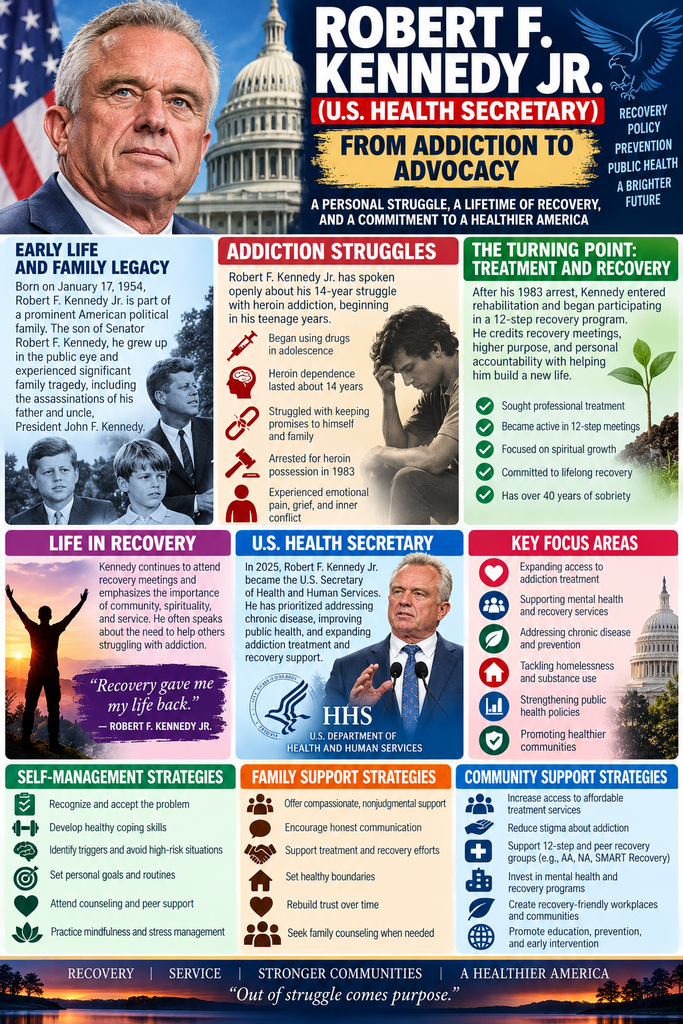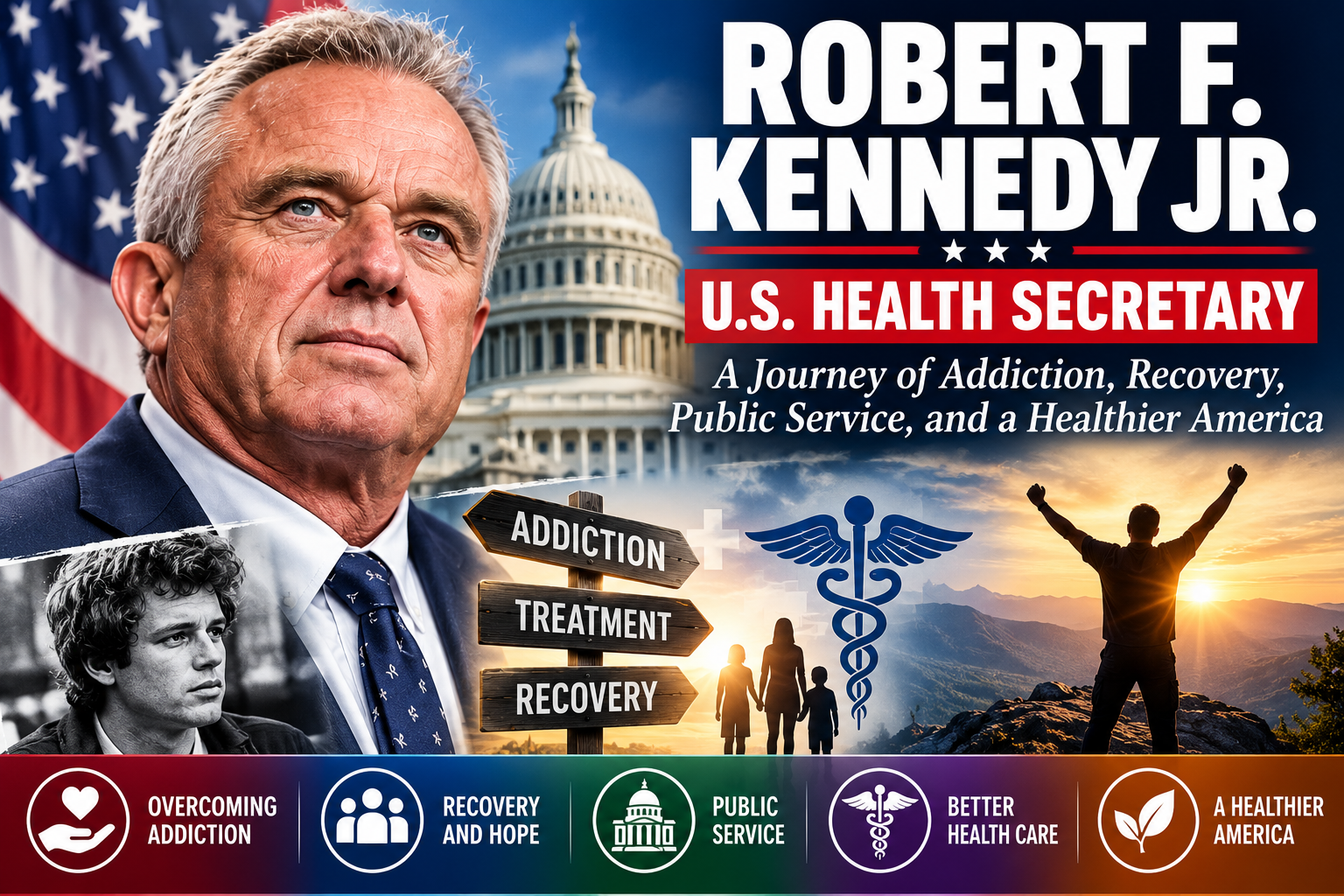
Robert F. Kennedy Jr., the United States Secretary of Health and Human Services, has spoken openly about his history of heroin addiction, his experiences with rehabilitation, and his decades-long commitment to recovery.
Born into one of America’s most prominent political families, Kennedy experienced personal tragedy, public expectations, and substance use problems beginning in adolescence. His addiction continued for approximately 14 years before he entered recovery in 1983.
Kennedy has described how heroin dependence affected his ability to keep promises, maintain personal control, and live according to his values. Following his arrest for heroin possession, he sought treatment and began participating in a 12-step recovery program.
In 2026, Kennedy reported about 43 years in recovery and continued attending recovery meetings, despite the demands of serving as U.S. Health Secretary.
His story provides an opportunity to examine the challenges of opioid addiction, the importance of sustained recovery, and the role of personal responsibility, family relationships, professional treatment, and community support.
By exploring Kennedy’s experiences through self-management, family support, and community-based recovery strategies, we can identify lessons that may help individuals and families affected by substance use disorders.
Robert F. Kennedy Jr.’s Early Life and the Beginning of Substance Use
Robert Francis Kennedy Jr. was born on January 17, 1954, in Washington, D.C. He is the son of former U.S. Attorney General and Senator Robert F. Kennedy and Ethel Kennedy.
His childhood was marked by significant family tragedy, including the assassination of his uncle, President John F. Kennedy, in 1963, and the assassination of his father in 1968.
Kennedy has publicly discussed beginning drug use during his teenage years and later developing heroin dependence.
Although childhood trauma and grief can increase vulnerability to substance use problems, it would be inaccurate to identify these experiences as the sole causes of his addiction.
Substance use disorders generally develop through interactions among biological, psychological, environmental, and social factors.
Factors relevant to understanding his experience
- Adolescent substance exposure: Beginning drug use at a young age can increase the risk of later substance use disorders.
- Family tragedy: Grief and traumatic experiences may create emotional challenges requiring healthy coping mechanisms.
- Public expectations: Growing up in a prominent family can involve unusual attention and expectations.
- Heroin’s addictive properties: Repeated opioid exposure can produce physical dependence, tolerance, and powerful cravings.
- Emotional coping: Kennedy has described using substances in connection with feelings of inner emptiness and discomfort.
- Delayed recovery: His substance use continued for years before he entered sustained recovery.
These factors provide context without reducing his addiction to any single event or personal characteristic.
Kennedy’s 14-Year Struggle With Heroin Addiction
Kennedy has described his heroin addiction as lasting approximately 14 years, beginning in adolescence and continuing into his late twenties.
Heroin is a powerful opioid that binds to mu-opioid receptors in the brain and produces effects involving pain relief, sedation, and euphoria.
Repeated use can alter the brain’s reward and stress systems, contributing to compulsive substance use and physical dependence.
Kennedy has described repeatedly promising himself and family members that he would stop using drugs but struggling to follow through.
During a 2025 addiction conference, he explained how his inability to keep promises to himself became one of the most distressing aspects of his addiction.
Common consequences of heroin dependence
- Intense cravings and compulsive drug-seeking behavior.
- Increasing tolerance and physical dependence.
- Withdrawal symptoms when opioid use stops.
- Difficulty fulfilling personal and professional responsibilities.
- Relationship conflicts and loss of trust.
- Increased risk of overdose and respiratory depression.
- Anxiety, depression, and emotional distress.
- Exposure to legal and financial consequences.
Kennedy’s personal descriptions illustrate how addiction can interfere with a person’s goals even when they recognize the harmful consequences of continued substance use.
The Turning Point: Arrest, Rehabilitation, and Recovery
In 1983, Kennedy was arrested for heroin possession following an incident involving air travel.
He subsequently entered treatment and began participating in a 12-step recovery program.
Kennedy has identified this period as a turning point in his life.
According to his public accounts, participation in recovery meetings helped him develop greater accountability, examine his behavior, and establish relationships with others working toward sobriety.
His recovery was not simply a matter of stopping heroin use. He has described it as a process of changing his daily routines, relationships, and approach to personal responsibility.
Lessons from his decision to seek treatment
- Recognizing the need for help can interrupt harmful substance use patterns.
- Professional treatment can provide structure and clinical support.
- Peer recovery meetings can reduce isolation.
- Honest self-assessment can encourage behavioral change.
- Long-term recovery requires continued attention to personal well-being.
- Recovery support can remain valuable even after decades without substance use.
Kennedy has repeatedly credited 12-step participation as central to his recovery, while acknowledging that recovery requires consistent personal effort.
Self-Management Strategies: Building a Sustainable Recovery Lifestyle
One notable aspect of Kennedy’s recovery story is his emphasis on daily participation in recovery activities.
He has said he continues attending 12-step meetings even when professional obligations make it hard to find time.
His approach illustrates how structured routines and ongoing accountability can become part of long-term recovery.
Recognize addiction as a treatable health condition
Opioid use disorder is a chronic but treatable medical condition.
It involves changes in brain systems associated with reward, motivation, stress, and behavioral control.
Recognizing addiction as a medical condition helps individuals seek appropriate treatment rather than relying solely on willpower.
Develop consistent recovery routines
Daily structure can reduce exposure to triggers and support emotional stability.
Helpful strategies include:
- Attending scheduled counseling or peer support meetings.
- Maintaining regular sleep and meal schedules.
- Engaging in physical activity.
- Identifying high-risk situations.
- Building relationships with supportive individuals.
- Establishing achievable personal goals.
- Practicing self-reflection and emotional regulation.
Identifying triggers and warning signs
Triggers may include stress, grief, social conflict, exposure to drugs, and environments associated with previous substance use.
Individuals can develop a written plan that identifies warning signs and appropriate responses.
For example, someone experiencing increased cravings might contact a recovery sponsor, attend a meeting, speak with a counselor, or seek additional medical care.
Practice accountability without self-punishment
Kennedy’s description of repeatedly breaking promises to himself illustrates how addiction can undermine self-trust.
Recovery can rebuild confidence through realistic commitments and consistent action.
Practical techniques include:
- Setting small, measurable goals.
- Keeping treatment appointments.
- Acknowledging setbacks without excessive shame.
- Reviewing progress regularly.
- Seeking feedback from trusted supporters.
- Adjusting when recovery strategies aren’t working.
Use evidence-based medical treatment
For opioid use disorder, medications such as methadone and buprenorphine are among the most effective treatments and reduce overdose risk and mortality.
Extended-release naltrexone is another option for selected patients after complete opioid withdrawal.
Although Kennedy has emphasized 12-step meetings in his personal recovery, peer support should not be presented as a replacement for medications when clinically indicated.
The most effective recovery plan is individualized and may combine medication, counseling, peer support, and ongoing healthcare.
Family Support Strategies: Healing Relationships and Rebuilding Trust
Addiction affects more than the individual using substances. Family members may experience fear, uncertainty, frustration, and emotional exhaustion.
Kennedy has discussed making promises to family members that he struggled to fulfill during his years of heroin dependence.
His experiences demonstrate how addiction can disrupt trust and why rebuilding relationships may become an important part of recovery.
Encourage honest, compassionate communication
Families can support loved ones by discussing substance use openly without humiliation or personal attacks.
Helpful strategies include:
- Expressing concern about specific behaviors.
- Listening without immediately judging.
- Encouraging professional addiction assessment.
- Recognizing that recovery may involve setbacks.
- Avoiding shame-based language.
- Supporting honest conversations about treatment needs.
Establish healthy boundaries
Family support should not require accepting dangerous behavior or concealing harmful consequences.
Boundaries may include refusing to provide money for drugs, maintaining substance-free household expectations, and protecting children from unsafe situations.
Encourage participation in treatment
Families can help loved ones locate addiction specialists, attend appointments, and understand available treatment options.
Family therapy can improve communication, address unresolved conflicts, and strengthen recovery support.
Rebuild trust gradually
Trust is generally restored through consistent behavior rather than promises alone.
Families can encourage progress by:
- Recognizing meaningful recovery milestones.
- Supporting responsible decision-making.
- Allowing individuals to take ownership of their treatment.
- Maintaining realistic expectations.
- Seeking counseling when family relationships remain strained.
Addressing grief and emotional challenges
Kennedy’s life includes significant experiences of family loss.
Grief counseling, trauma-informed therapy, and supportive relationships can help individuals process difficult experiences without relying on substances.
These services are not limited to people with addiction. Family members may also benefit from professional emotional support.
Community Support Strategies: The Importance of Connection and Belonging
Kennedy frequently describes community involvement as central to his recovery.
He has credited 12-step programs with helping him establish meaningful relationships, develop accountability, and maintain long-term sobriety.
At a 2025 addiction conference, Kennedy emphasized the importance of purpose, spiritual connection, and community participation in helping people avoid or recover from addiction.
His experiences highlight the potential benefits of supportive social networks.
Expand peer recovery opportunities
Peer support groups let people share experiences and learn from others facing similar challenges.
Programs include:
- Alcoholics Anonymous (AA).
- Narcotics Anonymous (NA).
- SMART Recovery.
- Recovery Dharma.
- Community-based recovery coaching.
- Peer-led sober social activities.
Participation is voluntary, and different approaches work for different individuals.
Improve access to addiction treatment
Communities can reduce barriers to recovery by expanding:
- Medication treatment for opioid use disorder.
- Affordable outpatient and residential services.
- Mental health counseling.
- Recovery housing.
- Transportation to treatment appointments.
- Employment and educational assistance.
- Continuing care following rehabilitation.
Reduce stigma surrounding addiction
Stigma can discourage individuals from discussing substance use problems or seeking medical care.
Public education should emphasize that opioid use disorder is treatable and that people deserve respectful healthcare regardless of their substance use history.
Promote meaningful activities and social connection
Community service, mentorship, education, employment, and recreational activities can provide purpose and strengthen social relationships.
Kennedy has spoken about finding meaning by helping others.
Although volunteering is not a substitute for medical treatment, meaningful activities can support psychological well-being and engagement in recovery.
Spirituality and the Role of 12-Step Programs in Kennedy’s Recovery
Spirituality has been an important component of Kennedy’s personal recovery experience.
He has described rediscovering his faith and participating in 12-step programs as significant influences on his efforts to overcome heroin addiction.
In public statements, Kennedy has emphasized humility, personal reflection, and service to others.
Potential benefits of spiritually oriented recovery
- Encourages self-reflection and personal responsibility.
- Provides opportunities for social connection.
- Helps individuals develop meaning and purpose.
- Supports forgiveness and relationship repair.
- Encourages consistent participation in recovery activities.
- Offers emotional support during difficult periods.
However, spirituality is not a requirement for successful addiction recovery.
Secular counseling, evidence-based behavioral therapies, medication treatment, and nonreligious peer support programs can also be effective.
The most appropriate recovery approach respects individual beliefs, clinical needs, and personal preferences.
Kennedy’s Recovery and His Role as U.S. Health Secretary
Kennedy became U.S. Secretary of Health and Human Services in February 2025.
His personal history with heroin addiction has influenced his public discussion of substance use prevention, treatment access, and long-term recovery.
In 2025, he spoke in favor of expanding access to medications such as methadone and buprenorphine, alongside rehabilitation and recovery support.
In February 2026, HHS announced a $100 million initiative intended to connect people experiencing homelessness and addiction with treatment, mental health services, and housing support.
Recovery-related priorities he has discussed
- Expanding access to addiction treatment.
- Supporting long-term rehabilitation.
- Strengthening recovery-oriented communities.
- Addressing homelessness and substance use together.
- Encouraging prevention and early intervention.
- Helping individuals rebuild stable, independent lives.
His policy approaches have also generated debate. Some addiction treatment advocates have questioned whether his administration’s priorities, funding decisions, and proposed recovery models adequately support established evidence-based services.
Personal recovery experience can provide valuable insight, but public health policies must also be evaluated through clinical evidence, accessibility, safety, and measurable patient outcomes.
The Importance of Medication-Assisted Treatment for Opioid Addiction
Kennedy’s story emphasizes the value of peer support, but modern opioid addiction treatment includes additional approaches that can substantially reduce mortality.
Medication treatment is particularly important because opioid use disorder carries a significant risk of fatal overdose.
Evidence-based treatment options
Buprenorphine: A partial opioid agonist that reduces withdrawal symptoms and cravings while lowering overdose risk.
Methadone: A long-acting opioid agonist that reduces illicit opioid use and mortality when provided through appropriate treatment programs.
Extended-release naltrexone: An opioid antagonist that blocks opioid effects and may be appropriate after a person has completed withdrawal.
Behavioral counseling: Helps individuals address substance use patterns, mental health concerns, and practical recovery challenges.
Naloxone: A lifesaving medication that can rapidly reverse an opioid overdose.
Individuals should not be required to discontinue effective medication simply to satisfy a particular definition of sobriety.
For many people, long-term medication treatment is an essential part of successful recovery.
Preventing Relapse and Maintaining Long-Term Recovery
Kennedy has described attending recovery meetings for more than four decades.
His continued participation illustrates an important principle: recovery may remain an active part of a person’s life long after substance use has stopped.
Strategies for maintaining recovery
- Continue appropriate treatment and follow-up appointments.
- Recognize emotional and environmental triggers.
- Maintain relationships with supportive people.
- Address depression, anxiety, trauma, or other mental health concerns when present.
- Develop meaningful work, hobbies, and social activities.
- Create a plan for managing cravings and setbacks.
- Keep naloxone available when opioid exposure or recurrence is possible.
- Reassess treatment needs as life circumstances change.
Returning to opioid use after a period of abstinence can be especially dangerous because tolerance may decrease, increasing overdose risk.
A setback should prompt immediate attention to safety and treatment needs rather than shame or abandonment of recovery goals.
Lessons From Robert F. Kennedy Jr.’s Addiction Journey
Kennedy’s experiences offer several lessons for individuals, families, and communities.
Addiction can affect anyone. Family prominence, educational opportunities, and professional achievement do not eliminate vulnerability to substance use disorders.
Recovery can begin after years of addiction. Kennedy has described entering recovery after approximately 14 years of heroin dependence.
Personal accountability matters. Recognizing harmful behaviors and accepting assistance can support meaningful change.
Supportive relationships can strengthen recovery. Peer groups, family members, and healthcare professionals may help individuals maintain progress.
Long-term recovery requires flexibility. Recovery strategies may need to change as people encounter new responsibilities, stressors, and health concerns.
Spirituality can help some individuals. Faith and personal meaning have been important to Kennedy, but successful recovery does not require religious participation.
Medical treatment saves lives. Evidence-based medications and overdose prevention remain essential components of opioid addiction care.
Recovery is more than abstinence. Improved relationships, emotional well-being, stability, and meaningful participation in society are also important outcomes.
How Kennedy’s Story Can Inspire Others Seeking Addiction Recovery
Kennedy’s willingness to discuss his heroin addiction publicly illustrates how sharing recovery experiences can encourage conversations about treatment and hope.
His story also shows that recovery doesn’t eliminate the need for ongoing support.
Individuals seeking help can start by consulting a healthcare professional, exploring evidence-based treatment options, and connecting with recovery resources.
Families can contribute by offering encouragement, maintaining healthy boundaries, and supporting access to appropriate care.
Communities can help by making treatment affordable, reducing stigma, and creating opportunities for stable housing, employment, and social connection.
Recovery resources
- FindTreatment.gov — Locate substance use treatment providers.
- SAMHSA — Addiction treatment and mental health resources.
- Narcotics Anonymous — Peer support for substance use recovery.
- SMART Recovery — Secular, skills-based recovery support.
- CDC Overdose Prevention — Information about opioid overdose and naloxone.
For an immediate overdose emergency, call 911 and administer naloxone if available.
Conclusion: A Recovery Journey Built on Persistence, Support, and Personal Change
Robert F. Kennedy Jr.’s journey from heroin dependence to decades of recovery demonstrates that addiction does not have to determine the course of a person’s entire life.
His account includes adolescent drug use, years of heroin dependence, an arrest, rehabilitation, and ongoing participation in recovery meetings.
Kennedy’s experience highlights the importance of acknowledging addiction, accepting assistance, establishing healthy routines, and maintaining supportive relationships.
His personal recovery approach has emphasized spirituality, service, accountability, and peer support. Modern addiction medicine also demonstrates the importance of individualized treatment, including medications for opioid use disorder.
Through self-management, family encouragement, professional healthcare, and community involvement, people experiencing addiction can work toward improved health and meaningful long-term recovery.
The central lesson of Kennedy’s recovery story is that change remains possible, even after years of substance dependence, and sustained recovery can be strengthened through consistent care, supportive relationships, and evidence-based treatment.
Frequently Asked Questions and Answers
1. Who is Robert F. Kennedy Jr., and why is his addiction recovery story significant?
Robert F. Kennedy Jr. is an American attorney, environmental advocate, and public official who became U.S. Secretary of Health and Human Services in February 2025. He has publicly described overcoming years of heroin dependence and maintaining recovery since 1983. His experience illustrates that substance use disorders can affect people regardless of family background, education, or professional achievement.
2. What substances did Robert F. Kennedy Jr. struggle with?
Kennedy has spoken primarily about his heroin addiction, which began during adolescence. He has also acknowledged other drug use during his younger years. His personal accounts emphasize heroin as the substance most closely associated with his prolonged addiction.
3. How old was Robert F. Kennedy Jr. when he began using drugs?
Kennedy has described beginning drug use around age 14, during a period marked by significant family tragedy. Early exposure to addictive substances can increase the risk of developing substance use disorders later in life.
4. How long did Robert F. Kennedy Jr.’s heroin addiction last?
Kennedy has described struggling with heroin addiction for approximately 14 years before entering recovery in 1983. During this period, he experienced difficulties controlling his substance use despite recognizing its harmful consequences.
5. Did the assassination of his father contribute to his addiction?
Kennedy has discussed his father’s assassination in 1968 and the emotional challenges he experienced during adolescence. Trauma and grief can increase vulnerability to substance use problems, but it would be inaccurate to identify the assassination as the sole cause of his addiction. Substance use disorders typically involve multiple interacting factors.
6. Was Robert F. Kennedy Jr. arrested for heroin possession?
Yes. Kennedy was arrested for heroin possession in 1983 following an incident at an airport in South Dakota. The arrest became a significant turning point in his publicly described recovery journey.
7. Did Robert F. Kennedy Jr. experience difficulty quitting heroin?
Yes. Kennedy has described repeatedly promising himself and family members that he would stop using drugs but struggling to maintain those commitments. This experience reflects a common characteristic of addiction: continued substance use despite a desire to stop and awareness of harmful consequences.
Rehabilitation and Long-Term Recovery
8. When did Robert F. Kennedy Jr. enter recovery?
Kennedy identifies 1983 as the beginning of his sustained recovery. Following his arrest, he participated in addiction treatment and became involved in 12-step recovery programs.
9. Did Robert F. Kennedy Jr. attend rehabilitation?
Yes. Kennedy has publicly discussed receiving addiction treatment and becoming involved in structured recovery activities after his 1983 arrest. His complete private clinical treatment history is not publicly established.
10. What role did 12-step programs play in his recovery?
Kennedy has repeatedly credited 12-step programs with helping him maintain sobriety. He has emphasized the importance of regular meetings, personal accountability, spiritual reflection, and connecting with others who understand addiction.
11. How many years has Robert F. Kennedy Jr. been sober?
Kennedy has publicly identified 1983 as the beginning of his recovery. As of 2026, that represents approximately 43 years, based on his own account of continuous sobriety.
12. Does Robert F. Kennedy Jr. still attend recovery meetings?
Kennedy has publicly said he continues to attend recovery meetings despite his demanding professional schedule. He describes these meetings as essential for maintaining accountability, emotional stability, and connection with the recovery community.
13. What does Kennedy say helped him overcome heroin addiction?
Kennedy has emphasized several elements of his personal recovery experience:
- Participating in 12-step meetings.
- Developing spiritual practices.
- Accepting responsibility for his behavior.
- Maintaining consistent recovery routines.
- Building relationships with supportive individuals.
- Finding purpose through service to others.
These approaches reflect his personal experience and should not be interpreted as a universal treatment plan.
14. Did Kennedy use medication-assisted treatment to overcome heroin addiction?
Kennedy has emphasized peer support, rehabilitation, and spirituality in his public accounts. His complete medical treatment history is not publicly available, so it would be inappropriate to assume whether he did or did not receive particular medications.
For people with opioid use disorder today, methadone and buprenorphine are highly effective evidence-based treatments that reduce overdose risk and mortality.
Self-Management Strategies for Addiction Recovery
15. What self-management strategies can help someone recover from heroin addiction?
Effective self-management involves developing routines and behaviors that support medical treatment and reduce exposure to substance use triggers.
Helpful strategies include:
- Recognizing cravings and warning signs.
- Attending medical and counseling appointments.
- Following prescribed treatment plans.
- Maintaining consistent sleep and exercise routines.
- Practicing mindfulness and stress management.
- Establishing meaningful personal goals.
- Developing a relapse-prevention plan.
- Maintaining contact with trusted recovery supporters.
16. Why is personal accountability important in addiction recovery?
Accountability helps individuals recognize harmful patterns, follow treatment recommendations, and rebuild trust. It involves taking responsibility for decisions without treating addiction as a moral failure. Kennedy has frequently described accountability as an important part of his recovery.
17. Can spirituality help someone recover from addiction?
Yes. For some individuals, spiritual practices can provide meaning, emotional support, and a sense of connection. Kennedy has described spirituality as central to his recovery. However, spirituality is not medically required, and secular treatments can also be effective.
18. How can someone manage heroin cravings?
Cravings may be managed through appropriate medications, behavioral counseling, avoiding high-risk situations, contacting supportive people, and practicing coping techniques. Methadone and buprenorphine are particularly effective at reducing opioid cravings and withdrawal symptoms.
19. What should someone do if they experience a return to opioid use?
A return to use should prompt immediate attention to safety and treatment needs. Individuals should contact their healthcare professional, reassess their recovery plan, and seek additional support. Because opioid tolerance decreases after abstinence, returning to previous doses can cause fatal overdose. Keeping naloxone available is an important safety measure.
20. Is lifelong participation in recovery programs necessary?
Not necessarily. Some individuals benefit from attending recovery meetings for decades, as Kennedy described. Others maintain recovery through medication, counseling, supportive relationships, or different approaches. The appropriate duration and type of support depend on individual needs.
Family Support Strategies
21. How did Robert F. Kennedy Jr.’s family influence his recovery?
Kennedy has described struggling to keep promises to family members during his addiction. His family relationships formed part of the personal context of his recovery. However, because the specific details of his relatives’ involvement in treatment are not fully public, we should not assume their individual contributions.
22. How can families support someone struggling with heroin addiction?
Families can provide compassionate encouragement, help locate professional treatment, and maintain healthy boundaries. They can also learn to recognize overdose symptoms, keep naloxone available, and participate in family counseling when appropriate.
23. Should family members confront someone about their addiction?
Conversations about addiction should emphasize concern, safety, and access to treatment rather than threats or humiliation. Families can discuss specific harmful behaviors, express their concerns, and encourage professional evaluation while respecting personal autonomy.
24. What is the difference between supporting recovery and enabling addiction?
Supporting recovery involves helping someone access treatment, encouraging accountability, and establishing appropriate boundaries. Enabling may involve repeatedly concealing dangerous behavior or providing resources that directly facilitate substance use.
25. Can family counseling improve opioid addiction recovery?
Family counseling can improve communication, reduce conflict, and help relatives understand substance use disorders. It may also strengthen treatment engagement and provide support for family members experiencing stress, grief, or anxiety.
Community Support and Public Health
26. Why are community recovery programs important?
Community programs reduce isolation, provide peer encouragement, and help individuals access treatment and practical resources. Recovery communities can also offer meaningful relationships, employment support, and ongoing care.
27. What community programs are available for opioid addiction recovery?
Programs include Narcotics Anonymous, SMART Recovery, Recovery Dharma, outpatient addiction clinics, certified opioid treatment programs, recovery community organizations, and peer recovery coaching.
28. What role does Kennedy’s recovery experience play in his public health discussions?
Kennedy has drawn on his personal history when discussing addiction, recovery, spirituality, and community involvement. His experience provides personal context for his statements, although government treatment policies must be evaluated independently using clinical evidence and public health outcomes.
29. What addiction recovery initiatives has Kennedy announced as U.S. Health Secretary?
In February 2026, Kennedy announced a $100 million initiative focused on homelessness, addiction treatment, psychiatric care, and recovery support. In July 2026, HHS also announced a commitment involving insurers, medical societies, and healthcare providers to strengthen behavioral health quality and evidence-based care.
30. Are 12-step programs as effective as medication treatment for opioid addiction?
These approaches serve different purposes. Twelve-step programs can provide social connection, accountability, and emotional support. Medications such as methadone and buprenorphine have strong evidence for reducing opioid-related mortality. Peer support should complement, not replace, effective medical treatment when indicated.
31. How can communities reduce opioid addiction stigma?
Communities can promote accurate education, respectful language, confidential treatment, accessible healthcare, and recovery-friendly workplaces. They can also support harm-reduction services and encourage people to seek assistance without fear of humiliation.
Long-Term Recovery and Important Lessons
32. What makes long-term recovery from heroin addiction possible?
Long-term recovery may involve medication treatment, behavioral counseling, supportive relationships, stable housing, meaningful activities, and continuing care. Different individuals require different combinations of services, and treatment plans should adapt as needs change.
33. What is the difference between sobriety and recovery?
Sobriety generally refers to abstinence from specified substances. Recovery is broader and may include improved physical health, emotional stability, relationships, employment, and quality of life. People receiving prescribed methadone or buprenorphine can be in meaningful, sustained recovery.
34. What can people learn from Kennedy’s decades of recovery?
His public account shows the value of seeking help, building consistent routines, maintaining supportive relationships, and participating in recovery activities over time. It also demonstrates that people can pursue education, professional responsibilities, and meaningful goals after experiencing addiction.
35. What is the most important lesson from Robert F. Kennedy Jr.’s addiction journey?
Kennedy’s experience demonstrates that long-term recovery is possible after years of heroin dependence. His personal emphasis on accountability, spirituality, peer support, and service offers one example of a recovery pathway.
The broader medical lesson is that individuals deserve access to evidence-based, individualized treatment, including medication for opioid use disorder, mental health services, and supportive community resources.
Video: