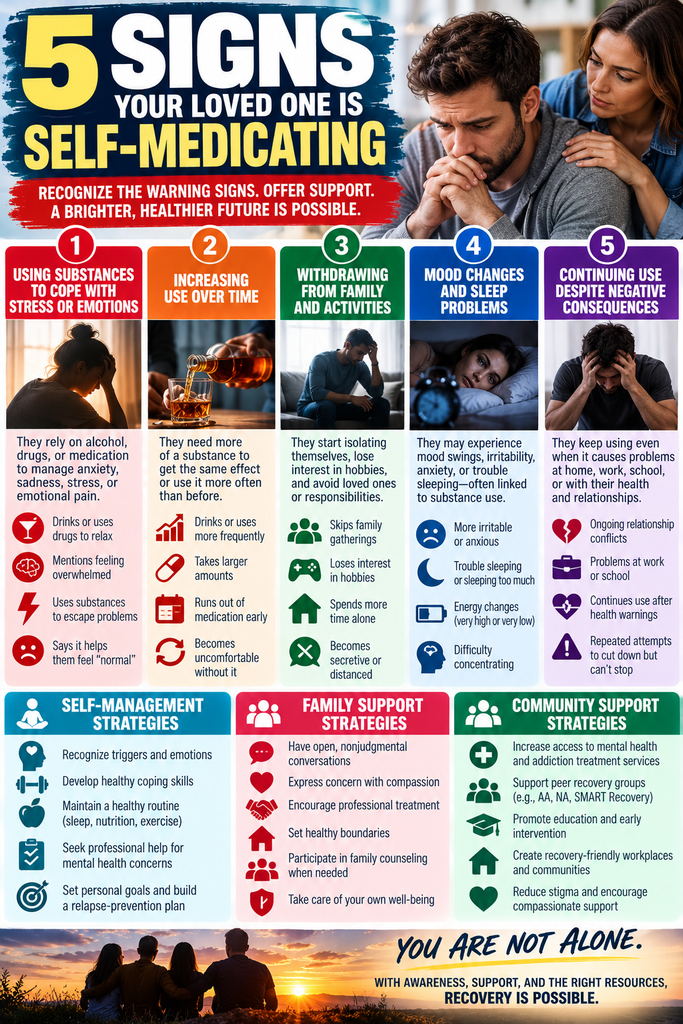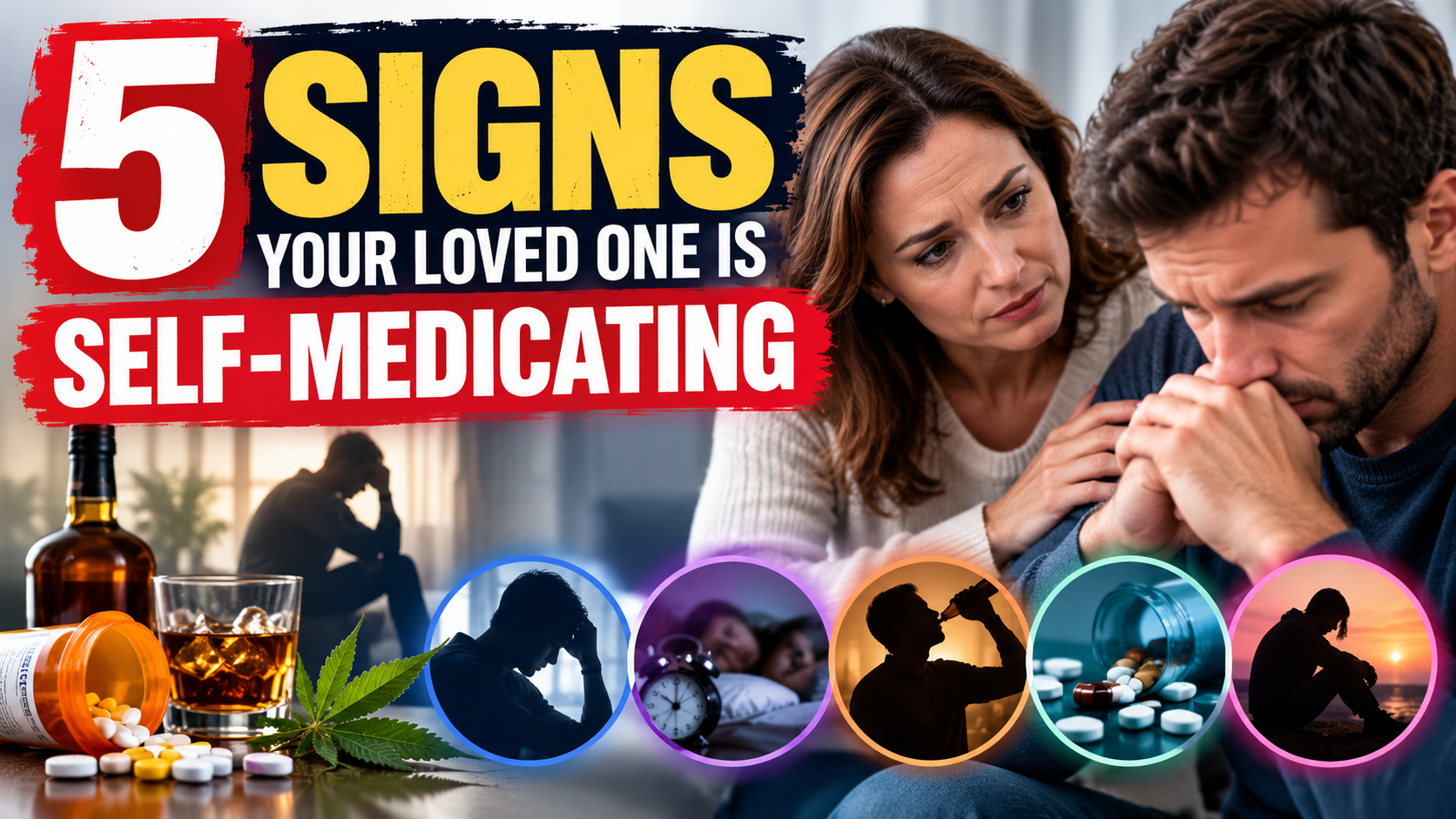
Changes in behavior, social withdrawal, or increased alcohol and drug use may signal that a loved one is struggling emotionally. Self-medication occurs when someone uses substances to cope with stress, anxiety, depression, trauma, or physical discomfort without appropriate medical guidance. Although it does not always lead to addiction, repeated substance use can worsen mental health and relationships. Recognizing the warning signs early encourages compassionate support and intervention. This article explores five signs of self-medication and practical self-management, family, and community strategies to support healthier coping and recovery.
Using Alcohol or Drugs to Escape Stress, Anxiety, or Emotional Pain
One of the most recognizable signs of self-medication is using substances to escape uncomfortable emotions.
A loved one may begin drinking after difficult workdays, using cannabis to manage anxiety, or taking medication that was not prescribed to them to cope with emotional distress.
They may describe these behaviors as necessary for relaxation or emotional stability.
Common statements include:
- “I need a drink to calm down.”
- “It’s the only thing that helps me sleep.”
- “I can’t deal with stress without it.”
- “It helps me forget my problems.”
- “I’m not addicted. I’m just trying to feel normal.”
These statements do not automatically indicate addiction. However, they may suggest that the person is becoming dependent on substances as a coping strategy.
Why this happens
Alcohol and certain drugs can temporarily change brain activity associated with stress, anxiety, pleasure, and emotional regulation.
Unfortunately, temporary relief can reinforce repeated substance use.
Over time, the original emotional problem may remain unresolved while additional problems develop, including tolerance, withdrawal symptoms, sleep disruption, and increased anxiety.
Self-management strategies
Someone experiencing this pattern may benefit from:
- Identifying the emotions that trigger substance use.
- Practicing breathing exercises and relaxation techniques.
- Participating in counseling or cognitive behavioral therapy.
- Developing healthier stress-management routines.
- Establishing consistent sleep and exercise habits.
- Consulting a healthcare professional about persistent anxiety or depression.
Family support strategies
Family members can encourage honest conversations without criticism.
Instead of saying, “You drink too much,” consider asking, “I’ve noticed you seem overwhelmed lately. Would you like to talk about what’s been happening?”
This approach focuses on emotional well-being rather than blame.
Increasing Substance Use or Needing More to Feel Better
A second warning sign is a gradual increase in how much or how often someone uses a substance.
What begins as occasional drinking or medication use may become a daily habit.
For example, someone who initially drinks one alcoholic beverage to relax may begin consuming several drinks every evening.
A person taking sedating medication without medical supervision may also increase the amount they use when the original dose no longer produces the desired effect.
Warning signs to recognize
- Drinking or using drugs more frequently.
- Taking larger amounts than originally intended.
- Running out of prescribed medication early.
- Using medication differently from the prescription instructions.
- Becoming uncomfortable when a substance is unavailable.
- Combining substances to intensify their effects.
- Continuing substance use despite negative consequences.
Understanding tolerance
Tolerance occurs when repeated exposure to a substance reduces its effects, leading some individuals to use larger amounts.
Tolerance alone does not establish addiction, and it can also occur during appropriate medical treatment.
However, increasing doses without medical supervision can create serious health risks.
Combining alcohol with opioids, benzodiazepines, or other sedating substances can cause life-threatening respiratory depression.
Self-management strategies
Individuals can begin by:
- Recording when and why substance use occurs.
- Reviewing medication use with a healthcare professional.
- Identifying patterns of escalating consumption.
- Seeking assessment for substance use disorder.
- Exploring safer treatments for anxiety, pain, or sleep problems.
- Developing a structured plan to reduce harmful substance use with medical guidance.
People with significant alcohol or benzodiazepine dependence should not abruptly stop using these substances without medical advice because withdrawal can be dangerous.
Family support strategies
Families can discuss observable changes rather than making accusations.
For example, they might say, “I’ve noticed you’re using your medication more often than before, and I’m concerned about your safety.”
Offering assistance with arranging a medical appointment may be more productive than arguing about whether the person has an addiction.
Withdrawing From Family, Friends, and Favorite Activities
Self-medication may become more concerning when a loved one begins avoiding relationships, social activities, or responsibilities.
Someone experiencing depression, anxiety, trauma, or problematic substance use may isolate themselves because they feel overwhelmed, ashamed, exhausted, or emotionally disconnected.
Family members may notice that the person no longer enjoys activities they previously valued.
Common behavioral changes
- Avoiding family dinners and social gatherings.
- Spending increasing amounts of time alone.
- Losing interest in hobbies or recreation.
- Frequently canceling plans.
- Becoming secretive about daily activities.
- Neglecting personal responsibilities.
- Avoiding conversations about emotional well-being.
Social withdrawal can have many causes, including depression, grief, physical illness, burnout, or relationship difficulties. It should not be interpreted as proof of substance use.
Why isolation can increase risk
Social connection provides emotional support, accountability, and opportunities for healthy coping.
When someone becomes isolated, they may have fewer opportunities to discuss problems or seek help.
Substance use can then become an increasingly familiar way of managing loneliness or distress.
Self-management strategies
Helpful approaches include:
- Reconnecting with trusted friends or relatives.
- Participating in enjoyable activities without substance use.
- Scheduling regular social contact.
- Joining a counseling or peer support group.
- Practicing communication and emotional regulation skills.
- Seeking evaluation for depression or other mental health concerns.
Family support strategies
Families can offer consistent, low-pressure opportunities for connection.
Inviting someone for a walk, sharing a meal, or checking in regularly can communicate support without forcing disclosure.
Avoid interpreting every declined invitation as rejection. A person experiencing emotional distress may need time and professional support to rebuild social confidence.
Experiencing Mood Swings, Irritability, or Changes in Sleep
Mood, energy, and sleep changes can sometimes accompany self-medication.
A loved one may appear relaxed or unusually energetic after using a substance but become irritable, anxious, exhausted, or withdrawn as its effects wear off.
Some individuals also use alcohol or sedating drugs to help them sleep, unaware that these substances can disrupt normal sleep patterns.
Possible warning signs
- Increased irritability or agitation.
- Unexplained changes in mood.
- Difficulty sleeping without alcohol or medication.
- Excessive daytime sleepiness.
- Unusual bursts of energy followed by exhaustion.
- Increased anxiety between episodes of substance use.
- Difficulty concentrating or remembering information.
These symptoms are not specific to addiction. They can also occur with mental health conditions, medication side effects, hormonal changes, and physical illnesses.
The connection between substances and sleep
Alcohol may initially cause drowsiness but often disrupts sleep later in the night.
Stimulants can interfere with sleep and contribute to agitation.
Sedatives may produce physical dependence when used improperly or for prolonged periods.
Repeated substance use may therefore worsen the very symptoms someone is trying to manage.
Self-management strategies
Individuals can improve emotional and sleep regulation by:
- Maintaining consistent sleep and wake times.
- Reducing caffeine late in the day.
- Practicing relaxation techniques.
- Seeking evaluation for persistent insomnia.
- Addressing anxiety or depression through appropriate treatment.
- Reviewing medications with a healthcare professional.
- Avoiding alcohol as a sleep aid.
Family support strategies
Families can encourage medical evaluation when changes in sleep, mood, or behavior become persistent.
They should avoid diagnosing the person based on isolated symptoms.
Instead, focus on concerns such as fatigue, emotional distress, and difficulty functioning.
Continuing Substance Use Despite Negative Consequences
One of the strongest warning signs of problematic substance use is continuing to drink or use drugs despite recognizing harmful consequences.
A loved one may experience relationship conflict, financial difficulties, health concerns, or problems at work but continue relying on substances.
They may minimize the consequences or promise to change but can’t sustain those changes.
Warning signs to watch for
- Repeated arguments related to drinking or drug use.
- Missing work, school, or family obligations.
- Driving or engaging in risky activities while impaired.
- Hiding alcohol, drugs, or medication use.
- Spending money on substances despite financial difficulties.
- Continuing use after medical warnings.
- Repeated unsuccessful attempts to cut down.
- Becoming defensive when others express concern.
These behaviors may indicate a substance use disorder and warrant professional assessment.
Understanding why stopping can be difficult
Repeated substance use can affect brain systems involved in motivation, reward, stress, and decision-making.
Withdrawal symptoms and cravings may also reinforce continued use.
This helps explain why simply telling someone to stop often isn’t enough.
Self-management strategies
People experiencing these problems may benefit from:
- Receiving a professional substance use assessment.
- Participating in individual or group therapy.
- Considering appropriate addiction medications.
- Developing a relapse-prevention plan.
- Identifying supportive accountability partners.
- Addressing co-occurring mental health conditions.
- Creating realistic goals for long-term recovery.
Family support strategies
Family members can remain compassionate while establishing boundaries.
For example, they can refuse to ride with an impaired driver, decline to provide money that facilitates substance use, and insist on maintaining a safe home environment.
Supporting recovery does not require ignoring dangerous behavior.
Understanding Why People Self-Medicate
Self-medication often develops because someone is trying to manage distress rather than seeking addiction.
Individuals may use substances to cope with:
- Anxiety and panic symptoms.
- Depression and persistent sadness.
- Traumatic experiences.
- Chronic pain.
- Insomnia and sleep disturbances.
- Grief and bereavement.
- Loneliness and social isolation.
- Workplace stress.
- Difficult family relationships.
The temporary relief a substance provides may make repeated use more appealing.
However, self-medication can interfere with identifying and treating the underlying problem.
For example, alcohol may temporarily reduce feelings of anxiety but can contribute to increased anxiety, poor sleep, and impaired emotional regulation over time.
Effective treatment should address both the substance use and the underlying physical or emotional symptoms.
Self-Management Strategies: Replacing Self-Medication With Healthier Coping Skills
For someone who recognizes that they are using substances to cope, self-management can become an important part of recovery.
The goal isn’t simply to remove a substance; it’s to develop safer, more effective ways to manage distress.
Build emotional awareness
Individuals can begin by identifying the feelings and situations that precede substance use.
Keeping a journal may help reveal patterns involving stress, conflict, loneliness, or sleep problems.
Develop healthier routines
Consistent routines can support emotional stability and reduce opportunities for impulsive substance use.
Helpful activities include:
- Regular physical exercise.
- Balanced meals and adequate hydration.
- Consistent sleep schedules.
- Mindfulness and relaxation exercises.
- Creative hobbies.
- Social activities.
- Time outdoors.
- Scheduled counseling appointments.
Seek appropriate medical treatment
People experiencing anxiety, depression, chronic pain, or insomnia should receive appropriate evaluation and care.
Evidence-based treatment may include psychotherapy, medication, physical rehabilitation, or a combination of approaches.
For substance use disorders, medications may also be appropriate depending on the substance involved.
Create a personalized recovery plan
A recovery plan should identify personal goals, triggers, coping strategies, emergency contacts, and sources of professional support.
Review the plan regularly and adjust it as circumstances change.
Family Support Strategies: Helping Without Judgment or Enabling
Discovering that someone you love may be self-medicating can create fear, frustration, and uncertainty.
Family members may feel responsible for fixing the problem or preventing every harmful consequence.
However, effective support involves compassion, realistic expectations, and healthy boundaries.
Start a supportive conversation
Choose a calm moment when the person is not intoxicated.
Focus on specific observations rather than accusations.
For example:
“I’ve noticed you’ve been having a difficult time lately and seem to be relying on alcohol more often. I’m concerned about how you’re feeling, and I’d like to help you find support.”
Encourage professional assistance
Offer to help locate a healthcare professional, addiction counselor, or mental health service.
Some individuals may feel more comfortable beginning with a primary care appointment rather than a specialized addiction program.
Avoid shame and threats
Criticism and humiliation can increase defensiveness and discourage honest conversations.
Families can communicate concern while remaining firm about unsafe behavior.
Establish healthy boundaries
Appropriate boundaries may include:
- Maintaining substance-free spaces.
- Refusing to provide money for drugs.
- Avoiding arguments during intoxication.
- Protecting children from unsafe behavior.
- Encouraging accountability.
- Seeking help if threatening or abusive behavior occurs.
Protect your own well-being
Family members also need emotional support.
Counseling, family support groups, and trusted relationships can help relatives manage stress and maintain healthy boundaries.
Community Support Strategies: Creating Pathways to Recovery
Community resources can help individuals and families move beyond isolation and obtain effective treatment.
Accessible services are especially important for people who face financial barriers, transportation difficulties, or fear of addiction-related stigma.
Expand mental health and addiction treatment
Communities can support recovery by providing:
- Affordable counseling and psychiatric services.
- Integrated treatment for mental health and substance use disorders.
- Outpatient addiction programs.
- Residential treatment when appropriate.
- Medication treatment for opioid and alcohol use disorders.
- Crisis intervention services.
- Continuing care and recovery support.
Encourage peer support
Programs such as Alcoholics Anonymous, Narcotics Anonymous, and SMART Recovery offer opportunities to connect with others who understand substance-related challenges.
Peer support can complement professional treatment, but it should not replace necessary medical care.
Promote education and early intervention
Schools, workplaces, healthcare organizations, and community groups can teach people to recognize problematic substance use and seek help before serious consequences develop.
Reduce stigma
Communities can encourage recovery by treating substance use disorders as health conditions and avoiding language that humiliates people who need assistance.
Support stable living conditions
Employment assistance, transportation, affordable housing, and accessible healthcare can improve recovery stability.
Social and economic challenges do not cause every substance use disorder, but addressing them can reduce barriers to treatment and continuing care.
When Should You Seek Professional Help?
Professional assistance is appropriate when substance use begins interfering with health, relationships, employment, finances, or daily functioning.
Warning signs requiring particular attention include repeated intoxication, unsuccessful attempts to stop, withdrawal symptoms, and use of multiple substances together.
Emergency medical assistance is necessary when someone experiences:
- Slow or absent breathing.
- Loss of consciousness.
- Seizures.
- Severe confusion.
- Chest pain.
- Suspected overdose.
- Immediate danger to themselves or others.
In the United States, call 911 for medical emergencies. Administer naloxone when an opioid overdose is suspected, and naloxone is available.
For emotional distress or suicidal thoughts, call or text 988.
Important Lessons for Families Recognizing Self-Medication
Recognizing possible self-medication is not about labeling someone as an addict.
It is about noticing patterns that may indicate untreated distress or harmful substance use.
Several lessons are especially important:
- Self-medication may begin as an attempt to relieve genuine emotional or physical suffering.
- Not everyone who uses substances to cope develops an addiction.
- Increasing use, secrecy, isolation, and harmful consequences deserve attention.
- Early conversations can encourage treatment before problems worsen.
- Compassion and accountability can coexist.
- Family members should maintain healthy boundaries.
- Professional treatment can address both substance use and underlying mental health concerns.
- Community support can reduce isolation and improve access to treatment.
- Recovery is possible through individualized, evidence-based care.
Conclusion: Recognizing the Signs Before the Struggle Deepens
When someone you love begins relying on alcohol, drugs, or medications to cope with emotional pain, the warning signs may be subtle.
Changes in mood, increased substance use, withdrawal from relationships, disrupted sleep, and continued use despite negative consequences can all indicate that a person needs additional support.
However, these signs are not proof of addiction, and similar behaviors can result from other medical or psychological conditions.
The most helpful response is to approach your loved one with curiosity, compassion, and concern while encouraging appropriate professional evaluation.
Through self-management, family encouragement, evidence-based treatment, and community support, individuals can learn healthier ways to manage emotional distress and reduce harmful substance use.
Recognizing warning signs isn’t about controlling someone else’s behavior. It opens the door to honest conversations, effective treatment, and lasting recovery.
Frequently Asked Questions and Answers
Understanding the Five Warning Signs
1. What does it mean when someone is self-medicating?
Self-medicating means using substances to relieve emotional or physical symptoms without appropriate medical supervision. Examples include drinking alcohol to manage anxiety, taking someone else’s prescription medication for sleep, or using drugs to escape emotional pain. Not every instance of self-medication indicates addiction, but repeated use can create serious health risks.
2. What are the five major signs that a loved one may be self-medicating?
The five warning signs include:
- Using alcohol, drugs, or medications to cope with stress or emotional pain.
- Increasing substance use or needing larger amounts for the same effect.
- Withdrawing from family, friends, and previously enjoyed activities.
- Experiencing mood changes, irritability, or sleep disturbances.
- Continuing substance use despite negative consequences.
These signs warrant attention but do not independently establish a substance use disorder.
3. Why do people use alcohol or drugs to cope with emotional pain?
Some individuals discover that substances temporarily reduce anxiety, sadness, emotional discomfort, or physical pain. These short-term effects can reinforce repeated use. However, substances may eventually worsen the original symptoms and create additional problems involving dependence, withdrawal, and impaired functioning.
4. Is self-medication the same as addiction?
No. Self-medication describes why someone may use a substance, while addiction involves a pattern of compulsive use, impaired control, and continued use despite harmful consequences. Someone can self-medicate without meeting the diagnostic criteria for a substance use disorder.
5. Can someone self-medicate without realizing it?
Yes. A person may view nightly drinking, frequent cannabis use, or taking sedating medication as a normal way to relax. They may not recognize that these behaviors have become their primary method of coping with emotional distress.
6. Is drinking alcohol every night a sign of self-medication?
It can be, particularly when someone drinks specifically to manage stress, anxiety, loneliness, or sleep problems. However, frequency alone does not reveal the motivation or establish addiction. The amount consumed, loss of control, and consequences also matter.
7. What does increasing substance use indicate?
Increasing use may suggest tolerance, worsening symptoms, or growing reliance on a substance. For example, someone may begin using larger amounts of alcohol to achieve the relaxation they previously experienced with less. Escalating use should prompt consideration of medical assessment.
8. Why might someone who is self-medicating withdraw from family and friends?
Social withdrawal may occur because of depression, anxiety, shame, exhaustion, or increasing time spent obtaining and using substances. However, isolation can have many causes and should not automatically be attributed to addiction.
9. Can mood swings and sleep problems indicate self-medication?
Yes. Alcohol, stimulants, opioids, and sedating medications can affect mood, energy, and sleep. Changes may occur during intoxication, withdrawal, or as a consequence of an underlying mental health condition. Persistent symptoms deserve professional evaluation.
10. Why is continued substance use despite negative consequences concerning?
Continuing to use substances despite relationship conflicts, medical problems, financial difficulties, or impaired daily functioning is an important warning sign of a possible substance use disorder. It suggests that substance use may be becoming difficult to control.
Mental Health and Hidden Emotional Struggles
11. What mental health conditions are commonly associated with self-medication?
People may use substances to cope with symptoms associated with anxiety disorders, depression, post-traumatic stress disorder, and other mental health conditions. Chronic pain, insomnia, grief, and emotional stress may also contribute to self-medication.
12. Can depression lead someone to self-medicate?
Yes. Someone experiencing depression may use alcohol or drugs to temporarily escape sadness, emotional numbness, or hopelessness. Unfortunately, substance use can worsen depressive symptoms and interfere with effective treatment.
13. Can anxiety cause someone to rely on alcohol or medications?
Anxiety can contribute to self-medication because alcohol and certain sedatives may temporarily reduce distress. However, repeated use can produce dependence, withdrawal-related anxiety, and disrupted sleep.
14. Can trauma contribute to self-medication?
Traumatic experiences may increase vulnerability to substance use as a coping mechanism. Some individuals use substances to avoid distressing memories or manage emotional arousal. Trauma-informed counseling can help address these experiences without relying on substances.
15. Can someone self-medicate with prescription medications?
Yes. Taking higher doses than prescribed, using someone else’s medication, or using a prescription drug for a purpose other than directed can constitute self-medication. However, taking medication exactly as prescribed for a diagnosed condition is not inherently self-medication or addiction.
16. Is using alcohol to fall asleep considered self-medication?
Yes, when alcohol is used specifically to treat sleep difficulties. Although alcohol may initially cause drowsiness, it often disrupts sleep quality and can worsen insomnia over time.
17. Can self-medication make mental health conditions worse?
Yes. Repeated substance use can contribute to increased anxiety, depression, sleep disturbances, cognitive difficulties, and emotional instability. It may also delay diagnosis and appropriate treatment of the underlying condition.
Self-Management and Recovery Strategies
18. What should someone do if they recognize that they are self-medicating?
First, acknowledge the pattern without shame. A healthcare professional can help evaluate substance use, emotional symptoms, and treatment needs. Developing healthier coping strategies and seeking counseling may reduce reliance on substances.
19. What healthy coping strategies can replace self-medication?
Helpful strategies include:
- Regular physical activity.
- Mindfulness and relaxation exercises.
- Consistent sleep routines.
- Counseling or psychotherapy.
- Journaling and emotional awareness.
- Supportive social relationships.
- Creative hobbies and recreational activities.
- Appropriate medical treatment for underlying symptoms.
20. How can someone identify their substance use triggers?
Keeping a record of substance use, emotional states, social situations, and stressful events can reveal patterns. Common triggers include workplace stress, conflict, loneliness, fatigue, and exposure to substances.
21. Can therapy help someone stop self-medicating?
Yes. Cognitive behavioral therapy and other evidence-based approaches can help individuals understand emotional triggers, change harmful behavior patterns, and develop healthier coping skills. Treatment may also address co-occurring mental health conditions.
22. Are medications available to treat substance use disorders?
Yes. Medications such as naltrexone and acamprosate may help treat alcohol use disorder. Methadone and buprenorphine are effective treatments for opioid use disorder. Choose medications based on professional assessment and individual medical needs.
23. Is it safe to stop using alcohol or sedatives suddenly?
Not always. Abruptly stopping alcohol or benzodiazepines after significant physical dependence can cause dangerous withdrawal symptoms, including seizures. Medical supervision may be necessary.
Family Support Strategies
24. How can I talk to a loved one who may be self-medicating?
Choose a calm, private moment and express concern using specific observations. Avoid accusations or labels. For example, say, “I’ve noticed you’ve been having trouble sleeping and drinking more often. I’m concerned about how you’re feeling.”
25. What should I avoid saying to someone who may be self-medicating?
Avoid statements that shame, threaten, or dismiss their emotional distress. Comments such as “Just stop drinking” or “You’re ruining everything” may increase defensiveness. Instead, emphasize safety, concern, and available treatment options.
26. What if my loved one denies having a problem?
Denial or disagreement doesn’t mean the conversation has failed. Continue communicating respectfully, describe observable concerns, maintain appropriate boundaries, and encourage professional assessment. You cannot force someone to acknowledge a problem through repeated arguments.
27. How can families support recovery without enabling harmful behavior?
Families can offer emotional encouragement, help access treatment, and recognize progress while maintaining boundaries. They should avoid concealing dangerous behavior, providing substances, or repeatedly shielding someone from reasonable consequences.
28. Should family members attend counseling?
Family counseling can improve communication, address relationship conflicts, and help relatives understand substance use disorders. Individual counseling may also benefit family members experiencing stress, anxiety, or emotional exhaustion.
29. How can families protect children when a parent is self-medicating?
Children need predictable routines, emotional reassurance, and protection from intoxicated or unsafe behavior. Families should seek professional guidance when substance use interferes with caregiving. Children should not be expected to manage an adult’s addiction.
Community Support and Professional Help
30. What community resources can help someone who is self-medicating?
Community resources include addiction treatment clinics, mental health centers, primary care services, peer recovery groups, family counseling programs, and public health organizations. Many communities also offer low-cost or sliding-scale services.
31. Can peer support groups help someone who is self-medicating?
Yes. Groups such as Alcoholics Anonymous, Narcotics Anonymous, and SMART Recovery can provide encouragement, accountability, and social connection. Peer support can complement professional treatment but should not replace necessary medical care.
32. How can workplaces and communities help prevent self-medication?
Workplaces and communities can promote mental health education, confidential counseling, reasonable access to treatment, stress-management resources, and supportive environments. Early intervention may help individuals address emotional distress before harmful substance use patterns become established.
33. When should someone seek professional help for suspected self-medication?
Professional evaluation is appropriate when substance use becomes frequent, difficult to control, or associated with worsening mental health, relationship conflicts, work difficulties, or physical symptoms. People don’t need to wait until they experience severe consequences to seek help.
34. What should I do if my loved one may be experiencing an overdose?
Call 911 immediately. If an opioid overdose is suspected, administer naloxone if available. Stay with the person and follow emergency dispatcher instructions. Slow breathing, unconsciousness, and an inability to wake up are medical emergencies.
35. What is the most important lesson about recognizing self-medication in a loved one?
The most important lesson is that concerning behavior may reflect an attempt to manage genuine emotional or physical suffering. Recognizing warning signs early creates an opportunity for compassionate conversations, professional assessment, and effective treatment.
Families can provide encouragement and maintain boundaries, while communities can improve access to care and reduce stigma.
Supporting someone who may be self-medicating begins with understanding the behavior, recognizing the underlying distress, and helping them access healthier ways to cope.
Video: