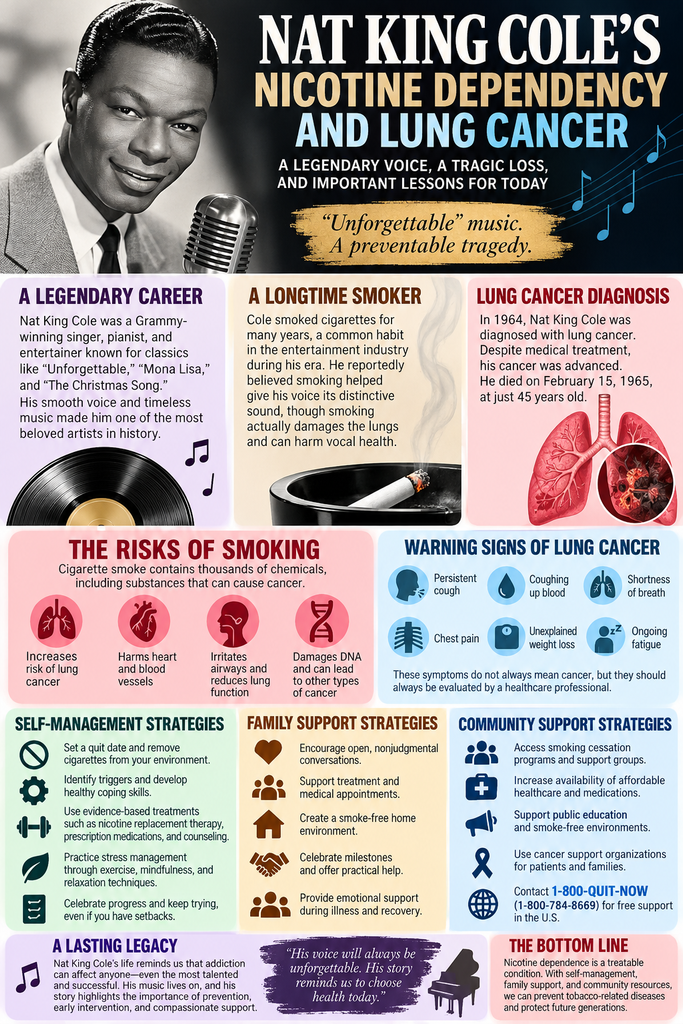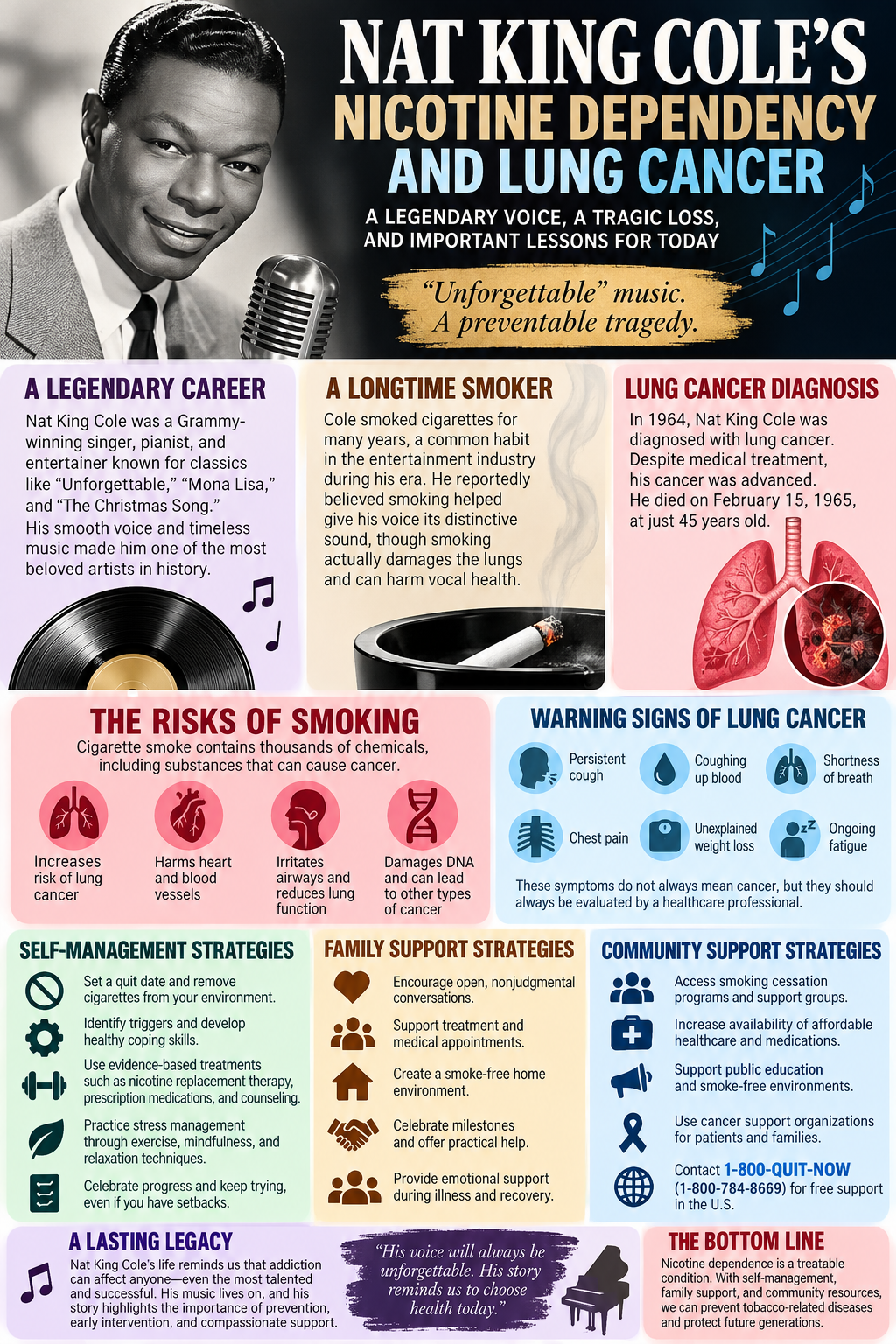
Nat King Cole was one of America’s most beloved singers, known for his smooth baritone, sophisticated style, and unforgettable songs like “Unforgettable,” “Mona Lisa,” and “The Christmas Song.” Behind his remarkable success, however, was a serious health risk associated with cigarette smoking.
Cole was a longtime cigarette smoker who developed lung cancer and died on February 15, 1965, at just 45 years old. His death illustrates the devastating consequences of tobacco exposure and the importance of recognizing nicotine dependence before irreversible health complications develop.
Although Cole lived during an era when smoking was widely accepted and frequently glamorized, his experience offers important lessons about addiction, prevention, early intervention, and the value of self-management, family involvement, and community support.
Understanding his story can help individuals and families recognize the dangers of tobacco use while encouraging compassionate, evidence-based approaches to nicotine addiction and cancer prevention.
Nat King Cole’s Smoking History and Nicotine Dependence
During the 1940s, 1950s, and early 1960s, cigarette smoking was deeply embedded in American entertainment culture. Performers, musicians, and Hollywood celebrities frequently appeared with cigarettes in photographs, movies, and advertisements.
Nat King Cole smoked heavily throughout much of his adult life. Historical accounts describe his belief that smoking contributed to the distinctive quality of his singing voice, although cigarette smoke actually damages the respiratory system and can harm vocal function.
Nicotine, the addictive chemical in tobacco, stimulates the brain’s reward pathways and promotes repeated use. Over time, individuals may develop physical dependence, cravings, and withdrawal symptoms when attempting to stop.
Factors that may have contributed to his smoking
- Entertainment industry culture: Smoking was common and socially accepted among performers.
- Professional pressures: Demanding schedules and public expectations may have made cigarettes seem like a convenient coping habit.
- Nicotine dependence: Repeated nicotine exposure can create strong physiological and behavioral dependence.
- Limited public awareness: People were less aware of tobacco’s health consequences during Cole’s early career.
- Personal beliefs about vocal performance: Cole reportedly associated smoking with the sound of his voice.
These factors provide historical context rather than a confirmed psychological explanation for every aspect of Cole’s smoking behavior.
Lung Cancer Diagnosis and His Final Months
In 1964, Cole was diagnosed with lung cancer after experiencing health problems. His illness developed during a period when medical understanding of tobacco-related cancer was advancing rapidly.
The landmark 1964 U.S. Surgeon General’s report had established cigarette smoking as a cause of lung cancer in men, marking a major turning point in public health awareness.
Cole underwent medical treatment, including surgery, but his cancer was advanced. Despite efforts to treat the disease, he died in February 1965.
His experience illustrates several important realities:
- Lung cancer can develop after years of exposure to tobacco smoke.
- Early symptoms may be subtle or mistaken for less serious respiratory problems.
- Stopping smoking reduces future health risks, but it cannot guarantee that cancer will never develop.
- Advanced lung cancer can be difficult to treat, particularly when diagnosed late.
- Medical treatment and emotional support are important for patients and their families.
Today, lung cancer screening and advances in cancer treatment offer opportunities that were largely unavailable during Cole’s lifetime.
Understanding the Connection Between Nicotine Dependence and Lung Cancer
Nat King Cole’s illness demonstrates the relationship between long-term cigarette smoking and cancer risk.
Nicotine is primarily responsible for maintaining tobacco dependence, while the carcinogenic chemicals produced by burning tobacco cause much of the cancer-related damage.
Cigarette smoke contains thousands of chemicals, including substances that can damage DNA, cause chronic inflammation, and promote the development of malignant tumors.
According to the Centers for Disease Control and Prevention, cigarette smoking is responsible for approximately 80% of lung cancer deaths in the United States.
Warning signs of lung cancer
- Persistent coughing or worsening chronic cough.
- Coughing up blood.
- Unexplained weight loss.
- Chest pain or discomfort.
- Shortness of breath.
- Persistent fatigue.
- Repeated respiratory infections.
- Unexplained back or shoulder pain.
These symptoms do not necessarily indicate cancer, but they warrant medical evaluation, particularly in individuals with a history of smoking.
Self-Management Strategies: Breaking Free From Nicotine Dependence
Although modern smoking cessation treatments were not available to Cole, his experience provides an opportunity to examine how individuals can manage nicotine addiction today.
Successful smoking cessation often requires a combination of behavioral changes, medication, emotional regulation, and professional support.
Practical self-management strategies
Recognize smoking triggers. Identify situations, emotions, and environments that encourage cigarette use. Common triggers include stress, alcohol consumption, boredom, and social gatherings.
Develop a personalized quit plan. Set a quit date, remove cigarettes from the home, and prepare alternatives to improve readiness.
Consider evidence-based medications. Nicotine replacement therapy, varenicline, and bupropion can help reduce cravings and withdrawal symptoms when clinically appropriate.
Practice stress management. Mindfulness, breathing exercises, physical activity, and relaxation techniques can help individuals manage cravings without cigarettes.
Monitor physical health. Regular healthcare appointments can help identify respiratory symptoms and other smoking-related complications.
Build healthier routines. Replace smoking rituals with walking, drinking water, journaling, or hobbies to support behavioral change.
Respond constructively to setbacks. Smoking after a quit attempt does not erase previous progress. Individuals can review their triggers, adjust their treatment plan, and resume quitting.
The goal isn’t simply to eliminate cigarettes; it’s to build sustainable coping mechanisms that support long-term health.
Family Support Strategies: Encouraging Recovery Without Judgment
Nicotine dependence affects more than the person who smokes. Family members may experience anxiety, frustration, financial concerns, and fear about smoking-related illnesses.
Cole’s family experienced the devastating loss of a husband and father whose career and personal life were cut short by cancer.
While the specific details of his family’s efforts to address his smoking are not fully documented, modern families can learn important lessons about providing compassionate support.
How families can help
- Encourage open conversations: Discuss smoking-related concerns without criticism or blame.
- Support treatment decisions: Help loved ones find healthcare professionals and smoking cessation programs.
- Create smoke-free environments: Establish household rules that protect everyone from secondhand smoke.
- Recognize withdrawal symptoms: Understand that irritability, anxiety, and difficulty concentrating may accompany nicotine withdrawal.
- Celebrate progress: Acknowledge milestones such as completing a smoke-free day, week, or month.
- Offer practical assistance: Help with transportation to appointments, medication reminders, or childcare during treatment.
- Respect personal autonomy: Encourage healthier choices without threats, humiliation, or excessive monitoring.
Supporting a family member diagnosed with lung cancer
A cancer diagnosis can produce intense emotional distress. Family members may need to shift their focus from smoking cessation alone to comprehensive medical and emotional support.
They can assist by:
- Accompanying the patient to oncology appointments.
- Helping manage medications and treatment schedules.
- Encouraging conversations about treatment preferences.
- Providing nutritional and practical assistance.
- Recognizing symptoms of depression, anxiety, and caregiver burnout.
- Exploring palliative care to improve comfort and quality of life.
Family support should emphasize dignity, compassion, and shared decision-making rather than assigning blame for the illness.
Community Support Strategies: Creating Environments That Encourage Smoking Cessation
Nat King Cole’s smoking occurred in a cultural environment where cigarettes were widely promoted and frequently associated with glamour, success, and sophistication.
Modern public health initiatives have worked to change these perceptions through education, tobacco regulations, smoking cessation services, and smoke-free policies.
Community resources can significantly improve access to treatment and reduce tobacco-related health disparities.
Effective community support approaches
Smoking cessation programs: Hospitals, clinics, and public health organizations can provide structured counseling and treatment.
Peer support groups: Individuals attempting to quit can benefit from connecting with others who understand nicotine withdrawal and behavioral challenges.
Accessible healthcare services: Affordable counseling, medications, and preventive care help reduce financial barriers.
Public education campaigns: Schools, workplaces, and community organizations can educate people about tobacco-related diseases.
Smoke-free public spaces: Restrictions on indoor smoking help protect nonsmokers and reduce environmental smoking cues.
Cancer support organizations: Patients and caregivers can access educational materials, support groups, transportation assistance, and financial guidance.
Culturally responsive outreach: Programs that address language, socioeconomic barriers, discrimination, and community-specific concerns can improve access to cessation services.
In the United States, individuals can contact 1-800-QUIT-NOW (1-800-784-8669) for free smoking cessation assistance.
Lung Cancer Prevention and Early Detection
One of the most important lessons from Cole’s death is the value of prevention and timely medical evaluation.
Smoking cessation substantially reduces the risk of lung cancer, cardiovascular disease, chronic obstructive pulmonary disease, and other serious conditions.
Even people who have smoked for decades can experience meaningful health benefits after quitting.
Modern lung cancer screening recommendations
The U.S. Preventive Services Task Force recommends annual low-dose CT screening for adults who meet all three criteria:
- Are between 50 and 80 years old.
- Have a smoking history of at least 20 pack-years.
- Currently smoke or quit within the previous 15 years.
A pack-year represents smoking one pack of cigarettes daily for one year. Discuss screening eligibility with a healthcare professional, especially when other risk factors are present.
Importantly, people experiencing possible lung cancer symptoms should seek diagnostic evaluation rather than wait until they qualify for routine screening.
The Emotional and Psychological Challenges of Nicotine Addiction
Nicotine addiction is not simply a matter of willpower. It involves changes in brain reward systems, learned behaviors, emotional associations, and physical dependence.
People who smoke may feel conflicted about quitting, especially when cigarettes have become connected to their identity, daily routines, or professional activities.
Cole’s reported belief that smoking contributed to his distinctive vocal sound illustrates how personal beliefs can reinforce harmful behaviors.
For individuals struggling with nicotine dependence, psychological support can help address:
- Fear of losing a familiar coping mechanism.
- Anxiety about withdrawal symptoms.
- Feelings of guilt or shame about smoking.
- Concerns about weight gain or changes in daily routines.
- Depression or emotional distress during cessation.
- Fear of developing smoking-related diseases.
Cognitive behavioral therapy, motivational interviewing, and other evidence-based counseling approaches can help individuals examine these beliefs and develop healthier coping strategies.
Treatment works best when healthcare providers approach nicotine dependence as a treatable medical condition rather than a personal failure.
Lessons From Nat King Cole’s Life and Legacy
Nat King Cole’s extraordinary musical achievements continue to inspire generations. His death also provides an important opportunity to reflect on how social norms, addictive substances, and healthcare awareness influence personal health.
His experience highlights several enduring lessons.
Addiction can affect anyone. Professional success, financial resources, and public admiration do not eliminate vulnerability to substance dependence.
Cultural acceptance does not guarantee safety. Cigarette smoking was once normalized throughout entertainment and society, despite its serious health consequences.
Personal beliefs can reinforce harmful habits. Associating cigarettes with creativity, relaxation, or professional performance may make quitting more difficult.
Early intervention matters. Addressing nicotine dependence before serious complications develop offers substantial health benefits.
Families and communities influence recovery. Supportive relationships, accessible treatment, and healthier environments can strengthen cessation efforts.
Compassion should replace stigma. People experiencing tobacco-related illnesses deserve appropriate healthcare, emotional support, and dignity.
Turning a Tragic History Into a Public Health Message
Cole’s story reminds us that addiction and chronic illness are closely connected, but they are not inevitable outcomes.
Today, individuals have access to smoking cessation medications, behavioral counseling, lung cancer screening, and advanced cancer treatments that were unavailable or far less developed during his lifetime.
Research also shows that quitting smoking after a cancer diagnosis can improve prognosis and reduce treatment-related complications.
Prevention should begin long before serious symptoms appear.
Families can encourage healthier habits, healthcare professionals can provide evidence-based treatment, and communities can create environments that make tobacco-free living more achievable.
Together, these strategies offer opportunities to reduce tobacco-related disease and improve long-term well-being.
Conclusion: Remembering Nat King Cole Beyond His Smoking-Related Illness
Nat King Cole’s legacy is defined by extraordinary musical talent, cultural influence, and a voice that continues to resonate decades after his death.
Yet his struggle with heavy cigarette smoking and his death from lung cancer at age 45 also represent a powerful reminder of tobacco’s consequences.
His experience demonstrates why nicotine dependence deserves early attention, effective treatment, and compassionate support.
Through self-management strategies, family encouragement, community resources, and medical intervention, individuals today have more opportunities to overcome tobacco dependence and protect their health.
The most important lesson from Nat King Cole’s story is that recognizing addiction early and seeking support can help protect the years, relationships, and experiences that make life meaningful.
Frequently Asked Questions And Answers
Did Nat King Cole die from lung cancer?
Yes. Nat King Cole died from lung cancer on February 15, 1965, at age 45. His diagnosis occurred in late 1964.
Was Nat King Cole addicted to cigarettes?
He was documented as a heavy, longtime cigarette smoker. This is consistent with possible nicotine dependence, although a formal clinical diagnosis is not established in the historical sources cited here.
Did smoking contribute to Nat King Cole’s distinctive voice?
Cole reportedly believed cigarettes contributed to his vocal tone. However, smoking can irritate and damage the vocal cords, and it is not a safe or medically recommended way to develop a singing voice.
Can quitting smoking prevent lung cancer?
Quitting smoking significantly reduces lung cancer risk, although it cannot eliminate all risk, especially after prolonged tobacco exposure.
What is the most effective way to overcome nicotine dependence?
Combining behavioral counseling with evidence-based cessation medication generally provides a better chance of long-term success than attempting to quit without support.
Can family members help someone stop smoking?
Yes. Emotional encouragement, smoke-free environments, practical assistance, and support for professional treatment can help individuals maintain their cessation efforts.
Understanding His Smoking History, Cancer Diagnosis, and Lessons for Addiction Recovery
Who was Nat King Cole, and why is his smoking history significant?
Nat King Cole was a legendary American jazz pianist and singer known for songs such as “Unforgettable,” “Mona Lisa,” and “The Christmas Song.” He was also a longtime heavy cigarette smoker who developed lung cancer and died at age 45. His experience illustrates the serious health consequences of tobacco use and the importance of smoking cessation and cancer prevention.
Was Nat King Cole addicted to nicotine?
Cole was widely documented as a heavy cigarette smoker. Although a formal medical diagnosis of nicotine dependence is not publicly established, his prolonged tobacco use is consistent with a pattern that can involve nicotine addiction. Nicotine affects the brain’s reward system, producing cravings, withdrawal symptoms, and difficulty quitting.
How many cigarettes did Nat King Cole smoke daily?
Historical accounts frequently describe Cole as smoking approximately three packs of cigarettes daily, although exact consumption likely varied. This level of smoking represents substantial tobacco exposure and significantly increases the risk of lung cancer, cardiovascular disease, and chronic respiratory conditions.
Did Nat King Cole believe smoking improved his singing voice?
Yes. Historical accounts suggest that Cole believed cigarette smoking contributed to the distinctive texture of his voice. However, medical evidence shows that smoking irritates the vocal cords, damages respiratory tissues, and can impair vocal performance. Smoking is not a safe way to improve vocal quality.
When was Nat King Cole diagnosed with lung cancer?
Cole was diagnosed with lung cancer in late 1964. His diagnosis occurred during the same year that the U.S. Surgeon General released a landmark report establishing the relationship between cigarette smoking and lung cancer in men.
How old was Nat King Cole when he died?
Nat King Cole died on February 15, 1965, at the age of 45. His death occurred only months after his lung cancer diagnosis, demonstrating how rapidly advanced cancer can progress.
Did cigarette smoking cause Nat King Cole’s lung cancer?
Cole’s history of heavy cigarette smoking was a major risk factor for lung cancer. Tobacco smoking is a well-established cause of the disease. Although it is not possible to prove the precise cause of an individual cancer retrospectively, his smoking history makes tobacco exposure a highly relevant factor.
What type of lung cancer did Nat King Cole have?
Historical reports have described Cole’s illness as lung cancer, sometimes identified as involving the left lung. Commonly available historical accounts do not consistently establish the exact pathological subtype. It is therefore more accurate to describe his diagnosis as lung cancer without assigning an unverified subtype.
What symptoms did Nat King Cole experience before his diagnosis?
Accounts of Cole’s final illness describe respiratory and other health difficulties, but the complete clinical details are not publicly established. Common lung cancer symptoms include persistent coughing, chest pain, unexplained weight loss, fatigue, coughing up blood, and shortness of breath. These symptoms should receive prompt medical evaluation.
Did Nat King Cole receive treatment for lung cancer?
Yes. Cole underwent medical treatment, including surgery, after his diagnosis. Unfortunately, his cancer was advanced, and treatment was unsuccessful. Cancer care during the 1960s lacked many modern treatments, including targeted therapies, immunotherapy, and contemporary screening technologies.
Nicotine Dependence and Health Consequences
Why is nicotine so addictive?
Nicotine rapidly reaches the brain after inhalation and activates receptors involved in dopamine release. Dopamine contributes to reinforcement and reward-related learning. Repeated exposure produces physiological adaptations that can result in cravings, tolerance, and withdrawal symptoms when nicotine use stops.
What are the warning signs of nicotine dependence?
Common signs include strong cigarette cravings, smoking shortly after waking, difficulty quitting, irritability when unable to smoke, and continued tobacco use despite health concerns. Individuals may also associate smoking with stress relief, social interactions, or daily routines.
How does cigarette smoking increase lung cancer risk?
Cigarette smoke contains carcinogenic chemicals that damage DNA, promote inflammation, and interfere with normal cellular repair. Over time, these accumulated genetic changes can lead to uncontrolled cell growth and cancer. Both the duration and intensity of smoking influence risk.
Is nicotine itself responsible for lung cancer?
Nicotine is primarily responsible for tobacco addiction, while many other chemicals in cigarette smoke cause much of the cancer-related damage. However, nicotine is not harmless. It affects cardiovascular function and can maintain dependence on harmful tobacco products.
Can smoking damage a person’s singing voice?
Yes. Cigarette smoke irritates the vocal cords and can cause inflammation, hoarseness, reduced vocal endurance, and changes in vocal quality. Long-term smoking also increases the risk of cancers affecting the throat and larynx.
Can someone develop lung cancer after quitting smoking?
Yes. Former smokers retain some lung cancer risk, particularly after years of heavy tobacco exposure. However, quitting substantially reduces that risk over time compared with continuing to smoke.
Does quitting smoking after a lung cancer diagnosis still help?
Yes. Smoking cessation after a cancer diagnosis can improve treatment outcomes, reduce complications, support healing, and potentially improve survival. Healthcare professionals generally recommend stopping smoking even after serious tobacco-related illnesses develop.
Self-Management and Smoking Cessation
What self-management strategies can help someone overcome nicotine dependence?
Effective strategies include identifying smoking triggers, establishing a quit date, using evidence-based cessation medications, practicing stress management, and tracking progress. Combining behavioral counseling with medication generally improves the likelihood of successfully quitting.
What medications can help someone quit smoking?
Evidence-based treatments include nicotine replacement products such as patches, gum, and lozenges, along with prescription medications such as varenicline and bupropion. A healthcare professional can help determine the right treatment based on medical history and individual needs.
How can someone manage nicotine cravings without cigarettes?
Cravings can be managed through brief physical activity, deep breathing, drinking water, chewing sugar-free gum, and temporarily avoiding smoking-related triggers. Behavioral counseling and cessation medications can also reduce the intensity and frequency of cravings.
How long does nicotine withdrawal last?
Withdrawal symptoms often begin within several hours after stopping nicotine, peak during the first few days, and generally improve over two to four weeks. Some cravings and behavioral triggers may persist longer, particularly in individuals with longstanding dependence.
Is quitting smoking suddenly better than gradually reducing cigarettes?
Both approaches can be effective. Some individuals prefer setting a firm quit date, while others benefit from a structured reduction plan. The most important factors are achieving complete smoking cessation, receiving appropriate support, and using evidence-based treatment when needed.
What should someone do after returning to smoking?
A return to smoking should be treated as an opportunity to review triggers and strengthen the quit plan rather than as a personal failure. Individuals can resume cessation treatment, contact a counselor, and develop additional strategies to manage high-risk situations.
Family Support Strategies
How can families support someone struggling with nicotine dependence?
Families can offer encouragement, listen without judgment, help identify treatment resources, and celebrate smoking-cessation milestones. Maintaining smoke-free environments and respecting personal autonomy can also strengthen recovery.
Should family members pressure someone to stop smoking?
Repeated criticism, threats, and shame can damage relationships and increase resistance. Supportive conversations that emphasize health, personal goals, and available treatment options are generally more constructive than confrontational approaches.
How does nicotine dependence affect family relationships?
Nicotine dependence may create concerns about health, financial expenses, secondhand smoke exposure, and future medical complications. Family members may experience anxiety or frustration, making communication and healthy boundaries especially important.
How can families help someone diagnosed with lung cancer?
Families can assist with medical appointments, transportation, medication schedules, nutrition, and emotional support. They can also encourage discussions about treatment preferences and help connect patients with oncology social workers, counseling, and palliative care services.
How did Nat King Cole’s illness affect his family?
Cole’s premature death left his wife, Maria Cole, and their children grieving the loss of a husband and father. His daughter Natalie Cole later became a successful singer in her own right. His family’s experience highlights the lasting emotional impact that serious illness and premature death can have across generations.
Community Support and Prevention
What community resources are available for nicotine addiction?
Community resources include smoking cessation clinics, public health departments, counseling programs, peer support groups, and telephone quitlines. In the United States, individuals can call 1-800-QUIT-NOW (1-800-784-8669) for free smoking cessation support.
How can communities help prevent smoking-related lung cancer?
Communities can promote tobacco education, establish smoke-free public spaces, improve access to cessation medications, support screening programs, and address barriers to affordable healthcare. These approaches help reduce smoking prevalence and tobacco-related disease.
Who should receive lung cancer screening?
The U.S. Preventive Services Task Force recommends annual low-dose CT screening for adults ages 50–80 who have at least a 20-pack-year smoking history and currently smoke or quit within the previous 15 years. Discuss screening eligibility and potential benefits with a healthcare professional.
What can today’s entertainers learn from Nat King Cole’s experience?
Entertainers can see that smoking isn’t necessary for artistic expression, vocal performance, or professional success. Protecting respiratory health, managing stress through healthier strategies, and seeking cessation treatment can support both career longevity and personal well-being.
How has public awareness of smoking changed since Nat King Cole’s lifetime?
During Cole’s career, cigarettes were widely advertised and socially accepted. Today, decades of scientific research have established the risks of tobacco use, leading to public education campaigns, smoke-free policies, warning labels, and evidence-based cessation treatments.
What is the most important lesson from Nat King Cole’s nicotine dependence and lung cancer?
Cole’s experience demonstrates that tobacco-related disease can affect anyone, regardless of talent, fame, or professional success. His story emphasizes the importance of recognizing nicotine dependence early, seeking effective treatment, involving supportive family members, and using community resources to reduce smoking-related health risks.
Video: