Recovery from addiction is more than stopping alcohol or drug use. For many women, it involves rebuilding physical health, emotional stability, relationships, confidence, independence, and a sense of identity. During this process, the way a woman is treated by partners, family members, healthcare professionals, and her community can either strengthen recovery or create additional stress.
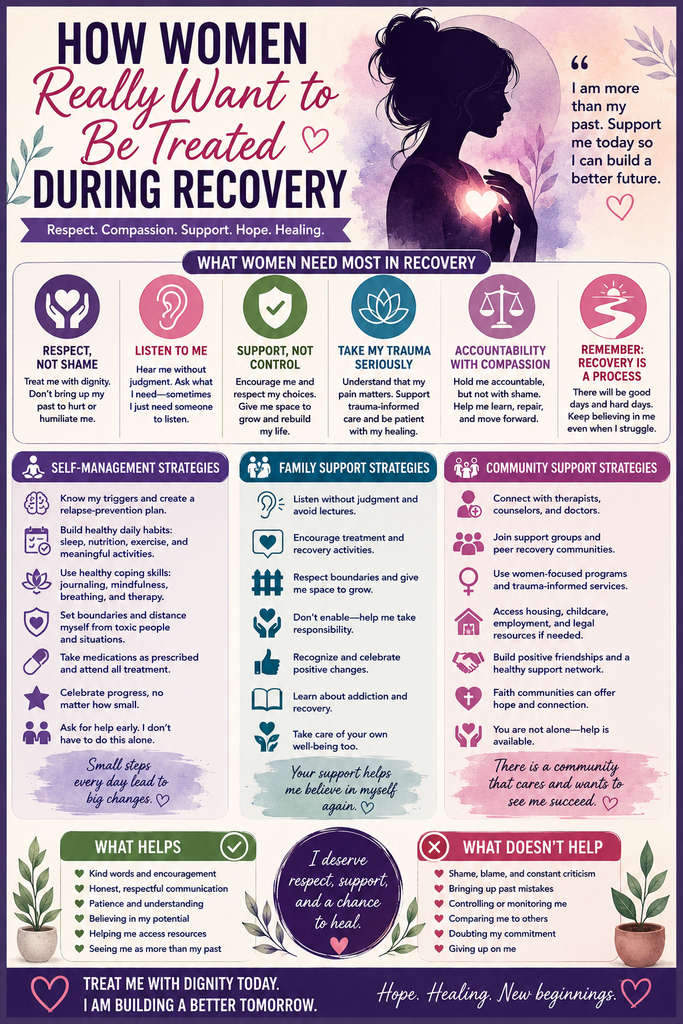
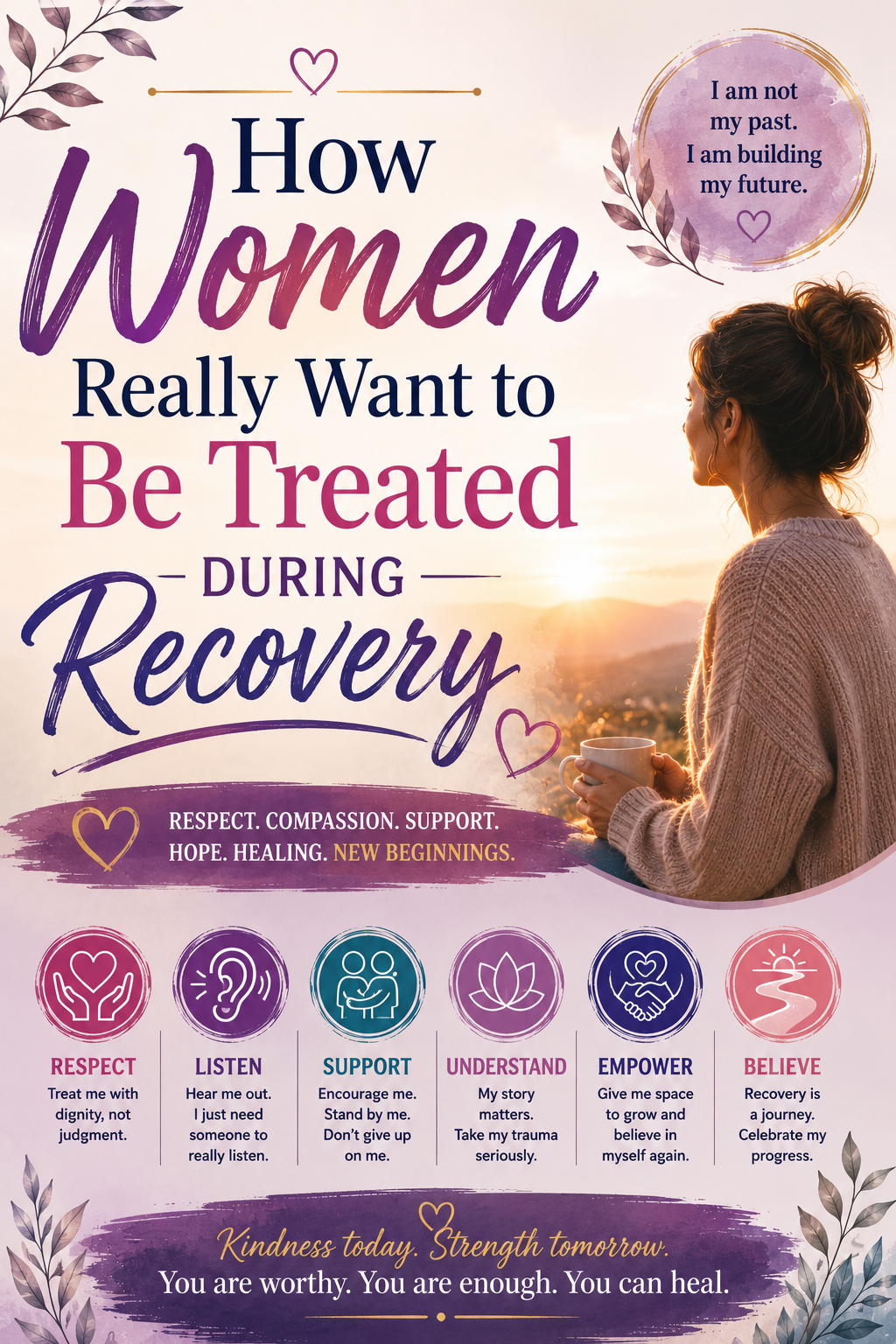
How Women Really Want to Be Treated During Recovery
There is no single way every woman wants to be treated. However, many women in recovery benefit from the same basic principles: respect, dignity, safety, compassion, honesty, autonomy, accountability, and meaningful support.
Recovery should not reduce a woman to her addiction history. She remains a complete person with strengths, responsibilities, relationships, goals, and a future.
1. She Wants to Be Treated With Respect, Not Shame
Shame rarely creates sustainable recovery.
Statements such as “Look what you’ve done to this family” or “Why can’t you just stop?” may increase guilt without addressing the biological, psychological, and social factors contributing to substance use.
More supportive approaches include:
- Speaking respectfully
- Listening before giving advice
- Avoiding humiliating comments
- Recognizing recovery progress
- Separating the person from the addiction
- Encouraging accountability without attacking character
A woman can take responsibility for harmful behavior without being defined permanently by her worst moments.
2. She Wants to Be Heard
People sometimes assume they know exactly what a woman in recovery needs.
Instead, ask.
She may need emotional support one day and practical assistance another. Sometimes she may simply want someone to listen without immediately trying to solve the problem.
Questions such as these can help:
- “What would be helpful today?”
- “Do you want advice or do you want me to listen?”
- “What situations are triggering cravings?”
- “How can I support your recovery plan?”
Listening gives her an active role in her own recovery.
3. She Wants Support Without Being Controlled
Recovery support and control are different.
Family members may understandably become fearful after experiencing repeated substance use, relapse, dishonesty, or crises. That fear can lead to excessive monitoring.
Healthy support encourages responsibility while respecting appropriate independence.
Examples include:
- Encouraging treatment attendance
- Supporting healthy routines
- Helping reduce exposure to triggers
- Discussing concerns directly
- Establishing reasonable boundaries
- Respecting appropriate privacy
- Allowing her to make recovery decisions with her treatment team
Recovery should gradually strengthen autonomy rather than create another form of dependence.
4. She Wants Her Trauma Taken Seriously
Trauma and substance use frequently intersect. Some women entering treatment have histories involving childhood adversity, intimate partner violence, sexual assault, grief, neglect, or other traumatic experiences.
Trauma-informed care emphasizes safety, trust, collaboration, empowerment, and the avoidance of unnecessary retraumatization.
Supporters should avoid demanding that someone disclose painful experiences before she is ready.
Recovery may require treating both substance use and the emotional experiences connected with it.
5. She Wants Accountability Without Humiliation
Compassion does not mean ignoring harmful behavior.
Recovery may require acknowledging damaged relationships, financial problems, broken promises, or other consequences associated with substance use.
Healthy accountability sounds different from humiliation.
It focuses on:
- What happened?
- Who was affected?
- What needs to be repaired?
- What can be done differently?
- What safeguards can prevent recurrence?
The purpose of accountability should be growth, not punishment.
6. She Wants People to Understand That Recovery Is a Process
Recovery rarely follows a perfectly straight line.
Cravings, difficult emotions, triggers, relationship problems, and setbacks can occur. A recurrence of substance use should be taken seriously, but it does not mean that everything previously learned has disappeared.
The response should focus on identifying what happened and reconnecting the person with appropriate care.
Ask:
“What can we learn from this?”
rather than:
“Why did you ruin everything?”
7. She Wants Her Identity Back
Addiction can gradually become someone’s dominant identity.
During recovery, women may rediscover roles and interests unrelated to substance use.
She may be a:
- Mother
- Daughter
- Partner
- Friend
- Professional
- Student
- Artist
- Caregiver
- Athlete
- Community member
- Person with dreams beyond recovery
Recovery becomes stronger when life develops meaning beyond simply avoiding substances.
Self-Management Strategies for Women in Recovery
Self-management means developing skills that strengthen stability, confidence, and independence.
Helpful strategies include:
- Identify personal triggers. Recognize people, places, emotions, and situations associated with substance use.
- Develop a relapse-prevention plan. Know what actions to take when cravings or warning signs appear.
- Build daily structure. Regular meals, sleep, treatment, work, exercise, and meaningful activities can provide stability.
- Practice emotional regulation. Mindfulness, journaling, breathing exercises, physical activity, and counseling can help manage difficult emotions.
- Set relationship boundaries. Recovery may require distancing from people who encourage substance use or repeatedly undermine treatment.
- Prioritize physical healthcare. Address medical, reproductive, dental, nutritional, and mental health needs.
- Take medications as prescribed. Evidence-based medications can be important components of treatment for certain substance use disorders.
- Celebrate progress. Recovery includes recognizing improvements in health, relationships, decision-making, and daily functioning.
- Ask for help early. Support is often most effective before a difficult situation becomes a crisis.
Family Support Strategies
Families can become powerful recovery partners when they combine compassion with healthy boundaries.
Helpful family strategies include:
- Learn about substance use disorders and recovery.
- Listen without immediately lecturing.
- Avoid constantly bringing up past mistakes.
- Recognize positive behavioral changes.
- Establish clear household boundaries.
- Avoid providing money or assistance that directly enables substance use.
- Encourage treatment and recovery activities.
- Participate in family counseling when appropriate.
- Learn warning signs of recurrence.
- Keep naloxone available when opioid overdose risk exists.
- Support healthy sleep, nutrition, exercise, and daily structure.
- Take care of your own emotional health.
Families need recovery support too. Addiction can affect everyone in the household.
Support Her Without Doing Recovery for Her
It can be tempting to solve every problem for someone in early recovery.
However, recovery also involves rebuilding confidence and learning to manage responsibilities.
Instead of automatically taking over, ask:
“Would you like help with this, or would you prefer to handle it yourself?”
This small question communicates both support and respect.
Community Support Strategies
Recovery becomes easier when people have access to supportive environments.
Community resources may include:
- Addiction treatment programs
- Primary care professionals
- Mental health services
- Peer recovery specialists
- Recovery community organizations
- Mutual-help groups
- Women-specific recovery programs
- Trauma-informed services
- Parenting support
- Childcare assistance
- Housing programs
- Employment and vocational services
- Educational programs
- Transportation assistance
- Domestic violence services
- Legal assistance
- Faith communities when personally meaningful
Treatment works best when it considers the whole person rather than addressing substance use in isolation.
Partners and Romantic Relationships During Recovery
Partners may struggle with trust after addiction has affected the relationship. Rebuilding trust takes time.
A supportive partner can:
- Communicate directly rather than constantly interrogating.
- Establish healthy boundaries.
- Avoid using past addiction as a weapon during unrelated arguments.
- Encourage recovery activities.
- Recognize consistent progress.
- Discuss financial expectations openly.
- Attend counseling when appropriate.
- Maintain their own support system.
Neither partner should expect recovery to automatically erase relationship injuries. Substance use recovery and relationship healing may need to occur simultaneously.
Motherhood and Recovery
Mothers with substance use disorders may experience intense shame and fear of judgment.
Supporting motherhood during recovery can include:
- Encouraging appropriate parenting education
- Providing childcare assistance
- Supporting treatment attendance
- Helping establish healthy family routines
- Connecting mothers with healthcare and social services
- Avoiding stigmatizing language
- Supporting safe reunification when appropriate
- Recognizing improvements in parenting and stability
A woman should not have to choose between being treated with dignity and being held accountable as a parent.
What Women Often Do Not Need During Recovery
Certain responses may unintentionally make recovery more difficult.
Avoid:
- Constantly reminding her of past failures
- Assuming every bad mood means relapse
- Monitoring every movement without justification
- Humiliating her publicly
- Comparing her recovery with someone else’s
- Treating medication for addiction as “cheating”
- Expecting trust to return instantly
- Making every conversation about addiction
- Assuming one setback means treatment has failed
- Speaking about her as though she is incapable of making decisions
Support should strengthen recovery rather than create additional shame.
Understanding Her Journey
A woman entering recovery may simultaneously experience relief, fear, guilt, grief, hope, anxiety, and uncertainty.
She may be grieving relationships, substances, routines, or an identity associated with her previous lifestyle while also trying to build something healthier.
Understanding her journey means recognizing that recovery involves much more than abstinence.
It may involve learning:
How to trust again.
How to manage emotions without substances.
How to establish boundaries.
How to repair relationships.
How to ask for help.
How to believe in a future again.
Respect + Support + Accountability
Women in recovery generally do not need to be rescued, controlled, shamed, or permanently defined by addiction.
They need opportunities to develop the skills and support necessary to build sustainable lives.
That means combining:
Compassion without enabling.
Accountability without humiliation.
Support without control.
Boundaries without abandonment.
Hope without ignoring risk.
Recovery grows stronger when women are treated as active participants in their own care. Families, partners, healthcare professionals, and communities can support that process by listening, respecting autonomy, providing practical resources, encouraging evidence-based treatment, and recognizing meaningful progress.
The goal is not simply helping a woman stop using substances.
The goal is helping create the conditions in which she can build a life that makes recovery worth protecting.
Frequently Asked Questions
Here are some common questions:
1. How do women want to be treated during addiction recovery?
Every woman is different, but many benefit from being treated with dignity, respect, compassion, honesty, and patience. Recovery support should encourage independence and accountability without using shame, humiliation, or excessive control.
2. Why is respect so important during recovery?
Addiction may already be associated with guilt, damaged relationships, stigma, and loss of confidence. Respect reminds a woman that her substance use history does not determine her entire identity or future.
3. Should family members avoid discussing past mistakes?
Past problems sometimes need to be addressed, particularly when relationships have been harmed. However, repeatedly bringing up past mistakes to shame someone can hinder rebuilding trust. Conversations should focus on accountability, repair, and healthier future behavior.
4. What should I say to a woman who is struggling in recovery?
Start by listening. Helpful questions include:
- “How are you doing today?”
- “What would help you right now?”
- “Would you like advice or would you rather I listen?”
- “Are you experiencing any triggers or cravings?”
- “How can I support your recovery plan?”
Sometimes being heard is more helpful than immediately receiving advice.
5. What’s the difference between supporting and controlling someone?
Support encourages healthy choices while respecting appropriate autonomy. Control attempts to manage another adult’s decisions through excessive monitoring, threats, intimidation, or coercion. Healthy recovery should gradually strengthen a person’s ability to manage her own life.
6. Should families trust a woman immediately after she enters recovery?
Trust may need to be rebuilt gradually, particularly when addiction previously involved dishonesty or broken commitments. Neither instant trust nor permanent suspicion is ideal. Consistent behavior over time provides opportunities for trust to return.
7. Why is trauma-informed care important for women?
Some women with substance use disorders have experienced trauma, including childhood adversity, interpersonal violence, sexual assault, neglect, or significant loss. Trauma-informed care emphasizes emotional and physical safety, collaboration, choice, empowerment, and avoiding unnecessary retraumatization.
8. Should a woman have to talk about her trauma during recovery?
Not before she is ready. Pressuring someone to disclose traumatic experiences may be counterproductive. Trauma should be addressed at an appropriate pace with qualified professionals when treatment is indicated.
9. How can families hold someone accountable without shaming her?
Focus on behavior and consequences rather than attacking character.
Healthy accountability asks:
- What happened?
- What contributed to it?
- Who was affected?
- What needs to be repaired?
- What can be done differently next time?
Accountability should promote responsibility and growth rather than humiliation.
10. Is relapse a sign that recovery has failed?
No. A return to substance use is serious and may require changes in treatment, but it does not erase previous progress. It can indicate that triggers, stressors, treatment needs, or relapse-prevention strategies need to be reassessed.
11. What should families do if relapse occurs?
Respond to immediate medical or overdose risks first. Then encourage rapid reconnection with treatment and examine what contributed to the recurrence. Avoid treating the event solely as a moral failure.
12. How can a woman protect her own recovery?
Helpful self-management strategies include:
- Identifying triggers
- Developing a relapse-prevention plan
- Maintaining regular sleep and meals
- Exercising
- Attending treatment
- Taking prescribed medications appropriately
- Establishing healthy boundaries
- Developing coping skills
- Staying connected with supportive people
- Asking for help when warning signs appear
13. Why are boundaries important during recovery?
Boundaries protect emotional health and reduce exposure to situations that threaten recovery. A woman may need to distance herself from people, places, relationships, or environments strongly associated with substance use.
14. How should a romantic partner support recovery?
A partner can encourage treatment, communicate respectfully, establish healthy boundaries, recognize progress, and gradually rebuild trust. Partners should also maintain their own support systems rather than making their entire lives revolve around monitoring recovery.
15. What should partners avoid doing?
Partners should avoid humiliation, threats, constantly bringing up past addiction during unrelated disagreements, assuming every difficult mood indicates relapse, or trying to control every decision. Concern can be expressed without treating someone as incapable.
16. How can families support mothers in recovery?
Families can assist with childcare, transportation, attendance at treatment, healthy routines, parenting resources, and practical responsibilities when appropriate. Mothers should be supported in becoming increasingly stable and independent rather than permanently treated as incapable parents.
17. What community resources can support women in recovery?
Helpful resources may include:
- Addiction treatment programs
- Mental health services
- Primary care
- Peer recovery specialists
- Recovery community organizations
- Mutual-help groups
- Women-focused treatment programs
- Trauma-informed services
- Housing and transportation programs
- Childcare and parenting resources
- Employment assistance
- Domestic violence services
- Legal and social services
Recovery often becomes stronger when medical, psychological, family, and social needs are addressed together.
18. Should medication be considered a legitimate part of recovery?
Yes. Evidence-based medications can be important treatments for certain substance use disorders. For example, medications are available for opioid and alcohol use disorders. Taking an appropriately prescribed medication should not automatically be viewed as replacing one addiction with another.
19. How can friends support a woman without making every conversation about recovery?
Continue treating her as a whole person. Talk about work, family, hobbies, goals, movies, travel, accomplishments, and everyday life. Recovery is important, but it does not need to become someone’s entire identity.
20. What does a woman in recovery often need most?
She may need something surprisingly simple:
“See who I am becoming, not only who I used to be.”
Women in recovery deserve opportunities to rebuild trust, confidence, relationships, independence, and purpose.
The healthiest approach combines:
Respect without judgment.
Support without control.
Accountability without humiliation.
Boundaries without abandonment.
Compassion without enabling.
Hope without ignoring risk.
Recovery is not simply about removing alcohol or drugs from someone’s life. It is about helping create a life in which health, connection, dignity, purpose, and hope have room to grow.
Video: The secret to her healing journey #recovery #women #respect