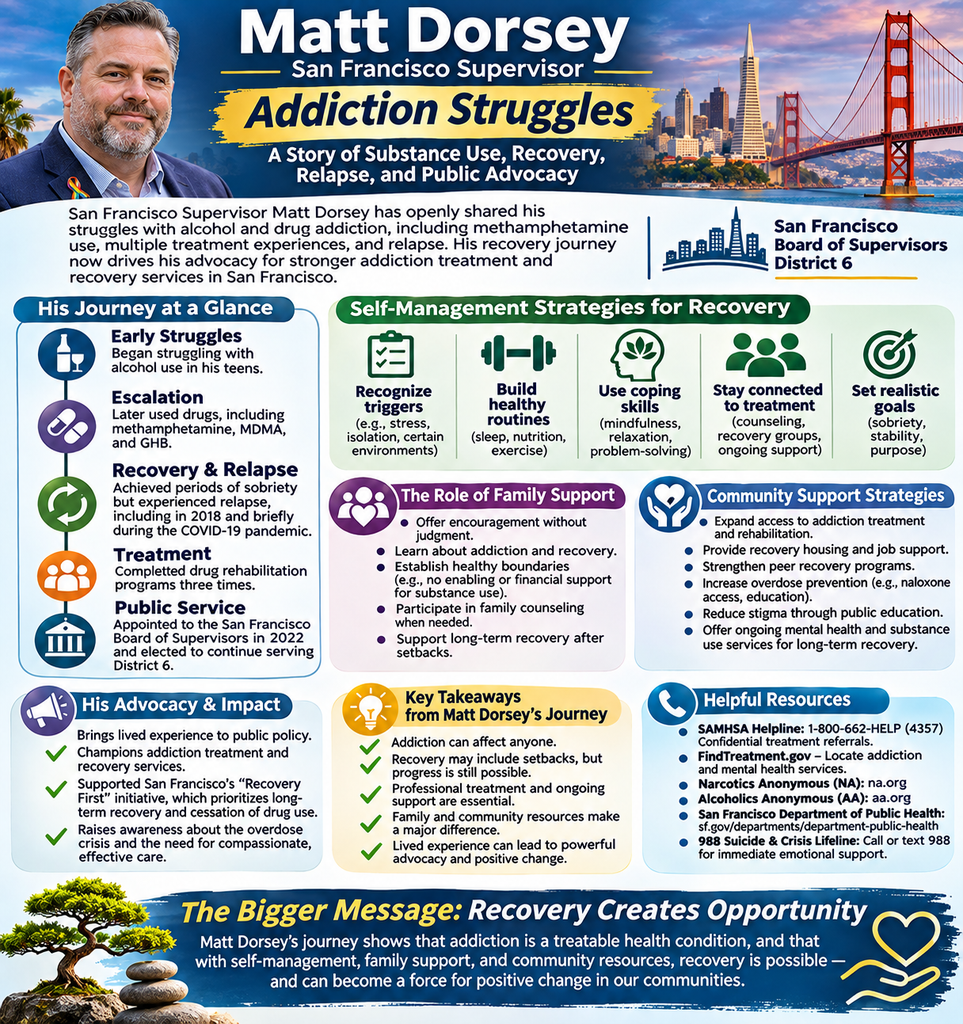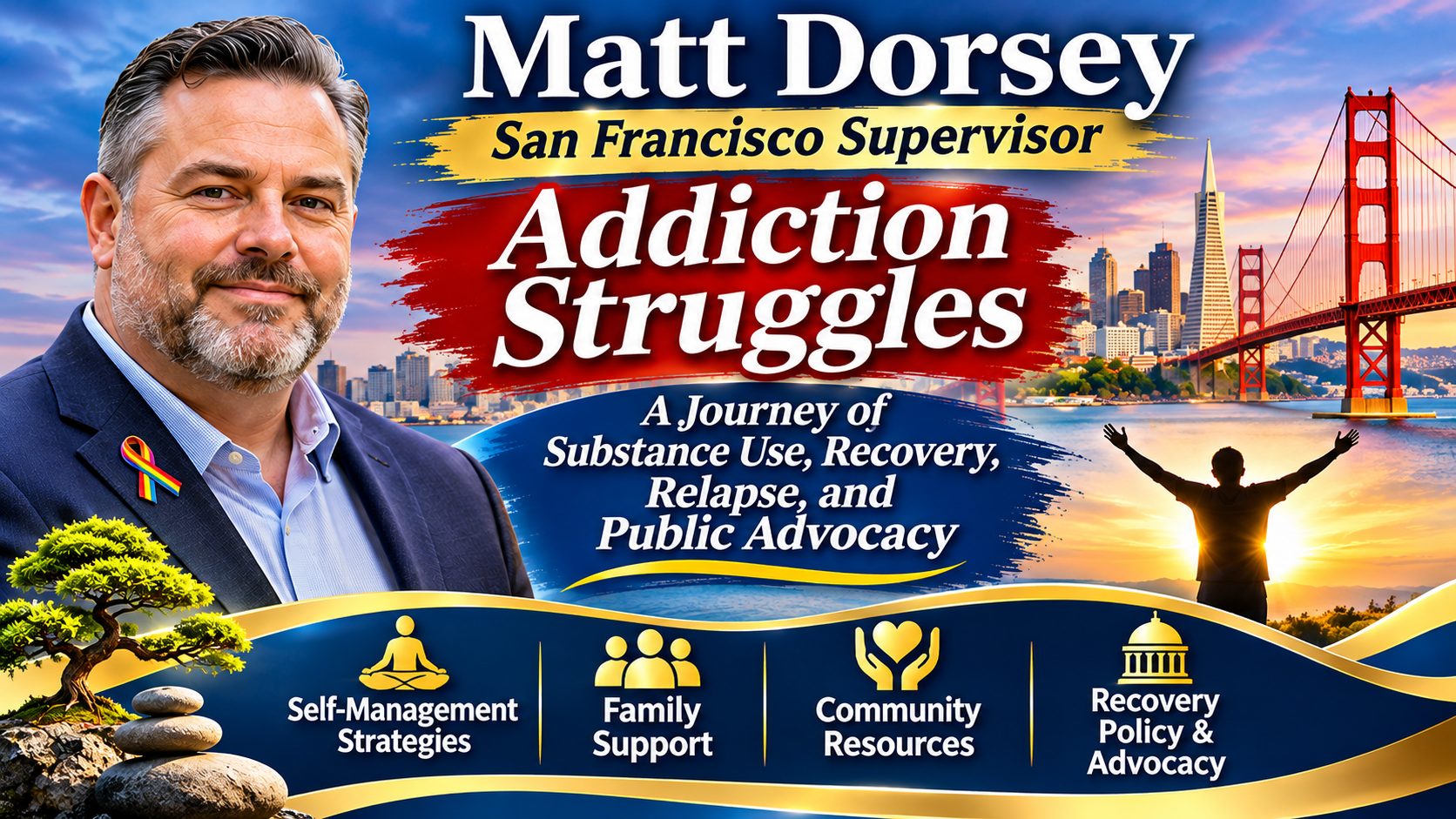
Addiction does not discriminate based on education, career success, socioeconomic status, or professional achievements. Substance use disorders can affect anyone, including individuals who dedicate their lives to public service.
Matt Dorsey is a San Francisco public official who has openly discussed his struggles with alcohol and drug addiction, including methamphetamine use, repeated treatment experiences, and relapse.
His journey reflects the complex nature of substance use disorders and the importance of professional treatment, personal accountability, and continuing recovery support.
In May 2022, Mayor London Breed appointed Dorsey to the San Francisco Board of Supervisors. He later won election to represent District 6. His experiences with addiction became a major motivation for entering public office and advocating for stronger addiction treatment and recovery services. ebar.com+1
His story illustrates an important message: Addiction can interrupt a person’s life, but treatment, support, and determination can create opportunities for recovery and meaningful change.
Matt Dorsey’s Early Struggles With Addiction
Matt Dorsey has described struggling with alcohol consumption beginning in his teenage years. What initially involved excessive drinking eventually developed into a pattern of problematic substance use that continued into adulthood.
In a May 2022 interview with the Bay Area Reporter, Dorsey explained that his first sobriety date was December 2, 1992. He maintained abstinence from alcohol for approximately eight years before experiencing additional substance use problems.
Around 2000, during San Francisco’s dot-com era, Dorsey began using recreational drugs, including methamphetamine, MDMA, and GHB. He also described using sedative medications to counteract the effects of stimulants.
Over the following years, he experienced periods of recovery interrupted by relapse, including a particularly difficult episode in 2018. ebar.com
Understanding the progression of addiction
Dorsey’s experiences illustrate several important characteristics of substance use disorders:
- Early substance exposure: Alcohol use during adolescence may increase the likelihood of developing problematic drinking patterns later in life.
- Escalating substance use: Repeated drug exposure can alter reward processing, decision-making, and behavioral control.
- Polysubstance use: Using multiple substances can increase the risk of overdose, unpredictable drug interactions, and other medical complications.
- Relapse vulnerability: Individuals may experience a return to substance use even after years of recovery.
- Difficulty maintaining control: Addiction can involve continued substance use despite an individual’s desire to stop.
Addiction develops through interactions among biological vulnerability, environmental influences, psychological factors, and repeated substance exposure.
Dorsey’s experiences demonstrate that substance use disorders can remain a significant health concern even when someone maintains professional responsibilities and appears successful.
The Challenges of Methamphetamine Addiction
Methamphetamine is a powerful central nervous system stimulant that increases the activity of neurotransmitters, particularly dopamine and norepinephrine.
Its effects may include increased energy, heightened alertness, euphoria, decreased appetite, and reduced need for sleep.
However, repeated methamphetamine exposure can contribute to significant physical and psychological consequences.
Potential complications include:
- Cardiovascular problems, including hypertension, arrhythmias, and increased risk of stroke.
- Anxiety, agitation, paranoia, and stimulant-induced psychosis.
- Sleep disturbances and nutritional deficiencies.
- Impaired judgment and increased risk-taking.
- Strong cravings and difficulty maintaining abstinence.
- Depression, fatigue, and other symptoms during withdrawal.
Dorsey has publicly acknowledged that methamphetamine was among the substances involved in his addiction history. His experiences demonstrate the difficulty some individuals face when attempting to discontinue stimulant use. San Francisco Chronicle
Unlike opioid use disorder, there are currently no FDA-approved medications specifically for methamphetamine use disorder. Nevertheless, behavioral treatments, particularly contingency management, have demonstrated effectiveness in reducing stimulant use.
Cognitive behavioral therapy, motivational interviewing, and structured recovery programs may also be beneficial.
Relapse and the Turning Point Toward Recovery
One of the most important aspects of Dorsey’s story is his willingness to discuss relapse.
Despite experiencing extended periods of sobriety, Dorsey acknowledged returning to substance use at different points in adulthood.
In 2022, he disclosed experiencing a brief relapse during the COVID-19 pandemic, when recovery meetings and support systems were disrupted.
He has also publicly identified himself as someone who completed drug rehabilitation programs three times. San Francisco Chronicle+1
His experiences demonstrate that recovery is not always a straightforward process.
Relapse may occur when individuals encounter overwhelming stress, social isolation, environmental triggers, or disruptions in treatment and recovery support.
However, relapse does not erase previous progress or mean that future recovery is impossible.
Important lessons about relapse
- Relapse is a recognized possibility during recovery, but it is not inevitable.
- Early identification of cravings and behavioral warning signs may prevent a return to substance use.
- Continuing treatment can reduce relapse risk.
- Reconnecting with healthcare professionals and recovery networks is important after a setback.
- A relapse prevention plan should be updated when an individual’s circumstances change.
Dorsey’s willingness to discuss his experiences also helps challenge the misconception that addiction recovery requires a perfect, uninterrupted journey.
Self-Management Strategies for Long-Term Recovery
Self-management involves recognizing personal vulnerabilities, developing healthy routines, and making decisions that support recovery.
Although Dorsey has discussed rehabilitation, relapse, and the importance of recovery services, his complete personal self-management routine has not been publicly documented.
The following strategies are evidence-informed approaches that individuals can use during addiction recovery.
A. Recognizing personal triggers
Triggers are internal or external circumstances that increase the desire to use alcohol or drugs.
Common triggers include emotional distress, workplace stress, loneliness, exposure to substances, and contact with people or environments associated with previous use.
Helpful strategies include:
- Identifying situations that increase cravings.
- Keeping a journal to recognize emotional and behavioral patterns.
- Developing alternative responses to stress.
- Avoiding high-risk situations when possible.
- Contacting a trusted supporter when cravings become difficult to manage.
Recognizing triggers helps individuals respond proactively rather than waiting until cravings become overwhelming.
B. Establishing healthy daily routines
Recovery often benefits from consistent routines that support physical and emotional stability.
Healthy habits may include regular sleep, nutritious meals, physical activity, and scheduled recovery-related activities.
For individuals recovering from stimulant use, sleep restoration and consistent daily structure can be particularly helpful.
C. Participating in professional addiction treatment
Evidence-based treatment is essential for many individuals experiencing substance use disorders.
Treatment options include:
- Cognitive behavioral therapy (CBT): Helps individuals recognize and modify thoughts and behaviors associated with substance use.
- Contingency management: Uses structured incentives to reinforce treatment participation and substance-free behaviors.
- Motivational interviewing: Strengthens motivation for recovery and supports behavior change.
- Relapse prevention therapy: Helps individuals identify warning signs and develop coping strategies.
- Peer recovery programs: Provide encouragement, accountability, and connection with others who have lived experience.
For individuals with co-occurring alcohol, opioid, or other substance use disorders, appropriate medications may also be included in treatment.
D. Developing a relapse prevention plan
A relapse prevention plan should identify personal triggers, early warning signs, coping strategies, emergency contacts, and professional treatment resources.
It should also explain what to do if substance use resumes.
Individuals recovering from methamphetamine addiction may benefit from planning for periods of fatigue, depression, strong cravings, and emotional instability.
E. Setting achievable recovery goals
Recovery goals should be realistic, measurable, and individualized.
Examples include attending scheduled counseling appointments, participating in recovery meetings, improving sleep habits, rebuilding relationships, and maintaining employment or educational responsibilities.
Small accomplishments can strengthen confidence and reinforce positive behavior.
The Importance of Family Support in Addiction Recovery
Substance use disorders frequently affect family relationships, emotional well-being, and household stability.
Family members may experience fear, frustration, confusion, and uncertainty about how to help someone experiencing addiction.
Although Dorsey has publicly discussed the impact of addiction on his life, detailed information about his family’s involvement in treatment has not been established in the sources reviewed.
His story nevertheless provides an opportunity to examine the important role families can play in recovery.
A. Encouraging treatment without judgment
Families can help by recognizing addiction as a treatable medical condition rather than a moral failure.
Supportive communication may involve expressing concern, listening without criticism, and encouraging professional assistance.
Avoiding shame-based language can make it easier for individuals to discuss substance use honestly.
B. Establishing healthy boundaries
Healthy boundaries protect family members while encouraging personal accountability.
Examples include:
- Refusing to finance dangerous substance use.
- Establishing expectations for respectful communication.
- Avoiding excuses that conceal harmful behaviors.
- Encouraging treatment participation.
- Seeking professional guidance when family conflicts become overwhelming.
Boundaries should be consistent, compassionate, and focused on safety.
C. Participating in family education and therapy
Family therapy can help relatives understand addiction, improve communication, and address unhealthy relationship patterns.
Educational programs can also explain relapse warning signs, overdose prevention, and treatment options.
Organizations such as Al-Anon and SMART Recovery Family & Friends offer support for individuals affected by another person’s substance use.
D. Supporting recovery after relapse
Families should understand that returning to substance use does not necessarily mean treatment has failed.
Instead of responding with shame or punishment, relatives can encourage reassessment, professional treatment, and renewed recovery planning.
Supportive relationships can provide stability during periods of increased vulnerability.
Community Support Strategies: Building a Recovery-Oriented Society
Dorsey’s personal experiences have influenced his belief that communities must provide accessible treatment and recovery opportunities.
In a 2025 interview with Mission Local, he acknowledged that his own recovery benefited from stable employment and private health insurance. He also recognized that people experiencing homelessness or financial instability often face greater barriers to treatment. Mission Local
His observations highlight the importance of addressing both addiction and the social conditions that affect recovery.
A. Expanding access to addiction treatment
Communities should provide affordable, evidence-based addiction treatment services.
These may include outpatient counseling, residential rehabilitation when clinically appropriate, medication-assisted treatment for eligible substance use disorders, and integrated mental health services.
Treatment programs should be accessible regardless of insurance status, housing stability, or financial resources.
B. Strengthening peer recovery networks
Peer recovery specialists provide support based on their personal experiences with substance use disorders.
Peer programs can help individuals:
- Develop connections with people who understand addiction.
- Access treatment and recovery resources.
- Maintain motivation during difficult periods.
- Identify employment, housing, and transportation assistance.
- Build supportive relationships that encourage long-term recovery.
C. Improving overdose prevention
Communities can reduce overdose deaths by expanding naloxone distribution, providing overdose prevention education, and improving access to evidence-based treatment.
Naloxone reverses opioid overdoses, including those involving fentanyl. It does not reverse methamphetamine toxicity itself, but it should be administered when an opioid overdose is suspected, including when the substance involved is uncertain.
D. Supporting recovery housing and employment
Stable housing and meaningful employment can improve treatment engagement and recovery stability.
Communities should promote recovery housing, vocational training, transportation assistance, and employment opportunities for individuals rebuilding their lives.
These services can reduce barriers that otherwise make sustained recovery difficult.
E. Reducing addiction-related stigma
Stigma can prevent individuals from seeking treatment because they fear discrimination or social rejection.
Community education should emphasize that addiction is a treatable medical condition and that people experiencing substance use disorders deserve compassionate healthcare.
Public figures who openly discuss their recovery, including Dorsey, can help normalize treatment-seeking and encourage more honest conversations.
Matt Dorsey’s Transition From Addiction Recovery to Public Service
Dorsey’s addiction recovery journey eventually became central to his political career.
Before serving on the San Francisco Board of Supervisors, he worked in public service, including positions with the San Francisco City Attorney’s Office and San Francisco Police Department.
During his work with the police department, he became increasingly concerned about the city’s overdose crisis.
In May 2022, Mayor London Breed appointed him to represent District 6 on the Board of Supervisors.
Dorsey explained that his lived experience with addiction motivated him to seek public office and advocate for individuals experiencing substance use disorders. KQED
His addiction advocacy priorities
Dorsey’s policy initiatives have emphasized:
- Expanding access to addiction treatment and rehabilitation.
- Supporting abstinence-based recovery programs.
- Improving recovery-oriented housing options.
- Strengthening responses to public drug use and trafficking.
- Encouraging people with lived experience to participate in public policy discussions.
- Increasing awareness of the overdose epidemic.
His advocacy reflects his belief that long-term recovery should be a central goal of addiction policy.
The Recovery First Initiative
One of Dorsey’s most significant policy initiatives is San Francisco’s Recovery First ordinance.
In May 2025, Mayor Daniel Lurie signed the legislation, which established long-term recovery and cessation of illicit drug use as primary objectives of the city’s substance use disorder policy. Axios San Francisco
Dorsey has argued that public health programs should do more to help individuals achieve sustained recovery rather than focusing exclusively on reducing the immediate harms of substance use.
However, this approach has generated debate among healthcare professionals, addiction advocates, and policymakers.
Benefits of emphasizing recovery
Supporters argue that recovery-oriented policies can:
- Encourage investment in long-term addiction treatment.
- Increase access to rehabilitation and recovery housing.
- Promote sustained improvements in health and functioning.
- Strengthen community recovery networks.
- Establish measurable goals for treatment programs.
Concerns about recovery-focused policies
Critics have raised concerns that defining recovery primarily through abstinence may overlook other meaningful treatment outcomes.
Some individuals benefit from harm reduction services even when they are not ready or able to stop using substances.
Evidence-based harm reduction approaches, including naloxone distribution, syringe services, and access to medications for opioid use disorder, can prevent deaths and reduce infectious disease transmission.
Additionally, involuntary or legally mandated treatment raises ethical questions about autonomy, effectiveness, and access to appropriate healthcare.
These competing perspectives highlight the importance of balancing recovery goals with patient-centered treatment, harm reduction, and individual choice. San Francisco Chronicle+1
An effective addiction treatment system should prioritize survival, dignity, evidence-based care, and opportunities for sustained recovery.
Challenges and Barriers to Addiction Recovery
Dorsey’s experiences demonstrate that addiction recovery can involve repeated challenges, even for individuals with stable employment and access to healthcare.
For many people, recovery is further complicated by financial insecurity, housing instability, untreated mental health conditions, and limited treatment availability.
Common barriers include:
- Stigma: Fear of judgment or discrimination may prevent individuals from seeking assistance.
- Financial difficulties: Treatment expenses and insurance limitations may restrict access to care.
- Limited rehabilitation services: Some communities lack specialized treatment programs for stimulant use disorders.
- Social isolation: Reduced contact with supportive individuals may increase vulnerability to relapse.
- Co-occurring mental health conditions: Depression, anxiety, and trauma-related symptoms may complicate treatment.
- Housing instability: Unstable living conditions can interfere with recovery planning and treatment attendance.
- Disrupted continuing care: Loss of access to counseling or peer support may increase relapse risk.
Addressing these barriers requires collaboration among healthcare professionals, community organizations, families, and policymakers.
Important Lessons From Matt Dorsey’s Recovery Journey
Dorsey’s story offers several lessons about addiction, treatment, and the possibility of rebuilding one’s life.
First, addiction can affect anyone. Professional accomplishments do not eliminate vulnerability to substance use disorders.
Second, relapse does not mean recovery is impossible. Dorsey’s history includes periods of sobriety, relapse, and repeated treatment. His experiences demonstrate the importance of persistence and continuing care.
Third, recovery requires more than willpower. Access to professional treatment, supportive relationships, and stable living conditions can significantly influence recovery outcomes.
Fourth, personal experiences can inspire advocacy. Dorsey’s history of addiction has influenced his work to improve treatment availability and strengthen recovery services in San Francisco.
Finally, communities must recognize the diversity of recovery experiences. Different individuals require different combinations of treatment, harm reduction, peer support, and long-term services.
Resources for Individuals and Families Affected by Addiction
Individuals experiencing substance use disorders can access several national organizations for education, treatment referrals, and continuing recovery support.
- SAMHSA National Helpline: 1-800-662-HELP (4357), providing confidential treatment referrals.
- FindTreatment.gov: Find substance use and mental health treatment services.
- SMART Recovery: Explore recovery meetings and self-management resources.
- Alcoholics Anonymous: Find alcohol recovery meetings.
- Narcotics Anonymous: Explore peer recovery support for drug addiction.
- San Francisco Department of Public Health: Find local behavioral health and addiction resources.
- 988 Suicide & Crisis Lifeline: Call or text 988 for immediate support during a mental health or suicidal crisis.
People experiencing severe symptoms after substance use, including chest pain, seizures, loss of consciousness, or extreme agitation, should receive emergency medical evaluation.
Conclusion: Transforming Addiction Struggles Into Recovery and Advocacy
Matt Dorsey’s journey from alcohol and methamphetamine addiction to recovery and public service demonstrates that substance use disorders do not have to determine a person’s future.
His experiences with relapse and repeated rehabilitation highlight the chronic and complex nature of addiction. They also show that meaningful recovery remains possible even after significant setbacks.
For individuals experiencing addiction, his story reinforces the importance of self-management, professional treatment, and continued engagement with recovery resources.
For families, it emphasizes compassion, education, healthy boundaries, and emotional support.
For communities, his advocacy highlights the need for accessible treatment, overdose prevention, recovery housing, and public policies that promote long-term wellness.
Although Dorsey’s specific policy proposals remain subjects of public debate, his willingness to discuss his addiction history has contributed to conversations about stigma, treatment accessibility, and the role of lived experience in public leadership.
Recovery is not defined by how many times someone struggles. It is defined by the continuing opportunity to seek help, rebuild stability, and move toward a healthier future.
Matt Dorsey’s journey reminds us that recovery can become more than a personal accomplishment. It can also inspire individuals to advocate for others who are still struggling.
Frequently Asked Questions and Answers
1. Who is Matt Dorsey?
Matt Dorsey is a San Francisco public official who began serving on the city’s Board of Supervisors in May 2022, representing District 6.
Before entering elected office, he worked in public communications and government, including positions with the San Francisco City Attorney’s Office and Police Department.
He has become known for openly discussing his history of substance use disorder and advocating for addiction treatment and recovery services.
2. Did Matt Dorsey struggle with addiction?
Yes. Dorsey has publicly acknowledged struggling with alcohol and drug addiction over several decades.
His experiences included periods of sobriety, relapse, and participation in professional rehabilitation programs.
He has discussed his addiction history to encourage greater understanding of substance use disorders and advocate for improved treatment access.
3. What substances did Matt Dorsey struggle with?
Dorsey has publicly described problematic alcohol use and later substance use involving methamphetamine, MDMA (ecstasy), and GHB.
He also discussed using sedating substances to counteract stimulant effects.
His experiences illustrate the risks associated with polysubstance use, which can increase the likelihood of dangerous drug interactions, impaired judgment, and serious medical complications.
4. When did Matt Dorsey begin experiencing addiction problems?
Dorsey has described problematic alcohol use beginning during his teenage years.
He reported his first sobriety date as December 2, 1992. After approximately eight years without alcohol, he experienced additional substance use problems around 2000.
His history demonstrates that addiction vulnerability may persist even after extended periods of recovery.
5. How did addiction affect Matt Dorsey’s life?
Dorsey has described addiction as a recurring challenge that required treatment and repeated efforts to maintain recovery.
His experiences included relapse despite periods of sobriety and professional stability.
His story demonstrates that substance use disorders can affect people who maintain successful careers and public responsibilities.
6. Did Matt Dorsey experience methamphetamine addiction?
Yes. Dorsey has publicly discussed methamphetamine as one of the substances involved in his addiction history.
Methamphetamine is a powerful stimulant that increases dopamine activity in the brain and can produce intense euphoria, increased energy, and reduced need for sleep.
Repeated use can contribute to cravings, sleep disturbances, cardiovascular complications, anxiety, and stimulant-induced psychosis.
Methamphetamine use disorder can be difficult to treat, but evidence-based behavioral interventions can support recovery.
7. Did Matt Dorsey attend addiction rehabilitation?
Yes. Dorsey has publicly stated that he completed drug rehabilitation programs three times.
His experiences demonstrate that some individuals require multiple treatment episodes before achieving sustained recovery.
Repeated treatment does not necessarily indicate failure. Substance use disorders can be chronic or recurring conditions that require adjustments in care.
8. Did Matt Dorsey experience relapse?
Yes. Dorsey has discussed experiencing relapse after extended periods of sobriety, including a significant episode in 2018 and a brief return to substance use during the COVID-19 pandemic.
He has described the disruption of recovery support systems during the pandemic as an important challenge.
His experience highlights why continued treatment engagement and supportive relationships are important.ebar.com+1
Recovery and Self-Management Strategies
9. How did Matt Dorsey begin his recovery journey?
Dorsey initially stopped drinking alcohol in 1992. Later, after experiencing problems with other substances, he participated in structured addiction treatment and recovery programs.
In an interview with the Partnership to End Addiction, he discussed finding a sponsor and developing relationships within San Francisco’s recovery community.
His experience illustrates how professional treatment and peer support can complement personal motivation. Partnership to End Addiction
10. What self-management strategies can help individuals recover from methamphetamine addiction?
Effective self-management strategies include:
- Identifying emotional and environmental triggers.
- Establishing consistent sleep and exercise routines.
- Participating in behavioral therapy and recovery meetings.
- Practicing mindfulness and stress-management techniques.
- Developing a personalized relapse prevention plan.
- Maintaining supportive relationships and realistic recovery goals.
These are general recommendations and should not be interpreted as Dorsey’s exact personal treatment routine.
11. What treatments are effective for methamphetamine use disorder?
Contingency management has the strongest evidence among behavioral treatments for stimulant use disorder.
Additional approaches include cognitive behavioral therapy (CBT), motivational interviewing, and community reinforcement programs.
There are currently no FDA-approved medications specifically for methamphetamine use disorder. However, healthcare professionals may consider selected off-label medications based on individual circumstances and emerging evidence.
12. Why can someone relapse after years of sobriety?
Relapse may occur because substance use disorders involve lasting changes in brain reward, motivation, learning, and stress-response systems.
Stress, isolation, exposure to substances, and disruptions in recovery support can increase vulnerability.
Dorsey’s experience demonstrates that extended periods of recovery do not completely eliminate relapse risk.
13. How did the COVID-19 pandemic affect Matt Dorsey’s recovery?
Dorsey described how the transition from in-person recovery meetings to virtual meetings affected his engagement with recovery support.
He explained that it became easier to become distracted during online meetings, reducing the personal connection he had previously experienced.
His experience highlights the importance of meaningful social engagement and continuing recovery support during stressful periods. Partnership to End Addiction
14. What should someone do after experiencing a relapse?
A return to substance use should prompt timely reassessment rather than shame or abandonment of treatment.
Helpful steps include contacting a healthcare professional, reconnecting with recovery supporters, identifying contributing triggers, and updating the treatment plan.
Because tolerance may decrease during abstinence, returning to previous drug doses can increase overdose risk, particularly with opioids.
Family Support and Relationships
15. How can families support someone recovering from addiction?
Families can provide support by encouraging professional treatment, offering emotional reassurance, and learning about substance use disorders.
Helpful strategies include:
- Listening without judgment.
- Establishing clear and healthy boundaries.
- Encouraging counseling and peer recovery participation.
- Recognizing warning signs of relapse.
- Supporting healthy routines and positive relationships.
- Seeking family counseling when appropriate.
Family involvement can improve communication and strengthen recovery support.
16. Did Matt Dorsey’s family play a role in his recovery?
Dorsey has publicly discussed the importance of recovery programs, sponsors, and supportive relationships.
However, detailed information about his family’s specific involvement in addiction treatment has not been established in the sources reviewed.
It would therefore be inappropriate to assume particular family experiences or private circumstances.
17. Why are healthy boundaries important for families affected by addiction?
Healthy boundaries help protect family members while encouraging personal responsibility.
For example, families may establish expectations regarding respectful communication, financial assistance, and household safety.
Boundaries should be communicated compassionately and consistently, not used as punishment.
18. How can families respond when a loved one relapses?
Families can encourage immediate reconnection with treatment while avoiding blame and criticism.
They should assess immediate safety concerns, encourage professional evaluation, and help identify available recovery resources.
Family members may also benefit from counseling or support groups to manage their own emotional stress.
Community Support and Addiction Advocacy
19. Why did Matt Dorsey become involved in addiction advocacy?
Dorsey has explained that his personal recovery experiences and exposure to San Francisco’s overdose crisis motivated him to pursue public office.
While working for the San Francisco Police Department, he became increasingly concerned about the number of overdose deaths.
He believed that individuals with lived experience in addiction recovery should have a stronger voice in public policy discussions. The San Francisco Standard+1
20. What is Matt Dorsey’s approach to addiction treatment policy?
Dorsey advocates for expanding addiction treatment, rehabilitation, and long-term recovery services.
He has also supported stronger law enforcement responses to public drug use and certain forms of court-mandated treatment.
His approach emphasizes abstinence and sustained recovery, although some of his policy proposals have generated debate regarding patient autonomy, harm reduction, and treatment effectiveness. Mission Local
21. What is San Francisco’s Recovery First initiative?
Recovery First is a San Francisco policy initiative supported by Dorsey that emphasizes long-term recovery and cessation of illicit drug use as major goals of the city’s substance use disorder response.
The initiative reflects his belief that addiction policies should prioritize helping individuals achieve lasting recovery.
However, experts continue to debate how abstinence-focused approaches should be integrated with harm reduction services and individualized treatment.
22. What is the difference between harm reduction and abstinence-based recovery?
Harm reduction focuses on decreasing the negative consequences of substance use, including overdose, infectious diseases, and other health risks.
Examples include naloxone distribution, syringe services, and education about safer practices.
Abstinence-based recovery focuses on stopping substance use and maintaining a substance-free lifestyle.
These approaches do not have to be mutually exclusive. Harm reduction can keep individuals alive and engaged with healthcare, while abstinence may be an appropriate long-term goal for those who choose it.
23. How can communities improve addiction recovery outcomes?
Communities can strengthen recovery by:
- Expanding access to affordable addiction treatment.
- Supporting peer recovery specialists and recovery meetings.
- Providing stable housing and employment assistance.
- Increasing overdose prevention education.
- Improving access to mental health services.
- Reducing stigma through public education.
- Offering continuing care after rehabilitation.
A comprehensive approach addresses both medical treatment and the social conditions that influence recovery.
Lessons From Matt Dorsey’s Journey
24. What makes Matt Dorsey’s addiction recovery story significant?
Dorsey’s experiences demonstrate that substance use disorders can affect individuals regardless of their professional success.
His willingness to discuss relapse, repeated treatment, and recovery challenges provides a perspective on the long-term management of addiction.
His transition into public service also illustrates how lived experience can influence community advocacy and healthcare policy.
25. What is the most important lesson from Matt Dorsey’s addiction struggles?
The most important lesson is that recovery remains possible even after repeated setbacks.
Dorsey’s experiences emphasize that addiction treatment may require multiple attempts, ongoing support, and adjustments to recovery strategies.
His story also reinforces the importance of compassionate healthcare, accessible treatment services, and opportunities for individuals to rebuild their lives.
Where Can Individuals and Families Find Addiction Support?
Several national organizations provide addiction treatment information, recovery resources, and crisis assistance.
- SAMHSA National Helpline: 1-800-662-HELP (4357), for confidential treatment referrals.
- FindTreatment.gov: Find addiction and mental health treatment services.
- SMART Recovery: Explore recovery meetings and self-management resources.
- Narcotics Anonymous: Find drug addiction recovery support meetings.
- Alcoholics Anonymous: Find alcohol recovery meetings.
- 988 Suicide & Crisis Lifeline: Call or text 988 for immediate mental health crisis support.
Video: