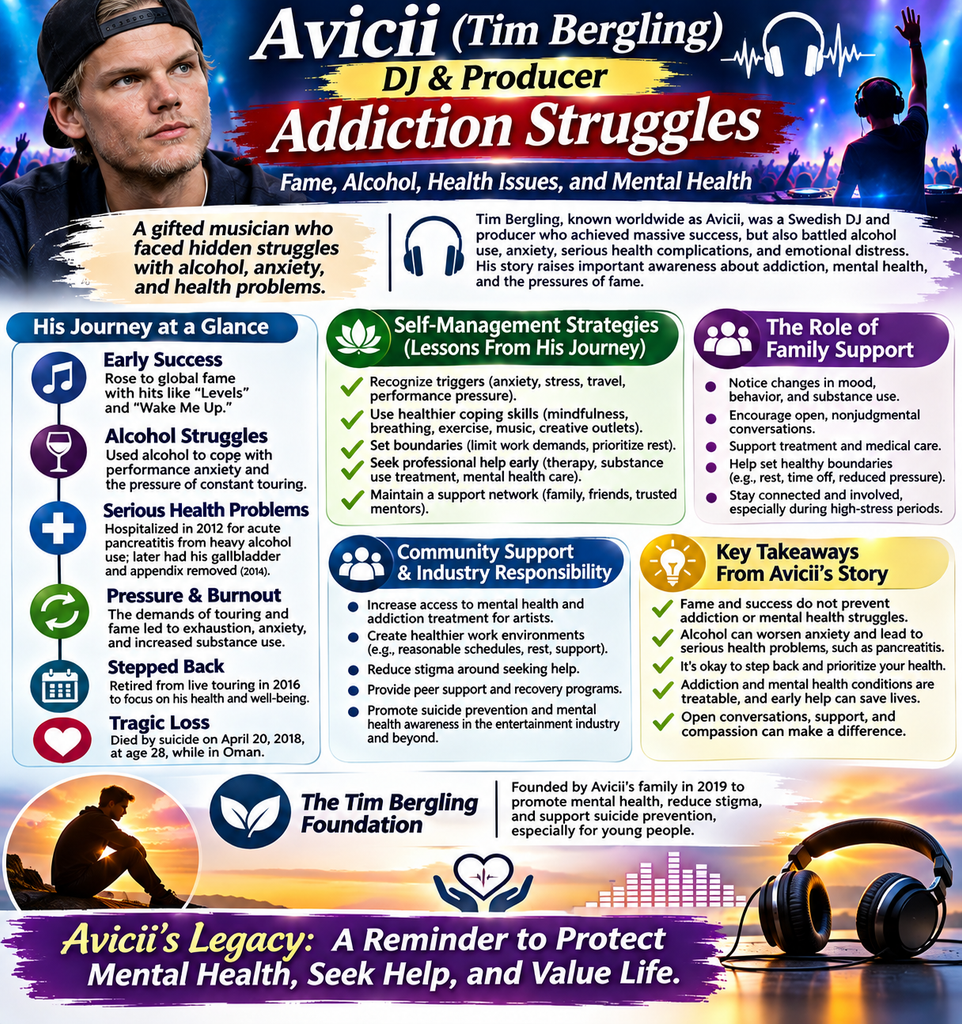
Behind the energetic performances, international fame, and chart-topping music of Swedish DJ and producer Avicii was a young man facing serious physical and emotional challenges.
Born Tim Bergling on September 8, 1989, Avicii became one of the most influential electronic dance music artists of his generation. His songs, including Wake Me Up and Levels, reached millions of listeners worldwide.
However, his rapid rise to fame came with intense touring schedules, performance anxiety, health complications, and struggles involving alcohol.
Avicii experienced alcohol-related health problems, including acute pancreatitis, and eventually retired from live touring in 2016 to prioritize his well-being.
On April 20, 2018, he died by suicide at age 28 while visiting Oman.
His death brought greater attention to the pressures of fame, the relationship between substance use and mental health, and the importance of recognizing emotional distress before it becomes overwhelming.
Avicii’s story reminds us that professional success does not guarantee emotional well-being and that seeking help for addiction, anxiety, or psychological distress is an essential part of protecting one’s health.
Avicii’s Early Career and the Pressures of Fame
Tim Bergling developed an interest in electronic music production during adolescence. His talent for creating memorable melodies and combining electronic dance rhythms with other musical styles helped him gain international recognition.
By his early twenties, he was performing at major music festivals and traveling extensively.
Although his career appeared glamorous, the demanding lifestyle created considerable pressure.
Frequent international travel, irregular sleep schedules, performance expectations, and limited opportunities for rest contributed to physical and emotional exhaustion.
Avicii publicly discussed experiencing anxiety associated with performing in front of large audiences.
Factors that can increase vulnerability to substance use
- Performance anxiety: Fear of judgment or failure may lead some individuals to use alcohol to temporarily reduce anxiety.
- High-pressure environments: Demanding professional expectations can increase emotional stress.
- Frequent social exposure: Events where alcohol is readily available may normalize heavy drinking.
- Sleep disruption: Irregular schedules can worsen anxiety, mood regulation, and decision-making.
- Social isolation: Extensive travel may limit meaningful connections with family and friends.
- Difficulty establishing boundaries: Individuals may feel pressured to continue working despite declining health.
These factors do not automatically cause addiction, but they can contribute to increased substance use risk.
Avicii’s experiences illustrate how demanding environments may affect even highly successful individuals.
Avicii’s Struggles With Alcohol and Anxiety
One of the most significant challenges Avicii faced was his reliance on alcohol to cope with performance-related anxiety.
Although he loved producing music, performing in front of large audiences was emotionally demanding.
In interviews, Avicii explained that drinking initially helped him feel more confident and less nervous before performances.
However, what began as a coping mechanism eventually developed into problematic alcohol use.
His experiences demonstrate how alcohol can temporarily reduce feelings of anxiety while contributing to a cycle of dependence and worsening emotional health. British GQ+1
Understanding the connection between anxiety and alcohol
Alcohol affects the central nervous system by enhancing inhibitory neurotransmission and altering brain circuits involved in stress and emotional regulation.
Although drinking may temporarily decrease anxiety, repeated consumption can contribute to tolerance, dependence, and rebound anxiety.
This creates a cycle in which individuals drink to relieve anxiety but eventually experience increased distress when alcohol’s effects wear off.
Common warning signs include:
- Drinking before stressful situations to feel more confident.
- Increasing alcohol consumption to achieve the same calming effects.
- Feeling anxious or uncomfortable when alcohol is unavailable.
- Continuing to drink despite negative health consequences.
- Using alcohol instead of developing healthier coping mechanisms.
Avicii’s experiences highlight the importance of identifying underlying anxiety and treating it alongside problematic substance use.
Alcohol-Related Pancreatitis and Serious Health Complications
Avicii’s alcohol use eventually contributed to significant medical complications.
In January 2012, he was hospitalized in New York for approximately 11 days after developing acute pancreatitis associated with excessive alcohol consumption.
Pancreatitis occurs when the pancreas becomes inflamed, potentially causing severe abdominal pain, nausea, vomiting, and systemic complications.
In 2014, Avicii underwent surgery involving removal of his gallbladder and appendix after further serious abdominal health problems.
His medical difficulties were compounded by exposure to prescription pain medications, including opioid medications used to manage severe pain. British GQ+1
How alcohol damages the pancreas
Heavy alcohol consumption can injure pancreatic cells, disrupt normal digestive enzyme activity, and promote inflammation.
Repeated episodes of acute pancreatitis may increase the risk of chronic pancreatitis, pancreatic insufficiency, and diabetes.
Warning signs include:
- Severe upper abdominal pain that may radiate to the back.
- Persistent nausea and vomiting.
- Fever and rapid heart rate.
- Abdominal tenderness.
- Difficulty tolerating food or fluids.
Suspected acute pancreatitis requires prompt medical evaluation.
Lessons from Avicii’s health complications
Avicii’s experience demonstrates why alcohol-related medical complications should be taken seriously.
Individuals with alcohol-associated pancreatitis generally benefit from complete alcohol abstinence, appropriate medical management, and treatment for alcohol use disorder when indicated.
For people with significant physical alcohol dependence, abruptly stopping alcohol can cause dangerous withdrawal symptoms, including seizures and delirium tremens. Medically supervised withdrawal may be necessary.
Prescription Medication and the Risk of Dependence
Following his medical complications, Avicii received prescription medications to manage pain and other symptoms.
Reports and his official biography describe difficulties involving opioid pain medications, including Percocet, during periods of serious illness.
His experiences illustrate the complicated relationship between chronic pain, anxiety, prescription medication exposure, and substance use disorders. British GQ+1
Understanding prescription opioid risks
Opioids can provide effective relief for certain types of severe pain, but prolonged use may lead to physical dependence and, in some individuals, opioid use disorder.
Physical dependence is not identical to addiction. Dependence refers to physiological adaptation, whereas addiction involves impaired control and continued use despite harm.
Potential risks include:
- Tolerance and withdrawal symptoms.
- Sedation and impaired concentration.
- Respiratory depression and overdose.
- Dangerous interactions with alcohol or sedatives.
- Development of opioid use disorder in susceptible individuals.
Strategies for safer pain management
Healthcare professionals can reduce medication-related risks by using individualized treatment plans, monitoring symptoms, reassessing the need for opioids, and considering nonopioid therapies when appropriate.
Patients should avoid combining opioids with alcohol or benzodiazepines unless specifically directed and closely monitored by a clinician.
Individuals experiencing opioid use disorder may benefit from medications such as buprenorphine or methadone, which are evidence-based treatments associated with reduced overdose mortality.
Self-Management Strategies for Addiction and Mental Health
Self-management involves developing practical skills to recognize emotional distress, manage triggers, and protect physical and psychological well-being.
Avicii’s experiences demonstrate how difficult it can be to maintain healthy routines while facing demanding professional expectations.
The following strategies are evidence-informed recommendations for individuals experiencing similar challenges. They should not be interpreted as a complete account of Avicii’s personal treatment.
A. Recognizing emotional and environmental triggers
Triggers may include performance anxiety, social pressure, exhaustion, loneliness, and fear of disappointing others.
Individuals can benefit from identifying situations that increase cravings or emotional distress.
Helpful strategies include:
- Keeping a journal to identify patterns of anxiety and substance use.
- Recognizing early signs of burnout and emotional exhaustion.
- Practicing grounding exercises and controlled breathing.
- Developing alternatives to drinking or drug use.
- Contacting trusted supporters when cravings increase.
B. Establishing healthy boundaries
Avicii’s decision to stop touring in 2016 showed he recognized that his professional schedule was affecting his health.
Although he continued creating music, he reduced the demands associated with live performances.
His decision illustrates the importance of protecting personal well-being, even when professional expectations are significant. The Guardian
Healthy boundaries may involve limiting work hours, declining unnecessary commitments, scheduling rest, and communicating personal needs.
C. Participating in professional treatment
Individuals experiencing addiction and anxiety may benefit from integrated treatment that addresses both conditions.
Approaches include:
- Cognitive behavioral therapy (CBT): Helps individuals identify and modify unhelpful thoughts and behaviors.
- Motivational interviewing: Supports readiness for behavioral change.
- Relapse prevention counseling: Develops strategies for managing cravings and high-risk situations.
- Medication treatment: May be appropriate for alcohol use disorder, opioid use disorder, anxiety, or depression.
- Psychiatric evaluation: Identifies co-occurring mental health conditions requiring additional care.
For alcohol use disorder, medications such as naltrexone and acamprosate can help reduce drinking or support abstinence in appropriate patients.
D. Prioritizing sleep and physical health
Adequate sleep supports emotional regulation, concentration, and overall mental health.
Individuals recovering from substance use disorders may benefit from consistent sleep schedules, regular physical activity, balanced nutrition, and ongoing medical follow-up.
These habits complement, rather than replace, professional treatment.
E. Developing a crisis and relapse prevention plan
A comprehensive plan should identify warning signs, supportive contacts, treatment providers, coping strategies, and steps to take during a crisis.
People experiencing suicidal thoughts require timely mental health assessment and support.
If someone is in immediate danger, emergency services should be contacted.
Family Support: Recognizing Distress Behind Success
Avicii’s family played an important role in his life and attempted to support him through periods of emotional and physical difficulty.
His father, Klas Bergling, later discussed recognizing signs of anxiety when Tim was a teenager.
According to his father, the family sought psychiatric assistance when Tim was approximately 14 or 15 years old.
As his career progressed, family members remained concerned about his health and the pressures associated with touring.
His father also described maintaining regular communication with him and discussing emotional challenges. CBS News
A. Recognizing warning signs
Families should watch for changes in mood, sleep, substance use, social behavior, and physical health.
Warning signs may include:
- Increased alcohol or drug consumption.
- Withdrawal from family and friends.
- Persistent anxiety or hopelessness.
- Significant changes in sleep or appetite.
- Repeated medical problems associated with substance use.
- Statements suggesting emotional exhaustion or suicidal thinking.
These symptoms do not automatically indicate addiction or suicidal intent, but they warrant compassionate attention.
B. Encouraging open communication
Families can create supportive environments by listening without judgment and encouraging honest conversations about mental health.
Helpful communication includes expressing concern, acknowledging distress, and asking directly about safety when suicide risk is suspected.
Asking someone about suicidal thoughts does not increase suicidal behavior and can help open a conversation about obtaining assistance.
C. Supporting professional treatment
Family members can help loved ones locate qualified healthcare professionals, attend appointments when invited, and navigate treatment options.
Family therapy may also improve communication and address relationship difficulties associated with addiction.
However, families cannot guarantee recovery or prevent every crisis. Responsibility for treatment and safety must be shared with appropriate professionals and support systems.
D. Establishing healthy boundaries
Family support should include compassion without neglecting personal well-being.
Healthy boundaries may involve declining to participate in harmful substance use, encouraging medical treatment, and protecting household safety.
E. Supporting grief and emotional recovery
When a family loses someone to suicide, surviving relatives may experience profound grief, guilt, anger, confusion, and unanswered questions.
Bereavement counseling and suicide-loss support groups can help families process these experiences.
Avicii’s death should not be interpreted as evidence that his family failed to provide support. Suicide is complex and cannot be attributed to one person, event, or circumstance.
The Tim Bergling Foundation: Transforming Grief Into Advocacy
Following Avicii’s death, his parents, Klas Bergling and Anki Lidén, established the Tim Bergling Foundation in 2019.
The foundation was created to honor Tim’s memory while addressing mental health challenges among young people.
Its mission includes improving mental health awareness, reducing suicide-related stigma, and supporting prevention initiatives.
The organization also recognizes the importance of music, creativity, and meaningful social connections in promoting emotional well-being. blog.google+1
Key areas of the foundation’s work
- Mental health awareness: Encouraging young people to discuss emotional challenges openly.
- Suicide prevention: Supporting initiatives that identify distress and improve access to assistance.
- Stigma reduction: Challenging misconceptions surrounding mental illness and suicide.
- Youth engagement: Promoting educational activities and creative opportunities.
- Community collaboration: Working with organizations, schools, and advocates to strengthen prevention efforts.
In 2026, the foundation helped organize a youth mental health policy debate in Sweden, bringing political representatives together to discuss access to mental healthcare and other challenges affecting young people. DJ Mag
The foundation demonstrates how families and communities can transform personal loss into meaningful advocacy.
Community Support Strategies for Musicians and Individuals With Addiction
Avicii’s experiences highlight the importance of creating healthier environments within the entertainment industry and beyond.
Artists may encounter demanding schedules, performance pressure, public scrutiny, and social environments where alcohol or drugs are readily available.
Communities and employers can help by promoting mental health education, accessible treatment, and supportive workplace practices.
A. Expanding access to mental health services
Musicians and other professionals should have access to confidential counseling, psychiatric evaluation, and addiction treatment.
Organizations can reduce barriers by providing employee assistance programs, flexible scheduling, and clear referral pathways.
B. Encouraging healthier workplace environments
Employers and managers can support wellness by establishing reasonable schedules, providing adequate rest periods, and respecting medical recommendations.
No professional opportunity should require someone to ignore serious health concerns.
C. Promoting peer support
Peer support programs connect individuals with others who understand the challenges of addiction and mental health recovery.
Peer networks can reduce isolation, provide encouragement, and help individuals access professional treatment.
D. Improving suicide prevention education
Communities should educate people about warning signs of suicide, including hopelessness, social withdrawal, severe emotional distress, and direct statements about wanting to die.
Prevention efforts should emphasize early intervention, compassionate communication, and timely access to mental healthcare.
E. Supporting creative and meaningful activities
Music, art, exercise, volunteering, and other meaningful activities can promote social connection and emotional expression.
These activities can complement professional treatment, although they are not substitutes for evidence-based care.
Challenges and Barriers to Recovery
Avicii’s experiences demonstrate that addiction and mental health problems can persist even when individuals have financial resources and access to healthcare.
Several barriers may complicate recovery:
- Stigma: Fear of judgment may discourage individuals from discussing substance use or mental health symptoms.
- Professional pressure: Work obligations may interfere with treatment and recovery.
- Social isolation: Extensive travel or demanding schedules may weaken support networks.
- Co-occurring conditions: Anxiety, depression, pain, and substance use disorders may require coordinated care.
- Medication-related complications: Certain prescription medications may create additional risks when combined with substance use.
- Difficulty maintaining boundaries: Individuals may feel responsible for meeting others’ expectations despite declining health.
- Inadequate continuing care: Ongoing mental health support remains important even after substance use decreases.
Successful treatment requires attention to both immediate symptoms and the broader circumstances affecting well-being.
Lessons From Avicii’s Life and Legacy
Avicii’s story offers important lessons for individuals, families, healthcare professionals, and communities.
First, success does not eliminate vulnerability to mental health problems. Fame, wealth, and professional achievement cannot protect someone from anxiety, addiction, or emotional distress.
Second, alcohol is not an effective long-term treatment for anxiety. Although it may temporarily reduce nervousness, repeated use can worsen mental health symptoms and increase dependence risk.
Third, physical health complications can be warning signs of serious substance-related harm. Avicii’s pancreatitis demonstrated the potential medical consequences of excessive alcohol consumption.
Fourth, establishing boundaries is essential. His retirement from touring illustrated the importance of recognizing personal limitations and protecting health.
Fifth, family support matters, but families cannot control every outcome. Compassionate communication and professional treatment are important, yet suicide prevention remains complex.
Finally, personal tragedy can inspire community change. Through the Tim Bergling Foundation, Avicii’s family has helped advance mental health awareness and suicide prevention efforts.
Resources for Addiction and Mental Health Support
Individuals experiencing addiction, anxiety, depression, or suicidal thoughts can access professional assistance through several organizations.
- SAMHSA National Helpline: 1-800-662-HELP (4357), offering confidential treatment referrals in the United States.
- FindTreatment.gov: Find addiction and mental health treatment services.
- 988 Suicide & Crisis Lifeline: Call or text 988 in the United States for confidential crisis support.
- SMART Recovery: Explore recovery meetings and self-management resources.
- Alcoholics Anonymous: Find alcohol recovery support meetings.
- Tim Bergling Foundation: Learn about youth mental health and suicide prevention advocacy.
If someone expresses an immediate intention to harm themselves or is in imminent danger, contact emergency services and remain with them when safe to do so.
Conclusion: Remembering Avicii Beyond His Addiction Struggles
Avicii’s life was defined by extraordinary musical creativity, global influence, and the emotional connection he created with millions of listeners.
Yet behind his professional achievements were serious challenges involving alcohol use, physical illness, anxiety, and prescription medication-related difficulties.
His experiences demonstrate why addiction and mental health conditions should be addressed together through compassionate, evidence-based treatment.
For individuals struggling with substance use, his story emphasizes the importance of recognizing warning signs, establishing healthy boundaries, seeking professional care, and developing supportive relationships.
For families, it highlights the value of open communication, early intervention, and understanding that emotional distress may remain hidden behind outward success.
For communities, it reinforces the responsibility to provide accessible mental healthcare, reduce stigma, and promote environments where people can seek help without fear of judgment.
Avicii’s death was a profound loss, but his music and the work of the Tim Bergling Foundation continue to inspire conversations about mental health and suicide prevention.
His legacy reminds us that no achievement is more important than protecting human life, emotional well-being, and the opportunity to get help when needed.
Frequently Asked Questions and Answers
Understanding Avicii’s Addiction Struggles
1. Who was Avicii?
Avicii, whose real name was Tim Bergling, was a Swedish DJ, songwriter, and electronic music producer born on September 8, 1989, in Stockholm, Sweden.
He became internationally recognized for combining electronic dance music with pop, folk, and other musical influences.
Despite his extraordinary professional achievements, he experienced serious physical and mental health challenges during his career.
2. Did Avicii struggle with addiction?
Avicii publicly discussed problematic alcohol consumption, particularly during periods of intense touring and performance anxiety.
His alcohol use contributed to serious health complications, including acute pancreatitis.
Accounts of his life also describe difficulties involving prescription opioid pain medications after medical treatment.
His experiences illustrate the complicated relationship between substance use, anxiety, chronic stress, and physical illness.
3. Why did Avicii drink alcohol?
Avicii described using alcohol to manage nervousness and anxiety associated with performing in front of large audiences.
Although he enjoyed producing music, the demands of live performances were emotionally challenging.
Alcohol initially provided temporary relief from anxiety, but repeated use contributed to harmful drinking patterns.
This illustrates how alcohol can become an unhealthy coping mechanism when underlying anxiety remains untreated.
4. How did fame contribute to Avicii’s struggles?
Avicii’s rapid rise to fame involved extensive international travel, frequent performances, public expectations, and demanding professional schedules.
These pressures contributed to exhaustion and limited opportunities for rest.
While fame itself does not cause addiction, high-stress environments can increase vulnerability to unhealthy coping behaviors, including excessive alcohol consumption.
5. Did Avicii experience anxiety and mental health problems?
Yes. Avicii publicly discussed anxiety associated with performing and the emotional demands of his career.
His family also described concerns about his mental health beginning during adolescence.
His experiences highlight the importance of recognizing anxiety symptoms early and obtaining appropriate professional support.
6. Did Avicii suffer from alcohol-related pancreatitis?
Yes. Avicii was hospitalized in 2012 with acute pancreatitis associated with excessive alcohol consumption.
Pancreatitis occurs when the pancreas becomes inflamed, potentially causing severe abdominal pain, nausea, vomiting, and serious systemic complications.
Heavy alcohol use is a recognized cause of acute and chronic pancreatitis.
7. What other health complications did Avicii experience?
In addition to pancreatitis, Avicii experienced other significant abdominal health problems.
In 2014, he underwent surgery to remove his gallbladder and appendix.
His medical problems affected his ability to perform and contributed to the physical demands he faced during his career.
8. Did Avicii struggle with prescription medications?
Published accounts, including his official biography, describe difficulties involving prescription opioid pain medications following medical treatment.
Opioids can be effective for certain types of severe pain, but they carry risks of physical dependence, sedation, overdose, and opioid use disorder.
Physical dependence and addiction are not identical. Addiction involves impaired control over use and continued use despite harmful consequences.
Recovery, Treatment, and Self-Management
9. Did Avicii receive professional addiction treatment?
Yes. Avicii received professional treatment for substance-related problems. His family and close associates organized interventions when concerns about his health and medication use increased.
He subsequently participated in rehabilitation and received mental health care. His experiences illustrate the importance of treating substance use disorders alongside anxiety and other psychological difficulties. DJ Mag+1
10. Did Avicii stop drinking alcohol?
Avicii reported reducing and stopping alcohol consumption following his pancreatitis diagnosis. In 2014, he publicly reported that he had gone more than a year without drinking.
His subsequent experiences included other health and substance-related challenges. His precise alcohol use throughout his remaining years should not be assumed beyond documented accounts. DJ Mag
11. Why did Avicii retire from touring in 2016?
Avicii stopped touring because the demanding performance schedule was affecting his physical and emotional well-being.
Frequent travel, exhaustion, anxiety, and medical complications had made live performances increasingly difficult.
Although he retired from touring, he continued producing music. His decision illustrates the importance of setting boundaries and recognizing when professional demands affect health. British GQ
12. What self-management strategies can help individuals struggling with addiction and anxiety?
Evidence-based self-management strategies include:
- Recognizing emotional and environmental triggers.
- Practicing stress-management techniques and relaxation exercises.
- Maintaining consistent sleep and exercise routines.
- Avoiding alcohol or drugs as coping mechanisms for anxiety.
- Participating in counseling and appropriate medical treatment.
- Developing a relapse prevention and mental health crisis plan.
- Establishing healthy boundaries between work and personal life.
These strategies are general recommendations, not a complete description of Avicii’s personal treatment plan.
13. Can alcohol make anxiety worse?
Yes. Although alcohol may temporarily reduce anxiety, repeated consumption can worsen symptoms over time.
Alcohol affects neurotransmitter systems involved in stress regulation, sleep, and emotional processing.
As its effects wear off, individuals may experience rebound anxiety, irritability, and sleep disturbances.
Treating anxiety directly through therapy, appropriate medications, and healthy coping strategies is generally more effective than relying on alcohol.
14. What treatments are available for alcohol use disorder?
Treatment may include behavioral therapy, medications, peer support, and ongoing medical monitoring.
Common evidence-based approaches include cognitive behavioral therapy, motivational interviewing, and relapse prevention counseling.
FDA-approved medications for alcohol use disorder include naltrexone, acamprosate, and disulfiram.
Treatment selection depends on the individual’s medical history, substance use patterns, treatment goals, and co-occurring conditions.
15. Can someone recover from both addiction and anxiety?
Yes. Individuals experiencing addiction and anxiety can achieve meaningful improvements with appropriate treatment.
Integrated care addresses both conditions rather than treating them separately.
Recovery may involve psychotherapy, medications when indicated, lifestyle changes, and continuing support.
The goal is to improve overall functioning, emotional well-being, and quality of life.
Family Support and Mental Health Awareness
16. How did Avicii’s family support him?
Avicii’s parents and other loved ones expressed concern about his physical and mental health.
His father, Klas Bergling, has discussed family efforts to encourage treatment, including interventions involving relatives, friends, and professional associates.
The family remained concerned about the effects of touring, anxiety, and substance use on his well-being. DJ Mag
17. What can families learn from Avicii’s struggles?
Families can learn the importance of recognizing emotional distress even when someone appears professionally successful.
Helpful strategies include:
- Encouraging honest conversations about mental health.
- Recognizing changes in mood, sleep, and substance use.
- Supporting professional treatment without judgment.
- Establishing healthy boundaries.
- Encouraging adequate rest and stress management.
- Seeking help when suicidal thoughts or severe emotional distress occur.
Family support can be valuable, but relatives cannot control every outcome or replace professional care.
18. What warning signs of addiction should families recognize?
Warning signs may include increased substance use, difficulty controlling consumption, neglecting responsibilities, withdrawal symptoms, and continued use despite health problems.
Additional concerns include secrecy surrounding substance use, changes in behavior, financial difficulties, and worsening emotional health.
Early identification creates opportunities for intervention before serious complications develop.
19. How can families help someone experiencing anxiety and addiction?
Families should approach the person with compassion and avoid blaming or shaming language.
They can encourage evaluation by qualified healthcare professionals, provide practical help accessing treatment, and maintain supportive communication.
Family therapy may also help improve relationships and address conflict associated with substance use.
20. What should families do if a loved one expresses suicidal thoughts?
Suicidal statements should always be taken seriously.
Families should ask directly about suicidal thoughts, listen without judgment, and help the person connect with professional crisis support.
If there is immediate danger, contact emergency services and remain with the person when it is safe to do so.
In the United States, individuals can call or text 988 to reach the Suicide & Crisis Lifeline.
Avicii’s Death and Mental Health Legacy
21. How did Avicii die?
Avicii died by suicide on April 20, 2018, in Muscat, Oman, at age 28.
His family subsequently spoke publicly about his mental health challenges and the importance of reducing stigma surrounding suicide.
His death should not be attributed to alcohol, addiction, professional pressure, or any single factor. Suicide is complex and often involves multiple interacting circumstances. CBS News
22. Was Avicii’s death directly caused by addiction?
There is no basis for concluding that addiction alone caused his death.
Avicii experienced documented difficulties involving anxiety, substance use, physical illness, and intense professional demands.
However, these factors cannot establish a single explanation for his suicide.
His story highlights the importance of comprehensive mental healthcare and recognizing that outward improvements do not always eliminate psychological vulnerability.
23. What is the Tim Bergling Foundation?
The Tim Bergling Foundation was established in 2019 by Avicii’s family to honor his memory.
Its mission includes improving mental health among young people, supporting suicide prevention, and reducing stigma surrounding mental illness.
The foundation also promotes collaboration among researchers, organizations, and communities to improve mental health awareness and access to support. blog.google
24. How does the Tim Bergling Foundation support mental health awareness?
The foundation supports initiatives focused on youth mental health, suicide prevention, education, and stigma reduction.
Its work emphasizes early intervention, scientific research, and community collaboration.
It also recognizes music and creativity as meaningful ways to encourage emotional expression and connection.
For additional information, visit the Tim Bergling Foundation.
25. What is the most important lesson from Avicii’s addiction and mental health struggles?
Avicii’s experiences demonstrate that fame, wealth, and professional achievements do not eliminate vulnerability to addiction or psychological distress.
His story emphasizes the importance of recognizing warning signs, seeking treatment, establishing healthy boundaries, and maintaining supportive relationships.
It also reminds families, employers, and communities that mental health deserves the same attention and compassion as physical health.
Seeking help is a sign of strength, and no professional achievement should come at the expense of a person’s health and safety.
Resources for Addiction and Mental Health Support
- SAMHSA National Helpline: 1-800-662-HELP (4357), for confidential treatment referrals in the United States.
- FindTreatment.gov: Find addiction and mental health treatment services.
- 988 Suicide & Crisis Lifeline: Call or text 988 in the United States for immediate emotional support.
- SMART Recovery: Explore recovery meetings and coping resources.
- Alcoholics Anonymous: Find alcohol recovery support meetings.
- Tim Bergling Foundation: Learn about mental health awareness and suicide prevention.
Video: