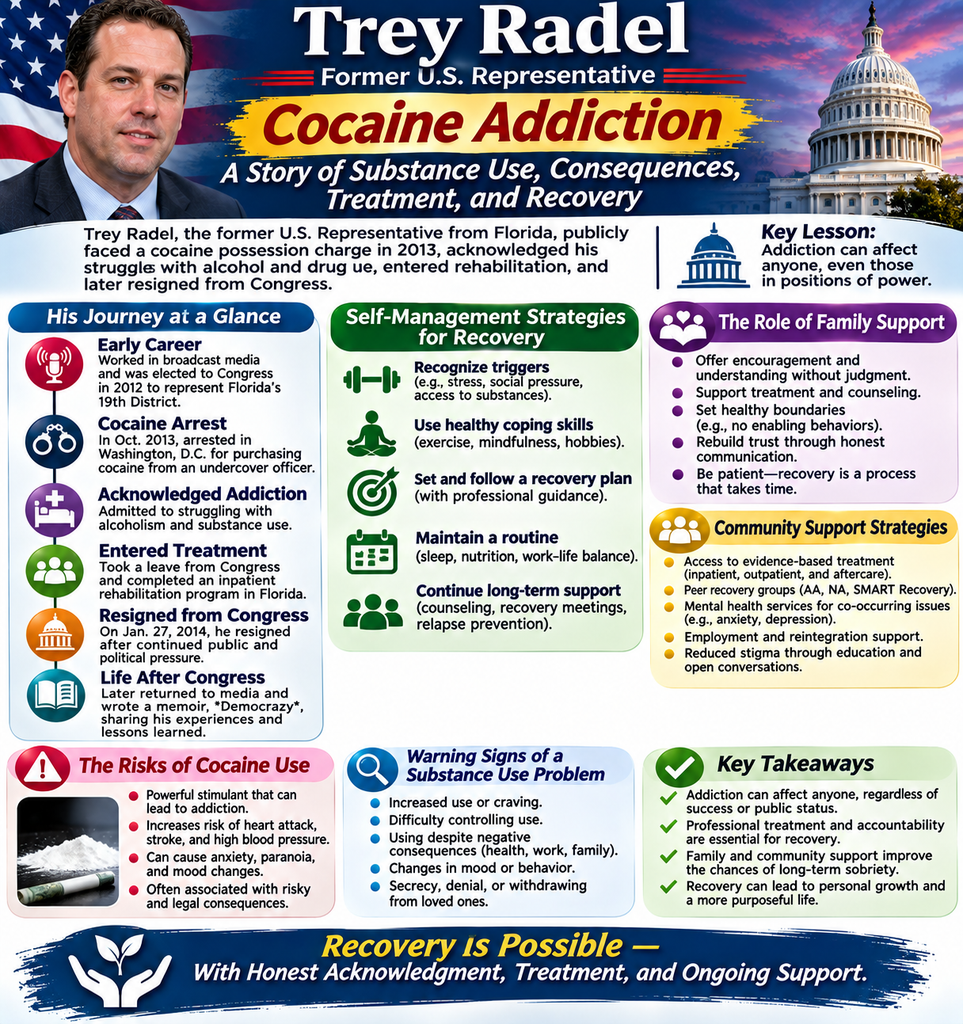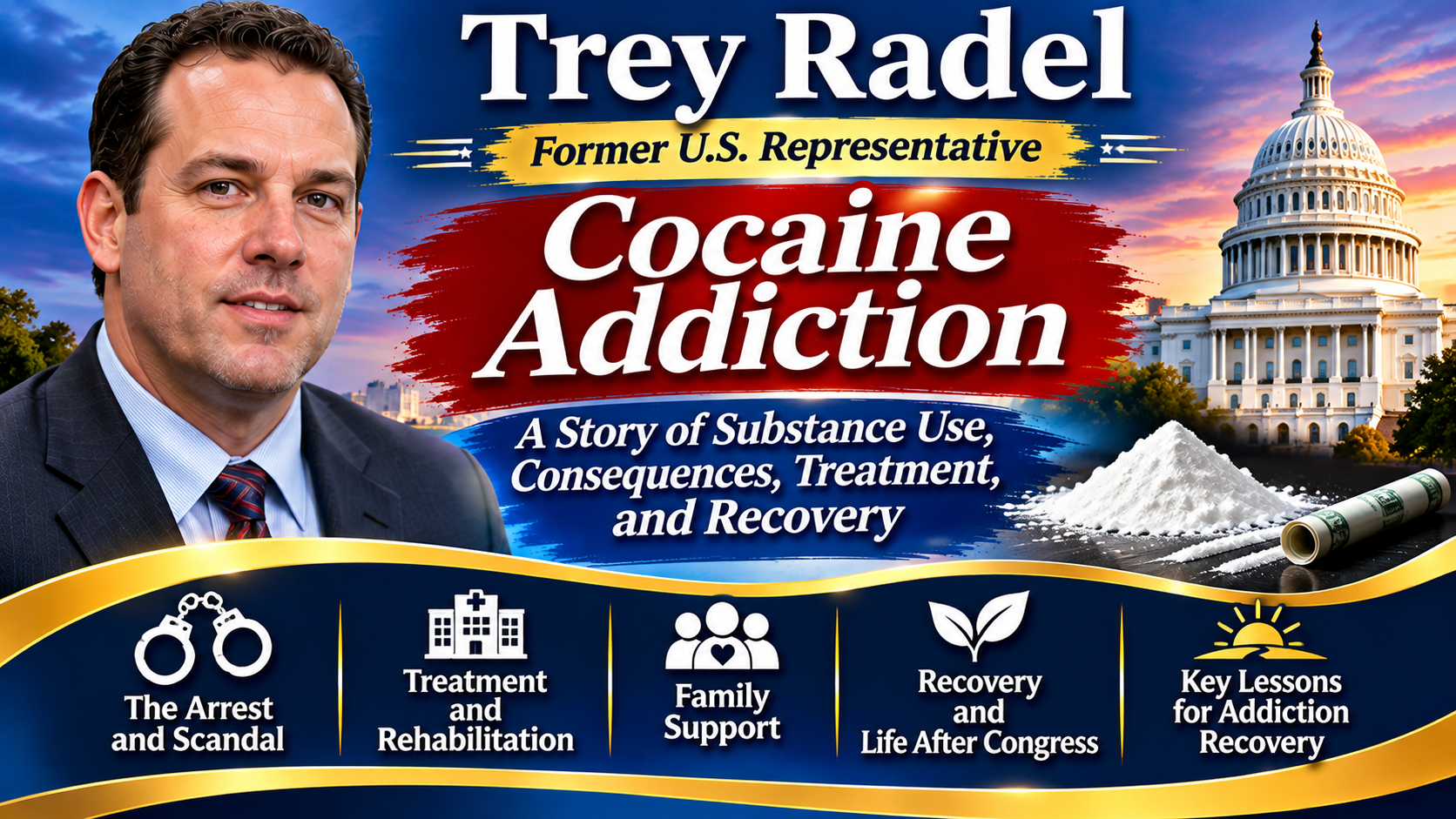
Addiction can affect anyone, regardless of professional success, education, financial stability, or public reputation. Substance use disorders do not discriminate, and even individuals in positions of leadership can experience serious challenges with drugs or alcohol.
Former U.S. Representative Trey Radel became the center of national attention in 2013 after being arrested for purchasing cocaine during an undercover law enforcement operation in Washington, D.C.
The incident exposed his struggles with substance use, damaged his political career, and ultimately led to his resignation from Congress in January 2014.
Following his arrest, Radel publicly acknowledged his problems with alcohol and cocaine, entered addiction treatment, and began discussing the personal consequences of substance use.
His experiences provide an opportunity to examine the complex relationship between addiction, stress, personal responsibility, professional consequences, and recovery.
Trey Radel’s story demonstrates that addiction can disrupt even the most successful careers, but recognizing the problem, seeking professional treatment, and accepting responsibility can create opportunities for meaningful change.
Trey Radel’s Political Career and the Pressures of Public Life
Before entering Congress, Trey Radel worked as a television news anchor, radio personality, and newspaper publisher in Southwest Florida.
In November 2012, he was elected to represent Florida’s 19th Congressional District and began serving in January 2013.
His transition into national politics brought new responsibilities, public scrutiny, demanding schedules, and frequent travel between Florida and Washington, D.C.
Like many professionals working in high-pressure environments, Radel faced expectations to maintain a successful public image while managing personal responsibilities.
In his 2017 memoir, Democrazy: A True Story of Weird Politics, Money, Madness & Finger Food, Radel reflected on Washington’s social culture, late-night gatherings, and the personal choices that contributed to his downfall. Roll Call+1
Factors that can increase addiction vulnerability
Although professional stress does not automatically cause addiction, certain circumstances can increase the risk of problematic substance use:
- High-pressure responsibilities: Demanding careers may contribute to chronic stress and emotional exhaustion.
- Social environments: Frequent gatherings where alcohol or drugs are present can increase exposure to substance use.
- Difficulty maintaining boundaries: Individuals may struggle to balance professional expectations with personal well-being.
- Underlying emotional distress: Anxiety, depression, and unresolved psychological challenges may contribute to unhealthy coping behaviors.
- Social isolation: Time away from family and supportive relationships may increase vulnerability.
- Poor coping mechanisms: Some individuals use substances to temporarily escape stress or emotional discomfort.
These factors help explain general addiction risk, but they should not be interpreted as a complete explanation of Radel’s personal substance use.
The Cocaine Arrest That Changed His Political Career
On October 29, 2013, Radel purchased approximately 3.5 grams of cocaine from an undercover law enforcement officer in Washington, D.C.
The transaction occurred during an investigation involving federal authorities.
On November 20, 2013, he pleaded guilty to misdemeanor cocaine possession and received one year of minimally supervised probation and a $250 assessment.
The incident attracted national attention because Radel was a sitting member of Congress.
Following the arrest, he publicly acknowledged struggling with alcoholism and described his cocaine purchase as a serious mistake. CBS News+1
Understanding the consequences of cocaine use
Cocaine is a powerful central nervous system stimulant that increases dopamine signaling and affects the brain’s reward system.
Its short-term effects may include euphoria, increased energy, alertness, and decreased appetite.
However, cocaine use can also cause significant physical and psychological complications.
Potential consequences include:
- Increased heart rate and blood pressure.
- Cardiac arrhythmias, heart attack, and stroke.
- Anxiety, agitation, and paranoia.
- Sleep disturbances and emotional instability.
- Strong cravings and repeated substance use.
- Impaired judgment and increased risk-taking.
- Legal, financial, occupational, and relationship problems.
Combining cocaine with alcohol creates an additional risk because the body can produce cocaethylene, a metabolite associated with increased cardiovascular toxicity.
Radel’s experience illustrates how substance-related decisions can have consequences extending far beyond physical health.
Acknowledging Alcoholism and Seeking Professional Treatment
Following his arrest, Radel publicly acknowledged that alcohol was a major problem in his life.
He announced that he would take a leave of absence from Congress and enter an intensive inpatient addiction treatment program.
Radel received treatment at a rehabilitation facility in Naples, Florida.
After about one month of treatment, he returned to public life and initially said he intended to continue serving in Congress.
He later explained that alcohol, rather than cocaine, had been the primary focus of his rehabilitation.
Why professional addiction treatment matters
Substance use disorders involve complex interactions among brain function, behavior, genetics, mental health, and environmental influences.
Professional treatment can help individuals understand these factors and develop strategies for lasting behavioral change.
Treatment may involve:
- Medical evaluation and management of withdrawal symptoms.
- Individual counseling and behavioral therapy.
- Group therapy and peer recovery support.
- Assessment of co-occurring mental health conditions.
- Relapse prevention planning.
- Family education and counseling.
- Continuing care following rehabilitation.
For alcohol use disorder, medications such as naltrexone and acamprosate may help reduce alcohol consumption or support abstinence.
For cocaine use disorder, there are currently no FDA-approved medications specifically indicated for treatment. Behavioral approaches, particularly contingency management, have demonstrated effectiveness.
Individuals with significant alcohol dependence should seek medical guidance before abruptly stopping alcohol because withdrawal can be life-threatening.
Resignation From Congress: Accountability and Personal Consequences
Although Radel initially attempted to resume his congressional responsibilities, public criticism and concerns about his ability to serve continued.
On January 27, 2014, he resigned from the U.S. House of Representatives.
In his resignation letter, Radel acknowledged that his personal struggles had serious consequences and explained that he wanted to focus on his health, family, and faith.
His resignation marked the end of a congressional career that had lasted approximately one year. CBS News+1
Lessons about addiction and accountability
Radel’s experience highlights several important principles:
- Addiction can affect professional judgment and decision-making.
- Substance use disorders do not eliminate personal or professional accountability.
- Legal consequences may create opportunities to recognize the need for treatment.
- Seeking help matters, whether treatment follows a crisis.
- Recovery may require difficult changes in lifestyle, responsibilities, and relationships.
- A person’s professional setbacks do not necessarily prevent future personal growth.
Compassion and accountability can coexist. Individuals experiencing addiction deserve appropriate healthcare while remaining responsible for harmful actions.
Self-Management Strategies for Cocaine and Alcohol Addiction
Self-management is an important component of addiction recovery. It involves developing practical skills to recognize triggers, manage cravings, regulate emotions, and maintain healthier behaviors.
Radel has publicly discussed rehabilitation, personal accountability, and rebuilding his life. However, the full details of his personal recovery routine have not been made public.
The following strategies are evidence-informed recommendations for individuals experiencing similar challenges.
A. Recognizing triggers and high-risk situations
Triggers are situations, emotions, or environments associated with previous substance use.
Common triggers include workplace stress, social gatherings, alcohol consumption, loneliness, and exposure to people or places associated with drug use.
Helpful strategies include:
- Identifying emotional and environmental triggers.
- Avoiding high-risk social situations when possible.
- Keeping a journal to recognize patterns of cravings.
- Developing alternative responses to stress.
- Contacting trusted supporters when urges increase.
Recognizing triggers can help individuals respond before cravings become overwhelming.
B. Developing healthy coping mechanisms
Individuals may use cocaine or alcohol to manage emotional distress, increase confidence, or escape difficult circumstances.
Recovery requires replacing substance use with healthier coping strategies.
Examples include regular physical activity, mindfulness exercises, relaxation techniques, structured hobbies, and meaningful social activities.
These strategies can improve emotional regulation but should complement professional treatment rather than replace it.
C. Participating in evidence-based behavioral treatment
Behavioral therapies can help individuals understand the relationship between thoughts, emotions, and substance use.
Effective approaches include:
- Cognitive behavioral therapy (CBT): Identifies and modifies harmful thought patterns and behaviors.
- Contingency management: Provides structured incentives that reinforce treatment goals and substance-free behaviors.
- Motivational interviewing: Helps individuals strengthen their motivation for change.
- Relapse prevention counseling: Develops practical strategies for responding to cravings and warning signs.
- Community reinforcement approaches: Help individuals build rewarding activities and relationships that support recovery.
D. Establishing healthy routines
Consistent routines can help reduce stress and improve stability.
Individuals may benefit from maintaining regular sleep schedules, eating balanced meals, exercising, attending treatment appointments, and setting achievable personal goals.
For people recovering from stimulant use, adequate sleep and emotional support can be particularly important during periods of fatigue, low mood, and cravings.
E. Creating a relapse prevention plan
A relapse prevention plan should identify personal warning signs, coping strategies, supportive contacts, and professional treatment resources.
Individuals should also establish clear steps to follow if substance use resumes.
A return to substance use should prompt timely reassessment of treatment rather than shame or abandonment of recovery goals.
The Importance of Family Support in Trey Radel’s Journey
Addiction can place significant emotional strain on marriages, parenting relationships, and family stability.
Following his arrest, Radel publicly expressed regret about disappointing his wife and young son.
He said becoming a better husband and father was a key motivation for seeking treatment.
His wife also appeared alongside him during a public appearance following rehabilitation.
In his memoir, Radel later reflected on how his political lifestyle and personal decisions had affected his attention to family responsibilities. CBS News+2
A. Encouraging treatment without judgment
Families can encourage individuals experiencing addiction to seek professional assistance while avoiding shame-based language.
Supportive communication should focus on concern, safety, and available treatment options.
B. Establishing healthy boundaries
Families should maintain boundaries that protect their emotional, physical, and financial well-being.
Examples include:
- Refusing to provide money that may directly support harmful substance use.
- Establishing expectations for respectful communication.
- Avoiding covering up dangerous behaviors.
- Encouraging treatment participation.
- Seeking professional assistance when family conflicts become overwhelming.
C. Participating in family counseling
Family therapy can improve communication, address damaged trust, and help relatives understand addiction.
Counseling may also help families develop realistic expectations for recovery.
D. Rebuilding trust through consistent actions
Addiction may damage relationships through secrecy, broken commitments, and unpredictable behavior.
Rebuilding trust often requires time, honesty, accountability, and consistent behavioral changes.
Families should recognize that trust may return gradually rather than immediately following treatment.
E. Supporting children affected by parental addiction
Children living with parental substance use disorders may experience anxiety, confusion, or emotional insecurity.
Age-appropriate education, consistent routines, supportive adults, and access to counseling can help protect their emotional well-being.
Children should understand that they are not responsible for causing or resolving a parent’s addiction.
Community Support Strategies for Addiction Recovery
Recovery is influenced not only by individual choices and family relationships but also by access to community resources.
Radel’s experience demonstrates how addiction treatment, professional accountability, and supportive relationships can influence the process of rebuilding one’s life.
A. Expanding access to treatment
Communities should promote affordable, evidence-based addiction treatment programs.
Services may include outpatient counseling, residential treatment when appropriate, medication management, and integrated mental health care.
B. Strengthening peer recovery programs
Peer recovery groups provide opportunities to connect with individuals who understand the challenges of substance use disorders.
Support networks may include Alcoholics Anonymous, Narcotics Anonymous, SMART Recovery, and professionally facilitated recovery groups.
C. Reducing addiction-related stigma
Stigma may discourage individuals from acknowledging substance use problems or seeking treatment.
Public education should emphasize that addiction is a treatable medical condition and that recovery can occur across different social and professional backgrounds.
D. Supporting employment and reintegration
Individuals recovering from addiction may face occupational consequences, including job loss or damaged professional relationships.
Communities can provide vocational rehabilitation, employment assistance, continuing education, and recovery-friendly workplace policies.
E. Improving mental health services
Substance use disorders frequently occur alongside anxiety, depression, trauma-related conditions, and other mental health concerns.
Integrated treatment programs can address these conditions together and improve continuity of care.
Life After Congress: Rebuilding Identity and Purpose
Following his resignation, Radel returned to media and public commentary.
In 2017, he published Democrazy: A True Story of Weird Politics, Money, Madness & Finger Food, reflecting on his experiences in Congress, the cocaine arrest, and the consequences of his decisions.
In interviews promoting the book, Radel discussed the importance of accepting responsibility and moving forward, rather than letting past mistakes define every aspect of life.
His return to broadcasting demonstrated that professional opportunities can remain possible after serious personal setbacks. Washingtonian+1
Rebuilding life after addiction
Individuals recovering from addiction may benefit from:
- Establishing new personal and professional goals.
- Rebuilding relationships through consistent actions.
- Participating in meaningful work or community activities.
- Developing healthier social networks.
- Continuing mental health and addiction treatment as needed.
- Practicing self-compassion while accepting responsibility.
Recovery does not guarantee that every consequence of substance use will disappear. However, it can create opportunities for improved health, stability, and personal growth.
Challenges and Barriers to Addiction Recovery
Radel’s experience highlights several challenges that individuals may encounter during recovery.
Stigma and public judgment: Fear of criticism may prevent people from acknowledging addiction or seeking help.
Professional consequences: Substance-related incidents may result in job loss, damaged reputations, or legal problems.
Family strain: Trust and communication may deteriorate during periods of problematic substance use.
Co-occurring substance use: Alcohol and cocaine use together can increase medical risks and complicate treatment.
Emotional distress: Shame, guilt, anxiety, and depression may interfere with recovery if left untreated.
Limited treatment access: Many individuals lack the financial resources, insurance coverage, or transportation needed to obtain comprehensive addiction care.
Addressing these barriers requires cooperation among healthcare providers, families, employers, and community organizations.
Important Lessons From Trey Radel’s Addiction Struggles
Radel’s experiences offer several important lessons about substance use disorders, accountability, and recovery.
First, addiction can affect individuals in positions of authority. Professional status does not eliminate vulnerability to problematic substance use.
Second, substance use can have serious legal and occupational consequences. Radel’s cocaine arrest resulted in criminal penalties and contributed to the end of his congressional career.
Third, acknowledging a problem is an important step toward change. His decision to enter rehabilitation showed he recognized that professional assistance was necessary.
Fourth, family relationships can motivate recovery. Radel publicly identified his responsibilities as a husband and father as reasons to seek treatment.
Fifth, accountability and compassion are not mutually exclusive. People can accept responsibility for their actions while receiving treatment for addiction.
Finally, recovery can involve rebuilding personal identity. Radel’s later work in media and writing illustrates the possibility of pursuing meaningful goals after a major professional setback.
Addiction Treatment and Recovery Resources
Individuals experiencing cocaine addiction, alcohol use disorder, or other substance-related problems can access several national resources.
- SAMHSA National Helpline: 1-800-662-HELP (4357), offering confidential treatment referrals.
- FindTreatment.gov: Locate addiction and mental health treatment programs.
- SMART Recovery: Find recovery meetings and self-management resources.
- Alcoholics Anonymous: Find alcohol recovery support meetings.
- Narcotics Anonymous: Find drug recovery support meetings.
- 988 Suicide & Crisis Lifeline: Call or text 988 for emotional support during a mental health or suicidal crisis.
Anyone experiencing chest pain, severe agitation, seizures, or other serious symptoms after cocaine use should receive emergency medical attention.
Conclusion: Addiction, Accountability, and the Possibility of Change
Trey Radel’s experience with cocaine possession, publicly acknowledged alcoholism, rehabilitation, and resignation from Congress illustrates how substance use disorders can affect individuals regardless of their professional accomplishments.
His journey also demonstrates that recognizing addiction and seeking treatment are important steps toward improving health and rebuilding stability.
For individuals experiencing addiction, his story emphasizes the importance of self-management, professional counseling, relapse prevention, and healthy coping strategies.
For families, it highlights the value of compassion, boundaries, honest communication, and support during recovery.
For communities, it reinforces the need for accessible addiction treatment, mental health services, peer recovery programs, and opportunities for individuals to rebuild their lives.
Although Radel experienced serious legal and professional consequences, his subsequent work illustrates that meaningful opportunities can remain possible after major personal setbacks.
Addiction does not erase personal responsibility, but neither should past mistakes erase the possibility of treatment, growth, and a healthier future.
Recovery begins with recognizing the need for help and continues through treatment, support, accountability, and sustained personal effort.
Frequently Asked Questions and Answers
Understanding Trey Radel’s Cocaine Addiction and Arrest
1. Who is Trey Radel?
Trey Radel is a former American politician, journalist, and media personality who represented Florida’s 19th Congressional District in the U.S. House of Representatives from January 2013 to January 2014.
Before entering politics, he worked in television, radio, and newspaper publishing.
His congressional career ended following a cocaine possession conviction and subsequent resignation.
2. Did Trey Radel struggle with cocaine addiction?
Radel was arrested for purchasing cocaine in 2013 and publicly acknowledged having problems involving substance use.
He specifically identified alcoholism as a major personal struggle.
Although his cocaine-related legal incident is documented, a formal diagnosis of cocaine use disorder should not be assumed solely from his arrest. His publicly acknowledged alcohol problems and cocaine use are important parts of his history.
3. When was Trey Radel arrested for cocaine possession?
Radel was arrested on October 29, 2013, in Washington, D.C., after purchasing approximately 3.5 grams of cocaine from an undercover law enforcement officer.
The arrest became public in November 2013 and drew considerable attention because he was a sitting member of Congress.
4. What legal consequences did Trey Radel face?
On November 20, 2013, Radel pleaded guilty to misdemeanor cocaine possession.
He received one year of minimally supervised probation and was ordered to pay a $250 assessment.
The legal proceedings were followed by professional and political consequences, including pressure to resign from Congress.
5. Did Trey Radel admit to having an addiction problem?
Yes. Following his arrest, Radel publicly acknowledged struggling with alcoholism.
He expressed regret for his actions and announced that he would seek professional treatment.
His statements emphasized personal responsibility and his desire to address his substance use problems.
6. Did Trey Radel resign from Congress because of his cocaine arrest?
Yes. The cocaine arrest and its aftermath contributed directly to his resignation.
Although he initially tried to return to his congressional responsibilities after rehabilitation, continued political pressure and concerns about his ability to serve weighed on the situation.
Radel resigned from the House of Representatives on January 27, 2014.
7. Was Trey Radel using cocaine and alcohol together?
Radel publicly acknowledged alcoholism and was convicted of cocaine possession.
However, the available public information does not establish whether he consistently used both substances simultaneously.
Combining cocaine with alcohol is medically dangerous because the interaction produces cocaethylene, a metabolite associated with increased cardiovascular toxicity.
8. How did Trey Radel’s substance use affect his political career?
Radel’s cocaine arrest damaged his public reputation and resulted in significant political consequences.
He took a leave of absence, entered rehabilitation, faced criticism from political leaders, and ultimately resigned.
His experience illustrates how substance-related legal incidents can affect employment, professional credibility, and public responsibilities.
Treatment and Recovery
9. Did Trey Radel attend addiction rehabilitation?
Yes. Following his November 2013 guilty plea, Radel took a leave of absence from Congress and entered an inpatient rehabilitation program in Naples, Florida.
He spent approximately one month in treatment before returning to Washington in early January 2014. CBS News+1
10. What type of addiction treatment did Trey Radel receive?
Radel publicly described entering an intensive inpatient treatment program for substance use problems.
His treatment was associated with his acknowledged alcoholism and cocaine-related incident.
The complete details of his medical treatment, counseling methods, medications, and continuing recovery plan have not been publicly documented.
11. Is cocaine addiction treatable?
Yes. Cocaine use disorder is a treatable condition involving changes in brain reward, motivation, and behavioral control.
Effective treatment may include cognitive behavioral therapy, contingency management, motivational interviewing, and structured recovery programs.
There are currently no FDA-approved medications specifically for cocaine use disorder, although research into potential medications continues.
12. What are the most effective self-management strategies for cocaine addiction?
Self-management involves recognizing triggers, developing healthier coping mechanisms, and staying engaged in treatment.
Helpful strategies include:
- Identifying situations associated with previous cocaine use.
- Avoiding environments where drugs are readily available.
- Establishing consistent sleep and exercise routines.
- Participating in professional counseling.
- Developing a relapse prevention plan.
- Maintaining supportive relationships.
- Seeking immediate help when cravings become difficult to manage.
These are general evidence-based recommendations, not documented details of Radel’s personal recovery routine.
13. What are the physical and psychological risks of cocaine use?
Cocaine is a powerful stimulant that increases dopamine activity and stimulates the sympathetic nervous system.
Potential complications include increased blood pressure, irregular heart rhythms, heart attack, stroke, seizures, anxiety, paranoia, and stimulant-induced psychosis.
Repeated use can also lead to cravings and difficulty controlling consumption.
Cocaine obtained from unregulated sources may be contaminated with fentanyl or other substances, increasing overdose risk.
14. Can someone recover from both cocaine addiction and alcoholism?
Yes. Individuals experiencing problems with multiple substances can benefit from integrated addiction treatment.
Treatment may include behavioral therapy for stimulant use, medications for alcohol use disorder when indicated, and ongoing peer support.
Alcohol use disorder medications include naltrexone, acamprosate, and disulfiram.
Because severe alcohol withdrawal can cause seizures and delirium tremens, individuals with significant alcohol dependence should obtain medical guidance before abruptly stopping drinking.
15. What should someone do if they relapse after addiction treatment?
A return to substance use should prompt timely reassessment of the individual’s treatment plan.
Recommended steps include contacting a healthcare professional, reconnecting with recovery supporters, identifying contributing triggers, and considering additional treatment services.
Relapse does not erase previous progress, but it should be taken seriously because substance use may involve substantial medical risks.
Family Support and Personal Accountability
16. How did Trey Radel’s addiction struggles affect his family?
Following his arrest, Radel publicly expressed regret about disappointing his wife and young son.
He identified becoming a better husband and father as an important reason for seeking treatment.
His statements demonstrate that family responsibilities were part of his publicly expressed motivation for change. CBS News
17. How can families support someone experiencing cocaine addiction?
Families can encourage treatment by providing emotional support while maintaining healthy boundaries.
Helpful strategies include:
- Listening without judgment.
- Encouraging professional addiction treatment.
- Avoiding financial support that directly facilitates harmful substance use.
- Participating in family counseling when appropriate.
- Learning about cravings and relapse warning signs.
- Supporting healthy routines and positive relationships.
- Seeking support for their own emotional well-being.
18. Why are healthy boundaries important during addiction recovery?
Healthy boundaries protect family relationships and encourage accountability.
For example, families may establish expectations regarding respectful communication, household safety, financial assistance, and treatment participation.
Boundaries should be communicated consistently and compassionately, not used as punishment.
19. Can addiction treatment help rebuild damaged family relationships?
Yes. Addiction treatment and family counseling can help improve communication, address conflict, and support rebuilding trust.
However, restoring relationships generally requires consistent behavioral changes over time.
Family members may need additional support to address emotional distress, uncertainty, and the consequences of previous substance use.
Life After Congress and Community Support
20. What happened to Trey Radel after he resigned from Congress?
Following his resignation, Radel returned to media and communications-related work.
In March 2017, he published Democrazy: A True Story of Weird Politics, Money, Madness & Finger Food, reflecting on his congressional career, arrest, and personal consequences.
In interviews, he discussed accepting responsibility for his decisions and rebuilding his professional life. Roll Call+1
21. Did Trey Radel publicly discuss his mistakes after leaving Congress?
Yes. In interviews promoting his memoir, Radel acknowledged that his decisions had serious personal and professional consequences.
He discussed the difficulties of balancing congressional responsibilities with family life and accepted responsibility for his actions.
His reflections offer insight into the importance of accountability following substance-related problems. The Washington Post+1
22. How can community resources support individuals recovering from cocaine addiction?
Community resources can provide access to treatment, social support, and help rebuilding stability.
Important services include:
- Affordable outpatient and residential addiction treatment.
- Peer recovery programs such as Narcotics Anonymous and SMART Recovery.
- Mental health counseling for co-occurring conditions.
- Employment and vocational rehabilitation.
- Recovery housing and transportation assistance.
- Family education and support programs.
- Public education to reduce addiction-related stigma.
23. Why is stigma a barrier to addiction treatment?
Stigma can discourage individuals from acknowledging substance use problems or seeking professional assistance.
Fear of losing employment, damaging relationships, or facing public judgment may cause people to conceal their difficulties.
Reducing stigma involves recognizing addiction as a treatable medical condition while maintaining appropriate accountability for harmful behavior.
24. What lessons can healthcare professionals learn from Trey Radel’s experience?
Radel’s experience illustrates why healthcare professionals should screen for substance use disorders without making assumptions based on a patient’s occupation, income, or social status.
Clinicians can help by using validated screening tools, conducting nonjudgmental assessments, evaluating co-occurring mental health conditions, and offering evidence-based treatment.
Confidentiality, patient-centered communication, and continuity of care are particularly important for individuals concerned about professional consequences.
25. What is the most important lesson from Trey Radel’s cocaine-related struggles?
The central lesson is that substance use problems can affect anyone, and seeking treatment can create opportunities for meaningful change.
Radel’s arrest and resignation demonstrate the serious legal and professional consequences associated with drug use.
His decision to enter rehabilitation and his subsequent public reflections also illustrate the importance of acknowledging problems, accepting responsibility, and pursuing healthier choices.
His precise current recovery status has not been established here, so his story should not be presented as proof of uninterrupted long-term sobriety.
Addiction Treatment and Recovery Resources
Individuals experiencing cocaine addiction, alcohol use disorder, or other substance-related problems can access several national resources.
- SAMHSA National Helpline: 1-800-662-HELP (4357), providing confidential treatment referrals.
- FindTreatment.gov: Find addiction and mental health treatment programs.
- SMART Recovery: Explore recovery meetings and coping resources.
- Narcotics Anonymous: Find peer support for drug addiction.
- Alcoholics Anonymous: Find alcohol recovery meetings.
- 988 Suicide & Crisis Lifeline: Call or text 988 for immediate emotional or suicidal crisis support.
Video: