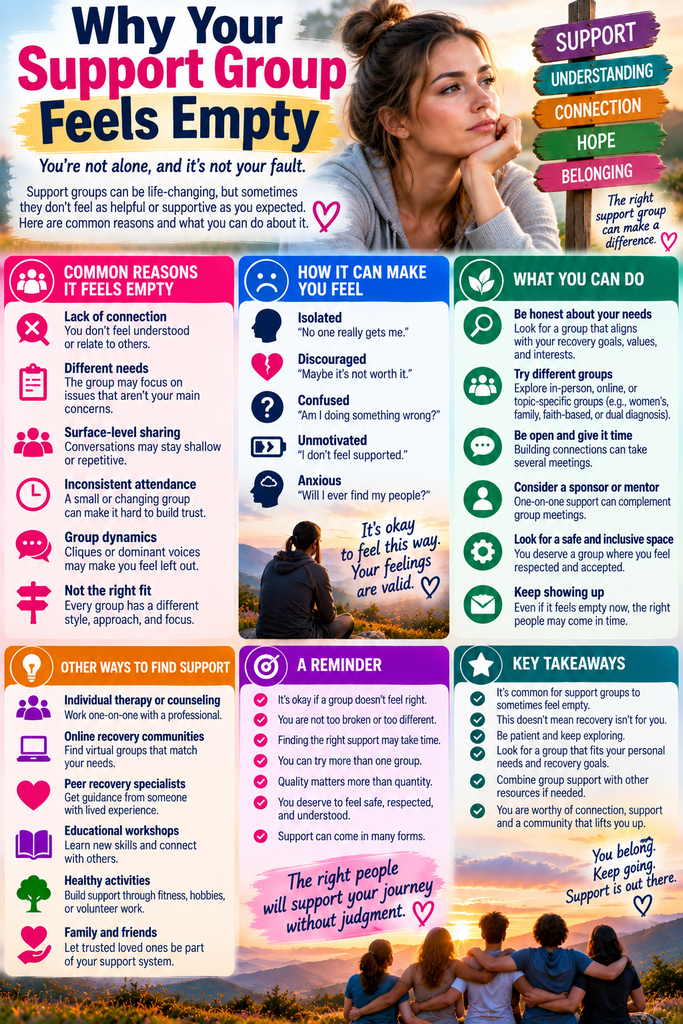
Support groups can be a game changer when it comes to feeling seen and understood. When you join, you’re probably hoping you’ll find real connection and shared experience. But sometimes, even with regular meetings and a packed roster, a support group can feel strangely empty. I know I’ve sat in a circle (in person or online), surrounded by people, and felt that lonely ache of wanting more than what’s happening in the room. If you’re wondering why your support group feels empty or disconnected, you’re definitely not alone. It’s worth looking at what might be causing these vibes.
Common Reasons Support Groups Feel Empty
The emptiness isn’t always about numbers; sometimes every seat is filled, but it still feels like something’s missing. A handful of reasons can cause this, and spotting them can help you figure out your next move.
Support groups come in a lot of shapes: grief circles, chronic illness groups, addiction recovery, even online forums. Each type can feel hollow at times for different reasons. A few issues show up in almost every kind:
- Lack of vulnerability: People show up, but don’t really share honestly.
- One-sided conversations: One or two voices dominate every session, leaving others tuned out.
- No clear purpose or structure: Meetings drift without any real focus, so the support part gets lost.
That feeling of emptiness doesn’t mean you’re being picky or ungrateful. It’s a signal that something could work better, and you deserve to get as much as possible out of these groups.
How Connection Actually Works in Groups
Connection in a support group isn’t just about showing up. The real goal is to build trust and understanding. If the group atmosphere stays polite but lukewarm, surface-level chit-chat or awkward silences can drown out real support. Here are a few ingredients that make connection more likely to happen:
- Honest sharing. Not every meeting has to end in tears, but the group only gets stronger when people open up about what’s really happening in their lives.
- Active listening. It helps when members actually tune in to each other instead of waiting for their turn to talk.
- Group safety. Judgment-free zones work best. If people are worried about being shamed or corrected, they shut down.
If these basics are missing, the vibe gets superficial very fast. And if that emptiness sticks around, it’s no wonder so many people drift away. Nobody wants to show up for something that doesn’t help.
Key Reasons Your Support Group Feels Disconnected
Some groups never get past small talk. Others start strong, but the energy fizzles out pretty quickly. A support group can start feeling empty for all sorts of reasons. Here are a few common culprits I’ve noticed and heard others talk about:
Emotional Safety Isn’t There
People open up when they feel safe. If the group has gossip, harsh advice-giving, or dismissive responses, even the most outspoken members will hold back. I remember joining a group once where every share turned into a “fix it” session. Instead of just listening, everyone gave advice; sometimes even conflicting advice. I stopped wanting to talk, and many others did too. Lack of basic privacy rules or boundaries can do the same.
Sharing Feels Forced or Off Limits
If everyone’s trying to sound positive, even in a group meant for tough stuff, it’s hard to get real. Some groups have an “all or nothing” vibe. You either tell your most vulnerable story or you don’t speak at all. That pressure can keep quieter members from speaking up. Plus, off-limits topics (even when nobody says so out loud) leave a lot unsaid.
The Group Isn’t a Great Match
It’s pretty common to notice that your support group isn’t the right one for you. This could mean your age, background, or struggle feels really different from everyone else’s. Members may all be at different points in the process, or maybe it just doesn’t click. You might not feel seen. When you’re the only one dealing with a specific situation, you can feel just as lonely in a group as you do on your own.
Leadership or Facilitation is Lacking
A strong group usually needs somebody to guide conversation gently, keep things on track, and make sure everyone can contribute. When nobody steps into this role, meetings can spiral into a few people oversharing while others fade into the background, or things just get off track and turn into general “hanging out.” A good facilitator also helps step in during misunderstandings and supports new members who are still getting comfortable.
What Helps Bring Real Connection Back
I’ve seen groups transform from tense and empty to something genuinely supportive just by changing a few approaches. Small changes can make a difference, even if it takes a little time for everyone to adjust. Here are some practical changes that usually spark more connection and less emptiness:
- Set group agreements: Simple rules around privacy, respectful listening, and how advice gets given make space for more honest sharing.
- Rotate leadership or facilitators: Sharing responsibility helps keep things fresh and balanced, so nobody feels left out.
- Encourage, but don’t force, sharing: Members can “pass” without shame. That helps nervous or new folks warm up over time.
- Use prompts or check-ins: Kick off with open-ended questions or themes to help steer away from the usual “I’m fine” responses.
- Review group fit now and then: It’s OK to outgrow a group or try a new one, and leaders can even help connect people to other groups that might be a better match.
Obstacles to Keep in Mind
Even the best support groups hit rough patches. It’s worth understanding what keeps members from connecting deeply, so you can spot these things early and do something about them:
- Burnout: If people are tired, overwhelmed, or going through extra stuff at home or work, showing up as a supportive group member can feel like too much. That can make the room really quiet.
- Zoom fatigue (if virtual): Online groups have a lot of perks, but they also make it seriously easy to zone out. Sometimes, people just leave their cameras and mics off the whole time. That can definitely add to the emptiness vibe.
- Unspoken group norms: If new members show up and everyone else acts like strangers or keeps interactions super formal, it creates a wall. Gossip or side conversations can make it worse.
Being aware of these issues helps group members and leaders keep things running smoothly and spot when things need a little refresh. If you notice any of these happening repeatedly, you may want to address them directly with the group or perhaps suggest a group “reset.” Don’t be shy about suggesting new ground rules, periodic feedback, or more social time to break the ice, especially if your group mostly meets virtually or includes newer members.
Real-World Examples and How They Changed Course
I’ve seen a chronic illness group make a huge turnaround after members started choosing one topic per meeting and using timers, so everyone got a fair amount of airtime (without rushing or dragging things out). A grief group I attended switched up what they did by starting each session with a simple “check-in” round. There was no pressure, just naming a feeling or a word. It made new members feel welcome and seen, and the silence wasn’t awkward anymore. Sometimes a small change in format, leadership, or agreement can be enough to let real connection grow.
Other examples include virtual support groups that created breakout sessions so people could talk in smaller groups during each meeting, or groups that added regular feedback rounds so everyone could say what’s working and what feels flat. Creating space for honest feedback, even structured as a monthly review, can help make sure hidden issues don’t keep everyone stuck and silent.
Frequently Asked Questions
Over the years, I’ve heard many questions about support groups from folks feeling stuck or unseen. Here are a few I hear a lot:
Question: Can I bring up these issues to my group?
Answer: Yes, absolutely. Most members appreciate honest feedback, and sometimes nobody else has put words to it yet. You can start by saying you’ve noticed the group feels a bit disconnected and ask if others feel the same. Being the first to speak up can start an important shift toward real connection.
Question: What if I’m the only one sharing openly?
Answer: You can keep modeling honesty, but it’s also OK to step back and protect your own energy if you’re feeling drained. Sometimes, talking one-on-one with the facilitator before or after group helps. You might suggest icebreakers or different ways for people to participate, creating more space for others to open up at their own pace.
Question: Is it normal to outgrow a support group?
Answer: Totally normal. It means your needs have switched up or you’re looking for a new kind of connection. Trying a different group isn’t a failure. Sometimes it’s the best way to keep growing, and taking time to find a better fit can actually give a boost to both you and the group you leave behind.
Final Thoughts
Feeling emptiness in a support group can feel discouraging, but it’s not a reason to give up hope. Not every group will be the right match, but looking at what’s going on and being honest about what you need can help you find or build the kind of support that actually feels supportive. Whether you stick it out and try to tweak things, or decide to explore other options, you’re allowed to look for what actually helps you move forward. Real support is possible, and you’re not alone in searching for it. Finding the right group can take time, but honest evaluation and openhearted participation will help you get there.
Video: Why you’re actually lonely in a room full of people #mentalhealthawareness #connection