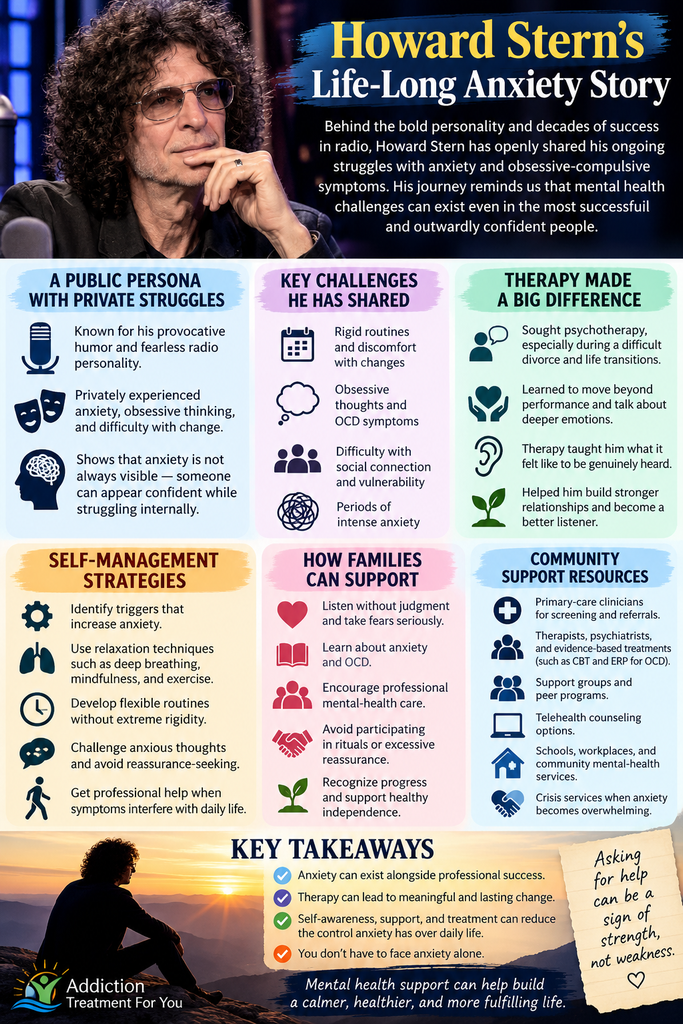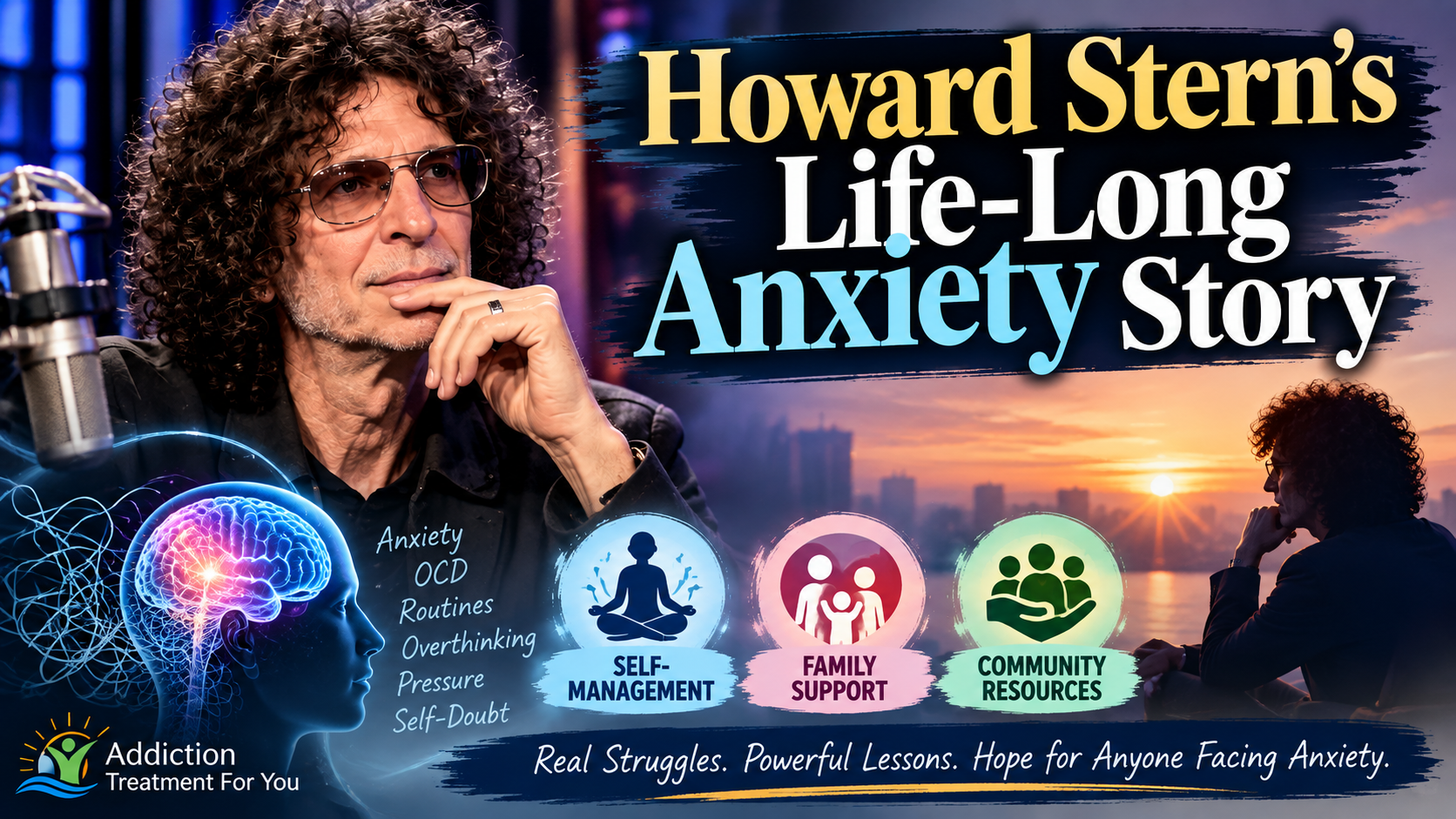
Howard Stern is known for his outspoken personality, provocative humor, and decades-long radio career. Behind the confident public persona, however, Stern has spoken openly about anxiety, obsessive-compulsive symptoms, emotional struggles, and his long-term experience with psychotherapy. His story illustrates an important mental-health lesson: outward confidence and professional success do not necessarily mean that someone feels calm or secure internally.
Stern has described periods when rigid routines, obsessive thinking, fear, and difficulty with change significantly affected his life. In a 2019 CBS interview, he discussed struggling with OCD symptoms and said that although some rituals had improved, he continued to experience rigidity around his schedule and discomfort when routines changed. He described feeling as though these patterns could create a kind of “prison” around his life.
Anxiety Behind the Public Personality
One interesting aspect of Stern’s story is the contrast between his public and private experiences. For decades, millions of people heard a fearless radio personality willing to discuss almost anything. Yet Stern has explained that the radio studio itself provided a controlled environment where he felt comfortable.
He has also described difficulties with social connection and emotional vulnerability. In interviews, Stern has reflected on growing up without regularly discussing difficult emotions and later seeking approval and connection through his audience.
This shows why anxiety shouldn’t always be judged by appearances. Someone can be successful, humorous, productive, and socially visible while still experiencing significant anxiety or obsessive thoughts.
Therapy Became an Important Part of His Journey
Psychotherapy became particularly important during a difficult period surrounding Stern’s divorce. He has said he was worried about his relationships, parenting his three daughters, and understanding himself more deeply.
Stern has described his first therapy sessions as especially revealing. He initially approached therapy much as he approached radio—telling entertaining stories and making jokes. His therapist challenged him to move beyond performing and begin discussing the emotions underneath those stories.
Over time, Stern has said therapy taught him what it felt like to be genuinely heard. He has credited that experience with changing not only his personal relationships but also the way he interviews other people. Instead of constantly trying to entertain or provoke, he learned the value of listening.
His experience also highlights another important point: therapy does not necessarily produce an instant transformation. Mental-health treatment can take years, involving identifying patterns, understanding triggers, practicing different responses, and gradually developing healthier ways of relating to emotions and other people.
Self-Management Strategies for Anxiety
Stern’s experiences should not be treated as a treatment plan for everyone. Anxiety disorders and OCD can require different approaches depending on the individual. Still, his story can encourage people to recognize their own patterns and seek appropriate help.
Helpful self-management strategies may include:
- Identify triggers. Notice situations, thoughts, uncertainty, or changes in routine that increase anxiety.
- Recognize avoidance. Avoiding uncomfortable situations can bring temporary relief but may strengthen anxiety over time.
- Develop flexible routines. Structure can be helpful, but extreme dependence on routines may make unexpected changes harder to tolerate.
- Practice relaxation techniques. Slow breathing, mindfulness, meditation, exercise, and adequate sleep can help regulate stress.
- Challenge anxious predictions. Ask whether a feared outcome is supported by evidence or being magnified by anxiety.
- Limit reassurance-seeking. Constantly asking others for reassurance can sometimes reinforce an anxiety cycle.
- Consider professional treatment. Persistent anxiety, OCD symptoms, or avoidance that interferes with daily functioning deserves professional evaluation.
For OCD specifically, evidence-based treatment commonly includes cognitive behavioral therapy, particularly exposure and response prevention (ERP), and medication may also be appropriate for some people.
How Families Can Provide Support
Family members often want to make anxiety disappear for someone they love. Unfortunately, constantly protecting a person from every uncomfortable situation can unintentionally reinforce avoidance.
A more helpful approach combines compassion with encouragement.
Families can:
- Listen without dismissing fears as irrational or ridiculous.
- Encourage professional mental-health care when symptoms interfere with everyday life.
- Learn about anxiety disorders and OCD.
- Avoid repeatedly participating in rituals or excessive reassurance when a clinician has identified these behaviors as part of an anxiety cycle.
- Encourage gradual independence and healthy coping strategies.
- Recognize improvements, even when they appear small.
- Maintain reasonable boundaries while remaining emotionally supportive.
Stern has spoken about therapy helping him develop deeper relationships and become more attentive to other people’s feelings. His experience demonstrates that mental-health treatment can affect more than symptoms—it can influence communication and relationships as well.
Community Support Strategies
Mental-health recovery does not have to occur in isolation. Community resources can provide education, treatment, and connection for people living with anxiety or OCD.
Helpful resources may include:
- Primary-care clinicians who can screen for anxiety and provide referrals.
- Psychiatrists, psychologists, therapists, and licensed counselors.
- Cognitive behavioral therapy and specialized ERP programs for OCD.
- Mental-health support groups.
- Peer-support programs.
- Workplace or school mental-health services.
- Telehealth counseling when local treatment is difficult to access.
- Crisis services when anxiety, depression, or emotional distress becomes overwhelming.
Community education is also important. When recognizable public figures discuss psychotherapy and mental-health struggles, those conversations can help challenge the misconception that seeking treatment represents weakness. Stern himself has publicly described psychotherapy as extremely valuable and has expressed hope that people will not be afraid of therapy.
What Howard Stern’s Story Can Teach Us
Perhaps the most useful lesson from Howard Stern’s experience is that mental-health struggles and professional achievement can exist simultaneously. A person may appear confident while privately struggling with fear, rigid routines, obsessive thinking, or emotional insecurity.
His story also illustrates that change can occur gradually. Stern has described psychotherapy as helping him listen more carefully, communicate differently, understand his relationships, and recognize patterns that had affected him for years. He has also acknowledged that some struggles have persisted rather than presenting himself as completely “cured.”
Mental-health recovery is rarely about becoming a person who never experiences anxiety again. More often, it involves understanding anxiety, reducing the control it has over everyday decisions, developing healthier coping strategies, strengthening relationships, and learning when to seek additional support.
Conclusion
Howard Stern’s public discussions about anxiety, obsessive-compulsive symptoms, emotional vulnerability, and psychotherapy provide a useful example of how complicated mental health can be. His larger-than-life radio personality did not protect him from private struggles, and professional success did not eliminate the need for emotional support.
For individuals experiencing anxiety, self-awareness and healthy coping strategies can be important first steps. Families can contribute through education, listening, encouragement, and appropriate boundaries. Communities can help by making evidence-based treatment and supportive resources easier to access.
Stern’s journey ultimately reinforces a simple but important message: asking for help can be part of growth. Anxiety may influence someone’s life for many years, but understanding its patterns and receiving appropriate support can help a person build greater flexibility, connection, and emotional well-being.
Frequently Asked Questions
Here are some common questions:
1. Has Howard Stern publicly discussed anxiety and mental-health struggles?
Yes. Stern has spoken publicly about anxiety, obsessive thinking, OCD symptoms, insecurity, and rigid routines. In a 2019 CBS interview, he described how changes to his normal schedule could cause significant distress and said some OCD-related rituals had improved while other difficulties remained.
2. Has Howard Stern said that he has OCD?
Yes. Stern has openly discussed OCD and described experiencing rituals, obsessive thinking, and an intense need for routine. He has also explained that these symptoms can interfere with travel, schedules, and everyday flexibility.
3. How did anxiety affect Howard Stern despite his successful career?
Stern’s experience demonstrates that professional success does not prevent someone from experiencing significant psychological distress. He described the radio studio as a particularly safe and structured environment for him, even while changes in his personal routine could be difficult to tolerate.
4. Did Howard Stern seek professional treatment?
Yes. Stern has discussed undergoing long-term psychotherapy. He said he initially entered therapy during a period when his personal life was in crisis following his divorce and when he was concerned about his relationships and parenting.
5. How did psychotherapy help Howard Stern?
Stern has credited psychotherapy with helping him understand his behavior, listen more carefully to other people, develop deeper relationships, and recognize emotions that he previously covered with humor or performance. He described learning what it felt like to be genuinely heard by another person.
6. Did therapy completely eliminate his anxiety and OCD symptoms?
No. Stern has described improvement rather than presenting himself as completely symptom-free. In the 2019 interview, he said some rituals had disappeared but that he continued struggling with rigidity and OCD-related patterns.
7. What self-management strategies may help someone experiencing chronic anxiety?
Helpful approaches include identifying triggers, maintaining healthy sleep and exercise habits, practicing relaxation or mindfulness techniques, reducing avoidance, and gradually learning to tolerate uncertainty. When anxiety or compulsions interfere with daily functioning, professional evaluation is important. For OCD, evidence-based treatments such as cognitive behavioral therapy (CBT), particularly exposure and response prevention (ERP), may be recommended.
8. How can family members support someone struggling with anxiety or OCD?
Family members can listen without judgment, learn about the condition, encourage treatment, and recognize progress. When OCD is involved, families may also need professional guidance about avoiding excessive reassurance or participation in compulsive rituals while remaining compassionate and supportive.
9. Can someone appear confident while experiencing severe anxiety?
Absolutely. Stern’s public persona provides a useful example. A person can be outgoing, humorous, professionally successful, or comfortable performing while experiencing substantial anxiety in other areas of life. Stern specifically described feeling comfortable within the controlled structure of his radio studio while struggling with uncertainty and disruptions to routine.
10. Did Stern’s mental-health journey affect his relationships?
According to Stern, therapy helped him recognize that meaningful relationships require boundaries, listening, and emotional connection. He has said he learned that not every private detail about his family needed to become entertainment for his audience.
11. Did therapy change the way Howard Stern interviewed celebrities?
Stern says it did. He has explained that experiencing what it felt like to have a therapist genuinely listen to him encouraged him to become a better listener himself. He connected that change with a more thoughtful approach to interviewing guests.
12. What can we learn from Howard Stern’s anxiety story?
One important lesson is that mental-health difficulties are not always visible. Success, fame, humor, and confidence can coexist with anxiety, obsessive thoughts, or compulsive behaviors. Stern’s account also illustrates how psychotherapy, self-awareness, supportive relationships, and sustained work on behavioral patterns can contribute to meaningful change.
13. When should someone seek professional help for anxiety?
Professional help should be considered when anxiety, obsessive thoughts, compulsions, panic, avoidance, or rigid routines begin interfering with work, relationships, sleep, travel, or normal daily activities. A primary-care clinician or licensed mental-health professional can help determine the appropriate next steps.
14. What community resources can help people experiencing anxiety or OCD?
Resources may include psychologists, psychiatrists, licensed therapists, primary-care clinicians, OCD specialists, CBT/ERP programs, support groups, telehealth services, school or workplace counseling programs, and community mental-health centers.
15. What is the central message of Howard Stern’s mental-health journey?
His public account suggests that acknowledging psychological struggles does not conflict with being accomplished or successful. Stern has described psychotherapy as an ongoing process that helped him better understand himself and his relationships rather than as an instant cure.
Video: