Understanding why some women stay with abusers can feel confusing and even frustrating for people looking in from the outside. The reality is there isn’t a single simple answer. Many reasons—emotional, psychological, cultural, practical, and even hopeful—combine and make it tough for someone to walk away. Here, I’ll share insights into this topic by exploring the main factors shaping these tough choices and highlighting several ways support systems can help.
Understanding the Cycle of Abuse
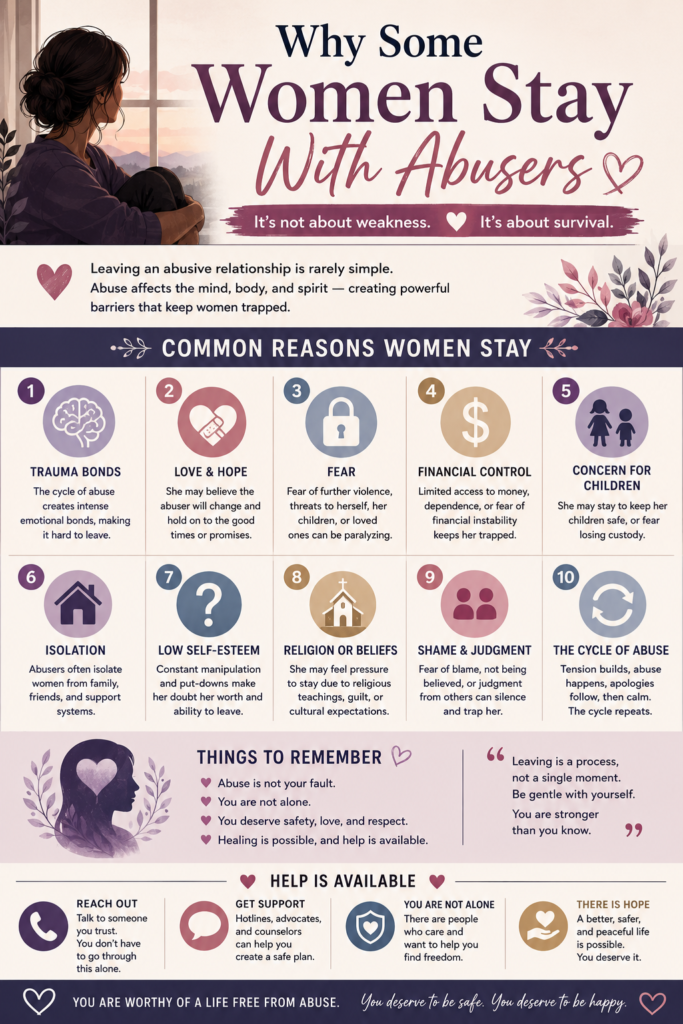
Staying with an abuser isn’t about weakness or a lack of strength. The cycle of abusive relationships can make leaving complicated. Here’s a quick explainer on how this cycle works:
- Tension Building: Over time, stress and conflict start building up in the relationship. Sometimes there’s this constant sense of walking on eggshells, where any small thing can set off conflict.
- Incident: This phase involves actual abuse, which could be emotional, physical, or psychological, and sometimes financial. It may also be verbal or include isolation tactics to cut someone off from support systems.
- Reconciliation: The abuser may apologize, promise to change, and sometimes overwhelm their partner with affection or gifts. This phase sparks hope that things might improve or that the abuser will become their old, loving self again.
- Calm (“Honeymoon Phase”): Things seem normal and even peaceful, giving a sense that the worst is over. Unfortunately, this peace is temporary, and the cycle repeats.
People I’ve talked to explain the honeymoon phase as especially confusing. It can bring up old, good memories or dreams of a better future, making it easy to hope for permanent change. The pattern leaves them worn down and unsure whether leaving is even the right move.
Emotional and Psychological Barriers
Abuse often chips away at someone’s self-esteem and confidence bit by bit, quietly over time. It’s not just the abuse itself but the slow change in how a person views themselves and what they think is possible. Here are some psychological things that keep people in these relationships:
- Low Self-Worth: Abusers often make criticism or put-downs a daily thing. Over time, people start to believe they can’t do better or are to blame for what’s happening.
- Fear: There’s sometimes a very real fear of harm to themselves or their children. Abusers may even threaten violence or more severe consequences if someone tries to leave.
- Guilt and Shame: Survivors face lots of stigma and often feel embarrassed. Some blame themselves for “letting it happen” or feel they have failed by being in an abusive relationship.
- Hope for Change: Most abusive relationships start out positively. Memories of happier days fuel hope that the abuser will change back and everything will improve.
It’s common for people living with abuse to feel completely alone. Even when they reach out for help, they might feel misunderstood or judged, which can cause them to withdraw even further.
Financial and Practical Challenges
Financial issues and practical barriers are among the strongest forces keeping women from leaving. Stepping away can mean losing a home, a steady income, or the ability to provide for children. Some common hurdles include:
- No Financial Resources: Abusers often control family money or sabotage work opportunities, making it hard to save for the future or have financial independence after leaving.
- Nowhere to Go: Safe housing options can be limited or overcrowded, especially in rural areas and small towns. Not everyone has friends or family willing and able to take them in.
- Children and Family Considerations: Many people worry about custody disputes, legal threats, or hurting the kids with a sudden move. Sometimes, kids themselves may resist leaving behind friends and routine.
I’ve noticed through community outreach that having even a small emergency fund, or simply knowing what local resources are available, can make a world of difference. Sadly, resources are often limited or hard to access, making that first step seem almost impossible.
The Role of Culture and Community
Cultural expectations and family dynamics often make it even more difficult to leave an abusive partner. In some communities, there is major pressure to keep families together at all costs:
- Stigma: Divorce or separation might be looked down on in certain cultures or communities, and survivors could worry about being shunned or spoken badly about.
- Religion or Traditional Beliefs: Beliefs about marriage and forgiveness can create extra pressure, with the expectation that people should work things out no matter what has happened.
- Lack of Support: Sometimes friends and relatives suggest staying “for the kids” or question someone’s story, adding to the sense of isolation.
I’ve seen time and again that finding just one supportive and nonjudgmental listener—a friend, advocate, or relative—can provide the clarity and encouragement someone needs to consider making a change.
Manipulation and Gaslighting
Emotional manipulation is a common tool in abusive situations. “Gaslighting” describes when someone twists facts or denies reality until their partner doubts their own memory or judgment. In practice, this can mean:
- The survivor begins doubting their own perceptions or feels they’re “losing it.”
- Even when things feel deeply wrong, it’s hard to feel sure enough to go.
- Abusers often blame survivors for the abuse or accuse them of causing the problem.
Phrases like “you’re imagining it” or “you’re just too sensitive”—repeated over and over—can destroy self-confidence. Breaking out of this headspace requires time, patience, and support from people outside the situation who can offer a reality check.
Common Misconceptions About Leaving
One thing people often say is, “Why don’t they just leave?” Sadly, leaving isn’t always the safest or easiest option. In fact, research shows the time right after leaving can be the most dangerous, as risks of violence and retaliation go way up. Some other common misunderstandings include:
- Thinking women “choose” to stay because they like or accept the abuse.
- Assuming there’s always a safe place available.
- Not accounting for just how complicated custody, housing, or emotional bonds can be.
Listening with compassion rather than judgment helps far more than making assumptions. Small offers of help, such as providing hotline information or just listening, can go a long way toward helping someone imagine new possibilities for themselves.
What Support Looks Like: Practical and Emotional Help
Support isn’t about pressuring or telling someone what to do. Here’s what people who have been through abuse say helps most:
- Nonjudgmental Listening: Having someone willing to listen openly and without criticism often makes the first big difference in seeing new options.
- Access to Local Resources: Shelters, financial support, hotlines, and legal help can be game-changers. The National Domestic Violence Hotline (thehotline.org) is a great place to start in the US.
- Ongoing Encouragement: Getting safe, working through legal systems, and rebuilding self-esteem can take a long time, even after leaving. Ongoing support and patience matter.
It’s never about blaming or pushing for immediate decisions. Respect, understanding, and reliable information create the trust that lets survivors picture a future beyond abuse.
FAQs on Why Some Women Stay With Abusers
People have many questions about this topic. Here are a few of the most frequent, with practical answers based on direct experience:
Why don’t they just call the police or leave?
Sometimes, police intervention doesn’t stop the abuse or can even increase risk, as abusers may become more violent. Plus, some survivors have had negative experiences with police or worry about issues like child custody, immigration status, or disbelief.
Isn’t it just a matter of willpower?
Abuse picks away at someone’s independence and strength over time. Walking out is never just about “deciding” to go. With emotional, financial, and safety concerns, people need support, options, and time before anything can change.
Can friends and family actually help?
Definitely. Showing you care, sharing resources, checking in, and being patient make a real difference. Sometimes it takes several tries before someone leaves for good, and ongoing understanding is crucial.
Resources for Anyone in Need of Support
Having information is power when you’re helping yourself or someone else. If you’re wondering what to do next, try these resources:
- National Domestic Violence Hotline (US): 1-800-799-SAFE or thehotline.org
- Women’s Aid (UK): www.womensaid.org.uk
- Local shelters and community support groups can offer lists of services or connect you to counselors, advocates, and more.
Just knowing you have choices is a practical first step towards leaving abuse behind. Nobody deserves to go through this alone, and there are organizations and people ready to offer understanding, hope, and real help for the road ahead.
Video: She Knows It’s Wrong But Can’t Leave #psychology #awareness