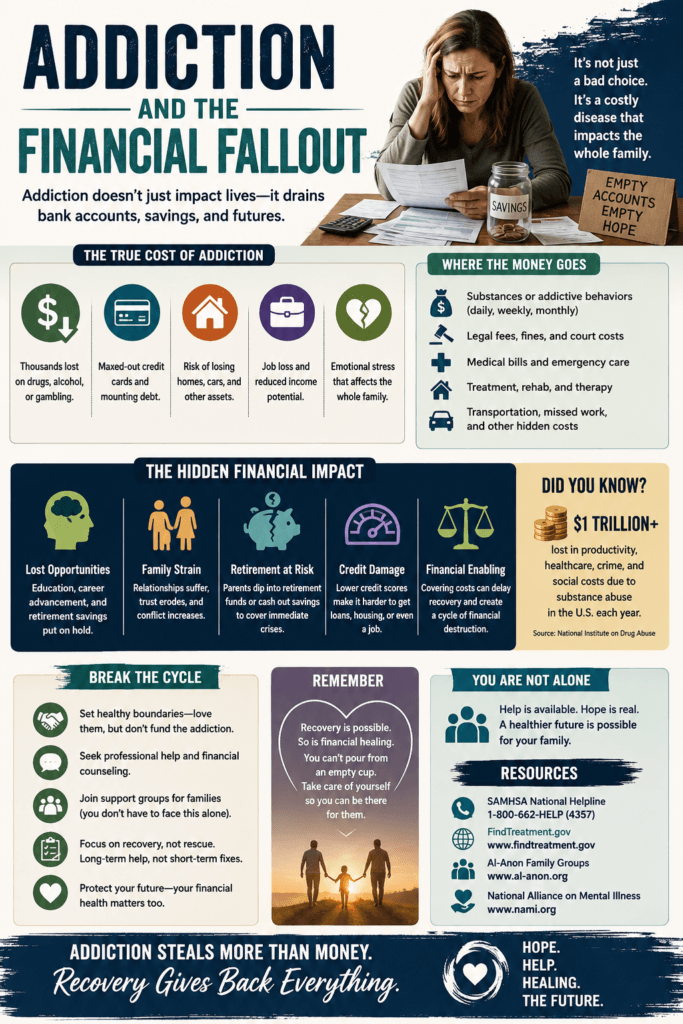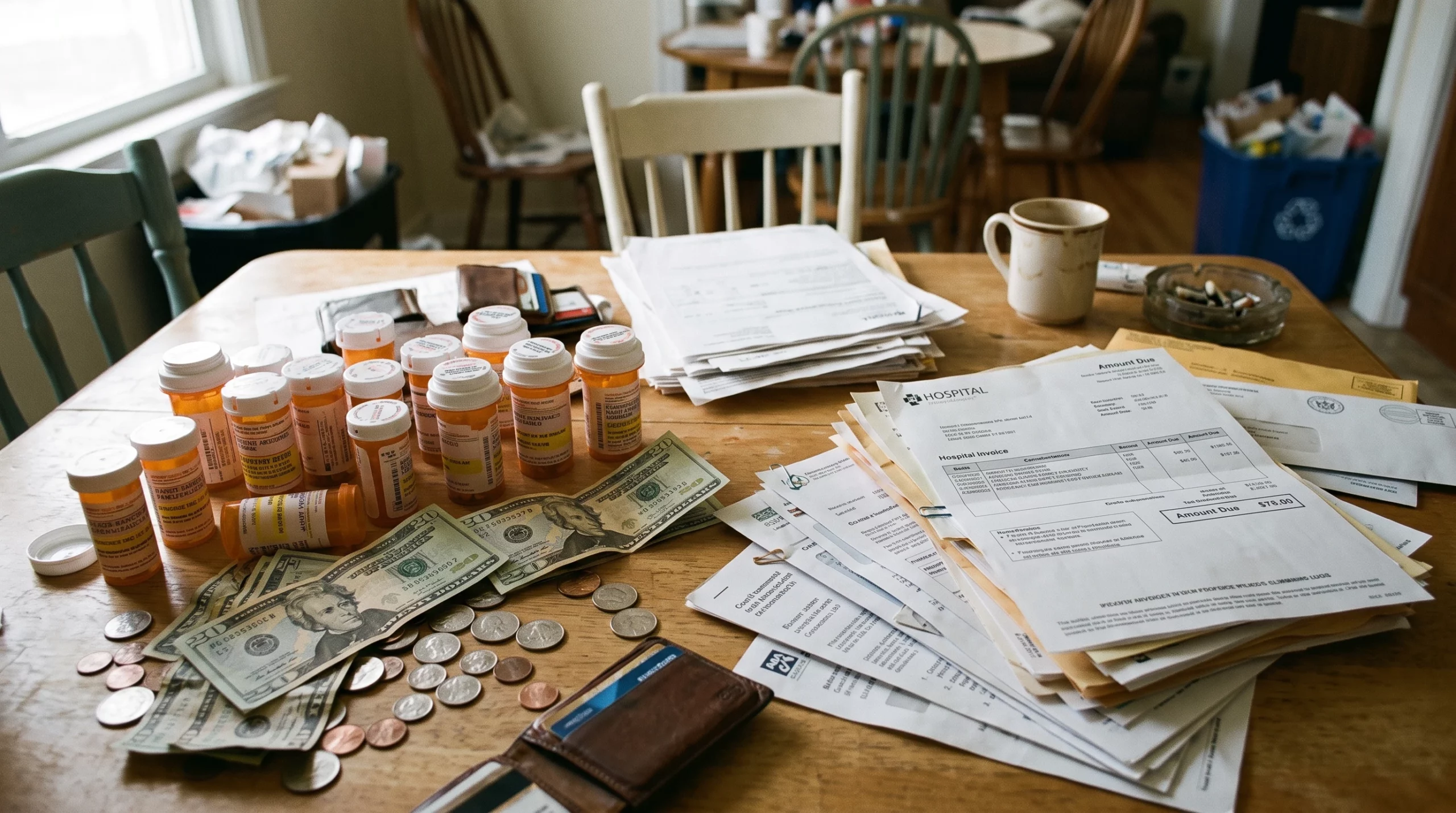
Addiction can affect families in ways that often go unnoticed, especially when it comes to financial hardship. The costs of treatment, rehabilitation, counseling, legal expenses, missed work, and everyday living needs can quickly overwhelm parents who are trying to help a child struggling with addiction. Some families drain their savings, accumulate credit card debt, borrow money from relatives, or refinance their homes in hopes of keeping their loved one safe and supporting recovery. Over time, these financial pressures can create additional stress, conflict, and uncertainty throughout the entire family. Understanding these hidden expenses provides a clearer picture of why addiction can become not only a health crisis but also a serious financial crisis for parents and families.
Why Costs Around Addiction Stack Up Quickly
Addiction is rarely just about buying a substance. The real costs start piling up when families try to get proper treatment or deal with the legal messes and health emergencies that often come with substance use. I hear all sorts of stories from parents who thought they’d be saving up for college or a family vacation, only to have their savings disappear into rehab bills or court fees.
According to the National Institute on Drug Abuse, addiction is costing the U.S. economy more than $600 billion a year overall, and a big part of that burden is landing on regular families. The ripple effect hits jobs, housing, relationships, and just about every part of daily life.
Families often run into surprise bills. Some parents are blindsided by out-of-network charges for rehab or discover their insurance cuts off earlier than expected. I’ve seen families go from financially stable to struggling overnight after just a few urgent expenses.
Breaking Down the Biggest Expenses
If you haven’t faced these costs up close, some of the numbers can be shocking. Here’s a look at where parents’ money ends up going when a child is addicted:
- Treatment Programs: Quality inpatient rehab can run from $10,000 to $60,000 per month. Outpatient therapy might be less, but it often costs hundreds of dollars per week.
- Detoxification: Medical detox may cost $1,000 to $1,500 a day for a week or two.
- Therapy and Counseling: Weekly private sessions with addiction counselors, family therapy, or psychiatric care add up quickly if insurance doesn’t cover much.
- Legal Fees: Drug offenses, DUIs, theft charges, and court dates can mean several thousand dollars in attorneys’ fees.
- Lost Work & Income: Parents may have to take unpaid leave, quit their jobs, or reduce their hours to care for their child.
- Missed Bill Payments & Debt: Paying for treatment and emergencies often means putting other bills on hold, leading to mounting credit card balances and loan interest.
- Relapse Costs: If treatment doesn’t work the first time (which happens often), the cycle and costs repeat.
It’s rare for parents to save up for something like this, so each new bill can feel like a disaster. The cycle can turn financial security into a distant memory pretty quickly.
Why Insurance Falls Short for So Many Families
A lot of people assume insurance will handle the really big bills when it comes to addiction, but coverage often falls short. Not all plans cover every kind of treatment or the right length of care. Many of the best facilities might not even take insurance. Even when insurance does contribute, parents are often left paying high deductibles, coinsurance, and many out-of-pocket expenses. Some policies will only pay for 30 days of inpatient rehab, even though doctors may recommend 90 days or longer for a real shot at recovery.
Mental health “parity” laws are supposed to guarantee equal insurance coverage for addiction, but in reality, families still have to fight denied claims and deal with complicated loopholes. That forces some parents to cash out retirement accounts or stack up credit card debt just to keep their kids safe and treatment ongoing.
The Emotional Toll of Financial Stress
Trying to support a child struggling with addiction is already exhausting. Add in the constant fear of running out of money, losing your home, or not knowing how to pay for groceries, and the stress multiplies. I’ve watched families drift apart, marriages stumble, and parents face depression or anxiety themselves, thanks to the constant money worries.
Some parents cut back on their own healthcare, meals out, vacations, or retirement savings to stretch the budget. Others borrow against their homes or ask family and friends for help, which can leave them feeling embarrassed or even cost them relationships. The emotional strain of feeling like every dollar is a battle, or that you’ll never get ahead, is as tough as managing the addiction itself.
Roadblocks: Where the Money “Leakage” Really Happens
A major factor in why addiction costs spiral is the series of roadblocks parents face when seeking help. Here are some of the biggest traps I’ve seen families fall into:
- Low-Quality or Scam Facilities: Not all rehabs are created equal. Some charge sky-high prices and deliver little support, resulting in worse outcomes and high relapse rates.
- Hidden Fees and Surprise Bills: Parents may find extra charges for medications, health checkups, or “aftercare” items that weren’t listed up front.
- Nonstop Relapses: Multiple stays in rehab or detox centers leave even financially stable families scrambling to find funds.
- Lack of Coordination: Without a clear treatment plan, families can bounce between facilities, therapists, and hospitals, each demanding separate payments.
- Cost of Support Services: Ongoing drug testing, sober coaching, follow-up check-ins, and extra transportation all add up, even after treatment has ended.
On top of these, making quick decisions during crises can lead to mistakes, such as choosing a bad program or overpaying for things that don’t really move the needle.
Tips for Parents Facing These Costs
There’s no magic fix, but some practical strategies can help parents stretch their dollars further when supporting a child through addiction:
- Ask About All Costs Upfront: Get a full breakdown of what’s included, refund policies, and any extra charges before you sign anything with a treatment center.
- Check Insurance Thoroughly: Call your insurance provider to confirm exactly what’s covered, for how long, and under what requirements. Don’t be afraid to appeal denied claims with your doctor’s help.
- Compare Facilities: Research and read reviews before choosing a rehab. State-funded or sliding-scale clinics often cost less and can still be effective.
- Track Your Budget in Writing: Record every addiction-related expense. Knowing where every dollar goes will help you spot trends or areas where you can save.
- Seek Out Financial Aid: Many nonprofits and local charities help with recovery costs or offer grants to families in need.
- Prioritize Spending: Focus spending on care with the strongest evidence, such as proven therapies, and be careful about extra “add-ons” that might not help.
- Ask for Help Early: Don’t wait. Reaching out to local groups, online forums, or a financial advisor can reveal resources you might otherwise miss.
FAQs: What Parents Want to Know About Addiction Costs
Q: Is expensive rehab always better?
A: Not always. Some higher-priced options offer nice amenities, but what really counts is the treatment method, quality of care, and post-discharge support. Plenty of more affordable programs have a solid, science-based approach.
Q: How do I know if my insurance will cover treatment?
A: Call the number on your insurance card and ask about addiction services. Be sure to check if you need any prior approval, and find out your costs for both in-network and out-of-network options.
Q: What should I do if I can’t afford rehab?
A: Check out state-funded or nonprofit programs, which often cost much less or might even be free. Many offer payment plans or scholarships, and some recovery groups or local clinics have counseling for very reduced rates.
The Impact on Everyday Life
The effects of addiction costs don’t stop at your bank account. I’ve seen parents move in with grandparents, delay retirement, skip medication, or leave jobs just to keep the family afloat. Credit scores can take a hit, family plans get mixed up, and the stress shows up in everyone’s health. If you’re in this spot, you’re not alone; lots of families are working through the same struggles and searching for a way forward.
Knowing how your money is spent and stretching each dollar can help you regain some control, even when things feel overwhelming. Steps like budgeting carefully, planning ahead, and reaching out for support really do add up. If you want more resources, organizations like the Partnership to End Addiction and the Substance Abuse and Mental Health Services Administration (SAMHSA) have tons of guides, hotlines, and practical advice worth checking out.
Video: The Hidden Cost of Addiction: A Family’s Worst Nightmare