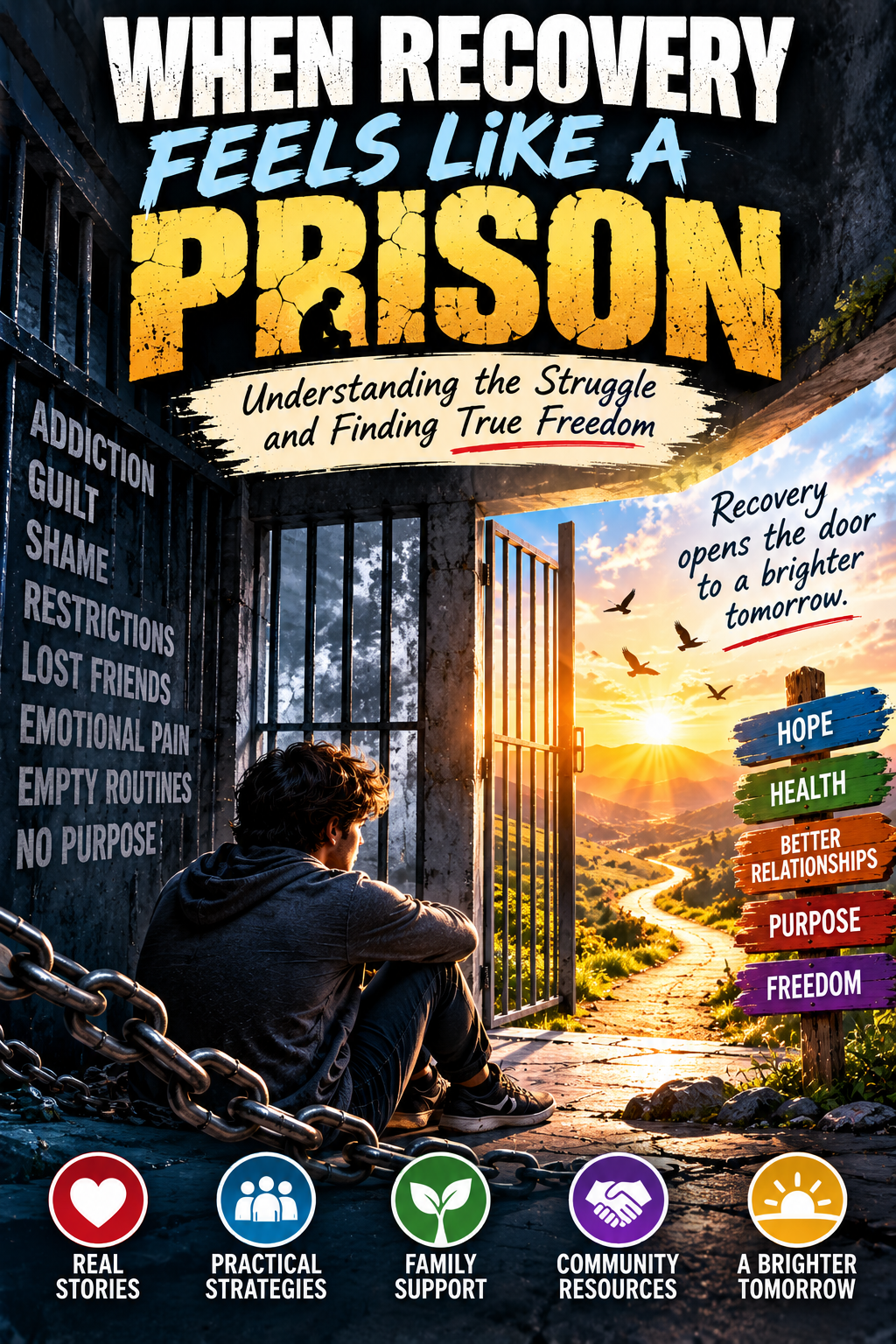
Recovery is often described as freedom: freedom from alcohol or drugs, destructive behaviors, secrecy, financial problems, damaged relationships, and the constant need to obtain the next substance. Yet for some people, especially during early recovery, sobriety does not immediately feel like freedom.
Instead, recovery can feel like a prison.
Suddenly, rules may appear everywhere: don’t drink, don’t use drugs, avoid certain people, attend treatment, go to meetings, take medications as prescribed, submit to drug testing, follow probation requirements, avoid old neighborhoods, and change familiar routines.
At the same time, the substance that once provided temporary relief from stress, trauma, anxiety, loneliness, or emotional pain is gone.
A person may think:
“If this is recovery, why do I feel trapped?”
That feeling does not necessarily mean recovery is failing. It may mean the person is still learning to build a life where sobriety feels meaningful rather than restrictive.
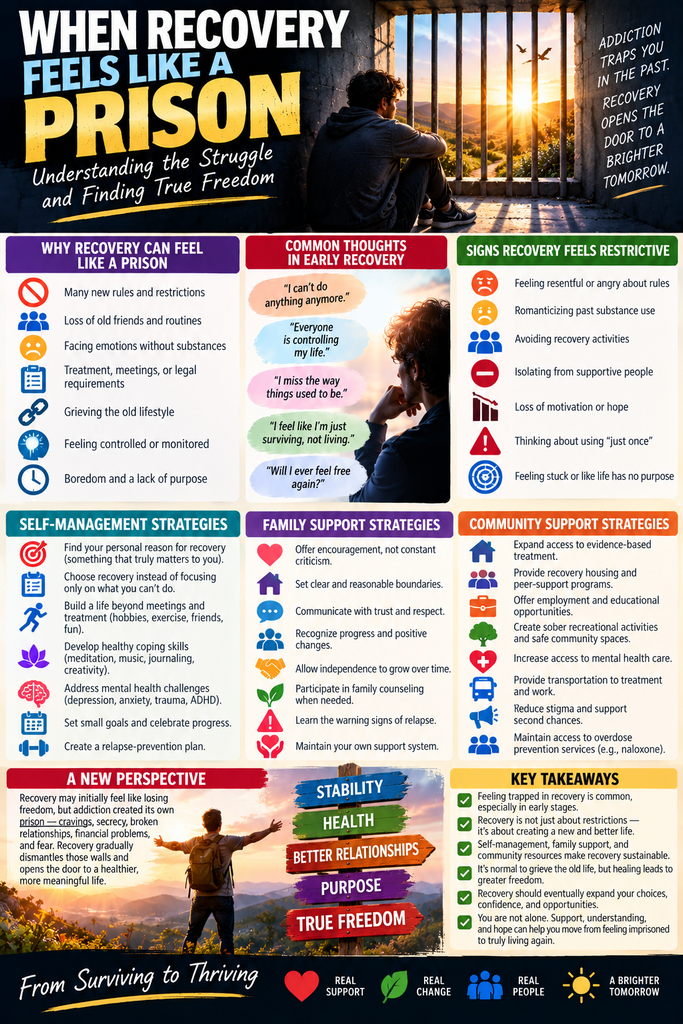
Why Can Recovery Feel So Restrictive?
Active addiction often creates the illusion of freedom. A person can use a substance to temporarily change how they feel, escape uncomfortable thoughts, reduce inhibitions, or avoid painful emotions.
Recovery removes that escape.
Suddenly, emotions that were suppressed through alcohol or drugs can become much harder to ignore. Boredom may feel unbearable. Relationships may need repair. Financial problems remain. Legal consequences may still exist. Mental-health concerns may become more noticeable.
Early recovery can therefore feel less like freedom and more like confronting everything addiction helped someone avoid.
The person may also be asked to change almost every part of daily life:
- Friendships.
- Social activities.
- Dating relationships.
- Daily routines.
- Spending habits.
- Sleep schedules.
- Work habits.
- Coping mechanisms.
- Recreation.
- Places they visit.
That is an enormous adjustment.
“I Can’t Do Anything Anymore”
One of the most common frustrations in recovery is feeling that life has become a collection of things the person cannot do.
I can’t drink.
I can’t go to that party.
I can’t see those friends.
I can’t go back to my favorite bar.
I can’t use when I’m stressed.
When recovery is defined entirely by restrictions, resentment can develop.
A useful shift is moving from “What am I no longer allowed to do?” toward “What am I now free to do?”
Recovery may eventually provide freedom to wake up without withdrawal, remember what happened the previous night, rebuild relationships, keep employment, manage money, pursue education, parent more consistently, travel without worrying about obtaining drugs, and make decisions that are not controlled by cravings.
That freedom may take time to recognize.
Grieving the Old Life
People sometimes assume someone should immediately feel grateful after stopping alcohol or drugs.
But recovery can involve grief.
A person may miss the substance itself, the ritual of using, friendships associated with it, nightlife, excitement, emotional numbness, or the identity they developed around substance use.
Those losses can be real even when the previous lifestyle was destructive.
Grieving does not mean someone wants addiction back. It means they are adjusting to losing something that occupied an important role in their life.
Recovery becomes more sustainable when people can acknowledge this loss without being shamed for it.
When Recovery Becomes Another Form of Control
Structure can protect someone during early recovery. Treatment schedules, sober housing rules, medications, therapy appointments, meetings, curfews, and accountability can create stability when life has been chaotic.
But structure should ideally help a person gradually develop independence.
When recovery becomes nothing but obedience, the person may feel that everyone else controls their life.
Families, treatment providers, and recovery programs can ask an important question:
“Are we helping this person develop the skills to manage their own recovery, or are we simply managing their life for them?”
Healthy recovery involves both accountability and autonomy.
Self-Management Strategies: Turning Restrictions Into Choices
Recovery can begin to feel less like imprisonment when the person develops ownership over it.
Helpful strategies include:
- Identify your personal reason for recovery. Recovery becomes more meaningful when it connects to something personally important, such as children, health, relationships, education, career, spirituality, or simply wanting peace.
- Separate “I can’t” from “I choose not to.” Saying “I choose not to drink because I don’t want to lose what I’m rebuilding” can create a different psychological experience than “I’m not allowed to drink.”
- Build a life beyond meetings and treatment. Recovery activities are important, but life also needs hobbies, friendships, exercise, entertainment, learning, travel, creativity, and fun.
- Set small goals. Completing manageable goals can rebuild confidence and independence.
- Identify triggers. Understand which emotions, people, environments, and situations increase cravings.
- Develop several coping strategies. Exercise, meditation, music, journaling, therapy, hobbies, spirituality, and supportive relationships can provide alternatives to substances.
- Address mental health. Depression, anxiety, trauma, ADHD, grief, or other concerns may make sobriety feel much harder if they remain untreated.
- Create a relapse-prevention plan. Know what to do when cravings, isolation, resentment, or thoughts about returning to substance use increase.
- Recognize progress. Recovery is measured by more than days without substances. Improved relationships, better emotional regulation, honesty, reliability, and healthier decisions also count as progress.
Boredom: An Overlooked Recovery Trigger
Boredom can be surprisingly dangerous in recovery.
Active addiction may have consumed enormous amounts of time: finding substances, using them, recovering from them, hiding use, managing consequences, and planning the next opportunity to use.
When that cycle disappears, hours suddenly become available.
Without meaningful replacements, emptiness can develop.
A recovery plan should therefore include enjoyable activities—not simply obligations.
Someone might explore:
- Exercise or recreational sports.
- Music or art.
- Cooking.
- Volunteering.
- Outdoor activities.
- Sober social events.
- Education.
- Travel.
- Gaming in healthy moderation.
- Spiritual or faith communities.
- New hobbies.
The goal is not merely to stay busy. It is to discover experiences worth being present for.
Family Support: Encourage Recovery Without Becoming the Warden
Families understandably become frightened after witnessing addiction, overdose, hospitalization, arrests, financial problems, or repeated relapses.
Fear can lead to excessive monitoring.
Family members may check phones, search rooms, track locations, control money, demand drug tests, or constantly ask whether the person has used.
Some monitoring may be appropriate in specific circumstances, particularly when safety is involved. But constant surveillance can create resentment and prevent trust from gradually rebuilding.
Helpful family strategies include:
- Establish clear and reasonable boundaries.
- Explain the reasons behind boundaries.
- Avoid repeatedly bringing up past mistakes.
- Recognize progress and responsible behavior.
- Allow independence to increase as trust develops.
- Communicate concerns without interrogation.
- Encourage treatment rather than trying to become the therapist.
- Participate in family counseling when needed.
- Learn the warning signs of relapse.
- Develop an emergency plan for overdose or mental-health crises.
- Maintain your own friendships, hobbies, counseling, and support system.
Families can provide accountability without making the home feel like another treatment facility.
Rebuilding Trust Takes Time
A person in recovery may say:
“Why doesn’t anyone trust me? I’ve been sober.”
Family members may respond:
“Because we’ve heard promises before.”
Both experiences can be understandable.
Trust usually does not return through promises. It returns through repeated behavior.
Showing up.
Keeping appointments.
Being honest.
Following through.
Handling money responsibly.
Communicating when something goes wrong.
Remaining consistent.
Recovery gives someone the opportunity to demonstrate change over time. Families also need to recognize when consistent change is occurring rather than permanently defining someone by their worst period.
Community Support: Recovery Needs Somewhere to Go
Communities often tell people to stop using substances without providing meaningful opportunities for what comes next.
Long-term recovery becomes harder when someone leaves treatment and encounters unemployment, unstable housing, loneliness, stigma, untreated mental illness, transportation problems, or no sober social network.
Communities can support recovery by:
- Expanding affordable evidence-based addiction treatment.
- Providing medications for opioid and alcohol use disorders when appropriate.
- Supporting recovery housing.
- Creating peer-recovery programs.
- Offering sober recreational and social activities.
- Providing employment and vocational assistance.
- Expanding mental-health treatment.
- Supporting transportation to treatment and employment.
- Offering educational opportunities.
- Providing family-support programs.
- Reducing discrimination against people in recovery.
- Maintaining access to naloxone and overdose-prevention services.
Treatment can help someone stop using substances. Community resources can help give that person a life worth protecting.
Recovery Should Expand Over Time
Early recovery may require substantial structure.
Over time, however, the goal should usually be greater independence, confidence, responsibility, and meaningful choice.
The journey might look something like this:
Structure → Stability → Responsibility → Confidence → Independence → Purpose
Recovery should gradually become less about avoiding substances and more about creating a satisfying life.
A person may eventually stop thinking:
“I can’t use drugs anymore.”
and begin thinking:
“I don’t want to return to the life drugs created for me.”
That difference represents an important psychological shift.
When Resentment Becomes a Relapse Warning Sign
Feeling trapped, angry, bored, or resentful does not automatically mean relapse is coming.
But these feelings deserve attention.
Warning signs can include:
- Romanticizing previous substance use.
- Thinking recovery rules are unnecessary.
- Isolating from supportive people.
- Stopping treatment or medications without professional guidance.
- Frequently talking about how much better life was while using.
- Reconnecting with high-risk people or environments.
- Becoming increasingly secretive.
- Losing interest in recovery activities.
- Feeling that sobriety has no purpose.
- Thinking, “I deserve to use just once.”
These thoughts should be discussed early rather than hidden until a crisis occurs.
From Prison to Freedom
Recovery may initially feel like losing freedom because substances once offered immediate access to escape.
But addiction gradually creates its own prison.
The walls may consist of cravings, withdrawal, secrecy, financial problems, broken relationships, medical complications, legal consequences, fear, and the constant need for another drink or drug.
Recovery can slowly dismantle those walls.
The freedom may not arrive immediately. It is built through repeated choices, supportive relationships, treatment, purpose, and time.
Key Takeaway
When recovery feels like a prison, the answer is not simply telling someone to “be grateful you’re sober.”
Ask what feels restrictive.
Ask what is missing.
Ask whether the person has meaningful relationships, enjoyable activities, appropriate mental-health treatment, independence, purpose, and hope.
Self-management helps transform recovery from something imposed into something personally chosen.
Family support provides accountability while gradually rebuilding trust and independence.
Community support ensures that recovery includes opportunities for housing, employment, healthcare, relationships, recreation, and belonging.
The goal of recovery is not to spend the rest of life staring at a locked door.
It is to eventually realize that the door is open.
Recovery is not supposed to become another prison. At its best, recovery gives a person the stability, support, and confidence to build a life they no longer need to escape from.
Frequently Asked Questions and Answers
1. Why can recovery feel like a prison?
Recovery can initially involve many restrictions and major lifestyle changes. A person may need to avoid alcohol or drugs, certain people, places, parties, and routines. Treatment appointments, recovery meetings, sober-living rules, drug testing, or legal requirements can add structure that may temporarily feel controlling rather than freeing.
2. Is it normal to feel trapped during recovery?
Yes. Some people experience frustration, boredom, grief, resentment, or a loss of identity, particularly in early recovery. These feelings do not automatically mean recovery is failing. They may indicate that the person is still adjusting to life without substances and needs more meaningful activities, autonomy, or emotional support.
3. Why would someone miss their old lifestyle if addiction was hurting them?
Addiction can still contain experiences a person associates with pleasure, friendships, excitement, rituals, belonging, or temporary emotional relief. Someone can understand that substance use was harmful while simultaneously grieving parts of the lifestyle they left behind.
4. Why can sobriety feel boring?
Addiction can consume enormous amounts of time and emotional energy. Once substances are removed, a person may suddenly have hours that were previously spent obtaining, using, or recovering from them. Recovery becomes stronger when those hours are gradually filled with meaningful relationships, hobbies, work, education, exercise, creativity, and recreation.
5. Why do emotions sometimes feel stronger after becoming sober?
Alcohol and drugs may have been used to numb or escape sadness, anxiety, anger, trauma, loneliness, or stress. When substances are removed, those emotions can become more noticeable. Counseling and mental-health treatment can help someone learn healthier ways to manage them.
6. Can too many recovery rules become counterproductive?
Structure can be extremely helpful, particularly early in recovery. However, the long-term goal should generally include increasing personal responsibility and independence. Recovery that feels entirely controlled by other people may create resentment. Appropriate structure should gradually help a person develop the skills to manage their own life.
7. How can someone change the feeling of “I can’t use” into something more positive?
One strategy is reframing restriction as choice: “I choose not to use because I don’t want to lose what I am rebuilding.” Connecting sobriety with personally meaningful goals—children, health, relationships, career, freedom, or peace—can make recovery feel more self-directed.
8. What are some self-management strategies when recovery feels restrictive?
Helpful strategies include identifying personal reasons for recovery, setting achievable goals, developing hobbies, exercising, maintaining healthy sleep, identifying triggers, practicing coping skills, building supportive friendships, addressing mental-health concerns, and creating a relapse-prevention plan.
9. Why is having fun important in recovery?
Recovery cannot consist only of treatment, meetings, rules, and avoiding substances. Enjoyable activities help people discover that pleasure and excitement are possible without intoxication. Recreation can also reduce boredom and create opportunities for healthy social connection.
10. How can families support recovery without becoming controlling?
Families can establish reasonable boundaries while allowing independence to increase as trust develops. They can communicate concerns without constant interrogation, acknowledge positive changes, encourage treatment, and participate in family counseling when appropriate.
11. Why might families become overly protective?
Family members may have experienced overdoses, relapses, dishonesty, financial problems, hospitalization, or other crises. Fear can lead to excessive monitoring. Family members may also benefit from counseling or support groups to address their own anxiety and learn healthier boundaries.
12. How long does it take to rebuild trust?
There is no universal timeline. Trust usually develops through consistent behavior rather than promises. Keeping appointments, being honest, handling responsibilities, following through on commitments, and communicating openly can gradually demonstrate change.
13. What are warning signs that resentment may be threatening recovery?
Warning signs may include:
- Romanticizing previous substance use.
- Increasing isolation.
- Avoiding treatment or recovery activities.
- Reconnecting with people associated with substance use.
- Becoming increasingly secretive.
- Feeling that sobriety has no purpose.
- Constantly focusing on what recovery has taken away.
- Thinking about using “just once.”
- Stopping prescribed treatment without discussing it with a healthcare professional.
These signs do not guarantee relapse, but they are reasons to reconnect with support.
14. Does thinking about using mean someone has failed?
No. Thoughts and cravings can occur during recovery. What matters is how the person responds. Recognizing the thought, discussing it with someone trustworthy, identifying the trigger, and using the relapse-prevention plan can prevent a thought from becoming an action.
15. What role does purpose play in recovery?
Purpose helps recovery become about more than avoiding alcohol or drugs. Parenting, employment, education, volunteering, creativity, spirituality, relationships, hobbies, or helping others can give someone meaningful reasons to protect their progress.
16. How can communities make recovery feel less isolating?
Communities can provide recovery-friendly housing, peer support, employment opportunities, mental-health services, education, transportation, sober recreational activities, and welcoming social environments. Recovery becomes easier when people have somewhere meaningful to belong.
17. Can someone have a full life in recovery?
Absolutely. Long-term recovery can include relationships, careers, travel, parenting, education, hobbies, celebrations, friendships, and new experiences. Over time, recovery can shift from feeling like a collection of restrictions to becoming a foundation for greater freedom.
18. What should someone do if recovery feels unbearable?
They should talk with their addiction-treatment provider, therapist, recovery coach, sponsor, peer-support specialist, or another trusted person. The recovery plan may need adjustment. Persistent depression, severe anxiety, hopelessness, or other mental-health symptoms also deserve professional evaluation.
Video: