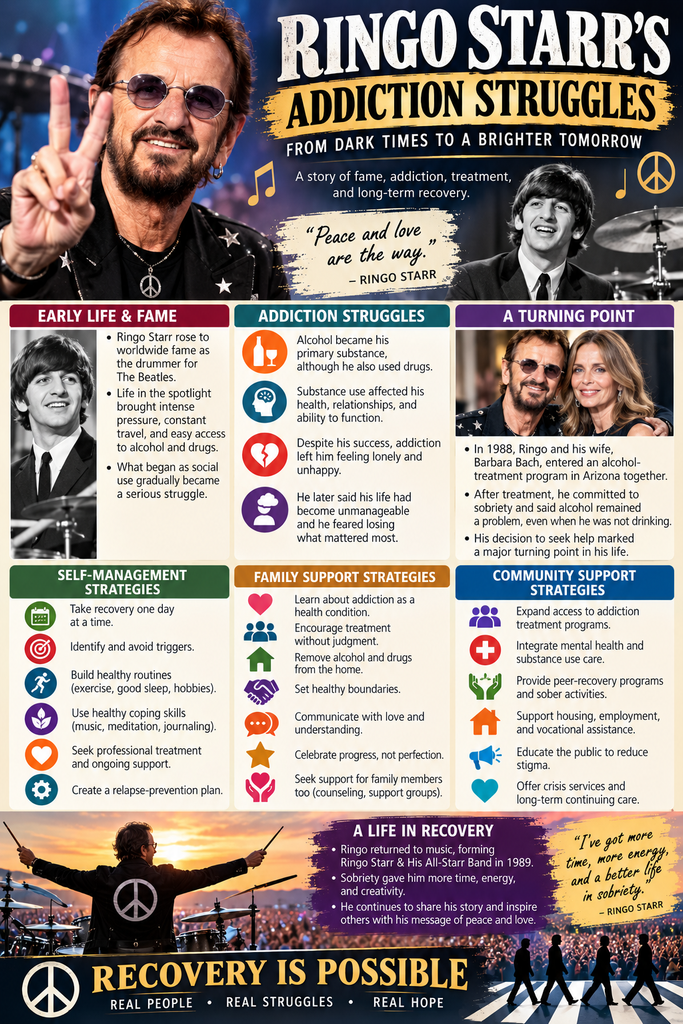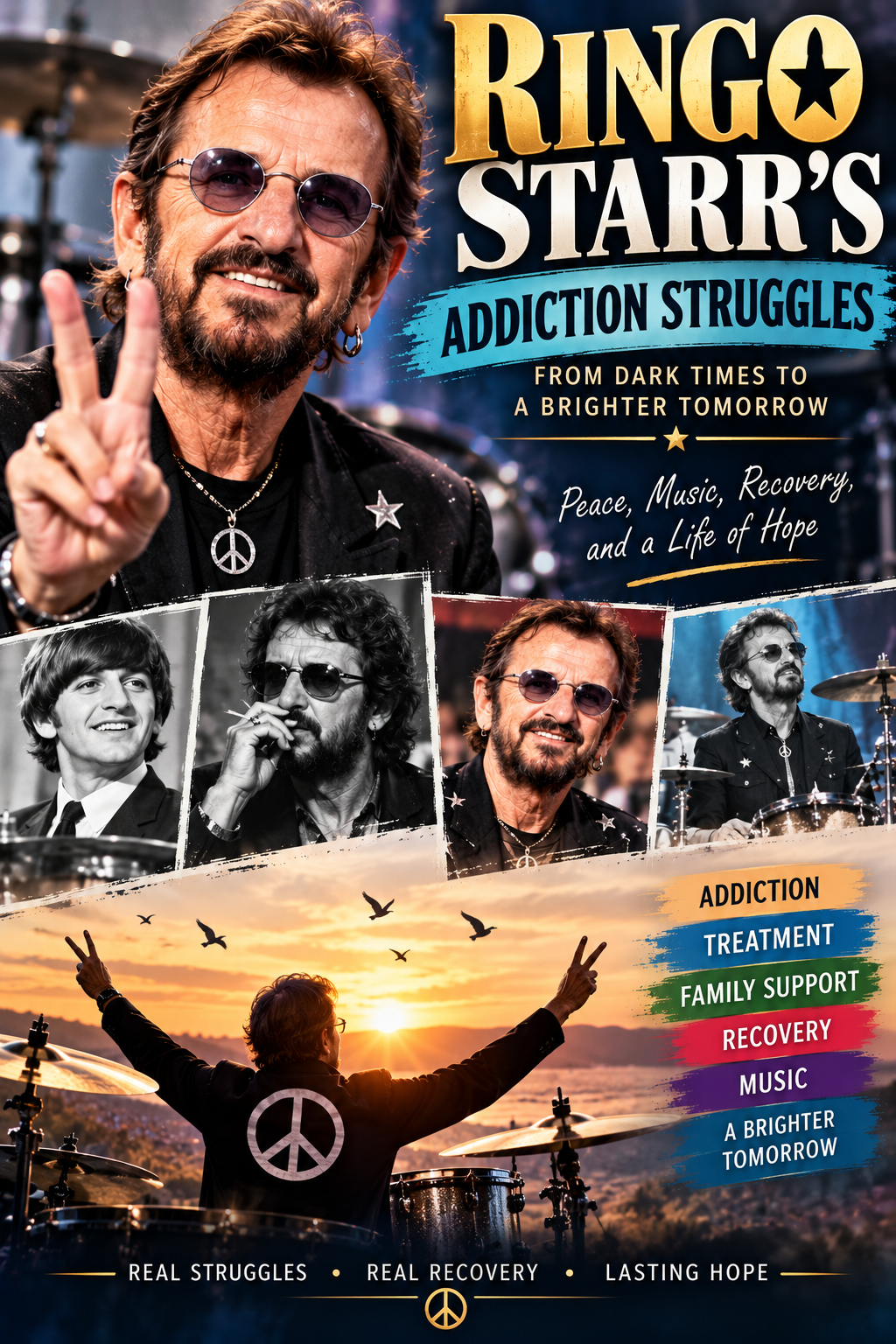
Ringo Starr is known worldwide as the drummer for The Beatles, but behind the fame, music, humor, and success was a serious struggle with alcohol and drugs. His experience demonstrates that addiction can affect anyone, regardless of talent, wealth, or professional achievement. More importantly, his decades of sobriety demonstrate that recovery can remain possible even after years of destructive substance use.
Starr has spoken openly about how severe his alcohol and drug use became during the 1970s and 1980s. Looking back, he described periods when alcohol and drugs interfered with his ability to function, create music, and maintain a healthy life. He later described addiction as an increasingly lonely experience, despite being surrounded by other people.
When Substance Use Takes Control
Alcohol reportedly became Starr’s primary substance, although he has also acknowledged using drugs. Substance use can initially be associated with socializing, celebration, coping with stress, or escaping uncomfortable emotions. Over time, however, repeated use can progress into addiction, in which obtaining and using substances begins taking priority over relationships, health, responsibilities, and activities that once mattered.
For Starr, the consequences eventually became impossible to ignore. He later explained that his life had become unmanageable and that he feared losing the things he valued most.
Common warning signs that substance use may have progressed into addiction include:
- Needing alcohol or drugs to feel normal or function.
- Experiencing blackouts or memory problems.
- Increasing the amount or frequency of substance use.
- Neglecting work, relationships, health, or responsibilities.
- Continuing to use despite negative consequences.
- Becoming socially isolated.
- Making unsuccessful attempts to cut down.
- Experiencing cravings or withdrawal.
- Losing interest in activities that were previously important.
- Using substances to manage stress, sadness, anger, or other emotions.
A Turning Point: Entering Treatment
In 1988, Starr and his wife, actress Barbara Bach, entered an alcohol-treatment program in Arizona together. Contemporary reports described them receiving approximately five weeks of treatment. When Starr returned to Britain, he said he had gone 45 days without drinking and intended to remain abstinent.
This was an important turning point. Starr later acknowledged that he needed help rather than continuing to manage the problem alone. In a 1989 interview, he explained that alcohol remained a problem for him even though he was no longer drinking—an idea consistent with viewing addiction as a condition requiring continuing management rather than assuming the problem disappears once substance use stops.
His recovery also illustrates an important lesson: asking for professional help is not weakness. Recognizing that substance use has become unmanageable can be the beginning of meaningful change.
Self-Management Strategies for Recovery
Long-term recovery involves more than simply removing alcohol or drugs. People often need to change routines, relationships, coping mechanisms, environments, and attitudes that previously supported substance use.
Helpful self-management strategies can include:
- Take recovery one day at a time. Starr has described sobriety in daily terms, emphasizing the continuing nature of recovery.
- Identify triggers. Stress, loneliness, celebrations, certain people, and environments associated with previous substance use can increase vulnerability.
- Create structure. Regular sleep, meals, exercise, work, hobbies, and recovery activities can reduce periods of boredom and instability.
- Build healthy coping skills. Meditation, exercise, music, therapy, journaling, hobbies, and supportive relationships can replace substance use as methods of managing emotions.
- Reconnect with meaningful activities. After becoming sober, Starr returned to touring and formed the All-Starr Band. He described having more time and energy after sobriety.
- Seek professional treatment when necessary. Addiction treatment may include counseling, medications for certain substance-use disorders, peer support, medical care, and treatment of co-occurring mental-health conditions.
- Develop a relapse-prevention plan. Recognize early warning signs and decide in advance whom to contact and what actions to take when cravings or emotional difficulties increase.
The Role of Family Support
Barbara Bach played a significant role in Starr’s recovery story because the couple entered treatment together. Their experience highlights how substance use can affect relationships and how loved ones may also need support and treatment.
Family members cannot recover for another person, but they can create an environment that supports change.
Helpful family strategies include:
- Learn about addiction as a health condition.
- Communicate concerns without humiliation or shame.
- Encourage professional treatment.
- Avoid providing money or resources that support continued substance use.
- Establish clear and healthy boundaries.
- Remove alcohol and drugs from the home when appropriate.
- Recognize and celebrate recovery milestones.
- Encourage healthy routines and activities.
- Participate in family counseling when needed.
- Seek independent support for themselves rather than making their entire lives revolve around the addicted person.
Supporting someone does not mean protecting them from every consequence of their behavior. Healthy support combines compassion with appropriate boundaries.
Rebuilding Life After Addiction
Recovery gave Starr an opportunity to reconnect with something fundamental to his identity: music.
After treatment, he returned to performing and launched Ringo Starr & His All-Starr Band in 1989. In a later interview, he described how sobriety left him with more time and energy.
This aspect of his journey is especially meaningful because recovery is not simply about what a person gives up. It can also be about what the person gets back.
Recovery may allow someone to rediscover:
- Relationships.
- Creativity.
- Physical health.
- Employment or education.
- Hobbies and interests.
- Financial stability.
- Trust.
- Self-respect.
- Meaning and purpose.
- Hope for the future.
Starr’s renewed musical career illustrates how rebuilding purpose can become an important part of maintaining recovery.
Community Support Strategies
Individual determination and family involvement matter, but communities also shape whether someone can achieve and maintain recovery.
Communities can support recovery by:
- Expanding affordable addiction-treatment programs.
- Integrating addiction and mental-health treatment.
- Providing medically supervised withdrawal management when appropriate.
- Increasing access to medications for alcohol and opioid use disorders.
- Supporting peer-recovery programs and recovery communities.
- Providing sober recreational and social activities.
- Offering housing, employment, and vocational assistance.
- Educating the public about addiction without stigmatizing people.
- Supporting families affected by substance-use disorders.
- Making emergency and crisis services readily available.
- Encouraging long-term continuing care instead of viewing short-term treatment as a complete cure.
Stigma can prevent people from admitting that they need help. Communities that treat addiction with the same seriousness and compassion as other health conditions can make treatment easier to seek.
Recovery Is More Than Abstinence
Stopping alcohol or drug use is a major achievement, but recovery often extends much further. People may need to repair damaged relationships, rebuild trust, manage emotions differently, develop new friendships, address physical and mental-health concerns, and rediscover a sense of identity without substances.
Starr’s recovery became intertwined with creativity, relationships, touring, philanthropy, and his well-known message of “peace and love.” More recently, he has continued discussing his long-term sobriety publicly.
His experience demonstrates that recovery does not require a person to erase the past. Instead, the past can become part of a larger story about change.
What Ringo Starr’s Journey Can Teach Us
Ringo Starr’s addiction history reminds us that outward success does not protect someone from substance-use disorders. A person can be famous, financially secure, surrounded by people, and professionally accomplished while experiencing profound problems with alcohol or drugs.
His journey also demonstrates several principles of recovery: recognize when substance use has become unmanageable, accept help, seek appropriate treatment, build supportive relationships, establish healthier routines, reconnect with meaningful activities, and continue protecting recovery over the long term.
Most importantly, addiction does not have to be the final chapter of someone’s life.
Ringo Starr went from describing years dominated by alcohol and drugs to building decades of sobriety and returning to the work he loved. His story offers a hopeful reminder that recovery is not simply about stopping substance use—it is about creating a life in which alcohol or drugs are no longer needed to make life bearable.
With self-management, supportive families, professional treatment, and recovery-friendly communities, people affected by addiction can have opportunities to rebuild relationships, restore purpose, and create meaningful lives beyond substance use.
Frequently Asked Questions and Answers
1. Did Ringo Starr struggle with addiction?
Yes. Ringo Starr has spoken publicly about serious problems with alcohol and drugs, particularly during the 1970s and 1980s. He has described a period when substance use negatively affected his health, relationships, creativity, and everyday life.
2. What substances did Ringo Starr struggle with?
Alcohol was a major part of Starr’s addiction struggles, although he has also acknowledged using other drugs. His experience illustrates how multiple substances can become part of an unhealthy pattern.
3. When did Ringo Starr realize he needed help?
By the late 1980s, Starr recognized that his alcohol and drug use had become unmanageable. In 1988, he and his wife, Barbara Bach, entered treatment together. This became a major turning point in his life.
4. Did Barbara Bach also enter addiction treatment?
Yes. Starr and Barbara Bach entered an alcohol-treatment program in Arizona together in 1988. Their experience demonstrates how substance-use problems can affect couples and how recovery may sometimes involve both partners addressing their own needs.
5. How did treatment help Ringo Starr?
Treatment provided an opportunity to stop drinking and using drugs while beginning to build a different lifestyle. Recovery required more than detoxification; it involved changing behaviors, routines, relationships, and coping strategies.
6. How long has Ringo Starr been sober?
Starr has publicly described remaining sober since 1988. His decades of recovery demonstrate that long-term sobriety is possible while also emphasizing that recovery requires continued attention.
7. Did addiction affect his music career?
Yes. Starr has discussed periods when substance use interfered with his creativity and productivity. After becoming sober, he returned to performing more actively and formed Ringo Starr & His All-Starr Band in 1989.
8. What self-management strategies can help someone in addiction recovery?
Helpful strategies include identifying triggers, developing healthy daily routines, exercising, maintaining adequate sleep, using healthy coping techniques, attending counseling or recovery meetings, avoiding high-risk environments, developing a relapse-prevention plan, and seeking professional help when cravings or emotional difficulties increase.
9. Why is taking recovery “one day at a time” helpful?
Thinking about remaining sober forever can feel overwhelming. Focusing on today’s decisions can make recovery more manageable while helping someone repeatedly practice healthy behaviors that eventually become part of everyday life.
10. What role can family members play in recovery?
Families can educate themselves about addiction, encourage treatment, communicate without shame, establish healthy boundaries, avoid enabling substance use, participate in counseling when appropriate, and recognize progress. Family members should also protect their own physical and emotional well-being.
11. Can family support prevent relapse?
Family support can strengthen recovery, but relatives cannot guarantee that someone will remain sober. Relapse risk depends on many factors. Families can help recognize warning signs and encourage the person to reconnect with treatment and recovery resources.
12. Does relapse mean recovery has failed?
No. A recurrence of substance use should be taken seriously, but it does not erase previous progress. It can indicate that the person’s treatment or recovery plan needs reassessment. Returning to professional care quickly can help prevent further deterioration.
13. What role does purpose play in recovery?
Purpose can provide structure, motivation, identity, and connection. For Starr, returning to music and performing became an important part of his life after treatment. For someone else, purpose might come from family, employment, education, volunteering, spirituality, hobbies, or helping others.
14. How can communities support people recovering from addiction?
Communities can improve access to evidence-based addiction treatment, mental-health services, peer-recovery programs, medications when appropriate, sober activities, housing assistance, employment services, family programs, and continuing care. Reducing stigma can also make people more willing to seek treatment.
15. Is addiction simply a matter of willpower?
No. Substance-use disorders are complex health conditions involving changes in brain function, behavior, environment, genetics, psychological factors, and social circumstances. Motivation is important, but many people benefit from professional treatment and ongoing support.
16. What can we learn from Ringo Starr’s addiction journey?
His experience demonstrates that fame, money, talent, and professional success do not protect someone from addiction. It also shows that a person’s most difficult period does not have to determine the rest of their life.
Video: