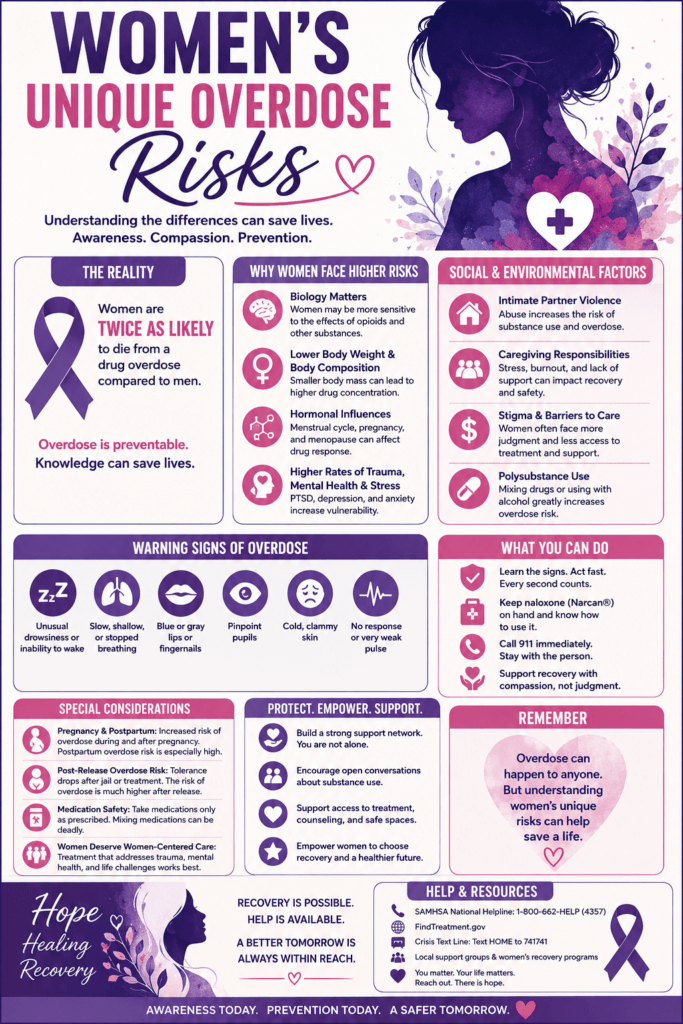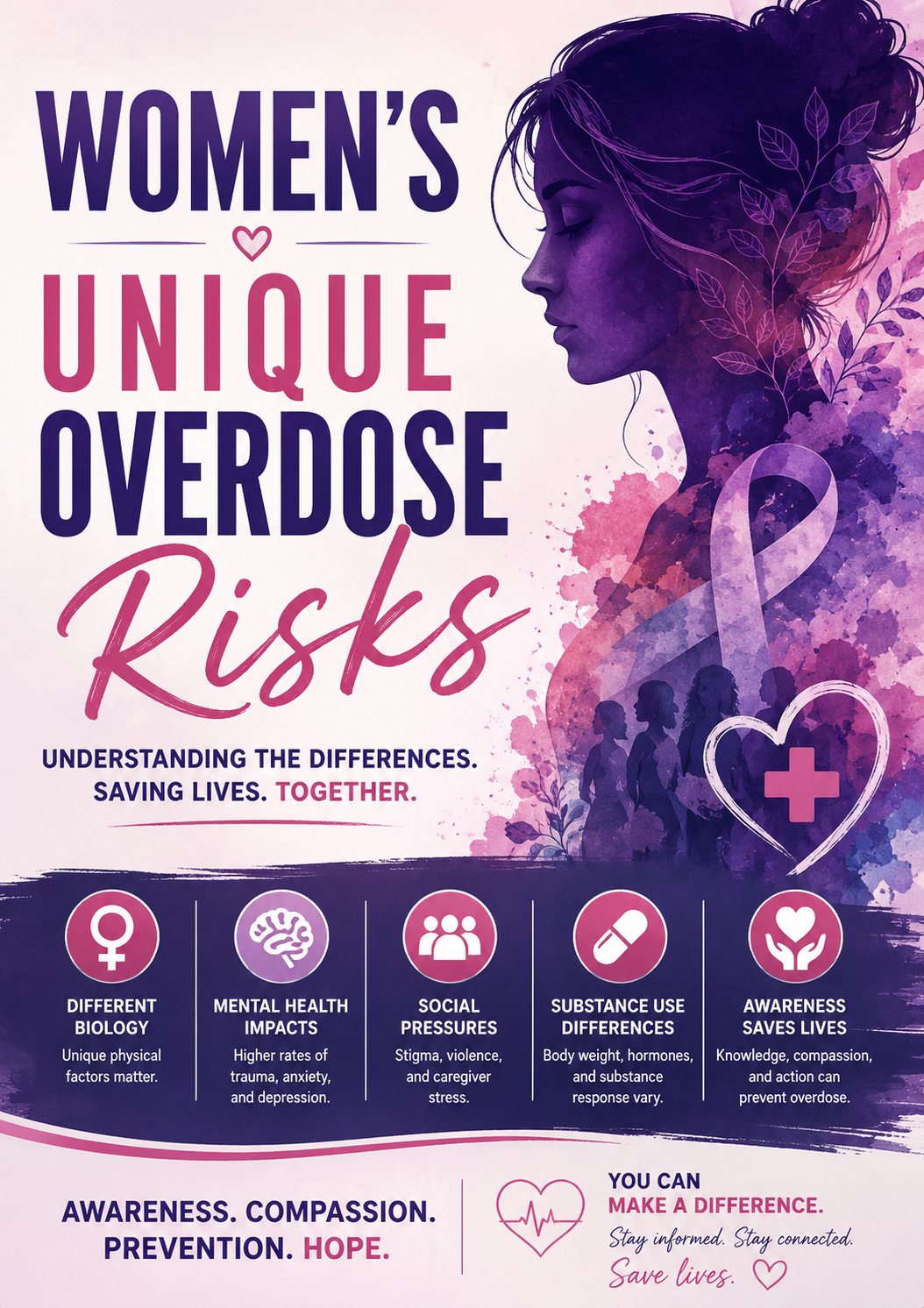
Learning that women may face distinct risks for drug overdose can be concerning, but understanding the factors behind these differences is essential. Biological differences, mental health conditions, trauma, pregnancy and postpartum changes, patterns of substance use, and barriers to treatment can all influence a woman’s vulnerability to overdose. Looking beyond the statistics helps families and communities better recognize who may be at risk and why. Understanding common warning signs, identifying risk factors, keeping naloxone available when opioids may be involved, and connecting people with evidence-based treatment can help prevent overdose deaths. With accurate information, compassionate support, and greater access to appropriate resources, individuals and families can take meaningful steps toward prevention, treatment, and recovery.
Why Are Women More at Risk for Overdose?
Understanding why women are more likely to overdose starts with looking at both medical and social factors. While the opioid crisis has drawn a lot of attention in recent years, it’s not just about opioids. Prescription medications, stimulants, and even alcohol play a role in these numbers. Overdose can happen unintentionally, especially for those managing chronic pain, mental health struggles, or other health conditions that are more common in women.
According to the Centers for Disease Control and Prevention (CDC), overdose deaths among women aged 30 to 64 increased by a whopping 260% from 1999 to 2017 (CDC Report). The factors behind this trend include:
- Higher prescription rates: Women are more likely to be prescribed opioids, anti-anxiety meds (like benzodiazepines), and antidepressants.
- Chronic pain and health conditions: Conditions like fibromyalgia, arthritis, and migraines are more prevalent in women, which leads to higher medication use.
- Hormonal influence: Hormonal changes can impact how the body processes drugs, making women more sensitive to certain substances.
- Mental health risks: Women experience anxiety and depression at higher rates, and these can overlap with substance use issues.
It’s a mix of biological and social dynamics, so effective prevention takes more than just basic awareness.
Common Causes and Substances Involved
While the word “overdose” often brings opioids to mind, many cases among women involve a wider range of substances. A big part of what makes this topic so complicated is polysubstance use, which is when multiple drugs, sometimes with alcohol, are mixed, and the risk goes up.
- Prescription opioids: Painkillers like oxycodone and hydrocodone are frequent culprits, especially for those managing pain long-term.
- Benzodiazepines: These anti-anxiety meds (think Valium, Xanax, Ativan) can become dangerous when combined with opioids or alcohol.
- Stimulants: Cocaine and methamphetamine-related overdoses have increased among women, especially when mixed with other substances.
- Alcohol: When taken with meds, alcohol raises overdose risk even more.
- Illicit drugs: Fentanyl, heroin, and counterfeit pills are more common than many people realize, especially with the rise of online drug markets.
Women can experience unintentional overdoses simply by taking prescribed medicines, particularly when doses get mixed up, prescriptions overlap, or there’s a change in health status.
Recognizing Overdose Warning Signs
Knowing what an overdose looks like can literally save lives. Signs vary by substance, but some red flags are common across the board. For opioids and benzodiazepines, it’s all about the body slowing down too much, while stimulants can send the system into overdrive.
- Trouble breathing: Slow, shallow, or stopped breathing is a key warning, especially with opioids.
- Unusual drowsiness: Falling asleep and not waking up easily, or being very hard to rouse.
- Confusion or delirium: Not making sense, slurred speech, or acting unusually agitated or paranoid.
- Bluish lips or fingertips: These are signs of low oxygen levels in the blood.
- Seizures: More common with stimulant overdoses.
- Loss of consciousness: Not responding or appearing to pass out.
If any of these are happening, it’s really important to call emergency services (911 in the US) right away. Lots of states have Good Samaritan laws to protect people who call for help, so don’t worry about getting in trouble—safety comes first. You shouldn’t hesitate to make the call; it really can be a lifesaver.
Risks and Underlying Factors Unique to Women
Women’s overdose risks don’t exist in a vacuum. Medical history, life circumstances, and quality of care all play a part. Here are a few things that tend to affect women more strongly:
- Body composition: Women’s bodies often process medications differently, so the same dose may be more potent or linger longer.
- Life stage: Pregnancy and menopause can heighten sensitivity to certain drugs and change how side effects show up.
- Caregivers and social roles: Juggling work, family, and caregiving can lead to skipping doses, doubling doses by mistake, or trying to “push through” pain by self-medicating.
- Stigma and barriers to care: Worries about judgment, especially for mothers, sometimes keep women from seeking help, even in emergencies.
- Partner influence: In some cases, partners or friends encourage misuse or share prescription meds, increasing risks for everyone involved.
Pain management is another area where women often face dismissal or misdiagnosis, leading to overuse of medications or searching for relief in risky ways. This is not about blame but about shining a light on gaps in care that need serious attention.
Steps for Prevention: How to Reduce Overdose Risk
No one has to go through this alone. Making a few practical choices along the way can lower overdose risk for yourself or for someone you care about:
- Keep meds safely stored: Use a lockbox or keep medicines out of sight, especially around kids or visitors.
- Know your meds: Always double-check labels and talk to your healthcare provider or pharmacist about interactions and safe dosages.
- Only take prescribed doses: It’s easy to forget, but never take more than the recommended amount, even on tough days.
- Avoid mixing substances: Alcohol and recreational drugs can interact with prescriptions in unpredictable ways.
- Share your health history: Regularly update your doctor about all medications and supplements you’re taking.
- Naloxone saves lives: This easy-to-use nasal spray can reverse an opioid overdose on the spot. Pharmacies in many places offer it without a prescription, and training is widely available.
- Reach out for support: If you’re struggling, talk to your doctor, a counselor, or check out local support groups for women. Connection makes staying on track much easier.
Knowing these tips doesn’t mean you have to do everything perfectly. Even one or two can make a real difference day to day.
Barriers Women Face When Accessing Help
While everyone deserves support, women sometimes run into unique obstacles when seeking treatment or emergency help:
- Fear of losing custody: Mothers may worry that admitting a substance issue could put their children at risk of being taken away.
- Cultural stigma: In some communities, there’s strong social pressure to maintain appearances, which can make asking for help feel risky.
- Financial access: Getting addiction help isn’t always free, and women often take on more caregiving roles with less access to personal funds.
- Lack of gender-specific services: Fewer rehab programs are designed with women in mind, especially those juggling family responsibilities.
Being aware of these hurdles can help friends, family, and healthcare providers offer better, more understanding support. Organizations like SAMHSA offer confidential advice and referral services to help people get started.
Real-World Scenarios: How Overdoses Happen and Can Be Prevented
Sometimes, it’s easier to understand when you think about everyday situations. Here’s an example based on common experiences:
- Scenario: A mom managing chronic back pain gets prescriptions from two different doctors for pain relief and anxiety. She misses a pharmacy warning about drug interactions, experiences extreme drowsiness, and barely wakes up when her kids try to get her attention. Her partner calls 911, and paramedics revive her with naloxone.
- How this could be prevented: A pharmacist double-checked the prescriptions, and her healthcare provider made sure she had naloxone on hand and explained possible drug interactions. Family members learned how to spot overdose signs and felt comfortable calling emergency services right away.
Real-life stories like these show how teamwork and communication make all the difference. It’s worth talking openly, even when it’s uncomfortable.
Frequently Asked Questions
Sometimes the facts can be confusing or even alarming, so here are a few questions I get pretty often:
Question: Are women really more likely to overdose than men?
Answer: Yes. Research and CDC data show women, especially in certain age groups, are at a much higher risk, mostly due to how medications are prescribed, the types of health issues women face, and unique social pressures.
Question: What should I do if I think someone is overdosing?
Answer: Call 911 right away. If opioids are involved and you have naloxone, use it as instructed. Stay with the person, try to keep them awake and breathing, and don’t hesitate to get emergency help. Your actions can make a lifesaving difference.
Question: Is naloxone hard to get or use?
Answer: In many parts of the U.S., naloxone is available without a prescription. It often comes as a nasal spray and is very straightforward to use. Pharmacists and doctors can walk you through the steps. Training programs are also widely available online and in person.
Question: How can I talk to my doctor about overdose risks?
Answer: Bring a list of all medications you use (including vitamins and over-the-counter stuff) and ask specifically about interactions and side effects. Don’t be afraid to ask about alternatives or additional resources for pain management or mental health.
Key Takeaways for Staying Safe
Women face unique overdose risks for a lot of reasons, but staying aware, communicating with healthcare providers, and getting support can really turn things around. Making safety part of your routine by checking labels, storing medicines properly, and learning how to use naloxone keeps you and your loved ones safer.
If you’re ever unsure what to do, reaching out for help is the right call. Trusted friends, family, and healthcare professionals want what’s best for you. No one has it all figured out, but even small steps can make a big impact day after day.
Video: What You Don’t Know About Women and Overdose