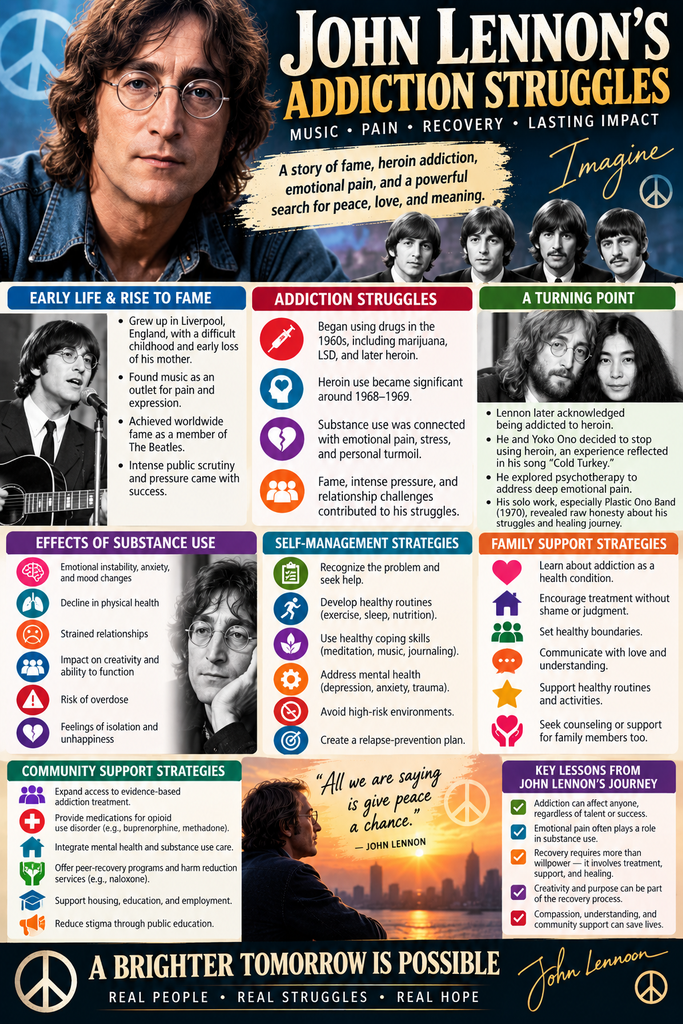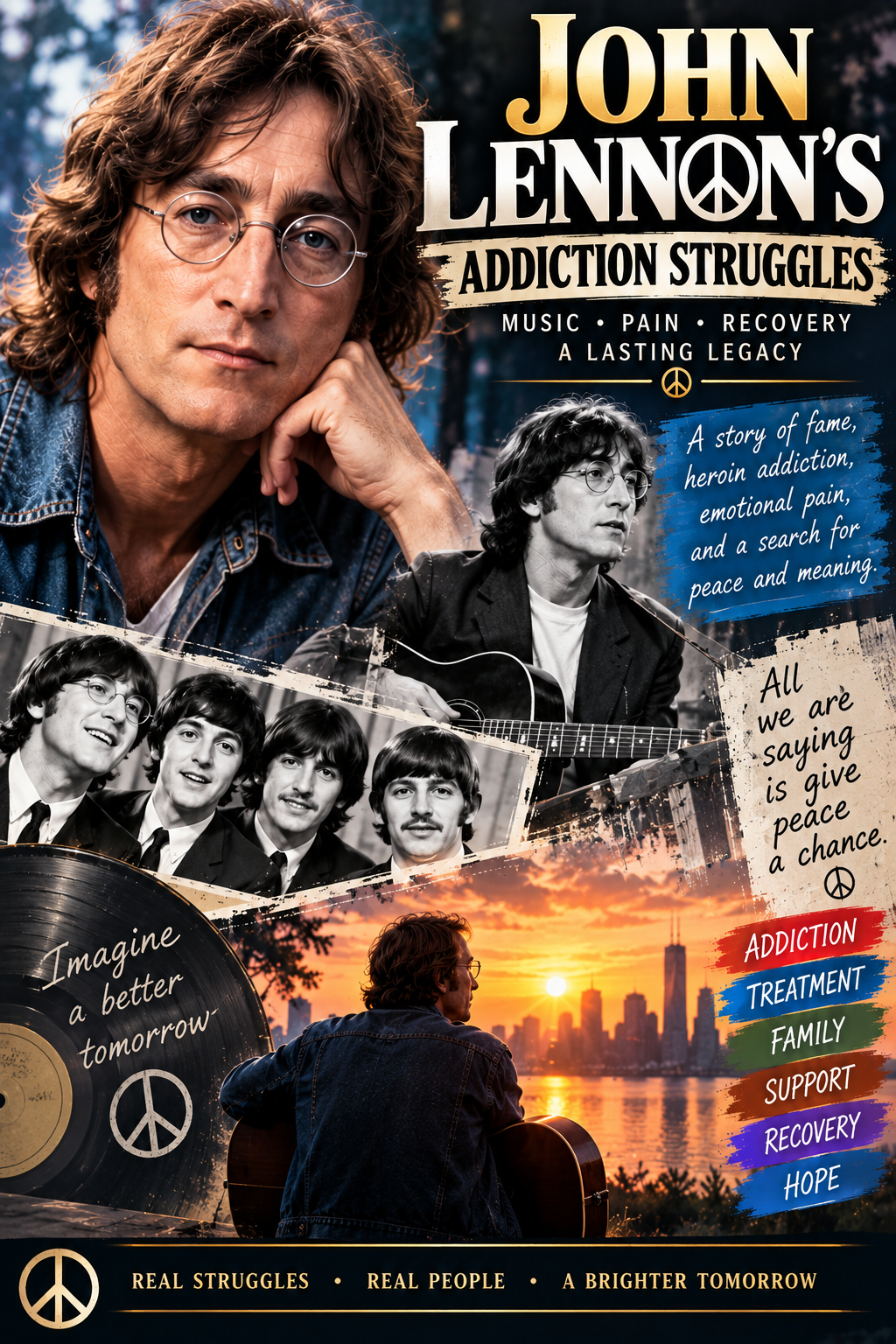
John Lennon rose to worldwide fame as a founding member of The Beatles and became one of the twentieth century’s most influential musicians. Yet behind his extraordinary success were periods of emotional distress and substance use. Lennon later spoke openly about his experiences with drugs, including his struggle with heroin addiction during the late 1960s. Historical accounts indicate that his heroin use became particularly significant around 1968–1969, a turbulent period marked by intense public attention, changes within The Beatles, his relationship with Yoko Ono, and shifts in his personal and professional life. His experience illustrates how addiction can develop amid fame, stress, complicated relationships, creativity, and emotional pain. It also reminds us that overcoming addiction often requires more than simply stopping drug use—it may involve addressing the emotional, behavioral, relational, and environmental factors that contribute to substance use.
John Lennon and Heroin
Lennon and Yoko Ono reportedly began using heroin during the late 1960s. Lennon later discussed this period candidly, describing heroin use as connected with emotional distress and the pressures surrounding them.
This distinction is important. Emotional suffering may help explain why someone uses a substance, but it does not make substance use inevitable or remove personal responsibility. Addiction usually develops through an interaction of biological vulnerability, psychological factors, environment, availability of substances, stress, and repeated exposure.
By 1969, Lennon’s heroin use had become significant enough to interfere with his well-being. He later acknowledged being addicted while performing with the Plastic Ono Band at the Toronto Rock and Roll Revival festival.
“Cold Turkey” and Withdrawal
One of the clearest artistic reflections of Lennon’s addiction experience was his 1969 song “Cold Turkey.” The song has widely been understood as a raw depiction of heroin withdrawal following Lennon and Ono’s decision to stop using heroin.
Opioid withdrawal can involve symptoms such as:
- Anxiety and agitation.
- Muscle aches and pain.
- Sweating and chills.
- Nausea, vomiting, or diarrhea.
- Insomnia.
- Restlessness.
- Strong cravings.
- Rapid heartbeat and other physical discomfort.
Although opioid withdrawal is often not medically dangerous in the same way that severe alcohol or benzodiazepine withdrawal can be, attempting withdrawal without medical assistance can create unnecessary suffering and increase the likelihood of returning to opioid use. Modern evidence-based care can include medications and professional monitoring rather than requiring someone to endure withdrawal “cold turkey.”
Addiction as an Attempt to Escape Pain
Lennon eventually raised an important question about substance use: rather than concentrating only on the drug itself, society should also examine why people feel compelled to use drugs.
That idea remains relevant to addiction treatment today.
People may initially use alcohol or drugs to cope with:
- Trauma or painful memories.
- Depression or anxiety.
- Relationship problems.
- Loneliness and isolation.
- Chronic stress.
- Physical pain.
- Low self-esteem.
- Grief or loss.
- Pressure to perform.
- Difficulty regulating emotions.
Understanding these underlying factors does not excuse harmful behavior. Instead, it can help clinicians and families address the reasons substance use became appealing in the first place.
Self-Management Strategies
Lennon’s experiences cannot be converted into a modern treatment plan, and recovery methods available today are substantially different from those available during his lifetime. However, his story illustrates several principles that apply to contemporary addiction recovery.
Helpful self-management strategies include:
- Recognize the problem honestly. Recovery often begins when someone acknowledges that substance use is causing harm.
- Identify emotional triggers. Stress, rejection, conflict, loneliness, anger, and painful memories can increase vulnerability to substance use.
- Seek professional treatment. Addiction treatment may include medical care, behavioral therapy, medications, psychiatric treatment, and peer support.
- Avoid attempting opioid withdrawal alone. Medical professionals can evaluate withdrawal symptoms and recommend appropriate evidence-based treatment.
- Develop healthier coping mechanisms. Exercise, meditation, music, journaling, therapy, hobbies, and supportive relationships can provide alternatives to substance use.
- Address mental health. Depression, anxiety, trauma, and other psychological concerns should be assessed rather than assuming sobriety alone will resolve them.
- Create a relapse-prevention plan. Identify triggers, warning signs, emergency contacts, supportive people, and actions to take when cravings intensify.
- Build meaning and purpose. Creative work, relationships, spirituality, volunteering, education, and other meaningful activities can strengthen recovery.
Therapy and Emotional Healing
After the Beatles era, Lennon explored psychotherapy, including Arthur Janov’s primal therapy. His 1970 album John Lennon/Plastic Ono Band became known for its unusually direct exploration of childhood pain, loss, relationships, identity, and emotional vulnerability.
The specific therapy Lennon pursued should not automatically be considered equivalent to today’s evidence-based addiction treatments. Nevertheless, his willingness to confront painful experiences illustrates a broader recovery principle: stopping substance use does not necessarily resolve the emotional problems that contributed to it.
Modern treatment may involve approaches such as cognitive behavioral therapy, motivational interviewing, trauma-informed treatment, family therapy, medications for substance-use disorders, and treatment of co-occurring psychiatric conditions.
Family and Relationship Support
Yoko Ono was closely connected with Lennon during his heroin-using period and his attempts to stop. Their experience also demonstrates something important about addiction: when substance use exists within a relationship, both partners can influence the recovery environment.
Families can help by:
- Learning about addiction as a health condition.
- Encouraging professional treatment.
- Communicating without humiliation or shame.
- Avoiding alcohol and drugs around someone in early recovery when appropriate.
- Establishing clear boundaries around unacceptable behavior.
- Refusing to provide money or resources that enable substance use.
- Encouraging healthy routines and relationships.
- Participating in family counseling when appropriate.
- Learning the warning signs of relapse and overdose.
- Seeking counseling or support groups for themselves.
Family members should remember that supporting recovery and enabling addiction are not the same thing. Compassion can exist alongside boundaries.
Community Support Strategies
Lennon’s story occurred during an era when addiction was often heavily stigmatized, and treatment options were more limited. Today’s communities have considerably more opportunities to approach addiction through healthcare and public-health interventions.
Helpful community strategies include:
- Expand access to evidence-based addiction treatment.
- Provide medications for opioid use disorder, including buprenorphine and methadone.
- Make naloxone widely available to reverse opioid overdoses.
- Integrate addiction treatment with mental-health services.
- Provide peer-recovery coaches and recovery-support programs.
- Offer affordable counseling and family services.
- Support stable housing, education, and employment.
- Provide harm-reduction services that keep people alive and connected to healthcare.
- Educate communities about addiction without using stigmatizing language.
- Provide long-term continuing care rather than expecting a short treatment episode to permanently resolve addiction.
Creativity, Recovery, and Identity
For Lennon, music often became a vehicle for expressing experiences that were difficult to communicate in ordinary conversation. “Cold Turkey” transformed an intensely uncomfortable experience into music, while his later solo work explored grief, anger, childhood experiences, relationships, and vulnerability.
Creative expression can be valuable during recovery, although it should not replace professional treatment when treatment is needed.
Art, music, writing, exercise, spirituality, volunteering, and other meaningful pursuits can help people build an identity that extends beyond addiction.
A person is not simply “an addict.”
They may also be a parent, spouse, musician, healthcare professional, student, friend, artist, worker, or community member. Recovery can involve rediscovering these identities.
What John Lennon’s Journey Can Teach Us
John Lennon’s addiction history should neither be romanticized because he was a famous musician nor used to define his entire life. His heroin addiction represented one difficult period within a much larger and complicated personal story.
His experience demonstrates that extraordinary talent, fame, wealth, and professional achievement do not provide immunity from addiction. Emotional distress can exist even when someone’s life appears successful from the outside.
It also illustrates why addiction treatment should look beyond the substance itself. Asking “What drug is this person using?” is important, but so is asking “What is happening in this person’s life that makes escaping through drugs feel necessary?”
A Message of Hope
John Lennon did not have access to the range of evidence-based addiction treatments available today. Modern recovery can include medications, behavioral therapies, mental-health treatment, harm reduction, peer recovery, family services, and long-term continuing care.
His story reminds us that addiction is not a sign of weakness or poor character. It is a complex condition that requires accountability, compassion, appropriate treatment, and support.
Recovery involves more than removing a drug. It involves helping people develop healthier ways to manage pain, rebuild relationships, rediscover purpose, and create lives they no longer need to escape from.
Through self-management, family involvement, professional treatment, and supportive communities, people struggling with addiction can be given both the opportunity and the tools to move toward recovery.
Frequently Asked Questions and Answers
1. Did John Lennon struggle with addiction?
Yes. John Lennon publicly discussed periods of heavy drug use and acknowledged becoming dependent on heroin during the late 1960s. His substance use occurred during a turbulent period involving enormous fame, relationship changes, emotional distress, and growing tensions surrounding The Beatles.
2. What drugs did John Lennon use?
Lennon experimented with several substances, including marijuana and LSD, and later used heroin. Heroin became particularly problematic around 1968–1969.
3. Was John Lennon addicted to heroin?
Yes. Lennon later acknowledged that he had become addicted to heroin. His experience demonstrates how opioid use can progress from experimentation to dependence and compulsive use.
4. Why did John Lennon begin using heroin?
There is no single explanation for why someone develops an addiction. Lennon associated his heroin use with emotional distress and pressures occurring in his life. Addiction typically develops through a combination of psychological, biological, environmental, social, and behavioral factors rather than one specific cause.
5. Did Yoko Ono use heroin with John Lennon?
Historical accounts indicate that Lennon and Yoko Ono used heroin during this period and later stopped. Their experience demonstrates how substance use can become intertwined within intimate relationships.
6. What does John Lennon’s song “Cold Turkey” have to do with addiction?
Lennon’s 1969 song “Cold Turkey” has widely been associated with his experience of stopping heroin and going through withdrawal. The song presents an intense depiction of physical and psychological discomfort.
7. What is opioid withdrawal?
Opioid withdrawal can cause anxiety, restlessness, sweating, muscle aches, nausea, diarrhea, insomnia, chills, and powerful cravings. Although withdrawal is often not life-threatening in otherwise healthy adults, medical support can make the process safer and more tolerable and can connect the person to ongoing treatment.
8. Should people with opioid addiction quit “cold turkey”?
Modern treatment generally does not require someone to suffer through withdrawal without assistance. Healthcare professionals can assess the individual and offer evidence-based treatment. Medications such as buprenorphine and methadone can reduce withdrawal, cravings, illicit opioid use, and overdose risk for people with opioid use disorder.
9. Did John Lennon seek therapy?
Yes. Lennon explored psychotherapy, including Arthur Janov’s primal therapy, during the early 1970s. His experiences influenced his solo work, particularly John Lennon/Plastic Ono Band. Primal therapy, however, should not be confused with today’s established evidence-based treatments for substance-use disorders.
10. Did childhood experiences affect John Lennon’s emotional life?
Lennon experienced significant childhood disruptions and losses, including separation from his parents and the death of his mother when he was a teenager. These experiences became recurring themes in his later music and discussions about his emotional life. However, it would be overly simplistic to say that childhood trauma alone caused his addiction.
11. Can emotional pain contribute to addiction?
Yes. Some people use substances to temporarily escape anxiety, depression, trauma, grief, loneliness, or stress. Temporary relief can reinforce continued substance use, potentially creating a cycle in which emotional distress triggers use and substance-related consequences create additional distress.
12. What self-management strategies can help someone recovering from addiction?
Helpful strategies can include recognizing triggers, developing structured routines, getting adequate sleep, exercising, learning healthier coping skills, avoiding high-risk environments, addressing co-occurring mental-health problems, maintaining supportive relationships, and developing a relapse-prevention plan.
13. How can families support someone with addiction?
Families can learn about substance-use disorders, encourage professional treatment, communicate without humiliation or shame, establish healthy boundaries, avoid enabling continued drug use, participate in family counseling, and learn how to recognize overdose and relapse warning signs.
14. What is the difference between supporting and enabling?
Support encourages recovery and personal responsibility. Enabling protects someone from consequences or unintentionally makes continued substance use easier. For example, helping someone attend treatment can support recovery, while repeatedly providing money that is being used to purchase drugs may enable continued substance use.
15. How can communities help people struggling with opioid addiction?
Communities can expand evidence-based treatment, increase access to buprenorphine and methadone, distribute naloxone, integrate addiction and mental-health services, provide peer-recovery support, improve housing and employment resources, and reduce stigma surrounding treatment.
16. Why is naloxone important?
Naloxone is an opioid-overdose reversal medication. It can rapidly restore breathing during an opioid overdose and provide crucial time for emergency medical assistance to arrive. Naloxone saves lives but does not replace ongoing addiction treatment.
17. Does relapse mean treatment has failed?
No. A return to substance use should be taken seriously, particularly because opioid tolerance can decrease during abstinence and increase overdose risk. Relapse may indicate that the person’s treatment and recovery plan needs to be reassessed or intensified.
18. What can John Lennon’s experience teach us about addiction?
His experience demonstrates that talent, wealth, creativity, and worldwide fame do not protect someone from substance-use problems. Addiction can affect people from every social and economic background.
Video: