If you’ve been dealing with substance use or addiction, there might come a point when trying to quit on your own just isn’t working anymore. It can feel overwhelming or even a bit scary to accept the idea of reaching out for professional help, but knowing when detoxing at home isn’t safe is really important for your health and recovery. I want to talk honestly about spotting the signs that professional detox is the right step, what it actually involves, and how you can find help that suits your needs.
Understanding Detox and Why Going Pro Matters
Detox stands for “detoxification,” which is basically the process your body goes through to clear out drugs, alcohol, or other toxins. Sometimes, detox can be managed at home with support, but not always. Some substances, like alcohol, benzodiazepines, and opioids, can lead to tough or even dangerous withdrawal symptoms when you suddenly stop using them. Serious withdrawal can come with things like seizures, dehydration, heart problems, or intense cravings that can be risky if you’re alone or don’t know what to expect.
Professional detox programs are designed by medical experts who closely monitor your symptoms and help keep you safe. These programs often include around-the-clock supervision, medicines to ease withdrawal, nutritious meals, and support from trained staff who understand what you’re going through. It’s not just about getting over the physical stuff—it’s about making that first real move toward recovery in a way that builds up your strength and confidence. The setting and professional support give you a boost by ensuring every aspect of your health gets attention, from sleep and hydration to emotional well-being.
When Self-Detox Just Isn’t Working
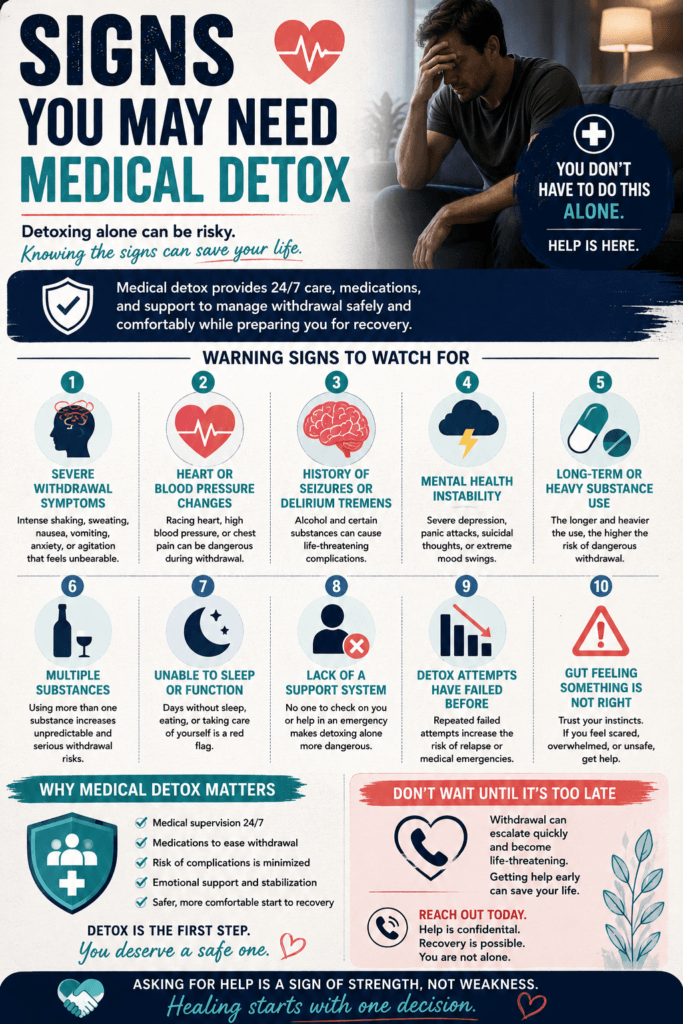
If you’ve tried to stop on your own but haven’t been able to, you’re definitely not the only one. Substance dependence changes how your brain and body function, and willpower alone sometimes isn’t enough. Here are a few everyday things people notice when it’s time to think seriously about professional detox:
- Multiple failed attempts: If you’ve tried to quit or cut down but keep going back, it’s usually not about “lack of effort.” It’s about your body needing more help than what home can offer.
- Severe withdrawal symptoms, Shakes, sweats, vomiting, hallucinations, agitation, or feeling extremely anxious or depressed can all signal withdrawal that’s gotten bigger than you can handle solo.
- Needing a substance just to feel normal: If you wake up already craving a drink or a pill just to start your day, your body may have developed physical dependence as much as mental dependence.
- Health issues are getting worse: Problems like heart palpitations, high blood pressure, or dehydration are not something to mess around with. Chronic pain, heart disease, or liver problems also make DIY detox risky.
If any of these feel familiar, those “red flags” are a sign to explore professional help. This doesn’t mean you’ve failed. It just means you’re ready for a safer approach that gives your body and mind the support they deserve.
Sometimes, you might even notice new physical symptoms during withdrawal that didn’t happen before, like uncontrollable anxiety or stomach issues that don’t go away. Signs like these make it easier to spot when you need a greater level of care.
Why Withdrawal Feels So Rough
Addictive substances change the chemical balance in your brain, which is why stopping suddenly can throw your body into chaos. Withdrawal symptoms can be physical (nausea, headaches, shaking) or mental (anxiety, insomnia, confusion). Some drugs, especially alcohol or benzos, can be life-threatening to detox from without medical help. That’s a big part of why doctors often strongly recommend supervised detox when these substances are involved.
It’s also pretty common to downplay withdrawal symptoms or assume you’ll be able to “tough it out.” The thing is, symptoms can ramp up in hours or days, and not having medical supervision puts you at risk for complications that can be serious or even fatal. Having a team in your corner can be a lifesaver and make the process a lot less frightening. Being in a professional setting also means you can get into self-care routines much sooner and have access to techniques that ease discomfort, such as guided relaxation, peer support, or medication for jitters or sleep troubles.
If you’re supporting a loved one going through withdrawal, it’s important to stay alert for any signs of new or worsening symptoms. Keeping an eye out for things like confusion, rapid heart rate, or trouble breathing means you can seek emergency help if needed.
What Happens in a Professional Detox Setting?
Professional detox isn’t about judgment or strict rules. It’s really focused on getting you through the toughest part safely and with as little discomfort as possible. Here’s what the process usually looks like:
- Intake assessment: Nurses or doctors ask about your health history, current symptoms, and any meds you’re taking. This helps build a plan that’s right for you.
- Medical supervision: Staff check your vital signs, watch for complications, and often use medications to help ease withdrawal (like anti-nausea meds for stomach issues, sleep aids for insomnia, or specific treatments for opioid detox).
- 24/7 support: You’re not left alone to “tough it out.” There’s always someone available if you need help, or even just someone to talk to if you’re feeling anxious.
- Nutrition and hydration: Eating well and staying hydrated help you recover. Centers often provide healthy meals and fluids to help your body heal. You may also be encouraged to rest in a peaceful environment, with some centers adding calming touches like natural light, music, or stress-management activities.
- Planning for next steps, Detox isn’t where the adventure ends. Staff helps you figure out what comes after, like inpatient or outpatient treatment, counseling, or support groups to keep you on track.
The length of detox varies. Some people are ready to move forward in a few days, while others need a week or more. What matters is not rushing or comparing your timeline to anyone else’s. Healing goes at its own pace, and the right program will match up with your needs.
Risks of Skipping Professional Detox
Sometimes people try to detox at home out of privacy fears, worries about missing work, or not wanting to let others down. It’s totally understandable to feel this way, but skipping medical detox has some real risks:
- Withdrawal seizures (especially from alcohol or benzos) that can be life-threatening
- Profound dehydration from vomiting or diarrhea
- Mental health crises, like depression or suicidal thoughts
- Unintended overdose if cravings get overwhelming and you relapse
These are risks that you don’t have to face alone. Medical detox isn’t about giving up control; it’s about gaining it back in a way that’s safe and supported. Plus, professional programs offer peace of mind that you’re not risking serious health emergencies behind closed doors.
Deciding When It’s Time for Professional Detox
Everyone’s story is unique, but a few key signs suggest that a professional detox is probably the safer option. If you answer “yes” to any of these, reaching out could make a big difference:
- Withdrawal symptoms have ever sent you to the hospital
- You have a history of seizures or health complications
- Your drug use involves mixing substances (like alcohol plus pills, or multiple drugs)
- You have no safe or supportive place to detox at home
- You’re feeling hopeless, frightened, or overwhelmed by the idea of withdrawal
No matter your situation, asking for help is a strong move. A lot of folks in recovery still say the hardest part was admitting they were ready for a change, but also that it was the turning point they needed. The support found in detox can set you up for stronger mental health and a smoother transition into longer-term treatment or community resources.
What Makes Professional Detox So Helpful?
Professional detox centers offer more than just meds and supervision. They’re built to help you feel heard, respected, and safe. Here are some reasons people often say the experience was worth it:
- Trained staff can spot and treat complications early
- Less stress about making medical decisions for yourself when you’re not feeling your best
- Peer support from people who get what you’re facing
- A plan for what comes after detox, so you’re never left hanging
It’s not always easy to reach out, but once you do, you don’t have to face the next steps alone. You might even stumble upon new friendships or sources of encouragement you hadn’t expected.
Frequently Asked Questions
These are some questions I get from readers who are considering detox (or have loved ones thinking about it):
How long does professional detox take?
Every person is different, but most detox programs last between three and seven days. Some may be a little shorter or longer, depending on the substance and your overall health.
Is detox painful?
It can be uncomfortable, but medical staff use a range of tools, such as medications, nutrition, and relaxation strategies, to help you feel as well as possible. You won’t be left to just “suffer through it.”
Can I keep my detox private?
Professional detox centers take privacy seriously. They won’t share your information with employers, family members, or others without your permission. You’re protected by strict confidentiality laws.
What’s next after detox?
Detox is only the beginning. Most people find that following up with counseling, group support, or longer-term rehab gives the best shot at staying drug-free for good. Continued check-ins and support can also provide a boost in tough moments.
Moving Forward with Confidence
Knowing when to seek professional detox can be a life-changing realization. It means you’re invested in your own health and future. Whether you’re making the decision for yourself or helping a loved one find their way, it pays to pick a program that listens to your needs and puts your safety first. Feel free to reach out to local providers, national helplines, or even anonymous forums online- whatever makes you comfortable. Recovery really is possible, and that first step into professional detox is a powerful way to reclaim your life. Taking that step is a sign of strength and a commitment to better days ahead.
Video: The Shocking Truth About DIY Detox: Don’t Try This at Home