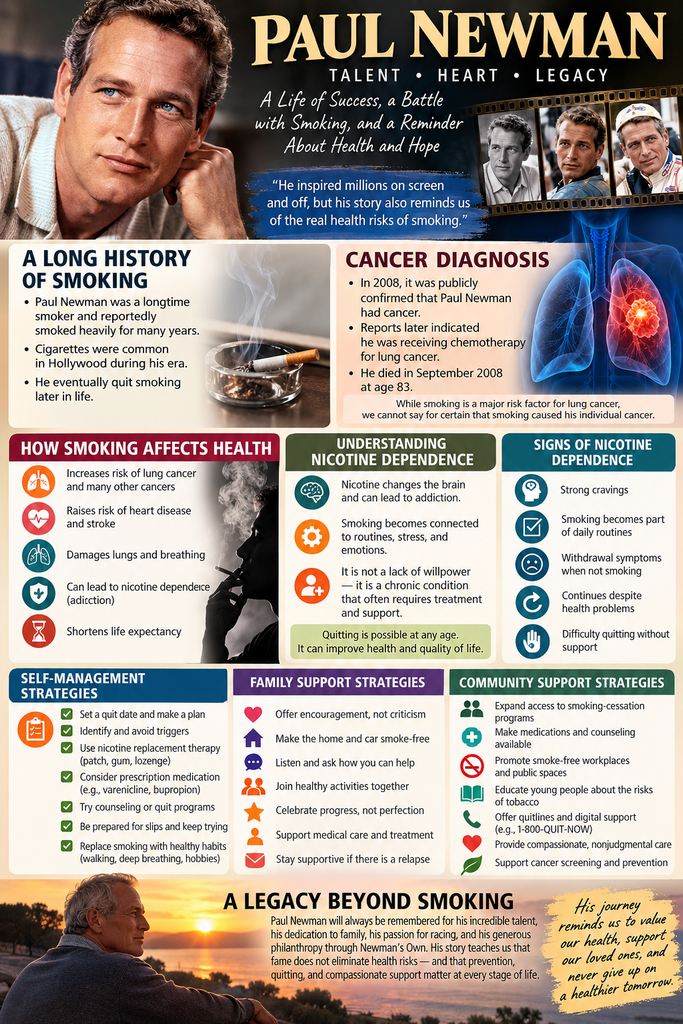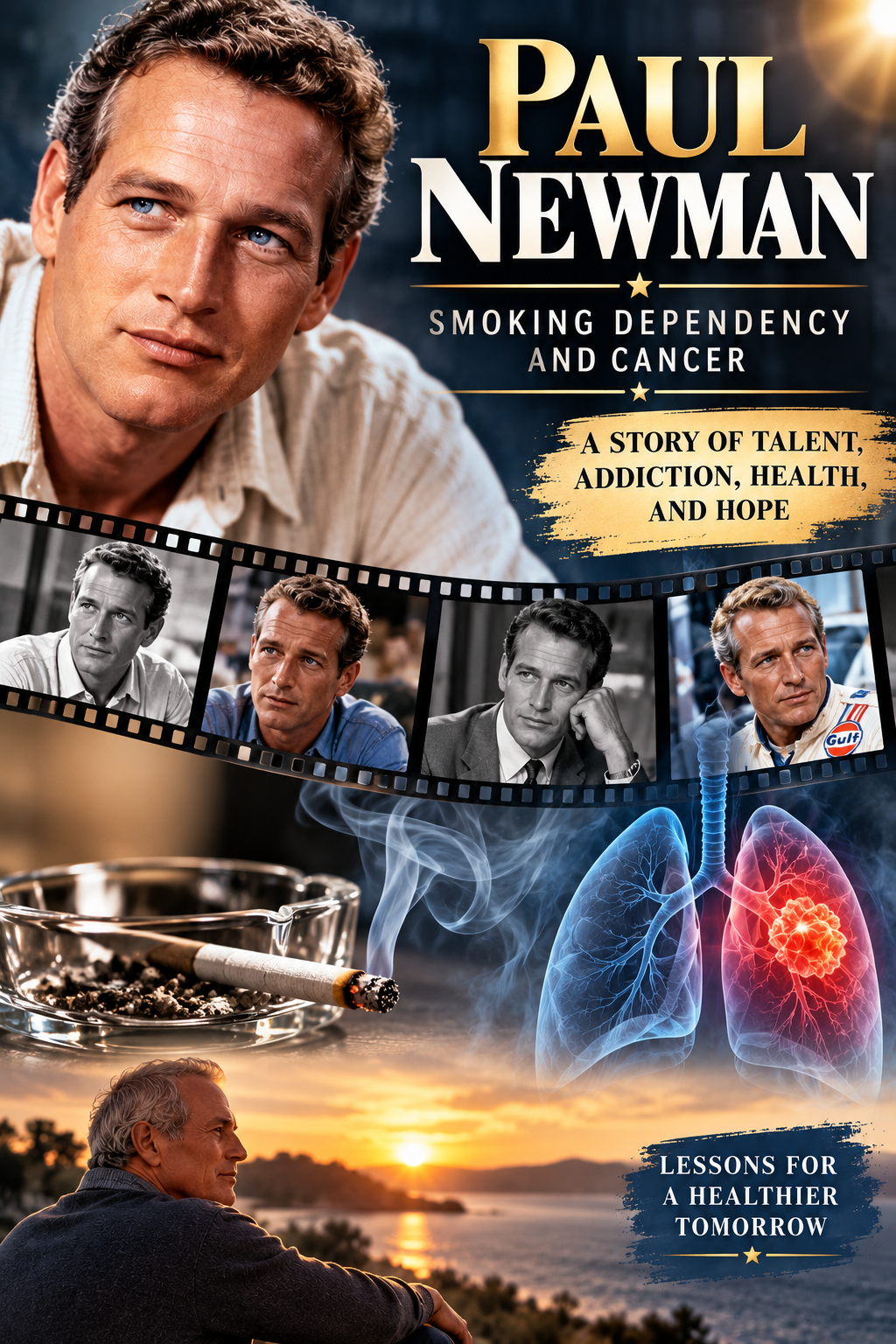
Paul Newman was one of Hollywood’s most recognizable actors, celebrated for films such as Cool Hand Luke, The Hustler, Butch Cassidy and the Sundance Kid, and The Color of Money. Behind his successful career, Newman also had a long history of cigarette smoking. Reports near the end of his life described him as a longtime or former heavy smoker who eventually stopped smoking. In 2008, his friend and business partner A. E. Hotchner confirmed that Newman had cancer, and later accounts reported that he was receiving chemotherapy for lung cancer. Newman died in September 2008 at age 83.
It is important to be careful when discussing cause and effect. Although cigarette smoking is a major risk factor for lung cancer, publicly available information cannot establish with certainty that smoking caused Newman’s individual cancer. His story can nevertheless help illustrate why nicotine dependence deserves to be viewed as a health condition rather than simply a bad habit.
Understanding Nicotine Dependency
Cigarettes deliver nicotine to the brain, where repeated exposure can produce dependence. Over time, smoking can become connected with routines, stress, social situations, meals, work breaks, and emotional experiences. This combination of physical dependence and learned behavioral patterns helps explain why someone may continue smoking even while understanding its health risks.
The CDC describes tobacco dependence as a chronic, relapsing condition that may require repeated treatment and long-term support. This is an important distinction because telling someone to “just stop smoking” ignores the biological and behavioral components of nicotine addiction.
Newman reportedly stopped smoking after many years of cigarette use. His experience underscores another important message: it is never too late to quit. The American Cancer Society notes that quitting smoking lowers lung-cancer risk regardless of a person’s age or how long they have smoked.
Self-Management Strategies
People who are dependent on nicotine can take an active role in recovery, but they do not have to depend on willpower alone. Evidence-based treatment can make quitting more manageable.
Helpful self-management strategies include:
- Identify smoking triggers. Keep track of situations that create strong urges to smoke, such as stress, alcohol, coffee, driving, boredom, or being around other smokers.
- Develop a quit plan. Choose a quit date and prepare for situations in which cravings are likely to occur.
- Change routines connected with cigarettes. Taking a walk after meals, drinking water, practicing slow breathing, or keeping the hands occupied can replace familiar smoking rituals.
- Consider nicotine-replacement therapy. Patches, gum, and lozenges can help decrease withdrawal symptoms and cravings.
- Discuss prescription treatment with a healthcare professional. Varenicline and bupropion are FDA-approved options for appropriate adults.
- Combine treatment approaches. Counseling plus medication provides a better chance of successfully quitting than trying to manage nicotine dependence without adequate support.
- Prepare for slips without giving up. Smoking a cigarette after quitting does not have to mean returning permanently to smoking. Identify what triggered the episode, adjust the plan, and continue working toward being tobacco-free.
The CDC reports that counseling and medication together provide the best chance of quitting successfully.
Family Support Strategies
Nicotine dependence can affect an entire family. Loved ones may feel frustrated when someone continues smoking despite health problems, but criticism, threats, or shame can make communication more difficult.
Families can provide healthier support by:
- Asking the person what type of help they would find useful.
- Recognizing nicotine dependence as an addiction rather than simply a lack of self-control.
- Avoiding lectures, blame, and repeated criticism.
- Making the home and vehicles smoke-free.
- Removing cigarettes, ashtrays, and other smoking cues when the person is ready to quit.
- Participating in healthy activities together, such as walking or exercising.
- Offering encouragement during cravings and withdrawal.
- Celebrating progress rather than demanding perfection.
- Encouraging medical care and smoking-cessation treatment when appropriate.
- Continuing emotional support if the person has a smoking relapse.
The American Cancer Society emphasizes that the person quitting should remain in control of the decision while family and friends provide encouragement and practical support.
When Smoking and Cancer Occur Together
A cancer diagnosis can produce fear, anxiety, grief, and uncertainty. Someone who has smoked for decades may even reach the conclusion that there is no reason to stop after being diagnosed with cancer. That assumption can prevent people from seeking help.
Cancer patients should be encouraged to discuss tobacco use openly with their oncology team. Healthcare professionals can evaluate nicotine dependence, recommend appropriate cessation treatment, address withdrawal symptoms, and explain how continued tobacco use may affect cancer treatment. The American Cancer Society specifically encourages patients not to hide tobacco use from their cancer-care team because clinicians can help them obtain cessation support.
Family members can also help by focusing on the person’s present needs instead of repeatedly discussing past smoking decisions. Cancer care should emphasize dignity, symptom management, treatment decisions, emotional support, and quality of life.
Community Support Strategies
Individual motivation matters, but communities can make quitting substantially easier by ensuring effective treatment is readily available.
Community strategies can include:
- Expanding affordable smoking-cessation counseling.
- Making nicotine-replacement therapy and prescription treatments accessible.
- Incorporating tobacco screening and treatment into routine medical care.
- Providing telephone quitlines and digital cessation programs.
- Maintaining smoke-free workplaces and public environments.
- Teaching young people about nicotine dependence before experimentation becomes regular use.
- Providing cancer screening and prevention education for appropriate populations.
- Training healthcare professionals to address tobacco use without judgment.
- Creating public-health campaigns that emphasize treatment and recovery rather than shame.
In the United States, people who want help quitting can call 1-800-QUIT-NOW for free quitline support.
Beyond Smoking: Purpose, Family, and Legacy
Newman’s life should not be reduced to smoking or cancer. He remained known for acting, auto racing, his marriage to actress Joanne Woodward, and extensive philanthropy. Through Newman’s Own and other charitable work, he used his public success to benefit others. His later years also demonstrate that serious illness exists within a much larger human story involving relationships, purpose, aging, and legacy.
This perspective is useful when supporting anyone with nicotine dependence or cancer. A patient is more than a diagnosis, and a person who smokes is more than their addiction.
What Paul Newman’s Journey Can Teach Us
Paul Newman’s experience offers a powerful starting point for discussing the long-term consequences of tobacco exposure without turning his illness into a simple cause-and-effect story. Long-term smoking can create powerful nicotine dependence, and tobacco exposure is strongly associated with serious diseases, including lung cancer. At the same time, quitting remains worthwhile even after decades of smoking.
The larger lesson is not about blame. It is about recognizing addiction early, making evidence-based treatment available, supporting people through repeated quit attempts, and creating families and communities where asking for help is easier.
Recovery from nicotine dependence may require several attempts. Each attempt can teach a person more about triggers, cravings, coping strategies, and the kind of support they need. With counseling, medication when appropriate, family encouragement, and accessible community resources, long-term freedom from cigarettes is possible.
Paul Newman’s story reminds us that success, talent, and fame do not eliminate health risks. Prevention matters, quitting matters, and compassionate support can matter at every stage of the journey.
Frequently Asked Questions and Answers
1. Was Paul Newman a smoker?
Yes. Paul Newman was widely reported to have been a longtime cigarette smoker and, according to biographical accounts, smoked heavily for many years before eventually quitting.
2. Did Paul Newman have lung cancer?
Yes. In 2008, reports indicated that Newman was being treated for lung cancer. He died on September 26, 2008, at age 83.
3. Did cigarette smoking cause Paul Newman’s cancer?
It cannot be stated with certainty that smoking caused Newman’s individual cancer. However, cigarette smoking is the leading risk factor for lung cancer, and the risk generally increases with greater duration and amount of tobacco exposure.
4. What is nicotine dependence?
Nicotine dependence is an addiction that develops when repeated nicotine exposure changes brain reward and reinforcement pathways. A person may experience cravings, withdrawal symptoms, difficulty quitting, and continued tobacco use despite knowing the health consequences.
5. Why is it so difficult for longtime smokers to quit?
Smoking involves both physical nicotine dependence and learned behaviors. Cigarettes may become connected with stress, coffee, meals, driving, socializing, or emotional distress. These associations can remain powerful even when someone wants to stop.
6. Did Paul Newman eventually quit smoking?
Yes. Newman was reported to have stopped smoking later in life. His experience reinforces an important public-health message: quitting remains beneficial even after someone has smoked for many years.
7. Does quitting smoking reduce cancer risk?
Yes. After quitting, the risk of smoking-related diseases decreases over time. Lung-cancer risk does not immediately return to that of someone who has never smoked, but quitting provides substantial health benefits at virtually any age.
8. What are effective treatments for nicotine dependence?
Evidence-based approaches include behavioral counseling and FDA-approved smoking-cessation medications. Options can include nicotine patches, gum or lozenges, and prescription medications such as varenicline or bupropion when medically appropriate. Combining counseling with medication can improve the likelihood of successfully quitting.
9. What should someone do if they relapse after quitting?
A return to smoking does not mean treatment has failed. Nicotine dependence is often a chronic, relapsing condition. The person can identify what triggered the return to smoking, revise the quit plan, seek additional support, and make another quit attempt.
10. How can families support someone trying to quit smoking?
Families can provide encouragement without criticism, maintain a smoke-free home and vehicle, participate in healthy activities together, help identify triggers, celebrate progress, and encourage professional smoking-cessation treatment.
11. Should families pressure someone to stop smoking?
Education and encouragement are generally more helpful than shame or repeated criticism. The individual ultimately needs to participate in the decision to quit. Family members can support that decision while establishing appropriate boundaries around secondhand smoke.
12. Should someone stop smoking after being diagnosed with cancer?
Yes. A cancer diagnosis does not mean it is “too late” to quit. People undergoing cancer treatment should discuss tobacco use with their oncology team because stopping smoking can still provide meaningful health and treatment-related benefits.
13. What role can communities play in reducing nicotine dependence?
Communities can improve access to smoking-cessation counseling and medications, provide quitlines, establish smoke-free environments, educate young people about nicotine addiction, support tobacco-prevention programs, and make healthcare services accessible without stigma.
14. Where can someone get help quitting cigarettes?
In the United States, 1-800-QUIT-NOW (1-800-784-8669) connects callers with their state quitline. Healthcare professionals can also help develop individualized cessation plans and determine whether medications are appropriate.
15. What can we learn from Paul Newman’s experience?
Newman’s story demonstrates that fame, achievement, and personal strength do not eliminate the risks associated with tobacco use or nicotine dependence. His experience can be used to encourage prevention, early smoking cessation, compassionate addiction treatment, family involvement, and continued healthcare.
Video: