If you’ve ever been close to someone struggling with addiction, or faced it yourself, you already know how complicated the whole adventure can get. Relying on faith can feel like a lifeline; sometimes it’s the first thing people turn to. But while faith provides comfort, support, and hope, expecting it alone to break the grip of addiction usually leads to frustration or disappointment. I’m going to walk you through why healing from addiction requires more than spiritual belief alone, and how combining faith with practical strategies makes a bigger difference.
How Addiction Works: More Than Just Willpower or Belief
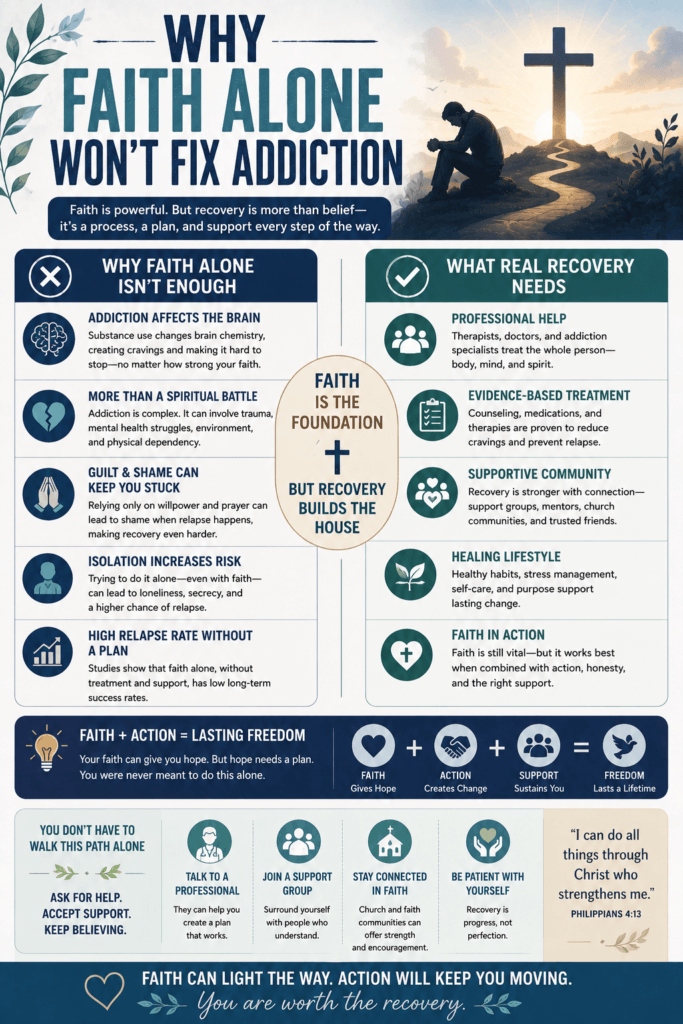
Addiction doesn’t just sit in one part of your life; it pops up everywhere. I often hear people say things like, “If you just had more faith, you’d be able to stop.” That sounds hopeful, but addiction is actually a mix of brain chemistry, environmental factors, past trauma, mental health struggles, and sometimes family history. Even folks with strong faith can end up stuck, simply because addiction rewires the brain and changes how people think, feel, and act.
The American Society of Addiction Medicine points out that addiction hijacks the brain’s reward system. That means even with the best intentions or deep spiritual beliefs, cravings and compulsions can overpower logical thinking. Getting past addiction isn’t just about motivation; it’s about healing the mind, body, and spirit together.
It’s important to realize that addiction often thrives in secrecy, loneliness, and shame. Many experts have found, through years of research, that when someone’s environment is filled with stress, trauma, or lack of support, the odds of developing an addiction go up dramatically. In those situations, faith becomes one of many coping mechanisms—helpful, for sure, but not a cure-all. That’s why addiction help often needs to bring together multiple tools: science, social connection, healthy habits, and spiritual guidance.
Why Faith Alone Feels So Appealing
It’s completely understandable that faith would be the first thing someone turns to. It offers purpose, meaning, and something hopeful to hang on to during dark times. Many people in recovery describe faith as a steady anchor. Faith communities can be amazingly supportive too, offering encouragement, meals, or a shoulder when life feels shaky.
For some, faith is also a way to make sense out of pain or guilt tied to addiction. When someone is isolated or judged, turning to spiritual teachings can feel safer than opening up to others. While leaning on faith is a source of comfort, it’s not always enough to untangle years of habits or challenges rooted deeply in biology or mental health.
Another reason faith is so appealing lies in its ability to inspire hope even in the darkest times. It provides unconditional acceptance and a vision of possible renewal. Yet, the journey through addiction recovery often asks for more than hope—it asks for tools that can address immediate needs, from medical crises to learning new behaviors. That’s why many people turn to faith and, with encouragement, also seek professional help. The two together work better than either alone.
Challenges That Come With “Faith Only” Recovery
- Ignoring the science: Leaving out medical facts about addiction or downplaying cravings and withdrawal usually results in repeated relapses, no matter how strong someone’s beliefs are.
- Stigma and shame: Sometimes, the message that “more faith” should fix addiction leaves people feeling like failures if things don’t change quickly. That extra shame does way more harm than good in recovery.
- Missing out on holistic help: Faith groups rarely offer trained therapists, addiction counselors, or medical detox services that are often necessary for safe and steady recovery.
- Risk of isolation: If someone is told not to seek medical treatment or outside support, they run the risk of feeling even more alone, which can actually drive addictive behavior to worsen.
In some cases, people have struggled to break the cycle of addiction because they felt pressure to “just have more faith” instead of seeking outside help. While faith is powerful, combining it with medical and emotional support can transform the recovery process.
What Actually Works: Blending Faith With Practical Support
The good news is that faith can absolutely play a role in recovery, and when it’s paired with solid treatment, outcomes improve significantly. Here are some of the most effective ways to treat addiction while honoring spiritual beliefs:
- Evidence-based therapies: Professional counseling, like cognitive behavioral therapy (CBT), helps rewire thinking and develop healthy coping skills. Adding faith-based counseling or mentorship programs can make things more relatable and comfortable for some people.
- Medical detox: When withdrawal symptoms are rough, having medical support beats relying on willpower alone. Safe detox is the starting line for many recovery adventures.
- Group support: Blending faith groups with programs like Alcoholics Anonymous (which has roots in spiritual values) can help people feel less alone and more understood.
- Healthy routines: Sleep, exercise, good food, and new hobbies all boost mental health. Spiritual routines, like daily prayer or meditation, fit right alongside these, giving structure and meaning.
Some treatment centers are specifically designed to blend faith and science. These places offer prayer sessions, pastoral care, or meditation, but also employ doctors and therapists who can handle the medical side of withdrawal, mental health counseling, and family therapy. This combination respects a person’s beliefs while ensuring that practical healthcare isn’t overlooked.
Understanding Relapse and Forgiveness in Recovery
Even after months or years of being clean, slipping up is surprisingly common. Some people worry that a relapse means they need “more faith,” or that they failed spiritually. I want to make it clear: relapse isn’t a moral failure, and it doesn’t mean faith has no value; it’s usually just a sign that more support or a different strategy is needed.
Forgiveness, both for yourself and from others, is really important here. Recovery is a marathon, not a sprint. Some days you run, some days you crawl. Blending faith with practical action builds patience and gives people the space to keep trying, even after setbacks.
It’s also helpful to seek forgiveness and encouragement from faith communities, which can offer support without judgment. Many people report that the compassion they receive from church groups, sponsors, or family members helps them bounce back after a relapse rather than sink further into shame.
Questions People Ask About Faith and Addiction
Can faith help with addiction at all?
Absolutely. Faith can inspire hope, offer community support, and build resilience. Still, faith works best alongside professional help, not as a standalone solution.
Is it wrong to pray for recovery?
There’s nothing wrong with prayer; in fact, many find it meaningful. Praying can bring comfort and hope, but pairing prayer with counseling, medical support, and lifestyle changes covers all bases for the ride ahead.
How do I find programs that respect my faith but still offer real help?
Look for “dualtrack” or “faith-friendly” treatment centers. These blend spiritual counseling with professional medical and psychological care. Sites like SAMHSA’s treatment locator can help you track down something that meets both your spiritual and medical needs.
Practical Steps to Take If You or Someone You Care About Is Struggling
- Reach out for help: This could mean talking to a doctor or therapist, or contacting an addiction helpline. Opening up to loved ones can sometimes be the first step.
- Find community: Faith groups, support meetings, and sober peer groups offer accountability, encouragement, and plenty of people who understand what you’re experiencing.
- Build a team: This might include a counselor, a sponsor, a doctor, a spiritual mentor, and trustworthy friends. The more well-rounded the support, the better.
- Embrace both faith and science: Using prayer, meditation, or spiritual reflection alongside medication or therapy can give a boost to long-term recovery; not just by changing habits, but by reshaping how you see yourself and your adventure.
Common Myths About Faith and Addiction Recovery
- “Addiction is just a lack of willpower or belief.”
This myth suggests that anyone can just “snap out of it” or pray harder. In reality, breaking addiction calls for more: medical care, new habits, and ongoing support. - “If you relapse, your faith just isn’t strong enough.”
No amount of faith guarantees perfect recovery. Stumbles are normal and part of the learning process, not a spiritual setback. - “Professional treatment isn’t necessary if you have faith.”
Skipping medical help can be dangerous, especially with withdrawal. Faith-based approaches work best as part of a larger treatment plan.
How Faith and Professional Help Can Work Together
I’ve seen people build long-lasting recovery by partnering spiritual practices, like prayer, scripture reading, or church involvement, with regular therapy, medication management, and accountability from sober communities. Many treatment centers now offer tailored programs that honor faith while providing evidence-based care.
For people who don’t feel comfortable in a strictly secular or strictly religious program, “integrated” or “faith-friendly” options are worth checking out. These programs often have staff who understand both spiritual and psychological angles, which really helps folks feel understood and supported throughout recovery.
In practice, this means you can, for example, attend a worship service for comfort and hope, then also see a counselor who specializes in addiction. You might work with a doctor to develop a medication plan for withdrawal, while also getting advice and encouragement from pastoral staff. Over time, these combined supports can strengthen not just your faith, but your practical ability to stay sober.
Wrapping up
Faith can do a lot of heavy lifting when facing addiction. It comforts, motivates, and inspires change. But expecting faith alone to “fix” addiction overlooks a ton of factors that shape lasting recovery. Pairing belief with medical care, therapy, and community support helps people build stronger, steadier lives, without feeling like setbacks are something to be ashamed of. If you’re on this adventure, or know someone who is, blending faith with practical help opens up more paths to healing, hope, and new beginnings. The road might not always be smooth, but with both spiritual and real-world support, recovery becomes not just possible, but genuinely sustainable for the long haul.
Video: You Need More Than Prayer to Beat This #recovery #sobriety