Anxiety and depersonalization can seem like completely different beasts, but if you’ve experienced either— or both— you know they often show up together or get mistaken for one another. Getting a handle on what sets them apart really helps when you’re trying to manage your mental health or support someone who’s struggling. In this article, I’m sharing what I’ve learned about both, plus some practical ideas for handling whatever comes your way.
Understanding Anxiety and Depersonalization: What Are They?
Anxiety is probably one of the most commonly talked about mental health experiences. It’s that wired, restless feeling you get before a big test, a job interview, or even during totally random quiet moments. Everyone feels anxious sometimes, but when those feelings are strong, frequent, or stick around a lot longer than they feel fair, they can make everyday life much harder.
Depersonalization isn’t as widely discussed, but it’s surprisingly common. Depersonalization happens when you feel detached from your body, your thoughts, or even the world around you. People describe it as feeling “out of it,” almost like you’re watching yourself in a movie or walking through a weird dream. These feelings aren’t about being numb or spaced out on purpose. They just sneak up, especially when stress is high.
Anxiety and depersonalization share some overlap since both can bring a sense of unreality or confusion. But their actual experiences are very different, and they respond best to different approaches to coping or getting support.
Key Differences Between Anxiety and Depersonalization
I find it’s helpful to break down what makes these two experiences unique:
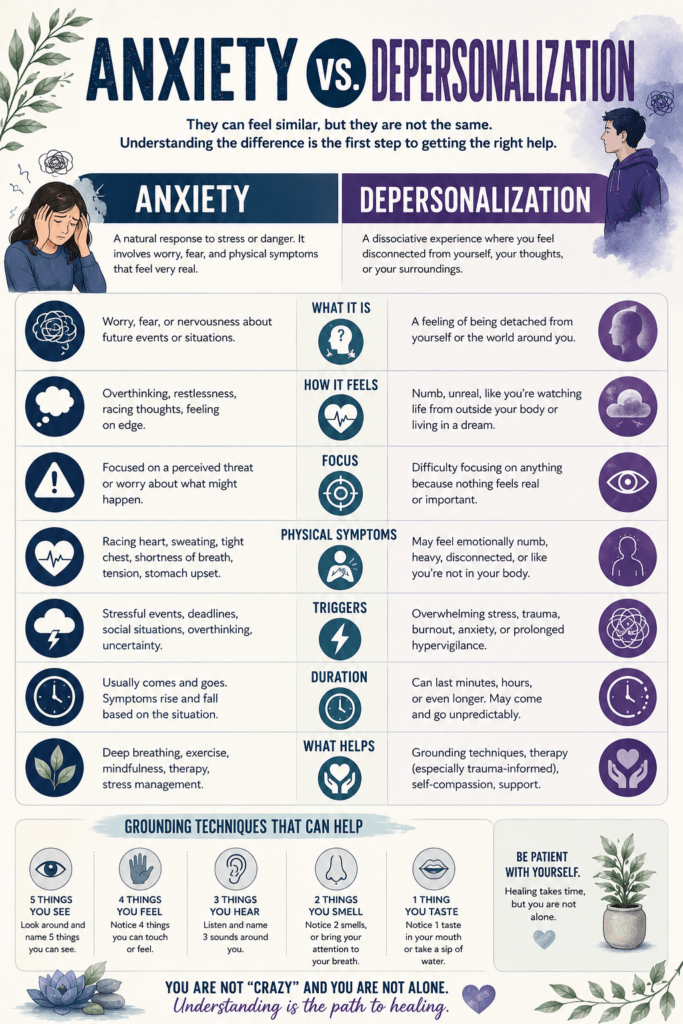
- Anxiety: Intense worry, nervousness, racing heart, sweaty palms, racing thoughts, restlessness.
- Depersonalization: Feeling like you’re outside your body, feeling emotionally numb, the world seems foggy or unreal, and time might feel distorted.
While anxiety is mostly about being almost too present— overwhelmed with fear or panic— depersonalization feels like stepping out of your own life, as if your emotions and experiences are happening somewhere far away.
They aren’t true opposites. Depersonalization often shows up as a response to high anxiety, especially during panic attacks. It’s like your brain’s way of taking a break when things get overwhelming. Sometimes you might get caught up in a loop: anxiety sparks depersonalization, then that strangeness fuels even more anxiety (“Why do I feel so weird? Am I losing it?”). This cycle can keep going unless you break it.
Why Does Depersonalization Sometimes Follow Anxiety?
The brain is wild. When anxiety spikes, your system jumps into fight or flight mode— heart races, breathing gets shallow, and adrenaline surges. For some people, especially when the stress doesn’t let up, a switch flips, and depersonalization sets in. It’s almost like your mind tries to cushion the blow from intense emotions by creating a buffer between “you” and what’s happening.
Think of it like watching an uncomfortable scene in a movie. You’re still there, but you check out a bit, so you don’t have to feel the full brunt of it. This feeling can last a few minutes or linger for hours—sometimes even days—depending on what triggered it and how your body and mind respond.
Some may even feel like they can’t control when they slip into that state, and that’s absolutely normal. The trick is learning to spot when it’s happening and figuring out gentle ways to reconnect with yourself and the present moment.
Common Triggers for Each Experience
Knowing what tends to spark anxiety or depersonalization can change how you cope with both. Some triggers overlap, but here are a few that come up often:
- Anxiety triggers: Stress at work or school, relationship problems, caffeine or other stimulants, big life changes, lack of sleep, health scares.
- Depersonalization triggers: Panic attacks, trauma, social stress, extreme fatigue, intense emotional events, and overstimulation.
It’s pretty common for someone managing a flood of anxiety to start noticing depersonalization symptoms just after— or during— those anxious moments. A lot of people find that really scary, but it’s the body’s way of handling overload; it’s not a sign of deeper trouble.
Recognizing the Signs: When Should I Be Concerned?
Some anxiety is part of being human, especially during stressful times. Feeling detached every so often is also normal, especially if you’re going through something tough. But if these feelings don’t fade or start messing with work, home life, or friendships, that’s when it’s worth checking in with someone—a therapist, counselor, or doctor.
- If anxious feelings or relentless worry keep you from your normal day, reach out for support.
- If you keep feeling like you’re in a dream or don’t recognize yourself in the mirror, talk to someone about it instead of brushing it off.
Both anxiety and depersonalization are treatable, and you don’t have to just power through alone.
Steps for Managing Anxiety and Depersonalization
I’ve picked up a lot of handy tips for dealing with anxiety and depersonalization. Here’s a run-down of what helps, whether you’re trying to keep symptoms at bay or need a lifeline during a rough patch:
- Grounding Exercises: When I start feeling spacey, I ground myself by naming five things I can see, four I can feel, three I can hear, and so on. It’s simple but surprisingly effective at pulling me back into the present.
- Slow, Deep Breathing: Slowing your breath works wonders for calming that fight-or-flight response. I like “box breathing”— breathe in for four, hold for four, out for four, hold for four counts before repeating.
- Stay Active: Physical movement lets out pent-up energy and reconnects you with your body. Even a short walk can reboot your mindset.
- Avoid Caffeine and Stimulants: These make anxiety and depersonalization feel worse for lots of people. Swapping coffee for herbal tea or water can make a noticeable difference when things are rough.
- Talk It Out: Sharing what you’re feeling, even if it sounds odd, takes a lot of weight off your shoulders. Talk to a friend, family member, or counselor.
- Limit Triggers When Possible: Notice which situations or habits make things worse for you. Small adjustments—like reducing social media use or getting better sleep—can help more than you’d think.
Things to Watch For When Anxiety and Depersonalization Overlap
Because anxiety and depersonalization are connected, you might notice both at once— and the mix can get confusing. Here are some things I’ve found helpful if you get stuck in that loop:
- Don’t Panic About Depersonalization: It feels strange, but it isn’t dangerous. Reminding yourself it’s temporary makes it much easier to handle.
- Schedule Rest: This combo can sap your energy; getting enough sleep, eating well, and making time for downtime all help your system reset.
- Mindfulness Practices: Simple practices, such as those offered by Headspace or Calm, help train your mind to stay present rather than drifting off.
- Professional Help: Long-term or really disruptive symptoms may call for extra support. Therapists with experience in anxiety and dissociation (the technical term for depersonalization) can set up strategies just for you.
Practical Examples: What It Looks Like in Everyday Life
I remember working with a client who described anxiety as feeling like he was “amped up to 100,” while depersonalization felt like “the world suddenly switched to low volume, and I couldn’t reach myself.” He’d get anxious before a presentation, and as his stress peaked, he felt like he was floating above himself, watching instead of participating. Knowing what each feeling was helped him use the right coping skills for each situation, instead of fighting them or feeling he was “seriously wrong.”
Frequently Asked Questions
Question: Can you have anxiety without ever experiencing depersonalization?
Answer: Definitely. Not everyone who deals with anxiety will get depersonalization. It’s just one way your mind and body might react to stress, not something everyone experiences.
Question: Does depersonalization always mean something serious is going on?
Answer: No. Most of the time, depersonalization is a temporary response to stress or anxiety. It doesn’t automatically mean you have a disorder, but if it lingers or messes with daily life, check in with a mental health professional.
Question: Can therapy help manage both anxiety and depersonalization?
Answer: Therapy is really helpful for both. Cognitive Behavioral Therapy (CBT) and acceptance-based approaches often offer practical tools for calming anxiety and reducing stress that brings on depersonalization.
Tips for Friends and Family: Supporting Someone Dealing with Both
If you’re close to someone wrestling with anxiety or depersonalization, patience is key. Listen without judgment and avoid telling them to “just snap out of it.” Encourage them to talk things through, remind them these experiences are more common than they seem, and help them stick to routines that boost mental health, like getting exercise, plenty of sleep, and staying connected.
Being there in a kind, steady way—even if you can’t fix it—makes the ride much smoother for someone going through these challenges.
Final Thoughts
Understanding the difference between anxiety and depersonalization makes it easier to respond to each experience in ways that feel right. Instead of feeling lost in the symptoms, you can put words to what you’re facing and create space for healing. Paying attention to your mind and body, reaching out for help when you need it, and practicing practical coping skills are all important for a stronger sense of well-being, whether you’re facing anxiety, depersonalization, or both. Remember: these experiences don’t define you, and support is always out there.
Video: Anxiety vs Depersonalization — What’s Actually Happening #psychology #shorts