Family plays a central role in the recovery process, often serving as one of the most immediate and influential support systems for individuals overcoming addiction. The way family members communicate, respond to stress, and provide support can significantly impact whether a person maintains recovery or experiences relapse. Relapse is not simply a single event but a gradual process influenced by emotional, psychological, and environmental factors—many of which are shaped within the family dynamic. Understanding how family interactions contribute to both risk and protection is essential for building a supportive environment that promotes long-term sobriety.
Family Influence on Relapse Prevention: Building a Foundation for Lasting Recovery
Recovery from addiction is not a one-time event but an ongoing process that requires consistent support, awareness, and healthy coping strategies. One of the most powerful influences on long-term recovery is the role of family. Families can either strengthen recovery efforts or unintentionally contribute to relapse, depending on communication patterns, emotional dynamics, and the level of support provided. Understanding how family involvement shapes relapse prevention is essential for creating a stable and encouraging environment.
Family members often serve as the closest support system, making their role especially important in recognizing triggers, reinforcing positive behaviors, and helping individuals stay accountable. With the right strategies, families can become a protective factor that reduces the risk of relapse and promotes long-term success.
Understanding Relapse as a Process
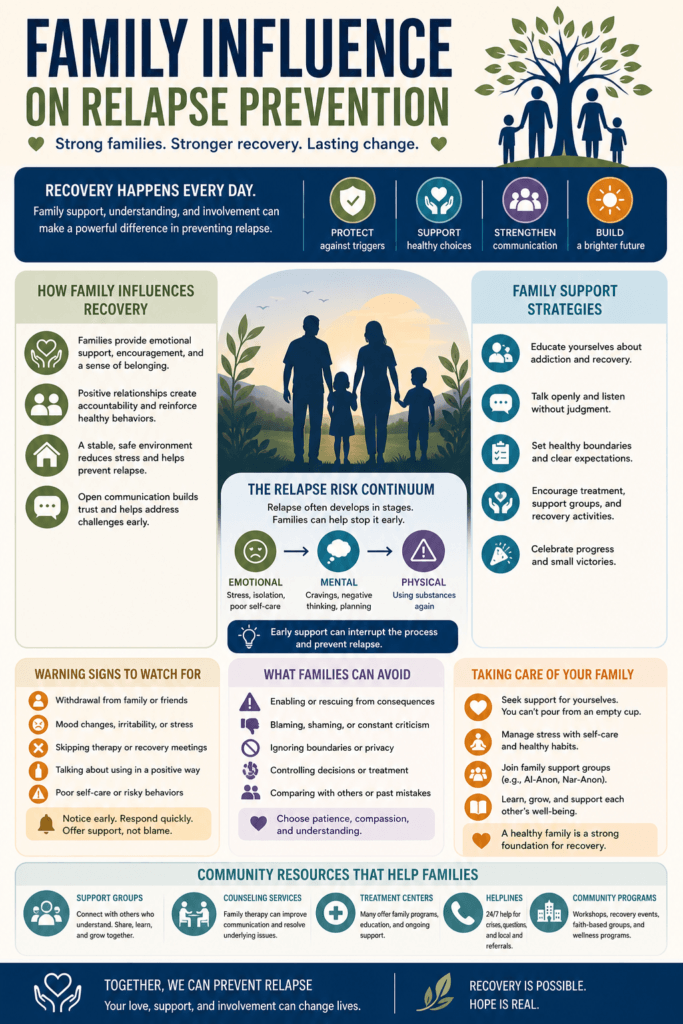
Relapse is not simply a single event but a gradual process that can begin with emotional or mental struggles before physical substance use occurs.
Key stages include:
- Emotional relapse: Stress, isolation, or poor self-care
- Mental relapse: Cravings, romanticizing past use, internal conflict
- Physical relapse: Returning to substance use
Families who understand these stages are better prepared to intervene early.
Creating a Supportive Home Environment
A stable and positive environment can significantly reduce relapse risk.
Ways families can help:
- Maintain a calm, low-conflict atmosphere
- Encourage healthy routines (sleep, meals, exercise)
- Remove triggers or substances from the home
- Support structure and consistency in daily life
A predictable environment promotes emotional safety and stability.
Effective Communication and Emotional Support
Healthy communication builds trust and reduces feelings of isolation.
Helpful strategies:
- Use nonjudgmental and supportive language
- Practice active listening
- Encourage open discussions about struggles and triggers
- Avoid blame, criticism, or shame
When individuals feel understood, they are more likely to seek help during difficult moments.
Encouraging Accountability Without Control
Balancing support with independence is crucial.
Healthy approaches include:
- Setting clear expectations and boundaries
- Encouraging responsibility for recovery actions
- Avoiding enabling behaviors (e.g., covering up mistakes)
- Supporting participation in treatment or support groups
Accountability helps individuals stay committed while maintaining autonomy.
Recognizing Triggers and Warning Signs
Families can help identify early signs of potential relapse.
Common warning signs:
- Withdrawal from family or support systems
- Increased stress or mood changes
- Skipping therapy or recovery meetings
- Talking about past substance use in a positive way
Early recognition allows for timely support and intervention.
Participating in Recovery Activities
Active involvement can strengthen recovery efforts.
Ways to stay involved:
- Attend family therapy sessions
- Join support groups for families
- Learn coping and relapse prevention strategies together
- Celebrate milestones and progress
Shared involvement reinforces a sense of teamwork in recovery.
Taking Care of Family Well-Being
Families must also prioritize their own health to remain effective supporters.
Self-care strategies:
- Seek counseling or peer support
- Set emotional and physical boundaries
- Take time for rest and personal activities
- Avoid burnout by sharing responsibilities
A healthy family system benefits everyone involved.
Final Thoughts
Family influence plays a crucial role in relapse prevention by providing emotional support, structure, and accountability. Through education, open communication, and healthy boundaries, families can help create an environment that supports long-term recovery. While challenges may arise, consistent and informed family involvement can make a lasting difference in helping individuals maintain sobriety and build a healthier future.
Self-Management Strategies for Understanding Family Influence on Relapse Prevention
Recovery from addiction is not only influenced by external support systems but also by an individual’s ability to manage their own thoughts, behaviors, and relationships. Family plays a powerful role in relapse prevention, but understanding how to navigate that influence requires self-awareness and intentional effort. Self-management strategies help individuals recognize how family dynamics affect their recovery and empower them to respond in healthy, constructive ways.
By developing personal insight and coping skills, individuals can better use family support as a strength while minimizing potential stressors or triggers. This balance is essential for maintaining long-term recovery and emotional stability.
Building Self-Awareness of Family Dynamics
Understanding how family interactions impact your recovery is the first step.
Key strategies include:
- Reflecting on how family behaviors affect your emotions and cravings
- Identifying patterns such as conflict, criticism, or over-dependence
- Recognizing supportive versus triggering interactions
- Journaling experiences with family to track emotional responses
This awareness helps you respond thoughtfully rather than react impulsively.
Setting Personal Boundaries
Healthy boundaries protect your recovery while maintaining relationships.
Examples of self-management boundaries:
- Limiting exposure to stressful or toxic interactions
- Communicating your needs clearly and respectfully
- Saying no to situations that may trigger relapse
- Prioritizing recovery over pleasing others
Boundaries create a sense of control and emotional safety.
Managing Emotional Responses
Family interactions can bring up strong emotions that may increase relapse risk.
Effective coping techniques:
- Practicing mindfulness and deep breathing
- Pausing before reacting during conflict
- Using positive self-talk to reduce negative thinking
- Seeking space when feeling overwhelmed
Managing emotions reduces impulsive decisions and supports stability.
Improving Communication Skills
Clear communication helps reduce misunderstandings and stress.
Helpful communication strategies:
- Expressing feelings using “I” statements
- Being honest about needs and challenges
- Listening actively without becoming defensive
- Asking for support in specific, practical ways
Strong communication strengthens relationships and recovery support.
Recognizing Personal Triggers Linked to Family
Family situations can sometimes act as relapse triggers.
Common triggers include:
- Unresolved conflict or past trauma
- Feeling judged, misunderstood, or pressured
- Family gatherings involving substance use
- Emotional stress from caregiving or expectations
Identifying these triggers allows for proactive planning and coping.
Creating a Personal Relapse Prevention Plan
Self-management includes having a clear plan for high-risk situations.
Key components:
- Identifying early warning signs of relapse
- Listing coping strategies and healthy alternatives
- Having emergency contacts or support systems ready
- Planning how to handle difficult family situations
Preparation increases confidence and reduces risk.
Balancing Independence and Support
While family support is valuable, maintaining personal responsibility is essential.
Ways to maintain balance:
- Taking ownership of your recovery decisions
- Avoiding over-reliance on family members
- Continuing therapy or support group participation
- Setting personal goals outside of family expectations
This balance fosters long-term independence and resilience.
Final Thoughts
Self-management strategies are essential for understanding and navigating the influence of family on relapse prevention. By building awareness, setting boundaries, and developing healthy coping and communication skills, individuals can transform family relationships into a source of strength rather than stress. Recovery is ultimately a personal journey, but with the right self-management tools, individuals can create a supportive environment that promotes lasting change and well-being.
Family Support Strategies for Understanding the Influence of Family on Relapse Prevention
Recovery from addiction is a long-term process that is deeply influenced by the environment surrounding an individual—especially their family. Families can play a powerful role in relapse prevention by offering stability, encouragement, and accountability. However, to be effective, family members must understand how their actions, communication styles, and emotional responses impact recovery. With the right strategies, families can become a strong protective factor against relapse.
Family support is not about control or perfection; it is about creating a balanced, informed, and compassionate environment that promotes healing. When families actively engage in supportive practices, they help reinforce positive behaviors and reduce the likelihood of setbacks.
Educating the Family About Relapse and Recovery
Understanding relapse as a process—not a failure—is essential for effective support.
Key strategies include:
- Learning the stages of relapse (emotional, mental, physical)
- Understanding triggers and high-risk situations
- Recognizing that recovery involves ongoing effort and setbacks
- Participating in educational programs or family therapy
Education helps families respond with empathy rather than frustration.
Creating a Supportive and Stable Environment
A consistent home environment can significantly reduce relapse risk.
Ways to create stability:
- Maintain predictable routines and structure
- Reduce household conflict and stress
- Remove substances or triggers from the home
- Encourage healthy habits like sleep, nutrition, and exercise
A calm environment promotes emotional safety and focus on recovery.
Using Healthy Communication Techniques
Open and respectful communication strengthens trust and connection.
Effective communication strategies:
- Use nonjudgmental language and tone
- Express concern with “I” statements rather than blame
- Practice active listening without interrupting
- Encourage honest conversations about struggles and progress
Positive communication reduces defensiveness and encourages openness.
Setting and Maintaining Healthy Boundaries
Boundaries help balance support with accountability.
Examples of healthy boundaries:
- Not enabling substance use or covering up consequences
- Refusing to provide money or access to substances
- Encouraging responsibility for recovery actions
- Protecting personal well-being and safety
Clear boundaries support both recovery and family health.
Recognizing Warning Signs of Relapse
Families can play a key role in early detection of relapse risk.
Common warning signs include:
- Withdrawal from family or support systems
- Mood changes, irritability, or increased stress
- Skipping therapy, meetings, or recovery activities
- Talking about past substance use in a positive way
Early recognition allows for timely support and intervention.
Encouraging Ongoing Treatment and Support
Continued engagement in recovery resources is essential.
Ways families can help:
- Support attendance at therapy or counseling sessions
- Encourage participation in support groups
- Help with transportation or scheduling if needed
- Celebrate milestones and progress
Ongoing involvement reinforces commitment to recovery.
Supporting Family Self-Care
Families must also take care of themselves to provide effective support.
Self-care strategies include:
- Joining family support groups (e.g., Al-Anon–type programs)
- Seeking individual counseling
- Setting aside time for rest and personal interests
- Sharing responsibilities among family members
Healthy families are better equipped to sustain long-term support.
Final Thoughts
Family support strategies are essential for understanding and strengthening the family’s influence on relapse prevention. Through education, communication, boundaries, and consistent encouragement, families can create an environment that supports long-term recovery. While challenges may arise, informed and compassionate family involvement can make a meaningful difference in helping individuals maintain sobriety and build a healthier future.
Community Resource Strategies for Understanding Family Influence on Relapse Prevention
Recovery from addiction is shaped not only by individual effort and family support but also by the broader community. Community resources provide education, structure, and support systems that help families better understand their role in relapse prevention. When families are connected to these resources, they gain tools to improve communication, set healthy boundaries, and respond effectively to challenges in recovery.
Communities act as an extension of the family system, offering guidance and reinforcement that strengthens both the individual in recovery and their loved ones. By utilizing these resources, families can move from uncertainty to informed, proactive support.
Accessing Family-Focused Education Programs
Community education helps families understand addiction and relapse in a structured way.
Key resources include:
- Workshops on addiction and relapse prevention
- Family education programs offered by treatment centers
- Public health seminars on substance use and recovery
- Online courses and webinars for flexible learning
These programs provide practical knowledge that families can apply in everyday situations.
Participating in Family Support Groups
Peer support for families is a powerful way to gain insight and reduce isolation.
Examples of support groups:
- Al-Anon or Nar-Anon programs
- Community-based family recovery groups
- Faith-based or culturally specific support groups
- Online forums and virtual meetings
These groups allow families to share experiences, learn coping strategies, and feel less alone.
Utilizing Counseling and Therapy Services
Professional guidance can help families navigate complex dynamics that influence relapse.
Available services may include:
- Family therapy sessions
- Individual counseling for family members
- Group therapy focused on communication and conflict resolution
- Programs addressing co-dependency and enabling behaviors
Therapy helps families develop healthier interaction patterns that support recovery.
Community-Based Recovery Programs
Programs within the community can reinforce family involvement in recovery.
Supportive programs include:
- Outpatient treatment programs with family participation
- Recovery coaching and case management services
- Sober living environments that include family engagement
- Wellness programs promoting healthy lifestyles
These services create a network of accountability and support beyond the home.
Crisis Intervention and Support Services
Communities provide immediate assistance during high-risk situations.
Important resources include:
- 24/7 crisis hotlines
- Emergency mental health services
- Mobile crisis response teams
- Local intervention specialists
Quick access to help allows families to respond effectively during moments of relapse risk.
Promoting Community Awareness and Reducing Stigma
A supportive community environment makes it easier for families to engage in recovery efforts.
Strategies to improve awareness:
- Community campaigns that frame addiction as a health condition
- Educational events that encourage open discussion
- Sharing recovery success stories
- Promoting nonjudgmental language and attitudes
Reducing stigma encourages families to seek help without fear of shame or judgment.
Encouraging Collaboration Between Families and Community Providers
Strong partnerships enhance recovery outcomes.
Ways to collaborate:
- Communicating regularly with healthcare providers
- Participating in treatment planning when appropriate
- Attending family-inclusive recovery events
- Staying informed about available local resources
Collaboration ensures that families are aligned with professional guidance and support systems.
Final Thoughts
Community resource strategies play a crucial role in helping families understand and strengthen their influence on relapse prevention. By connecting with educational programs, support groups, therapy services, and crisis resources, families gain the tools needed to support recovery effectively. When families and communities work together, they create a powerful network that promotes resilience, reduces the risk of relapse, and supports long-term healing.
Frequently Asked Questions
Here are some common questions:
1. Why is family important in relapse prevention?
Family members often provide daily support, structure, and emotional connection. A supportive family environment can reduce stress, reinforce healthy behaviors, and help individuals stay committed to recovery.
2. Can family dynamics increase the risk of relapse?
Yes. High conflict, lack of communication, enabling behaviors, or misunderstanding addiction can increase stress and trigger relapse. Family influence can be either protective or harmful depending on these dynamics.
3. What does “relapse prevention” mean?
Relapse prevention refers to strategies and skills used to avoid returning to substance use. It includes recognizing triggers, managing stress, and maintaining supportive relationships—especially within the family.
4. How can families recognize early warning signs of relapse?
Common signs include:
- Withdrawal from family or support systems
- Mood changes (irritability, anxiety, depression)
- Skipping therapy or recovery meetings
- Talking about past substance use positively
- Changes in sleep or daily routines
5. What are healthy ways for families to support recovery?
- Offer encouragement and emotional support
- Maintain open and honest communication
- Help create a stable, low-stress environment
- Encourage participation in treatment and support groups
- Celebrate progress and milestones
6. What are enabling behaviors, and why are they harmful?
Enabling behaviors are actions that unintentionally support substance use, such as covering up mistakes, providing money, or avoiding consequences. These behaviors can delay recovery and increase relapse risk.
7. How can families set healthy boundaries?
Examples include:
- Saying no to unsafe or harmful requests
- Not providing substances or money for misuse
- Encouraging responsibility for recovery
- Protecting personal well-being
Boundaries create accountability while maintaining support.
8. How should families communicate with a loved one in recovery?
- Use calm, nonjudgmental language
- Express concern using “I” statements
- Listen actively without interrupting
- Avoid blame, shame, or criticism
Healthy communication builds trust and openness.
9. What should families do if they suspect a relapse?
- Address concerns calmly and early
- Encourage the individual to seek professional help
- Avoid panic, blame, or confrontation
- Reconnect with treatment providers or support systems
Early action can prevent a full relapse.
10. Can families participate in treatment?
Yes. Many programs offer family therapy, education sessions, and support groups. Family involvement often improves recovery outcomes.
11. How can families take care of themselves?
Supporting someone in recovery can be stressful.
Self-care strategies include:
- Joining family support groups (e.g., Al-Anon–type programs)
- Seeking counseling or therapy
- Taking time for rest and personal activities
- Setting emotional and physical boundaries
12. What role does trust play in relapse prevention?
Trust is essential but must be rebuilt over time. Families can support this process by being consistent, honest, and patient while also maintaining appropriate boundaries.
13. Is relapse a failure?
No. Relapse can be part of the recovery process. It signals that adjustments may be needed in coping strategies, support systems, or treatment plans.
Conclusion
Family influence on relapse prevention is both powerful and complex. When families are informed, supportive, and able to maintain healthy boundaries, they can greatly reduce the risk of relapse and strengthen recovery outcomes. On the other hand, unresolved conflict, lack of understanding, or enabling behaviors can increase vulnerability. By focusing on education, open communication, and shared responsibility, families can create a stable foundation that supports lasting change. Ultimately, recovery is a collective effort, and positive family involvement can make a meaningful difference in sustaining long-term health and well-being.
Video: Family and Relapse Prevention: How to Help Your Loved One Stay Sober