Benzodiazepines are a class of medications commonly prescribed to treat anxiety, insomnia, and seizure disorders. Drugs such as Alprazolam, Diazepam, and Lorazepam are effective when used as directed for short-term relief. However, prolonged use or misuse can lead to tolerance, dependence, and in some cases Benzodiazepine Use Disorder. Because these medications act on the central nervous system to produce calming effects, they carry a risk of both physical and psychological reliance. Understanding how misuse develops—and the factors that contribute to dependency—is essential for promoting safe use, early intervention, and effective treatment strategies.
Benzodiazepine Misuse and Dependence: Understanding the Risks, Signs, and Path to Recovery
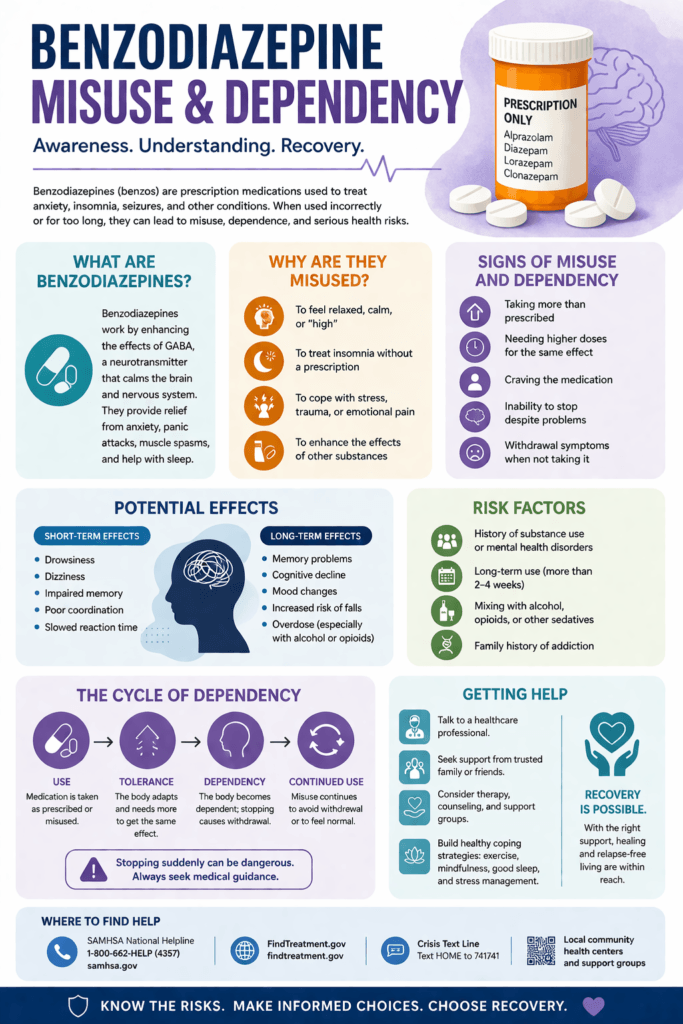
Benzodiazepines—often called “benzos”—are a class of medications commonly prescribed to treat anxiety, insomnia, seizures, and muscle spasms. Drugs such as Alprazolam, Diazepam, and Lorazepam can be highly effective when used as directed. However, their calming effects also make them prone to misuse, especially when taken in higher doses, for longer periods than prescribed, or in combination with other substances.
Over time, repeated use can lead to tolerance—meaning the body requires more of the drug to achieve the same effect. This often progresses into dependence, where the body and brain begin to rely on the medication to function normally. In some cases, this can develop into Benzodiazepine Use Disorder, a condition marked by compulsive use despite harmful consequences.
Why Benzodiazepines Can Be Risky
Benzodiazepines work by enhancing the effects of GABA, a neurotransmitter that slows down brain activity. While this produces a calming effect, it also depresses the central nervous system, which can become dangerous when misused.
Key risk factors include:
- Long-term use beyond prescribed duration
- Increasing dosage without medical guidance
- Combining with alcohol or opioids
- History of substance use disorders
- Using benzos for emotional coping rather than medical need
Signs of Misuse and Dependence
Recognizing the warning signs early can make a significant difference in outcomes.
Common indicators include:
- Taking more medication than prescribed
- Craving the drug or feeling unable to relax without it
- Doctor shopping or seeking multiple prescriptions
- Drowsiness, confusion, or impaired coordination
- Withdrawal symptoms (anxiety, insomnia, tremors) when stopping
Dependence can develop even in individuals who initially used benzodiazepines exactly as prescribed, especially with long-term use.
Short- and Long-Term Effects
Misuse of benzodiazepines can affect both physical and mental health.
Short-term effects:
- Sedation and drowsiness
- Memory impairment
- Slowed reaction time
- Poor judgment
Long-term effects:
- Cognitive decline and memory issues
- Increased risk of falls or accidents
- Emotional blunting or depression
- Greater likelihood of overdose—especially when combined with opioids
Withdrawal and Its Challenges
Stopping benzodiazepines abruptly can be dangerous. Withdrawal symptoms can range from mild to severe and may include:
- Severe anxiety and panic attacks
- Insomnia and restlessness
- Sweating and heart palpitations
- Seizures (in severe cases)
Because of these risks, tapering under medical supervision is strongly recommended rather than quitting “cold turkey.”
Pathways to Recovery
Recovery from benzodiazepine dependence is possible, but it often requires a structured and supportive approach.
Effective strategies include:
- Medically supervised tapering to safely reduce dosage
- Cognitive Behavioral Therapy (CBT) to address underlying anxiety or triggers
- Support groups for accountability and shared experiences
- Holistic approaches like mindfulness, exercise, or yoga
- Treatment of co-occurring disorders such as anxiety or depression
Final Thoughts
Benzodiazepines can be helpful medications, but they carry real risks when misused. Understanding how dependence develops—and recognizing the signs early—can prevent serious consequences. With proper medical care, psychological support, and lifestyle changes, individuals can safely navigate recovery and regain control over their health.
Self-Management Strategies for Understanding and Addressing Benzodiazepine Misuse and Dependence
Benzodiazepines—such as Alprazolam, Diazepam, and Lorazepam—are widely prescribed for anxiety, insomnia, and related conditions. While effective in the short term, prolonged or unsupervised use can lead to tolerance, dependence, and in some cases Benzodiazepine Use Disorder. Understanding how to manage one’s own use—and recognizing early warning signs—is a critical step in preventing misuse and supporting recovery.
Self-management does not replace medical care, but it empowers individuals to take an active role in their health. By combining awareness, structure, and support, people can reduce risks and build healthier coping strategies.
Building Awareness and Insight
The first step in self-management is understanding your relationship with the medication. This involves recognizing patterns, triggers, and motivations behind use.
Helpful approaches include:
- Keeping a daily log of dosage, timing, and emotional state
- Identifying triggers such as stress, insomnia, or social anxiety
- Learning about how benzodiazepines affect the brain and body
- Reflecting on whether use is medically necessary or emotionally driven
Developing this awareness helps shift use from automatic behavior to intentional decision-making.
Establishing Safe Medication Practices
Consistency and structure are key to reducing the risk of misuse.
Best practices include:
- Taking medication exactly as prescribed—no extra doses
- Avoiding mixing benzodiazepines with alcohol or other sedatives
- Using one prescribing provider and one pharmacy
- Scheduling regular check-ins with a healthcare professional
- Setting reminders to prevent accidental overuse
These strategies create clear boundaries that support safer use.
Managing Stress Without Over-Reliance on Medication
Many individuals begin using benzodiazepines to cope with anxiety or stress. Expanding coping tools is essential for long-term stability.
Alternative coping strategies:
- Deep breathing exercises and progressive muscle relaxation
- Mindfulness meditation or yoga
- Physical activity such as walking or stretching
- Journaling thoughts and emotions
- Engaging in hobbies or social support networks
Strengthening these skills often reduces reliance on medication over time.
Recognizing Early Warning Signs
Early detection of misuse can prevent more serious dependence.
Watch for:
- Increasing dosage without medical approval
- Feeling unable to function or relax without the medication
- Frequent thoughts about when to take the next dose
- Using medication for non-medical reasons (e.g., emotional escape)
- Experiencing mild withdrawal symptoms between doses
Acknowledging these signs early allows for timely intervention.
Planning for Gradual Reduction (If Needed)
If dependence has developed, self-management includes preparing for change—always with medical guidance.
Key considerations:
- Never stop abruptly due to withdrawal risks
- Work with a provider on a gradual tapering schedule
- Track symptoms during dose reduction
- Build a support system (friends, family, or support groups)
- Celebrate small progress milestones
A structured plan increases safety and success during reduction.
Strengthening Long-Term Recovery Habits
Sustained change requires ongoing effort and lifestyle adjustments.
Supportive habits include:
- Maintaining a consistent sleep routine
- Practicing stress management daily
- Attending therapy such as Cognitive Behavioral Therapy (CBT)
- Staying connected with supportive individuals
- Setting realistic goals for mental and physical health
Final Thoughts
Self-management strategies play a vital role in understanding and addressing benzodiazepine misuse and dependence. While professional guidance is essential—especially for tapering or withdrawal—personal awareness, structure, and healthy coping mechanisms can significantly improve outcomes. With the right tools and support, individuals can regain control, reduce reliance on medication, and move toward a more balanced and sustainable recovery.
Family Support Strategies for Understanding Benzodiazepine Misuse and Dependence
Benzodiazepines—such as Alprazolam, Diazepam, and Lorazepam—are commonly prescribed for anxiety and sleep disorders, but long-term or unmonitored use can lead to dependence and, in some cases, Benzodiazepine Use Disorder. While recovery is a deeply personal process, family support often plays a critical role in recognizing misuse, encouraging treatment, and maintaining long-term stability.
Families are not responsible for causing or “fixing” addiction, but they can influence recovery in meaningful ways. With education, communication, and healthy boundaries, loved ones can become a strong source of stability and encouragement.
Understanding Benzodiazepine Misuse as a Family
One of the most important steps families can take is learning about how benzodiazepines affect the brain and behavior. Misuse is often misunderstood as a lack of willpower, when in reality it involves complex physical and psychological dependence.
Ways families can build understanding:
- Learning about tolerance, dependence, and withdrawal
- Recognizing that misuse can develop even with prescribed use
- Understanding the risks of combining benzodiazepines with alcohol or other drugs
- Attending educational sessions or family therapy
This knowledge reduces stigma and promotes empathy, which is essential for effective support.
Recognizing Signs of Misuse and Dependence
Families are often the first to notice changes in behavior or health.
Common warning signs include:
- Increased drowsiness, confusion, or memory problems
- Taking higher doses or running out of medication early
- Mood swings, irritability, or withdrawal from family activities
- Visiting multiple doctors for prescriptions
- Difficulty functioning without the medication
Early recognition allows families to respond before the situation worsens.
Effective Communication Strategies
Open, respectful communication can encourage a loved one to seek help without feeling judged or attacked.
Helpful approaches:
- Use “I” statements (e.g., “I’m concerned about your health”)
- Avoid blame, criticism, or ultimatums
- Choose a calm, private time to talk
- Listen actively without interrupting
- Focus on safety and well-being rather than control
Constructive conversations can build trust and reduce defensiveness.
Setting Healthy Boundaries
Support does not mean enabling. Families must balance compassion with clear limits.
Examples of healthy boundaries:
- Not providing extra medication or covering up misuse
- Refusing to support unsafe behaviors
- Encouraging professional help instead of trying to manage it alone
- Protecting one’s own emotional and physical well-being
Boundaries help maintain accountability while preserving family stability.
Supporting Treatment and Recovery
Recovery is often more successful when families are involved in the process.
Ways to support recovery:
- Encouraging medical supervision for tapering (never abrupt stopping)
- Participating in family therapy or counseling
- Helping with transportation to appointments or meetings
- Creating a low-stress, supportive home environment
- Celebrating progress, no matter how small
Family involvement can improve motivation and reduce the risk of relapse.
Taking Care of Yourself as a Supporter
Supporting someone with dependence can be emotionally exhausting. Families must also care for their own well-being.
Self-care strategies for family members:
- Seeking support groups for families (e.g., Al-Anon–type programs)
- Setting aside time for personal rest and activities
- Talking with a counselor or therapist
- Avoiding burnout by sharing responsibilities
When family members are supported, they are better able to help others.
Final Thoughts
Family support is a powerful component in understanding and addressing benzodiazepine misuse and dependence. Through education, communication, and healthy boundaries, families can foster an environment that encourages recovery while protecting their own well-being. With patience and the right support systems in place, both individuals and their families can move toward healing and long-term stability.
Community Resource Strategies for Understanding Benzodiazepine Misuse and Dependence
Benzodiazepines—such as Alprazolam, Diazepam, and Lorazepam—are commonly prescribed to manage anxiety, insomnia, and other conditions. While effective when used appropriately, long-term use or misuse can lead to dependence and, in some cases, Benzodiazepine Use Disorder. Addressing this issue goes beyond individual effort—community resources play a vital role in education, prevention, treatment, and recovery support.
Communities provide a network of services that help individuals and families better understand benzodiazepine misuse and access the tools needed for recovery. When used effectively, these resources can reduce stigma, improve outcomes, and create safer environments.
Accessing Local Healthcare and Treatment Services
Healthcare providers are often the first point of contact for individuals struggling with benzodiazepine misuse.
Key community-based services include:
- Primary care providers for screening and referrals
- Addiction specialists and outpatient treatment programs
- Mental health clinics offering therapy and medication management
- Detoxification centers for medically supervised withdrawal
- Pharmacists who provide medication guidance and safety education
These services ensure that individuals receive safe, evidence-based care tailored to their needs.
Support Groups and Peer Networks
Peer support is a powerful community resource that fosters connection and accountability.
Examples of support options:
- 12-step programs and recovery groups
- Non-12-step alternatives focused on self-management
- Family support groups for loved ones
- Online recovery communities for accessibility and anonymity
Sharing experiences with others who understand addiction can reduce isolation and build motivation for change.
Educational Programs and Public Awareness
Community education helps prevent misuse and encourages early intervention.
Effective strategies include:
- School and college-based substance use education
- Community workshops on medication safety
- Public health campaigns about the risks of benzodiazepines
- Training programs for recognizing overdose and misuse
These initiatives empower individuals with knowledge and reduce stigma around seeking help.
Crisis Intervention and Helplines
Immediate support is critical during moments of crisis or uncertainty.
Available resources often include:
- 24/7 crisis hotlines for mental health and substance use concerns
- Emergency services for severe withdrawal or overdose
- Text or chat-based support for those uncomfortable with phone calls
- Mobile crisis units in some communities
Quick access to help can prevent dangerous outcomes and connect individuals to ongoing care.
Community-Based Recovery Support Services
Long-term recovery is strengthened through ongoing community involvement.
Supportive services may include:
- Sober living environments
- Job training and employment assistance
- Case management and recovery coaching
- Faith-based or culturally specific recovery programs
- Recreational and wellness programs promoting healthy lifestyles
These resources address the broader social and lifestyle factors that influence recovery success.
Reducing Stigma Through Community Engagement
Stigma can prevent individuals from seeking help. Communities play a key role in changing perceptions.
Ways to reduce stigma:
- Promoting addiction as a health condition, not a moral failure
- Encouraging open conversations about substance use
- Sharing recovery success stories
- Supporting inclusive and nonjudgmental language
A supportive community environment makes it easier for individuals to access care and stay engaged in recovery.
Final Thoughts
Community resources are essential in understanding and addressing benzodiazepine misuse and dependence. From healthcare services to peer support and public education, these strategies create a network of care that supports individuals at every stage of recovery. By connecting people to the right resources and fostering a culture of understanding, communities can play a powerful role in reducing harm and promoting long-term healing.
Frequently Asked Questions
Here are some common questions:
1. What are benzodiazepines?
Benzodiazepines are prescription medications used to treat anxiety, insomnia, seizures, and muscle spasms. Common examples include Alprazolam, Diazepam, and Lorazepam. They work by calming the brain and nervous system.
2. What is benzodiazepine misuse?
Misuse occurs when these medications are taken in ways not prescribed—such as higher doses, longer duration, or for non-medical reasons (e.g., to feel relaxed or “high”).
3. How does dependence develop?
Dependence develops when the body adapts to the drug over time. This leads to tolerance (needing more for the same effect) and withdrawal symptoms when the medication is reduced or stopped.
4. What is Benzodiazepine Use Disorder?
It is a medical condition where a person continues using benzodiazepines despite negative consequences, often accompanied by cravings and loss of control over use.
5. What are the common signs of misuse or dependence?
- Taking more medication than prescribed
- Craving the drug
- Difficulty stopping use
- Drowsiness or confusion
- Withdrawal symptoms between doses
6. What are the risks of long-term use?
Long-term use can lead to:
- Memory problems and cognitive decline
- Increased risk of falls or accidents
- Emotional changes such as depression
- Higher risk of overdose, especially when combined with other substances
7. Is it dangerous to stop benzodiazepines suddenly?
Yes. Stopping abruptly can cause serious withdrawal symptoms, including anxiety, insomnia, and in severe cases, seizures. Medical supervision is strongly recommended.
8. What are common withdrawal symptoms?
- Anxiety and panic attacks
- Insomnia
- Sweating and rapid heartbeat
- Tremors
- Seizures (in severe cases)
9. Who is at higher risk for misuse?
- Individuals with a history of substance use
- Those using benzodiazepines long-term
- People with untreated mental health conditions
- Individuals combining them with alcohol or opioids
10. How is benzodiazepine dependence treated?
Treatment often includes:
- Gradual tapering under medical supervision
- Therapy (such as Cognitive Behavioral Therapy)
- Support groups
- Treatment for underlying conditions like anxiety or depression
11. Can someone recover from benzodiazepine dependence?
Yes. Recovery is possible with the right combination of medical care, psychological support, and lifestyle changes. Many individuals successfully reduce or stop use and regain stability.
12. How can family or friends help?
- Encourage seeking professional help
- Offer emotional support without judgment
- Learn about the condition
- Help maintain a safe and structured environment
13. How can misuse be prevented?
- Follow prescriptions exactly
- Avoid mixing with alcohol or other sedatives
- Use the medication for the shortest duration necessary
- Regularly check in with a healthcare provider
Conclusion
Benzodiazepine misuse and dependence represent a significant but preventable public health concern. While these medications have legitimate medical benefits, their potential for harm increases when they are used outside prescribed guidelines or for extended periods. Recognizing early warning signs, seeking professional guidance, and implementing supportive strategies—whether individual, family-based, or community-driven—can greatly improve outcomes. With proper education, responsible prescribing, and access to treatment and recovery resources, individuals can reduce risks and work toward long-term stability and well-being.
Video: What Happens When You Stop Benzos #withdrawal #patientcare #shorts