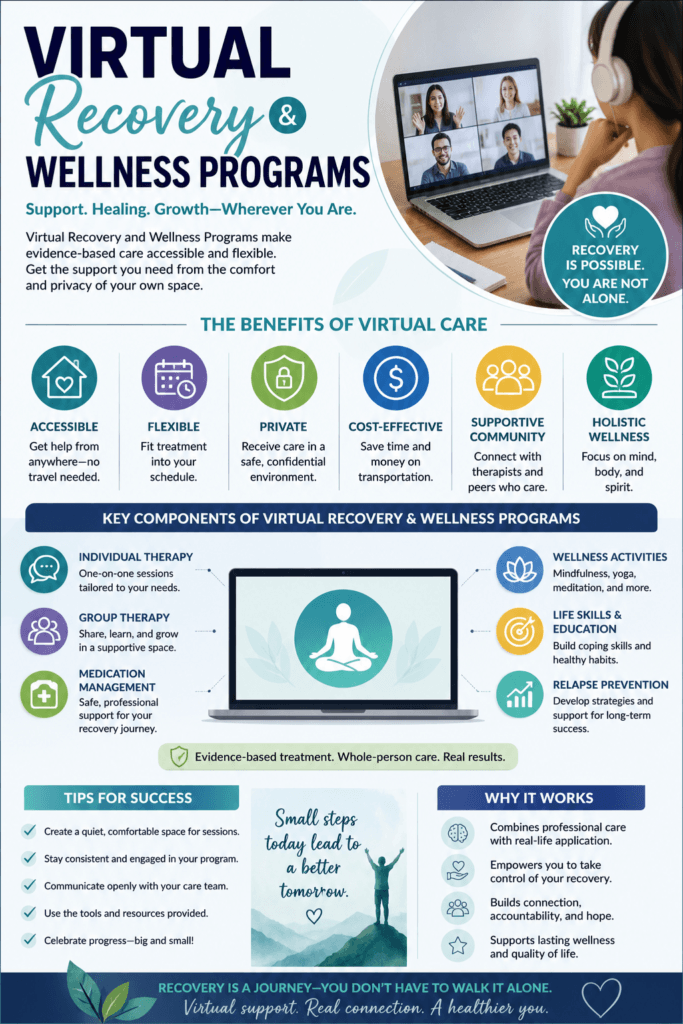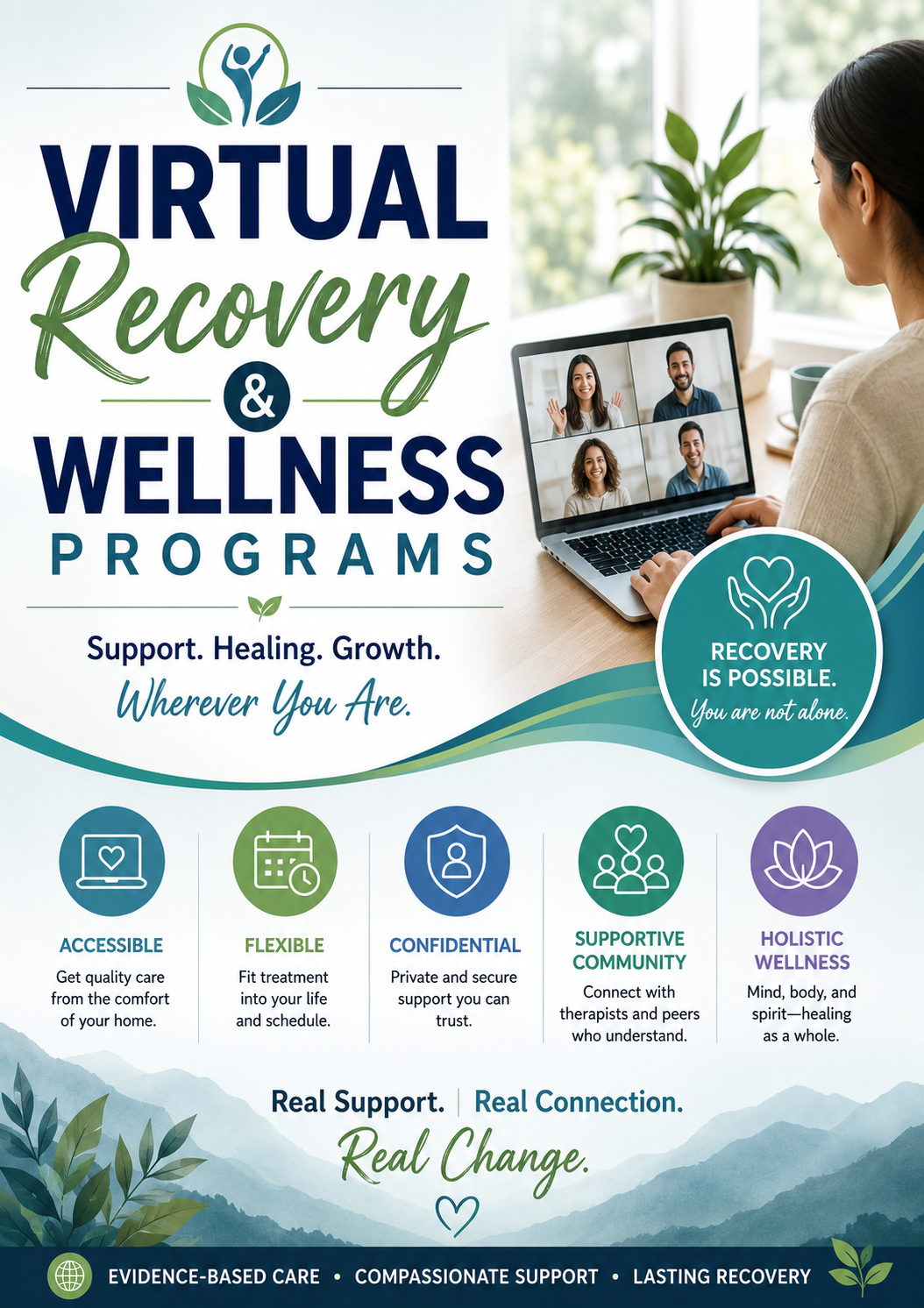
Virtual Recovery Programs have transformed the delivery of addiction and mental health care by making evidence-based treatment more accessible, flexible, and convenient. Using secure telehealth technology, individuals can receive services such as individual counseling, group therapy, medication management, and wellness coaching from the comfort of their homes. These programs help overcome common obstacles to treatment, including transportation challenges, geographic limitations, demanding work schedules, and concerns about stigma. By integrating clinical care with holistic wellness practices, Virtual Recovery Programs empower individuals to improve their physical, emotional, and mental well-being while maintaining their daily responsibilities at work, school, and home.
Reimagining Healing: The Rise of Virtual Recovery and Wellness Programs
Expanding Access to Healing: Virtual Recovery and Wellness Programs
Virtual Recovery and Wellness Programs have transformed the way individuals access addiction and mental health treatment. By leveraging telehealth technology, these programs provide structured, evidence-based care remotely, allowing participants to receive support from the comfort of their homes. This model has become increasingly important in removing traditional barriers such as transportation, geographic limitations, and stigma, making recovery more accessible and flexible.
At their core, virtual programs are designed to mirror the intensity and structure of in-person treatment while offering greater convenience. Participants engage in individual therapy, group sessions, and wellness activities through secure online platforms. This approach allows individuals to integrate recovery into their daily lives while still receiving consistent, high-quality care.
One of the greatest strengths of virtual recovery programs is their ability to combine clinical treatment with holistic wellness strategies. Recovery is not just about abstinence—it involves rebuilding physical health, emotional resilience, and social connections. Virtual platforms make it possible to address all of these areas in a comprehensive and personalized way.
Key Components of Virtual Recovery Programs:
- Individual therapy sessions using evidence-based approaches (CBT, DBT)
- Group counseling for peer support and shared experiences
- Medication management and psychiatric support
- Relapse prevention education and skill-building
- Wellness activities such as mindfulness, yoga, and stress management
Accessibility is a major advantage of virtual care. Individuals who may not have access to local treatment centers—or who need to balance work, school, or family responsibilities—can participate without disrupting their daily routines. This flexibility often leads to higher engagement and retention in treatment.
Benefits of Virtual Recovery and Wellness Programs:
- Increased access to care regardless of location
- Greater flexibility in scheduling and participation
- Reduced stigma by allowing treatment in a private setting
- Ability to maintain work, education, and family responsibilities
- Continuity of care during transitions or disruptions
However, virtual programs also require a level of personal responsibility and self-discipline. Without the physical structure of a treatment facility, individuals must actively engage in sessions and apply the skills they learn in their daily lives. Creating a dedicated space for treatment, minimizing distractions, and maintaining a routine are essential for success.
Strategies for Success in Virtual Programs:
- Establish a consistent daily schedule
- Create a quiet, private space for sessions
- Actively participate in therapy and group discussions
- Apply coping skills outside of sessions
- Stay connected with peers and support networks
Technology plays a central role in these programs, but it can also present challenges. Reliable internet access, digital literacy, and privacy concerns may impact participation. Addressing these barriers is important to ensure equitable access to care.
Despite these challenges, virtual recovery programs have proven to be an effective and sustainable model for many individuals. They are particularly valuable as part of a broader continuum of care, offering step-down support after inpatient treatment or ongoing maintenance for long-term recovery.
In conclusion, Virtual Recovery and Wellness Programs represent a significant advancement in behavioral health care. By combining accessibility, flexibility, and comprehensive support, they empower individuals to take an active role in their recovery journey.
Recovery is no longer confined to a single location—it can happen anywhere. With the right tools, structure, and commitment, virtual programs provide a powerful pathway to healing, growth, and lasting wellness.
Taking Ownership of Healing: Self-Management Strategies in Virtual Recovery and Wellness Programs
Virtual Recovery and Wellness Programs have made addiction and mental health treatment more accessible than ever. However, their success depends heavily on the individual’s ability to actively engage and manage their own recovery. Without the physical structure of in-person programs, participants must take greater responsibility for maintaining routines, applying coping skills, and staying connected. Self-management is not just helpful in virtual care—it is essential for achieving lasting results.
In a virtual setting, individuals are often balancing treatment with work, family, and daily responsibilities. This flexibility can be empowering, but it also requires discipline and intentional effort. By developing strong self-management strategies, participants can create structure, maintain accountability, and fully benefit from the support provided in virtual programs.
One of the most important strategies is establishing a consistent routine. Structure helps regulate emotions, reduce stress, and reinforce recovery-focused behaviors. Even though treatment is remote, it should be treated with the same level of commitment as in-person care.
Creating Structure and Routine:
- Set consistent times for therapy sessions, meals, and sleep
- Use calendars or reminders to stay organized
- Build daily routines that include recovery activities
- Treat virtual sessions as non-negotiable commitments
Active participation is another key component of self-management. Simply logging into sessions is not enough—engagement and presence are critical for progress. Individuals who prepare for sessions and contribute meaningfully tend to see better outcomes.
Staying Actively Engaged:
- Minimize distractions during sessions (turn off notifications, find a quiet space)
- Take notes and reflect on key takeaways
- Ask questions and participate in discussions
- Set personal goals for each session
Applying learned skills outside of sessions is where real progress happens. Virtual programs provide tools, but individuals must use them in real-life situations to build resilience and prevent relapse.
Applying Coping Skills:
- Practice mindfulness, breathing exercises, or grounding techniques
- Use cognitive behavioral strategies to manage negative thoughts
- Develop healthy responses to stress and triggers
- Reinforce new habits through daily practice
Creating a supportive environment at home is also essential. Since treatment takes place in the same space where daily life occurs, individuals must intentionally shape their surroundings to support recovery.
Optimizing Your Environment:
- Designate a private, quiet space for sessions
- Reduce exposure to triggers or distractions
- Communicate boundaries with family or roommates
- Keep recovery tools (journals, resources) easily accessible
Accountability plays a major role in maintaining progress. Without in-person oversight, individuals must build systems to hold themselves accountable for their actions and commitments.
Building Accountability:
- Track progress through journals or apps
- Set short-term and long-term recovery goals
- Check in regularly with therapists, peers, or sponsors
- Celebrate milestones and recognize progress
Staying connected is another critical factor. Isolation can undermine recovery, while connection reinforces support and motivation.
Maintaining Connection:
- Participate in virtual peer support groups
- Stay in contact with trusted friends or family
- Engage in online recovery communities
- Reach out when feeling overwhelmed or at risk
Finally, self-compassion is an essential part of self-management. Virtual recovery requires effort and adjustment, and setbacks may occur. Responding with understanding rather than judgment helps individuals stay committed to their recovery journey.
Mindset for Success:
- Focus on progress, not perfection
- Recognize challenges as part of growth
- Be patient with the process
- Stay committed to long-term wellness
Virtual Recovery and Wellness Programs offer flexibility and accessibility, but self-management is what transforms these advantages into meaningful outcomes. By building structure, staying engaged, applying skills, and maintaining accountability, individuals can take control of their recovery.
Recovery does not depend on location—it depends on action. With strong self-management strategies, virtual care becomes a powerful tool for lasting change and personal growth.
Strengthening Recovery at Home: Family Support Strategies in Virtual Recovery and Wellness Programs
Virtual Recovery and Wellness Programs have redefined how individuals access addiction and mental health treatment, bringing care directly into the home. While this model increases accessibility and flexibility, it also places families in a more active and influential role. Because treatment occurs within the home environment, family support becomes a key factor in reinforcing structure, encouraging engagement, and promoting long-term recovery success.
In a virtual setting, individuals are responsible for managing their own schedules and participation. Families can help bridge the gap between clinical care and daily life by fostering a supportive environment that promotes consistency and accountability. When families understand the structure and purpose of virtual programs, they are better equipped to provide meaningful and balanced support.
One of the most important strategies is understanding the nature of virtual recovery. Unlike inpatient or in-person programs, virtual care requires independence and self-discipline. Families who recognize this can offer support without becoming overly controlling.
Understanding Virtual Recovery:
- Learn how virtual programs operate (therapy, group sessions, wellness activities)
- Recognize the importance of self-management and independence
- Understand that recovery is ongoing and may include challenges
- Be aware of the role of technology in treatment
Creating a stable and structured home environment is another essential strategy. Since the home becomes the primary setting for recovery, it should support focus, privacy, and routine.
Creating a Supportive Environment:
- Provide a quiet, distraction-free space for sessions
- Respect scheduled therapy times as important commitments
- Encourage consistent routines for sleep, meals, and daily activities
- Reduce exposure to triggers or high-risk situations
Communication plays a central role in family support. Open, respectful dialogue helps individuals feel understood and supported, making it easier to stay engaged in treatment.
Healthy Communication Strategies:
- Practice active listening without judgment
- Encourage honest conversations about progress and challenges
- Offer support without criticism or pressure
- Maintain regular check-ins to stay connected
Encouraging engagement in treatment is another key responsibility for families. While participation must come from the individual, gentle encouragement and practical support can make a difference.
Encouraging Engagement:
- Remind and support attendance at virtual sessions
- Encourage active participation in therapy and group discussions
- Reinforce the importance of applying skills outside of sessions
- Celebrate progress and milestones
Families must also balance support with healthy boundaries. Providing help should not turn into enabling behaviors. Clear expectations help maintain accountability while still offering encouragement.
Setting Healthy Boundaries:
- Establish expectations around participation and responsibility
- Avoid minimizing or excusing harmful behaviors
- Encourage independence and personal ownership of recovery
- Communicate boundaries clearly and consistently
Technology is a central part of virtual programs, and families can help ensure it is used effectively. Supporting a stable digital environment improves the overall treatment experience.
Supporting Technology Use:
- Ensure reliable internet access and necessary devices
- Minimize interruptions during sessions
- Encourage focus by limiting distractions (phones, TV, noise)
- Respect privacy during therapy sessions
Finally, families must prioritize their own well-being. Supporting a loved one in recovery—especially in a shared living environment—can be emotionally demanding. Maintaining personal balance is essential for long-term support.
Family Self-Care:
- Seek support through counseling or peer groups
- Take time for rest and personal needs
- Stay connected with supportive networks
- Recognize limits and avoid burnout
Virtual Recovery and Wellness Programs offer a flexible and effective path to healing, but family involvement is crucial to their success. By creating structure, encouraging engagement, communicating effectively, and maintaining healthy boundaries, families can help transform the home into a space of recovery and growth.
Recovery does not happen in isolation—it happens in relationships and environments. With thoughtful family support, virtual care becomes not just accessible, but deeply impactful and sustainable.
Extending the Circle of Care: Community Resource Strategies in Virtual Recovery and Wellness Programs
Virtual Recovery and Wellness Programs have made treatment more accessible by allowing individuals to receive care from home. However, recovery does not happen solely within scheduled online sessions. Long-term success depends on connecting individuals to community resources that provide real-world support, stability, and opportunities for growth. By integrating community-based services with virtual care, individuals can build a more comprehensive and sustainable foundation for recovery.
While virtual programs offer clinical structure and flexibility, they may not fully address external challenges such as housing, employment, or social isolation. Community resources help bridge this gap by supporting the practical and social aspects of recovery. When individuals combine virtual treatment with local support systems, they are better equipped to maintain progress and navigate daily life.
One of the most important strategies is connecting individuals with local recovery support networks. These resources provide peer connection, accountability, and shared experiences that complement virtual therapy.
Leveraging Local Recovery Support:
- Participate in in-person or hybrid peer support groups
- Connect with local recovery coaches or mentors
- Engage with community centers or nonprofit organizations
- Build relationships that reduce isolation and strengthen accountability
Access to healthcare services is another critical component. Virtual programs can coordinate with local providers to ensure individuals receive comprehensive care, including physical and mental health support.
Integrating Healthcare Resources:
- Connect with primary care providers for ongoing medical needs
- Access local mental health services for additional counseling
- Coordinate medication management with nearby providers or pharmacies
- Utilize urgent care or crisis services when needed
Addressing social determinants of health is essential for long-term recovery. Community resources can help individuals stabilize key areas of their lives that directly affect their ability to stay engaged in treatment.
Addressing Basic Needs:
- Access housing support or sober living environments
- Utilize food banks or financial assistance programs
- Connect with transportation services for appointments
- Seek childcare or family support resources
Employment and education opportunities also play a significant role in recovery. Having structure, purpose, and financial stability can reinforce positive behaviors and reduce the risk of relapse.
Supporting Employment and Education:
- Enroll in job training or workforce development programs
- Access resume-building and career counseling services
- Pursue educational opportunities or skill-building courses
- Connect with local employment agencies
Technology can act as a bridge between virtual care and community resources. Many programs provide tools that help individuals locate and access services in their area.
Using Technology to Access Resources:
- Utilize online directories to find local support services
- Join hybrid recovery meetings (virtual + in-person)
- Use apps to track goals and connect with support networks
- Maintain communication with providers and peers
Community engagement is another powerful strategy. Participating in meaningful activities helps individuals build a sense of purpose and belonging beyond treatment.
Encouraging Community Involvement:
- Volunteer with local organizations
- Participate in recreational or wellness activities
- Join faith-based or cultural groups
- Build positive social connections
Coordination between virtual programs and community resources is key to ensuring continuity of care. Care teams can help individuals navigate available services and create personalized plans that align with their goals.
Strengthening Care Coordination:
- Work with care coordinators to identify local resources
- Develop a plan that integrates virtual and in-person support
- Maintain regular follow-ups to adjust resource needs
- Ensure smooth transitions between levels of care
Ultimately, Virtual Recovery and Wellness Programs are most effective when they extend beyond the digital space. Community resource strategies provide the real-world support necessary to sustain recovery, turning virtual care into a comprehensive, life-centered approach.
Recovery is not confined to a screen—it is built through connection, opportunity, and environment. By integrating community resources with virtual programs, individuals gain the tools and support needed to create lasting, meaningful change.
Frequently Asked Questions
Here are some common questions:
1. What is a Virtual Recovery and Wellness Program?
A Virtual Recovery and Wellness Program is an online treatment and support service that provides evidence-based care for individuals recovering from substance use disorders or managing mental health conditions. Services may include individual counseling, group therapy, medication management, recovery coaching, educational workshops, and wellness activities delivered through secure telehealth platforms.
2. Who can benefit from a Virtual Recovery and Wellness Program?
These programs can benefit individuals with mild to moderate substance use disorders, those transitioning from residential treatment, people living in rural or underserved areas, individuals with transportation barriers, working professionals, caregivers, students, and anyone seeking flexible access to recovery services.
3. Are virtual recovery programs as effective as in-person treatment?
Research suggests that telehealth can be as effective as in-person treatment for many individuals when appropriate clinical services, active participation, and regular follow-up are provided. Effectiveness depends on the person’s clinical needs, engagement, and the quality of the treatment program.
4. What services are typically included in a virtual recovery program?
Common services include:
- Individual counseling
- Group therapy
- Medication management
- Recovery coaching
- Cognitive Behavioral Therapy (CBT)
- Motivational Interviewing (MI)
- Family therapy
- Peer support meetings
- Relapse prevention education
- Mindfulness and stress management
5. Can medications for addiction treatment be managed virtually?
Yes. In many cases, healthcare providers can conduct telehealth appointments for medication management, monitor progress, adjust treatment plans, and, when permitted by applicable laws and regulations, prescribe medications.
6. Is my personal information kept confidential?
Yes. Reputable Virtual Recovery and Wellness Programs use secure, encrypted telehealth platforms and follow privacy regulations designed to protect personal health information. Participants should also use private locations and secure internet connections whenever possible.
7. What equipment do I need to participate?
Most programs require:
- A smartphone, tablet, or computer
- A reliable internet connection
- A camera and microphone
- A private, quiet location for appointments
Some services may also be available by telephone if video is not possible.
8. Can family members participate in treatment?
Yes. Many programs offer family counseling, educational sessions, and family support groups. Family involvement can improve communication, strengthen relationships, and support long-term recovery when appropriate.
9. What if I experience a crisis during virtual treatment?
Virtual programs are not designed to replace emergency care. Individuals experiencing suicidal thoughts, a medical emergency, severe withdrawal symptoms, or an overdose should contact emergency services immediately or seek care at the nearest emergency department. Many virtual programs also provide crisis planning and emergency contact procedures.
10. Are virtual recovery programs covered by insurance?
Coverage varies depending on the insurance provider, individual health plan, geographic location, and the services being provided. Many commercial insurance plans, Medicaid programs, and Medicare plans cover eligible telehealth behavioral health services.
11. Can I attend sessions while traveling?
In many situations, yes. However, healthcare providers may have licensing or regulatory limitations based on the state or country where the participant is physically located during the appointment. It is important to discuss travel plans with the treatment team.
12. What are the advantages of virtual recovery programs?
Benefits include:
- Increased accessibility
- Greater scheduling flexibility
- Reduced travel time
- Increased privacy
- Lower transportation costs
- Easier access to specialists
- Greater continuity of care
- Ability to receive treatment from home
13. What challenges should participants be aware of?
Potential challenges include:
- Limited internet access
- Technology difficulties
- Home distractions
- Reduced face-to-face interaction
- Privacy concerns in shared living spaces
- Difficulty participating during crises that require in-person care
14. How can I get the most out of a Virtual Recovery and Wellness Program?
Successful participants often:
- Attend appointments consistently
- Complete assigned exercises
- Communicate honestly with providers
- Create a quiet, private space for sessions
- Follow medication recommendations
- Practice healthy daily routines
- Stay connected with peer support groups
- Develop a relapse prevention plan
15. Can virtual programs be combined with in-person treatment?
Yes. Many healthcare organizations use a hybrid model that combines telehealth with in-person visits, laboratory testing, support groups, or intensive outpatient services. This approach allows treatment to be individualized based on each person’s needs.
16. Are Virtual Recovery and Wellness Programs suitable for everyone?
Not always. Individuals experiencing severe withdrawal, significant medical complications, severe psychiatric instability, or situations requiring intensive supervision may need inpatient, residential, or hospital-based treatment before transitioning to virtual services.
17. How do I choose a quality Virtual Recovery and Wellness Program?
Look for programs that offer:
- Licensed healthcare professionals
- Evidence-based treatment approaches
- Individualized treatment plans
- Medication-assisted treatment when appropriate
- Family involvement opportunities
- Clear privacy policies
- Relapse prevention planning
- Ongoing aftercare services
18. What is the long-term goal of a Virtual Recovery and Wellness Program?
The primary goal is to help individuals achieve and maintain recovery while improving physical, emotional, and social well-being. Through ongoing therapy, education, wellness practices, medication management when appropriate, and strong support systems, virtual programs empower participants to build healthier lifestyles and sustain long-term recovery.
Conclusion
Virtual Recovery and Wellness Programs demonstrate that effective recovery support can extend far beyond the walls of a traditional treatment center. When combined with active participation, strong self-management skills, family involvement, and community resources, these programs provide a comprehensive approach to long-term recovery and overall well-being. Although virtual care may not be appropriate for every individual or every stage of treatment, it has become an important part of the continuum of care, offering flexible and personalized support for many people. As technology continues to advance, Virtual Recovery and Wellness Programs will likely play an even greater role in expanding access to high-quality addiction and mental health treatment, helping more individuals achieve lasting recovery and improved quality of life.
Video: How virtual recovery removes the stigma #addiction #shorts