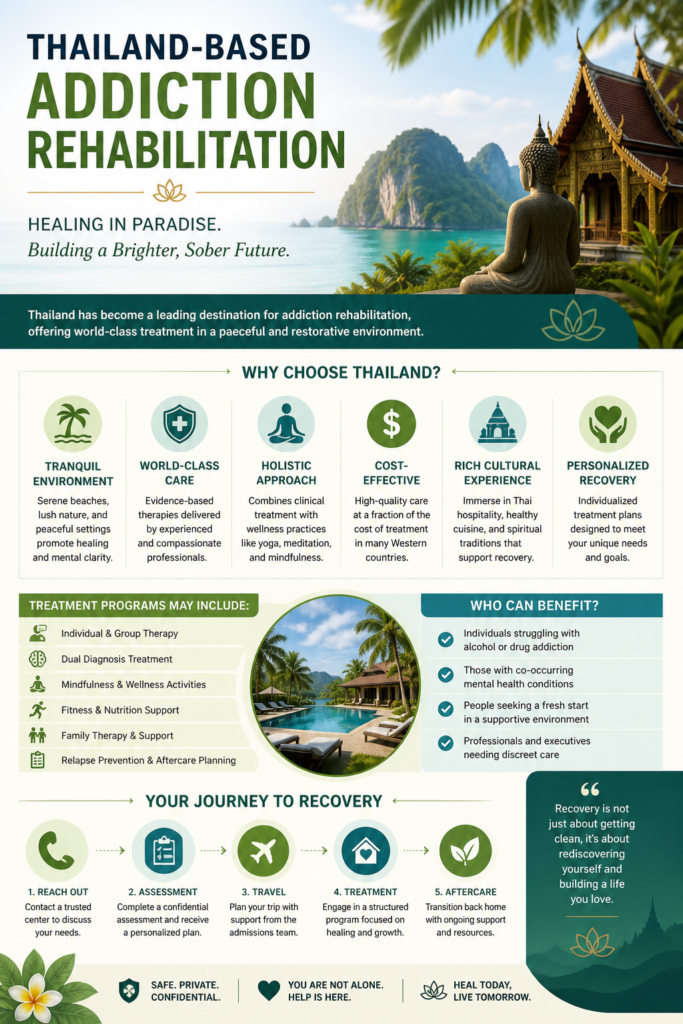
Thailand-based addiction rehabilitation has gained increasing attention as individuals seek treatment options that go beyond traditional clinical settings. By combining evidence-based therapies with a tranquil, immersive environment, programs in Thailand offer a unique approach to recovery that addresses both the psychological and physical aspects of addiction. The distance from familiar triggers, paired with holistic practices such as mindfulness and wellness-focused activities, creates an opportunity for individuals to step outside their daily routines and fully engage in the healing process. As global access to treatment expands, understanding what makes Thailand a distinctive destination for rehabilitation is essential for those considering this path.
Healing in a New Environment: Thailand-Based Addiction Rehabilitation
Thailand-based addiction rehabilitation has become an increasingly popular option for individuals seeking a more immersive and holistic approach to recovery. By combining evidence-based clinical care with a tranquil and restorative environment, programs in Thailand offer a unique opportunity to step away from everyday stressors and focus fully on healing. This approach not only addresses substance use but also promotes overall wellness—physically, emotionally, and mentally.
Unlike traditional treatment settings, rehabilitation programs in Thailand often emphasize a balance between structured therapy and holistic practices. The natural surroundings—whether beaches, mountains, or tropical landscapes—create a calming atmosphere that supports reflection and emotional regulation. This separation from familiar triggers can be especially beneficial during early recovery, when individuals are most vulnerable to relapse.
At the core of Thailand-based rehabilitation is a comprehensive treatment model that integrates clinical care with wellness-focused strategies. These programs are designed to treat addiction as a whole-person condition, addressing underlying causes while building sustainable coping mechanisms.
Key Components of Thailand-Based Rehabilitation:
- Individual and group therapy using evidence-based approaches (CBT, DBT)
- Medication-assisted treatment (MAT) when appropriate
- Trauma-informed care and mental health support
- Relapse prevention planning and life skills development
- Holistic practices such as yoga, meditation, and mindfulness
One of the major advantages of seeking treatment in Thailand is the immersive nature of residential programs. Individuals follow a structured daily schedule that promotes consistency and engagement while allowing time for personal reflection and growth.
Benefits of an Immersive Treatment Environment:
- Distance from everyday triggers and high-risk environments
- Focused time dedicated solely to recovery
- Reduced distractions from work, social pressures, or responsibilities
- Opportunities for self-reflection and personal growth
- Exposure to new cultural perspectives that support mindfulness and balance
Affordability is another factor that attracts individuals to Thailand-based rehabilitation. In many cases, high-quality programs may be more cost-effective than similar services in Western countries, making comprehensive care more accessible.
However, pursuing treatment abroad also requires careful planning. Being far from home can present challenges, including distance from family, cultural adjustments, and the need for strong aftercare planning.
Considerations When Choosing Thailand-Based Treatment:
- Travel logistics and medical clearance
- Language and cultural differences
- Distance from personal support systems
- Availability of aftercare and transition planning
- Coordination with providers in the home country
Aftercare is one of the most critical aspects of long-term recovery. Successful programs in Thailand emphasize the importance of preparing individuals for the transition back home, ensuring continuity of care and ongoing support.
Aftercare and Transition Strategies:
- Connecting with outpatient providers before returning home
- Participating in virtual recovery programs for continued support
- Developing a relapse prevention plan
- Engaging with local support groups and community resources
- Maintaining communication with therapists or recovery coaches
Ultimately, Thailand-based addiction rehabilitation offers a powerful combination of clinical treatment and environmental healing. By stepping outside familiar surroundings, individuals can gain new perspectives, develop healthier habits, and build a strong foundation for recovery.
Recovery is not just about breaking free from substance use—it is about creating a new way of living. In a setting designed for renewal and reflection, Thailand-based rehabilitation provides an opportunity to reset, rebuild, and move forward with clarity and purpose.
Owning the Journey: Self-Management Strategies for Thailand-Based Addiction Rehabilitation
Thailand-based addiction rehabilitation offers a unique opportunity for individuals to step outside their usual environments and fully focus on recovery. While the setting provides structure, clinical care, and holistic healing, long-term success depends heavily on how individuals manage their own behaviors, mindset, and engagement throughout the process. Self-management is what transforms a temporary treatment experience into lasting, meaningful change.
Traveling to a new country for treatment introduces both opportunities and challenges. The unfamiliar environment can reduce exposure to triggers, but it also requires adaptability and personal responsibility. Individuals who take an active role in managing their recovery—rather than relying solely on the program—are more likely to build sustainable habits that continue after they return home.
One of the most important strategies is to develop clear intentions and maintain focus. Recovery abroad is not just about being physically present—it requires mental and emotional commitment.
Setting Intentions and Staying Focused:
- Define personal goals for treatment and recovery
- Identify underlying reasons for seeking change
- Regularly reflect on progress and challenges
- Stay committed even during difficult moments
Preparation and understanding are also critical. Knowing what to expect from the program and environment helps individuals engage more confidently and reduces anxiety about the unknown.
Preparing for the Experience:
- Learn about the treatment structure and daily schedule
- Understand cultural differences and expectations
- Organize medical, personal, and travel-related information
- Set realistic expectations for progress and outcomes
Active participation is essential in maximizing the benefits of rehabilitation. Programs in Thailand often include therapy, group work, and holistic activities—but their impact depends on engagement.
Engaging Fully in Treatment:
- Attend all sessions and activities consistently
- Communicate openly with therapists and peers
- Be honest about struggles, triggers, and emotions
- Take responsibility for personal growth
Adapting to a new environment is another key self-management skill. The natural and cultural setting in Thailand can support healing, but only if individuals are open to the experience.
Adapting to the Environment:
- Embrace mindfulness and present-moment awareness
- Participate in holistic practices like meditation or yoga
- Use the environment for reflection and stress reduction
- Stay flexible and open to new perspectives
Applying learned skills outside of structured sessions is where recovery becomes real. The immersive setting provides a safe space to practice coping strategies in everyday situations.
Applying Recovery Skills Daily:
- Practice stress management techniques regularly
- Use journaling to process thoughts and emotions
- Develop healthy routines and habits
- Reinforce coping strategies learned in therapy
Maintaining connection—both within the program and with trusted individuals back home—helps balance independence with support.
Staying Connected:
- Build supportive relationships with peers in treatment
- Communicate with family or trusted individuals when appropriate
- Seek help when feeling overwhelmed
- Engage in group support activities
Planning for life after treatment is one of the most important self-management strategies. Without a clear aftercare plan, progress made during rehabilitation can be difficult to maintain.
Planning for Aftercare:
- Develop a relapse prevention plan
- Arrange follow-up care with providers at home
- Connect with local or virtual support groups
- Continue practicing recovery skills after discharge
Finally, mindset plays a crucial role in self-management. Recovery is not linear, and challenges are part of the process. Approaching the journey with patience and self-compassion helps sustain motivation.
Building a Resilient Mindset:
- Focus on progress rather than perfection
- Accept setbacks as opportunities for learning
- Practice patience and self-awareness
- Stay committed to long-term wellness
Thailand-based addiction rehabilitation offers a powerful environment for transformation, but it is self-management that determines whether that transformation lasts. By staying engaged, adapting to change, and planning for the future, individuals can turn their experience abroad into a foundation for lifelong recovery.
Recovery is not just about where you go—it is about how you show up. With strong self-management strategies, individuals can leave treatment not only healthier, but empowered to sustain their progress wherever they are.
Supporting Recovery Across Borders: Family Strategies for Thailand-Based Addiction Rehabilitation
Thailand-based addiction rehabilitation offers a unique and immersive path to recovery, combining clinical care with a restorative environment. While the individual undergoes treatment abroad, family support remains a critical factor in long-term success. Even from a distance, families can play an active role in reinforcing stability, encouraging engagement, and preparing for life after treatment. Understanding how to provide effective support—without interfering with the recovery process—is essential.
When a loved one travels to Thailand for rehabilitation, families often experience a mix of hope, concern, and uncertainty. Being informed about the treatment process and expectations can help families provide meaningful, balanced support. Recovery is not just about the time spent in treatment—it is about how well that progress is supported during and after the experience.
One of the most important strategies is understanding the nature of rehabilitation in Thailand. These programs often combine structured therapy with holistic practices and cultural elements, which may differ from traditional treatment models.
Understanding the Treatment Approach:
- Learn about the program structure (therapy, wellness activities, daily routines)
- Understand the role of holistic practices such as meditation and mindfulness
- Recognize that recovery is a long-term process with potential challenges
- Respect the immersive nature of the treatment experience
Maintaining healthy communication is another key strategy. While distance can make connection more challenging, consistent and supportive communication helps individuals feel encouraged without being overwhelmed.
Effective Communication Strategies:
- Schedule regular, supportive check-ins (when allowed by the program)
- Use nonjudgmental and encouraging language
- Focus on listening rather than giving advice
- Respect boundaries set by the treatment program
Supporting independence is especially important in an international setting. While families naturally want to help, recovery requires individuals to take responsibility for their own growth.
Encouraging Independence:
- Avoid trying to control or manage the recovery process from afar
- Trust the treatment team and program structure
- Encourage personal responsibility and decision-making
- Support growth rather than dependency
Preparation for aftercare is one of the most critical roles families can play. The transition back home can be challenging, and having a plan in place helps maintain progress made during treatment.
Planning for Aftercare:
- Help identify local therapists, support groups, or outpatient programs
- Prepare a stable and supportive home environment
- Encourage continuation of healthy routines and habits
- Support adherence to relapse prevention plans
Families can also contribute by creating a safe and supportive environment for the individual’s return. The home environment plays a significant role in sustaining recovery.
Creating a Supportive Home Environment:
- Reduce exposure to triggers or high-risk situations
- Promote healthy routines (sleep, nutrition, activity)
- Encourage ongoing participation in recovery programs
- Foster a calm and stable atmosphere
Setting healthy boundaries is equally important. Support should be balanced with accountability to avoid enabling behaviors that could undermine recovery.
Setting Healthy Boundaries:
- Establish clear expectations around behavior and responsibilities
- Avoid minimizing or excusing harmful actions
- Encourage accountability while offering support
- Communicate boundaries clearly and consistently
Finally, families must prioritize their own well-being. Supporting a loved one through international treatment can be emotionally demanding, and maintaining personal resilience is essential.
Family Self-Care:
- Seek support through counseling or peer groups
- Stay connected with trusted friends or networks
- Take time for rest and personal needs
- Recognize limits and avoid burnout
Thailand-based addiction rehabilitation offers a powerful opportunity for transformation, but family support plays a vital role in sustaining that change. By staying informed, communicating effectively, encouraging independence, and preparing for aftercare, families can help bridge the gap between treatment abroad and life at home.
Recovery may begin in a different country, but it continues within relationships and environments. With thoughtful and balanced support, families can help ensure that healing is not only achieved—but maintained for the long term.
Building Support Beyond Borders: Community Resource Strategies for Thailand-Based Addiction Rehabilitation
Thailand-based addiction rehabilitation offers a powerful and immersive approach to recovery, combining clinical treatment with a restorative environment. However, long-term success depends not only on the experience abroad but also on how well individuals connect that experience to real-world support systems. Community resource strategies play a critical role in helping individuals understand, navigate, and sustain recovery before, during, and after treatment in Thailand.
While rehabilitation programs in Thailand provide structure and intensive care, they are only one part of the recovery journey. Individuals must eventually transition back to their home communities, where access to local resources becomes essential. By building a strong support network, individuals can maintain progress made abroad and reduce the risk of relapse.
One of the most important strategies is establishing connections with community resources before even beginning treatment. This proactive approach ensures continuity of care and reduces uncertainty about what happens after returning home.
Pre-Treatment Community Planning:
- Identify local therapists, counselors, or outpatient programs
- Research nearby support groups or recovery meetings
- Connect with primary care providers for ongoing health needs
- Explore sober living or transitional housing options
During treatment in Thailand, individuals can benefit from staying connected to broader recovery networks. Many programs encourage engagement with both local and global support systems.
Maintaining Connection During Treatment:
- Participate in virtual support groups from home communities
- Build relationships with peers in the program
- Engage with recovery coaches or mentors
- Use digital platforms to stay connected to support networks
After completing treatment, community resources become even more important. The transition back home can be a vulnerable period, and having structured support helps reinforce stability and accountability.
Post-Treatment Community Support:
- Attend regular support group meetings (in-person or virtual)
- Continue therapy or counseling services
- Stay engaged with recovery coaches or peer mentors
- Follow a structured aftercare plan
Addressing social determinants of health is another critical aspect of community resource strategies. Stability in areas such as housing, employment, and finances directly impacts recovery outcomes.
Supporting Stability Through Resources:
- Access housing assistance or sober living environments
- Utilize job training and employment services
- Seek financial counseling or assistance programs
- Connect with transportation resources for appointments
Community engagement also plays a key role in sustaining recovery. Building a sense of purpose and belonging helps individuals replace old patterns with meaningful activities and relationships.
Encouraging Community Involvement:
- Volunteer with local organizations
- Participate in wellness or recreational activities
- Join faith-based or cultural groups
- Build positive social connections
Technology can act as a bridge between international treatment and local support systems. Digital tools make it easier to access resources, maintain communication, and stay engaged in recovery.
Using Technology to Stay Connected:
- Use recovery apps to track progress and goals
- Join online communities and forums
- Access directories of local services
- Attend virtual therapy or support meetings
Coordination between treatment providers in Thailand and local community resources is essential for a smooth transition. Effective communication ensures that care continues without interruption.
Strengthening Care Coordination:
- Share treatment plans with local providers (with consent)
- Arrange follow-up appointments before returning home
- Maintain communication between international and local care teams
- Adjust support plans based on individual needs
Ultimately, Thailand-based addiction rehabilitation is most effective when it is connected to a broader network of community resources. Recovery does not end when treatment abroad concludes—it continues in everyday life, supported by accessible and reliable services.
By integrating community resource strategies into the recovery journey, individuals can turn an international treatment experience into a lasting foundation for growth. Recovery may begin in a new environment, but it is sustained through connection, support, and engagement within the community.
Frequently Asked Questions
Here are some common questions:
1. Why choose Thailand for addiction rehabilitation?
Thailand offers a unique combination of evidence-based treatment and holistic healing in a शांत, restorative environment. Many programs integrate therapy with mindfulness practices, wellness activities, and nature-based healing, which can enhance emotional recovery and reduce stress.
2. Is treatment in Thailand as effective as in the United States or Europe?
Yes—many rehabilitation centers in Thailand follow internationally recognized standards, employing licensed clinicians and evidence-based therapies like CBT, DBT, and trauma-informed care. Outcomes depend more on program quality and personal engagement than location alone.
3. What types of addictions are treated?
Programs in Thailand commonly treat:
- Substance use disorders (alcohol, opioids, stimulants)
- Prescription drug dependence
- Behavioral addictions (e.g., gambling, internet use)
Many centers also address co-occurring mental health conditions such as anxiety, depression, and PTSD.
4. How long do programs typically last?
Most residential programs range from 28 days to 90 days, though some offer extended stays depending on individual needs and progress.
5. Is Thailand-based rehab more affordable?
In many cases, yes. High-quality programs in Thailand can be more cost-effective than similar services in Western countries, allowing for longer or more comprehensive treatment at a lower cost.
6. What is daily life like in a Thailand rehab program?
A typical day may include:
- Individual and group therapy
- Wellness activities (yoga, meditation, fitness)
- Educational sessions
- Personal reflection or journaling
The structure is similar to Western programs but often includes more holistic and lifestyle-focused elements.
7. Will there be a language barrier?
Most reputable centers cater to international clients and operate in English, with multilingual staff available in many cases.
8. Can family be involved in the treatment process?
Yes. Many programs offer:
- Virtual family therapy sessions
- Educational workshops
- Scheduled communication plans
This helps maintain support systems even while the individual is abroad.
9. What happens after completing treatment?
Aftercare planning is critical. Programs typically help arrange:
- Ongoing therapy (virtual or local)
- Support group connections
- Relapse prevention plans
A strong transition plan ensures continuity once you return home.
10. Is traveling abroad for rehab safe?
Generally, yes—when working with reputable, accredited centers. It’s important to:
- Research facilities thoroughly
- Confirm medical and clinical credentials
- Plan travel and insurance logistics
11. Who is a good candidate for Thailand-based rehab?
This option may be ideal for individuals who:
- Need distance from triggers or environment
- Prefer a retreat-style, immersive experience
- Are open to holistic and culturally diverse approaches
12. Are there any challenges to consider?
Potential challenges include:
- Being far from home and support networks
- Adjusting to a new culture and environment
- Ensuring strong aftercare upon return
Planning ahead helps minimize these concerns.
13. Does insurance cover treatment in Thailand?
Coverage varies. Some international or private insurance plans may reimburse part of the cost, but many programs are self-pay. Always verify with your provider.
14. How do I choose the right rehab center in Thailand?
Look for:
- Accreditation and licensing
- Qualified clinical staff
- Evidence-based treatment approaches
- Clear aftercare planning
- Reviews and testimonials
15. Is it worth going abroad for addiction treatment?
For many people, yes. The combination of distance, structure, and holistic care in Thailand can create a powerful environment for change—especially when paired with strong commitment and follow-up care.
Conclusion
Ultimately, Thailand-based addiction rehabilitation represents more than just a change in location—it reflects a broader shift toward integrated, whole-person care. While traveling abroad for treatment requires thoughtful planning and a strong commitment to aftercare, the potential benefits of an immersive and restorative setting can be significant. By combining structured clinical support with opportunities for reflection and personal growth, programs in Thailand can help individuals build a solid foundation for long-term recovery. Success, however, depends on maintaining continuity of care and applying the skills learned abroad to everyday life back home, ensuring that the progress made is both meaningful and sustainable.
Video: Thailand showed me recovery could actually work #healing #recovery