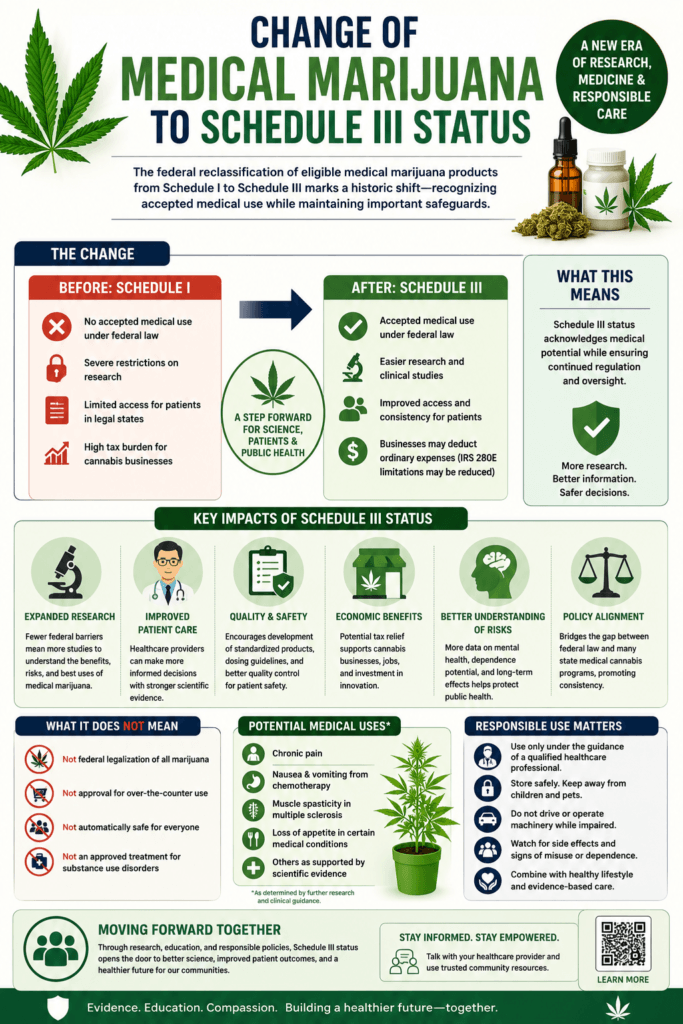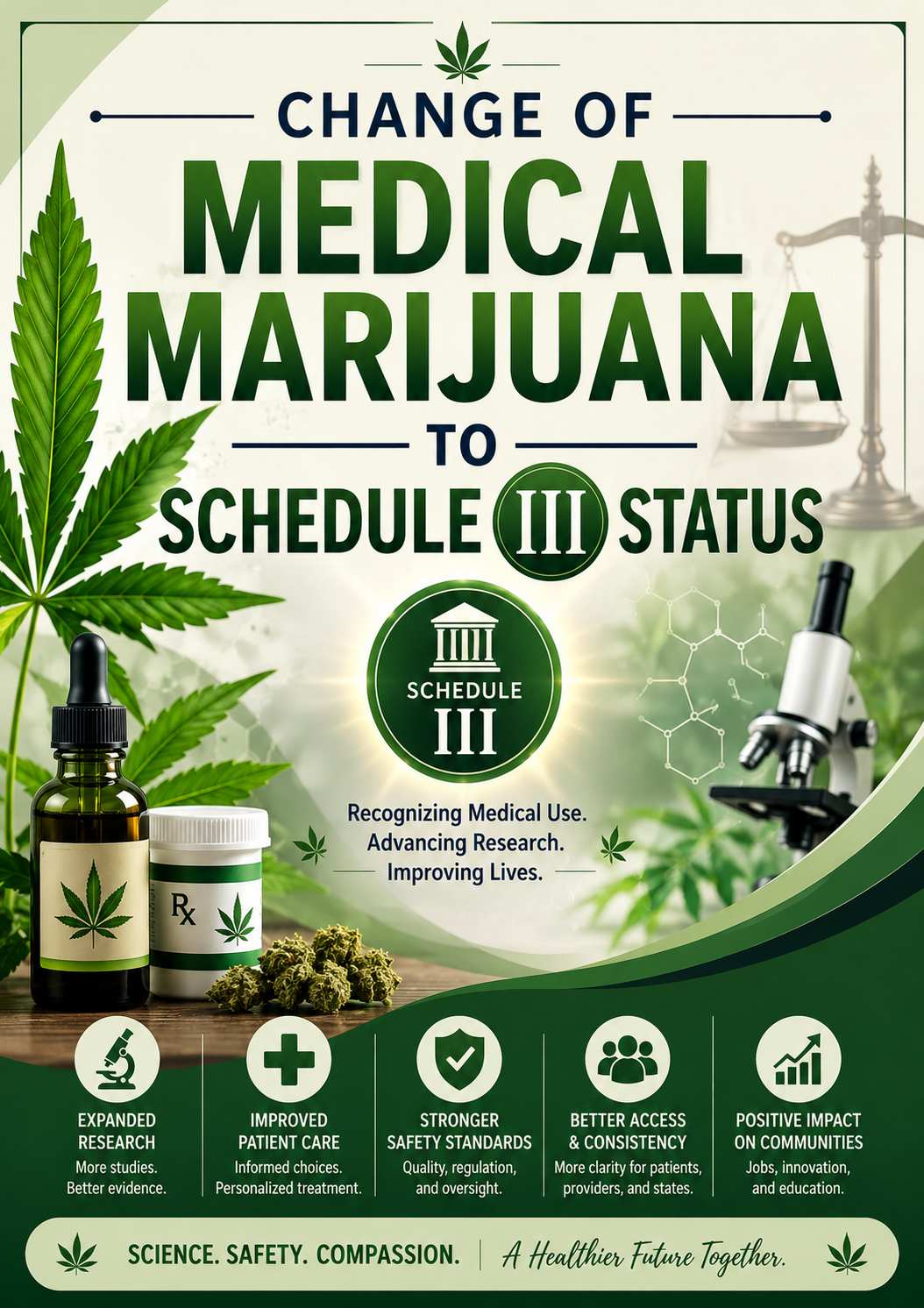
The change of eligible medical marijuana products to Schedule III status under the federal Controlled Substances Act represents a historic shift in U.S. drug policy and reflects evolving scientific understanding of cannabis and its potential medical uses. For decades, marijuana was classified as a Schedule I substance, indicating a high potential for abuse and no currently accepted medical use under federal law. Reclassification to Schedule III acknowledges that certain marijuana products have accepted medical applications while maintaining federal oversight because they still carry risks of misuse, dependence, and adverse health effects. This change has important implications for medical research, healthcare providers, patients, and the medical cannabis industry by reducing barriers to scientific investigation, encouraging the development of evidence-based treatment guidelines, and promoting greater consistency between federal policy and many state medical marijuana programs. However, Schedule III status does not federally legalize marijuana for all purposes or establish it as a first-line treatment for medical conditions or substance use disorders.
The Significance of Changing Medical Marijuana to Schedule III Status
The federal reclassification of medical marijuana from Schedule I to Schedule III under the Controlled Substances Act represents one of the most significant changes in U.S. drug policy in decades. Under Schedule I, marijuana was classified as having no currently accepted medical use and a high potential for abuse, creating substantial barriers to research and inconsistencies between federal law and state medical cannabis programs. In 2026, the U.S. Department of Justice and the Drug Enforcement Administration (DEA) took steps to place FDA-approved marijuana products and state-licensed medical marijuana products into Schedule III while continuing broader proceedings on marijuana rescheduling. Importantly, this change does not federally legalize marijuana or make it an over-the-counter medication, and recreational marijuana remains subject to different legal considerations.
1. Recognition of Medical Use
One of the most important implications of Schedule III status is the federal acknowledgment that marijuana has accepted medical uses under certain circumstances.
This recognition:
- Supports evidence-based medical evaluation.
- Reduces the inconsistency between federal policy and many state medical cannabis programs.
- Encourages healthcare professionals to discuss potential therapeutic benefits and risks more openly.
2. Expanded Medical Research
Schedule I classification created numerous regulatory hurdles for researchers.
Moving eligible medical marijuana products to Schedule III can:
- Simplify research approvals.
- Increase clinical trials.
- Improve understanding of benefits and risks.
- Generate stronger scientific evidence for physicians and patients.
- Encourage development of standardized cannabis-based medications.
Greater research may lead to improved treatment recommendations and safer prescribing practices.
3. Better Understanding of Addiction Risks
Additional research may improve knowledge about:
- Cannabis use disorder
- Dependence potential
- Withdrawal symptoms
- Long-term cognitive effects
- Mental health outcomes
- Safe prescribing practices
This information can help healthcare providers identify patients who may benefit from treatment while recognizing those at greater risk for problematic use.
4. Improved Quality Standards
Medical research often promotes:
- Standardized dosing
- Manufacturing quality control
- Product consistency
- Better labeling
- Improved patient safety
Patients may benefit from more reliable products with clearly identified cannabinoid content and contaminants.
5. Financial Relief for Medical Cannabis Businesses
One of the most significant practical effects involves federal taxation.
Schedule III status may allow qualifying medical cannabis businesses to deduct ordinary business expenses that were previously disallowed under Internal Revenue Code Section 280E, potentially improving financial stability and supporting further investment in patient care and research.
6. Improved Physician Education
Greater research availability may improve education regarding:
- Appropriate patient selection
- Drug interactions
- Side effects
- Contraindications
- Monitoring recommendations
- Safe use alongside other medications
Better education supports more informed clinical decision-making.
7. Increased Development of Cannabis-Based Medications
Rescheduling may encourage pharmaceutical innovation.
Potential developments include:
- New cannabinoid medications
- Improved delivery systems
- More precise dosing
- Better safety monitoring
- Expanded treatment options for qualifying conditions
These advances could improve the quality of medical care while maintaining regulatory oversight.
8. Better Understanding of Addiction Treatment
Researchers are studying cannabinoids for their possible roles in:
- Chronic pain management
- Opioid-sparing strategies
- Withdrawal symptom management
- Anxiety
- Sleep disorders
- Post-traumatic stress disorder (PTSD)
At present, evidence remains mixed, and cannabis is not an FDA-approved treatment for opioid, alcohol, stimulant, or nicotine use disorders. More research is needed before recommending cannabis as an addiction treatment.
9. Continued Regulation and Safety
Schedule III status does not mean marijuana is harmless.
Important considerations remain:
- Impaired driving risks
- Cannabis use disorder
- Potential cognitive impairment
- Drug interactions
- Risks during pregnancy
- Adolescent brain development
Healthcare providers must continue to educate patients about these risks.
10. Reduced Stigma
Federal recognition of medical use may:
- Encourage more open conversations between patients and clinicians.
- Reduce stigma associated with legitimate medical use.
- Promote evidence-based rather than opinion-based discussions.
- Encourage patients to disclose cannabis use to healthcare providers.
Reducing stigma may improve communication and patient safety.
11. Limitations of Schedule III
Although Schedule III represents a major policy shift, it does not:
- Federally legalize all marijuana.
- Automatically legalize recreational cannabis nationwide.
- Guarantee insurance coverage.
- Mean marijuana is safe for everyone.
- Replace FDA approval for specific medical indications.
- Eliminate the need for continued scientific research.
Many legal and regulatory issues remain unresolved as federal policy continues to evolve.
12. Implications for Addiction Medicine
For addiction specialists, Schedule III status may:
- Expand research into both the therapeutic potential and risks of cannabis.
- Improve understanding of cannabis use disorder.
- Clarify which patients may benefit and which may be harmed.
- Inform evidence-based clinical guidelines.
- Support more individualized treatment planning.
However, clinicians should continue to use established, evidence-based treatments for substance use disorders unless future research supports additional indications.
Conclusion
The movement of eligible medical marijuana products toward Schedule III represents an important milestone in U.S. healthcare and drug policy by recognizing medical use, expanding opportunities for scientific research, improving regulatory consistency, and reducing barriers that have historically limited the study of cannabis. At the same time, Schedule III status does not mean that marijuana is harmless or that it has been approved as a treatment for addiction. Continued research is essential to determine its effectiveness, long-term safety, optimal dosing, and potential risks, including cannabis use disorder. For healthcare professionals, patients, and policymakers, the significance of Schedule III lies in creating a stronger scientific foundation for future medical decisions while maintaining appropriate safeguards to protect public health.
Self-Management Strategies to Understand the Change of Medical Marijuana to Schedule III Status
The reclassification of eligible medical marijuana products from Schedule I to Schedule III represents a significant shift in federal drug policy, reflecting growing scientific evidence that cannabis may have accepted medical uses under certain circumstances. However, this change does not mean marijuana is risk-free, appropriate for everyone, or approved to treat all medical conditions or substance use disorders. Understanding what Schedule III status does—and does not—mean allows patients to make informed decisions, communicate effectively with healthcare providers, and safely incorporate evidence-based practices into their overall healthcare plan. Self-management strategies help individuals remain informed, reduce unnecessary risks, and use medical marijuana responsibly when it is recommended as part of comprehensive medical care.
Self-Management Strategies
1. Learn What Schedule III Means
Understanding the legal classification is the first step toward informed decision-making.
- Recognize that Schedule III status acknowledges accepted medical uses under federal law for qualifying products.
- Understand that recreational marijuana laws vary by state.
- Know that Schedule III does not mean marijuana is harmless or appropriate for everyone.
- Stay informed about evolving federal and state regulations.
Knowledge helps reduce misconceptions and promotes responsible healthcare decisions.
2. Use Medical Marijuana Only Under Healthcare Supervision
Medical marijuana should never replace professional medical advice.
Patients should:
- Follow recommendations from qualified healthcare providers.
- Discuss treatment goals before starting therapy.
- Report side effects promptly.
- Attend scheduled follow-up appointments.
- Never adjust dosing without medical guidance.
Medical supervision improves safety and treatment effectiveness.
3. Understand Both Benefits and Risks
Balanced education is essential.
Potential benefits may include:
- Chronic pain relief
- Reduction of chemotherapy-related nausea and vomiting
- Improved appetite in selected medical conditions
- Relief of muscle spasticity in certain neurological disorders
Potential risks include:
- Impaired concentration
- Dizziness
- Anxiety or paranoia
- Memory impairment
- Cannabis use disorder
- Drug interactions
Understanding both sides helps individuals make informed choices.
4. Avoid Self-Medicating for Addiction
Although research continues to explore cannabis and the brain’s reward system, medical marijuana is not currently an FDA-approved treatment for opioid, alcohol, stimulant, or nicotine use disorders.
Individuals with addiction should instead seek evidence-based treatments, including:
- Behavioral therapy
- FDA-approved medications for opioid, alcohol, and tobacco use disorders when appropriate
- Recovery support programs
- Addiction medicine specialists
Avoid replacing one substance with another without professional guidance.
5. Monitor Your Physical and Mental Health
Keep track of:
- Pain levels
- Sleep quality
- Mood changes
- Anxiety symptoms
- Appetite
- Daily functioning
- Concentration
- Any adverse effects
Recording changes in a journal or mobile app can help healthcare providers adjust treatment safely.
6. Prevent Cannabis Use Disorder
Use medications responsibly by:
- Taking only the prescribed amount.
- Avoiding more frequent use than recommended.
- Watching for increasing tolerance.
- Recognizing cravings or loss of control.
- Seeking help early if cannabis use becomes difficult to manage.
Early recognition helps prevent dependence.
7. Practice Safe Medication Storage
Protect yourself and others by:
- Keeping products out of reach of children and pets.
- Storing medications in original labeled containers.
- Avoiding sharing medication with others.
- Following local disposal recommendations for unused products.
Safe storage reduces accidental exposure and misuse.
8. Avoid High-Risk Activities While Impaired
Cannabis may impair reaction time, judgment, and coordination.
Do not:
- Drive a vehicle.
- Operate heavy machinery.
- Perform dangerous tasks.
- Combine cannabis with alcohol or other sedating drugs unless specifically directed by a healthcare professional.
Safety should always come first.
9. Maintain Healthy Lifestyle Habits
Medical marijuana works best as part of an overall wellness plan.
Support your health by:
- Exercising regularly.
- Eating a balanced diet.
- Getting adequate sleep.
- Managing stress through relaxation techniques.
- Maintaining healthy social relationships.
Healthy habits complement medical treatment and improve overall well-being.
10. Continue Evidence-Based Medical Care
Medical marijuana should be viewed as one component of comprehensive healthcare—not a replacement for proven treatments.
Continue to:
- Take prescribed medications as directed.
- Attend regular medical appointments.
- Participate in physical therapy if indicated.
- Continue counseling for mental health or substance use disorders.
- Follow disease-specific treatment plans.
Comprehensive care leads to better long-term outcomes.
11. Stay Current on Scientific Research
Research on cannabis continues to evolve.
Patients should:
- Seek information from reputable medical organizations.
- Discuss new findings with healthcare providers.
- Avoid relying solely on social media or anecdotal reports.
- Recognize that recommendations may change as higher-quality evidence becomes available.
Lifelong learning supports safer healthcare decisions.
12. Build a Strong Support System
Successful self-management is strengthened by support.
Consider involving:
- Family members
- Trusted friends
- Healthcare providers
- Pharmacists
- Mental health professionals
- Addiction specialists when appropriate
- Patient support groups
Supportive relationships encourage accountability, education, and healthy decision-making.
Conclusion
Successfully adapting to the change of eligible medical marijuana products to Schedule III requires more than understanding a legal classification—it requires informed, responsible self-management. Patients should educate themselves about both the potential therapeutic benefits and known risks of cannabis while recognizing that research continues to evolve. Medical marijuana should be used only under the guidance of qualified healthcare professionals and should complement, not replace, evidence-based medical and behavioral treatments. By monitoring their health, preventing misuse, practicing safe medication habits, maintaining healthy lifestyles, and staying informed about new scientific evidence, individuals can make thoughtful decisions that promote both safety and long-term well-being.
Family Support Strategies to Understand the Change of Medical Marijuana to Schedule III Status
The reclassification of eligible medical marijuana products from Schedule I to Schedule III marks an important change in federal drug policy, recognizing that certain cannabis products have accepted medical uses under specific circumstances. While this change may improve research opportunities and influence healthcare practices, it does not mean that marijuana is harmless, appropriate for everyone, or approved to treat all medical conditions or substance use disorders. Families play a vital role in helping loved ones understand these changes, make informed healthcare decisions, and use medical marijuana safely when prescribed. Through education, open communication, and supportive involvement, family members can promote responsible use while helping reduce the risks of misuse, dependence, and misinformation.
Family Support Strategies
1. Learn the Facts About Schedule III Status
Families should educate themselves about what the reclassification means.
Important points include:
- Schedule III recognizes accepted medical use for qualifying products under federal law.
- Recreational marijuana laws continue to vary by state.
- The change does not mean marijuana is risk-free.
- Medical marijuana remains subject to medical oversight and regulatory requirements.
Accurate information helps families avoid common misconceptions.
2. Encourage Open and Honest Communication
Create a supportive environment where loved ones feel comfortable discussing:
- Reasons for using medical marijuana
- Treatment goals
- Benefits experienced
- Side effects
- Concerns about dependence
- Questions about changing laws
Open conversations promote trust and early identification of problems.
3. Support Healthcare Provider Involvement
Encourage loved ones to:
- Follow their healthcare provider’s recommendations.
- Attend regular medical appointments.
- Report side effects honestly.
- Ask questions about medication safety.
- Review other medications for potential interactions.
Medical guidance helps ensure that treatment remains safe and appropriate.
4. Understand the Difference Between Medical and Recreational Use
Families should recognize that:
- Medical marijuana is intended to treat specific health conditions under professional guidance.
- Recreational use has different legal and health considerations.
- Medical use should not automatically be viewed as harmless simply because federal scheduling has changed.
Understanding this distinction helps support informed decision-making.
5. Watch for Signs of Cannabis Misuse
Although many people use medical marijuana responsibly, families should be aware of warning signs such as:
- Increasing dosage without medical advice
- Using cannabis for reasons other than prescribed
- Difficulty controlling use
- Neglecting work, school, or family responsibilities
- Memory or concentration problems
- Withdrawal from social activities
Early recognition allows timely intervention.
6. Encourage Healthy Lifestyle Habits
Medical marijuana should be only one part of an overall wellness plan.
Families can encourage:
- Regular exercise
- Healthy nutrition
- Consistent sleep schedules
- Stress management techniques
- Meaningful hobbies
- Social engagement
Healthy routines support both physical and emotional well-being.
7. Support Mental Health
Some individuals may experience anxiety, depression, or other mental health conditions alongside chronic illness or pain.
Families can help by:
- Encouraging counseling when appropriate
- Supporting stress reduction practices
- Watching for mood changes
- Promoting healthy coping strategies
- Reducing stigma around mental health treatment
Comprehensive care improves overall outcomes.
8. Promote Safe Medication Practices
Families should encourage loved ones to:
- Use only the prescribed amount.
- Store products securely away from children and pets.
- Never share medical marijuana with others.
- Avoid combining cannabis with alcohol or other substances unless approved by a healthcare provider.
- Dispose of unused products safely.
Safe medication practices reduce accidental exposure and misuse.
9. Recognize That Medical Marijuana Is Not an Approved Treatment for Most Substance Use Disorders
Families should understand that, although research is ongoing, medical marijuana is not currently approved as a treatment for opioid, alcohol, stimulant, or nicotine use disorders.
Encourage loved ones with addiction to seek evidence-based care, including:
- Addiction medicine specialists
- Behavioral therapy
- FDA-approved medications for opioid, alcohol, and tobacco use disorders when appropriate
- Peer recovery programs
Evidence-based treatment offers the greatest likelihood of long-term recovery.
10. Stay Informed as Research Evolves
Cannabis research continues to expand.
Families should:
- Read information from reputable medical organizations.
- Discuss new findings with healthcare providers.
- Avoid relying on social media rumors or misinformation.
- Recognize that medical recommendations may change as new evidence emerges.
Remaining informed supports safer healthcare decisions.
11. Respect Individual Treatment Decisions
Every patient’s medical condition is unique.
Families should:
- Respect treatment plans developed with healthcare professionals.
- Avoid pressuring loved ones to start or stop medical marijuana without medical advice.
- Encourage informed, shared decision-making.
- Focus on supporting health rather than judging treatment choices.
Respectful support strengthens family relationships.
12. Build a Recovery-Oriented Environment
Whether medical marijuana is part of a treatment plan or not, families can promote wellness by:
- Encouraging regular healthcare visits
- Supporting medication adherence
- Celebrating healthy milestones
- Reducing stigma surrounding chronic illness and addiction
- Helping loved ones access community resources
- Encouraging participation in support groups when appropriate
A positive, recovery-oriented home environment promotes resilience and long-term health.
Conclusion
Families are essential partners in helping loved ones understand the implications of the change to Schedule III status for eligible medical marijuana products. By learning the facts, encouraging healthcare supervision, recognizing both the potential benefits and risks of cannabis, and supporting evidence-based medical care, families can help loved ones make informed and responsible decisions. Although the scheduling change expands opportunities for research and acknowledges certain medical uses, it does not eliminate the risks associated with cannabis use or replace established treatments for substance use disorders. Through education, compassionate communication, and ongoing support, families can foster safe medication use, strengthen recovery, and contribute to healthier outcomes for those navigating chronic medical conditions or addiction recovery.
Community Resource Strategies to Understand the Change of Medical Marijuana to Schedule III Status
The reclassification of eligible medical marijuana products from Schedule I to Schedule III represents a significant shift in federal drug policy that may improve medical research, expand scientific knowledge, and influence future healthcare practices. However, Schedule III status does not mean that marijuana is federally legalized for all uses, appropriate for every patient, or approved as a treatment for substance use disorders. Community resources play a critical role in helping patients, families, healthcare providers, and the public understand these changes through education, evidence-based guidance, and access to appropriate healthcare services. By utilizing trusted community organizations, individuals can make informed decisions while promoting safe, responsible, and medically supervised cannabis use.
Community Resource Strategies
1. Utilize Healthcare Professionals for Accurate Information
Healthcare providers remain the most reliable source of information regarding medical marijuana.
Community members should seek guidance from:
- Primary care providers
- Pain management specialists
- Neurologists
- Oncologists
- Addiction medicine specialists
- Psychiatrists
- Pharmacists
These professionals can explain who may benefit from medical marijuana, discuss potential risks, and help patients understand how the Schedule III change may affect clinical practice.
2. Participate in Community Health Education Programs
Many hospitals, health departments, and community organizations offer educational programs about:
- Medical marijuana
- Chronic pain management
- Medication safety
- Mental health
- Addiction prevention
- Responsible medication use
These programs help community members distinguish scientific evidence from misinformation.
3. Access State Medical Cannabis Programs
Individuals who qualify for medical marijuana should become familiar with their state’s medical cannabis program.
These programs often provide information about:
- Patient eligibility
- Physician certification requirements
- Approved medical conditions
- Licensed dispensaries
- Patient rights and responsibilities
- Safe medication practices
Understanding state regulations promotes legal and responsible use.
4. Seek Evidence-Based Addiction Treatment Resources
Although cannabis research continues to evolve, medical marijuana is not currently an FDA-approved treatment for opioid, alcohol, stimulant, or nicotine use disorders.
Individuals struggling with addiction should seek community resources such as:
- Addiction treatment centers
- Medication-assisted treatment (MAT) programs
- Behavioral health clinics
- Certified addiction counselors
- Recovery coaches
- Peer support organizations
Evidence-based treatment remains the standard of care for substance use disorders.
5. Utilize Mental Health Services
Many individuals using medical marijuana also experience:
- Anxiety
- Depression
- Post-traumatic stress disorder (PTSD)
- Chronic stress
- Chronic pain
Community mental health services provide:
- Individual counseling
- Group therapy
- Psychiatric evaluation
- Crisis intervention
- Medication management
Treating both physical and mental health needs improves overall well-being.
6. Learn From Pharmacists
Pharmacists are valuable community resources who can educate patients about:
- Drug interactions
- Safe dosing
- Side effects
- Medication storage
- Potential impairment
- Risks of combining cannabis with alcohol or other medications
Pharmacists help improve medication safety and reduce preventable complications.
7. Attend Community Support Groups
Support groups provide opportunities to share experiences and learn from others.
Helpful organizations include:
- SMART Recovery
- Alcoholics Anonymous (AA)
- Narcotics Anonymous (NA)
- Chronic pain support groups
- Cancer support organizations
- Family caregiver groups
These groups offer emotional support while encouraging healthy coping strategies.
8. Access Reliable Educational Resources
Community members should seek information from reputable organizations, including:
- Federal public health agencies
- State health departments
- Academic medical centers
- Professional medical societies
- University research institutions
Reliable information helps individuals understand both the therapeutic potential and limitations of medical marijuana.
9. Promote Safe Medication Practices Through Community Campaigns
Public health initiatives can educate communities about:
- Safe storage
- Safe disposal
- Responsible use
- Driving impairment
- Youth prevention
- Cannabis use disorder
- Medication safety
Community awareness campaigns help reduce accidental exposure and misuse.
10. Support Ongoing Scientific Research
Community members can contribute to medical knowledge by:
- Participating in approved clinical trials when appropriate
- Supporting research institutions
- Encouraging evidence-based policymaking
- Promoting scientific literacy
Expanded research may improve understanding of the benefits and risks of medical marijuana.
11. Encourage Workplace and School Education
Employers, schools, and universities can provide education regarding:
- Workplace impairment policies
- Patient rights
- Medication safety
- Responsible decision-making
- Legal considerations
- Substance misuse prevention
Educational programs help reduce confusion surrounding changing cannabis laws.
12. Build Community Partnerships
Successful education requires collaboration among:
- Healthcare systems
- Public health departments
- Schools and universities
- Law enforcement
- Recovery organizations
- Faith-based organizations
- Nonprofit health agencies
- Patient advocacy groups
These partnerships create consistent messaging, improve public understanding, and strengthen access to evidence-based healthcare services.
Conclusion
Community resources are essential for helping individuals and families understand the implications of changing eligible medical marijuana products to Schedule III status. By providing accurate education, expanding access to qualified healthcare professionals, supporting scientific research, and promoting evidence-based treatment, communities can reduce misinformation and encourage responsible decision-making. While the scheduling change acknowledges accepted medical uses for certain cannabis products and may facilitate additional research, it does not eliminate the potential risks of cannabis use or replace established treatments for substance use disorders. Through collaboration among healthcare providers, educators, public health agencies, recovery organizations, and community leaders, individuals can receive the knowledge and support needed to make informed healthcare decisions while promoting safety, wellness, and long-term recovery.
Frequently Asked Questions
Here are some common questions:
1. What does changing medical marijuana to Schedule III mean?
Moving eligible medical marijuana products from Schedule I to Schedule III under the federal Controlled Substances Act recognizes that they have accepted medical uses under certain circumstances while maintaining federal regulation. It also reduces some research barriers and may affect taxation for qualifying businesses. The change does not mean marijuana is no longer a controlled substance.
2. Why is this change considered significant?
The change is significant because it:
- Acknowledges accepted medical use for qualifying products.
- Expands opportunities for scientific research.
- May improve patient access through better evidence.
- Encourages development of standardized cannabis-based therapies.
- Brings federal policy closer to many state medical marijuana programs.
3. Does Schedule III mean marijuana is federally legal?
No. Schedule III status does not federally legalize marijuana for all purposes. Marijuana remains a controlled substance, and federal and state laws may differ. Recreational marijuana laws continue to depend on individual state policies.
4. Does Schedule III mean marijuana is safe?
No. Marijuana still carries potential risks, including:
- Impaired judgment
- Slowed reaction time
- Memory and concentration problems
- Cannabis use disorder
- Anxiety or paranoia in some individuals
- Drug interactions
Like any medication, it should be used under appropriate medical supervision when indicated.
5. Will this change make medical marijuana easier to study?
Yes. One of the primary goals of Schedule III classification is to reduce regulatory barriers that have historically limited cannabis research. Easier access for researchers may lead to:
- More clinical trials
- Better understanding of benefits and risks
- Improved dosing guidelines
- Stronger scientific evidence
- Development of new cannabis-based medications
6. Does Schedule III mean marijuana is approved to treat addiction?
No. Marijuana is not currently approved by the U.S. Food and Drug Administration (FDA) to treat opioid, alcohol, stimulant, or nicotine use disorders. Although researchers continue studying cannabinoids and addiction, evidence remains insufficient to recommend cannabis as a standard addiction treatment.
7. How might patients benefit from this change?
Potential benefits include:
- More scientific evidence to guide treatment
- Better quality control of medical cannabis products
- Improved physician education
- Greater consistency in medical recommendations
- Expanded research into new therapeutic uses
8. How does Schedule III affect healthcare providers?
Healthcare providers may benefit from:
- Increased access to research findings
- Better evidence for treatment decisions
- More standardized dosing information
- Improved patient education resources
- Enhanced understanding of drug interactions and safety
9. Does Schedule III affect cannabis businesses?
Potentially. Businesses handling qualifying Schedule III products may become eligible for certain federal tax deductions that were previously restricted under Internal Revenue Code Section 280E. However, the exact impact depends on federal regulations and applicable laws.
10. What medical conditions may benefit from cannabis-based therapies?
Research supports or continues to evaluate cannabis or cannabinoid products for selected conditions, including:
- Chronic pain
- Chemotherapy-induced nausea and vomiting
- Muscle spasticity associated with certain neurological disorders
- Certain seizure disorders (for specific FDA-approved cannabinoid medications)
- Appetite stimulation in selected medical conditions
Treatment decisions should always be individualized and based on current evidence.
11. Are there risks associated with long-term marijuana use?
Yes. Potential long-term risks may include:
- Cannabis use disorder
- Memory and learning difficulties
- Reduced motivation in some individuals
- Mental health effects in susceptible people
- Respiratory irritation from smoked cannabis
- Dependence and withdrawal symptoms
Not everyone experiences these effects, but they should be considered when evaluating treatment options.
12. Can adolescents safely use medical marijuana?
Adolescents require special consideration because the brain continues to develop into early adulthood. Cannabis use during adolescence may increase the risk of cognitive impairment and mental health problems. Medical marijuana should only be considered in carefully selected cases under the supervision of qualified healthcare professionals.
13. What role do families play after the Schedule III change?
Families can:
- Learn accurate information about medical marijuana.
- Encourage medical supervision.
- Support medication adherence.
- Recognize signs of misuse.
- Promote healthy lifestyle habits.
- Encourage evidence-based treatment for addiction and mental health conditions.
- Help reduce stigma while supporting informed decision-making.
14. What community resources are available?
Helpful resources include:
- Primary care providers
- Addiction medicine specialists
- Pain management clinics
- Mental health professionals
- Pharmacists
- State medical cannabis programs
- Community health education programs
- Recovery organizations
- Patient advocacy groups
These resources provide education, treatment guidance, and ongoing support.
15. What is the most important message about changing medical marijuana to Schedule III status?
The most important message is that Schedule III status represents an important advancement in medical research and healthcare policy—not a declaration that marijuana is harmless or appropriate for every patient. The change recognizes accepted medical uses for qualifying products, encourages more rigorous scientific research, and may improve patient care through stronger evidence and clearer clinical guidance. However, marijuana remains a controlled substance with potential risks, including cannabis use disorder and impairment, and it is not currently FDA-approved as a treatment for substance use disorders. Individuals should make decisions about medical marijuana in consultation with qualified healthcare professionals and continue to rely on evidence-based treatments for chronic medical conditions and addiction.
Conclusion
The change of eligible medical marijuana products to Schedule III status marks an important milestone in the evolution of healthcare and drug policy by recognizing accepted medical uses while preserving safeguards to protect public health. The reclassification has the potential to expand clinical research, improve healthcare provider education, encourage the development of standardized cannabis-based therapies, and increase access to scientifically supported treatment options for appropriate patients. At the same time, marijuana remains a controlled substance with potential risks, including impaired judgment, cannabis use disorder, and adverse effects on mental and physical health in some individuals. Ongoing research, responsible prescribing practices, patient education, and careful medical supervision will be essential to fully understand the long-term benefits and risks of medical marijuana. As scientific evidence continues to grow, the Schedule III classification provides an opportunity to develop more informed, evidence-based policies that balance patient access with safety, ultimately improving healthcare outcomes while supporting responsible use.
Video: This Marijuana Change Could Solve the Safety Standards Problem #healthcare #medical #shorts