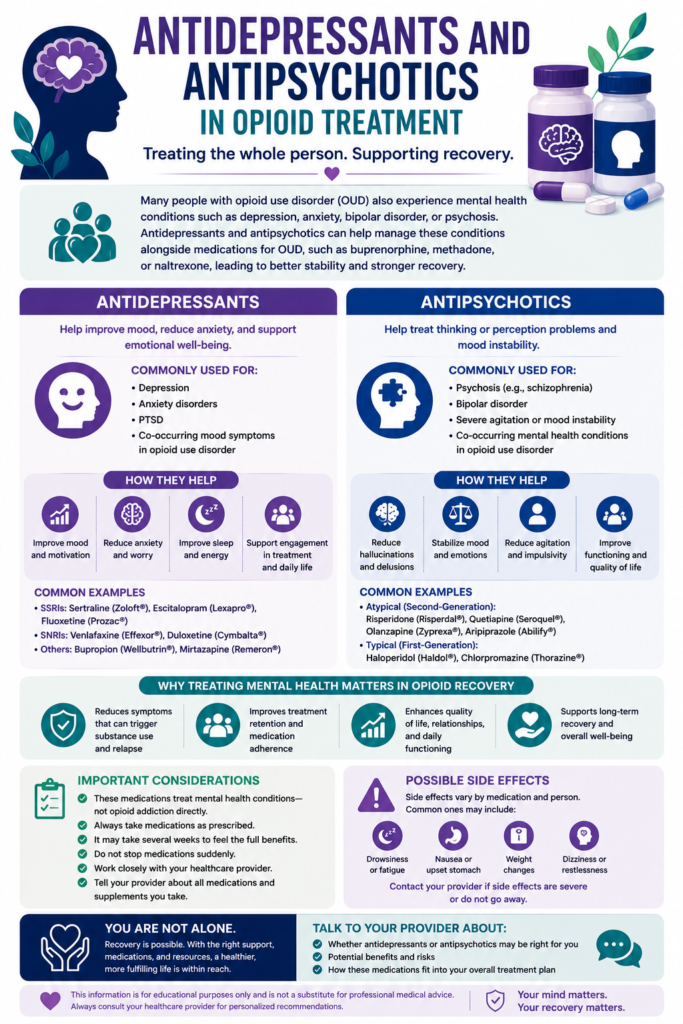
Opioid use disorder (OUD) frequently occurs alongside mental health conditions such as depression, anxiety, bipolar disorder, and psychotic disorders. These co-occurring conditions can make recovery more challenging and increase the risk of relapse if left untreated. While medications such as buprenorphine, methadone, and naltrexone are the primary treatments for OUD, antidepressants and antipsychotics may also play an important role in comprehensive care when mental health symptoms are present. By addressing both addiction and underlying psychiatric conditions, healthcare providers can help individuals achieve greater emotional stability, improve daily functioning, and strengthen their long-term recovery efforts. Understanding the purpose and benefits of these medications is essential for reducing stigma and supporting a whole-person approach to treatment.
Antidepressants and Antipsychotics for Opioid Treatment
Introduction
Medications used to treat opioid use disorder (OUD) primarily include medications such as Buprenorphine, Methadone, and Naltrexone. However, many individuals with OUD also experience co-occurring mental health conditions such as depression, anxiety, bipolar disorder, or psychotic disorders. In these cases, antidepressants and antipsychotics may be used alongside opioid treatment medications to address mental health symptoms that can contribute to substance use, relapse risk, and poor recovery outcomes.
Antidepressants in Opioid Treatment
Why Are Antidepressants Used?
Depression is common among individuals with opioid use disorder. Some people develop depression before addiction, while others experience depression as a result of chronic opioid use, withdrawal, or life stressors associated with addiction.
Antidepressants may help:
- Reduce symptoms of depression
- Improve mood and emotional stability
- Decrease anxiety symptoms
- Improve sleep and concentration
- Increase participation in recovery activities
- Reduce the risk of relapse associated with untreated depression
Common Antidepressants
Examples include:
- Sertraline
- Fluoxetine
- Escitalopram
- Venlafaxine
- Duloxetine
These medications do not treat opioid addiction directly but may improve recovery by addressing underlying mental health symptoms.
Antipsychotics in Opioid Treatment
Why Are Antipsychotics Used?
Antipsychotic medications are generally not used to treat opioid addiction itself. Instead, they are prescribed when an individual has a co-occurring psychiatric disorder, such as:
- Schizophrenia
- Schizoaffective disorder
- Bipolar disorder with psychosis
- Severe mood disorders
- Substance-induced psychosis
Treating these conditions can improve overall functioning and reduce the likelihood of substance use as a way to cope with psychiatric symptoms.
Common Antipsychotics
Examples include:
- Risperidone
- Olanzapine
- Quetiapine
- Aripiprazole
- Paliperidone
These medications can help reduce hallucinations, delusions, severe mood instability, agitation, and disorganized thinking.
Benefits of Treating Co-Occurring Mental Illness
When mental health disorders are treated alongside opioid use disorder, individuals may experience:
- Improved treatment retention
- Better medication adherence
- Reduced psychiatric symptoms
- Improved quality of life
- Greater recovery success
- Lower relapse rates
- Better social and occupational functioning
Important Considerations
Integrated Treatment Is Best
Research supports treating both opioid use disorder and mental health conditions simultaneously. Addressing only one condition often leads to poorer outcomes.
Monitoring for Medication Interactions
Healthcare providers should carefully monitor patients taking multiple medications, especially when combining opioid treatment medications with antidepressants or antipsychotics.
Individualized Care
Not everyone with opioid use disorder needs antidepressants or antipsychotics. These medications should only be prescribed when there is a diagnosed mental health condition that warrants treatment.
Conclusion
Antidepressants and antipsychotics are not primary treatments for opioid use disorder, but they can play a crucial role when individuals have co-occurring mental health conditions. By treating depression, anxiety, schizophrenia, bipolar disorder, or other psychiatric illnesses alongside opioid addiction, healthcare providers can improve treatment engagement, reduce relapse risk, and support long-term recovery. A comprehensive, integrated approach that addresses both addiction and mental health often provides the best opportunity for sustained recovery and improved overall well-being.
Self-Management Strategies to Understand Using Antidepressants and Antipsychotics for Opioid Treatment
Many individuals with opioid use disorder (OUD) also experience mental health conditions such as depression, anxiety, bipolar disorder, or psychotic disorders. When prescribed appropriately, antidepressants and antipsychotics can help manage these conditions and support recovery. Self-management strategies can help individuals better understand their medications, improve treatment adherence, and achieve better recovery outcomes.
1. Learn Why the Medication Was Prescribed
Ask your healthcare provider questions about your diagnosis and treatment plan. Understanding whether the medication is treating depression, anxiety, bipolar disorder, psychosis, or another condition can help increase confidence in treatment and reduce uncertainty.
2. Understand That Mental Health and Addiction Often Occur Together
Recognize that opioid use disorder and mental health conditions frequently coexist. Treating both conditions simultaneously often improves recovery outcomes, reduces relapse risk, and enhances overall well-being.
3. Take Medications Exactly as Prescribed
Follow your provider’s instructions carefully. Do not change doses, skip medications, or stop treatment without medical guidance. Consistent medication use helps maintain stability and symptom control.
4. Track Symptoms and Progress
Keep a journal or use a smartphone app to monitor:
- Mood changes
- Anxiety levels
- Sleep quality
- Cravings
- Energy levels
- Side effects
- Recovery milestones
Tracking progress can help you and your provider evaluate the effectiveness of treatment.
5. Be Patient With Treatment
Many antidepressants require several weeks before significant benefits are noticed. Antipsychotic medications may also take time to fully stabilize symptoms. Understanding this timeline can help prevent frustration and premature discontinuation.
6. Learn About Possible Side Effects
Educate yourself about common side effects while remembering that not everyone experiences them. Contact your healthcare provider if side effects become bothersome or concerning.
7. Maintain Regular Medical Appointments
Routine follow-up visits allow healthcare providers to:
- Monitor medication effectiveness
- Adjust dosages if necessary
- Address side effects
- Assess recovery progress
- Evaluate mental health symptoms
8. Combine Medication With Therapy
Medication is often most effective when combined with counseling or behavioral therapies. Consider participating in:
- Cognitive Behavioral Therapy (CBT)
- Individual counseling
- Group therapy
- Trauma-focused therapy
- Peer support programs
9. Practice Healthy Lifestyle Habits
Support mental health recovery by:
- Exercising regularly
- Eating nutritious meals
- Maintaining a consistent sleep schedule
- Limiting alcohol and non-prescribed substances
- Managing stress through mindfulness or relaxation techniques
10. Develop a Relapse Prevention Plan
Work with your treatment team to identify:
- Personal triggers
- Warning signs of relapse
- Mental health symptom changes
- Emergency contacts
- Coping strategies
A written plan can improve preparedness during difficult periods.
11. Build a Support Network
Connect with people who support both your recovery and mental health treatment, including:
- Family members
- Friends
- Counselors
- Peer recovery specialists
- Support groups
- Healthcare providers
Strong support systems improve treatment engagement and resilience.
12. Challenge Stigma About Psychiatric Medications
Some individuals feel embarrassed about taking antidepressants or antipsychotics. Remind yourself that mental health conditions are medical conditions, and using prescribed medications is a responsible step toward recovery and wellness.
13. Know When to Seek Help
Contact your healthcare provider immediately if you experience:
- Worsening depression
- Suicidal thoughts
- Severe anxiety
- Hallucinations
- Significant mood changes
- Serious medication side effects
Early intervention can prevent crises and improve outcomes.
Conclusion
Successfully using antidepressants and antipsychotics during opioid treatment involves more than simply taking medication. Through education, medication adherence, symptom monitoring, healthy lifestyle habits, therapy participation, and ongoing communication with healthcare providers, individuals can better manage co-occurring mental health conditions and support long-term recovery. Understanding the role of these medications can empower individuals to take an active role in both their mental health and addiction recovery journey.
Family Support Strategies to Understand Using Antidepressants and Antipsychotics for Opioid Treatment
Families can play a vital role in supporting loved ones who are receiving treatment for both opioid use disorder (OUD) and co-occurring mental health conditions. Understanding the purpose of antidepressants and antipsychotics can help families provide encouragement, reduce stigma, and improve treatment outcomes.
1. Learn About Co-Occurring Disorders
Educate yourself about the connection between opioid addiction and mental health conditions such as depression, anxiety, bipolar disorder, and schizophrenia. Understanding that these conditions often occur together can help family members view treatment more compassionately and realistically.
2. Understand the Purpose of the Medications
Recognize that antidepressants and antipsychotics are not used to treat opioid addiction directly. Instead, they help manage mental health symptoms that can interfere with recovery. Treating both conditions simultaneously often leads to better outcomes.
3. Reduce Stigma Within the Family
Avoid viewing psychiatric medications as a sign of weakness or personal failure. Mental health disorders are medical conditions that often require treatment, just as diabetes or high blood pressure may require medication.
4. Encourage Medication Adherence
Support loved ones in taking medications as prescribed by:
- Encouraging consistent routines
- Helping organize medications if requested
- Offering reminders when appropriate
- Celebrating treatment milestones
Avoid controlling or policing medication use, which can create tension and reduce trust.
5. Promote Open Communication
Create a safe environment where your loved one can discuss:
- Medication concerns
- Side effects
- Mental health symptoms
- Recovery challenges
- Treatment goals
Listening without judgment strengthens trust and promotes engagement in care.
6. Learn to Recognize Symptom Changes
Family members should be aware of potential warning signs such as:
- Increased depression
- Severe anxiety
- Mood swings
- Hallucinations
- Paranoia
- Social withdrawal
- Increased cravings or relapse risk
Recognizing changes early allows for timely intervention.
7. Support Regular Healthcare Appointments
Encourage attendance at medical, psychiatric, counseling, and recovery appointments. Offer transportation or assistance with scheduling if needed.
8. Participate in Family Therapy or Education Programs
Family counseling and psychoeducation programs can help family members:
- Better understand addiction and mental illness
- Improve communication skills
- Learn healthy boundaries
- Develop effective coping strategies
9. Encourage Healthy Lifestyle Habits
Families can support recovery by promoting:
- Regular exercise
- Healthy eating
- Consistent sleep schedules
- Stress reduction activities
- Participation in recovery programs
Healthy routines can improve both mental health and addiction recovery.
10. Avoid Unrealistic Expectations
Recovery from opioid addiction and mental illness is often a gradual process. Some medications take several weeks to show benefits, and symptom improvement may occur slowly. Patience and encouragement are important.
11. Focus on Progress Rather Than Perfection
Celebrate positive changes such as:
- Attending appointments
- Taking medications consistently
- Improved mood stability
- Reduced substance use
- Better relationships
- Increased daily functioning
Acknowledging progress helps build confidence and motivation.
12. Prepare for Crisis Situations
Know what to do if your loved one experiences:
- Suicidal thoughts
- Severe depression
- Psychosis
- Significant medication reactions
- Relapse
Keep emergency contact information and crisis resources readily available.
13. Practice Self-Care as a Family Member
Supporting someone with OUD and mental illness can be emotionally demanding. Family members should:
- Seek support when needed
- Maintain personal boundaries
- Participate in support groups
- Prioritize their own physical and emotional health
Healthy caregivers are better able to provide effective support.
Conclusion
Family understanding and support can significantly improve outcomes for individuals using antidepressants and antipsychotics during opioid treatment. Through education, open communication, encouragement, and compassion, families can help reduce stigma, strengthen treatment engagement, and support long-term recovery. When families recognize that treating mental health conditions is an important part of addiction recovery, they become valuable partners in the healing process.
Community Resource Strategies to Understand Using Antidepressants and Antipsychotics for Opioid Treatment
Communities play an important role in helping individuals understand the use of antidepressants and antipsychotics during opioid use disorder (OUD) treatment. Because mental health conditions frequently occur alongside addiction, community resources can provide education, support, and access to integrated care. Increasing awareness helps reduce stigma and encourages individuals to seek comprehensive treatment for both addiction and mental health conditions.
1. Promote Community Education Programs
Community organizations can offer workshops, seminars, and public awareness campaigns that explain:
- The relationship between addiction and mental health
- The purpose of antidepressants and antipsychotics
- The benefits of integrated treatment
- Common misconceptions about psychiatric medications
Education helps reduce stigma and encourages informed decision-making.
2. Support Integrated Treatment Programs
Communities should encourage treatment centers that provide both addiction and mental health services. Integrated care allows individuals to receive treatment for opioid use disorder and co-occurring mental health conditions in one setting.
3. Utilize Community Mental Health Centers
Community mental health centers often provide:
- Psychiatric evaluations
- Medication management
- Counseling services
- Case management
- Crisis intervention
These services can support individuals receiving antidepressants or antipsychotics while participating in addiction treatment.
4. Expand Peer Recovery Support Services
Peer recovery specialists can help individuals:
- Navigate treatment systems
- Understand medication treatment
- Share lived experiences
- Build recovery skills
- Access community resources
Peer support can reduce isolation and increase engagement in treatment.
5. Encourage Support Groups
Community support groups can provide:
- Emotional support
- Shared experiences
- Recovery education
- Practical coping strategies
Groups that welcome individuals receiving psychiatric medications help normalize treatment and reduce stigma.
6. Partner With Healthcare Providers
Hospitals, primary care clinics, addiction treatment centers, and psychiatric providers can collaborate to:
- Improve care coordination
- Increase access to treatment
- Provide educational resources
- Support medication adherence
Strong partnerships improve continuity of care.
7. Engage Faith-Based Organizations
Faith communities can help by:
- Providing emotional and spiritual support
- Reducing stigma around mental illness and addiction
- Offering recovery-focused programs
- Connecting individuals with treatment resources
Compassionate faith-based support can complement medical treatment.
8. Utilize Crisis and Behavioral Health Services
Communities should promote awareness of:
- Crisis hotlines
- Mobile crisis teams
- Emergency psychiatric services
- Behavioral health urgent care programs
These resources can provide immediate assistance during mental health crises.
9. Support Recovery Housing Programs
Recovery residences that understand co-occurring disorders can provide stable housing environments that support both addiction recovery and mental health treatment.
10. Increase Access to Transportation Services
Transportation barriers can prevent individuals from attending appointments for medication management, counseling, and addiction treatment. Community transportation programs can improve access to treatment and retention.
11. Advocate for Anti-Stigma Campaigns
Communities can reduce misconceptions by promoting messages that:
- Mental illness is treatable
- Addiction is a medical condition
- Psychiatric medications are evidence-based treatments
- Recovery can include medication use
Public awareness efforts help foster acceptance and understanding.
12. Support Employment and Vocational Programs
Employment programs can assist individuals in recovery by providing:
- Job training
- Vocational rehabilitation
- Workplace accommodations
- Employment placement services
Meaningful employment supports recovery and improves quality of life.
13. Connect Individuals to Family Education Resources
Community organizations can provide educational programs that help families understand:
- Depression and anxiety disorders
- Psychotic disorders
- Medication treatment
- Recovery support strategies
Educated families are often better equipped to support loved ones.
14. Encourage Collaboration Between Recovery and Mental Health Organizations
Partnerships between addiction recovery organizations and mental health agencies can create comprehensive support networks that address the full range of an individual’s needs.
Conclusion
Community resources are essential for helping individuals understand and successfully use antidepressants and antipsychotics during opioid treatment. Through education, integrated care, peer support, mental health services, recovery programs, and anti-stigma initiatives, communities can help individuals manage co-occurring disorders and achieve better recovery outcomes. When communities recognize that treating mental health conditions is a critical component of opioid recovery, they create environments that promote healing, stability, and long-term wellness.
Frequently Asked Questions
Here are some common questions:
1. What is opioid use disorder (OUD)?
Answer: Opioid use disorder is a chronic medical condition characterized by the inability to stop using opioids despite harmful consequences. It affects brain function, behavior, and physical health.
2. Why are antidepressants or antipsychotics used during opioid treatment?
Answer: These medications are prescribed to treat co-occurring mental health conditions such as depression, anxiety, bipolar disorder, or schizophrenia that may occur alongside opioid use disorder. Treating both conditions can improve recovery outcomes.
3. Do antidepressants treat opioid addiction?
Answer: No. Antidepressants do not treat opioid addiction directly. They help manage depression and anxiety, which can reduce relapse risk and improve overall well-being.
4. Do antipsychotic medications treat opioid addiction?
Answer: No. Antipsychotics treat conditions such as schizophrenia, schizoaffective disorder, bipolar disorder with psychosis, and other serious mental illnesses. They are not medications for opioid use disorder.
5. What medications are approved to treat opioid use disorder?
Answer: The primary medications approved for opioid use disorder are Buprenorphine, Methadone, and Naltrexone.
6. Why do mental health conditions commonly occur with opioid use disorder?
Answer: Many individuals with OUD also have depression, anxiety, trauma-related disorders, bipolar disorder, or psychotic disorders. Mental health symptoms may exist before addiction, develop during substance use, or emerge during recovery.
7. Can treating depression improve recovery from opioid addiction?
Answer: Yes. Treating depression may improve mood, increase motivation, enhance participation in treatment, and reduce the risk of relapse.
8. Can antidepressants and opioid treatment medications be taken together?
Answer: In many cases, yes. Healthcare providers often prescribe antidepressants alongside medications for OUD when clinically appropriate. They carefully monitor for drug interactions and side effects.
9. Can antipsychotics and opioid treatment medications be taken together?
Answer: Yes, many people safely take both under medical supervision. Providers monitor for sedation, changes in heart rhythm, and other potential interactions.
10. What are common antidepressants used in people with OUD?
Answer: Common antidepressants include:
- Sertraline
- Fluoxetine
- Escitalopram
- Venlafaxine
- Duloxetine
11. What are common antipsychotics used in people with OUD?
Answer: Common antipsychotics include:
- Risperidone
- Olanzapine
- Quetiapine
- Aripiprazole
- Paliperidone
12. How long do antidepressants take to work?
Answer: Many antidepressants begin improving symptoms within 2 to 6 weeks, although some individuals may notice benefits sooner or require additional time.
13. How quickly do antipsychotics work?
Answer: Some symptoms, such as agitation, may improve within days, while full benefits for hallucinations or delusions may take several weeks.
14. Can untreated mental illness increase relapse risk?
Answer: Yes. Untreated depression, anxiety, bipolar disorder, or psychosis can increase stress, impair decision-making, and make recovery more difficult.
15. Are these medications addictive?
Answer: Most antidepressants and antipsychotics are not considered addictive and do not produce the cravings or compulsive use seen with addictive substances.
16. Can therapy still help if someone is taking medication?
Answer: Yes. Combining medication with counseling, such as cognitive behavioral therapy (CBT), motivational interviewing, or trauma-informed therapy, often leads to better outcomes than medication alone.
17. Can these medications cause side effects?
Answer: Yes. Possible side effects vary by medication and may include drowsiness, weight changes, dry mouth, dizziness, nausea, or changes in appetite. Healthcare providers monitor for side effects and adjust treatment if needed.
18. Should someone stop taking antidepressants or antipsychotics once they feel better?
Answer: No. Medications should never be stopped suddenly without consulting a healthcare provider. Abrupt discontinuation may lead to withdrawal symptoms or a return of mental health symptoms.
19. Can family members support someone taking these medications?
Answer: Yes. Families can encourage medication adherence, attend educational sessions, support healthy routines, reduce stigma, and maintain open, nonjudgmental communication.
20. What role do community resources play in treatment?
Answer: Community mental health centers, peer support programs, counseling services, recovery organizations, crisis services, and support groups can help individuals manage both opioid use disorder and mental health conditions.
21. Why is integrated treatment important?
Answer: Treating opioid use disorder and mental health conditions together improves treatment retention, reduces relapse risk, enhances emotional stability, and supports long-term recovery.
22. Can these medications improve quality of life?
Answer: Yes. By reducing psychiatric symptoms and supporting recovery, antidepressants and antipsychotics may improve relationships, daily functioning, employment, and overall well-being.
23. How often should someone taking these medications see their healthcare provider?
Answer: Regular follow-up appointments are important, especially when starting or adjusting medications. The frequency depends on the individual’s condition, treatment response, and any side effects.
24. Is medication alone enough for recovery?
Answer: Usually not. The most effective treatment often combines medications, counseling, peer support, healthy lifestyle habits, and ongoing medical care tailored to the individual’s needs.
25. What is the most important thing to remember about antidepressants and antipsychotics in opioid treatment?
Answer: These medications do not replace medications specifically approved for opioid use disorder. Instead, they treat co-occurring mental health conditions that can interfere with recovery. When integrated into a comprehensive treatment plan, they can improve emotional stability, increase treatment engagement, reduce relapse risk, and support long-term recovery and overall quality of life.
Conclusion
Antidepressants and antipsychotics are valuable tools in the treatment of individuals with opioid use disorder who also experience co-occurring mental health conditions. Although these medications do not directly treat opioid addiction, they can significantly improve symptoms of depression, anxiety, psychosis, and mood instability that may interfere with recovery. When combined with evidence-based opioid treatment, counseling, peer support, and healthy lifestyle practices, psychiatric medications can help individuals achieve greater stability and improve their overall quality of life. A comprehensive treatment approach that addresses both mental health and addiction offers the best opportunity for sustained recovery, improved well-being, and long-term success.
Video: Your Antidepressant Could Save Your Recovery #DualDiagnosis #HopeInRecovery