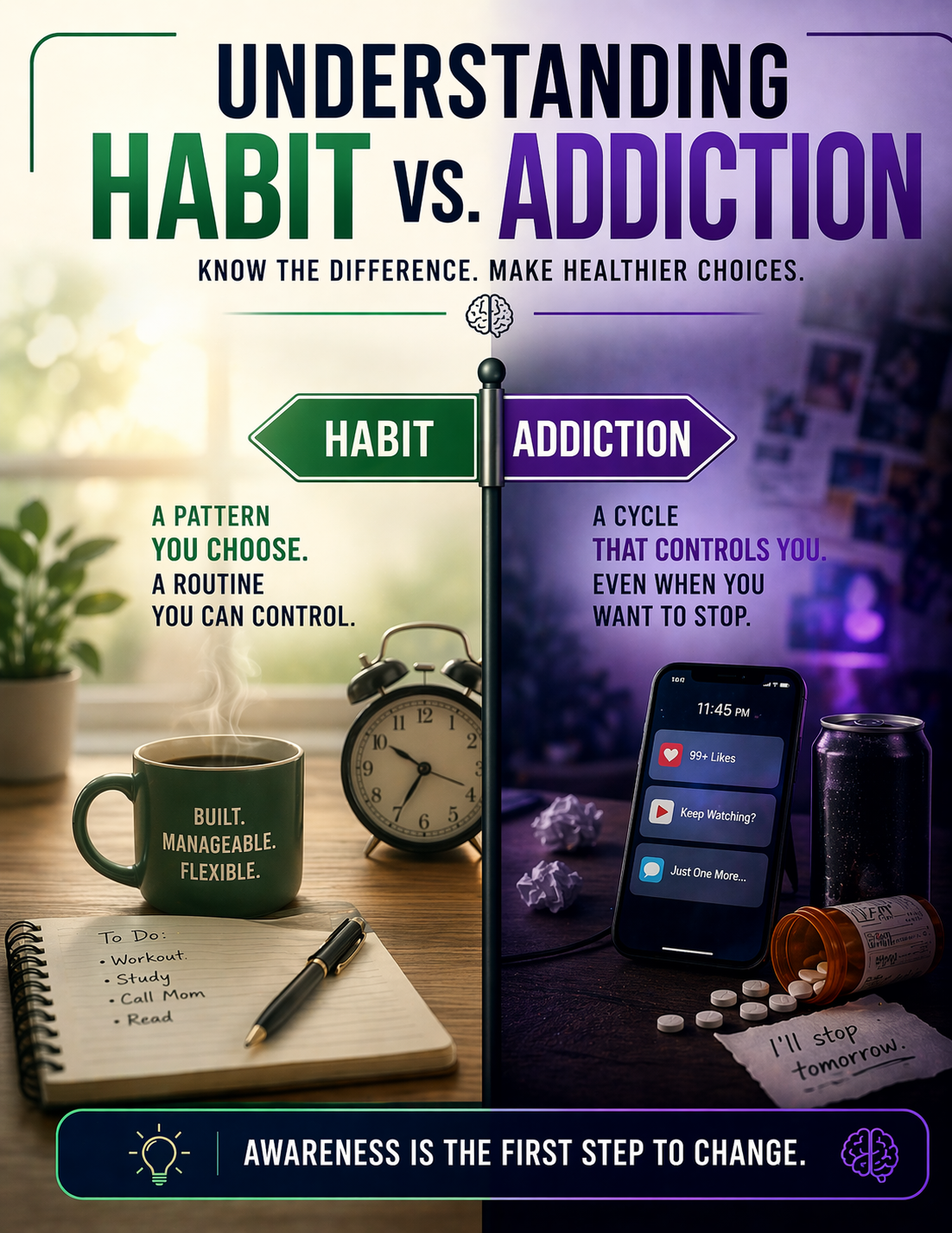
Understanding the difference between a habit and an addiction is essential for recognizing how everyday behaviors can impact overall well-being. While both involve repeated actions, they exist on a spectrum of control and consequence. Habits are typically automatic routines that help structure daily life, whereas addictions involve compulsive engagement despite negative outcomes. The challenge lies in the fact that the transition from habit to addiction is often gradual and not immediately obvious. By examining the psychological and neurological factors behind these behaviors, individuals can better understand how patterns form, why they persist, and when they may require attention or intervention.
Habit vs. Addiction: Understanding the Line Between Routine and Dependence
At first glance, habits and addictions can look very similar. Both involve repeated behaviors, often performed automatically and sometimes without much thought. But while habits are a normal part of daily life, addictions involve a deeper level of dependence that can significantly impact a person’s health and well-being.
Understanding the difference between a habit and an addiction is essential—not only for awareness, but for recognizing when a behavior may require change or support.
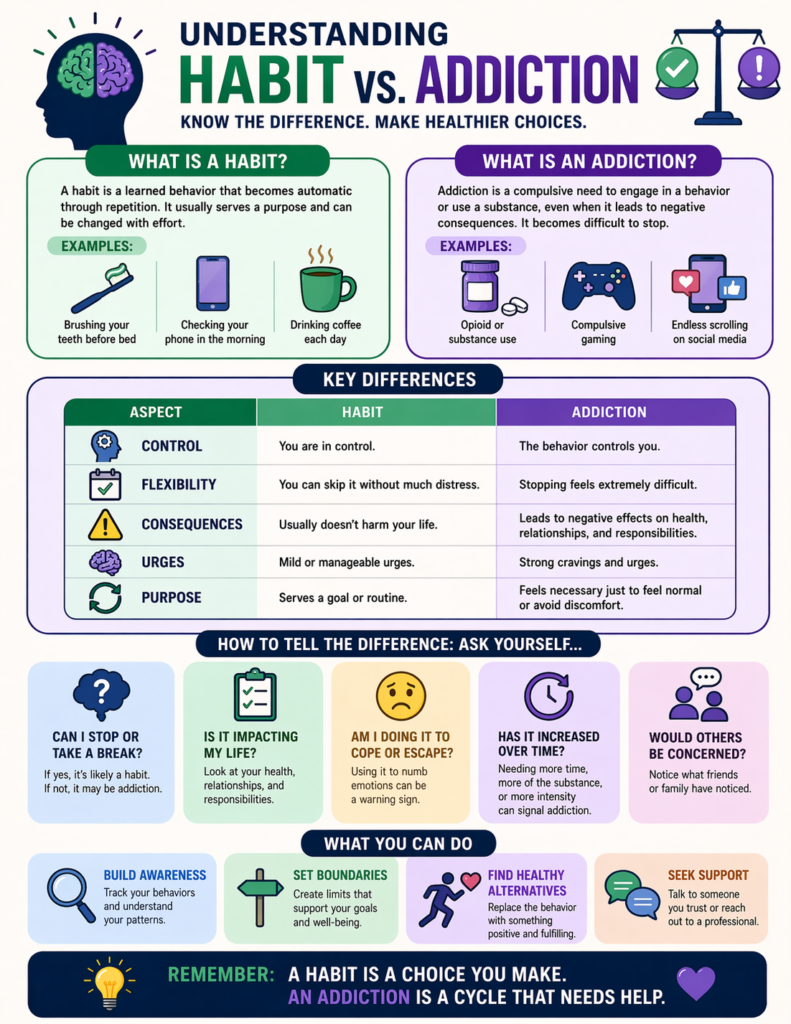
What Is a Habit?
A habit is a learned behavior that becomes automatic through repetition. Habits are often formed to make life more efficient.
Examples include:
- Brushing your teeth before bed
- Checking your phone in the morning
- Drinking coffee at a certain time each day
Habits are typically:
- Predictable and manageable
- Flexible (you can skip them without major distress)
- Not harmful to your overall functioning
They serve a purpose, but do not control your life.
What Is an Addiction?
Addiction goes beyond repetition. It involves a compulsive need to engage in a behavior or use a substance, even when it leads to negative consequences.
Addiction is characterized by:
- Loss of control over the behavior
- Cravings or strong urges
- Continued use despite harm
- Difficulty stopping, even when you want to
It often affects multiple areas of life, including relationships, health, and responsibilities.
The Key Differences
While habits and addictions share some similarities, the differences are significant:
| Habit | Addiction |
|---|---|
| Controlled behavior | Compulsive behavior |
| Easy to modify | Difficult to stop |
| Minimal impact on life | Negative impact on life |
| No strong cravings | Intense urges or cravings |
| Flexible routine | Rigid, repetitive cycle |
The most important distinction is control. With habits, you are in control. With addiction, the behavior begins to control you.
The Role of the Brain
Both habits and addictions involve the brain’s reward system, particularly dopamine.
- Habits form through repetition and reinforcement, making behaviors automatic.
- Addictions overstimulate the reward system, creating stronger reinforcement and making the behavior more difficult to resist.
Over time, addiction can change how the brain processes reward, motivation, and decision-making.
When Does a Habit Become an Addiction?
The shift is often gradual. A habit may become an addiction when:
- It is used to cope with emotional distress
- The behavior increases in frequency or intensity
- You feel unable to stop
- It begins to interfere with daily life
For example, casually checking social media can become problematic if it turns into hours of compulsive scrolling that disrupts sleep or responsibilities.
Why This Distinction Matters
Understanding the difference helps:
- Identify early warning signs
- Reduce stigma around addiction
- Encourage appropriate support and intervention
It also helps individuals reflect on their own behaviors without immediately labeling them as “good” or “bad.”
Moving Toward Awareness and Balance
If a behavior feels difficult to control, it’s worth exploring:
- Why am I doing this?
- What is the need for this meeting?
- Is this helping or harming me?
From there, small changes—like setting boundaries, replacing behaviors, or seeking support—can make a meaningful difference.
Final Thought
Habits are a natural and necessary part of life, helping us function efficiently. Addiction, however, is a more complex condition that requires understanding, compassion, and often support.
Recognizing where a behavior falls on this spectrum isn’t about judgment—it’s about awareness. And with awareness comes the ability to make choices that support your health, your goals, and your overall well-being.
In Control or Controlled? Self-Management Strategies for Understanding Habit vs. Addiction
Understanding the difference between a habit and an addiction is one thing—managing your own behaviors is another. Many patterns start off harmless but can gradually become harder to control. This is where self-management becomes essential. By actively monitoring your thoughts, emotions, and behaviors, you can better recognize where you are on the spectrum between habit and addiction—and take steps to stay in control.
Self-management is not about perfection. It’s about awareness, intention, and making small, consistent changes that protect your well-being.
Why Self-Management Matters
Habits and addictions both rely on repetition and the brain’s reward system. Without awareness, behaviors can shift from controlled routines to compulsive patterns.
Self-management helps you:
- Recognize early warning signs
- Maintain control over your behaviors
- Prevent habits from becoming harmful
- Build healthier coping strategies
It turns unconscious behavior into conscious choice.
Strategy 1: Increase Self-Awareness
The first step is recognizing your patterns.
Ask yourself:
- How often do I engage in this behavior?
- Do I feel in control, or does it feel automatic?
- How do I feel before and after?
Tracking your behavior—mentally or through journaling—can reveal whether it’s a flexible habit or something more rigid.
Strategy 2: Identify Your Motivation
Understanding why you engage in a behavior is key.
- Is it routine and convenience? → Likely a habit
- Is it to escape stress, anxiety, or discomfort? → May be leaning toward addiction
When behaviors are tied to emotional relief, they are more likely to become compulsive over time.
Strategy 3: Test Your Control
A simple way to evaluate a behavior is to pause or stop it temporarily.
Try:
- Skipping the behavior for a day or two
- Reducing how often you do it
If it feels manageable, it’s likely a habit. If you experience strong urges, discomfort, or difficulty stopping, it may be moving toward addiction.
Strategy 4: Set Clear Boundaries
Boundaries help maintain control before patterns escalate.
Examples:
- Limiting screen time
- Setting rules around substance use
- Creating structured routines
These limits keep behaviors intentional rather than automatic.
Strategy 5: Develop Healthy Coping Strategies
If a behavior is used to manage emotions, it’s important to replace it with healthier alternatives.
Consider:
- Exercise for stress relief
- Journaling to process thoughts
- Talking to someone for support
- Mindfulness or relaxation techniques
Meeting your needs in healthier ways reduces reliance on potentially addictive behaviors.
Strategy 6: Reframe Your Thinking
Avoid labeling yourself negatively:
- “I have no self-control.”
Instead, think:
- “This is a learned behavior, and I can change it.”
This shift reduces shame and encourages growth. It also aligns with how the brain actually works—through learning and adaptation.
Strategy 7: Monitor Consequences
Pay attention to how the behavior affects your life.
Ask:
- Is this interfering with my responsibilities?
- Is it affecting my relationships or health?
If the answer is yes, the behavior may be moving beyond a habit.
Strategy 8: Seek Support When Needed
If a behavior feels difficult to control, reaching out is a strong and proactive step.
Support can include:
- Talking to a trusted person
- Seeking professional guidance
- Joining support groups
You don’t have to manage everything alone.
Why These Strategies Work
Self-management strategies are effective because they:
- Increase awareness of behavior patterns
- Strengthen decision-making and control
- Address emotional triggers
- Encourage healthier alternatives
They focus not just on stopping behavior, but on understanding it.
Final Thought
The line between habit and addiction isn’t always obvious—but it is important. With self-management, you can notice the shift early and respond before it becomes overwhelming.
You don’t need to have everything figured out. You just need to be aware, intentional, and willing to adjust. That’s how control is maintained—and how healthier patterns are built over time.
Support Without Stigma: Family Strategies for Understanding Habit vs. Addiction
When a loved one’s behavior starts to change—whether it’s increased screen time, substance use, or repetitive routines—families are often left asking: Is this just a habit, or something more serious? The line between habit and addiction can be difficult to recognize, especially from the outside. Without a clear understanding, families may respond with frustration, fear, or even denial.
However, families play a crucial role in recognizing patterns, providing support, and helping loved ones stay on a healthy path. By understanding the difference between habits and addiction, and responding with informed strategies, families can create an environment that encourages awareness, communication, and positive change.
Why Family Understanding Matters
Habits are typically manageable and flexible, while addiction involves loss of control and continued behavior despite negative consequences. Misinterpreting one for the other can lead to ineffective responses:
- Treating addiction like a simple habit → minimizes the seriousness
- Treating a habit like an addiction → can create unnecessary alarm or conflict
When families understand the distinction, they can respond appropriately—supporting without overreacting or overlooking real concerns.
Strategy 1: Learn the Difference Together
Education is the foundation of effective support.
Families can:
- Learn the key differences between habits and addiction
- Understand how the brain’s reward system works
- Discuss examples of both healthy habits and harmful patterns
When everyone shares the same understanding, it reduces confusion and promotes constructive conversations.
Strategy 2: Observe Without Immediate Judgment
It’s natural to react quickly when concerned, but observation is key.
Pay attention to:
- Frequency and intensity of the behavior
- Emotional responses when the behavior is interrupted
- Impact on daily responsibilities, relationships, or health
Approaching the situation with curiosity rather than accusation helps gather accurate insight.
Strategy 3: Encourage Open Communication
Creating a safe space for conversation is essential.
Families can:
- Ask open-ended questions (“How do you feel about this behavior?”)
- Listen without interrupting or criticizing
- Validate emotions, even if they don’t agree with the behavior
When individuals feel heard, they are more likely to reflect honestly on their actions.
Strategy 4: Avoid Labels and Assumptions
Labeling someone too quickly—either as “addicted” or “fine”—can be harmful.
Instead of saying:
- “You’re addicted.”
Try:
- “I’ve noticed this has been happening more often—how are you feeling about it?”
This keeps the focus on behavior and experience rather than identity.
Strategy 5: Set Healthy Boundaries
Support does not mean allowing harmful behavior to continue unchecked.
Families can:
- Establish clear expectations (e.g., screen time limits, substance boundaries)
- Be consistent with rules and consequences
- Ensure boundaries are communicated calmly and respectfully
Boundaries create structure while still showing care.
Strategy 6: Support Healthy Alternatives
If a behavior is meeting a need—such as stress relief or connection—families can help provide healthier options.
This might include:
- Encouraging hobbies or physical activity
- Spending quality time together
- Promoting social interaction outside of the behavior
Replacing the function of the behavior is more effective than simply trying to stop it.
Strategy 7: Recognize Warning Signs of Addiction
Families should be aware of signs that a habit may be shifting into addiction:
- Loss of control over the behavior
- Strong cravings or urges
- Continued behavior despite negative consequences
- Withdrawal from responsibilities or relationships
Early recognition allows for earlier intervention.
Strategy 8: Seek Support When Needed
If there is concern that a behavior has become addictive, outside help can be valuable.
Families can:
- Encourage professional guidance (therapy, counseling)
- Explore support groups
- Participate in family therapy if appropriate
Seeking help is not a sign of failure—it’s a proactive step toward understanding and support.
Why These Strategies Work
Family-based strategies are effective because they:
- Promote awareness without shame
- Encourage open communication
- Address both behavior and underlying needs
- Provide consistent support and structure
When families are informed and involved, individuals are more likely to reflect, adjust, and seek help if needed.
Final Thought
The difference between a habit and an addiction isn’t always obvious—but it is important. Families don’t need to have all the answers; they just need to be willing to learn, observe, and support with empathy.
By focusing on understanding rather than judgment, families can create a space where healthy habits are reinforced, and harmful patterns are addressed early—making a meaningful difference in long-term well-being.
Building Awareness: Community Resource Strategies for Understanding Habit vs. Addiction
The difference between a habit and an addiction is not always easy to recognize—especially when behaviors develop gradually over time. While individuals and families play important roles in identifying and managing these patterns, communities have a unique responsibility in shaping how these behaviors are understood and addressed.
Community resources—such as education programs, healthcare services, and support networks—can help clarify the line between habit and addiction. By providing accurate information and accessible support, communities create environments where individuals are better equipped to recognize unhealthy patterns early and seek help when needed.
Why Community Resources Matter
Habits and addictions are influenced by more than personal choices—they are shaped by social norms, access to information, and available support systems.
Without community awareness:
- Addictions may be dismissed as “bad habits.”
- Harmful behaviors may go unnoticed or untreated
- Stigma may prevent people from seeking help
Strong community resources help replace misunderstanding with knowledge and create pathways for early intervention and recovery.
Strategy 1: Expand Public Education
Education is key to helping people distinguish between habits and addiction.
Communities can:
- Host workshops explaining behavioral patterns and brain science
- Provide accessible materials on warning signs of addiction
- Promote awareness campaigns that challenge common myths
When people understand the difference, they are more likely to recognize when a behavior becomes harmful.
Strategy 2: Increase Access to Mental Health Services
Mental health plays a major role in both habits and addiction. Many addictive behaviors are linked to stress, anxiety, depression, or trauma.
Communities can support individuals by:
- Expanding affordable counseling and therapy services
- Offering early intervention programs
- Integrating mental health care with substance use support
Addressing underlying issues reduces the risk of habits developing into addictions.
Strategy 3: Develop Peer Support Networks
Peer support provides a space for shared experiences and understanding.
Community efforts may include:
- Support groups for behavioral and substance-related concerns
- Recovery programs led by individuals with lived experience
- Mentorship opportunities
These networks help individuals feel less isolated and more supported in recognizing and changing their behaviors.
Strategy 4: Promote Early Intervention Programs
Recognizing the shift from habit to addiction early can prevent more serious consequences.
Communities can:
- Train educators, healthcare providers, and leaders to identify warning signs
- Offer screening tools and assessments
- Provide guidance on when and how to seek help
Early intervention increases the likelihood of successful outcomes.
Strategy 5: Create Healthy Community Environments
The environment plays a major role in shaping behavior.
Communities can:
- Provide safe spaces for recreation and social interaction
- Encourage activities that promote physical and mental well-being
- Reduce exposure to high-risk environments
Healthy alternatives reduce reliance on harmful behaviors.
Strategy 6: Reduce Stigma Through Awareness Campaigns
Stigma is one of the biggest barriers to understanding addiction.
Communities can:
- Promote the message that addiction is a health condition, not a moral failure
- Share real stories of recovery
- Encourage open conversations about mental health and behavior
Reducing stigma makes it easier for individuals to seek help without fear of judgment.
Strategy 7: Foster Collaboration Across Systems
Understanding and addressing habit vs. addiction requires collaboration between:
- Schools
- Healthcare providers
- Social services
- Community organizations
Working together ensures consistent messaging and comprehensive support for individuals at all stages.
Why These Strategies Work
Community resource strategies are effective because they:
- Address both knowledge and access gaps
- Provide consistent support across environments
- Encourage early recognition and intervention
- Create a culture of understanding rather than judgment
They shift the focus from reacting to problems to preventing them.
Final Thought
The line between habit and addiction may be subtle, but its impact is significant. Communities have the power to make that line clearer—through education, support, and awareness.
By investing in resources that promote understanding, communities can help individuals recognize their behaviors, seek help when needed, and build healthier, more balanced lives. In doing so, they don’t just respond to addiction—they help prevent it.
Frequently Asked Questions
Here are some common questions:
1. What is the main difference between a habit and an addiction?
Answer:
The key difference is control. A habit is a behavior you can manage, modify, or stop without major difficulty. Addiction involves a loss of control, where the behavior continues despite negative consequences and feels difficult or impossible to stop.
2. Can a habit turn into an addiction?
Answer:
Yes. Many addictions begin as habits. Over time, if a behavior becomes more frequent, emotionally driven, and harder to control, it can shift into addiction—especially if it is used to cope with stress or discomfort.
3. How can I tell if something is just a habit?
Answer:
A behavior is likely a habit if:
- You can stop or skip it easily
- It doesn’t cause harm to your life
- It feels routine rather than necessary
- You don’t experience strong cravings
Habits are flexible and do not control your decisions.
4. What are the signs that a behavior may be an addiction?
Answer:
Warning signs include:
- Strong urges or cravings
- Difficulty stopping, even when you want to
- Continuing despite negative consequences
- Impact on relationships, health, or responsibilities
These signs indicate the behavior may be more than just a habit.
5. Why do addictions feel so hard to control?
Answer:
Addictions affect the brain’s reward system, especially dopamine pathways. Repeated exposure strengthens these pathways, making the behavior feel necessary and automatic, rather than optional.
6. Is addiction always related to substances?
Answer:
No. Addiction can involve behaviors as well, such as:
- Social media use
- Gaming
- Gambling
These are called behavioral addictions and follow similar patterns to substance-related addictions.
7. Do habits involve the brain’s reward system too?
Answer:
Yes. Habits also involve dopamine and reinforcement, but to a lesser degree. They become automatic through repetition, but they don’t typically create the intense cravings or loss of control seen in addiction.
8. Can someone have both habits and addictions at the same time?
Answer:
Yes. People often have many habits—some healthy, some neutral—and may also struggle with addictive behaviors. Understanding the difference helps identify which behaviors need more attention.
9. How can I prevent a habit from becoming an addiction?
Answer:
- Stay aware of how often and why you engage in the behavior
- Avoid using it as your main way to cope with stress
- Set boundaries or limits
- Reflect on whether it’s affecting your life
Early awareness is key to prevention.
10. When should someone seek help?
Answer:
If a behavior:
- Feels out of control
- Causes harm to your life
- Is difficult to stop despite wanting to
…it’s a good idea to seek support. Early help can prevent the situation from worsening.
Conclusion
Recognizing the distinction between habit and addiction allows for more informed and compassionate responses to behavior—both in ourselves and others. Rather than viewing these patterns through a lens of judgment, understanding their underlying mechanisms encourages awareness and early action. With this perspective, individuals can identify when a behavior begins to shift beyond control and take steps to address it through self-management, support, or professional help. Ultimately, understanding this spectrum is not about labeling behavior, but about promoting balance, well-being, and the ability to make intentional, healthy choices over time.
Video: How Habits Turn Into Chains #psychology #behavior