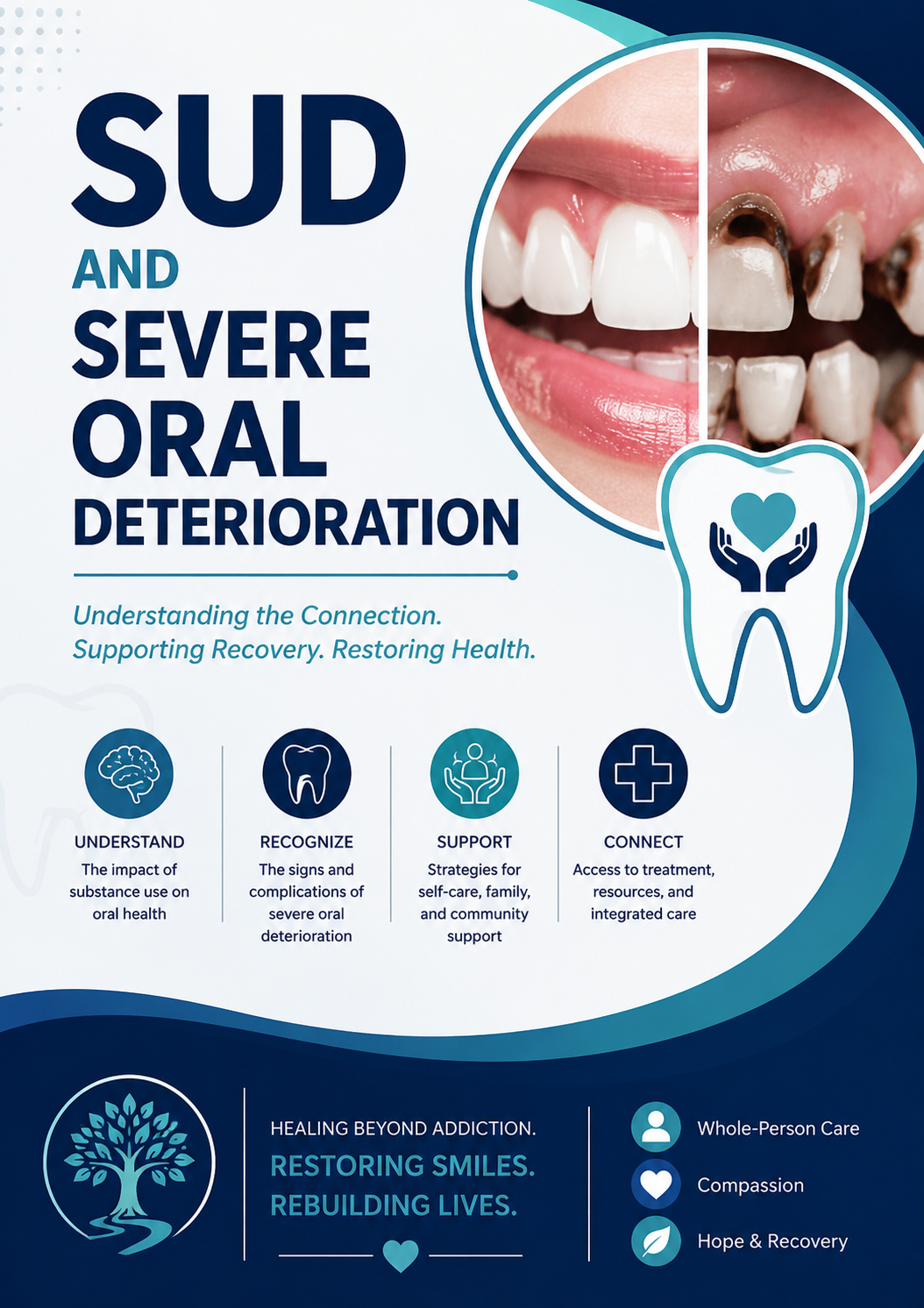
Substance Use Disorder (SUD) affects far more than the brain and behavior—it can have serious consequences for nearly every part of the body, including the mouth. Severe oral deterioration is a common yet often overlooked complication of substance use and may include extensive tooth decay, gum disease, dry mouth, oral infections, broken or missing teeth, and chronic pain. These problems result from a combination of factors, including the direct effects of substances, poor nutrition, reduced saliva production, inadequate oral hygiene, tobacco use, and limited access to dental care. Poor oral health can make eating, speaking, working, and socializing more difficult, negatively affecting self-esteem and overall quality of life. Understanding the relationship between SUD and oral deterioration emphasizes the importance of treating oral health as an essential part of comprehensive addiction care and long-term recovery.
Substance Use Disorder (SUD) and Severe Oral Deterioration
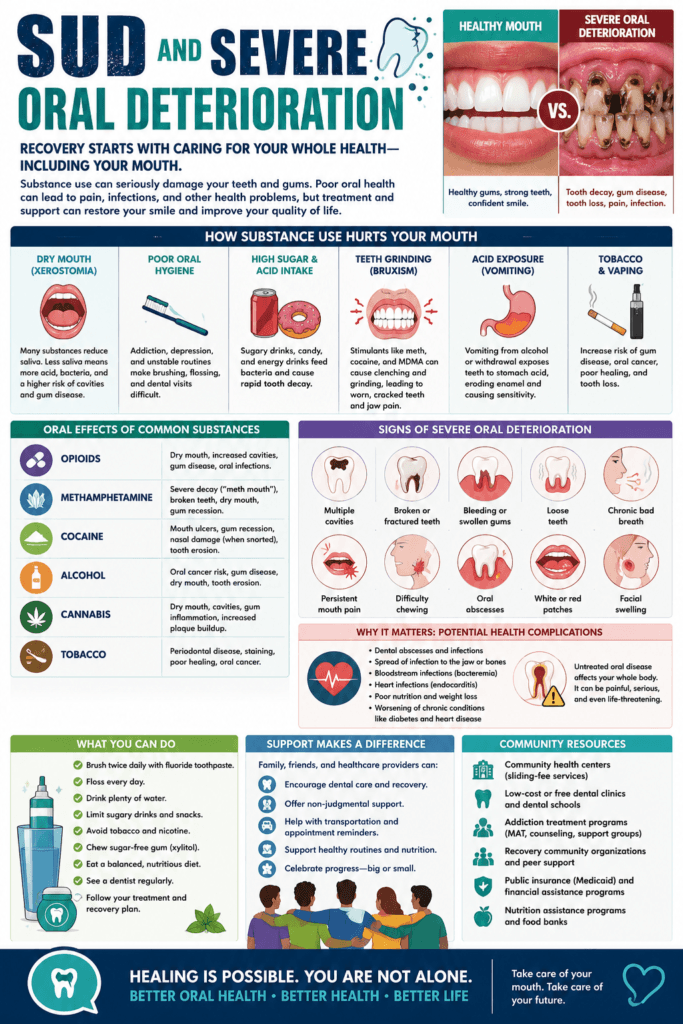
Substance Use Disorder (SUD) is strongly associated with severe oral deterioration, often referred to as “drug-related dental disease.” Poor oral health can develop because of the direct effects of substances on the mouth, combined with inadequate oral hygiene, poor nutrition, dry mouth, reduced access to dental care, and lifestyle factors. Oral deterioration is not limited to one drug and can occur with opioids, methamphetamine, cocaine, alcohol, tobacco, cannabis, and other substances.
How Substance Use Affects Oral Health
Dry Mouth (Xerostomia)
Many substances decrease saliva production. Saliva protects teeth by neutralizing acids, washing away food particles, and preventing bacterial growth. Reduced saliva significantly increases the risk of:
- Tooth decay
- Gum disease
- Oral infections
- Difficulty swallowing and speaking
- Persistent bad breath
Poor Oral Hygiene
Individuals with active addiction may neglect routine brushing, flossing, and dental visits because substance use becomes the primary focus. Depression, anxiety, unstable housing, or financial hardship may further contribute to poor oral care.
High Sugar Intake
Many individuals using stimulants or opioids consume sugary drinks, candy, or energy beverages. Frequent sugar exposure fuels bacteria that produce acids, leading to rapid tooth decay.
Teeth Grinding (Bruxism)
Methamphetamine, cocaine, and MDMA commonly cause jaw clenching and teeth grinding, resulting in:
- Cracked teeth
- Worn enamel
- Jaw pain
- Temporomandibular joint (TMJ) disorders
Acid Exposure
Repeated vomiting associated with alcohol misuse or opioid withdrawal exposes teeth to stomach acid, eroding enamel and increasing tooth sensitivity.
Oral Effects of Specific Substances
| Substance | Common Oral Effects |
|---|---|
| Opioids | Dry mouth, increased cavities, gum disease, and oral infections |
| Methamphetamine | Severe tooth decay (“meth mouth”), broken teeth, dry mouth, gum recession |
| Cocaine | Mouth ulcers, gum recession, nasal septum damage (when snorted), tooth erosion |
| Alcohol | Oral cancer risk, gum disease, dry mouth, tooth erosion |
| Tobacco | Periodontal disease, tooth staining, delayed healing, oral cancer |
| Cannabis | Dry mouth, cavities, gum inflammation, increased plaque accumulation |
Signs of Severe Oral Deterioration
Healthcare providers should assess for:
- Multiple untreated cavities
- Broken or fractured teeth
- Missing teeth
- Gum recession
- Bleeding gums
- Loose teeth
- Persistent mouth pain
- Difficulty chewing
- Oral abscesses
- Chronic bad breath
- White or red patches that may indicate precancerous changes
- Facial swelling suggesting dental infection
Medical Complications
Untreated oral disease can lead to serious health problems, including:
- Dental abscesses
- Facial cellulitis
- Bone infections (osteomyelitis)
- Bloodstream infections (bacteremia)
- Infective endocarditis in high-risk patients
- Malnutrition due to painful chewing
- Poor diabetes control
- Increased cardiovascular inflammation
Psychological and Social Effects
Severe dental disease often affects more than physical health. Individuals may experience:
- Low self-esteem
- Depression
- Social isolation
- Difficulty finding employment
- Embarrassment about appearance
- Reduced willingness to smile or speak
These challenges can negatively affect recovery and quality of life.
Assessment by Healthcare Providers
Routine evaluation should include:
- Inspection of teeth, gums, tongue, and oral mucosa
- Assessment of oral pain and chewing ability
- Questions about dry mouth
- Review of nutrition and beverage intake
- Tobacco and vaping history
- Dental care access
- Screening for oral cancer in individuals who use tobacco or alcohol
Treatment
Effective management includes both addiction treatment and dental care.
Substance Use Treatment
- Evidence-based treatment for SUD
- Medication treatment when appropriate (e.g., Buprenorphine, Methadone, Naltrexone)
- Counseling and behavioral therapies
- Relapse prevention planning
Dental Treatment
Depending on severity, treatment may include:
- Professional dental cleaning
- Fluoride therapy
- Dental fillings
- Root canal treatment
- Tooth extraction
- Periodontal therapy
- Crowns or bridges
- Dentures or dental implants
- Treatment of oral infections with antibiotics when indicated
Prevention Strategies
Patients should be encouraged to:
- Brush twice daily with fluoride toothpaste.
- Floss every day.
- Drink plenty of water.
- Use sugar-free gum or saliva substitutes for dry mouth.
- Limit sugary drinks and snacks.
- Avoid tobacco products.
- Attend regular dental checkups.
- Seek treatment for substance use as early as possible.
Role of Integrated Care
Research supports integrating oral health into addiction treatment programs. Collaboration among physicians, physician assistants, dentists, dental hygienists, addiction specialists, behavioral health professionals, and case managers improves overall outcomes. Early dental intervention can reduce pain, improve nutrition, enhance self-confidence, and remove barriers to successful recovery.
Conclusion
Severe oral deterioration is a common but often overlooked consequence of Substance Use Disorder. It results from a combination of biological effects, behavioral changes, nutritional deficiencies, and limited access to dental care. Early recognition and integrated treatment can restore oral health, reduce medical complications, improve quality of life, and support long-term recovery. Addressing dental health should be considered an essential component of comprehensive addiction treatment rather than a separate or optional aspect of care.
Self-Management Strategies to Understand Substance Use Disorder (SUD) and Severe Oral Deterioration
Self-management is an important part of recovery from Substance Use Disorder (SUD) and maintaining good oral health. While professional addiction treatment and dental care are essential, individuals can take daily steps to reduce oral complications, improve overall health, and support long-term recovery.
1. Prioritize Daily Oral Hygiene
Brush your teeth twice daily with fluoride toothpaste and floss at least once a day to remove plaque and reduce the risk of cavities and gum disease. If brushing is difficult due to pain or sensitivity, use a soft-bristled toothbrush and consult a dental professional about products designed for sensitive teeth.
2. Stay Hydrated and Manage Dry Mouth
Many substances and medications used during recovery can reduce saliva production, increasing the risk of tooth decay. Drink plenty of water throughout the day, chew sugar-free gum containing xylitol to stimulate saliva, and consider alcohol-free mouth rinses or saliva substitutes if recommended by your healthcare provider.
3. Improve Nutrition
Choose a balanced diet rich in fruits, vegetables, lean proteins, dairy products, and whole grains. Limit sugary snacks, soft drinks, and energy drinks that contribute to tooth decay. Foods high in calcium and vitamin D help maintain healthy teeth and bones.
4. Schedule Regular Dental Visits
Even if you have significant dental damage or anxiety about seeing a dentist, routine dental examinations are important. Early treatment can prevent small problems from becoming serious infections that require extensive procedures.
5. Recognize Early Warning Signs
Monitor your mouth regularly for symptoms such as:
- Tooth pain or sensitivity
- Bleeding or swollen gums
- Loose or broken teeth
- Persistent bad breath
- Mouth sores that do not heal
- Facial swelling
- Difficulty chewing
Seek prompt dental or medical care if these symptoms develop.
6. Follow Your Recovery Treatment Plan
Consistently attend counseling, therapy sessions, recovery meetings, and medical appointments. Take prescribed medications for substance use disorders exactly as directed. Maintaining recovery greatly reduces ongoing damage to your oral and overall health.
7. Avoid Tobacco and Nicotine Products
Smoking and vaping increase the risk of gum disease, delayed healing, oral cancer, and tooth loss. Quitting tobacco improves circulation, supports healthier gums, and enhances recovery after dental procedures.
8. Reduce Teeth Grinding and Jaw Clenching
Stress, anxiety, and stimulant use can contribute to teeth grinding (bruxism). Practice relaxation techniques such as deep breathing, mindfulness, meditation, or gentle stretching. Ask your dentist whether a nighttime mouthguard may help protect your teeth.
9. Manage Stress in Healthy Ways
Stress is a common trigger for both substance use and poor self-care. Develop healthy coping skills such as:
- Regular physical activity
- Journaling
- Mindfulness meditation
- Creative hobbies
- Spending time outdoors
- Talking with trusted friends or counselors
Healthy stress management supports both recovery and consistent oral care.
10. Build Daily Healthy Habits
Establish routines that include brushing your teeth, drinking water, eating regular meals, exercising, taking medications, and getting adequate sleep. Consistent daily habits improve physical health and strengthen long-term recovery.
11. Address Dental Anxiety
Fear of dental treatment often prevents individuals from seeking care. Discuss your concerns openly with your dentist. Many dental offices offer comfort measures, sedation options when appropriate, and trauma-informed care that can make treatment more manageable.
12. Celebrate Progress, Not Perfection
Recovery and oral health improvement both take time. Even small positive changes—such as brushing consistently, attending one dental appointment, or reducing sugar intake—can significantly improve long-term health. Focus on steady progress rather than expecting immediate perfection.
Key Takeaway
Recovery from Substance Use Disorder involves caring for both the brain and the body—including oral health. Practicing good oral hygiene, maintaining proper nutrition, staying engaged in addiction treatment, managing stress, attending regular dental visits, and seeking help early for dental problems can prevent serious complications. By making small, consistent healthy choices each day, individuals can improve their oral health, boost self-confidence, enhance their overall well-being, and strengthen their foundation for lasting recovery.
Family Support Strategies to Understand Substance Use Disorder (SUD) and Severe Oral Deterioration
Family members play a vital role in supporting loved ones with Substance Use Disorder (SUD) and the oral health complications that often accompany addiction. Severe dental problems can affect physical health, nutrition, self-esteem, employment, and recovery. By providing encouragement, education, and practical assistance without judgment, families can help their loved one improve both oral health and long-term recovery.
1. Learn About the Connection Between SUD and Oral Health
Educate yourself about how substance use contributes to tooth decay, gum disease, dry mouth, oral infections, and tooth loss. Understanding that severe oral deterioration is often a medical consequence of addiction—not simply poor hygiene—can increase compassion and reduce stigma.
2. Encourage Professional Dental Care
Support your loved one in scheduling regular dental appointments and completing recommended treatments. Offer transportation, help with insurance paperwork, or assist in finding community dental clinics if finances are a barrier.
3. Promote Healthy Daily Habits
Encourage routines that support both recovery and oral health, including:
- Brushing teeth twice daily with fluoride toothpaste
- Flossing every day
- Drinking plenty of water
- Eating balanced, nutritious meals
- Limiting sugary foods and beverages
- Getting adequate sleep
Modeling these healthy behaviors as a family can make them easier to maintain.
4. Support Recovery from Substance Use
Encourage participation in counseling, medication treatment when appropriate, recovery meetings, and follow-up healthcare appointments. As recovery progresses, individuals are often better able to care for their oral health and complete needed dental treatment.
5. Avoid Judgment and Shame
People with severe dental damage often experience embarrassment and low self-esteem. Avoid criticizing their appearance or blaming them for their condition. Instead, use supportive language that focuses on healing, recovery, and hope.
6. Watch for Signs of Serious Dental Problems
Families should be alert for symptoms that require prompt medical or dental attention, including:
- Severe tooth pain
- Facial swelling
- Fever with dental pain
- Difficulty swallowing
- Broken teeth
- Bleeding or swollen gums
- Persistent mouth sores
- Difficulty eating due to pain
Early treatment can prevent serious infections and other complications.
7. Encourage Good Nutrition
Prepare meals that are rich in fruits, vegetables, lean proteins, whole grains, calcium, and vitamins. Limit sugary snacks and beverages that increase the risk of tooth decay. Soft, nutritious foods may be helpful if chewing is painful during dental treatment.
8. Help Manage Dry Mouth
Encourage frequent water intake and discuss saliva substitutes or sugar-free gum with healthcare providers when appropriate. Dry mouth significantly increases the risk of cavities and oral infections.
9. Celebrate Small Improvements
Recovery and dental restoration often occur gradually. Acknowledge positive steps such as attending a dental appointment, brushing consistently, completing treatment, or maintaining sobriety. Positive reinforcement helps build motivation and confidence.
10. Maintain Healthy Boundaries
Supporting recovery does not mean enabling substance use. Encourage accountability while maintaining compassionate boundaries. Healthy family support balances encouragement with personal responsibility.
11. Reduce Dental Anxiety
Many individuals avoid dental care because of fear, shame, or previous traumatic experiences. Offer reassurance, accompany them to appointments if requested, and encourage open communication with dental professionals about anxiety or discomfort.
12. Care for Yourself as a Family Member
Supporting someone with SUD can be emotionally challenging. Family members should also prioritize their own well-being by:
- Seeking counseling if needed
- Participating in family support groups
- Practicing stress-management techniques
- Maintaining healthy relationships and self-care
- Learning about addiction and recovery
Healthy family members are better equipped to provide effective support.
Key Takeaway
Families can have a meaningful impact on both recovery and oral health by providing education, encouragement, emotional support, and practical assistance. Helping a loved one establish healthy routines, access dental and addiction treatment, improve nutrition, and overcome shame can reduce complications and improve quality of life. When families combine compassion with healthy boundaries and ongoing support, they become valuable partners in promoting healing, restoring confidence, and supporting lasting recovery.
Community Resource Strategies to Understand Substance Use Disorder (SUD) and Severe Oral Deterioration
Recovery from Substance Use Disorder (SUD) and the treatment of severe oral deterioration require collaboration among healthcare providers, dental professionals, community organizations, and support networks. Community resources can improve access to preventive dental care, addiction treatment, education, and social services while reducing barriers such as cost, transportation, stigma, and lack of insurance. Connecting individuals with these resources can improve oral health, overall wellness, and long-term recovery.
1. Utilize Community Health Centers
Federally Qualified Health Centers (FQHCs) and community health clinics often provide integrated medical, behavioral health, and dental services on a sliding-fee scale. These centers can help individuals receive preventive dental care, treat oral infections, and manage chronic medical conditions alongside addiction treatment.
2. Access Low-Cost or Free Dental Clinics
Many communities offer charitable dental clinics, dental school clinics, mobile dental units, and nonprofit organizations that provide affordable or free dental care for individuals with limited financial resources. These services may include cleanings, fillings, extractions, dentures, and emergency dental treatment.
3. Participate in Addiction Treatment Programs
Comprehensive addiction treatment programs—including outpatient, intensive outpatient (IOP), residential treatment, and medication-assisted treatment (MAT)—often coordinate referrals to dental providers as part of whole-person care. Integrated treatment improves both recovery outcomes and physical health.
4. Connect with Recovery Support Organizations
Peer recovery organizations and recovery community centers provide encouragement, education, mentorship, and connections to local healthcare resources. Peer recovery specialists can help individuals navigate dental services, transportation, insurance, and recovery supports.
5. Take Advantage of Dental Education Programs
Local health departments, schools, community colleges, and nonprofit organizations frequently offer educational programs on oral hygiene, nutrition, tobacco cessation, and preventive dental care. These programs increase awareness of how substance use affects oral health.
6. Utilize Public Insurance and Assistance Programs
Medicaid and other public assistance programs may cover certain dental services depending on state eligibility and benefits. Community case managers, social workers, and insurance navigators can help individuals understand available coverage and apply for benefits.
7. Access Nutrition Assistance Programs
Programs such as food banks, community meal services, and nutrition assistance initiatives can improve access to healthy foods that support oral health and recovery. Good nutrition promotes healing, reduces inflammation, and strengthens teeth and gums.
8. Participate in Tobacco and Nicotine Cessation Programs
Community smoking cessation programs, quitlines, counseling services, and support groups help reduce tobacco use, lowering the risk of gum disease, tooth loss, delayed healing, and oral cancer.
9. Address Transportation Barriers
Many communities offer transportation assistance through Medicaid, nonprofit organizations, senior services, recovery programs, or local transit agencies. Reliable transportation helps individuals consistently attend medical, dental, and behavioral health appointments.
10. Promote Interprofessional Collaboration
Strong communication among primary care providers, physician assistants, dentists, dental hygienists, addiction specialists, behavioral health clinicians, pharmacists, and social workers ensures coordinated care. Integrated treatment plans address both addiction recovery and oral health needs simultaneously.
11. Reduce Stigma Through Community Education
Public awareness campaigns, school education programs, faith communities, employers, and civic organizations can help reduce stigma surrounding addiction and encourage individuals to seek treatment before serious complications develop. Education reinforces that addiction is a treatable medical condition and that oral deterioration is often a consequence of the disease rather than a personal failure.
12. Know When to Seek Emergency Care
Community education should emphasize recognizing signs of serious dental infection that require immediate medical attention, including:
- Facial swelling
- Difficulty breathing or swallowing
- High fever with dental pain
- Rapidly spreading swelling
- Severe oral bleeding
Prompt emergency treatment can prevent life-threatening complications.
Key Takeaway
Community resources are essential for improving outcomes in individuals with Substance Use Disorder and severe oral deterioration. Affordable dental services, integrated addiction treatment, recovery support organizations, nutrition programs, transportation assistance, public insurance, and educational initiatives all contribute to better health and sustained recovery. When communities work together to reduce barriers, expand access to care, and promote compassionate, evidence-based treatment, individuals are more likely to restore their oral health, improve their quality of life, and achieve long-term recovery.
Frequently Asked Questions
Here are some common questions:
1. What is the connection between Substance Use Disorder (SUD) and severe oral deterioration?
Substance Use Disorder can significantly damage oral health through dry mouth, poor oral hygiene, poor nutrition, teeth grinding, acidic erosion, tobacco use, and delayed dental care. Over time, these factors can lead to severe tooth decay, gum disease, infections, and tooth loss.
2. Which substances are most commonly associated with severe dental problems?
Methamphetamine is well known for causing “meth mouth,” but opioids, cocaine, alcohol, tobacco, cannabis, and other substances can also contribute to serious oral health problems. Each substance affects the mouth differently, but all increase the risk of dental disease.
3. What is “meth mouth”?
“Meth mouth” describes severe tooth decay, broken teeth, gum disease, and tooth loss commonly seen in people who use methamphetamine. It results from dry mouth, teeth grinding, poor oral hygiene, frequent consumption of sugary drinks, and reduced dental care.
4. Why does dry mouth increase the risk of cavities?
Saliva protects teeth by washing away bacteria, neutralizing acids, and helping repair early enamel damage. When saliva production decreases, harmful bacteria multiply more easily, increasing the risk of cavities, gum disease, and oral infections.
5. Can medications used to treat addiction also cause dry mouth?
Yes. Some medications prescribed during recovery may contribute to dry mouth. However, the health benefits of evidence-based addiction treatment generally far outweigh this side effect. Patients should discuss dry mouth management strategies with their healthcare provider or dentist.
6. What are the early warning signs of severe oral deterioration?
Common warning signs include:
- Tooth pain or sensitivity
- Bleeding or swollen gums
- Persistent bad breath
- Loose or broken teeth
- Mouth sores that do not heal
- Difficulty chewing
- Facial swelling
- Multiple untreated cavities
Early treatment can prevent more serious complications.
7. Can severe dental disease affect overall health?
Yes. Untreated dental infections may spread beyond the mouth and contribute to facial infections, bloodstream infections, poor nutrition, worsening diabetes, cardiovascular complications, and reduced quality of life.
8. Can oral health improve after someone enters recovery?
Yes. Recovery often leads to improved daily hygiene, healthier nutrition, regular dental care, and reduced exposure to harmful substances. Although some damage may be permanent, many dental problems can be successfully treated or restored.
9. How often should someone in recovery see a dentist?
Most people should have dental examinations and cleanings every six months. Individuals with significant dental disease, dry mouth, or ongoing oral health concerns may require more frequent visits, as recommended by their dentist.
10. What daily habits help protect oral health during recovery?
Helpful habits include:
- Brushing twice daily with fluoride toothpaste
- Flossing every day
- Drinking plenty of water
- Limiting sugary foods and beverages
- Eating a balanced diet
- Avoiding tobacco and vaping
- Attending regular dental appointments
- Following addiction treatment recommendations
11. How can family members support someone with SUD and dental problems?
Families can encourage recovery, help schedule dental appointments, provide transportation when needed, prepare healthy meals, promote good oral hygiene, offer emotional support, and avoid blaming or shaming their loved one. Compassion and encouragement can improve both recovery and oral health outcomes.
12. Are dental problems a reason someone might avoid recovery?
Sometimes. Individuals may feel embarrassed about their appearance, fear judgment, or worry about the cost of treatment. Creating supportive, nonjudgmental environments and connecting individuals with affordable dental services can help reduce these barriers.
13. Are there affordable dental resources available for people with SUD?
Yes. Many communities offer services through federally qualified health centers, charitable dental clinics, dental schools, mobile dental programs, public insurance programs, and nonprofit organizations that provide low-cost or free dental care.
14. Can quitting tobacco improve oral health?
Yes. Stopping smoking or vaping improves gum health, reduces the risk of oral cancer, enhances healing after dental procedures, decreases tooth loss, and supports overall recovery and long-term health.
15. Why is oral health considered part of addiction recovery?
Good oral health improves nutrition, reduces pain and infection, enhances self-confidence, supports communication and employment opportunities, and contributes to overall physical and mental well-being. Treating oral disease alongside Substance Use Disorder promotes whole-person care and strengthens the foundation for lasting recovery.
Conclusion
Severe oral deterioration is a significant but treatable consequence of Substance Use Disorder. Early recognition, routine dental care, evidence-based addiction treatment, proper nutrition, and consistent oral hygiene can help prevent further damage and improve overall health. Recovery involves more than achieving sobriety—it also includes restoring physical health, rebuilding confidence, and improving quality of life. Families, healthcare providers, dental professionals, and community organizations each play an important role in supporting individuals throughout this process. By integrating dental care into addiction treatment and reducing the stigma surrounding both SUD and oral disease, individuals can receive the comprehensive care they need to heal, regain their health, and build a stronger foundation for lasting recovery.
Video: This Is Why Addicts Lose Their Teeth #harsh #reality