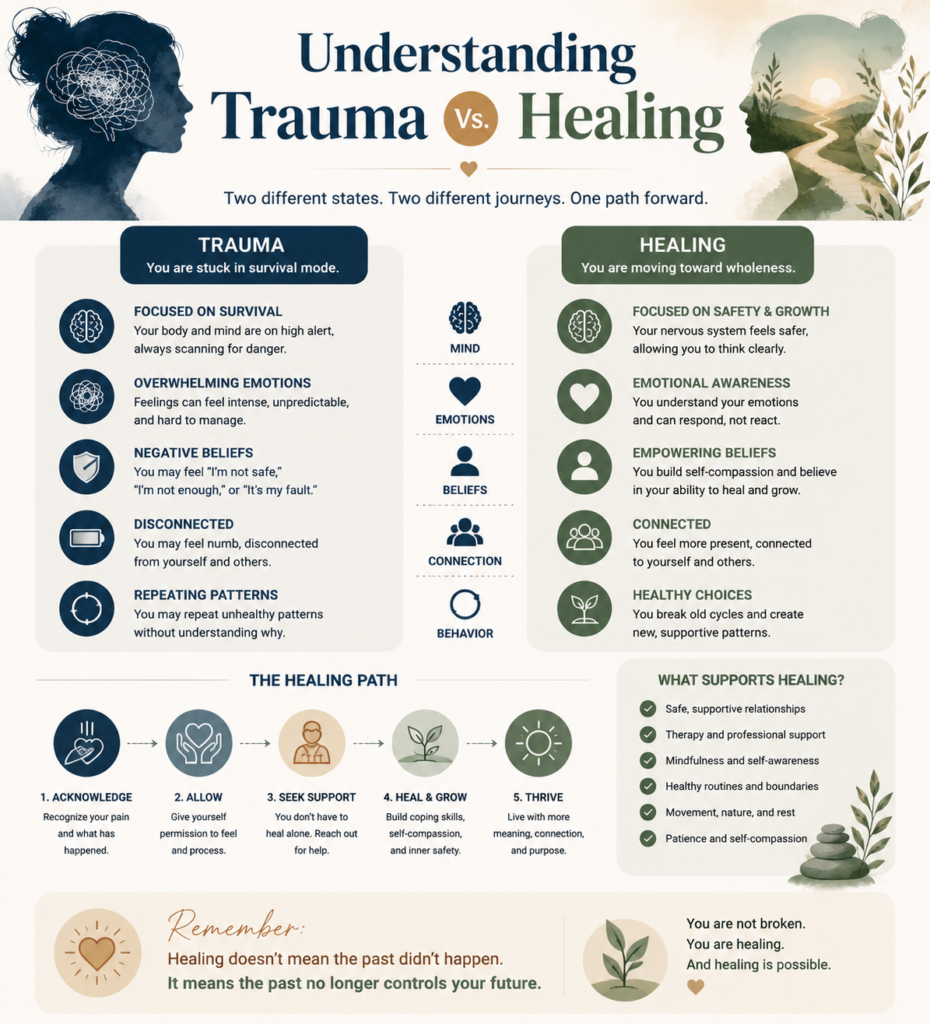
Understanding the difference between trauma and healing is crucial, whether you are navigating your own recovery journey or supporting someone you care about. Trauma and healing influence the mind, body, and emotions in profoundly different ways, shaping how we perceive, react, and interact with the world around us. By recognizing the signs and patterns of each, you can better identify moments of progress, understand emotional responses, and determine the most beneficial type of support. Awareness of these distinctions not only helps in tracking personal growth but also fosters compassion, patience, and effective guidance when helping others move from a place of pain toward wholeness and resilience.
What Trauma Really Means
Trauma is an emotional response to distressing or deeply upsetting events. It’s not just about what happened; it’s also about how that experience makes you feel. Some people think trauma only comes from massive life events, but it can also develop from a series of smaller, ongoing stressors or challenges over time.
When you experience trauma, your brain and body switch into survival mode. Your system reacts by triggering stress hormones, making you more alert, but also jumpy or hyperaware. Reactions like anxiety, fear, shame, or feeling disconnected from your body sometimes show up right away. Other times, they might pop up years after the event.
Some common signs of trauma:
- Intrusive thoughts: Flashbacks or distressing memories that interrupt your day.
- Hypervigilance: Always keeping an eye out, ready for something bad to happen.
- Avoidance: Changing your routine to avoid reminders.
- Emotional numbness: Feeling flat, disconnected, or indifferent to things you used to enjoy.
- Changes in mood: Swings toward irritability, overwhelm, or sadness.
Trauma isn’t just mental. Symptoms like headaches, digestive problems, sleep issues, or body aches can be just as telling. The bottom line: trauma tends to make your world feel less safe and harder to control. Besides emotional upheaval, you might notice your energy levels drop or even physical symptoms that linger long after the original event. Chronic pain or feeling constantly on edge is pretty common for trauma survivors.
Social impacts are worth mentioning, too. People going through trauma might pull back from friends or have a hard time trusting others. Sometimes, it affects work or school performance because it’s harder to concentrate or stay motivated. Understanding the scope of trauma means acknowledging its ripple effect across all parts of life—and knowing you’re not alone in facing this.
What Healing Looks Like
Healing is a process that helps your mind and body recover from trauma. It rarely happens overnight and doesn’t always follow a straight line. You might have days where you feel like you’ve made progress, and others where old symptoms pop up again. That’s pretty normal.
Key signs and experiences of healing include:
- Reconnecting with yourself: You start to understand your feelings and don’t judge them as harshly.
- Feeling safer: Triggers start losing their old power over you.
- Greater resilience: When tough moments arise, you handle them with new skills rather than panic or resorting to avoidance.
- Improved relationships: You’re able to show up with more honesty, set boundaries, or build trust again.
- Curiosity and hope: You get interested in new things or look forward to the future.
Healing often involves both body and mind—things like learning calming skills, getting support, or exploring your story with less fear. It’s about building a sense of comfort and confidence, even when you remember what’s happened. A lot of healing happens quietly, like choosing self-care or allowing yourself to rest. Over time, these choices stack up and help shift old patterns.
Along the way, you might stumble upon new interests, like getting involved in creative activities, practicing mindfulness, or connecting with nature. These things can boost your sense of wellbeing and help rewrite old stories of fear or doubt. Noticing small victories—like reaching out to a friend or making it through a tough day—matters more than people think. The longer you stick with the process, the more those wins add up to real change.
Trauma vs. Healing: The Main Differences
Understanding the differences between trauma and healing comes down to how you feel and act day to day. Trauma can feel like you’re stuck in replaying old experiences, while healing feels more like moving forward, even if that progress is tiny or slow.
- In trauma, Thoughts and emotions often feel unpredictable or overwhelming. You might switch into survival mode quickly, even when nothing dangerous is happening.
- In healing, Emotions are still present, but you usually respond rather than react. You have tools and ways to take care of yourself in tough moments.
The mix-up fades into healing, but it doesn’t mean triggers or hard days disappear completely. Instead, it means you have more options and fewer feelings of helplessness. If you notice you’re making decisions because you want to, rather than just reacting to fear or anxiety, that’s a pretty good sign you’re on the path to healing. This progress can show up in how you talk to yourself or in the courage to try new things. Over time, the feeling of being stuck fades, and genuine hope takes its place.
Starting Your Healing Process
Every healing adventure is a bit different, but some steps help most people get moving. Here are a few that I’ve found super useful, whether from my own experience or from hearing others share their process:
- Find support: This could be a therapist, a support group, or a trusted friend. Having someone listen without judgment can be really important.
- Learn about trauma responses: Understanding what’s happening in your brain and body helps take some of the fear out of symptoms.
- Try grounding skills: Breathing exercises, moving your body, or focusing on your senses can help you come back to the here and now.
- Set boundaries: It’s okay to say no to things that don’t feel safe for you right now.
- Practice self-care routines: Find activities that make you feel calm or happy, even if just for a moment at a time.
There’s no one way to heal, and it’s okay for the adventure to be messy. It’s pretty common to drift between feeling totally stuck and surprising yourself with new bursts of hope. For many, creating a healing space at home, journaling about emotions, or starting gentle movement (like yoga or walking) can really help. Remember to check in with yourself regularly about what’s working and what isn’t.
Common Obstacles on the Healing Path
If healing were a smooth process, everyone would already be well on their way. There are some obstacles that can make it harder, and knowing what to expect can help you spot them before they get in the way:
- Shame: Feeling embarrassed or wrong for struggling with trauma is more common than people realize. Remember, trauma responses are normal reactions to tough experiences and not a personal failure.
- Lack of support: Sometimes, friends or family don’t understand, or they might dismiss how you’re feeling. That’s when outside support (like a therapist or peer group) might help.
- Triggers: Unexpected reminders of trauma can hit without warning. Building up coping skills and knowing how to calm yourself can make these moments a bit easier.
- Slips or setbacks: Progress might slow down, or you may feel stuck for a while. Healing isn’t about never struggling again; it’s about learning how to come back from tough spots.
Some folks also face cultural stigma or past messages that make it hard to ask for help. Breaking out of isolation and reaching for support is a brave step that can start to break old cycles.
Dealing with Shame
I’ve seen shame freeze people up more than almost anything else. Naming shame and telling someone about it (even if it’s just writing in a journal) often takes away some of its sting. The more you speak honestly, the less alone you tend to feel. Trying to add self-compassion to how you talk to yourself can be a powerful tool.
Handling Triggers
When triggers hit, small actions like stepping outside, listening to music, or focusing on your breath can switch your body out of panic mode. Over time, these skills become easier to use in the moment. Sometimes just noticing that you’ve been triggered—and being gentle with yourself about it—can prevent old patterns from taking over entirely.
How to Measure Progress
Measuring emotional healing isn’t as straightforward as checking blood pressure or counting steps. Still, there are ways I notice things start to change:
- You bounce back faster after tough moments.
- You don’t avoid as many things as you used to.
- Your self-talk gets kinder.
- Relationships feel less draining or more meaningful.
- You start to imagine a hopeful future again.
It’s really important to celebrate small wins. Progress can be slow, but that doesn’t mean it’s not happening. Even just showing up for yourself matters. Marking a journal entry or taking a quiet moment to acknowledge a tough milestone can reinforce your progress and keep you motivated.
Sometimes friends or family might notice changes before you do and point them out. Accept those observations as signs you’re moving forward, even if it doesn’t feel huge in the moment. Healing is full of small steps that add up over time.
Real-Life Examples: Trauma vs. Healing
To put things in perspective, here are two simple examples:
- Trauma response: Someone who survived a car accident might startle badly whenever they hear tires screech, even months later. They might avoid driving altogether.
- Healing experience: As they heal, they may still feel nervous behind the wheel, but they learn grounding exercises to calm their body, talk openly about their feelings, and start driving short distances again.
The switch isn’t about pretending the trauma never happened. It’s about managing feelings with more awareness and confidence. You learn to honor what you’ve been through without letting it control your every move. Some days may still feel tricky, but over time, those moments usually come less often and feel less intense.
Frequently Asked Questions
Here are a few questions that pop up for a lot of people starting to work through trauma:
Question: Can I heal from trauma on my own, or do I need professional help?
Answer: A lot of folks make progress with self-help tools, books, or online resources, but professional support can really speed things along and provide guidance when things get complicated. Don’t hesitate to ask for help; even one supportive session can make things clearer.
Question: How long does healing from trauma take?
Answer: There’s no set timeline. Some people notice changes in a few weeks; for others, it might take years. It depends on the kind of trauma, your environment, and the resources you have. It’s a good idea to be patient and stay flexible with your expectations as you go.
Question: Are setbacks normal during healing?
Answer: Yes, and actually pretty common. Setbacks can feel tough, but they’re part of the process. They often mean you’re facing new layers of your story, not that you’re back at square one. Each setback can teach you something about what you need next.
Final Word
Learning the difference between trauma and healing means understanding how these experiences shape your life and what you can do to move forward. Both are real, and both deserve attention and care. By spotting the signs, building skills, and reaching out for support, most people can find their way toward greater wellbeing, even if the adventure takes time. There’s courage in each small step—and that matters every bit as much as the destination.
Video: Trauma vs Healing: What Your Nervous System Actually Needs #psychology #trauma #recovery