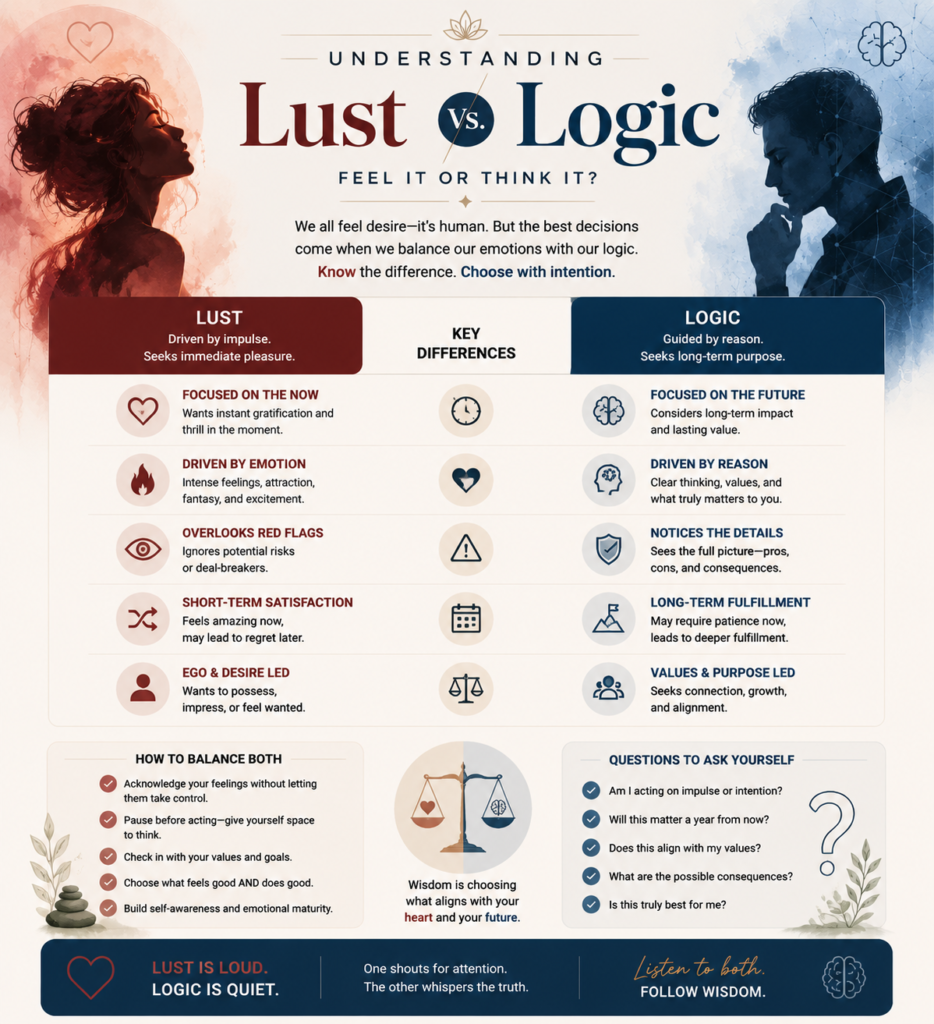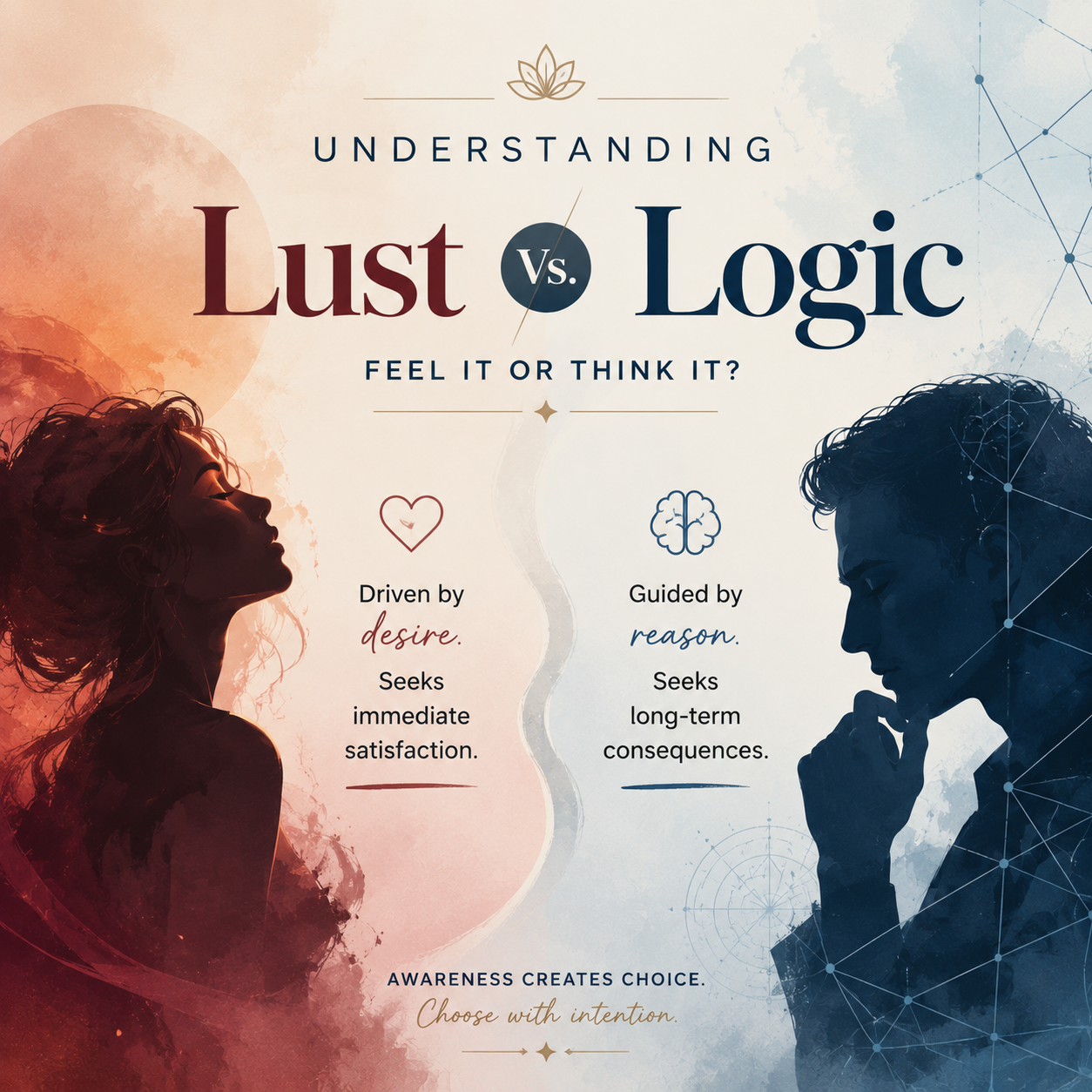
If you’ve ever felt torn between a heart-racing impulse and a calm, rational plan when making decisions, you’re far from alone. This ongoing tug-of-war between lust and logic influences nearly every aspect of our lives, from romantic relationships to everyday choices like spending or prioritizing tasks. Both forces play a significant role in shaping our actions, often pulling us in opposite directions and prompting inner conflict. Understanding which of these voices is guiding you at any given moment can provide valuable insight into your motivations, helping you make more deliberate, balanced decisions. By exploring how lust and logic interact, you can begin to recognize patterns, identify when emotion or reason dominates, and ultimately learn to harness both to make choices that align with your long-term goals and values.
Understanding Lust and Logic in Everyday Choices
Lust and logic show up in decisions big and small, but they speak pretty different languages. When I talk about lust here, I don’t just mean romantic or sexual desire. I’m talking about those quick, powerful feelings—cravings for a new gadget, the excitement for an adventure, or just wanting something now because it feels good. Logic, in contrast, focuses more on weighing facts, anticipating consequences, and prioritizing long-term wins over short-term pleasure.
Scientists often describe these forces in terms of how our brains are wired. The limbic system helps trigger emotional, instant responses, the kind that make you crave that midnight chocolate cake or swipe right on someone who makes your heart race, even if you know it might not lead to anything lasting. The prefrontal cortex, on the other hand, is like your internal advisor, weighing options and helping you plan. So, you’re basically built to feel the push and pull between these two modes.
The First Steps: Spotting Which Voice Is Speaking Up
Knowing whether lust or logic is running the show can be trickier than it sounds. Here are some common ways each voice tends to show up:
- Lust: Urges you to act now, with a vibe of, “I need this immediately!” It comes with excitement, physical energy, and short-term thinking.
- Logic: Makes you pause and consider things like budget, impacts on your goals, and potential risks. It’s steady and sometimes a bit boring, but you’ll rarely regret its advice later.
I’ve found it helps to just notice what goes on in your body and thoughts during big decisions. A racing heart, a quick-tempered voice in your head, or a feeling of not wanting to wait—that’s probably lust. If you’re making a checklist or talking yourself through pros and cons, that’s logic at work.
How Lust and Logic Shape Relationships, Careers, and Even Shopping
You probably already know that your choices in love, work, and spending can swing wildly depending on whether you’re listening to desire or practicality. Here’s how each plays out in daily life:
- Relationships: Lust might make you jump into a passionate fling or swipe ‘yes’ based on looks alone, while logic wants you to think about compatibility, values, and what you actually want in the long haul.
- Career Moves: The thrill of quitting a job on the spot or launching a business without a plan is classic lust energy. Logic will push you to set up a savings cushion, research your field, or talk to mentors first.
- Shopping Decisions: That sudden urge to buy the latest phone, even when yours works fine? That’s lust. Waiting for reviews, budgeting for an upgrade, or comparing models is the domain of logic.
Plenty of people, including me, have experienced that buyer’s remorse you get after letting lust take the wheel. But you also might miss out on excitement and spontaneity if logic is the only voice you listen to. Striking a balance matters a lot.
Quick Guide: Checking Yourself Before Making a Decision
Here’s a checklist I follow to figure out what’s fueling my choices and keep both voices in check:
- Pause for a Moment: Take a breath before jumping in. Even waiting a few minutes gives your logical side a chance to speak up.
- Ask Yourself “Why Now?”Are you rushing because of a deadline, hype, or butterflies in your stomach?
- Write It Down: Jot down the pros, cons, and how you might feel about this choice tomorrow, next week, and even next year.
- Talk It Out: Sometimes it helps to ask a friend—or yourself—what advice you’d give someone else in your shoes.
- Notice Regret: If a choice feels great in the moment but lousy right after, take note. Over time, you’ll spot your patterns.
Balancing these steps before making a decision keeps impulse in check without totally shutting down your emotional side.
Things to Consider When Balancing Emotion and Reason
It’s tempting to say, “Always be logical,” but life would get pretty bland if you never followed your desires. On the other hand, letting lust run wild can lead to regret, debt, or burnout. Here’s what to keep in mind to get the best of both worlds:
- Short-Term vs. Long-Term Happiness: Is the choice just about a moment’s thrill, or does it fit your bigger goals?
- Emotional Clarity: Wait until strong emotions have settled before taking action, if you can. This fuels wiser, more satisfying results.
- Accountability: Share your plans with someone you trust. External input brings a dose of reality to high-emotion moments.
- Self-Knowledge: Helps you tune your awareness for future calls, especially in high-pressure situations. Pay attention to how your choices play out over time.
To really step up your decision-making skills, consider keeping a journal of occasions where impulse or logic played a role. Over time, you’ll start to see patterns in your behavior. These can help you tune your awareness for future calls, especially in high-pressure situations or when your emotions are running wild. Tracking your own experiences also helps strengthen that inner pause button, making it easier to stick to your long-term goals while also catching those meaningful, spontaneous moments.
Lust: When Acting on Desire Actually Pays Off
Sometimes, throwing caution aside really does pay off, especially when it comes to creative work or seizing rare opportunities. Examples include taking a spontaneous trip that broadens your perspective, saying yes to an adventure that leads to a great story, or launching a side project driven by pure passion. These wins come from recognizing when it’s safe and exciting to say yes without overthinking.
Besides, some of life’s best experiences come from those moments where you don’t run every detail through your internal checklist. Breaking patterns can bring energy and excitement into your life, and sometimes that’s exactly what you need. For instance, you might sign up last-minute for a class that ends up sparking a new passion, or connect with someone new because you decided to be bold and strike up a conversation.
Logic: The Steady Hand In Risky or Important Choices
When stakes are high, like with finances, health, or big investments, logic helps you sidestep problems that pure emotion can miss. Planning, research, and a sober look at reality keep things moving toward your actual goals. That boring review of your budget before a large purchase can honestly save you a headache.
Logic is also a lifesaver for professional decisions, especially if you’re facing a big switch-up or have a lot on the line. Taking time to think ahead, mapping out potential pitfalls, and monitoring your options helps you make informed moves that support your future self. It’s not flashy, but it sure can keep your life steady.
External Factors Can Nudge You One Way or the Other
Stress, lack of sleep, hunger, or simply being around emotional people can crank up your impulsivity-driven side. Being aware of what’s going on in your environment helps you spot when you’re more likely to act on lust, not logic. If you can, pause and revisit big decisions when you’re rested and clearheaded.
Sometimes, just acknowledging your mental state is enough to tone down rash decisions. Try not to make any big moves when you know you’re not at your best. Setting boundaries, eating well, and making time for rest all help give logic a stronger voice when you need it most.
Practical Examples from Real Life
Plenty of folks (me included) can look back at moments where lust or logic led to great or not-so-great outcomes. Here are a few examples to help you spot these patterns in your own choices:
- LustInspired: Jumping into a relationship after just a week of texts, fun at first, but it often fizzles or leads to mismatched expectations.
- LogicDriven: Turning down a dream vacation because you’re focused on saving for a home, you miss the spontaneous fun, but stay on track with your goals.
- The Sweet Spot: Planning a fun weekend with friends (hello, impulse!), but set a budget and check your schedule first.
Recognizing where previous decisions landed me and thinking through the process each time has helped shape better habits for the future. You might find it helpful to talk through past choices with someone you trust or to write out what you learned from those experiences. Over time, you’ll gain a better sense of when it’s safe or smart to lean into impulse, and when your long-term goals need to come first.
Frequently Asked Questions
Here are some questions people often have when trying to balance lust and logic:
Question: Is it bad to be emotional in decision-making?
Answer: Not at all. Emotions signal what matters to you. The key is letting them inform your choice without drowning out logic entirely.
Question: Can logic alone make me happier?
Answer: Sometimes logic makes for the safe choice, but too much can lead to feeling bored or stuck. Letting in a little impulse can keep things lively.
Question: How do I know when to follow a gut feeling?
Answer: If you’ve checked in with logic and there aren’t huge downsides, sometimes your gut is worth trusting. It helps to review how following your gut worked out in the past.
Final Thoughts
Every choice you make has its own mix of desire and reason. Recognizing those moments when you’re pulled by either side can help you make decisions you feel good about, both today and down the line. Staying curious about your own patterns and listening to both voices gives you a better shot at living with fewer regrets and more satisfying experiences. You don’t have to choose sides. Both lust and logic have something valuable to offer for a good life.
Video: Lust vs Logic Every Man Faces This #choices #character