Finding the right therapist is an important step in addiction recovery and mental health treatment. While research consistently shows that a therapist’s clinical expertise, empathy, and ability to build a strong therapeutic relationship are the most important factors in successful treatment, some individuals may feel more comfortable working with a therapist of a particular gender. Personal experiences, trauma history, cultural beliefs, communication styles, and individual preferences can all influence how safe and understood someone feels during therapy. Understanding how therapist gender may affect comfort and engagement can help individuals make informed decisions and develop a therapeutic relationship that supports lasting recovery.
How Your Therapist’s Gender Could Impact Your Recovery
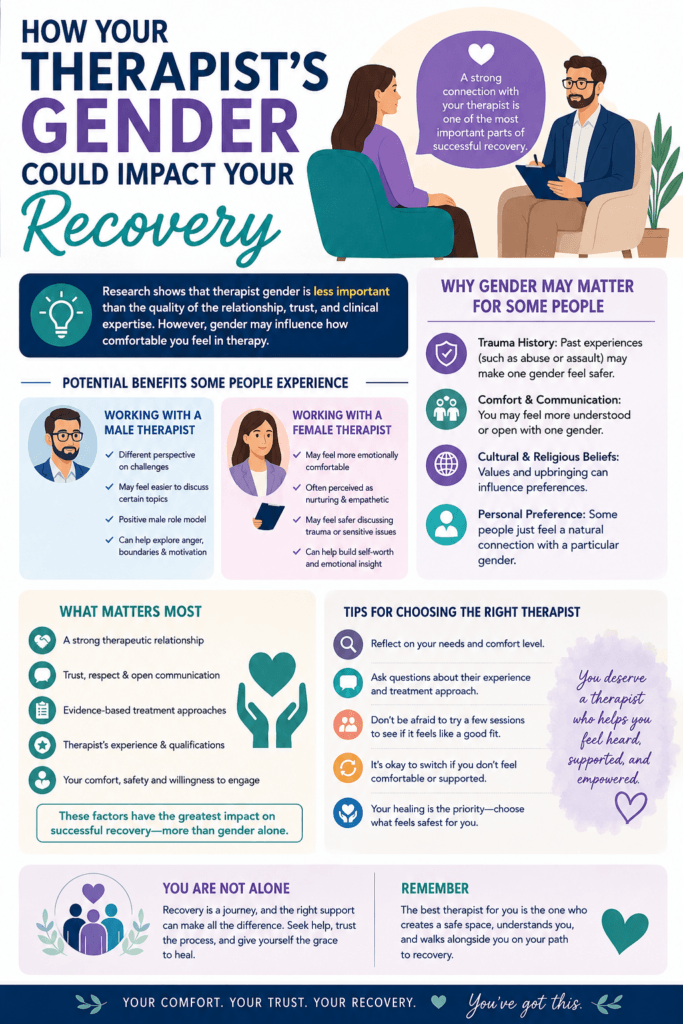
The relationship between a therapist and a client—often called the therapeutic alliance—is one of the strongest predictors of successful treatment outcomes. While a therapist’s education, clinical skills, and ability to build trust are generally more important than their gender, some individuals may feel more comfortable or communicate more openly with a therapist of a particular gender. Understanding how therapist gender may influence recovery can help individuals make informed decisions when seeking mental health or addiction treatment.
Does Therapist Gender Matter?
Research suggests that therapist gender alone does not determine treatment success. Instead, recovery is more strongly influenced by factors such as:
- The quality of the therapeutic relationship
- The therapist’s clinical competence
- Evidence-based treatment methods
- Mutual trust and respect
- Consistency and engagement in therapy
However, therapist gender may affect how comfortable some clients feel discussing sensitive topics, especially during the early stages of treatment.
When Therapist Gender May Influence Recovery
Certain individuals have personal experiences, cultural beliefs, or histories of trauma that make therapist gender more meaningful.
Examples include:
- Survivors of sexual assault may initially feel safer with a therapist of a particular gender.
- Individuals with domestic violence histories may have strong emotional reactions to one gender.
- Cultural or religious beliefs may influence comfort with discussing personal issues.
- Adolescents sometimes feel more understood by therapists of a specific gender.
- Some clients simply feel they communicate more naturally with either a male or female therapist.
These preferences are valid and should be discussed during the treatment selection process.
Potential Benefits of Choosing a Male Therapist
Some individuals report that male therapists may offer:
- A calm and direct communication style
- Different perspectives on relationships and family dynamics
- Positive male role modeling
- Support in addressing anger or conflict
- Guidance in developing healthy boundaries
Of course, these characteristics vary widely among individuals and should not be assumed based on gender alone.
Potential Benefits of Choosing a Female Therapist
Some clients report feeling that female therapists provide:
- Greater emotional warmth and empathy
- Comfort discussing trauma or abuse
- Strong listening skills
- Validation of emotions
- A nurturing therapeutic environment
Again, these qualities depend on the individual therapist rather than gender itself.
The Importance of Trauma-Informed Care
For individuals recovering from addiction, trauma often plays a significant role.
A therapist’s gender may become particularly important if someone has experienced:
- Childhood abuse
- Sexual assault
- Domestic violence
- Human trafficking
- Emotional abuse
- Military trauma
Feeling emotionally safe allows individuals to discuss painful experiences more openly, which can strengthen treatment outcomes.
The Therapeutic Alliance Matters Most
Regardless of gender, successful therapy depends on a strong therapeutic alliance.
Characteristics of an effective therapist include:
- Active listening
- Compassion
- Respect
- Nonjudgmental communication
- Professional boundaries
- Cultural sensitivity
- Knowledge of addiction and mental health
- Use of evidence-based treatments
Research consistently shows that a strong therapeutic relationship is one of the most important predictors of successful recovery.
Should You Switch Therapists?
Sometimes therapy is not effective—not because of the therapist’s gender, but because the relationship is not a good fit.
Signs it may be time to consider a different therapist include:
- Feeling consistently misunderstood
- Difficulty building trust
- Poor communication
- Feeling judged or dismissed
- Lack of progress toward treatment goals
- Discomfort discussing important issues
Switching therapists can be an appropriate step if it helps establish a stronger therapeutic connection.
Questions to Ask Before Choosing a Therapist
When selecting a therapist, consider asking:
- What experience do you have treating addiction?
- Do you use evidence-based therapies?
- Have you worked with clients who have experienced trauma?
- What is your approach to relapse prevention?
- How do you involve families in treatment?
- What should I expect during therapy?
These questions often provide more useful information than therapist gender alone.
What the Research Shows
Studies have found that:
- The quality of the therapist-client relationship predicts outcomes better than therapist gender.
- Client comfort and trust improve treatment engagement.
- Matching therapist gender to client preference may increase satisfaction for some individuals.
- Evidence-based therapies remain effective regardless of therapist gender when a strong therapeutic alliance exists.
Conclusion
A therapist’s gender can influence how comfortable some individuals feel during treatment, particularly when discussing trauma, relationships, or deeply personal experiences. However, gender alone is rarely the deciding factor in successful recovery. Clinical expertise, empathy, professionalism, and the ability to build a trusting therapeutic relationship have a much greater impact on treatment outcomes. The best therapist is one who creates a safe, respectful, and supportive environment where individuals feel heard, understood, and empowered to make lasting changes. Finding the right therapeutic fit—whether with a male, female, or nonbinary therapist—is an important step toward achieving long-term recovery and improved mental health.
Self-Management Strategies to Understand How Your Therapist’s Gender Could Impact Your Recovery
Choosing a therapist is an important decision that can influence your recovery experience. While research shows that a therapist’s clinical skills, empathy, and ability to build a strong therapeutic relationship are more important than their gender, some individuals may feel more comfortable working with a therapist of a particular gender. Personal experiences, cultural beliefs, trauma history, and communication preferences can all affect how safe and understood someone feels during therapy. By using self-management strategies, you can better evaluate your needs and find a therapist who supports your recovery goals.
Understand Your Personal Preferences
Before beginning therapy, take time to reflect on what makes you feel safe, respected, and comfortable.
Helpful questions to ask yourself include:
- Do I feel more comfortable talking with a male, female, or nonbinary therapist?
- Have past experiences influenced my comfort level?
- Are there cultural or religious beliefs that affect my preference?
- What qualities do I value most in a therapist?
Understanding your preferences can help you make an informed decision without assuming that one gender is automatically better than another.
Focus on the Therapeutic Relationship
Research consistently shows that a strong therapeutic alliance is one of the best predictors of successful treatment.
Look for a therapist who demonstrates:
- Active listening
- Compassion and empathy
- Respect for your values
- Honest communication
- Professional boundaries
- Collaboration in treatment planning
Feeling emotionally safe is often more important than the therapist’s gender.
Be Honest About Your Comfort Level
Your therapist can only address concerns they know about.
Practice self-management by:
- Expressing discomfort respectfully
- Discussing communication preferences
- Sharing concerns about difficult topics
- Asking questions about the therapy process
- Providing feedback during sessions
Open communication strengthens trust and improves treatment outcomes.
Identify Trauma Triggers
For many people, trauma influences how they respond to healthcare providers.
Consider whether experiences involving:
- Sexual abuse
- Domestic violence
- Emotional abuse
- Childhood trauma
- Bullying
- Military service
may affect your comfort with a therapist’s gender.
Recognizing these triggers helps you choose a therapist who allows you to feel emotionally secure while healing.
Evaluate Progress Regularly
Recovery is an ongoing process, and your therapy experience should evolve over time.
Ask yourself:
- Am I becoming more comfortable during sessions?
- Do I feel respected?
- Is therapy helping me achieve my goals?
- Can I discuss difficult topics honestly?
- Am I learning healthy coping skills?
If the answer is consistently “no,” it may be appropriate to discuss your concerns or consider another therapist.
Avoid Gender Stereotypes
Every therapist has a unique personality, communication style, and clinical approach.
Remember that:
- Male therapists can be highly empathetic.
- Female therapists can be direct and solution-focused.
- Nonbinary therapists may offer valuable perspectives and inclusive care.
- Clinical competence cannot be determined by gender alone.
Keeping an open mind allows you to focus on the qualities that truly influence successful therapy.
Learn About Different Therapy Approaches
Understanding treatment methods helps you focus on what matters most.
Ask whether your therapist uses evidence-based approaches such as:
- Cognitive Behavioral Therapy (CBT)
- Dialectical Behavior Therapy (DBT)
- Motivational Interviewing (MI)
- Trauma-focused therapies
- Medication-Assisted Treatment (MAT) support
- Relapse prevention counseling
The therapeutic approach often has a greater impact than therapist gender.
Develop Healthy Communication Skills
Successful therapy depends on honest communication.
Practice:
- Asking questions when something is unclear
- Discussing your goals openly
- Sharing fears and concerns
- Expressing disagreements respectfully
- Accepting constructive feedback
These skills strengthen both therapy and recovery.
Be Open to Reassessing Your Choice
Your initial therapist may not always be the best fit.
It’s okay to:
- Request another therapist
- Seek a second opinion
- Change providers if trust is not developing
- Explore different therapy styles
Finding the right therapeutic relationship is an important part of self-care, not a sign of failure.
Support Recovery Beyond Therapy
Therapy is one part of a comprehensive recovery plan.
Strengthen your progress by:
- Following your treatment plan
- Practicing stress-management techniques
- Exercising regularly
- Eating a balanced diet
- Getting adequate sleep
- Attending recovery support groups
- Building healthy relationships
- Practicing mindfulness and relaxation
These habits reinforce the skills learned in therapy.
Signs You’ve Found a Good Therapeutic Fit
Positive indicators include:
- Feeling emotionally safe
- Building trust over time
- Honest, two-way communication
- Respect for your beliefs and goals
- Progress toward recovery objectives
- Increased confidence and resilience
- Greater emotional awareness
- Improved coping skills
These signs are generally more meaningful than the therapist’s gender.
Final Thoughts
Self-management begins with understanding your own needs, preferences, and recovery goals. While a therapist’s gender may influence comfort for some individuals—particularly those with trauma histories—the strongest predictor of successful treatment is a trusting, collaborative therapeutic relationship. By focusing on communication, evidence-based care, personal comfort, and regular self-evaluation, you can choose a therapist who helps you feel supported, understood, and empowered. Ultimately, the best therapist is one who provides a safe environment where healing, personal growth, and lasting recovery can flourish.
Family Support Strategies to Understand How Your Therapist’s Gender Could Impact Your Recovery
Recovery from addiction or a mental health condition is strengthened when individuals have the support of caring family members. One aspect that families may overlook is how comfortable their loved one feels with their therapist. Although research shows that a therapist’s clinical competence, empathy, and ability to build trust are generally more important than gender, some individuals may have a preference based on personal experiences, trauma history, culture, or communication style. Understanding and respecting these preferences can help families support a stronger therapeutic relationship and improve recovery outcomes.
Recognize That Therapy Is a Personal Experience
Every person’s recovery journey is unique. Some individuals may feel more comfortable discussing sensitive topics with a therapist of a particular gender, while others may have no preference at all.
Families should remember:
- Therapy is based on trust and emotional safety.
- Comfort levels vary from person to person.
- Personal preferences should be respected.
- A supportive therapeutic relationship is the primary goal.
Avoid assuming that one therapist is better simply because of their gender.
Encourage Open Conversations
Families can create an environment where loved ones feel comfortable discussing their therapy experiences.
Helpful approaches include:
- Listening without interrupting.
- Asking open-ended questions.
- Respecting privacy.
- Avoiding criticism of the therapist.
- Encouraging honest communication.
Questions such as, “Do you feel comfortable with your therapist?” or “Do you feel heard during your sessions?” can help start supportive conversations.
Understand the Role of Trauma
For individuals with a history of trauma, therapist gender may influence their sense of safety.
Trauma experiences may include:
- Childhood abuse
- Sexual assault
- Domestic violence
- Emotional abuse
- Bullying
- Military trauma
Families should recognize that these experiences may affect comfort during therapy and avoid minimizing or questioning these feelings.
Support Individual Choice
One of the best ways families can help is by respecting their loved one’s choice of therapist.
Supportive behaviors include:
- Allowing them to choose the therapist they feel comfortable with.
- Understanding that preferences may change over time.
- Avoiding pressure to stay with a therapist who is not a good fit.
- Encouraging informed decision-making.
Feeling empowered to make healthcare decisions can improve treatment engagement.
Focus on Therapist Qualifications
Families should remember that therapist effectiveness depends on more than gender.
Important qualities include:
- Professional licensing and credentials
- Experience treating addiction or mental health disorders
- Trauma-informed care
- Evidence-based treatment approaches
- Compassion and empathy
- Strong communication skills
Helping a loved one evaluate these qualities may be more beneficial than focusing solely on gender.
Avoid Reinforcing Gender Stereotypes
Every therapist is unique.
Families should avoid assumptions such as:
- Male therapists are less empathetic.
- Female therapists are always more nurturing.
- One gender is automatically better at treating addiction.
Professional competence, not gender, should remain the primary consideration.
Encourage Honest Feedback
Recovery is an ongoing process, and therapy should evolve as needs change.
Families can encourage loved ones to discuss:
- Whether they feel understood.
- If therapy is helping.
- Any concerns about communication.
- Goals for future sessions.
Constructive feedback allows therapists to adjust treatment when appropriate.
Support the Entire Recovery Plan
Therapy is one part of comprehensive recovery.
Families can reinforce recovery by encouraging:
- Medication adherence, when prescribed
- Healthy sleep habits
- Balanced nutrition
- Regular exercise
- Stress-management techniques
- Participation in recovery support groups
- Positive social connections
These healthy behaviors complement the work done during therapy.
Respect Confidentiality
Healthy family support includes respecting personal boundaries.
Families should:
- Avoid demanding details from therapy sessions.
- Respect confidentiality.
- Allow loved ones to decide what they wish to share.
- Encourage therapy without controlling it.
Respecting privacy helps strengthen trust between the individual and their therapist.
Recognize Signs of a Positive Therapeutic Relationship
Families may notice positive changes such as:
- Increased confidence
- Better emotional regulation
- Improved communication
- Greater motivation
- Reduced substance use
- Healthier relationships
- Better problem-solving skills
- Increased hope for the future
These improvements often indicate that therapy is supporting recovery effectively.
Know When It May Be Time for a Change
Sometimes a therapist is simply not the right fit.
Families should support a change if their loved one consistently reports:
- Feeling misunderstood
- Difficulty trusting the therapist
- Lack of progress
- Feeling judged
- Persistent discomfort during sessions
Changing therapists can be a healthy step toward finding a stronger therapeutic relationship.
Final Thoughts
Family support can significantly influence the success of addiction and mental health treatment. While a therapist’s gender may affect comfort for some individuals, especially those with trauma histories or specific cultural preferences, the strongest predictor of successful therapy is a trusting relationship built on empathy, respect, and effective communication. By respecting personal preferences, encouraging open dialogue, avoiding stereotypes, and supporting evidence-based care, families can help their loved ones build a therapeutic relationship that promotes healing, resilience, and lasting recovery.
Community Resource Strategies to Understand How Your Therapist’s Gender Could Impact Your Recovery
Recovery from addiction or mental illness is strengthened by access to quality healthcare, supportive relationships, and community resources. While research shows that a therapist’s clinical competence, empathy, and ability to build a strong therapeutic alliance are more important than gender, some individuals may feel more comfortable working with a therapist of a particular gender due to personal experiences, trauma history, cultural beliefs, or communication preferences. Community resources can help individuals make informed choices, locate qualified professionals, and access supportive services that meet their unique needs. By understanding what resources are available, individuals can build a recovery plan that promotes trust, safety, and long-term success.
Why Community Resources Matter
Community organizations help individuals connect with qualified professionals and services that support recovery beyond individual therapy.
Benefits include:
- Expanding access to licensed therapists
- Providing education about mental health treatment
- Offering trauma-informed care
- Reducing barriers to treatment
- Connecting individuals with peer support
- Improving long-term recovery outcomes
Strong community support allows individuals to find therapists who best meet their clinical and personal needs.
1. Use Behavioral Health Referral Services
Many communities offer referral programs that help individuals find therapists who match their needs and preferences.
These services may help identify professionals by:
- Specialty areas
- Treatment approach
- Languages spoken
- Insurance accepted
- Office location
- Telehealth availability
- Gender preference, when requested
Referral services can make the search process less overwhelming.
2. Seek Trauma-Informed Treatment Programs
Individuals with trauma histories may benefit from programs that emphasize emotional safety and individualized care.
Community resources often include:
- Trauma recovery centers
- Domestic violence programs
- Sexual assault support services
- Veteran services
- Child advocacy centers
- Crisis counseling programs
These organizations frequently help clients find therapists who are experienced in trauma-informed treatment.
3. Participate in Peer Support Groups
Peer support complements professional therapy by providing encouragement from individuals with similar experiences.
Examples include:
- Mutual-help recovery groups
- Peer recovery organizations
- Mental health support groups
- Family support groups
- Community wellness programs
Participants can often share recommendations for therapists and discuss what has helped them feel comfortable during treatment.
4. Take Advantage of Community Mental Health Centers
Community mental health centers provide affordable behavioral healthcare for many individuals.
Services may include:
- Individual counseling
- Family therapy
- Group therapy
- Psychiatric evaluations
- Medication management
- Crisis intervention
- Case management
Many centers allow clients to discuss therapist preferences during the intake process.
5. Learn Through Educational Programs
Knowledge empowers individuals to make informed healthcare decisions.
Communities often provide:
- Mental health workshops
- Addiction education classes
- Public health seminars
- Recovery conferences
- Educational webinars
- Community awareness events
These programs explain how therapeutic relationships contribute to successful recovery and help dispel misconceptions about therapist gender.
6. Explore Telehealth Options
Telehealth has expanded access to behavioral healthcare, especially in rural or underserved areas.
Benefits include:
- Greater choice of therapists
- Reduced travel time
- Increased privacy
- Flexible scheduling
- Access to specialists
- Improved continuity of care
Telehealth allows individuals to select therapists based on expertise and personal comfort rather than geographic location alone.
7. Utilize Employee and Student Assistance Programs
Many workplaces and educational institutions provide confidential counseling services.
Available resources may include:
- Short-term counseling
- Mental health screenings
- Referral services
- Crisis support
- Wellness programs
These programs often help individuals find therapists who meet their treatment preferences.
8. Work With Primary Care Providers
Primary care clinicians frequently serve as the first point of contact for mental health concerns.
They can:
- Screen for depression and anxiety
- Identify substance use disorders
- Recommend behavioral health specialists
- Coordinate medical and mental health care
- Refer patients to qualified therapists
Integrated care improves communication among healthcare providers and supports comprehensive treatment.
9. Reduce Stigma Through Community Education
Community education encourages individuals to seek help without fear of judgment.
Educational efforts can promote:
- Understanding of mental illness
- Addiction awareness
- Trauma-informed care
- Respect for individual treatment preferences
- Acceptance of therapy as part of healthcare
Reducing stigma increases access to treatment and encourages earlier intervention.
10. Build a Comprehensive Recovery Network
Successful recovery extends beyond one therapist.
Community resources help individuals develop a network that may include:
- Therapists
- Physicians
- Peer recovery coaches
- Family support groups
- Vocational counselors
- Faith leaders, if desired
- Community organizations
- Social service agencies
A strong recovery network provides support across many areas of life.
Choosing the Right Therapist
When selecting a therapist, community resources can help individuals focus on factors such as:
- Professional credentials
- Experience treating addiction
- Trauma-informed practice
- Communication style
- Cultural competence
- Evidence-based therapies
- Availability and accessibility
- Personal comfort and trust
These characteristics generally have a greater impact on recovery than therapist gender alone.
Final Thoughts
Community resources play an essential role in helping individuals find behavioral health services that support lasting recovery. While therapist gender may influence comfort for some people, especially those with trauma histories or cultural preferences, research consistently shows that a strong therapeutic alliance, evidence-based treatment, and mutual trust are the most important predictors of successful outcomes. By using community referral services, trauma-informed programs, peer support groups, telehealth, educational opportunities, and integrated healthcare, individuals can make informed choices that strengthen their recovery journey. Access to the right resources empowers people to build meaningful therapeutic relationships and achieve long-term emotional health and sobriety.
Frequently Asked Questions
Here are some common questions:
1. Does a therapist’s gender affect recovery outcomes?
Research suggests that a therapist’s gender alone does not determine treatment success. The strongest predictors of positive outcomes are a strong therapeutic relationship, mutual trust, effective communication, clinical competence, and the use of evidence-based treatments. However, some individuals may feel more comfortable with a therapist of a particular gender, which can improve engagement in therapy.
2. Should I choose a therapist based on gender?
Gender can be one factor to consider, but it should not be the only factor. Also consider:
- Professional credentials
- Experience treating your condition
- Communication style
- Trauma-informed care
- Cultural competence
- Personal comfort and trust
Finding a therapist who makes you feel safe and understood is often more important than gender.
3. Why do some people prefer a male or female therapist?
Preferences may be influenced by:
- Personal experiences
- Trauma history
- Cultural or religious beliefs
- Communication style
- Comfort discussing sensitive topics
- Previous experiences with healthcare providers
These preferences are personal and should be respected during the therapist selection process.
4. Does therapist gender matter for trauma survivors?
For some trauma survivors, yes. Individuals who have experienced sexual assault, domestic violence, childhood abuse, or other forms of trauma may initially feel safer working with a therapist of a particular gender. Feeling emotionally safe can make it easier to discuss painful experiences and participate fully in treatment.
5. Can a therapist of any gender effectively treat addiction?
Yes. Licensed therapists of all genders can effectively treat substance use disorders when they have appropriate training, experience, and use evidence-based approaches such as:
- Cognitive Behavioral Therapy (CBT)
- Motivational Interviewing (MI)
- Dialectical Behavior Therapy (DBT)
- Relapse prevention counseling
- Trauma-informed therapy
- Medication-assisted treatment support
Clinical expertise is far more important than gender.
6. What if I don’t feel comfortable with my therapist?
If you consistently feel uncomfortable, misunderstood, or unable to build trust, consider discussing your concerns with your therapist. If the relationship does not improve, it is appropriate to seek another therapist. Finding the right therapeutic fit is an important part of recovery.
7. How important is the therapeutic relationship?
The therapeutic relationship—often called the therapeutic alliance—is one of the strongest predictors of successful treatment outcomes. A positive alliance is built on:
- Trust
- Respect
- Empathy
- Honest communication
- Shared treatment goals
- Consistency
These factors contribute more to recovery than therapist gender.
8. Can my therapist’s gender influence how openly I communicate?
Yes. Some people find it easier to discuss sensitive topics with a therapist of a particular gender, especially when addressing issues involving relationships, trauma, sexuality, or abuse. Feeling comfortable communicating openly can strengthen the therapeutic process.
9. Should families influence the choice of therapist?
Families can provide support and help locate qualified professionals, but the individual receiving therapy should have a significant voice in choosing their therapist. Respecting personal preferences can increase comfort, trust, and participation in treatment.
10. Is it okay to switch therapists if the relationship isn’t working?
Absolutely. Therapy is most effective when there is a strong connection between the therapist and client. Changing therapists is appropriate if:
- You don’t feel heard.
- Trust isn’t developing.
- Progress has stalled.
- Communication feels difficult.
- You remain uncomfortable after discussing concerns.
Seeking a better therapeutic fit is part of advocating for your own care.
11. Can telehealth help me find the right therapist?
Yes. Telehealth expands access to therapists beyond your local area, allowing you to search for professionals based on:
- Clinical expertise
- Specialty areas
- Languages spoken
- Availability
- Insurance participation
- Personal preferences, including therapist gender if desired
This increased access can help individuals find a therapist who best meets their needs.
12. What qualities should I look for in a therapist?
Look for someone who demonstrates:
- Professional licensing and credentials
- Experience treating your concerns
- Compassion and empathy
- Strong listening skills
- Respect for your values
- Evidence-based treatment methods
- Clear communication
- Professional boundaries
These qualities often have a greater impact on successful recovery than gender alone.
13. Can cultural background influence therapist gender preferences?
Yes. Cultural traditions, religious beliefs, and family values may influence whether someone feels more comfortable with a therapist of a particular gender. Mental health professionals should respect these preferences while providing culturally sensitive care.
14. What role does trust play in recovery?
Trust allows individuals to discuss difficult emotions, acknowledge setbacks, and explore personal challenges honestly. When trust is present, people are generally more likely to remain engaged in therapy, follow treatment recommendations, and make meaningful progress toward recovery goals.
15. What is the most important factor when choosing a therapist?
The most important factor is finding a therapist who helps you feel safe, respected, understood, and supported. While therapist gender may matter for some individuals, especially those with trauma histories or personal preferences, research consistently shows that a strong therapeutic alliance, clinical competence, and evidence-based care have the greatest influence on successful recovery. The right therapist is one who creates an environment where healing, growth, and long-term recovery can flourish.
Conclusion
A therapist’s gender may influence a person’s comfort level, particularly when discussing sensitive topics or processing traumatic experiences, but it is only one factor in choosing the right mental health professional. The quality of the therapeutic alliance, the therapist’s qualifications, evidence-based treatment approach, and mutual trust have a far greater impact on recovery outcomes. Every individual’s needs and preferences are unique, and there is no universally “best” therapist based on gender alone. By focusing on finding a therapist who provides compassion, respect, clinical expertise, and a safe environment for open communication, individuals can build a strong foundation for healing, personal growth, and long-term recovery.
Video: Therapist Gender in Recovery