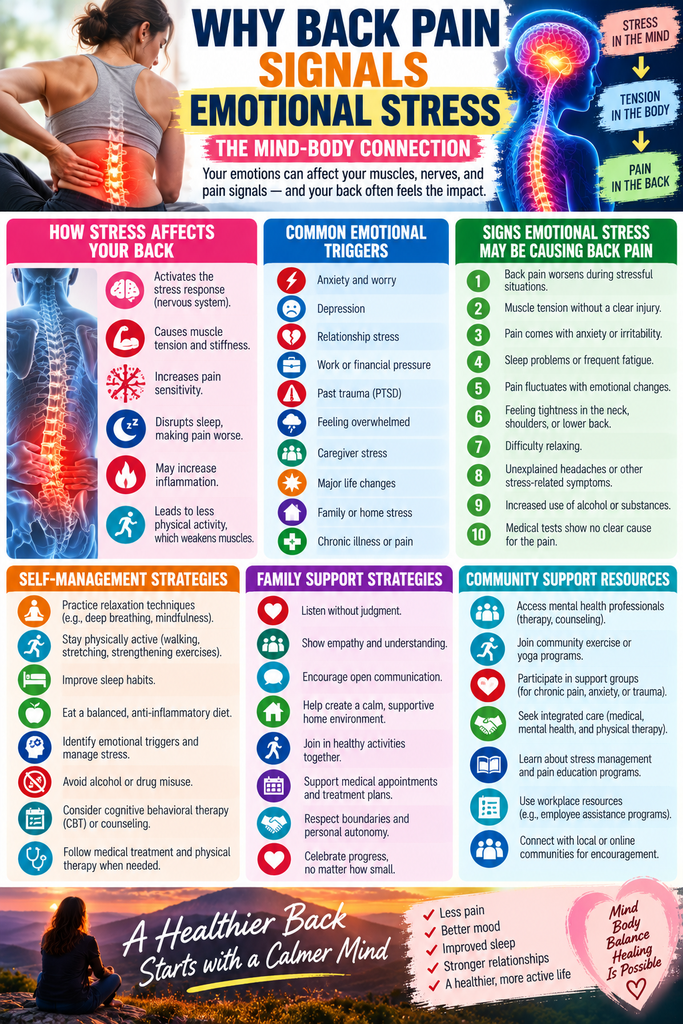
Back pain is one of the most common health complaints worldwide, affecting millions of people regardless of age, occupation, or lifestyle. While many individuals associate back pain with muscle strain, poor posture, arthritis, or spinal injuries, emotional stress can also contribute to the development and persistence of physical discomfort.
The connection between emotional health and physical pain is complex. Chronic stress, anxiety, depression, and unresolved trauma can influence muscle tension, nervous system activity, sleep quality, and the brain’s perception of pain.
Some individuals experience persistent back pain during periods of emotional distress, even when medical imaging does not reveal a clear structural explanation. Others have identifiable spinal conditions whose symptoms worsen during stressful situations.
Stress-related back pain is real physical pain, not imaginary pain or simply a psychological problem.
Understanding the relationship between emotional stress and back pain can help individuals recognize contributing factors, seek appropriate medical care, and develop effective coping strategies.
Through self-management, family encouragement, and community support, people experiencing stress-related back pain can improve their physical comfort, emotional resilience, and overall quality of life.
Understanding the Connection Between Emotional Stress and Back Pain
The brain and body communicate continuously through the nervous system, hormones, and immune responses.
When a person experiences stress, the body activates its sympathetic nervous system and hypothalamic-pituitary-adrenal (HPA) axis.
These systems prepare the body to respond to perceived threats by increasing alertness, heart rate, and muscle activity.
Although this response is useful during immediate danger, prolonged activation may contribute to physical discomfort.
How emotional stress affects the back
Stress can influence back pain through several mechanisms:
- Muscle tension: Stress may cause sustained contraction of muscles in the neck, shoulders, and lower back.
- Pain sensitivity: Psychological distress can alter how the nervous system processes painful signals.
- Sleep disturbances: Poor sleep may increase pain sensitivity and reduce physical recovery.
- Inflammatory signaling: Chronic stress can affect immune regulation, although its relationship with back pain is complex.
- Reduced physical activity: Stress, fatigue, or depression may lead to inactivity and physical deconditioning.
- Fear and avoidance: Worry about pain can encourage movement avoidance, contributing to stiffness and reduced function.
These mechanisms help explain why emotional stress may intensify existing back pain or contribute to persistent symptoms.
However, back pain cannot be reliably attributed to emotional stress based on symptoms alone.
7 Signs Emotional Stress May Be Contributing to Back Pain
Emotional stress can influence pain in different ways. Recognizing patterns may help individuals understand when stress is one of several contributing factors.
1. Back pain increases during stressful situations
Pain may become more noticeable during workplace conflicts, financial difficulties, relationship problems, or periods of emotional uncertainty.
Stress-related muscle tension and increased pain sensitivity may worsen symptoms.
2. Pain occurs alongside anxiety or emotional distress
Individuals may notice back discomfort occurring with:
- Persistent worry.
- Irritability.
- Difficulty relaxing.
- Racing thoughts.
- Fatigue.
- Sleep disturbances.
These symptoms suggest that emotional health may be influencing physical well-being.
3. Muscle tension persists without an obvious injury
Some people experience tightness or aching in the shoulders, upper back, or lower back without recalling a specific injury.
Sustained muscle contraction during stress may contribute to discomfort.
However, the absence of an obvious injury does not rule out an underlying medical condition.
4. Back pain worsens after poor sleep
Sleep deprivation can increase pain sensitivity and interfere with emotional regulation.
Individuals experiencing anxiety, depression, or chronic stress may develop sleep problems that intensify musculoskeletal discomfort.
5. Pain fluctuates with emotional circumstances
Some individuals notice that pain becomes more severe during emotionally difficult periods and improves when stress decreases.
Tracking these patterns may help identify contributing factors.
Pain fluctuations alone do not establish that stress is the primary cause.
6. Fear of movement increases physical limitations
Individuals with persistent back pain may worry that ordinary movement will worsen an injury.
This fear can lead to reduced activity, muscle weakness, stiffness, and increased disability.
Gradual activity and appropriate rehabilitation can help interrupt this cycle.
7. Back pain occurs with other stress-related symptoms
Emotional stress may also be associated with headaches, gastrointestinal discomfort, jaw tension, fatigue, and changes in appetite.
When several symptoms occur together, a comprehensive medical and psychological evaluation may be beneficial.
How Anxiety, Depression, and Trauma Influence Back Pain
Emotional health conditions can affect the experience and management of physical pain.
Anxiety and back pain
Anxiety may increase muscle tension, vigilance toward physical sensations, and fear of movement.
People with anxiety may become more attentive to discomfort, making pain feel more intense or difficult to ignore.
Relaxation techniques, cognitive behavioral therapy, and appropriate physical activity may help reduce these effects.
Depression and chronic back pain
Depression and chronic pain frequently occur together.
Persistent pain can contribute to depression by limiting sleep, activity, employment, and social participation.
Depression can also increase pain sensitivity and reduce motivation to engage in rehabilitation.
This relationship is bidirectional, meaning each condition may worsen the other.
Trauma and PTSD
Individuals with a history of trauma or PTSD may experience increased muscle tension, sleep disturbances, hypervigilance, and heightened physiological arousal.
These factors can contribute to persistent pain.
However, trauma history does not mean that back pain is necessarily caused by PTSD or unresolved emotional experiences.
Medical assessment remains important.
The Pain-Stress Cycle: Why Symptoms Can Become Persistent
Back pain and emotional stress can reinforce one another.
The Pain-Stress Cycle
Illustrative cycle showing how emotional and physical factors may interact. Not everyone with back pain experiences this pattern.
For example, someone experiencing back pain may begin avoiding physical activity because they fear further injury.
Reduced movement may contribute to stiffness, decreased strength, and lower confidence.
As pain persists, the individual may become increasingly anxious, frustrated, or discouraged.
These emotional responses can further influence sleep, muscle tension, and pain sensitivity.
Breaking this cycle often requires addressing both physical and psychological factors.
Self-Management Strategies for Stress-Related Back Pain
Effective self-management focuses on improving physical function, reducing emotional distress, and building sustainable daily habits.
1. Practice stress reduction techniques
Relaxation strategies can help regulate physiological arousal and reduce muscle tension.
Helpful techniques include:
- Slow, controlled breathing.
- Progressive muscle relaxation.
- Mindfulness meditation.
- Gentle stretching.
- Guided imagery.
- Spending time outdoors.
These techniques may reduce stress-related pain amplification but should complement appropriate medical treatment.
2. Maintain regular physical activity
Movement is an important component of back pain management.
Depending on the individual’s condition and functional ability, activities may include:
- Walking.
- Swimming or aquatic exercise.
- Gentle yoga.
- Low-impact aerobic exercise.
- Core strengthening.
- Physical therapy exercises.
Gradual activity is generally more beneficial for nonspecific back pain than prolonged bed rest.
Adjust exercise programs when neurological symptoms, fractures, inflammatory conditions, or other serious disorders are suspected.
3. Improve sleep quality
Poor sleep can worsen both emotional distress and pain sensitivity.
Healthy sleep practices include maintaining a consistent bedtime, limiting caffeine late in the day, creating a comfortable sleep environment, and reducing stimulating activities before bed.
Persistent insomnia may benefit from cognitive behavioral therapy for insomnia (CBT-I).
4. Identify emotional triggers
A symptom journal can help individuals recognize relationships between pain, stress, sleep, and activity.
Consider tracking:
- Pain intensity and location.
- Daily stress levels.
- Sleep duration and quality.
- Physical activity.
- Emotional experiences.
- Activities that improve or worsen symptoms.
The goal is to identify patterns rather than assume that emotional stress explains every episode of pain.
5. Consider cognitive behavioral therapy
Cognitive behavioral therapy (CBT) can help individuals manage unhelpful beliefs, fear of movement, and emotional distress associated with chronic pain.
CBT does not suggest that pain is imaginary. Instead, it addresses psychological processes that can influence pain perception and disability.
6. Use appropriate medical treatments
Depending on the cause and severity of back pain, treatment may include physical therapy, nonpharmacological therapies, or medications.
For chronic primary low back pain, guidelines generally emphasize education, exercise, and selected psychological therapies.
Medication choices should consider individual medical conditions and potential adverse effects.
Opioids are generally not preferred for chronic nonspecific low back pain because of limited long-term benefit and significant risks.
7. Develop healthy coping strategies
Instead of relying on alcohol, recreational drugs, or excessive medication use to manage discomfort, individuals can explore healthier coping methods.
These may include creative activities, journaling, supportive conversations, hobbies, and structured stress-management programs.
Family Support Strategies: Helping Loved Ones With Back Pain and Emotional Stress
Chronic back pain can affect family relationships, household responsibilities, employment, and emotional well-being.
Family members may feel uncertain about how to help, particularly when medical testing does not identify a clear structural cause.
1. Validate the person’s pain
Families should recognize that pain is real even when imaging or laboratory results are normal.
Helpful communication includes acknowledging discomfort and asking what kind of assistance would be useful.
Avoid suggesting that the pain is exaggerated or entirely psychological.
2. Encourage balanced activity
Families can support gradual movement and participation in daily activities.
Helpful approaches include:
- Taking short walks together.
- Encouraging prescribed physical therapy exercises.
- Supporting regular sleep routines.
- Participating in low-impact recreational activities.
- Avoiding unnecessary restrictions on safe movement.
3. Promote emotional communication
Open conversations about stress, anxiety, and frustration can improve understanding.
Families should listen without immediately attempting to solve every problem.
Encouraging professional counseling may be appropriate when emotional distress significantly affects daily functioning.
4. Maintain healthy boundaries
Although practical assistance may be necessary during periods of severe pain, excessive dependence can sometimes reduce confidence and independence.
Families can encourage safe participation in meaningful activities while respecting genuine physical limitations.
5. Support professional treatment
Family members may help arrange appointments, provide transportation, or participate in treatment discussions when invited.
Collaborative support can improve adherence to rehabilitation and mental health treatment plans.
Community Support Strategies: Creating a Supportive Environment
Community resources can help individuals manage chronic back pain and emotional stress more effectively.
1. Improve access to multidisciplinary pain care
Comprehensive pain management may involve:
- Primary care clinicians.
- Physical therapists.
- Behavioral health professionals.
- Pain medicine specialists.
- Occupational therapists.
- Social workers.
A multidisciplinary approach recognizes the interaction between physical, psychological, and social factors.
2. Encourage community exercise programs
Accessible walking groups, aquatic exercise classes, and adapted fitness programs can help individuals maintain physical activity.
Programs should accommodate different ages, disabilities, and levels of physical ability.
3. Expand mental health services
Affordable counseling, stress-management programs, and telehealth services can help individuals address anxiety, depression, and trauma-related symptoms that may influence pain.
4. Support workplace accommodations
Workplaces can help employees with persistent back pain through ergonomic adjustments, appropriate activity modification, flexible scheduling, and opportunities to change positions.
These strategies may reduce physical strain while supporting continued participation in employment.
5. Reduce stigma surrounding chronic pain
Public education should emphasize that pain is a complex biological, psychological, and social experience.
People with persistent pain should not be dismissed because diagnostic imaging fails to identify a specific cause.
When Back Pain Requires Immediate Medical Attention
Although emotional stress can contribute to back pain, serious medical conditions must not be overlooked.
Seek emergency evaluation for back pain accompanied by:
- New urinary retention or loss of bladder or bowel control.
- Numbness around the groin or saddle region.
- New or rapidly progressive leg weakness.
- Severe back pain after significant trauma.
- Back pain accompanied by symptoms of a major vascular emergency, such as sudden severe chest or abdominal pain, fainting, or collapse.
Prompt medical evaluation is also important for back pain associated with fever, unexplained weight loss, a history of cancer, immunosuppression, or persistent worsening symptoms.
Emotional stress should be considered only as part of a comprehensive assessment.
Important Lessons About Back Pain and Emotional Stress
1. Back pain can have multiple contributing factors. Emotional stress may influence pain alongside physical, neurological, and medical conditions.
2. Stress-related pain is genuine physical pain. Psychological factors can affect pain processing without making symptoms imaginary.
3. Chronic pain and emotional distress can reinforce each other. Addressing both may improve recovery outcomes.
4. Physical activity and psychological support can work together. Exercise, rehabilitation, and evidence-based behavioral interventions may reduce pain-related disability.
5. Families can support recovery through validation and encouragement. Respectful communication and balanced assistance help individuals maintain confidence.
6. Community resources improve access to care. Multidisciplinary services, mental health treatment, and supportive workplaces can improve quality of life.
Conclusion: Understanding the Emotional Side of Back Pain
Back pain is not always explained by physical injury or structural changes in the spine. Emotional stress, anxiety, depression, and trauma can influence muscle tension, sleep, nervous system activity, and the perception of pain.
However, emotional stress should never be assumed to be the sole cause of persistent back pain without appropriate medical evaluation.
Recognizing the mind-body connection allows individuals and healthcare professionals to approach pain more comprehensively.
Self-management strategies such as physical activity, relaxation techniques, healthy sleep, and stress awareness can improve daily functioning. Families can offer encouragement through compassionate communication and practical assistance. Communities can support recovery through accessible healthcare, rehabilitation programs, and mental health services.
The most important message is that back pain deserves attention to both physical and emotional health. Understanding how stress and pain interact can help individuals pursue effective treatment, regain confidence, and improve their quality of life.
Helpful Resources
- National Institute of Arthritis and Musculoskeletal and Skin Diseases — Back Pain — Causes, symptoms, diagnosis, and treatment.
- NCCIH — Low Back Pain — Evidence-based information on nonpharmacological treatments.
- National Institute of Mental Health — Mental health education and resources.
- CDC — Pain Care and Opioid Prescribing Guidance — Clinical considerations for pain management.
- FindTreatment.gov — Locate mental health and substance use treatment services.
Frequently Asked Questions and Answers
Understanding the Connection Between Back Pain and Emotional Stress
1. Can emotional stress really cause back pain?
Yes. Emotional stress can contribute to back pain by increasing muscle tension, disrupting sleep, and influencing how the nervous system processes pain signals.
However, stress is only one possible contributing factor. Back pain may also result from musculoskeletal, neurological, inflammatory, or other medical conditions.
2. Why does emotional stress affect the back?
When the body experiences stress, it activates the sympathetic nervous system and releases stress-related hormones, including cortisol and adrenaline.
This response can increase muscle tension, alertness, and sensitivity to discomfort. When stress persists, these changes may contribute to back pain or worsen an existing condition.
3. What types of emotional stress can contribute to back pain?
Common emotional stressors include:
- Workplace pressure or job insecurity.
- Financial difficulties.
- Relationship conflicts.
- Family responsibilities and caregiver stress.
- Anxiety or depression.
- Traumatic experiences.
- Grief and loss.
- Major life changes.
- Chronic emotional exhaustion.
These experiences may affect physical well-being differently from person to person.
4. Can anxiety cause lower back pain?
Yes. Anxiety may contribute to lower back discomfort through sustained muscle tension, altered breathing patterns, poor sleep, and increased pain sensitivity.
Anxiety can also make individuals more attentive to physical sensations, potentially intensifying their experience of pain.
5. Can depression make back pain worse?
Yes. Depression and chronic pain frequently occur together.
Depression may influence pain processing, reduce motivation for physical activity, disrupt sleep, and make coping with discomfort more difficult.
Persistent pain can also contribute to depression, creating a cycle in which emotional and physical symptoms reinforce one another.
Recognizing Stress-Related Back Pain
6. What are common signs that emotional stress may be contributing to back pain?
Possible clues include:
- Pain worsening during stressful situations.
- Muscle tightness without a clear injury.
- Pain occurring alongside anxiety or irritability.
- Sleep disturbances and fatigue.
- Symptoms fluctuating with emotional circumstances.
- Difficulty relaxing.
- Reduced activity due to fear of pain.
- Back discomfort accompanied by headaches or other stress-related symptoms.
These patterns suggest possible contributing factors but do not establish a diagnosis.
7. Can back pain occur without a visible injury?
Yes. Many individuals experience nonspecific back pain without a clearly identifiable structural cause.
Muscle tension, nervous system sensitivity, physical deconditioning, and psychosocial factors may contribute.
A normal imaging study does not mean that pain is imaginary.
8. Why does back pain sometimes worsen during stressful situations?
Stress can increase muscle tension and heighten the nervous system’s sensitivity to pain.
Stressful situations may also disrupt sleep, reduce physical activity, and increase attention to discomfort.
Together, these factors can make existing pain feel more intense.
9. Can emotional trauma or PTSD contribute to chronic back pain?
Yes. Trauma-related conditions, including PTSD, may be associated with chronic pain.
Hypervigilance, sleep disturbances, persistent physiological arousal, and changes in pain processing can contribute to musculoskeletal discomfort.
However, a history of trauma does not automatically mean that back pain is caused by PTSD.
10. How can someone distinguish stress-related back pain from a physical injury?
There is no single symptom or test that reliably distinguishes stress-related pain from pain caused by physical injury.
Healthcare professionals evaluate the medical history, physical examination findings, neurological symptoms, functional limitations, and relevant psychological factors.
Imaging or laboratory testing may be appropriate when specific medical conditions are suspected.
The Mind-Body Connection and Chronic Pain
11. How does the brain influence back pain?
Pain results from complex interactions among sensory nerves, the spinal cord, brain networks, and the body’s stress-response systems.
Emotional states, attention, expectations, and previous experiences can influence how pain signals are processed.
This does not mean that pain is imagined. It means that pain is both a sensory and emotional experience.
12. What is the pain-stress cycle?
The pain-stress cycle occurs when physical discomfort increases emotional distress, which may then worsen pain.
The Pain-Stress Cycle
Illustration of a possible feedback cycle. Individual experiences vary.
For example, someone experiencing back pain may become anxious about movement. Avoiding activity may then contribute to stiffness, reduced strength, and further discomfort.
13. Can chronic stress cause permanent damage to the spine?
Emotional stress alone is not established as a direct cause of permanent structural spinal damage.
However, prolonged stress may contribute to persistent muscle tension, reduced activity, poor sleep, and increased pain sensitivity.
Underlying spinal conditions should be evaluated independently.
14. Can poor sleep make stress-related back pain worse?
Yes. Inadequate or disrupted sleep can increase pain sensitivity, worsen emotional regulation, and interfere with physical recovery.
Improving sleep quality may help reduce pain-related distress and improve daily functioning.
15. Can stress-related back pain become chronic?
Yes. Back pain influenced by stress can persist, especially when accompanied by fear of movement, sleep disturbances, depression, or physical deconditioning.
Early intervention and a comprehensive treatment approach may help reduce the risk of long-term disability.
Self-Management Strategies for Stress-Related Back Pain
16. What self-management strategies can help reduce back pain associated with emotional stress?
Helpful strategies include:
- Practicing mindfulness and relaxation techniques.
- Maintaining regular physical activity.
- Performing appropriate stretching and strengthening exercises.
- Improving sleep habits.
- Identifying emotional stressors.
- Participating in physical therapy when indicated.
- Seeking counseling for anxiety or depression.
- Maintaining healthy social relationships.
- Avoiding excessive alcohol or substance use.
17. Can meditation and deep breathing help relieve back pain?
They may help. Mindfulness meditation and slow breathing can reduce emotional distress and physiological arousal.
Some individuals experience improvements in pain-related coping and daily functioning.
These techniques are best used alongside appropriate medical evaluation and physical rehabilitation.
18. What exercises are helpful for stress-related back pain?
Depending on medical history and physical ability, beneficial activities may include walking, swimming, gentle yoga, low-impact aerobic exercise, and core strengthening.
Exercise should be introduced gradually and adjusted according to symptoms and functional limitations.
A physical therapist can help develop an individualized rehabilitation program.
19. Can cognitive behavioral therapy help with chronic back pain?
Yes. Cognitive behavioral therapy (CBT) can help individuals address fear of movement, pain-related anxiety, unhelpful beliefs, and behavioral patterns that contribute to disability.
CBT does not imply that back pain is imaginary. It helps people develop more effective ways of managing persistent pain.
20. Should someone take pain medication for stress-related back pain?
Medication decisions depend on the underlying cause, severity, medical history, and functional impact of the pain.
Nonpharmacological approaches are often emphasized for chronic nonspecific low back pain.
When medication is appropriate, clinicians should consider potential benefits, adverse effects, and individual risk factors.
Opioids are generally not recommended as routine treatment for chronic nonspecific back pain.
Family and Community Support
21. How can family members support someone experiencing back pain and emotional stress?
Families can provide support by:
- Listening without judgment.
- Acknowledging that the pain is real.
- Encouraging appropriate medical evaluation.
- Participating in gentle physical activities together.
- Supporting healthy sleep and daily routines.
- Encouraging counseling when emotional distress is significant.
- Respecting personal boundaries and independence.
22. What should families avoid saying to someone with stress-related back pain?
Families should avoid statements that minimize or dismiss pain, such as:
- “It’s all in your head.”
- “You’re just overreacting.”
- “There’s nothing wrong because your MRI is normal.”
- “You just need to stop worrying.”
A more supportive approach is to acknowledge the person’s discomfort while encouraging comprehensive care.
23. What community resources can help individuals with chronic back pain?
Helpful resources include:
- Primary care and rehabilitation clinics.
- Physical therapy services.
- Behavioral health counseling.
- Multidisciplinary pain management programs.
- Community exercise and wellness programs.
- Chronic pain support groups.
- Workplace ergonomic and employee assistance services.
24. When should someone seek medical attention for back pain?
Medical evaluation is appropriate when back pain persists, worsens, limits daily functioning, or occurs with concerning symptoms.
Seek emergency medical attention for new bladder or bowel dysfunction, numbness in the saddle region, progressive leg weakness, or severe back pain associated with major trauma.
Prompt evaluation is also important for fever, unexplained weight loss, a history of cancer, or other concerning medical symptoms.
Emotional stress should never be assumed to explain potentially serious warning signs.
25. What is the most important lesson about back pain and emotional stress?
The most important lesson is that back pain often involves an interaction between physical, emotional, and social factors.
Stress can intensify pain, but it does not automatically explain every symptom.
A comprehensive approach that combines appropriate medical evaluation, physical activity, stress management, psychological support, and family encouragement can improve recovery outcomes.
Video: