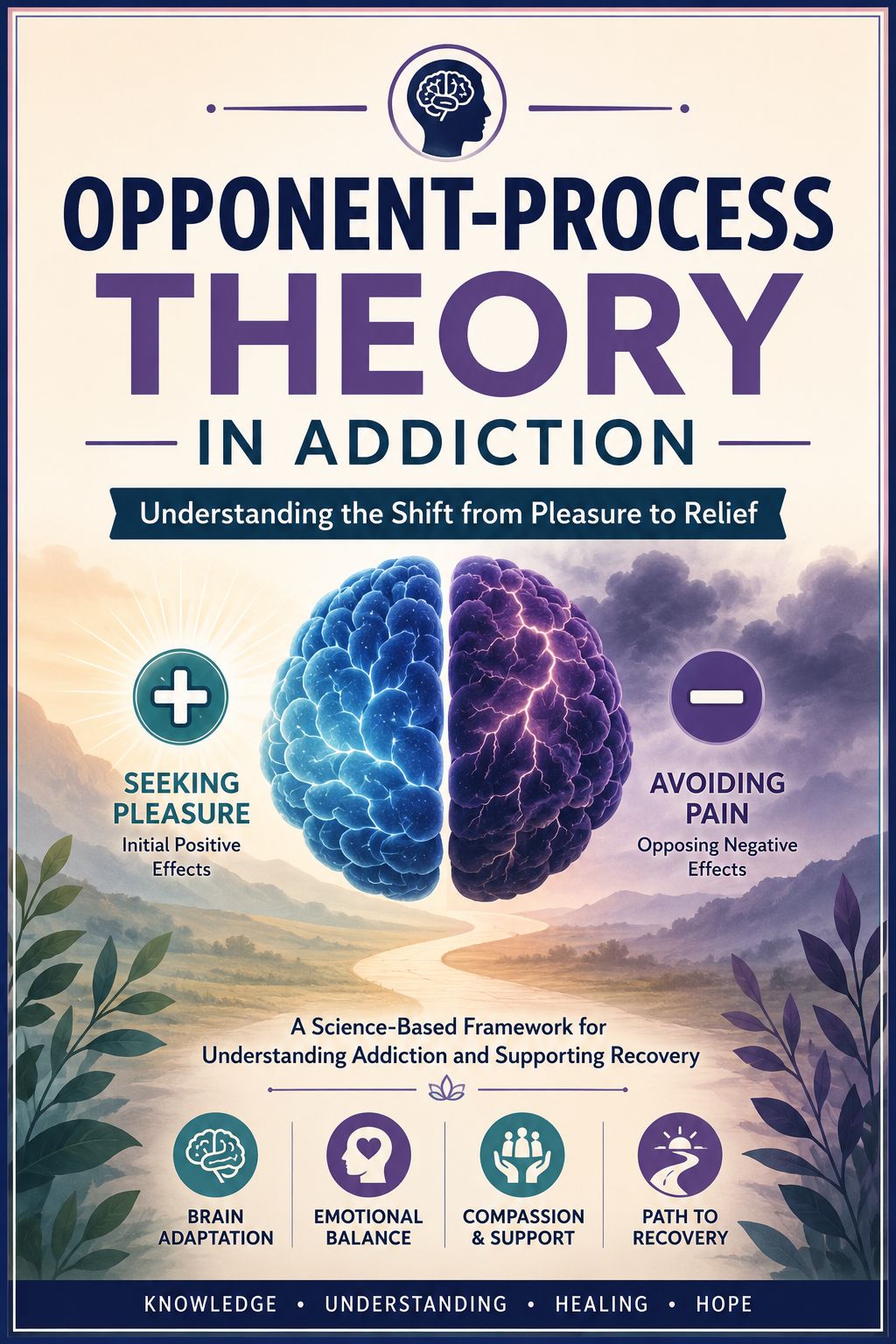
The Opponent-Process Theory of Addiction provides a valuable framework for understanding why addiction often progresses from seeking pleasure to avoiding pain. Initially, substances or addictive behaviors produce rewarding feelings such as euphoria, relaxation, or excitement by activating the brain’s reward system. However, with repeated use, the brain adapts by reducing its response to these pleasurable effects while strengthening opposing emotional and physical reactions, including cravings, anxiety, irritability, and withdrawal symptoms. Over time, individuals may continue using substances not because they experience the same level of pleasure, but because they want to relieve the discomfort that occurs when they stop. Understanding this theory helps explain the development of tolerance, dependence, and relapse, while emphasizing that addiction is a chronic brain disorder influenced by complex biological and psychological changes rather than a lack of willpower.
Opponent-Process Theory in Addiction
The Opponent-Process Theory of Addiction is a psychological and neurobiological theory that explains why people often continue using addictive substances or engaging in addictive behaviors even after the pleasurable effects decrease. Originally proposed by psychologists Richard Solomon and John Corbit in 1974, the theory suggests that every emotional or pleasurable experience triggers an opposing emotional response. In addition, repeated substance use causes the brain’s natural reward system to become less responsive while the opposing negative emotional state becomes stronger. As a result, individuals gradually use drugs or alcohol less to feel pleasure and more to avoid discomfort.
How the Opponent-Process Theory Works
The theory describes two opposing emotional processes:
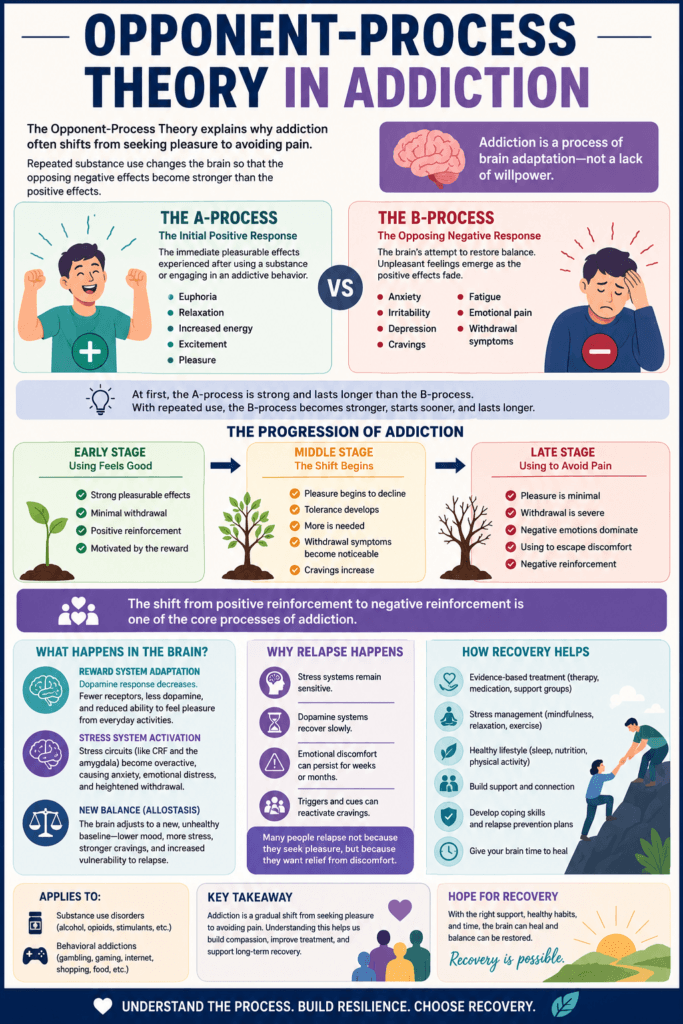
A-Process (Initial Positive Response)
The A-process is the immediate pleasurable effect experienced after using a substance or engaging in an addictive behavior.
Examples include:
- Euphoria after using opioids
- Relaxation after drinking alcohol
- Increased energy after using stimulants
- Excitement during gambling
- Pleasure from excessive shopping or gaming
During early substance use, the A-process is strong and lasts longer than the opposing response.
B-Process (Opposing Negative Response)
The B-process is the brain’s attempt to restore emotional balance (homeostasis). After the pleasurable effects wear off, unpleasant emotions begin to emerge, such as:
- Anxiety
- Depression
- Irritability
- Fatigue
- Cravings
- Emotional emptiness
- Physical withdrawal symptoms
Initially, the B-process is weak and short-lived. However, with repeated substance use, it becomes stronger, begins sooner, and lasts much longer.
Progression of Addiction
Early Stage
During initial drug or alcohol use:
- Strong pleasurable effects
- Minimal withdrawal
- Positive reinforcement motivates repeated use
The individual uses because it feels good.
Middle Stage
As repeated use continues:
- Pleasure begins to decline
- Tolerance develops
- Larger amounts are needed
- Withdrawal symptoms become noticeable
- Cravings increase
The brain begins adapting to repeated dopamine stimulation.
Late Stage
Eventually:
- Pleasure becomes minimal
- Withdrawal becomes severe
- Negative emotions dominate
- Drug use becomes focused on avoiding discomfort
The individual now uses primarily because stopping feels worse than continuing.
This transition from positive reinforcement to negative reinforcement is one of the core concepts of the Opponent-Process Theory.
Neurobiology Behind the Theory
Repeated exposure to addictive substances changes several brain systems.
Dopamine Reward System
Early use produces large dopamine releases within the brain’s reward pathway.
Over time:
- Dopamine receptors decrease in sensitivity.
- Less dopamine is released.
- Everyday pleasures become less rewarding.
This contributes to tolerance.
Stress System Activation
Repeated substance use activates the brain’s stress circuits, including:
- Corticotropin-releasing factor (CRF)
- The extended amygdala
- The hypothalamic-pituitary-adrenal (HPA) axis
These systems contribute to:
- Anxiety
- Emotional distress
- Irritability
- Heightened stress during withdrawal
The brain becomes increasingly sensitive to negative emotional states.
Allostasis
Instead of returning to its original healthy balance (homeostasis), the brain establishes a new, unhealthy baseline known as allostasis.
Characteristics include:
- Lower mood
- Reduced ability to experience pleasure
- Chronic stress
- Increased cravings
- Persistent vulnerability to relapse
Why Relapse Occurs
The Opponent-Process Theory helps explain why relapse is common.
Even after detoxification:
- Stress pathways remain overactive.
- Dopamine systems recover slowly.
- Emotional discomfort may persist for weeks or months.
- Environmental cues can reactivate cravings.
Many individuals relapse not because they seek euphoria but because they want relief from emotional or physical discomfort.
Behavioral Addictions
The theory also applies to behavioral addictions such as:
- Gambling disorder
- Internet addiction
- Gaming disorder
- Shopping addiction
- Food addiction
- Compulsive sexual behaviors
Initially, these behaviors provide excitement and pleasure. Over time, they may be repeated primarily to relieve boredom, anxiety, loneliness, or emotional distress.
Clinical Implications
Understanding the Opponent-Process Theory helps healthcare providers develop more effective treatment plans.
Treatment often includes:
- Medication-assisted treatment (when appropriate)
- Cognitive behavioral therapy (CBT)
- Stress-management techniques
- Mindfulness practices
- Exercise and healthy lifestyle habits
- Peer support groups
- Relapse prevention planning
- Long-term recovery support
Treatment focuses on both reducing cravings and helping the brain gradually restore emotional balance.
Strengths of the Theory
The Opponent-Process Theory helps explain:
- Why tolerance develops
- Why withdrawal worsens over time
- Why cravings continue after detoxification
- Why addiction shifts from seeking pleasure to avoiding pain
- Why long-term recovery requires time for brain healing
It integrates psychological experiences with underlying neurobiological changes.
Limitations
Although highly influential, the theory does not explain every aspect of addiction.
It does not fully account for:
- Genetic susceptibility
- Trauma and adverse childhood experiences
- Social and environmental influences
- Mental health disorders
- Differences in addiction risk among individuals
Modern addiction research views the Opponent-Process Theory as one component of a broader understanding that includes genetics, learning, brain circuitry, psychological factors, and social determinants of health.
Key Takeaway
The Opponent-Process Theory explains addiction as a shift from using substances to gain pleasure toward using them to escape discomfort. With repeated use, the brain’s reward system becomes less responsive while stress and withdrawal systems become increasingly active. This imbalance drives tolerance, dependence, cravings, and relapse risk. Understanding these processes highlights why recovery is more than simply stopping substance use—it involves allowing the brain’s reward and stress systems time to recover while developing healthier coping skills, receiving appropriate treatment, and building long-term support for sustained recovery.
Self-Management Strategies to Understand Opponent-Process Theory in Addiction
Understanding the Opponent-Process Theory of Addiction can help individuals recognize why addiction often shifts from seeking pleasure to avoiding discomfort. Self-management strategies focus on reducing cravings, managing withdrawal-related emotions, restoring healthy brain function, and building long-term recovery habits.
1. Recognize the Shift from Pleasure to Relief
One of the first steps is understanding that addiction often changes over time. Initially, substances or addictive behaviors may produce pleasure, but repeated use often leads to using them simply to avoid withdrawal symptoms or emotional distress. Recognizing this pattern can help individuals understand that continued use is no longer providing the same benefits and may instead be maintaining the cycle of addiction.
Practice:
- Reflect on why you use a substance or behavior.
- Ask yourself, “Am I using this to feel good, or to stop feeling bad?”
- Keep a journal of your motivations and emotional state before and after use.
2. Learn to Identify Triggers
Triggers activate the brain’s learned reward pathways and can strengthen the opponent process. These triggers may be emotional, environmental, social, or physical.
Common triggers include:
- Stress
- Loneliness
- Anxiety
- Anger
- Fatigue
- Certain people or places
- Celebrations
- Financial stress
Practice:
- Create a personal trigger list.
- Rate triggers from low to high risk.
- Develop coping plans for each trigger before encountering them.
3. Build Healthy Sources of Dopamine
Recovery involves helping the brain naturally restore its reward system. Healthy activities gradually increase dopamine without reinforcing addiction.
Examples include:
- Regular physical exercise
- Walking outdoors
- Creative hobbies
- Music
- Gardening
- Reading
- Volunteering
- Learning new skills
- Spending time with supportive friends and family
Consistency is more important than intensity. Small, enjoyable activities practiced regularly help strengthen healthy reward pathways over time.
4. Practice Stress-Reduction Techniques
The Opponent-Process Theory highlights that the brain’s stress systems become increasingly active during addiction. Managing stress helps reduce the urge to seek relief through substances or addictive behaviors.
Helpful techniques include:
- Deep breathing exercises
- Meditation
- Progressive muscle relaxation
- Yoga
- Mindfulness
- Prayer or spiritual practices
- Spending time in nature
Practicing stress management daily can reduce emotional discomfort and improve resilience.
5. Accept That Recovery Takes Time
The brain does not return to balance immediately after stopping substance use. Temporary symptoms such as low mood, irritability, fatigue, sleep problems, or cravings are common as the brain heals.
Practice:
- Set realistic expectations.
- Celebrate small improvements.
- Avoid comparing your recovery with others.
- Remember that healing occurs gradually.
Patience helps reduce frustration during early recovery.
6. Develop Healthy Coping Skills
Instead of relying on substances to manage emotions, learn healthier ways to respond to difficult situations.
Healthy coping strategies include:
- Talking with someone you trust
- Writing in a journal
- Exercising
- Listening to calming music
- Practicing relaxation techniques
- Solving problems one step at a time
- Seeking professional counseling
These skills become stronger with repeated use.
7. Maintain a Structured Daily Routine
A predictable routine helps stabilize mood and reduces opportunities for impulsive substance use.
Include:
- Regular wake-up and bedtime
- Healthy meals
- Exercise
- Work or school responsibilities
- Relaxation time
- Recovery meetings or therapy
- Leisure activities
Structure provides consistency while the brain recovers.
8. Prioritize Physical Health
Physical health strongly influences emotional well-being and recovery.
Focus on:
- Eating balanced meals
- Staying hydrated
- Sleeping 7–9 hours per night
- Limiting caffeine if it increases anxiety
- Attending regular medical appointments
- Taking prescribed medications as directed
A healthy body supports brain healing.
9. Create a Relapse Prevention Plan
Cravings and emotional discomfort may occur unexpectedly. Planning ahead reduces the likelihood of returning to substance use.
Your plan should include:
- Personal warning signs
- High-risk situations
- Healthy alternatives to substance use
- Emergency contacts
- Recovery goals
- Steps to take after a lapse to prevent a full relapse
Keeping the plan easily accessible can provide guidance during difficult moments.
10. Build a Strong Support Network
Recovery is strengthened through supportive relationships.
Helpful sources of support include:
- Family members
- Trusted friends
- Recovery coaches
- Therapists
- Healthcare providers
- Peer support groups
- Faith communities
Regular connection with supportive people helps reduce isolation and provides encouragement during setbacks.
11. Practice Self-Compassion
Recovery often includes setbacks, difficult emotions, and periods of slow progress. Treating yourself with kindness instead of self-criticism promotes resilience and continued growth.
Practice:
- Replace negative self-talk with realistic encouragement.
- View mistakes as opportunities to learn rather than evidence of failure.
- Acknowledge progress, even when it feels small.
Self-compassion supports long-term motivation and emotional well-being.
Key Takeaway
The Opponent-Process Theory teaches that addiction gradually changes from seeking pleasure to avoiding emotional and physical discomfort. Effective self-management focuses on breaking this cycle by recognizing triggers, managing stress, building healthy sources of reward, maintaining physical and emotional wellness, and seeking support when needed. Although recovery may involve temporary discomfort as the brain heals, consistent healthy habits, patience, and ongoing support can help restore emotional balance, reduce cravings, and build a strong foundation for lasting recovery.
Family Support Strategies to Understand Opponent-Process Theory in Addiction
The Opponent-Process Theory of Addiction explains that addiction often begins with seeking pleasure but gradually shifts toward avoiding emotional and physical discomfort. As the brain adapts to repeated substance use, the pleasurable effects become weaker while withdrawal symptoms, cravings, and negative emotions become stronger. Understanding this process helps families recognize that continued substance use is often driven by brain changes rather than a lack of willpower. Families play an essential role in creating a supportive environment that encourages recovery while promoting healthy boundaries and accountability.
1. Learn About the Brain’s Changes in Addiction
Family members can better support their loved one by learning how addiction affects the brain. Understanding tolerance, withdrawal, cravings, and the shift from pleasure to relief reduces blame and promotes empathy.
Ways to help:
- Read reliable information about addiction science.
- Attend educational workshops or family support groups.
- Ask healthcare providers questions about the recovery process.
2. Replace Judgment with Compassion
Individuals in recovery may continue struggling with cravings or mood changes even after they stop using substances. Families who recognize these symptoms as part of brain healing can respond with patience rather than criticism.
Supportive approaches include:
- Listening without interrupting.
- Avoiding labels such as “lazy” or “weak.”
- Encouraging honest conversations about challenges.
- Recognizing progress, even when recovery feels slow.
Compassion helps build trust while maintaining realistic expectations.
3. Encourage Healthy Daily Routines
Consistent routines support brain recovery by reducing stress and promoting emotional stability.
Families can encourage:
- Regular sleep schedules.
- Balanced meals.
- Daily physical activity.
- Medication adherence, when prescribed.
- Attendance at counseling or recovery meetings.
- Time for hobbies and healthy recreation.
Participating in healthy activities together can strengthen relationships and reinforce positive habits.
4. Help Identify Triggers
Family members often notice patterns that the individual may overlook. Working together to identify situations that increase cravings can reduce relapse risk.
Common triggers include:
- Family conflict
- Financial stress
- Social gatherings involving alcohol or drugs
- Isolation
- Fatigue
- Major life changes
Discussing triggers calmly and planning healthy responses in advance promotes confidence during recovery.
5. Support Healthy Stress Management
Since the opponent process involves increased activity in the brain’s stress systems, families can help reduce unnecessary stress at home.
Helpful strategies include:
- Maintaining calm communication.
- Encouraging relaxation techniques.
- Planning enjoyable family activities.
- Respecting personal space when needed.
- Supporting hobbies that reduce anxiety and improve mood.
A stable home environment can make recovery more manageable.
6. Avoid Enabling Behaviors
Supporting recovery does not mean protecting someone from the natural consequences of addiction. Families should provide encouragement without enabling continued substance use.
Healthy boundaries include:
- Refusing to provide money for substances.
- Not making excuses for addictive behaviors.
- Encouraging treatment participation.
- Holding consistent expectations while remaining supportive.
Boundaries promote responsibility while preserving healthy relationships.
7. Encourage Professional Treatment
Opponent-Process Theory highlights that addiction involves long-term brain changes that often require professional care.
Families can encourage:
- Individual counseling.
- Medication-assisted treatment when appropriate.
- Cognitive behavioral therapy (CBT).
- Family therapy.
- Peer recovery support groups.
- Mental health treatment for co-occurring disorders.
Professional treatment addresses both the biological and psychological aspects of addiction.
8. Be Patient During Brain Recovery
Recovery is rarely immediate. Mood swings, irritability, fatigue, anxiety, and cravings may continue for weeks or months as the brain gradually restores balance.
Families can:
- Celebrate small milestones.
- Offer encouragement during setbacks.
- Avoid expecting immediate emotional improvement.
- Focus on long-term progress rather than perfection.
Patience helps reduce frustration for everyone involved.
9. Develop a Family Relapse Prevention Plan
Relapse can be part of the recovery process, and planning ahead reduces panic if challenges arise.
A family plan may include:
- Recognizing early warning signs.
- Identifying emergency contacts.
- Knowing how to respond calmly to cravings or relapse.
- Removing substances from the home when appropriate.
- Encouraging immediate re-engagement with treatment if needed.
Prepared families often respond more effectively during difficult situations.
10. Practice Open and Respectful Communication
Honest communication strengthens trust and reduces misunderstandings.
Helpful communication skills include:
- Using “I” statements instead of blame.
- Asking open-ended questions.
- Listening without immediately offering solutions.
- Expressing concern with kindness and respect.
- Scheduling regular family check-ins to discuss progress and challenges.
Supportive conversations encourage continued recovery and strengthen family relationships.
11. Care for Your Own Well-Being
Supporting a loved one with addiction can be emotionally demanding. Family members should also prioritize their own physical and mental health.
Consider:
- Joining family support groups.
- Seeking individual counseling if needed.
- Maintaining hobbies and friendships.
- Practicing stress-management techniques.
- Setting healthy emotional boundaries.
When caregivers are healthy, they are better equipped to provide consistent and effective support.
Key Takeaway
The Opponent-Process Theory helps families understand that addiction evolves from seeking pleasure to avoiding emotional and physical discomfort because of changes in the brain’s reward and stress systems. By learning about these changes, communicating with empathy, encouraging healthy routines, supporting professional treatment, maintaining clear boundaries, and practicing patience, families can become valuable partners in recovery. A supportive home environment, combined with self-care for family members, can strengthen resilience, reduce the risk of relapse, and foster long-term healing for everyone involved.
Community Resource Strategies to Understand Opponent-Process Theory in Addiction
The Opponent-Process Theory of Addiction explains that repeated substance use changes the brain’s reward and stress systems. Over time, individuals often stop using substances primarily for pleasure and begin using them to avoid withdrawal symptoms, emotional distress, and cravings. Because addiction affects physical health, mental health, relationships, employment, and community well-being, recovery is most successful when individuals have access to a network of community resources. These services provide education, treatment, social support, and long-term recovery assistance that help individuals rebuild healthy lives.
1. Access Addiction Treatment Programs
Community-based addiction treatment programs help individuals understand the biological and psychological changes that occur during addiction. Treatment providers educate patients about tolerance, withdrawal, cravings, and the shift from positive reinforcement to negative reinforcement described by the Opponent-Process Theory.
Treatment services may include:
- Comprehensive substance use assessments
- Individual counseling
- Group therapy
- Intensive outpatient programs (IOPs)
- Residential treatment
- Recovery planning and case management
These programs help individuals develop healthier coping strategies while supporting long-term recovery.
2. Utilize Medication-Assisted Treatment (MAT)
For individuals with opioid or alcohol use disorders, medication-assisted treatment can reduce cravings, improve stability, and lower the risk of relapse.
Common medications include:
- Buprenorphine
- Methadone
- Extended-release naltrexone
- Acamprosate (for alcohol use disorder)
- Disulfiram (for selected individuals with alcohol use disorder)
When combined with counseling and behavioral therapies, these medications support recovery while the brain’s reward and stress systems gradually heal.
3. Participate in Peer Recovery Support Groups
Peer support groups provide encouragement from individuals who have experienced addiction and recovery themselves. These groups help normalize the challenges of recovery and reinforce that healing takes time.
Examples include:
- Alcoholics Anonymous (AA)
- Narcotics Anonymous (NA)
- SMART Recovery
- Celebrate Recovery
- Refuge Recovery
- LifeRing Secular Recovery
Regular participation promotes accountability, social connection, and hope.
4. Access Mental Health Services
Because addiction often occurs alongside anxiety, depression, trauma, or other mental health conditions, integrated behavioral health services are essential.
Community mental health resources may provide:
- Psychiatric evaluations
- Individual psychotherapy
- Cognitive behavioral therapy (CBT)
- Trauma-informed care
- Medication management
- Crisis intervention services
Treating both addiction and mental health conditions improves long-term recovery outcomes.
5. Attend Family Education Programs
Community organizations often offer educational programs that help families understand the brain changes associated with addiction.
Topics commonly include:
- The science of addiction
- Withdrawal and cravings
- Healthy communication
- Boundary setting
- Relapse prevention
- Family coping skills
Educated families are often better prepared to provide effective support while maintaining healthy boundaries.
6. Use Community Wellness Programs
Healthy lifestyle programs help restore natural reward pathways and reduce stress.
Examples include:
- Community fitness classes
- Walking groups
- Yoga sessions
- Meditation classes
- Nutrition education
- Recreational sports
- Art and music therapy
- Gardening programs
These activities promote emotional well-being and help individuals experience pleasure through healthy, substance-free activities.
7. Utilize Recovery Community Organizations
Recovery community organizations provide long-term support beyond formal treatment.
Services may include:
- Recovery coaching
- Peer mentoring
- Employment assistance
- Educational support
- Transportation assistance
- Recovery housing referrals
- Volunteer opportunities
- Social recovery events
These organizations reduce isolation while strengthening recovery capital.
8. Access Employment and Educational Resources
Stable employment and meaningful educational opportunities improve self-esteem and reduce the risk of relapse.
Community resources may offer:
- Job readiness training
- Resume assistance
- Vocational rehabilitation
- GED preparation
- College advising
- Workforce development programs
- Financial literacy education
Purposeful daily activities support long-term recovery.
9. Learn About Harm Reduction Services
Harm reduction programs help reduce health risks while connecting individuals to treatment when they are ready.
Available services may include:
- Naloxone distribution and overdose education
- Syringe service programs where legally available
- Infectious disease screening
- Fentanyl test strip education where permitted
- Referral to addiction treatment
- Safe-use education
These services can prevent overdose and provide pathways to recovery.
10. Develop a Community-Based Relapse Prevention Plan
Many communities provide relapse prevention resources through healthcare organizations, recovery centers, and public health agencies.
Helpful resources include:
- Crisis hotlines
- Mobile crisis teams
- Recovery coaches
- Aftercare programs
- Sober living environments
- Peer recovery centers
- Community support meetings
Having a written recovery plan with local emergency contacts can improve confidence and preparedness.
11. Promote Public Education and Reduce Stigma
Community education helps replace misconceptions about addiction with evidence-based understanding. Public awareness campaigns, educational workshops, and school programs can explain that addiction is a chronic but treatable medical condition involving changes in brain function—not simply a lack of willpower.
Communities can promote recovery by:
- Offering educational seminars on addiction science.
- Supporting recovery-friendly workplaces and schools.
- Encouraging healthcare screening and early intervention.
- Sharing stories of recovery to inspire hope.
- Advocating for increased access to evidence-based treatment.
Reducing stigma encourages more people to seek help earlier and supports healthier, more compassionate communities.
Key Takeaway
The Opponent-Process Theory demonstrates that addiction gradually changes from seeking pleasure to avoiding emotional and physical discomfort because of long-term adaptations in the brain’s reward and stress systems. Community resources play a critical role in helping individuals and families understand these changes while providing comprehensive support through treatment programs, medication-assisted treatment, mental health services, peer recovery groups, wellness activities, family education, employment assistance, and harm reduction services. By combining professional care with strong community support, individuals can restore healthy coping skills, reduce the risk of relapse, and build a lasting foundation for recovery and improved quality of life.
Frequently Asked Questions
Here are some common questions:
1. What is the Opponent-Process Theory of Addiction?
The Opponent-Process Theory is a psychological and neurobiological theory that explains how addiction develops over time. It suggests that repeated use of drugs or engagement in addictive behaviors causes the brain’s pleasurable response to weaken while negative emotional and physical responses become stronger. Eventually, people often continue using substances not to feel good but to avoid feeling bad.
2. Who developed the Opponent-Process Theory?
The theory was developed by psychologists Richard Solomon and John Corbit in 1974. Although it was originally designed to explain emotions, it has become an important framework for understanding addiction and substance use disorders.
3. What is the A-process?
The A-process is the brain’s initial positive response to a substance or addictive behavior. It may include:
- Euphoria
- Relaxation
- Increased energy
- Excitement
- Reduced emotional pain
During the early stages of addiction, the A-process is strong and motivates repeated use.
4. What is the B-process?
The B-process is the brain’s opposing response that works to restore emotional balance after the pleasurable effects wear off. It often includes:
- Anxiety
- Irritability
- Depression
- Fatigue
- Cravings
- Withdrawal symptoms
With repeated substance use, the B-process becomes stronger and lasts longer.
5. Why does addiction become less pleasurable over time?
Repeated substance use causes the brain to adapt. Dopamine receptors become less responsive, and larger amounts of the substance may be needed to produce the same pleasurable effects. This process is known as tolerance, and it reduces the intensity of the A-process.
6. How does the Opponent-Process Theory explain withdrawal?
As the brain becomes more dependent on a substance, the B-process grows stronger. When substance use stops, the brain experiences an imbalance that results in withdrawal symptoms such as anxiety, cravings, irritability, and physical discomfort until the brain begins to recover.
7. How does this theory explain relapse?
The theory suggests that relapse often occurs because individuals want to escape the unpleasant emotions and physical discomfort associated with withdrawal rather than seek the original pleasurable effects. Stress, emotional distress, and environmental triggers can reactivate cravings even after a period of abstinence.
8. Does the Opponent-Process Theory apply only to drug addiction?
No. The theory can also help explain behavioral addictions, including:
- Gambling disorder
- Internet addiction
- Gaming disorder
- Shopping addiction
- Food addiction
- Compulsive sexual behavior
These behaviors may initially provide pleasure but can eventually be repeated to relieve negative emotions or stress.
9. What role does dopamine play in the theory?
Dopamine is a neurotransmitter involved in motivation, reward, and learning. Early substance use produces large dopamine releases that create pleasurable feelings. Over time, the brain becomes less sensitive to dopamine, making it harder to experience pleasure from both substances and everyday activities.
10. What is allostasis?
Allostasis refers to the brain establishing a new, unhealthy balance after repeated substance use. Instead of returning to its original healthy state, the brain functions at a lower emotional baseline characterized by increased stress, reduced pleasure, stronger cravings, and a higher risk of relapse.
11. Can the brain recover from these changes?
Yes. The brain has the ability to adapt and heal over time, a property known as neuroplasticity. Recovery may take weeks, months, or longer depending on the individual and the substance involved. Healthy lifestyle habits, therapy, medication when appropriate, and ongoing support all promote brain recovery.
12. How does understanding this theory help in recovery?
Understanding the Opponent-Process Theory helps individuals recognize that cravings and emotional discomfort are expected parts of the brain’s healing process rather than signs of personal failure. This knowledge can improve motivation, reduce self-blame, encourage treatment participation, and support long-term recovery.
13. What treatments support recovery according to this theory?
Effective treatments include:
- Medication-assisted treatment (when appropriate)
- Cognitive behavioral therapy (CBT)
- Motivational interviewing
- Individual and group counseling
- Peer support groups
- Family therapy
- Stress management techniques
- Regular exercise and healthy nutrition
- Mindfulness and relaxation practices
- Relapse prevention planning
These approaches help reduce cravings, improve coping skills, and support the brain’s gradual return to balance.
14. Is addiction simply a lack of willpower?
No. Modern research shows that addiction is a chronic, treatable medical condition involving changes in brain structure and function, genetics, environment, mental health, and behavior. While personal responsibility is important in recovery, addiction is not simply a matter of weak willpower. Understanding the Opponent-Process Theory reinforces the importance of compassionate, evidence-based treatment.
15. What is the most important message of the Opponent-Process Theory?
The key message is that addiction gradually shifts from using substances to experience pleasure to using them to avoid emotional and physical discomfort. This shift occurs because repeated substance use changes the brain’s reward and stress systems. Recognizing these changes helps explain why recovery requires more than stopping substance use—it also involves allowing the brain time to heal, developing healthier coping strategies, and building strong support systems for lasting recovery.
Conclusion
The Opponent-Process Theory highlights how repeated substance use gradually alters the brain’s reward and stress systems, shifting addiction from the pursuit of pleasure to the avoidance of emotional and physical distress. This understanding reinforces the importance of comprehensive, evidence-based treatment that addresses both the biological and behavioral aspects of addiction. Recovery requires time, patience, and consistent support as the brain slowly regains its natural balance. Through education, healthy coping strategies, professional treatment, family involvement, and community resources, individuals can reduce cravings, strengthen resilience, and rebuild healthier lives. Recognizing the principles of the Opponent-Process Theory not only deepens our understanding of addiction but also encourages greater compassion, reduces stigma, and supports long-term recovery.
Video: The Opponent Process That Keeps You Trapped #Psychology #Addiction