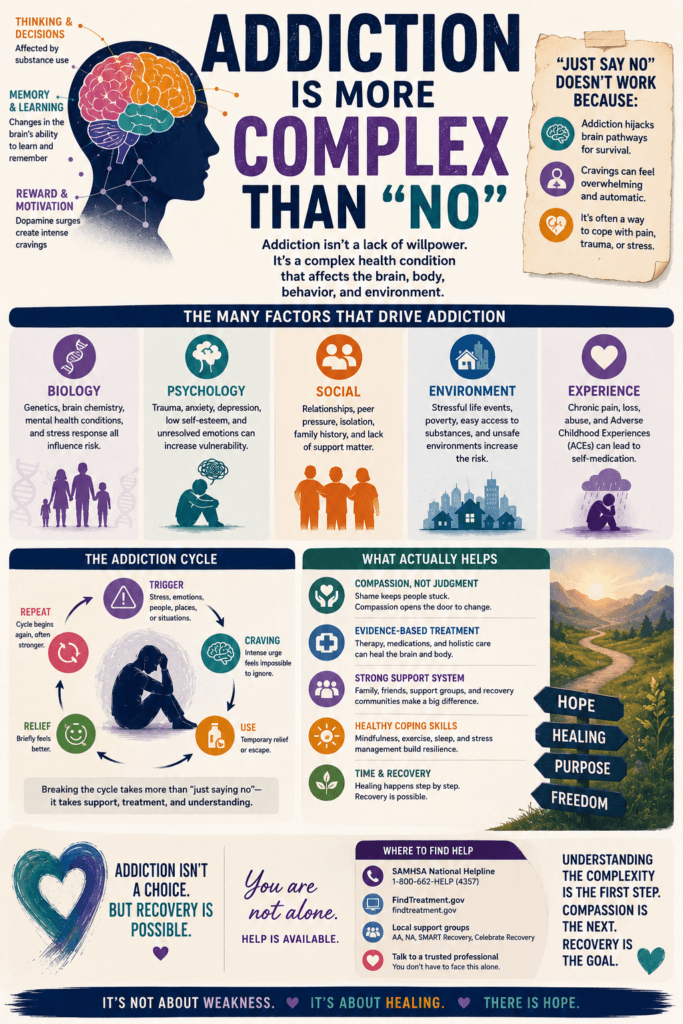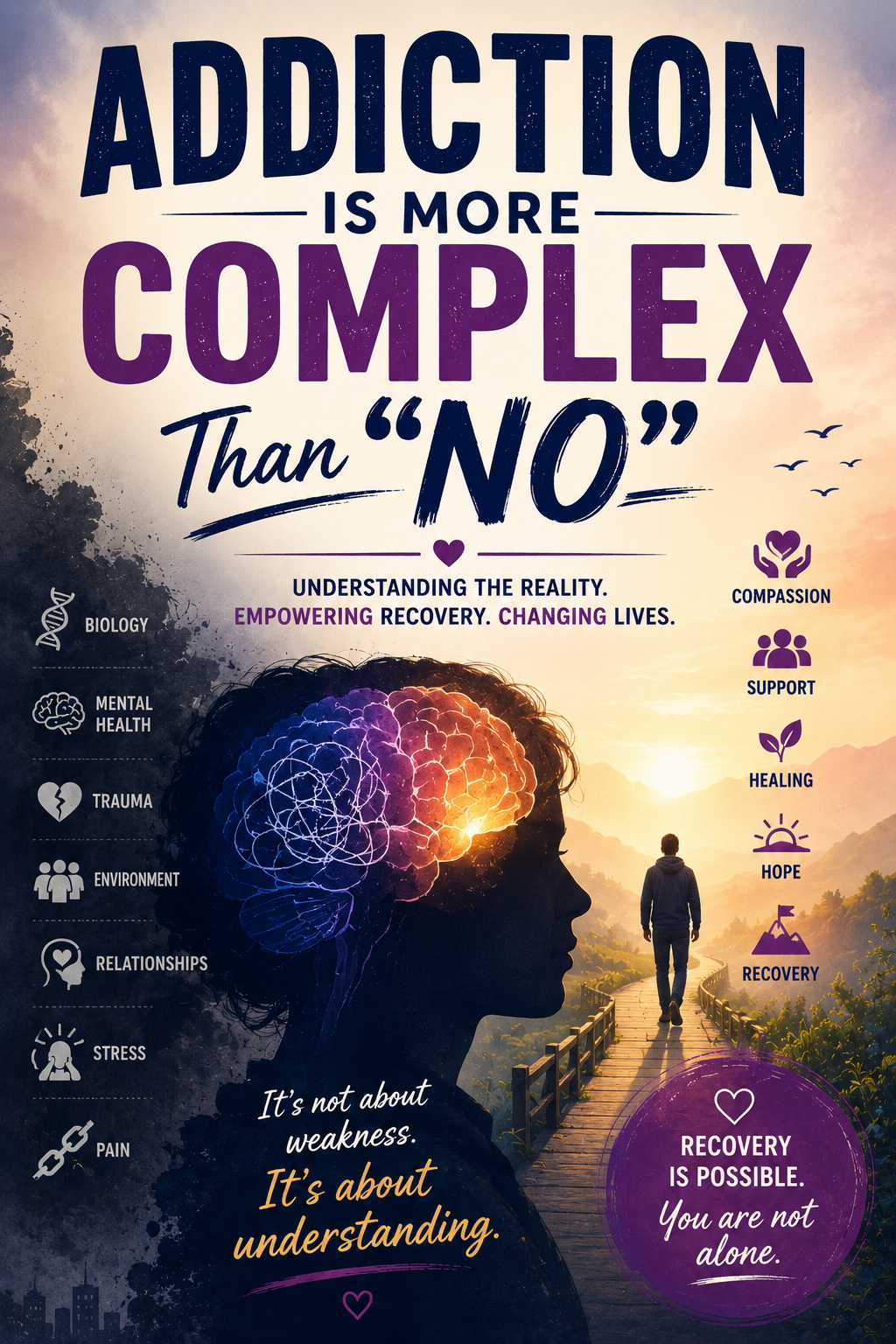
If you grew up in the late 1980s or 90s, you probably heard the phrase “just say no” when it came to drugs or alcohol. On the surface, this slogan made resisting temptation sound simple—almost like a switch you could flip with a little willpower. But after years of talking to people who have battled addiction and looking at the bigger picture, I’ve realized addiction is much more complicated than saying no. There are personal, psychological, biological, and social factors that play into how people get tangled up in addiction, and just as importantly, how they find their way out.
“Just Say No”: Where Did This Message Come From?
The “just say no” campaign took off in the United States during the 1980s, with celebrities and politicians pitching the idea on TV and in schools. The aim was straightforward: empower kids to refuse drugs. It sounded great, and schools ran with the idea, rolling out pep rallies, posters, and assemblies all focused on making “no” a reflex answer.
While this message raised awareness about substance use, it oversimplified what addiction really is. Many people learned to see drug use only as a choice, missing the deeper stuff behind why someone might have a tough time resisting. This has led to a lot of misunderstandings about addiction and can make those who struggle with it feel like they’re simply not strong enough to just say no.
Why Addiction Isn’t Only About Willpower
I used to buy into the idea that if someone wanted to quit badly enough, they could just decide to stop. As I’ve learned more, it’s become clearer that addiction actually rewires parts of the brain linked to memory, reward, and impulse control. Saying no isn’t as easy as flexing willpower, especially when cravings and withdrawal kick in.
- Brain Chemistry: Drugs and alcohol boost levels of certain chemicals in the brain, like dopamine, which create intense feelings of pleasure. Over time, your brain can start to rely on those substances just to feel okay. Without them, everyday things that used to feel good, like hanging out with friends or enjoying a meal, lose their spark. “Just saying no” doesn’t fix this chemical change overnight.
- Withdrawal Symptoms: Stopping after long-term use can trigger some pretty uncomfortable symptoms: anxiety, nausea, shaking, insomnia, or strong mood swings. It’s not just about being tempted; facing these symptoms without medical support can feel impossible for a lot of people.
- Mental Health: Lots of folks dealing with addiction also have anxiety, depression, or trauma. Substances can act as a way to cope. So, quitting isn’t just about ditching the drug; it can mean dealing with tough feelings or memories, too.
Factors That Make Addiction More Complicated
Addiction develops differently for everyone, but here are some of the main factors that can increase risk or make recovery trickier:
- Family History: If addiction runs in your family, you’re more likely to develop it yourself. That’s not to say it’s guaranteed, but genes do play a role in susceptibility.
- Environment: Growing up around heavy drinking, drug use, or lots of stress can raise the odds that someone tries substances in the first place. Peer pressure and social dynamics often push people to start, especially in their teens or early twenties.
- Mental Health: Depression, PTSD, and anxiety can all make someone more vulnerable. People sometimes use substances to manage symptoms, even though it usually makes things worse in the long term.
- Early Use: The earlier someone starts using alcohol or drugs, the higher the risk they’ll get addicted. Teenage brains are still developing, so substances can have a major (and lasting) effect.
Barriers to “Just Saying No”
Even if someone wants to walk away from drugs or alcohol, here are some reasons why it’s not as easy as turning down an offer:
- Physical Dependence: After using regularly, your body can start depending on the substance to feel normal. Skipping it brings on withdrawal symptoms that are tough to manage without help.
- Stigma: People struggling with addiction often feel ashamed or afraid to ask for help, worried about being judged or losing relationships.
- Lack of Access to Support: Not everyone has insurance or resources to get therapy, medical detox, or specialized addiction programs. Safe places to recover matter a lot, and some folks simply can’t access them.
- Triggers Everywhere: Everyday reminders, like old friends, certain neighborhoods, social media posts, or TV, can pull someone back toward old habits even after months of being substance-free.
Approaches That Look Beyond “Just Say No”
In my experience, most people who succeed in recovery have support systems and resources that help tackle the layers behind addiction. Here are a few things that make a real difference:
- Medical and Professional Support: This can include supervised detox, medication to ease cravings, or therapy with a specialist who understands addiction. Treatments like Medication-Assisted Treatment (MAT) for opioid or alcohol use have helped many people, not just with withdrawal, but with long-term stability.
- Counseling and Therapy: Therapies like cognitive behavioral therapy (CBT) help people recognize what leads up to cravings or use, unpack old habits, and build healthier coping skills. Some people benefit from group therapy or support groups like Narcotics Anonymous, where the shared experience really helps.
- Building Healthy Routines: Sleep, exercise, and stress management aren’t magic fixes, but they give your brain and body a fighting chance to heal. Hobbies, community activities, and volunteering are all ways people find new purpose and connections that make recovery feel more worthwhile.
- Family and Peer Support: Friends and family who listen (rather than judge) are super important. Some programs, like Al-Anon, support loved ones who are also dealing with the impact of addiction.
What Recovery Feels Like
I’ve seen people describe their early days in recovery as a rollercoaster. There’s nervousness and hope, but also rough patches full of second-guessing and anxiety. Having a plan, support, and even medication can help manage the tough spots. Over time, cravings usually fade or get easier to handle. Old habits swap out for new routines, and a sense of control slowly comes back. It’s not quick or always smooth, but it is possible.
What People Get Wrong About Addiction
I used to see news stories and online comments blaming people with addiction for their choices or failures. The truth is that nearly everyone who ends up addicted to something didn’t plan on becoming dependent. Many started out using drugs or alcohol at parties, to treat pain, or to cope with tough situations. After a while, addiction took hold, and quitting became much more than a matter of “just saying no.”
Research shows that viewing addiction as a disease, not just a character flaw, helps reduce judgment and get more people the support they need. The National Institute on Drug Abuse and organizations like the American Medical Association have done a lot to promote this switch in thinking. They point out that addiction changes how the brain works, but recovery is absolutely possible with care and support.
Frequently Asked Questions
Question: Is addiction really a disease?
Answer: Yes, most medical organizations, like the World Health Organization and the American Society of Addiction Medicine, view addiction as a chronic disease that affects the brain and behavior. This doesn’t mean people can’t get well, but it explains why it’s more complex than simply choosing to stop.
Question: Can someone recover from addiction without professional treatment?
Answer: Some people do stop using substances on their own, but professional treatment can make recovery safer and give a boost to the odds of staying sober, especially for serious addictions. Support groups, therapy, and medical care are all worth checking out if possible.
Question: What’s the best way to support someone struggling with addiction?
Answer: Listening without judgment, offering information about treatment options, and letting them know you care make a difference. Encouraging healthy routines, setting boundaries (when needed), and seeking support for yourself (like Al-Anon) can help both you and your loved one.
Why It’s Super Important to Move Beyond “Just Say No”
Focusing on “just say no” ignores the reality that addiction is a layered and complex challenge, not a simple choice. Approaching addiction with more empathy and understanding, backed by science and real-world experience, opens up better chances for people to get help and feel supported. Real change usually happens when we look past slogans and start treating addiction as a health issue, not just a moral one.
For the best results, recovery plans should combine medical support, therapy, lifestyle changes, and genuine community support. It might not fit in a catchy slogan, but honestly, that’s the route that works for most people, and it’s the one worth sharing. If you or someone you know is dealing with addiction, reaching out to a healthcare professional or support group can be a huge first step. Remember, you’re not alone, and there’s real hope even when it feels complicated.
Video: Why You Can’t Just “Stop”: The Science Of Addiction