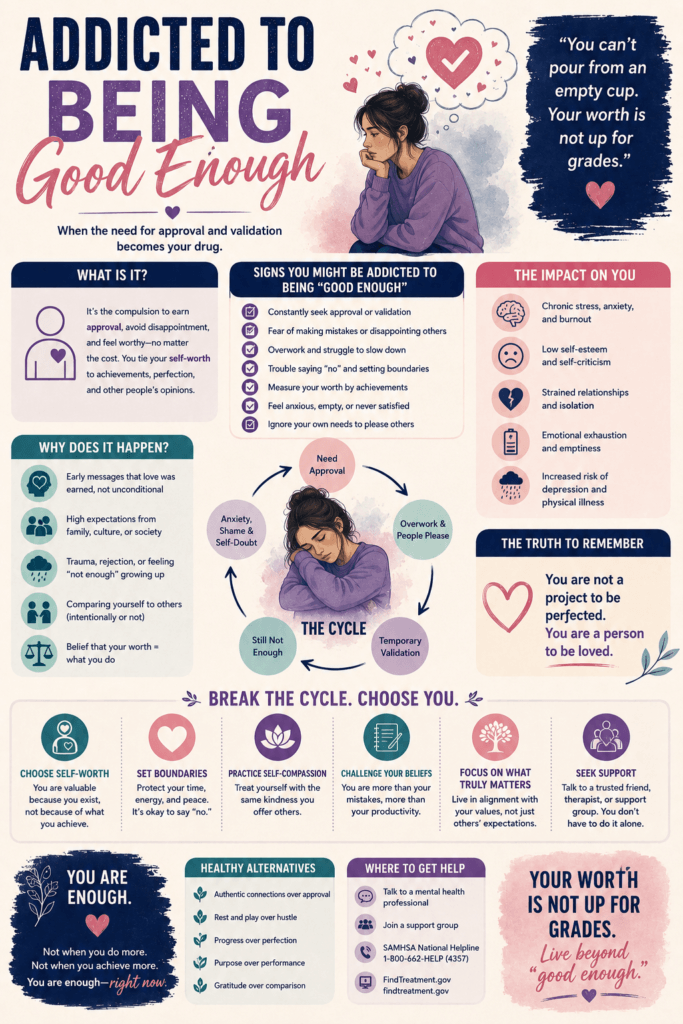
The urge to always be “good enough” often sneaks up quietly. On the outside, it can look like striving for genuine self-improvement or diligently meeting responsibilities. But for some, this chase turns into something more intense—a kind of hidden addiction. Instead of feeling accomplished, you start to run on an endless treadmill, never quite convinced you measure up. Here’s what I’ve learned about how the constant quest to be “good enough” can quietly shape your habits, energy, and sense of self-worth.
Why the “Good Enough” Fix Feels So Rewarding
Getting recognition or approval for doing a good job can be pretty satisfying. I’ve noticed that chasing validation can easily become routine, almost like getting a quick boost every time someone praises your efforts or notices you’ve met a certain standard. Over time, the cycle starts to shape how you see yourself and what kind of feedback you crave.
The problem is, the bar only moves higher. Many people who fall into this pattern rarely have moments when they think, “That’s it. I’ve arrived.” Each small win feels nice, but it’s fleeting. This reward system isn’t all that different from other addictive cycles. It often gets wrapped up in socially approved behaviors like working hard or excelling at school.
Understanding the Roots of the “Good Enough” Addiction
The drive to prove oneself usually doesn’t start out as a problem. For lots of people, myself included, it can trace back to childhood experiences, family expectations, or even well-meaning teachers who praised effort and achievement. When kids grow up feeling they’re only worthy when they perform well or please others, those habits are tough to shake in adulthood.
It doesn’t help that a culture of productivity, especially one where social media always shows everyone’s best moments, amps up these pressures. Suddenly, being decent at something isn’t enough; you feel pressured to be visibly successful, to always be improving, and to be constantly “on.”
- Perfectionism: Always raising your standards, never feeling satisfied with “just enough.”
- Fear of Disapproval: Worrying that any mistake might leave you out or less valued.
- Chronic Comparison: Constantly measuring yourself against others, real or online.
This combination of outside pressure and inside anxiety is a recipe for getting hooked on that approval buzz.
What Life Looks Like When Chasing “Good Enough” Rules Everything
If you’ve spent any length of time driven by this need, you know the toll it can take. Sometimes it’s pretty obvious, like burning out at work, feeling constantly anxious, or never taking breaks. Other times, it’s subtle: brushing off achievements with “It wasn’t that great,” or downplaying moments of genuine rest. I’ve noticed quiet signs that show up in everyday routines. Here’s what I see a lot:
- Overcommitting: Taking on too much to avoid disappointing anyone.
- Difficulty relaxing: Even downtime feels nervous or undeserved.
- Super sensitivity to feedback: Praise brings quick relief, but any criticism stings for days.
- Imposter syndrome: Secretly feeling undeserving of your success, even when clearly earned.
This pressure sticks around until it feels almost normal. That’s one of the reasons this kind of addiction is hard to spot and even harder to talk about without sounding dramatic.
Getting Off the Treadmill: Practical First Steps
Recognizing you’ve slipped into this pattern is a big step. Shifting away from constantly chasing external validation takes practice, and honestly, it can feel pretty uncomfortable at first. Here are tools and ideas I’ve seen work for lots of people, including myself:
- Notice Your Triggers: Start tracking situations or comments that trigger “prove myself” mode. Awareness helps you call out old patterns as they happen.
- Build Self-Compassion: Practice talking to yourself like you would to a friend having a tough time. Recognizing your humanity and flaws makes it easier to step off the hamster wheel.
- Set Clear Boundaries: Say no sometimes, even if it feels weird at first. Let people know when you need downtime or can’t take on another project.
- Value Effort, Not Perfection: Celebrate progress, not just outcomes. Remind yourself that showing up matters, even if it’s not flawless or impressive every time.
Small, consistent changes add up. Each time you resist the urge to prove yourself, those new habits get a little bit easier. As you keep practicing, you might begin to feel more at ease—even during moments when you would have once obsessed over approval. It helps to journal your thoughts to see how your perspective shifts over time, and to reward yourself for making healthier choices, no matter how small they seem.
Roadblocks That Make Recovery Harder
The habit of seeking approval doesn’t go away overnight. There are a few bumps I’ve seen people trip over, especially in the first weeks of trying to make a change.
- Old Patterns With Family: Family members might still expect the “old you” and unintentionally push the same buttons as before.
- Peer Pressure: Friends or coworkers may joke about your need to excel or interpret new boundaries as a sign of less dedication.
- Fear of Disappointing Others: Worrying you’ll lose love or respect if you ease up, even just a little.
Social support makes a difference here. Surrounding yourself with people who respect your boundaries, or even finding online communities focused on self-acceptance, can be pretty helpful. If you find it especially difficult to break away from old approval-seeking patterns, consider seeking guidance from a counselor or therapist. Professional support can smooth the way and give you tools for managing setbacks.
Relearning What “Good Enough” Means
A big part of healing from this kind of addiction is redefining what “good enough” is and getting comfortable with the answer sometimes being “less than perfect.” I find it really helps to:
- List personal values that matter to you (not just what’s impressive to others)
- Jot down moments where you felt genuinely proud, even about little progress
- Practice sitting with discomfort when you finish something that’s just okay (and resisting the urge to “fix” it for external kudos)
This kind of self-inventory makes it easier to spot when you’re drifting back into old routines and gives you a straight path back to what really matters. Over time, the meaning of “good enough” can shift from meeting everyone’s expectations to aligning with your true values and priorities. You might even start to enjoy (instead of fear) those “imperfect” moments, realizing they’re part of being fully human.
Examples of How People Break the Cycle
I’ve come across folks from all walks of life who’ve found creative ways to push back against “good enough” pressure. Here are a few relatable real-world examples:
- A first-year teacher who stopped grading papers every night and set a hard cutoff time, giving herself permission to rest and come back fresh.
- An ambitious college student who quit chasing extra credit and decided to focus on favorite courses, even if it meant not getting straight As.
- A manager who learned to delegate small tasks, trusting the team more, and focusing on what only she could uniquely contribute.
At first, these changes can feel risky, almost like “slacking off.” But over time, people report feeling lighter, more creative, and way more present for the things (and people) that matter most. Sometimes, breaking the cycle also encourages others to question their own habits around seeking approval and achieving accomplishments, setting off a positive chain reaction in peer groups and families. Others might notice your more relaxed demeanor and be inspired to try something similar in their own lives.
Frequently Asked Questions
Here’s what people often want to know if they realize they’re stuck in this cycle:
Question: How can I tell if being “good enough” has turned into a problem?
Answer: If you’re running yourself ragged, rarely satisfied, or need outside praise just to feel okay, it could be worth exploring how much this is running your life. Feeling exhausted by small mistakes or casual criticism can also be a sign. Track your energy and mood for a week or two—notice if your ups and downs are tied mostly to what others say about you.
Question: Is it possible to still do well without the constant need for approval?
Answer: Plenty of people grow into self-motivated achievers. They work hard because it matches their values, not just for applause. Building internal motivation usually leads to better well-being and often better long-term results, too. It may take time to shift your focus, but reflecting on your own successes, rather than relying on others to identify them, can help you stick with your goals for the right reasons.
Question: How can I explain this to my friends or family?
Answer: You can say something like, “I’m learning to let go of always trying to prove myself. I want to focus on what feels right for me, not just what gets the most praise.” Honest conversations about why you’re making these changes help others understand and support you. If they’re receptive, invite them to talk with you about their own experiences—sometimes sharing stories builds empathy and connection.
Long-Term Peace: Focusing on Self-Worth Over Approval
The pressure to always be “good enough” can quietly impact your mental health and daily life. Paying attention to what drives your actions, building more self-acceptance, and finding supportive routines can make a big difference. Each small choice to value yourself (rather than just your achievements) helps break the old cycle and opens the door to more genuine fulfillment.
With patience, encouragement, and genuine self-compassion, you can gradually shift from chasing approval to simply showing up as yourself, flaws included. That’s a freedom worth working toward. Over time, you might find that life actually feels more peaceful and satisfying—not because you finally became “perfect,” but because you learned to show up wholeheartedly, just as you are.
Video: The Truth About Why You Feel Like You’re Never Enough